
Rytvae Consulting — AMFI Registered Mutual Fund Distributor (ARN-265474), EUIN E091320
Decoding Group Health Insurance: The Roles of Employer, Insurer, Broker and TPA
When an employee falls ill, navigating a group health claim often feels like dealing with a labyrinth of different companies. Understanding the distinct roles of the employer, insurer, broker, and third-party administrator makes the process clearer.
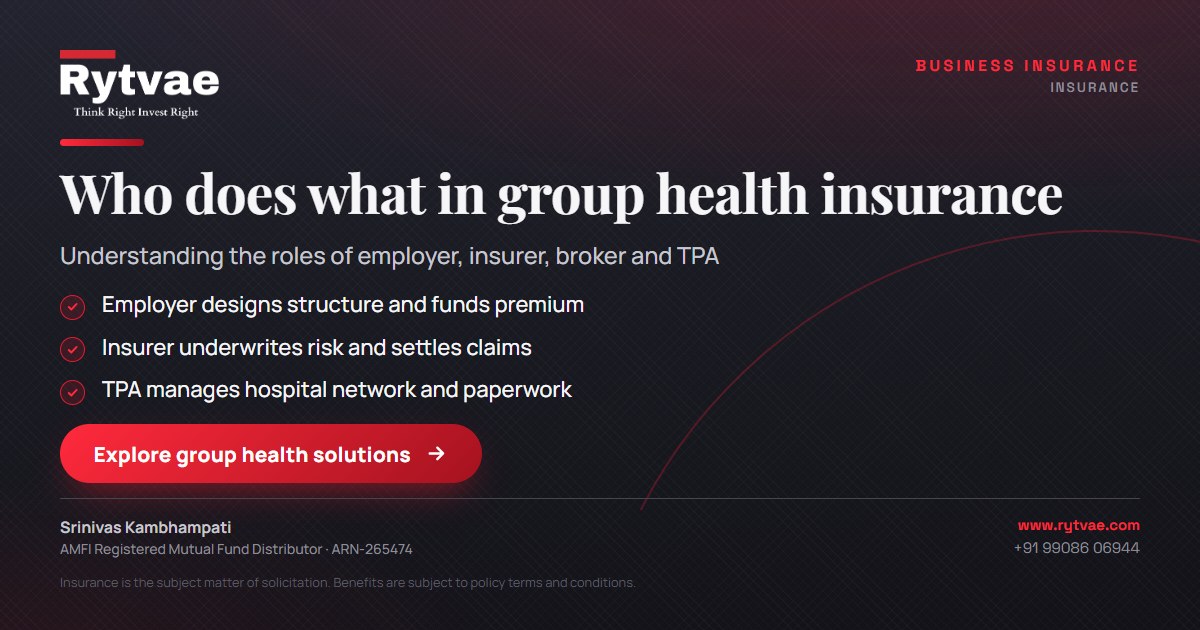
When an employee falls ill, navigating a group health claim often feels like dealing with a labyrinth of different corporate entities. You might wonder why your HR team directs you to a third-party desk, why the insurer issues the policy document, and where the insurance broker fits into the equation.
Confusion over these responsibilities frequently leads to delayed claims, frustrated employees, and administrative bottlenecks for business owners. A group health plan is not managed by a single monolithic entity. Instead, it relies on a carefully coordinated ecosystem where four distinct players carry out specialized functions.
The Employer: Setting the Structure and Funding the Plan
The employer acts as the policyholder. In a corporate group health setup, the company purchases the insurance contract on behalf of its workforce. This gives the employer significant leverage in deciding the contours of the coverage.
As an employer or HR leader, your primary responsibilities include defining the eligibility criteria, selecting the sum insured categories, deciding whether to include parental coverage or maternity benefits, and remitting the premium payments to the insurance company. You also act as the internal escalation point when employees face hurdles with their coverage additions, deletions, or policy documentation. However, the employer does not evaluate medical necessity, nor does it approve or reject hospital bills. Those decisions rest entirely with the insurance entities.
To explore comprehensive coverage options for your team, you can review our detailed Corporate & Group Insurance in Bangalore service page.
The Insurer: Underwriting Risk and Issuing the Contract
The insurer is the licensed insurance company that underwrites the risk. They are the financial backbone of the entire arrangement. When a claim is approved, it is the insurer's capital that pays the hospital or reimburses the employee.
The insurer drafts the master policy document, defines the standard exclusions, sets the room rent limits, and establishes the pricing based on the demographic profile, claim history, and size of the employee group. While insurers have direct contractual relationships with large corporate clients, they often delegate day-to-day operational tasks to specialized service providers to manage high volumes of medical claims efficiently.
For a deeper dive into what influences the pricing of these policies, read our article on What Actually Drives Group Health Insurance Cost.
The Third-Party Administrator (TPA): Managing Networks and Claims
The Third-Party Administrator, commonly known as the TPA, is an independent entity licensed by the regulator to service insurance claims. If the insurer is the bank, the TPA is the processing branch that handles the day-to-day transactions.
When an employee or their dependent is hospitalized, the TPA is usually the primary point of contact for cashless approvals and reimbursement filings. The TPA manages the network of hospitals, verifies identity and policy coverage at the hospital desk, reviews medical charts to check if treatments align with policy terms, and recommends claim approval or denial to the insurer. They also issue the physical or digital health cards and maintain the database of insured members.
The Broker: Bridging the Gap and Advocating for the Employer
An insurance broker acts as an independent intermediary representing the client—in this case, the employer and its employees. Unlike agents who may represent a single insurer, a registered broker works across multiple insurance companies to source competitive terms and suitable coverage structures.
The broker's role begins well before policy purchase. They analyze your workforce demographics, help design an optimal benefits structure, and negotiate terms with various insurers. Once the policy is active, the broker steps in as an advocate during complex claim disputes, helps manage annual renewals, and conducts employee awareness sessions to explain how to use the health cover effectively.
For businesses looking to evaluate their overall protection strategy beyond health insurance, a structured review using our Financial Health Check-Up | Nine-Point Annual Review can provide valuable clarity.
How the Four Entities Coordinate During a Claim
Understanding how these four parties interact prevents unnecessary panic during a medical emergency. Consider a typical cashless hospitalization scenario:
- The employee approaches a network hospital partnered with the TPA.
- The hospital submits the pre-authorization form to the TPA.
- The TPA reviews the medical notes against the insurer's policy rules.
- The insurer backs the financial commitment based on the TPA's processing recommendation.
- The broker remains available in the background if an unusual dispute or delay requires escalation to senior insurer management.
By recognizing the precise boundaries of each entity's mandate, employers can build smoother administrative workflows, and employees can set realistic expectations when filing claims.
Frequently asked questions
Does my employer have the final say on whether my health claim is approved?
No. Employers purchase and fund the group health policy, but they do not evaluate medical claims. The decision to approve, query, or reject a claim is made strictly by the TPA and the issuing insurer based on the terms of the master policy document.
What is the difference between an insurer and a TPA?
The insurer is the financial institution that assumes the risk and pays out valid claims. The TPA is a service provider appointed by the insurer to handle administrative tasks such as issuing health cards, managing hospital networks, and processing paperwork.
Why should a company involve an insurance broker for group health coverage?
An insurance broker acts on behalf of the employer to compare quotes from multiple insurers, negotiate favorable terms, design appropriate benefit structures, and provide crucial support during renewals and claim disputes.
Rytvae Consulting — AMFI Registered Mutual Fund Distributor (ARN-265474), EUIN E091320. Insurance is the subject matter of solicitation. The benefits described are indicative and are governed entirely by the policy wording, terms, conditions and exclusions of the issuing insurer. Please read the policy document before concluding a sale. Rytvae Consulting acts as a distribution intermediary and does not underwrite risk or settle claims.
See our full disclosures and disclaimers.