
Home / Insights / Loans & credit
Balancing SIP Contributions with Existing Debt Repayments: A Cash Flow Framework
Juggling loan EMIs and mutual fund SIPs can strain monthly budgets. Learn how debt classification, cash flow buffers, and systematic discipline create balance.
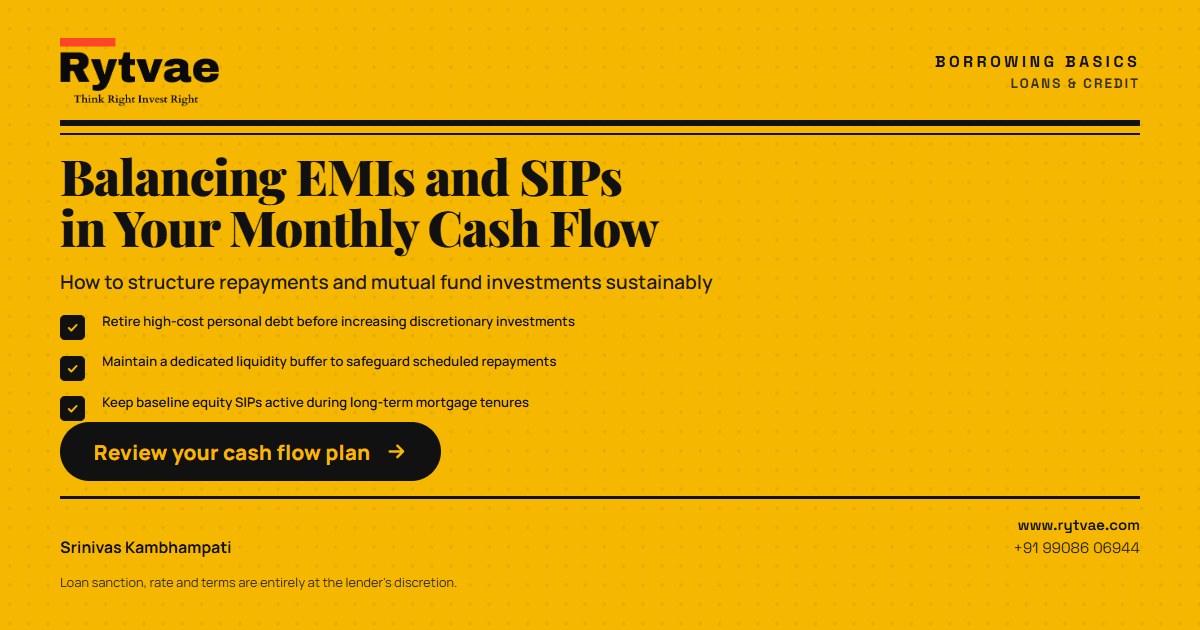
Many households encounter a recurring dilemma when evaluating their monthly surplus: should extra funds go entirely toward clearing active debt, or should they be channelled into systematic investment plans (SIPs) in mutual funds? A monthly equated monthly instalment (EMI) creates a rigid cash outflow, whereas pausing investments risks postponing long-term financial milestones.
This friction often pushes individuals toward extreme choices. Some halt all systematic investing until every rupee of liability is cleared, while others accumulate debt while trying to sustain ambitious investment targets. Establishing a clear, structured framework allows you to manage debt service obligations responsibly while preserving your compounding journey.
Distinguishing High-Cost Debt from Long-Term Structured Liabilities
The first step in resolving this conflict is classifying your existing borrowing. Not all debt carries the same financial burden or purpose. High-cost unsecured liabilities, such as personal loans or revolving credit card balances, carry substantial financing charges. In these scenarios, the interest obligation compounds steadily, eroding household savings faster than typical market-linked instruments can grow.
When dealing with high-cost unsecured facilities, directing surplus cash flow toward debt reduction is generally the prudent path. The interest saved by prepaying an expensive loan provides an immediate, risk-free reduction in your financial liabilities. Understanding how unsecured personal loans work helps highlight why their carrying costs demand swift, dedicated principal reduction.
Evaluating the Balance Between Debt Clearance and Long-Term Investing
In contrast to unsecured borrowing, long-term collateralised debt—such as a mortgage—functions under an entirely different dynamic. Home loans typically feature lower financing rates, extended tenures, and potential tax provisions under relevant provisions of the Income-tax Act. Attempting to clear an extended mortgage entirely before starting an investment program can lead to years of missed market participation.
| Borrowing Category | Primary Structural Feature | Impact on Monthly Cash Flow | Strategic Allocation Focus |
|---|---|---|---|
| High-Cost Unsecured Debt | High interest charges, rigid short tenure | Substantial drain on liquidity | Aggressive prepayment takes priority over new investments |
| Long-Term Secured Mortgages | Lower interest cost, extended multi-decade tenure | Predictable, ongoing baseline expense | Service EMIs consistently while running parallel systematic investments |
| Working Capital Borrowing | Variable utilisation tied to operating cycles | Fluctuating operational liability | Maintain cash reserves before committing to personal long-term SIPs |
As illustrated, treating all debt identically can distort your financial planning. While high-cost borrowing warrants accelerated closure, secured borrowing can comfortably co-exist with long-term capital accumulation.
The Value of Maintaining Ongoing Investment Discipline
Halting systematic investments completely during a loan tenure introduces behavioural and structural setbacks. Mutual fund SIPs benefit from rupee cost averaging across varying market cycles. When you pause a SIP during a market downturn, you forfeit the opportunity to accumulate fund units at relatively lower net asset values (NAVs).
Furthermore, building the habit of systematic investing requires behavioural momentum. When investors pause their SIPs to channel every spare rupee into an EMI, restarting the investment habit after several years often proves difficult. Maintaining even a modest, baseline SIP alongside debt service ensures that your wealth-creation habit remains intact while your principal loan balance steadily declines.
Navigating Long-Term Mortgages Alongside Wealth Goals
For most Indian families, a residential mortgage represents the single largest ongoing liability. Navigating a 15-year or 20-year repayment schedule requires steady coordination with long-term retirement and education targets. For those managing a home loan in Bangalore or other metropolitan centres, property financing forms a significant portion of monthly take-home pay.
Borrowers should also monitor changes in borrowing terms over time. Understanding your home loan spread and when a transfer is worth it allows you to identify whether your financing costs can be optimised. Any reduction achieved in ongoing interest costs can directly expand your capacity to fund monthly SIPs without straining your household living standards.
Structuring a Balanced Cash Flow Allocation
To implement a sustainable balance between debt service and mutual fund investments, consider structuring your income across distinct priorities:
- Sustain an Emergency Liquidity Buffer: Before accelerating loan prepayments or expanding equity SIPs, maintain adequate liquid funds to cover several months of fixed living expenses and EMIs. This prevents you from taking on fresh debt if an unexpected cash flow disruption occurs.
- Service Mandatory Debt Obligations: Ensure that all scheduled EMIs are funded on time to protect your credit profile and prevent late payment penalties.
- Maintain a Non-Negotiable Core SIP: Allocate a sustainable, modest percentage of surplus cash flow to systematic mutual fund investments. Treat this allocation as a fixed monthly commitment alongside your utility bills.
- Divide the Remaining Surplus: If additional funds remain at the end of the month, allocate a portion toward prepaying the principal on active loans and direct the remainder toward discretionary long-term investments.
By treating debt service and investment accumulation as complementary components of personal finance rather than opposing forces, you can steadily reduce your liabilities while building a durable asset base for future needs.
Frequently asked questions
Should I stop my existing SIPs to pay off my home loan faster?
Pausing SIPs completely may disrupt your compounding trajectory and cause you to miss market cycles. If cash flow allows, continuing a baseline SIP while servicing regular home loan EMIs provides a balanced approach to managing liabilities and building wealth.
When should debt repayment take absolute priority over SIP contributions?
Debt repayment should take immediate priority when you are carrying high-cost unsecured debt, such as personal loans or credit card balances. The financing cost on these facilities generally outweighs potential market-linked returns and strains household liquidity.
How does an emergency fund fit into balancing EMIs and SIPs?
An emergency reserve provides a liquidity buffer that covers living costs and mandatory EMIs during cash flow disruptions. Without this buffer, any temporary income disruption could force you to liquidate investments prematurely or take on expensive new debt.
Loan sanction, interest rate, tenure, charges and terms are entirely at the discretion of the lender and subject to its credit policy and documentation requirements. Rytvae Consulting does not sanction credit, does not guarantee approval and does not represent any specific lender's terms. This material is for general education only.
See our full disclosures and disclaimers.