
Home / Insights / Loans & credit
Dealer-Finance Arrangements and Their Repayment Structures
Dealer-finance agreements bridge the cash gap between procuring manufacturer stock and collecting retail proceeds. Here is an overview of how these facilities function and how repayment cycles are structured.
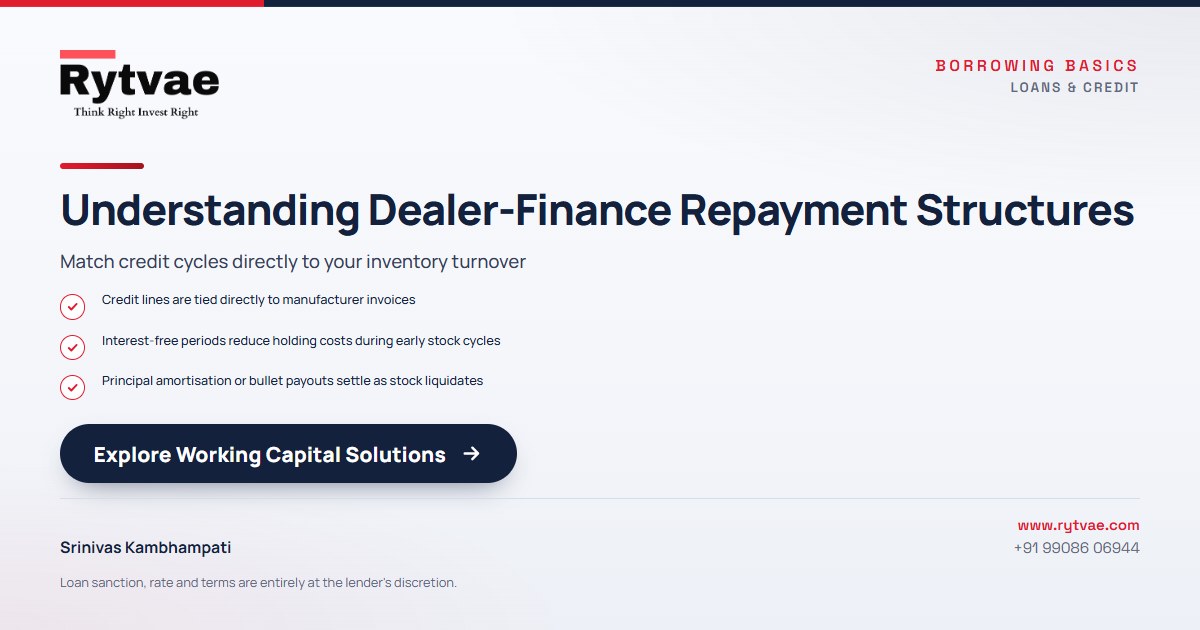
Running a dealership requires significant working capital tied up in display models, floor stock, and transit inventory. When an original equipment manufacturer bills an authorised distributor for new shipments, payment terms rarely align with the pace at which retail buyers purchase that stock. Paying for high-value merchandise outright from internal operational cash can rapidly drain liquidity.
To prevent showroom floors from emptying while keeping manufacturer assembly lines moving, commercial lenders and captive finance companies offer dealer financing. While the facility provides immediate purchasing power, understanding the underlying legal arrangements and repayment mechanics is essential for protecting your balance sheet.
The Core Mechanism of Dealer Financing
Dealer finance, frequently referred to in commercial lending as floor-plan financing or channel financing, is a specialised revolving credit line designed solely to purchase commercial inventory. Unlike a conventional overdraft, the lender usually disburses funds directly to the manufacturing partner rather than crediting the dealership bank account.
The physical goods serve as collateral for the drawdowns. When an invoice is raised by the supplier, the financing institution clears the dues within agreed settlement windows. The dealer then assumes a direct liability to the financier. For businesses evaluating broader institutional borrowing parameters, reviewing our Business Loan Eligibility & Credit Analyzer can clarify how banks evaluate collateral and turnover thresholds across diverse enterprise models.
Tripartite Structures: The Manufacturer, Dealer, and Lender
A standard dealer-finance facility relies on a tripartite agreement involving three stakeholders: the anchor manufacturer, the retail dealer, and the institutional financier. Each entity has distinct responsibilities and credit risks embedded into the documentation.
The manufacturer agrees to supply genuine goods and, in many frameworks, commits to a first-loss default guarantee or a stock buyback arrangement if the dealer defaults. The dealer covenants to insure the inventory, maintain physical custody, and remit sales proceeds to the credit line immediately upon completing retail sales. The financier provides liquidity, conducts periodic floor audits, and monitors credit exposure using an institutional Credit Risk Assessment to evaluate trade velocity and working capital ratios.
Common Repayment Structures in Channel Facilities
Repayment schedules in dealer financing differ substantially from standard monthly term loans. Lenders calibrate payment terms around expected inventory holding periods. Three primary structures predominate in commercial arrangements:
- Pay-as-Sold Settlement: The principal balance drawn against a specific vehicle or equipment unit becomes immediately due when the dealer liquidates that unit to a retail customer. The dealer must report the billing and remit the drawn sum within a fixed number of operational days.
- Subsidised Grace Period with Bullet Settlement: Many anchor manufacturers negotiate an interest-free or subsidised grace period with the lender to encourage dealers to take seasonal stock. Once this period concludes, interest begins accruing on any unsold items, with the full principal due at the end of the total sanctioned tenure.
- Tiered Interest Structures: To discourage dealers from holding aged inventory, lenders may apply a step-up interest schedule. The interest rate remains moderate during the expected turnover cycle and escalates if items remain unsold beyond standard holding benchmarks.
Comparing Floor-Plan Credit with Other Trade Lines
Dealers often evaluate channel facilities alongside other short-term trade tools. While facilities like Invoice & Bill Discounting in India finance accounts receivable generated after selling to corporate clients, dealer finance funds the inward procurement of inventory before retail sales occur.
| Feature | Dealer Financing (Floor-Plan) | Receivables Bill Discounting |
|---|---|---|
| Underlying Asset | Unsold inventory and showroom stock | Accepted invoices for goods already delivered |
| Disbursement Destination | Directly to the manufacturing anchor | Directly to the supplier or seller |
| Repayment Trigger | Retail sale of stock or tenure expiry | Due date of the customer invoice |
| Collateral Form | Hypothecation of physical goods on floor | Assignment of trade receivables |
Managing Operational and Cash Flow Risks
Because dealer financing operates on high turnover, small disruptions in retail demand can create severe liquidity strain. Holding slow-moving stock beyond the subsidised interest window causes interest charges to compound against working margins. Furthermore, if a dealership uses customer sales receipts to cover general overheads rather than instantly clearing the corresponding financing tranche, it commits a technical default known as selling out of trust.
To maintain sustainable funding, dealers must regularly audit their stock age, match their borrowing limits strictly to demonstrable sales conversion cycles, and understand the structural parameters governing their legal covenants. If your dealership operates as an incorporated entity or partnership, reviewing the Business Loan Eligibility: Structure-Wise Guide can help you align corporate documentation with bank standards.
Frequently asked questions
What happens if inventory funded by dealer financing is not sold within the sanctioned tenure?
If stock remains unsold when the maximum tenure expires, the dealer is usually required to repay the outstanding principal tranche in full using operational cash flows. In arrangements with manufacturer support, the anchor partner may step in under a pre-agreed stock repurchase agreement, subject to the conditions of the tripartite facility.
Who owns the inventory while it sits on the dealership floor?
Legal title and hypothecation rules depend on the specific credit agreement. Generally, the dealer holds physical possession while the financing institution holds a primary charge or hypothecation lien over the inventory until the corresponding loan tranche is cleared.
How does dealer financing differ from an unsecured cash credit or overdraft line?
An overdraft allows business owners to draw cash for general operational expenses up to a sanctioned limit. Dealer financing is restricted entirely to purchasing inventory from an approved manufacturer, with funds disbursed directly to that supplier against valid commercial invoices.
Loan sanction, interest rate, tenure, charges and terms are entirely at the discretion of the lender and subject to its credit policy and documentation requirements. Rytvae Consulting does not sanction credit, does not guarantee approval and does not represent any specific lender's terms. This material is for general education only.
See our full disclosures and disclaimers.