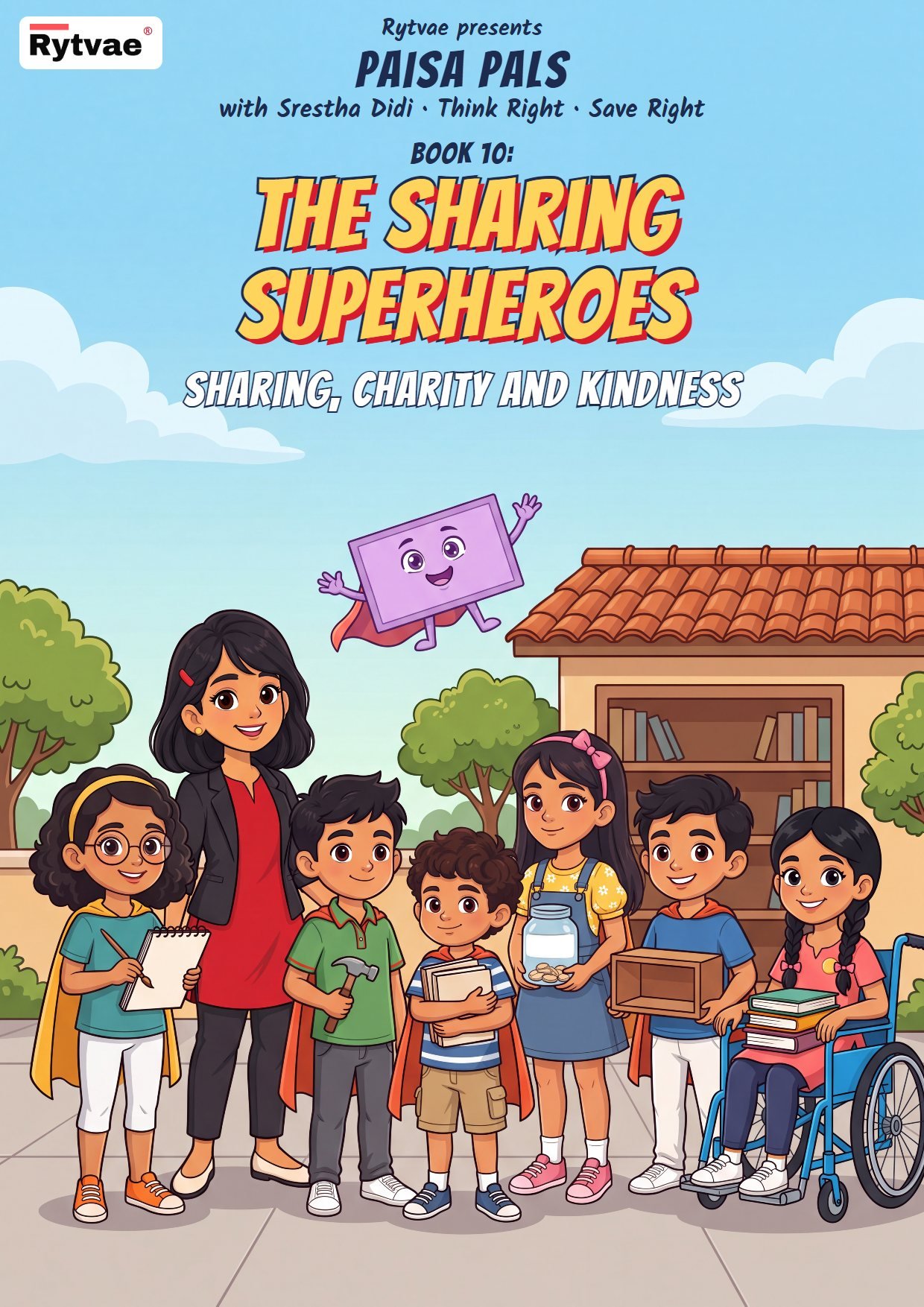
Sau is upset

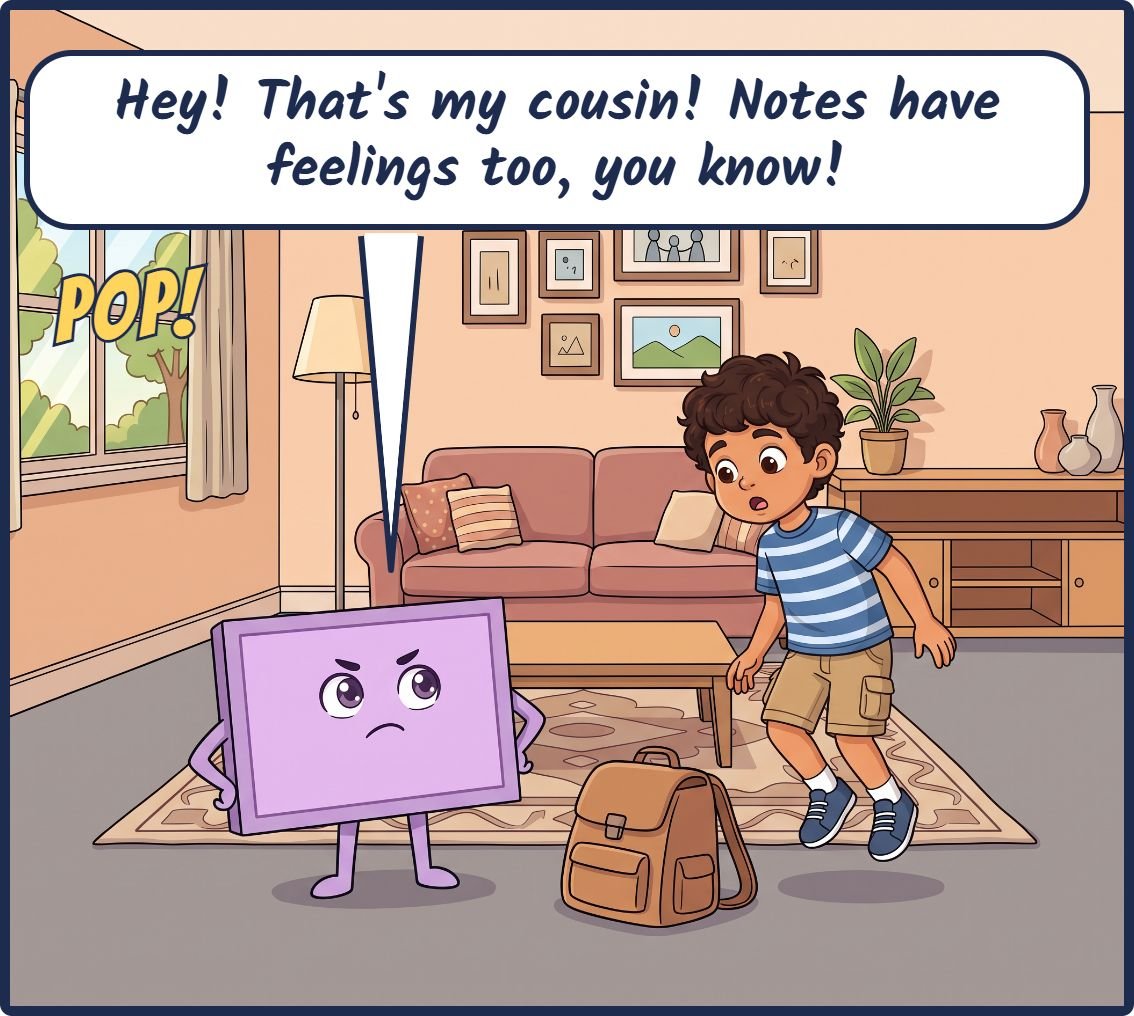
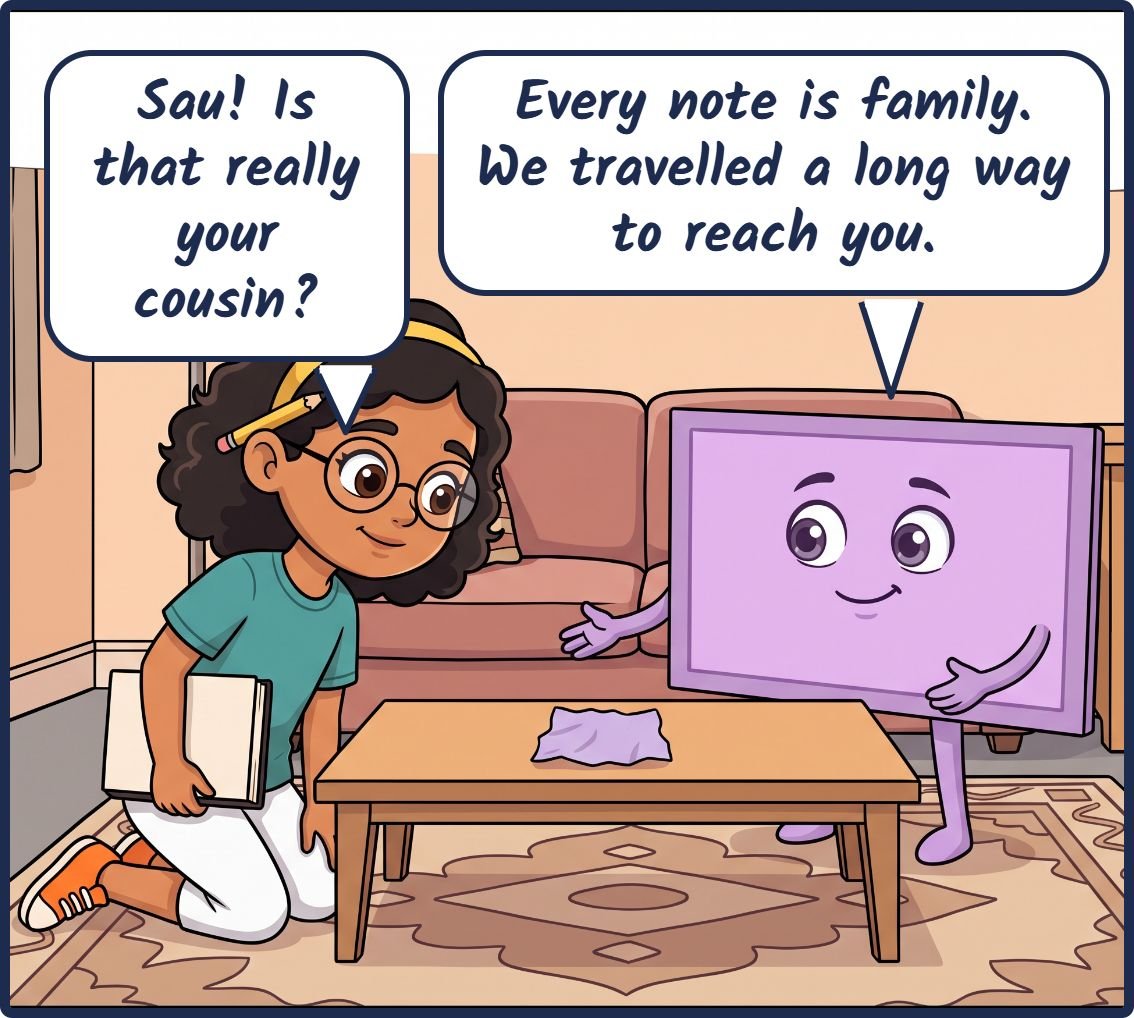
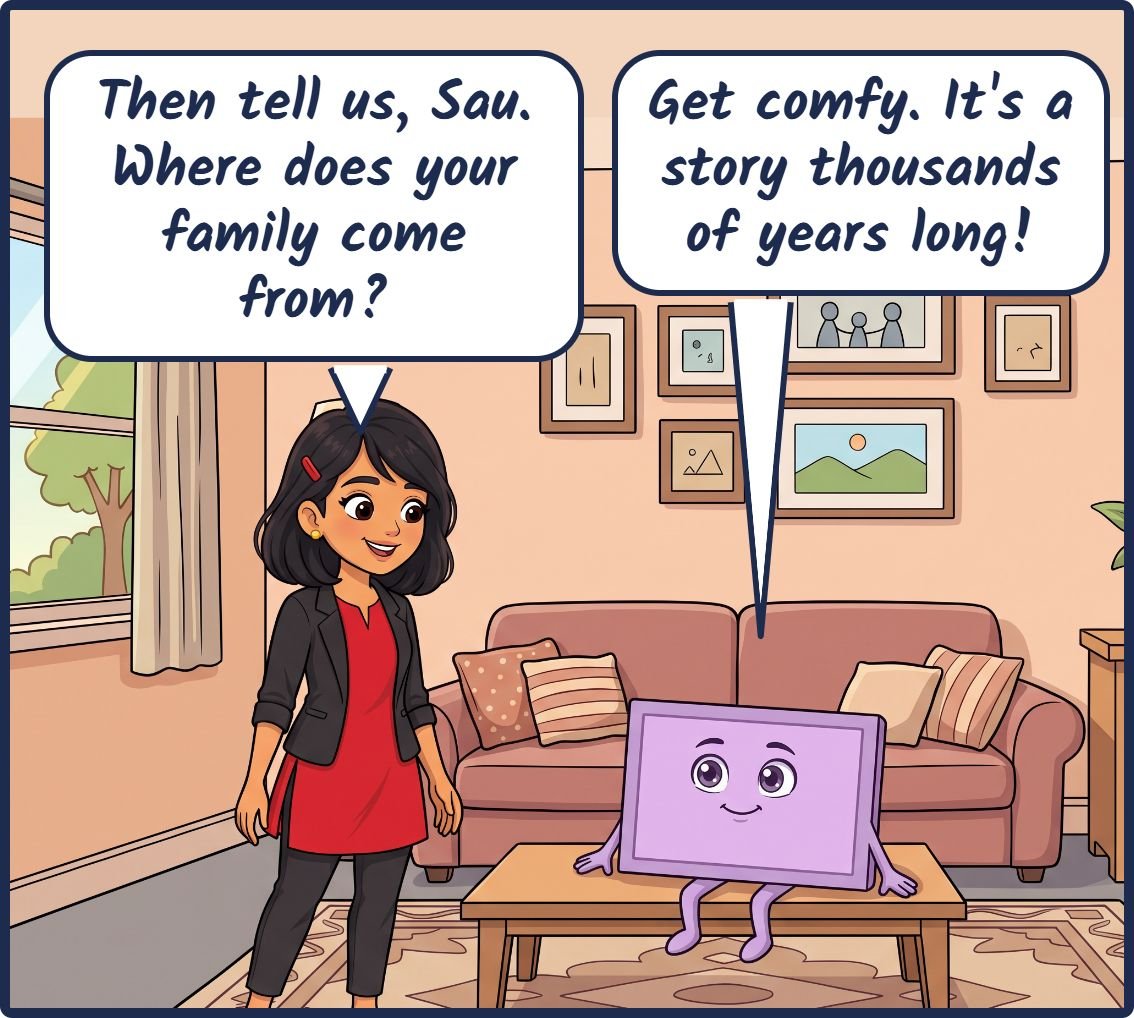
After school, at Siddu's house Look what was in my pocket! A wrapper, a marble… and ₹100! Kabir! It's all crumpled, and you wrote a phone number on it! I needed paper. It was there. POP! Hey! That's my cousin! Notes have feelings too, you know! Sau! Is that really your cousin? Every note is family. We travelled a long way to reach you. Then tell us, Sau. Where does your family come from? Get comfy. It's a story thousands of years long!
Before money
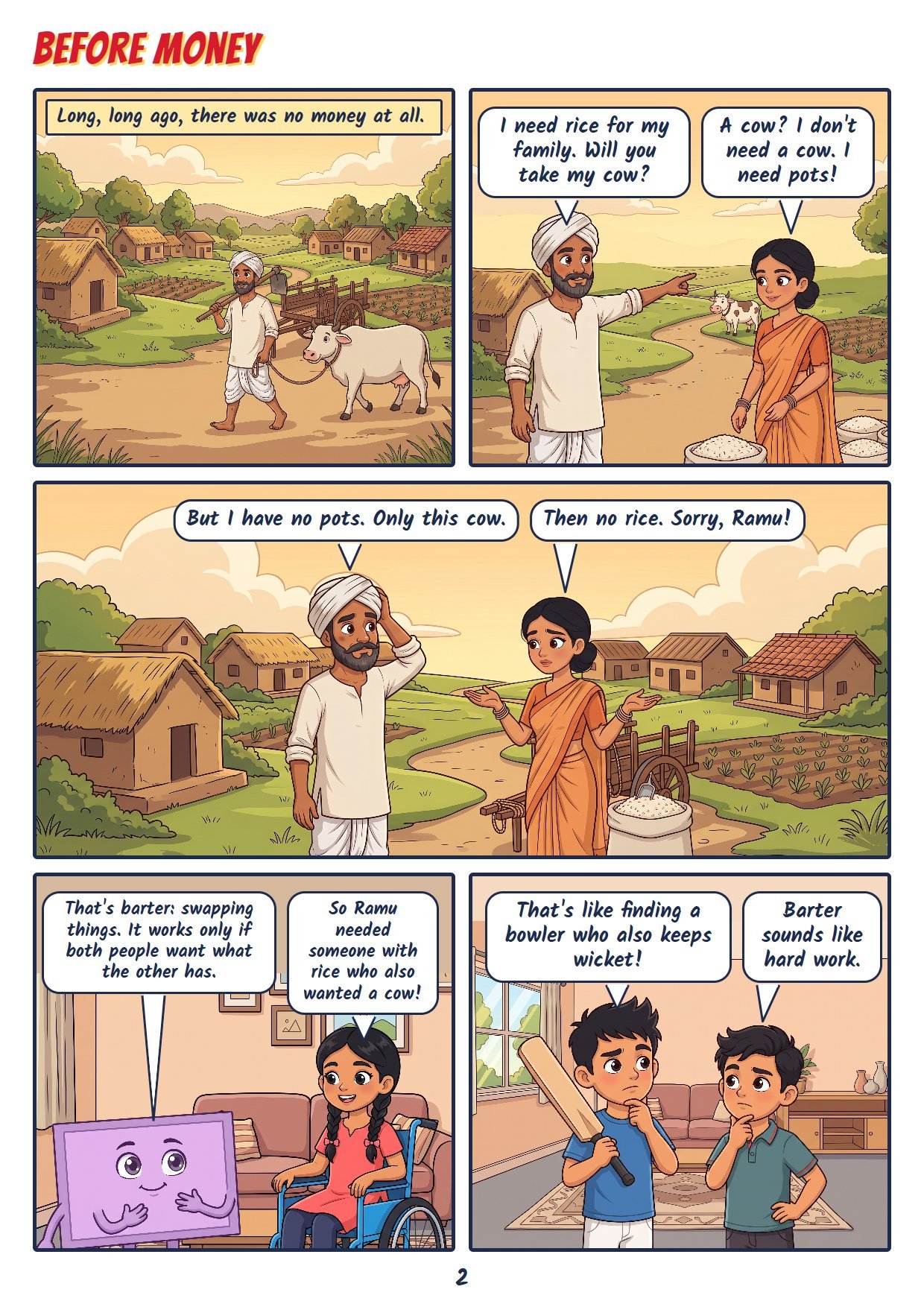
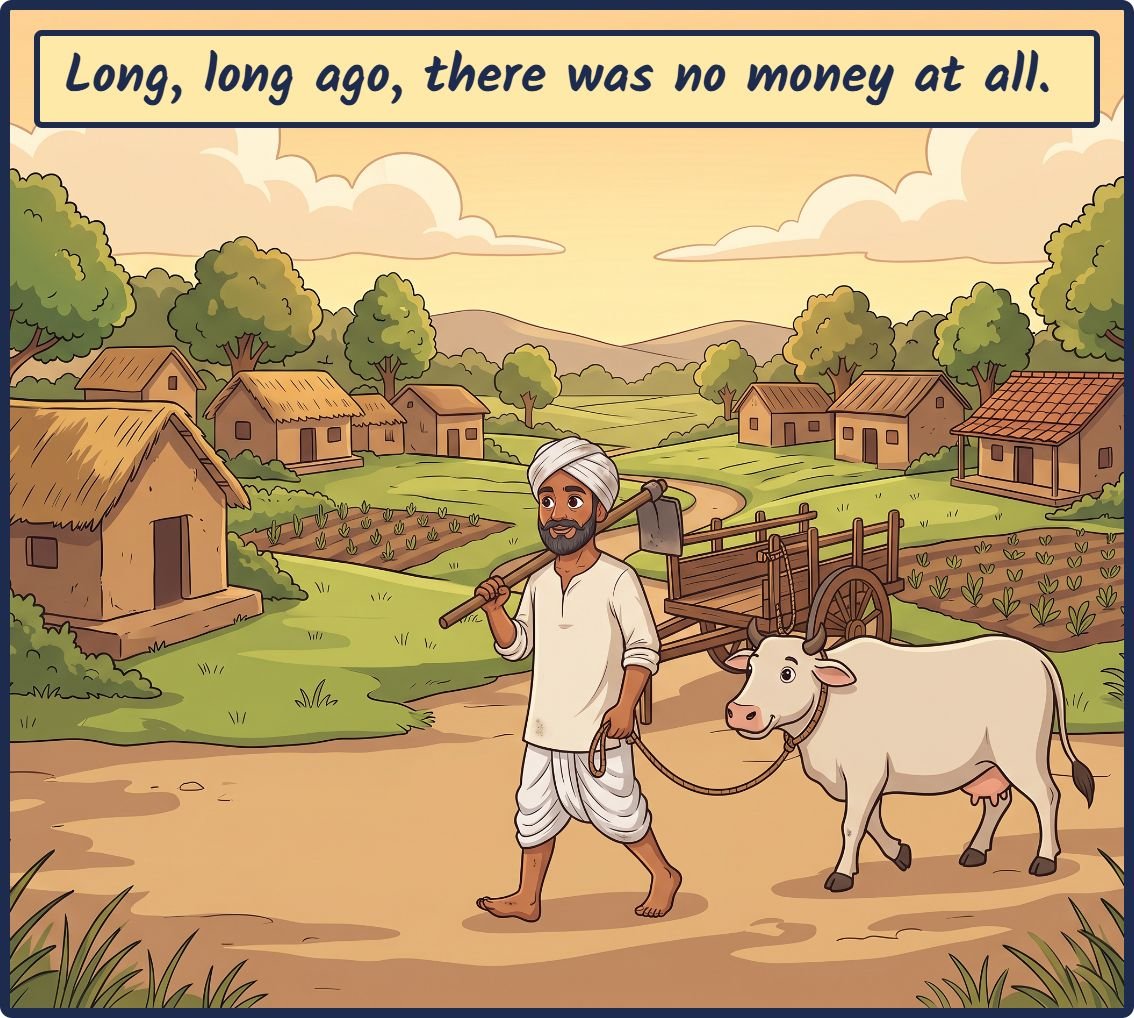
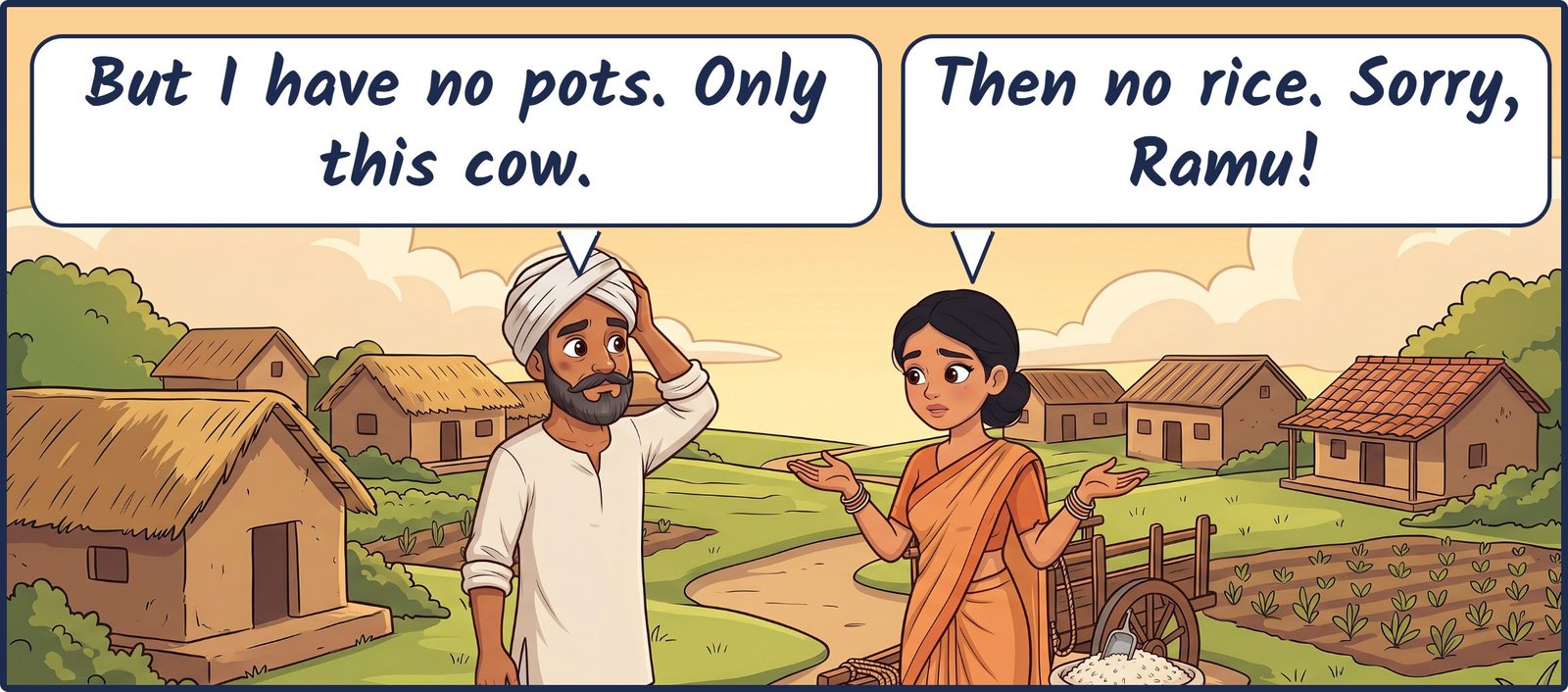
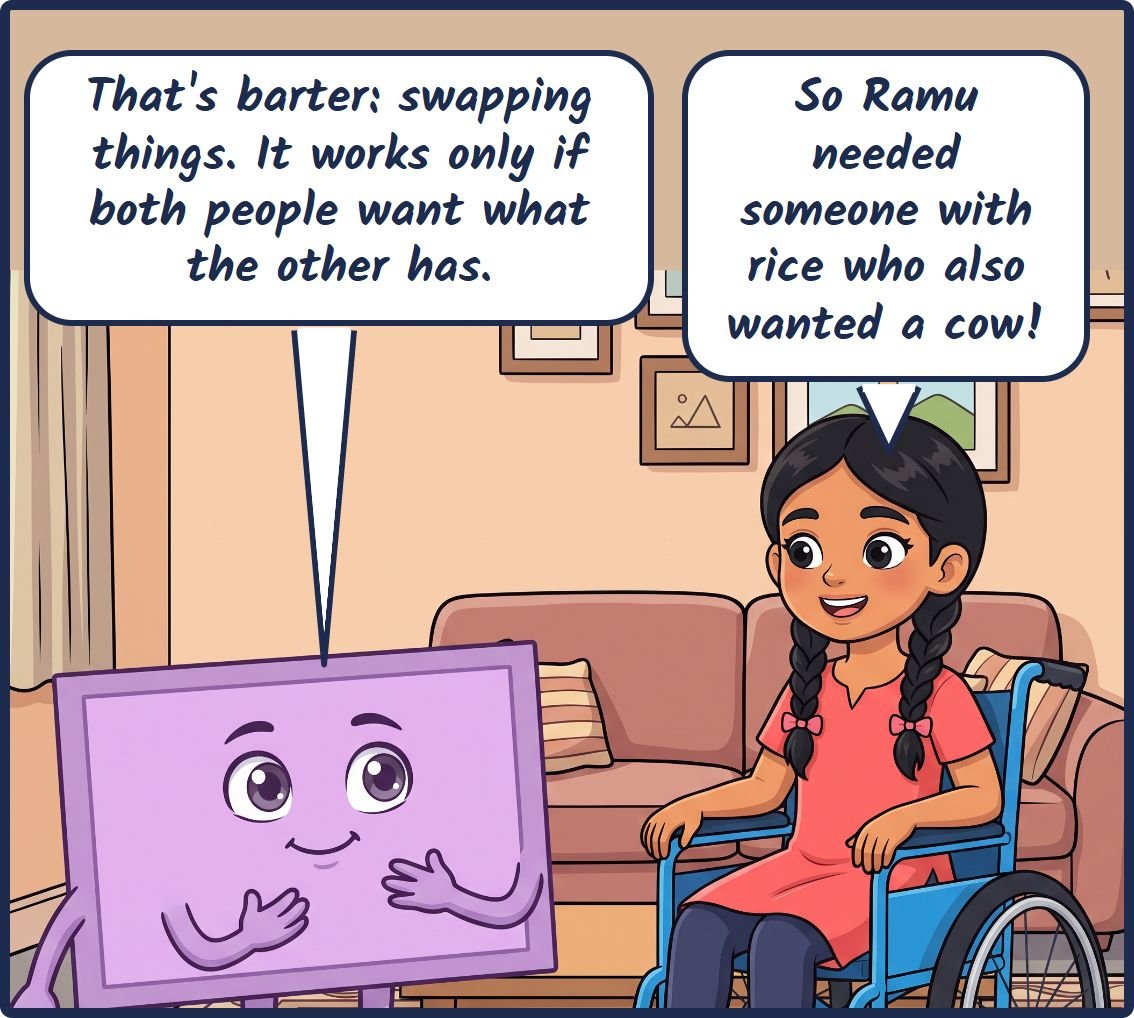
Long, long ago, there was no money at all. I need rice for my family. Will you take my cow? A cow? I don't need a cow. I need pots! But I have no pots. Only this cow. Then no rice. Sorry, Ramu! That's barter: swapping things. It works only if both people want what the other has. So Ramu needed someone with rice who also wanted a cow! That's like finding a bowler who also keeps wicket! Barter sounds like hard work.
The cow problem
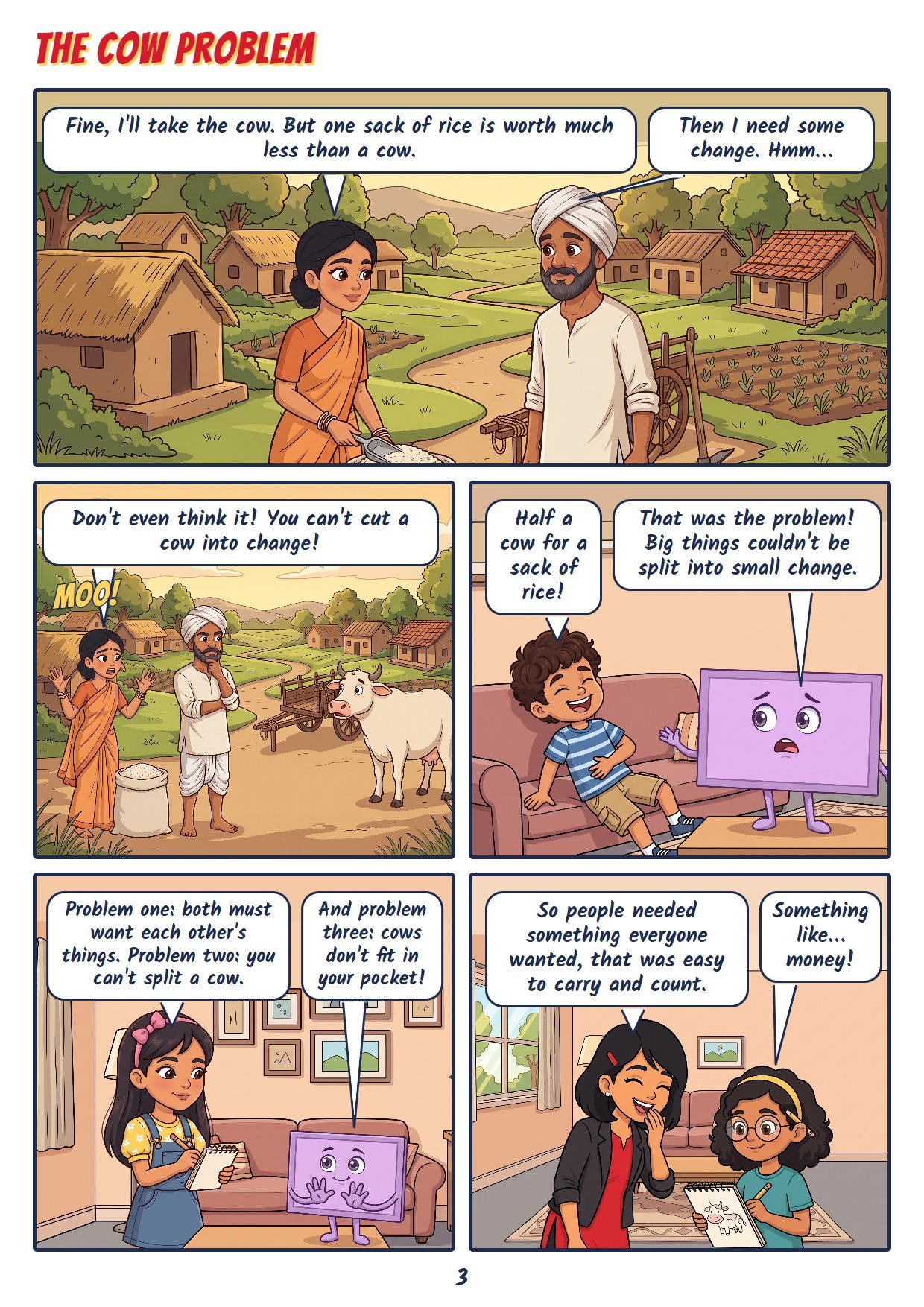
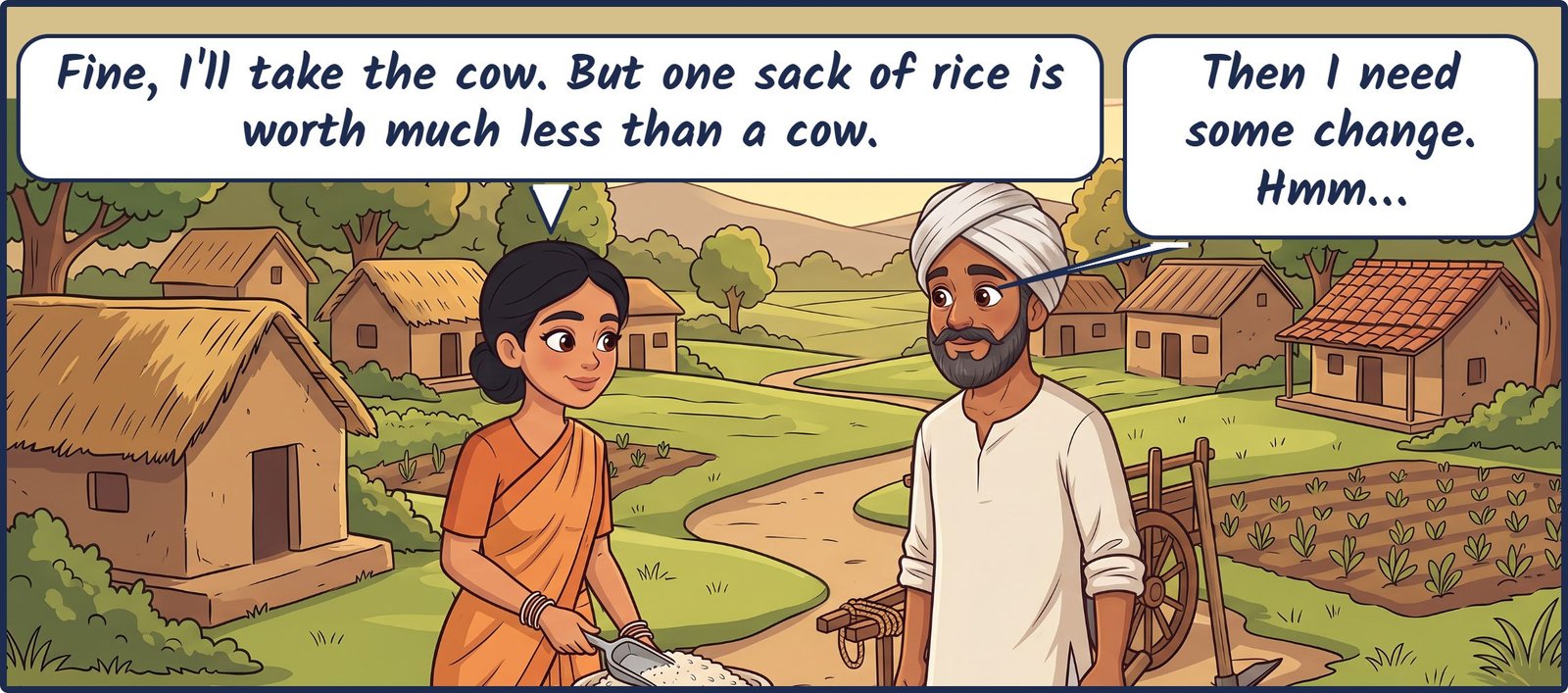
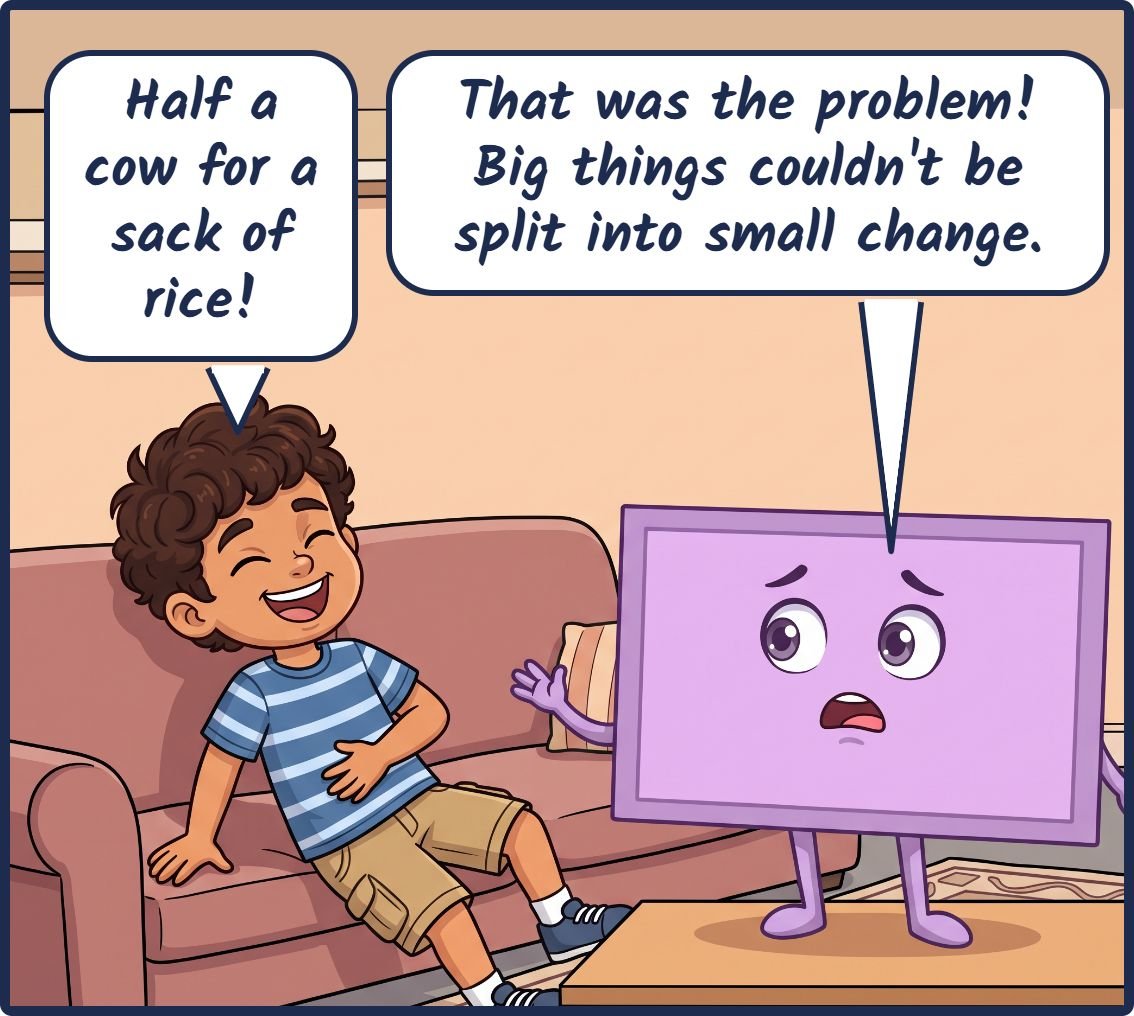
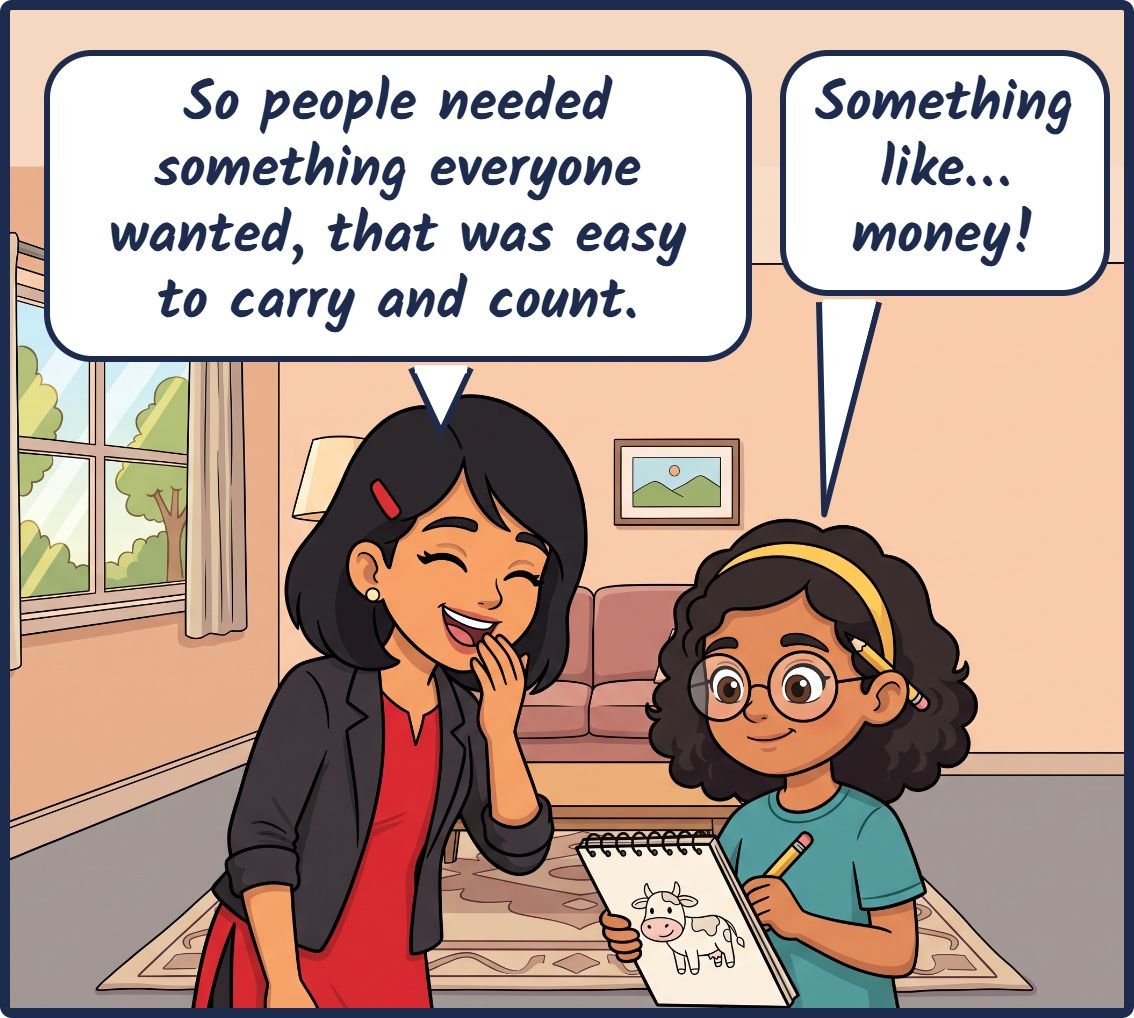
Fine, I'll take the cow. But one sack of rice is worth much less than a cow. Then I need some change. Hmm… MOO! Don't even think it! You can't cut a cow into change! Half a cow for a sack of rice! That was the problem! Big things couldn't be split into small change. Problem one: both must want each other's things. Problem two: you can't split a cow. And problem three: cows don't fit in your pocket! So people needed something everyone wanted, that was easy to carry and count. Something like… money!
Shells and grain

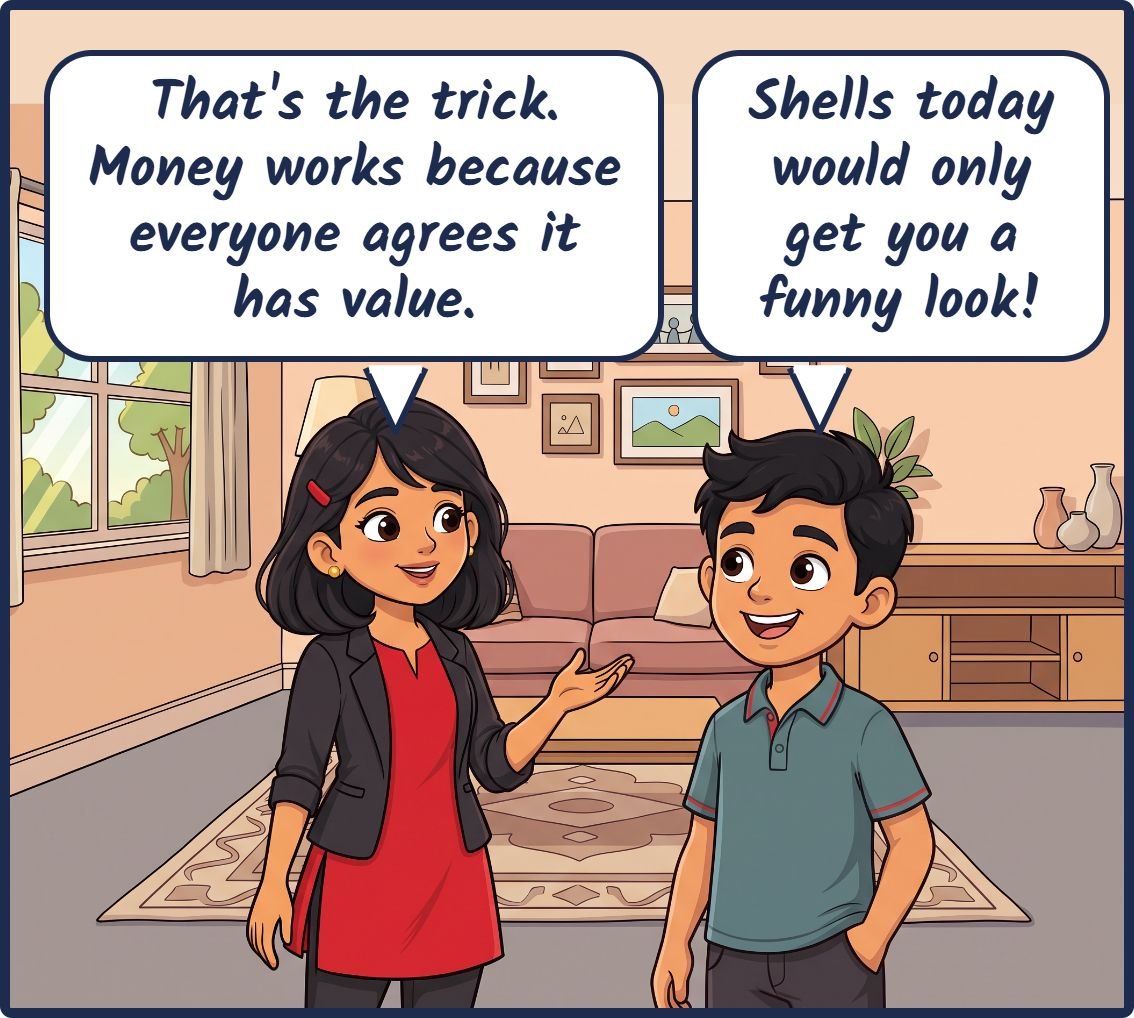
Later, people used things everyone wanted, like grain and cowrie shells. Ten shells for a sack of rice? Done! Shells are easy to carry and easy to count. These are cowrie shells, from the sea. Long ago, they worked like coins. Money from the sea? Amazing! So I could buy a cricket bat with shells? I'd buy samosas with grain. Wait… I'd just eat the grain. That's the trick. Money works because everyone agrees it has value. Shells today would only get you a funny look!
The first coins

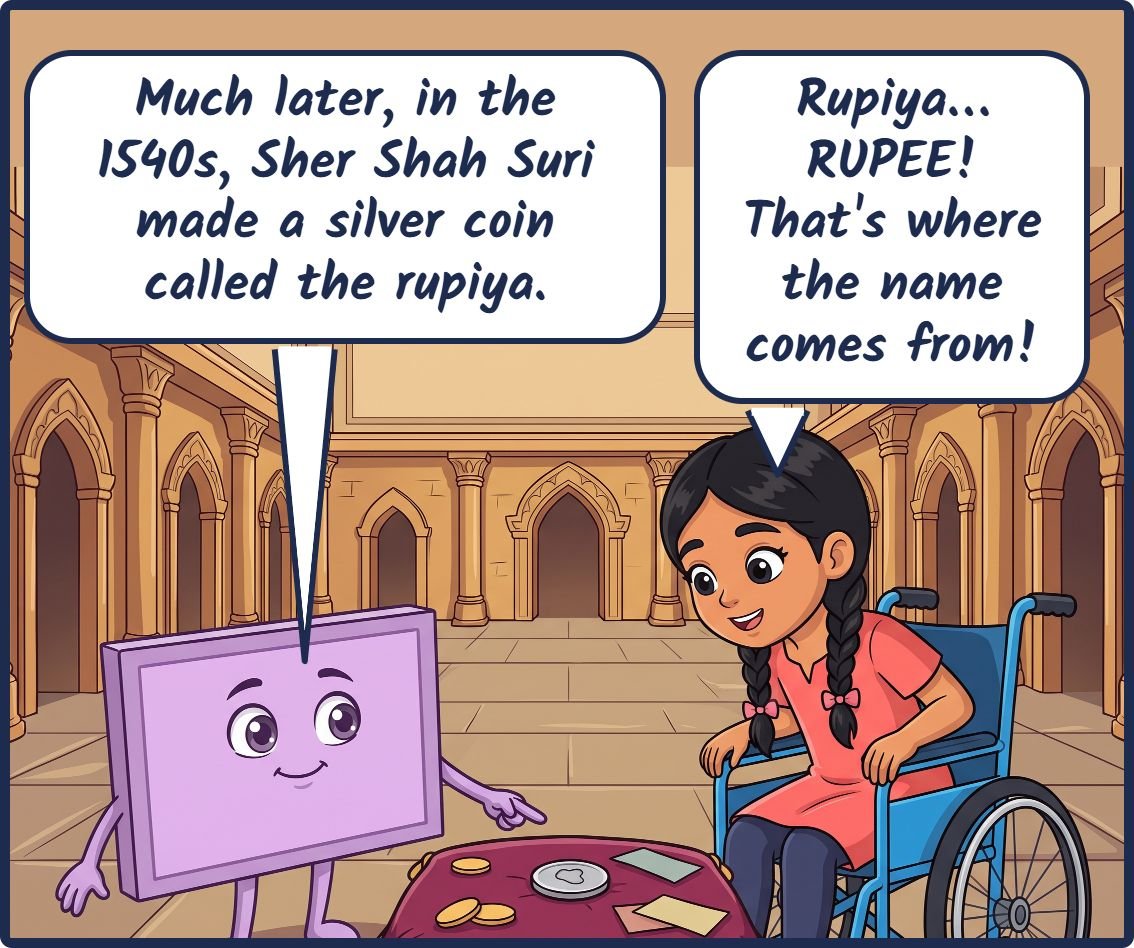
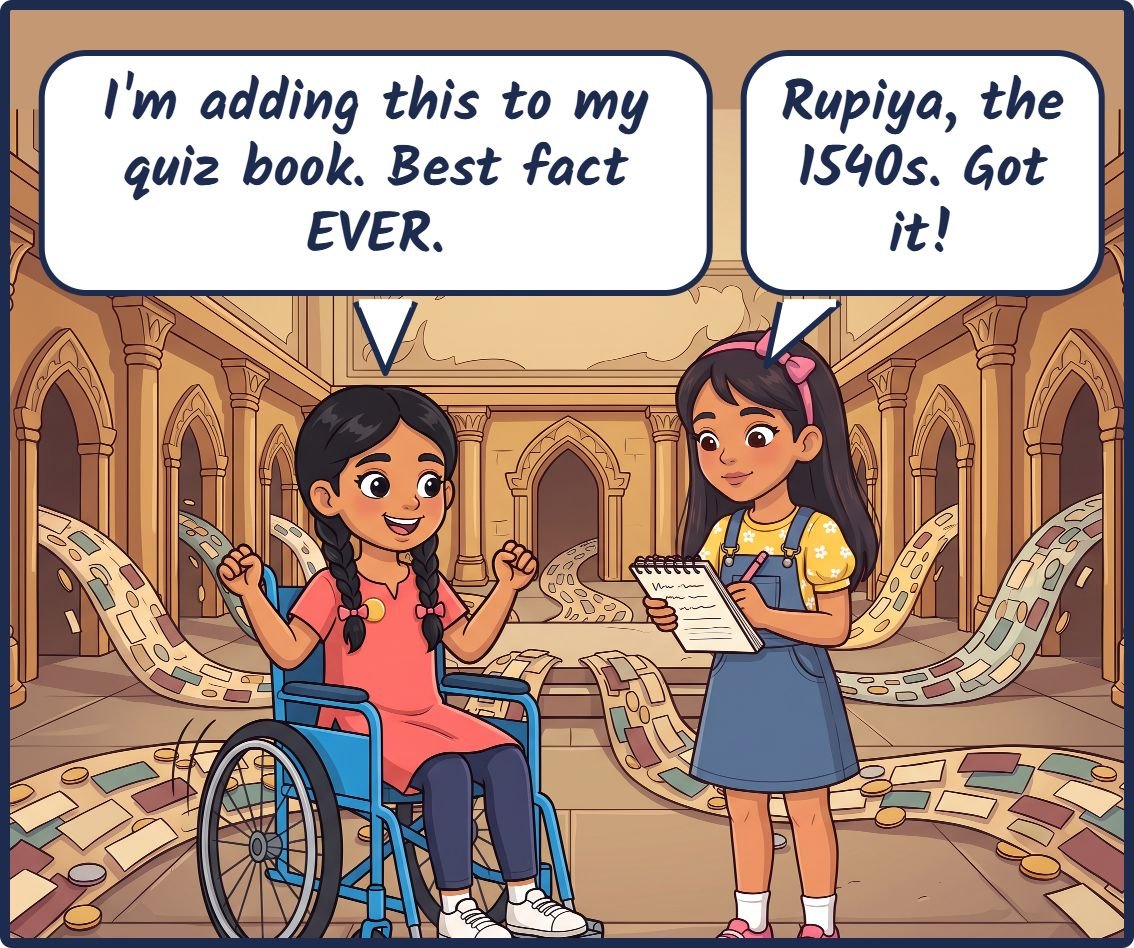
About 2,500 years ago, India's first coins appeared: small pieces of silver, punched with shapes. One silver piece, and I can buy rice any day! They're called punch-marked coins. Light, strong and hard to break. And no cow needed! Much later, in the 1540s, Sher Shah Suri made a silver coin called the rupiya. Rupiya… RUPEE! That's where the name comes from! I'm adding this to my quiz book. Best fact EVER. Rupiya, the 1540s. Got it! So your family name comes from a coin? Cool. A very old, very shiny family!
Paper promises

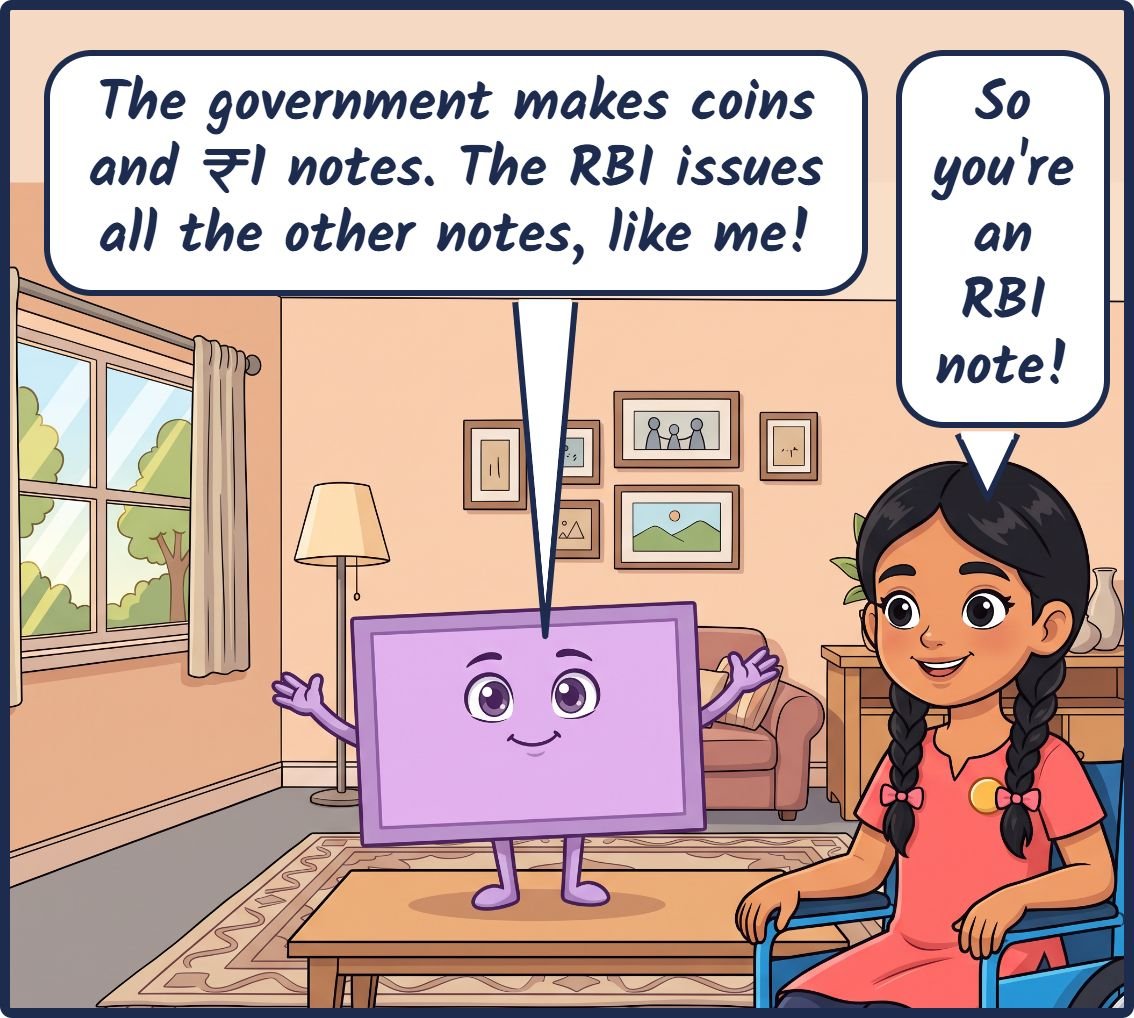
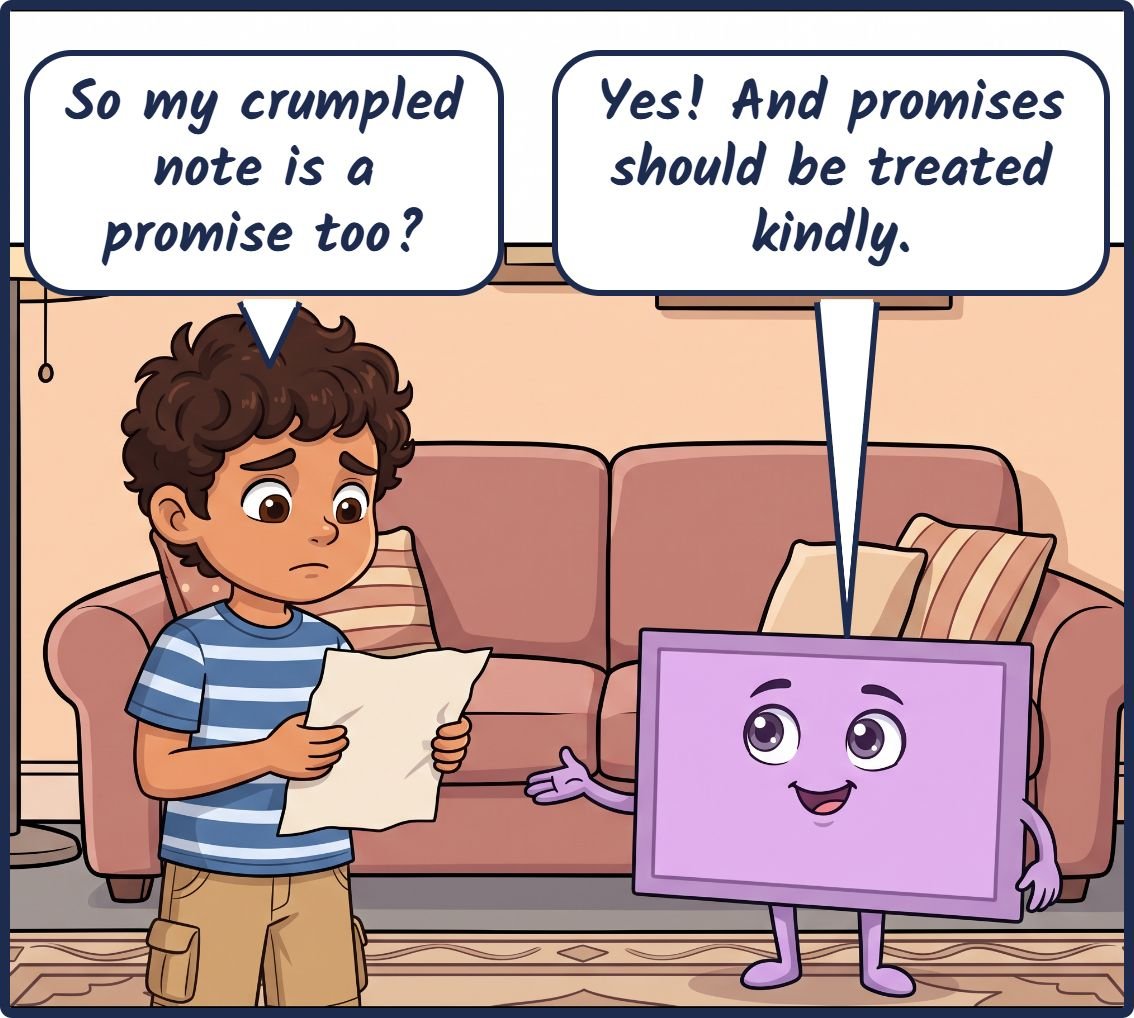
Buying a field needs SO many coins. My back hurts! You need something lighter, Ramu. So paper money came: light paper that everyone trusts is worth the coins. A promise on paper! Remember Book 1? Today the RBI issues our banknotes. And the RBI started in 1935! The government makes coins and ₹1 notes. The RBI issues all the other notes, like me! So you're an RBI note! So my crumpled note is a promise too? Yes! And promises should be treated kindly.
Where Sau was born

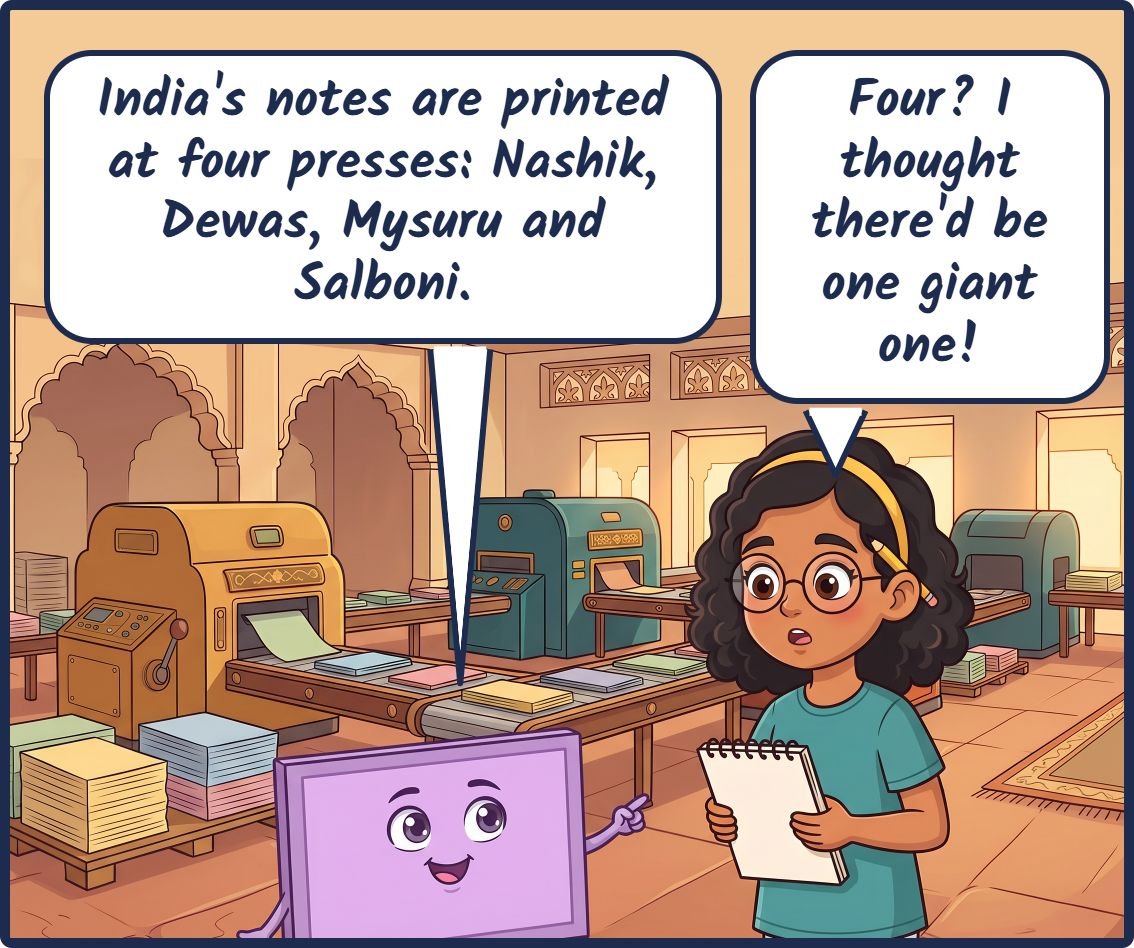
Imagination: a banknote press Welcome to where notes are born! India's notes are printed at four presses: Nashik, Dewas, Mysuru and Salboni. Four? I thought there'd be one giant one! I think I was born in Mysuru, near Bengaluru! A neighbour! Welcome home, Sau. Coins come from the government's four mints: Mumbai, Hyderabad, Kolkata and Noida. Presses for notes, mints for coins. Got it! Can I print a few for myself? No! Only these presses may make notes. Copying money is a serious crime.
Hidden secrets

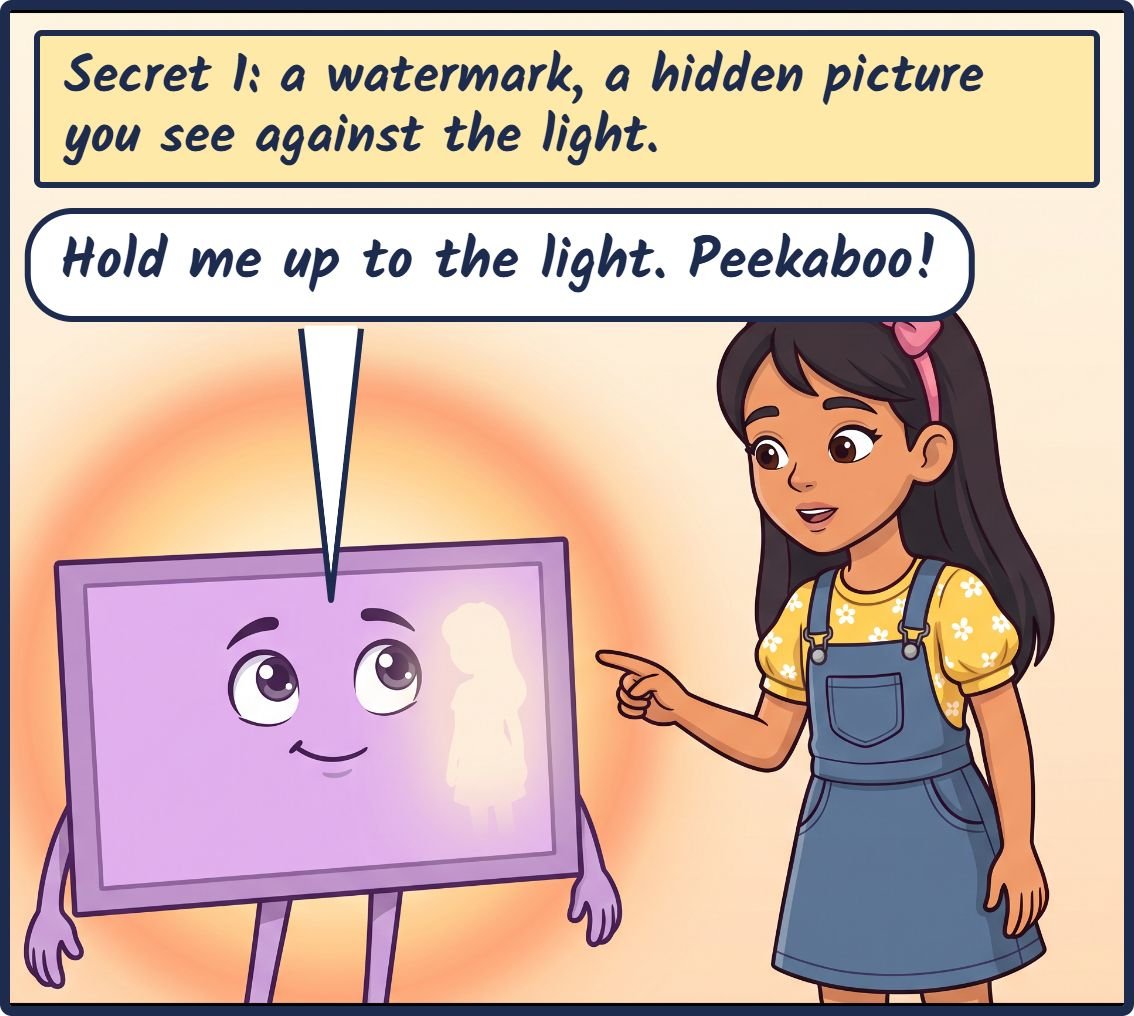
Real notes have hidden secrets, so fakes are easy to spot. Secrets? Like a spy? Secret 1: a watermark, a hidden picture you see against the light. Hold me up to the light. Peekaboo! Secret 2: a security thread, a thin shiny line inside the paper. A silver stripe! Like a superhero belt. Secret 3: colour-shifting ink, which changes colour when you tilt the note. Whoa, it changed colour! If a note ever looks strange, don't use it. Give it to a grown-up. And grown-ups take it to the bank. Got it!
Sau's travels

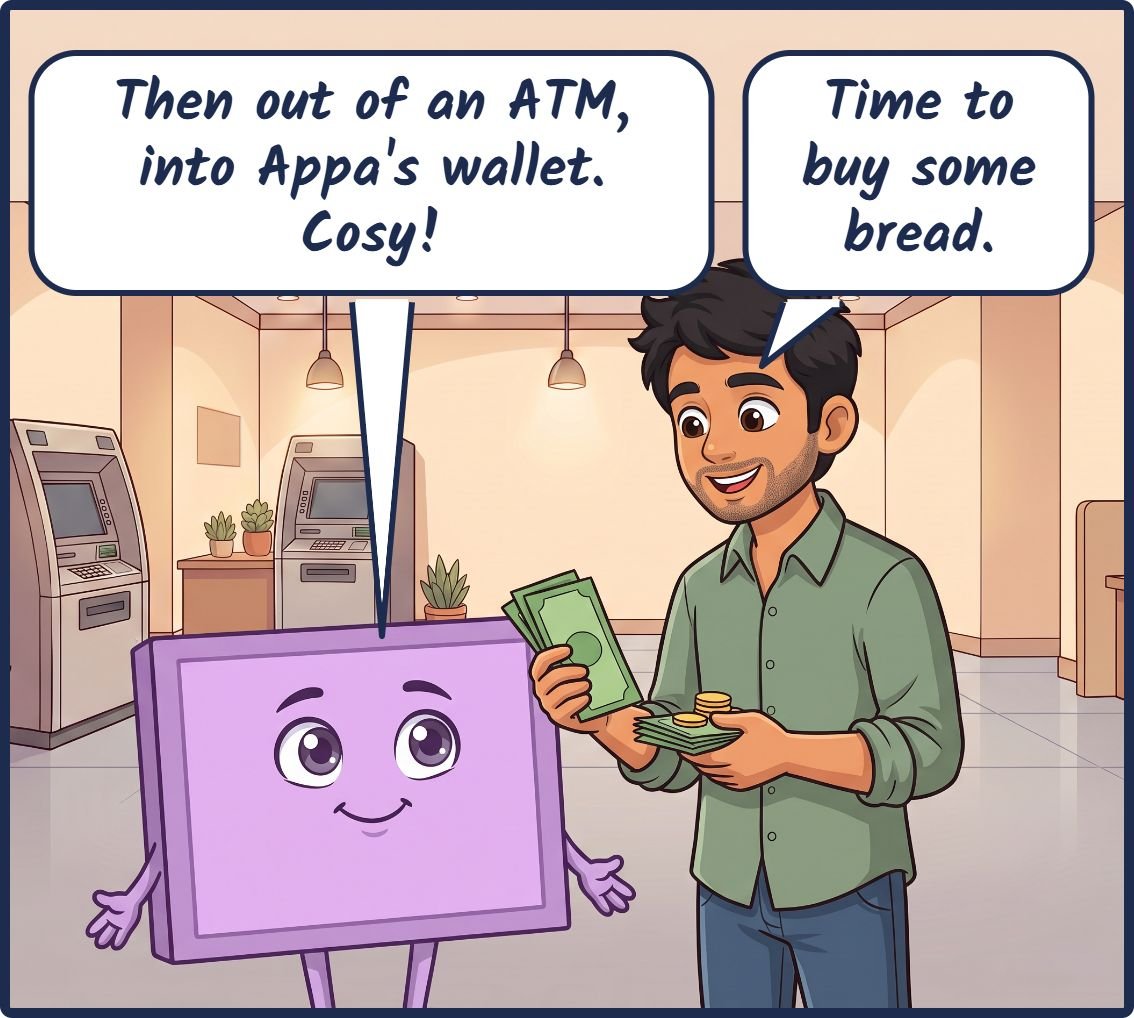
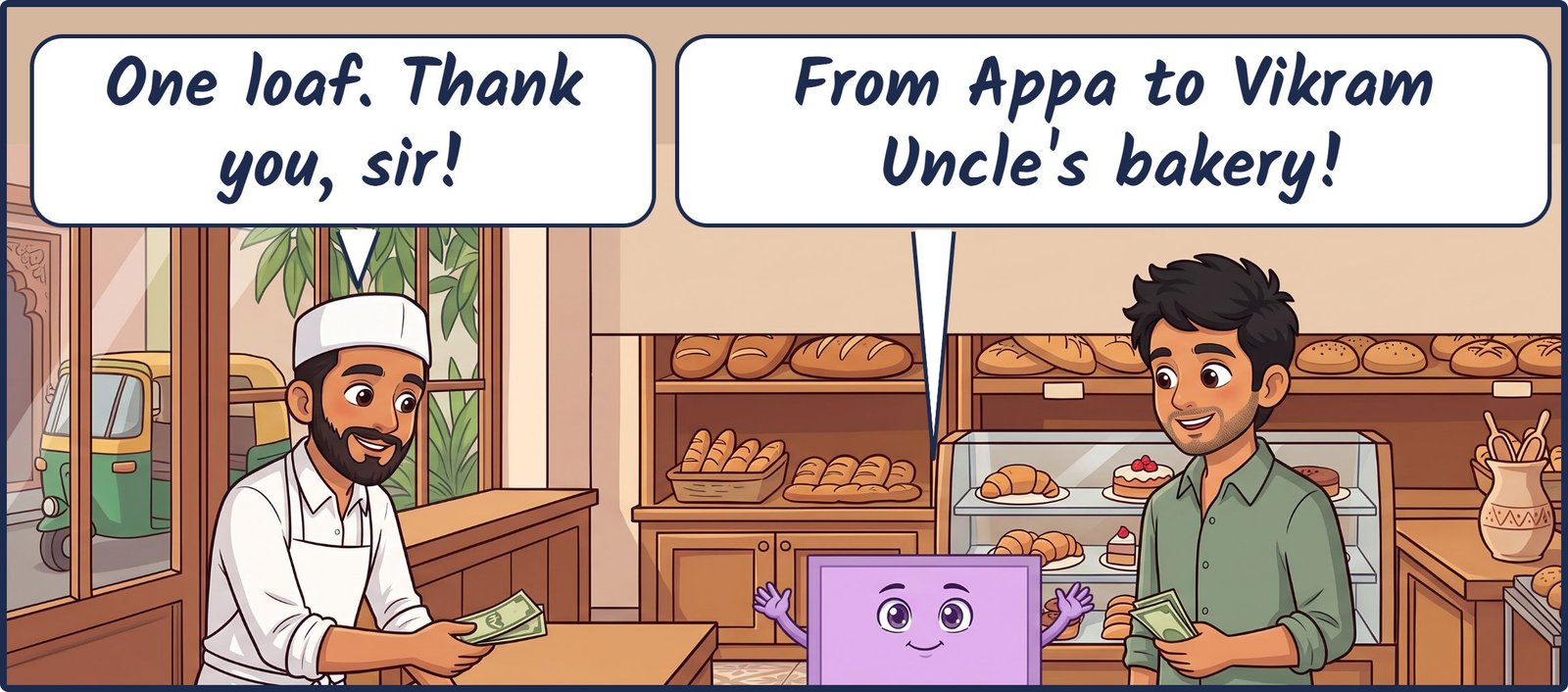
From the RBI, I travelled to a bank. Hello, Nandini Ma'am! Welcome! Off you go to the ATM. Then out of an ATM, into Appa's wallet. Cosy! Time to buy some bread. One loaf. Thank you, sir! From Appa to Vikram Uncle's bakery! Flour for the bakery? Here you go, Vikram! Then to Mahendra Bhai's shop! Once, I was a birthday gift in a card for Siddu! That was YOU? Best gift ever!
Treat me kindly
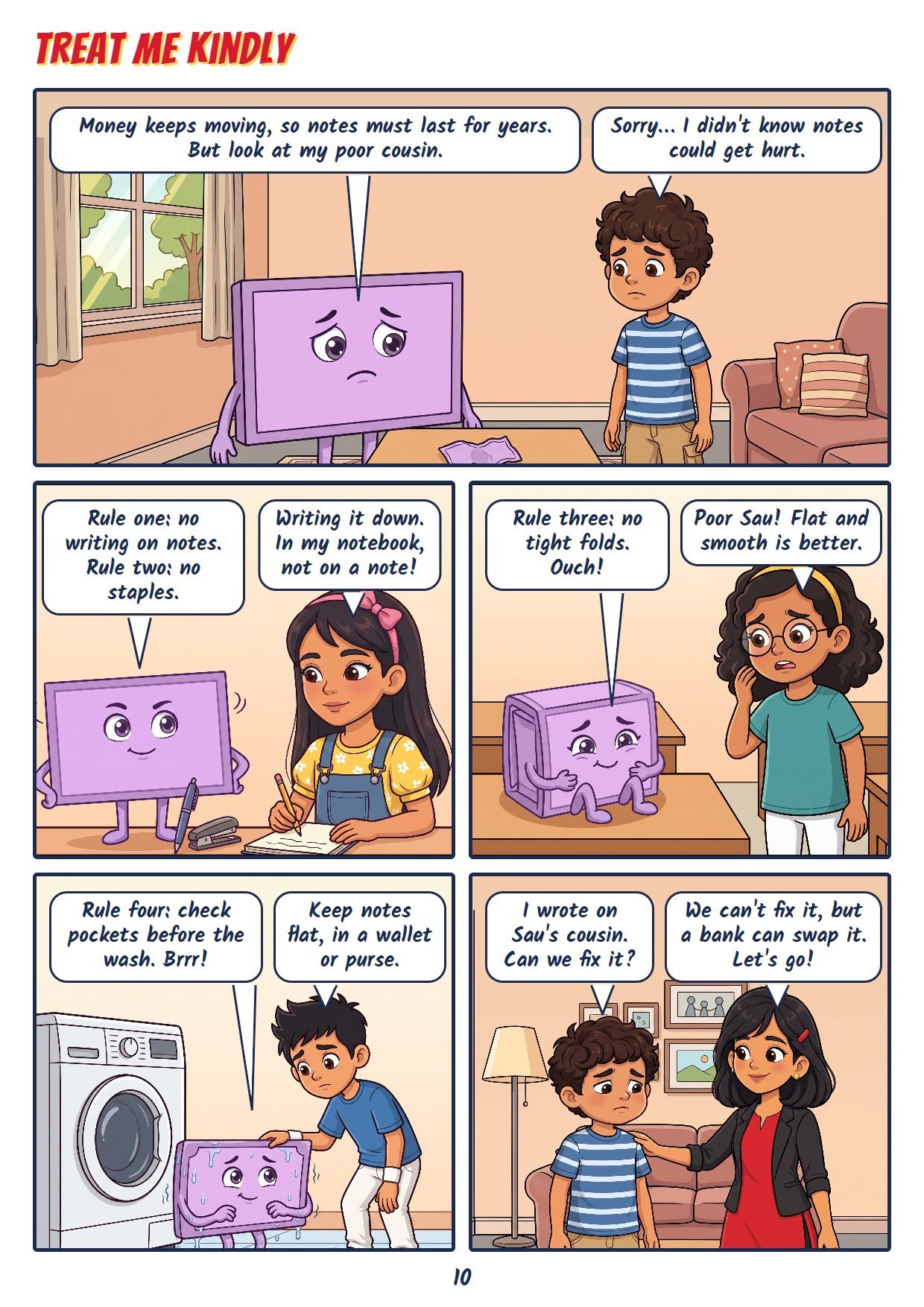
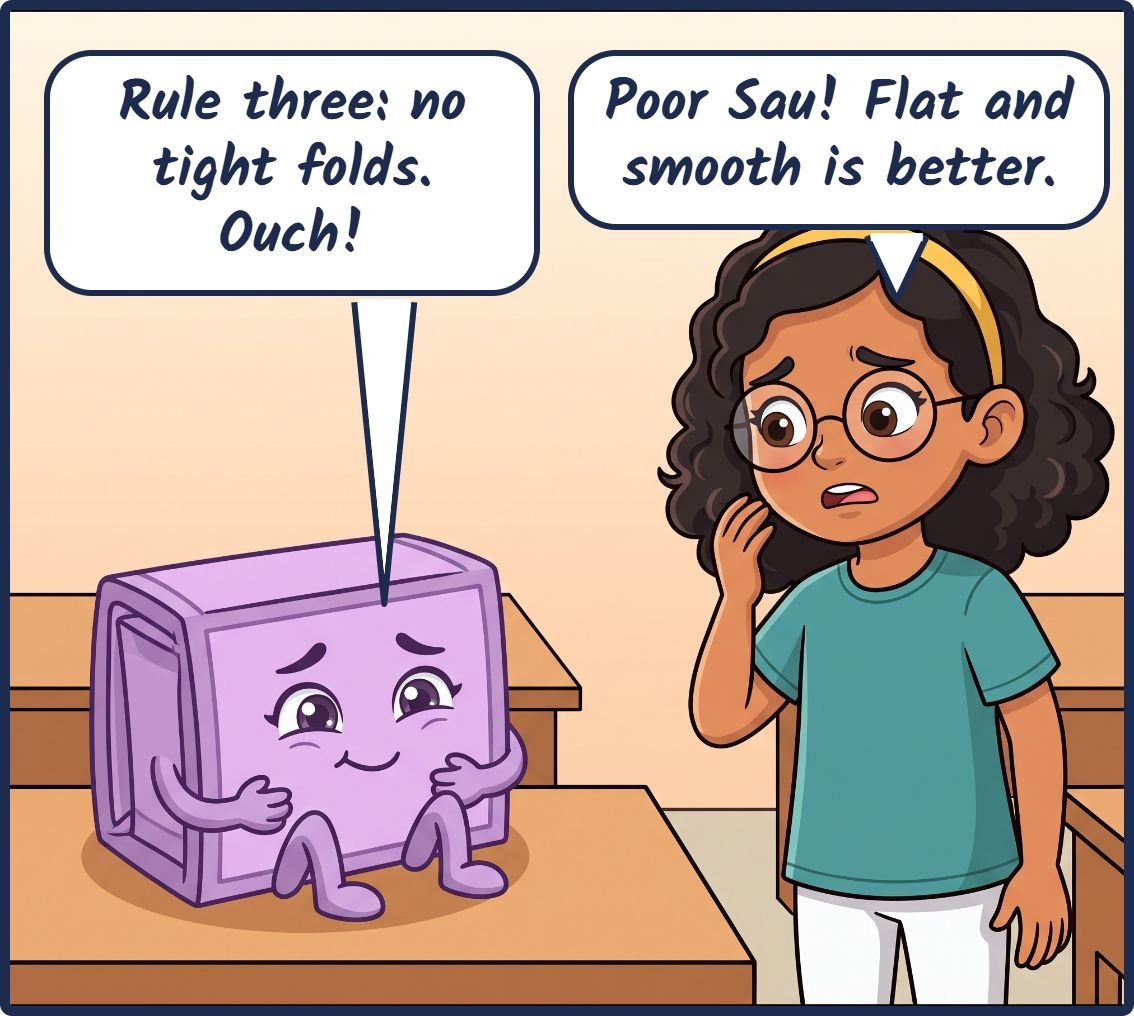
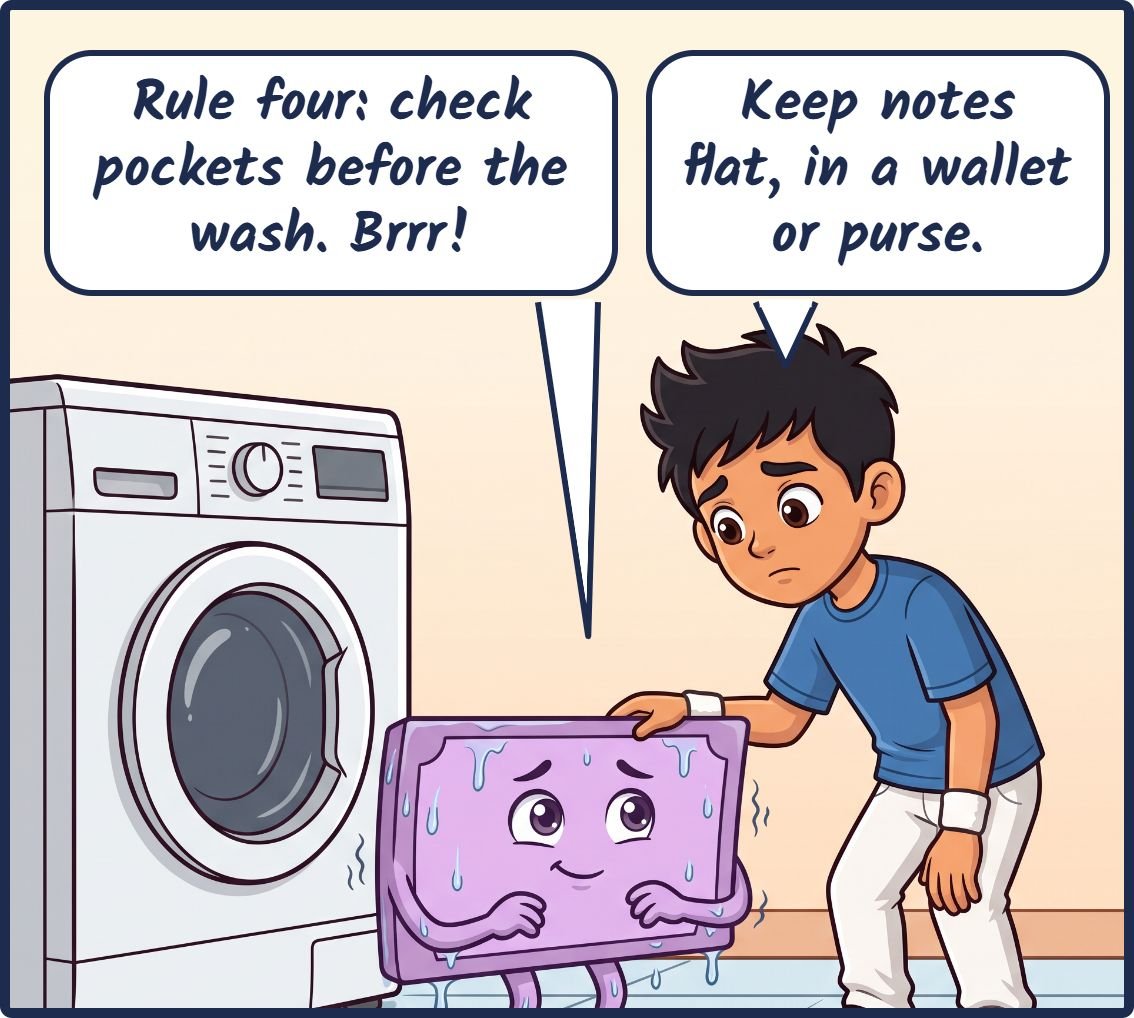
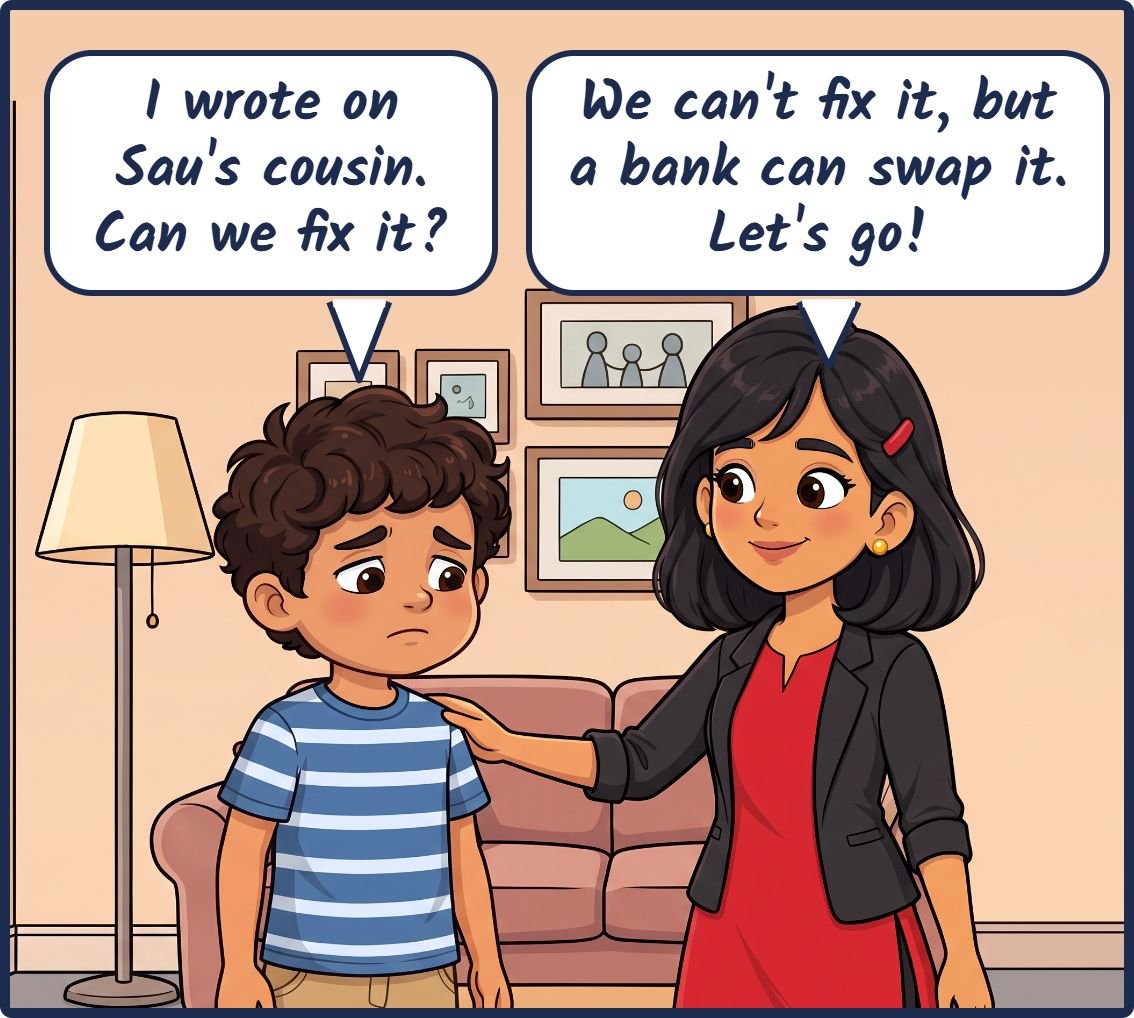
Money keeps moving, so notes must last for years. But look at my poor cousin. Sorry… I didn't know notes could get hurt. Rule one: no writing on notes. Rule two: no staples. Writing it down. In my notebook, not on a note! Rule three: no tight folds. Ouch! Poor Sau! Flat and smooth is better. Rule four: check pockets before the wash. Brrr! Keep notes flat, in a wallet or purse. I wrote on Sau's cousin. Can we fix it? We can't fix it, but a bank can swap it. Let's go!
The note hospital

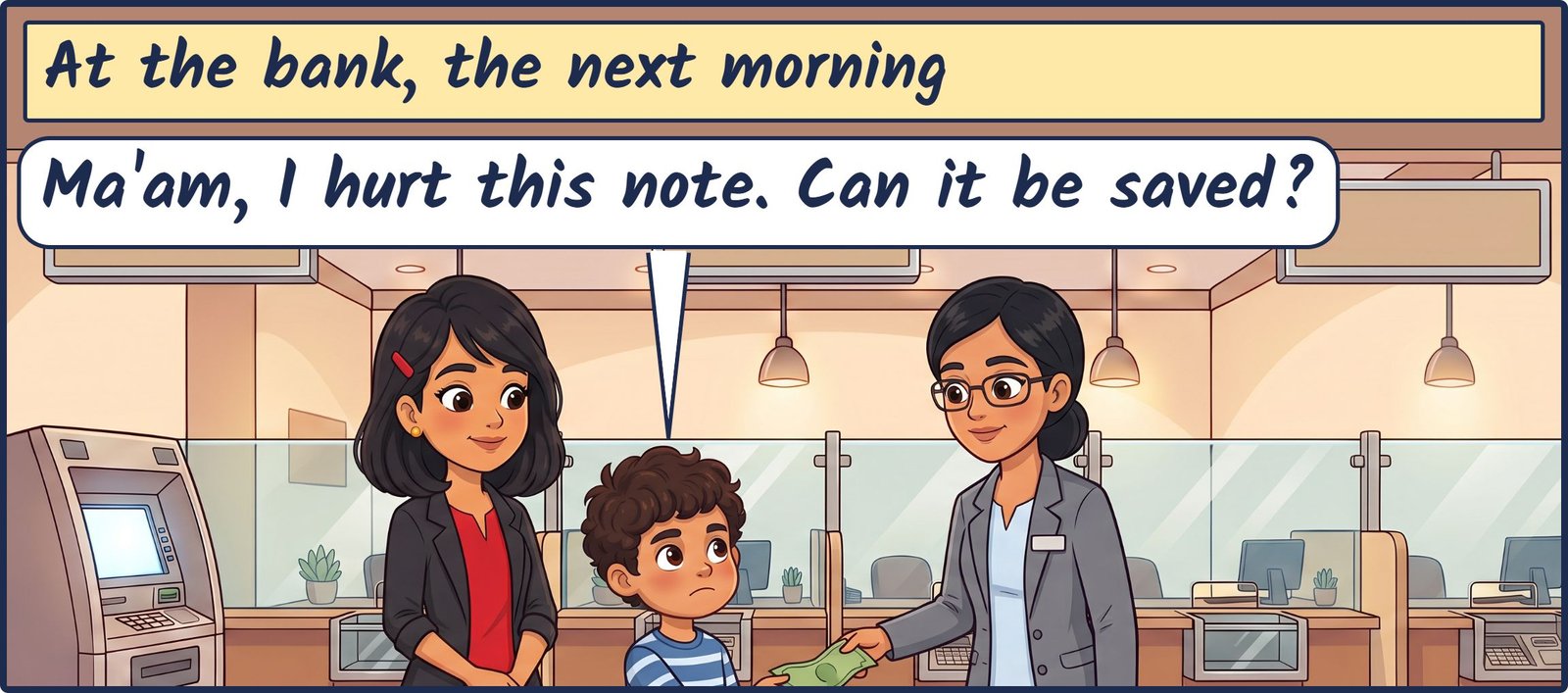
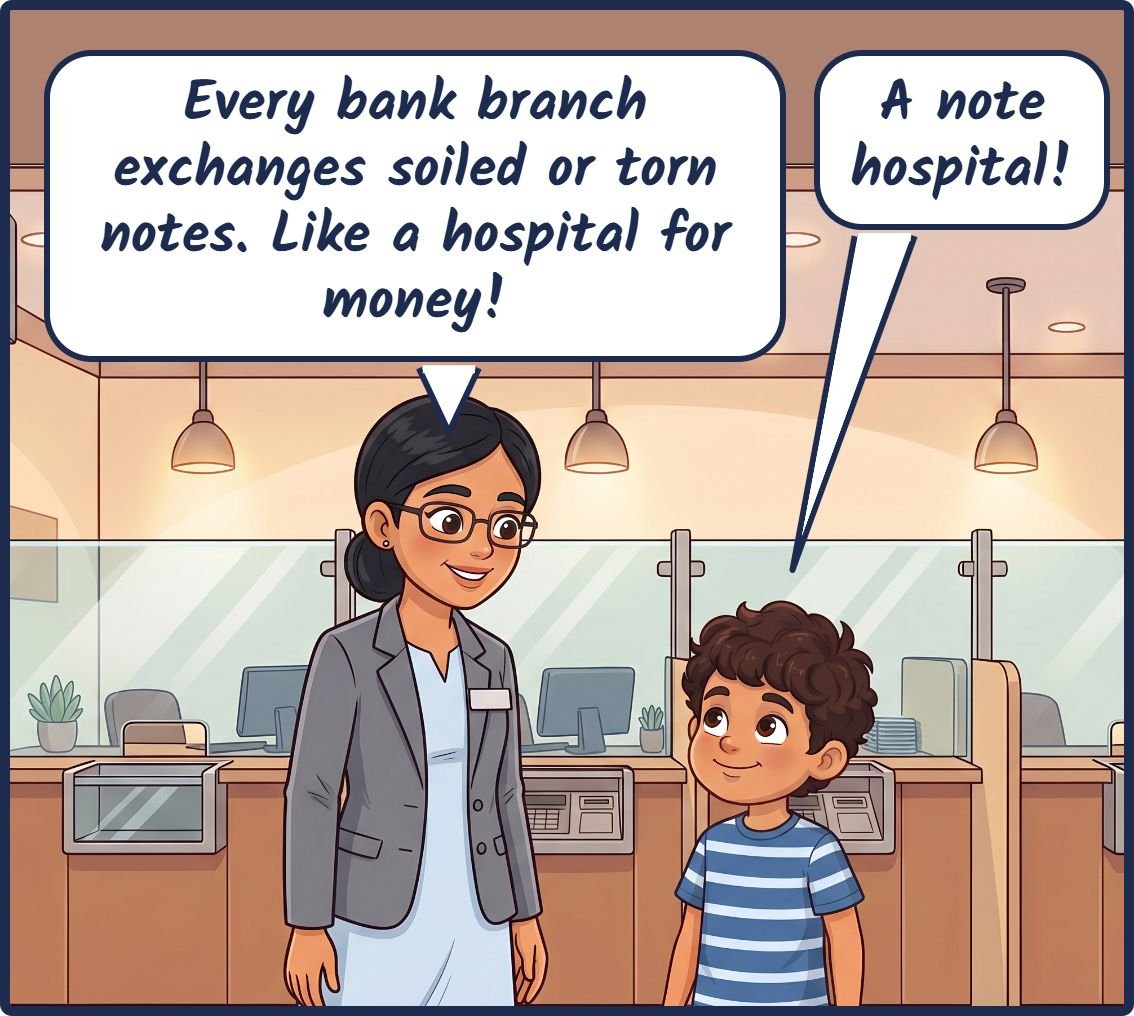
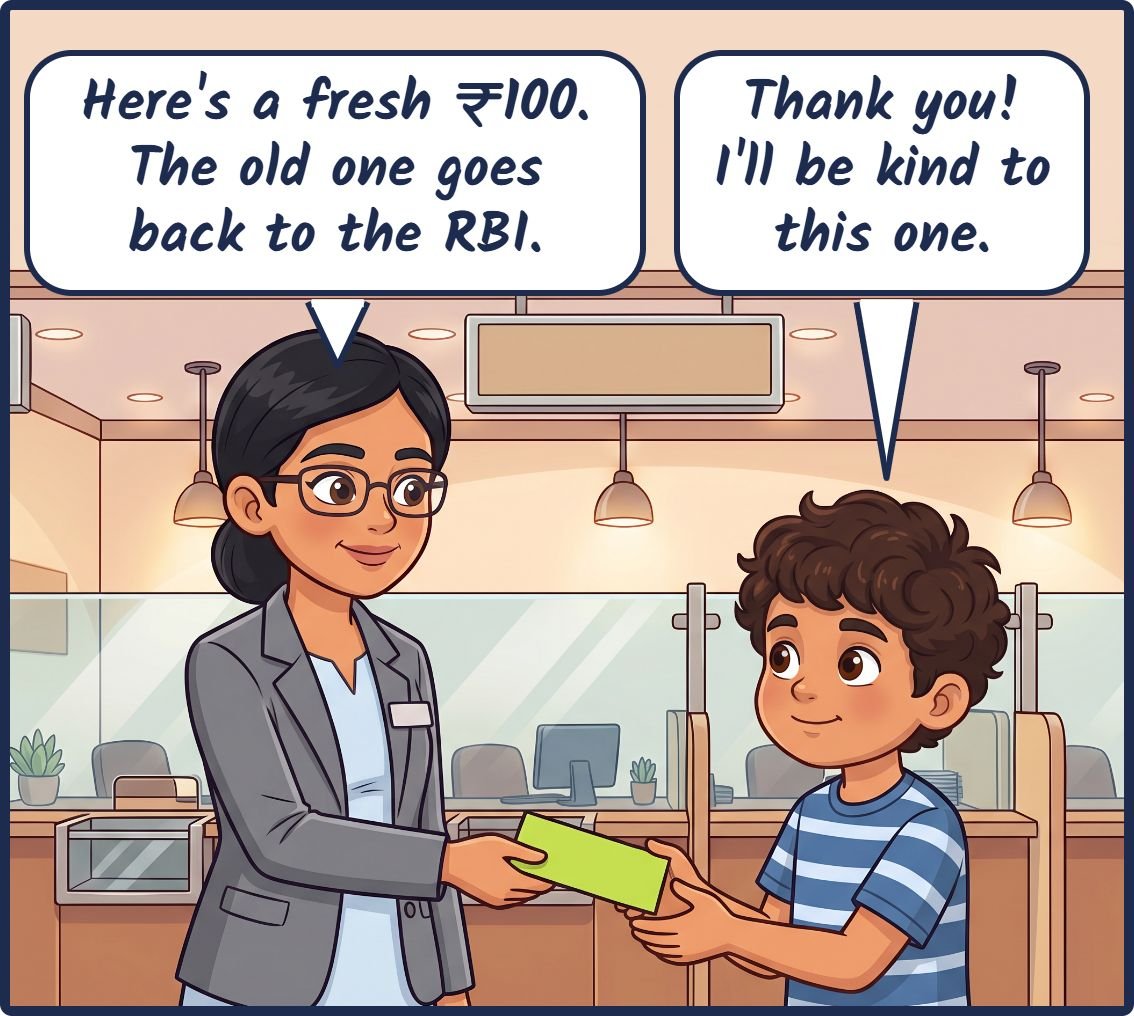
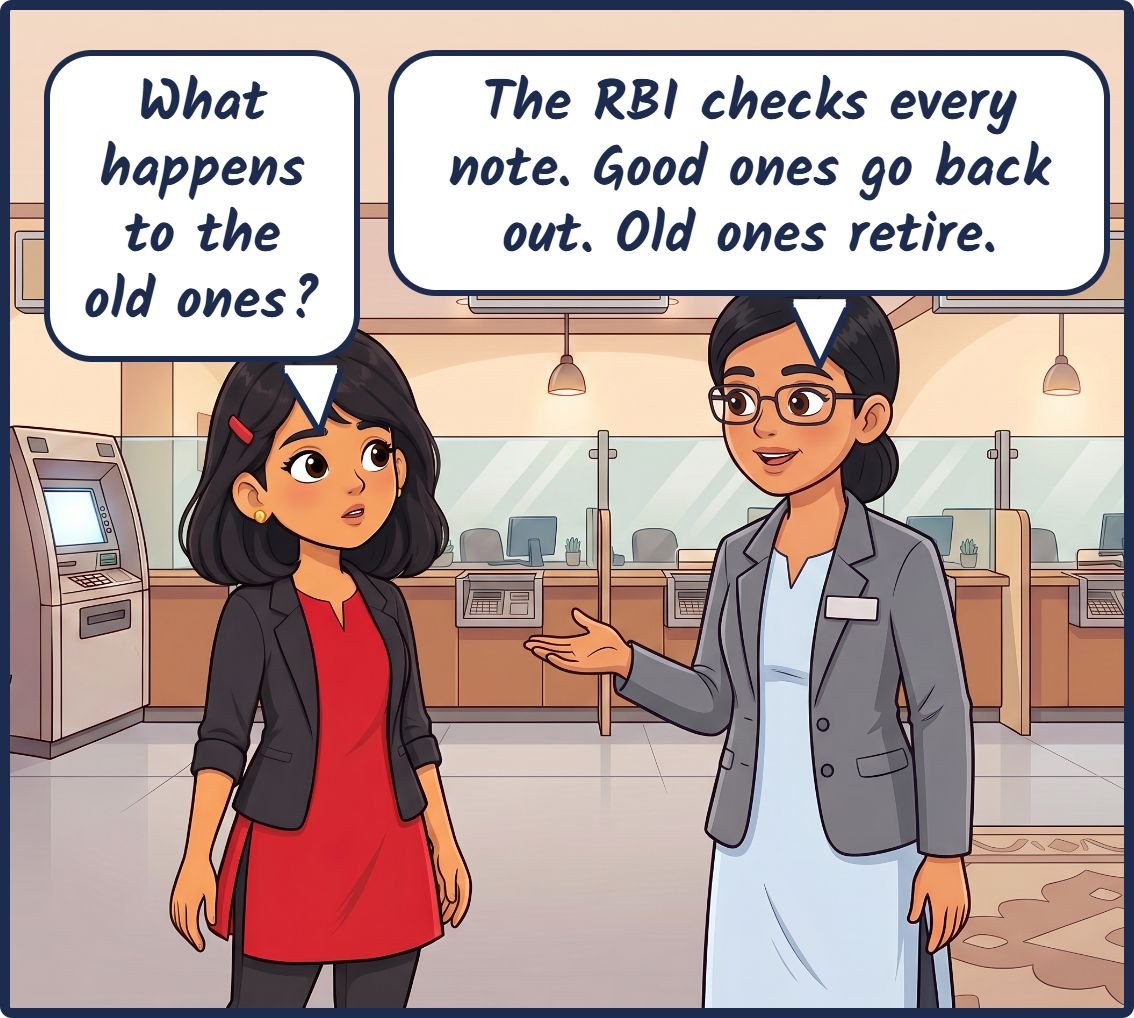
At the bank, the next morning Ma'am, I hurt this note. Can it be saved? Every bank branch exchanges soiled or torn notes. Like a hospital for money! A note hospital! Here's a fresh ₹100. The old one goes back to the RBI. Thank you! I'll be kind to this one. What happens to the old ones? The RBI checks every note. Good ones go back out. Old ones retire. My cousin is being looked after. Phew! And this one goes in a wallet. Flat!
When notes grow old

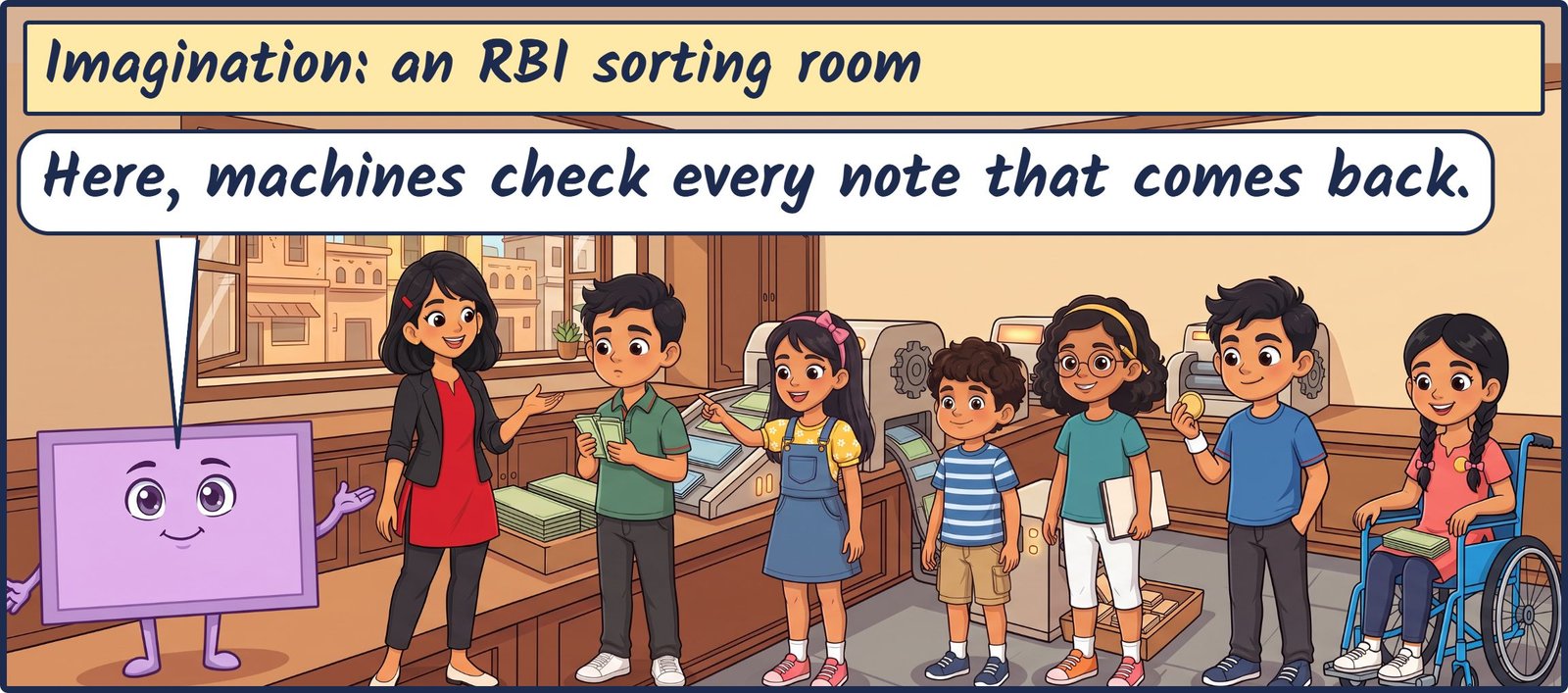
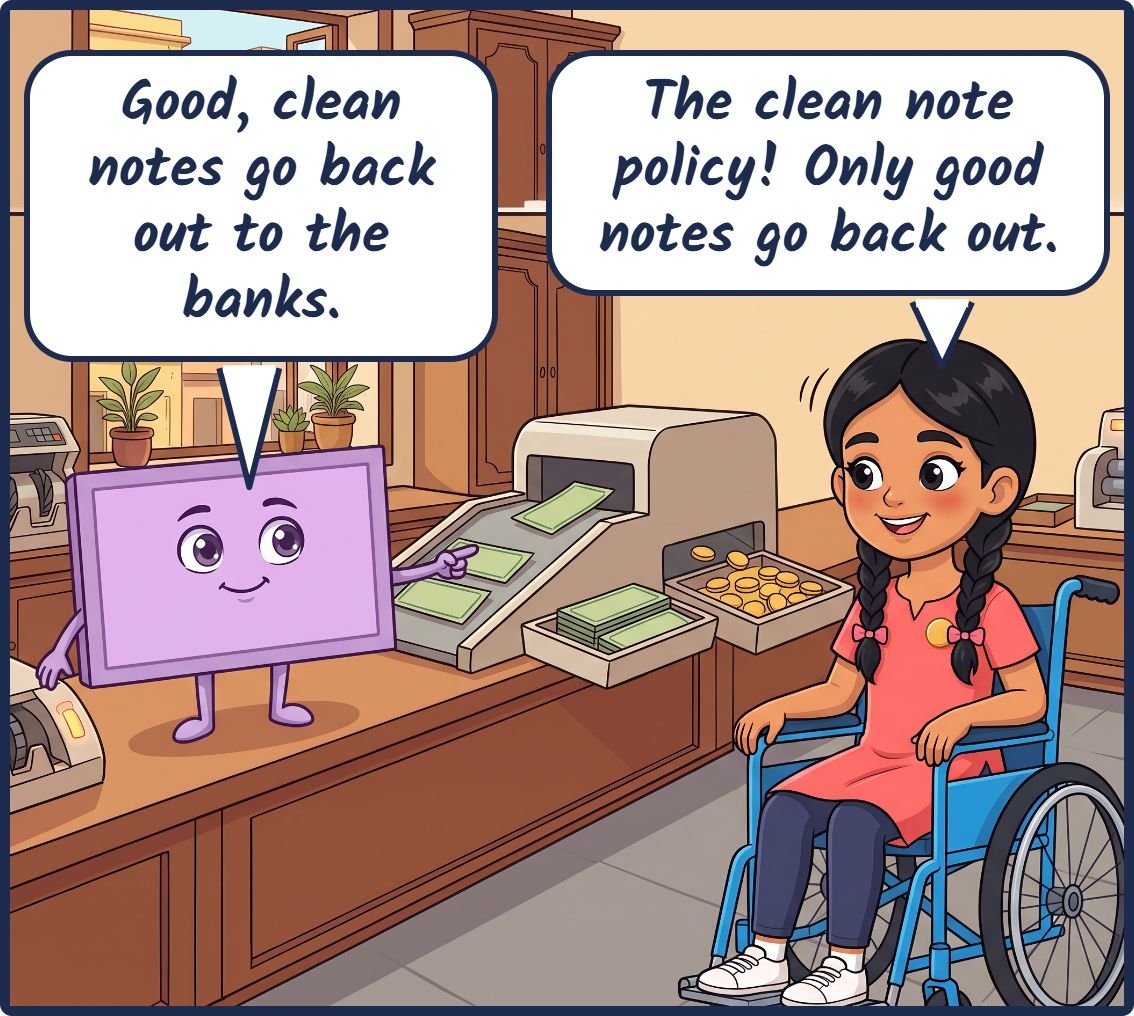
Imagination: an RBI sorting room Here, machines check every note that comes back. Good, clean notes go back out to the banks. The clean note policy! Only good notes go back out. Old, soiled notes are shredded and pressed into little bricks. Money bricks! Could you build a house? One day I'll retire too. But not yet! Not if I keep you flat and clean! So clean notes last longer, and fewer new ones need printing. Exactly. Treating notes kindly saves everyone money.
Same money, new clothes

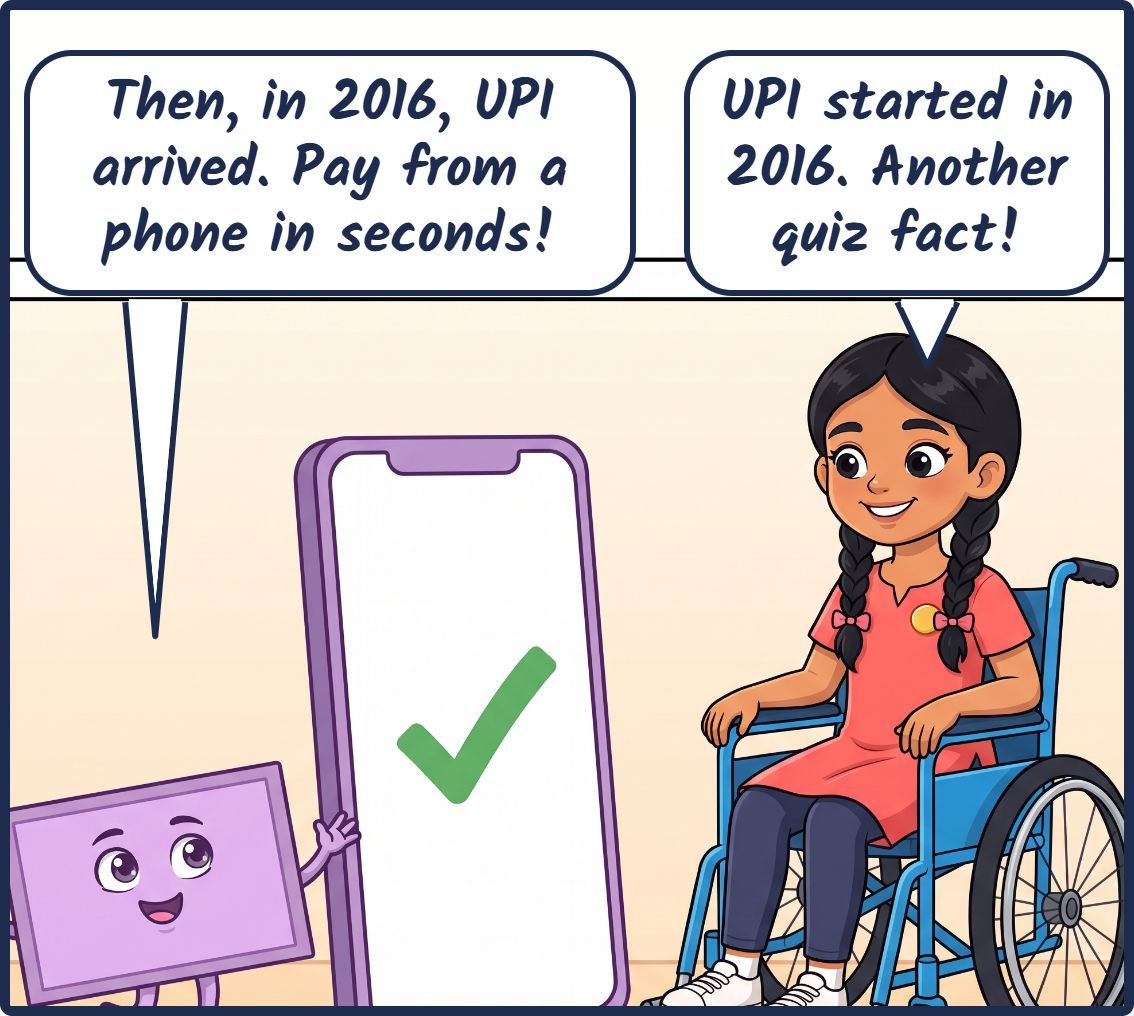
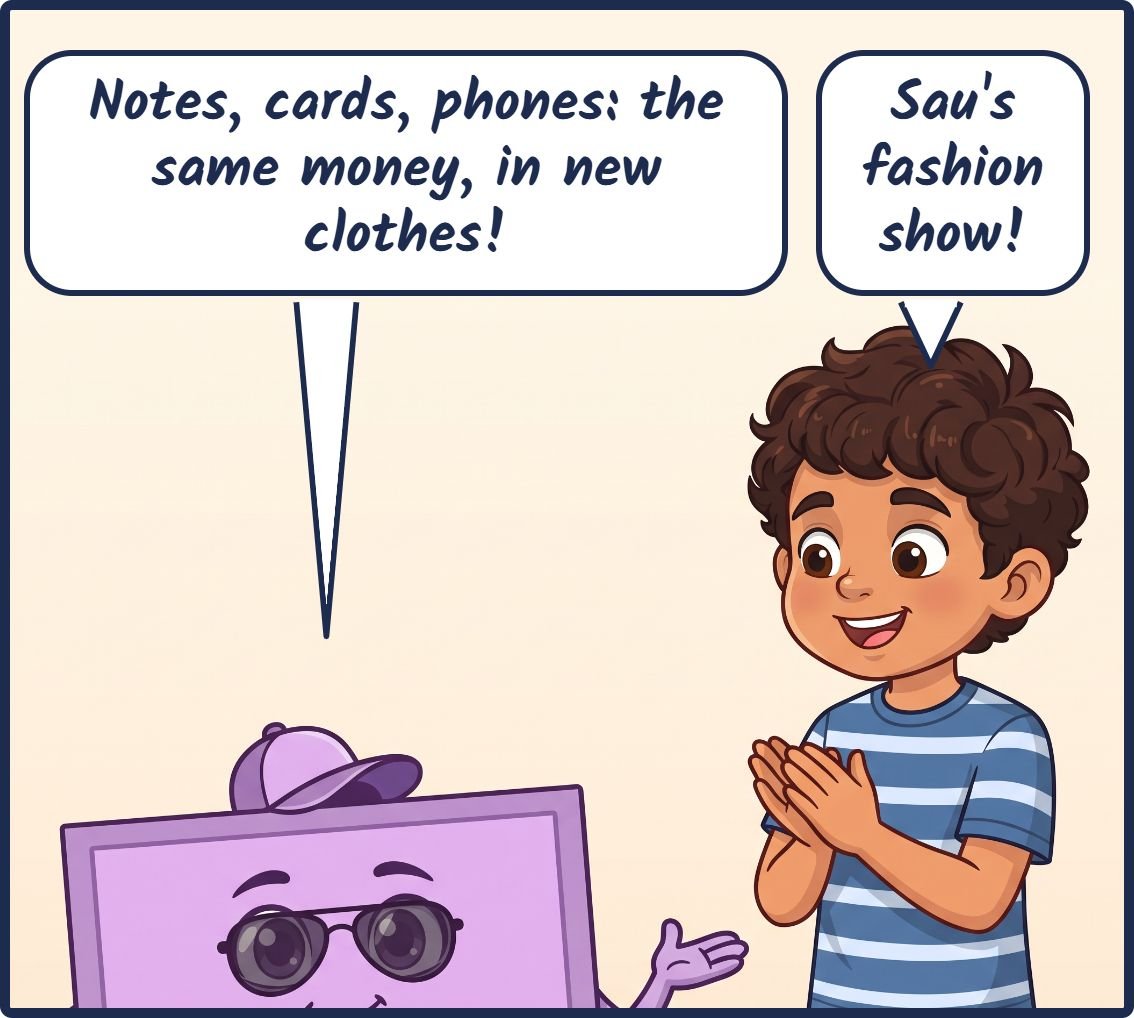
Today, money doesn't only come as notes and coins. Appa pays with his phone all the time! First came cards: you pay with a card, and money moves from your bank. Plastic money! Then, in 2016, UPI arrived. Pay from a phone in seconds! UPI started in 2016. Another quiz fact! Notes, cards, phones: the same money, in new clothes! Sau's fashion show! Cards are a whole story of their own. We'll learn about them soon. I can't wait!
Ajja's coin box
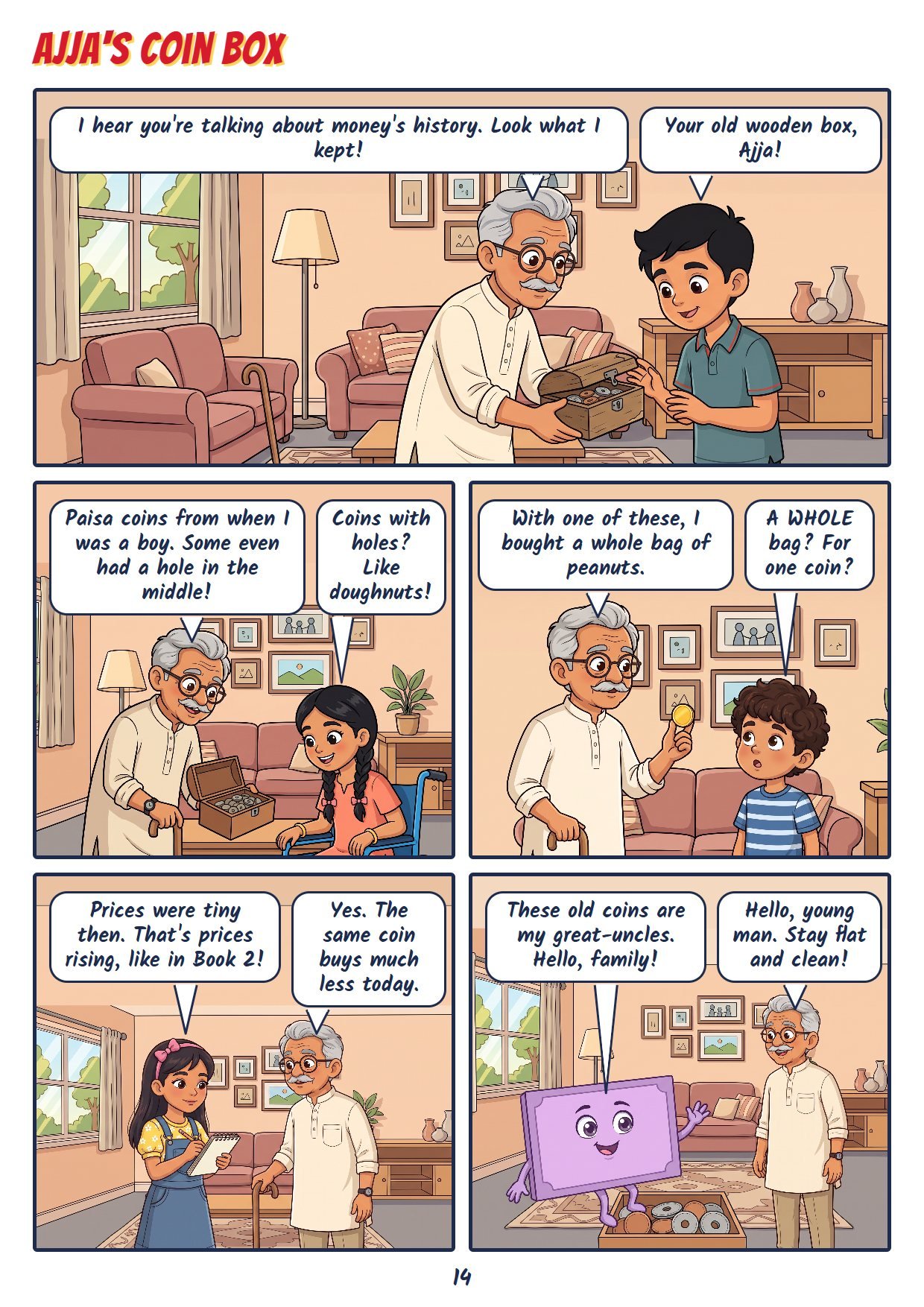
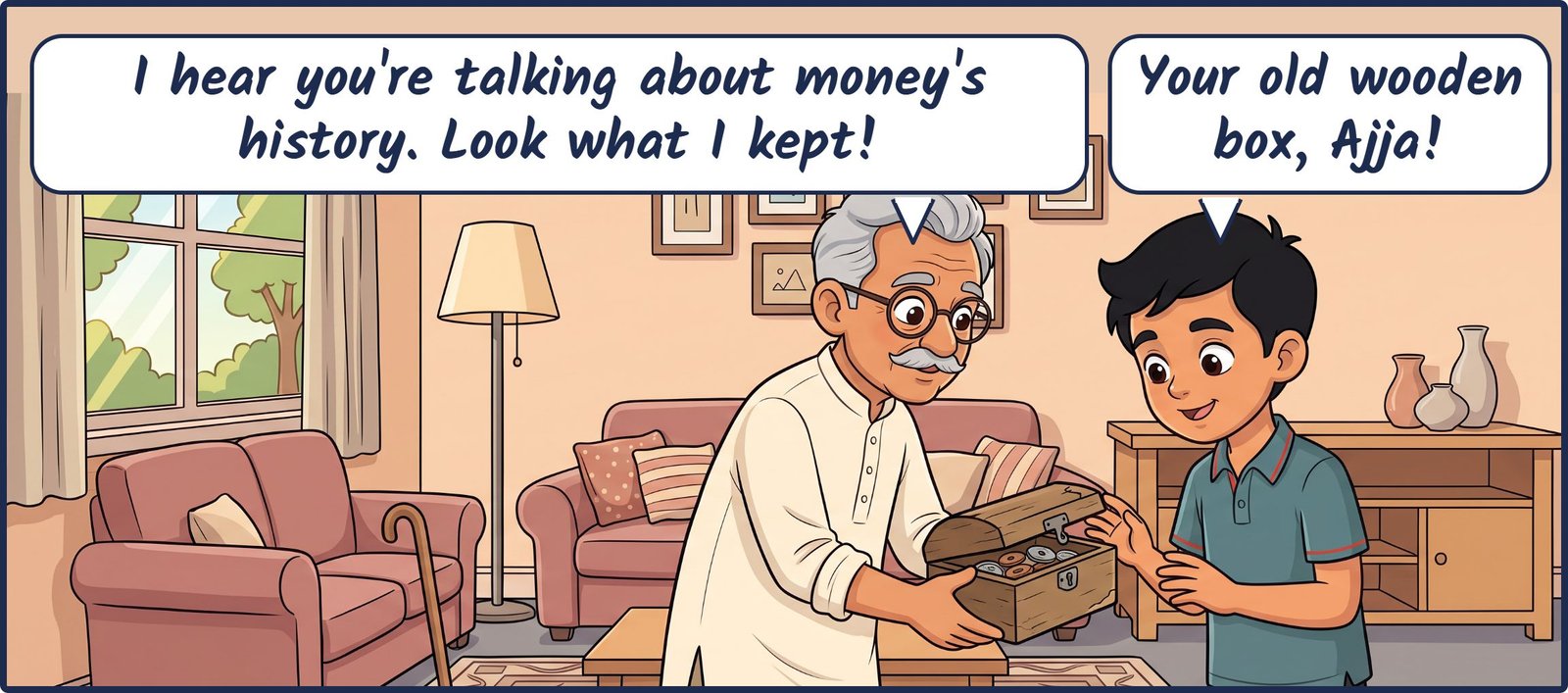
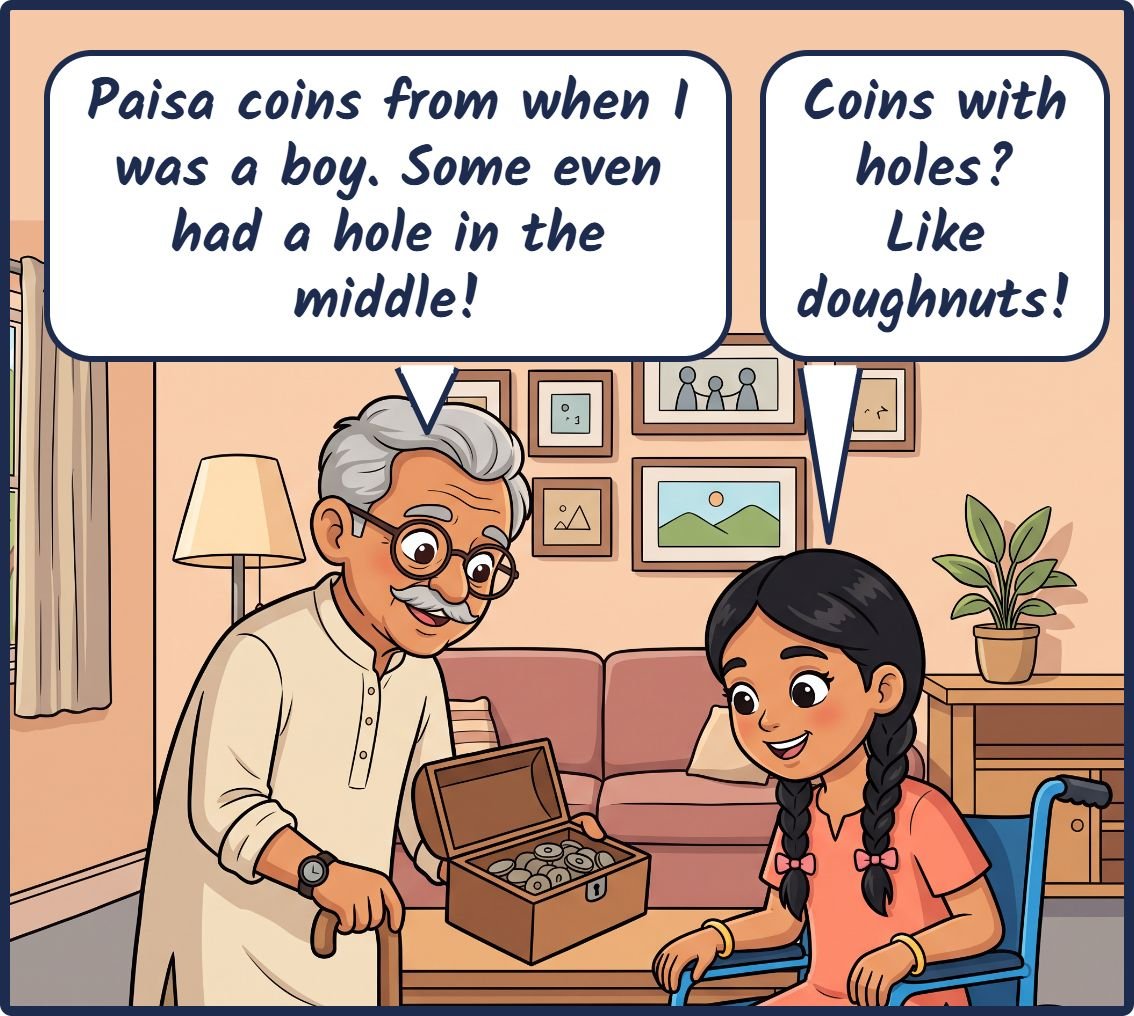
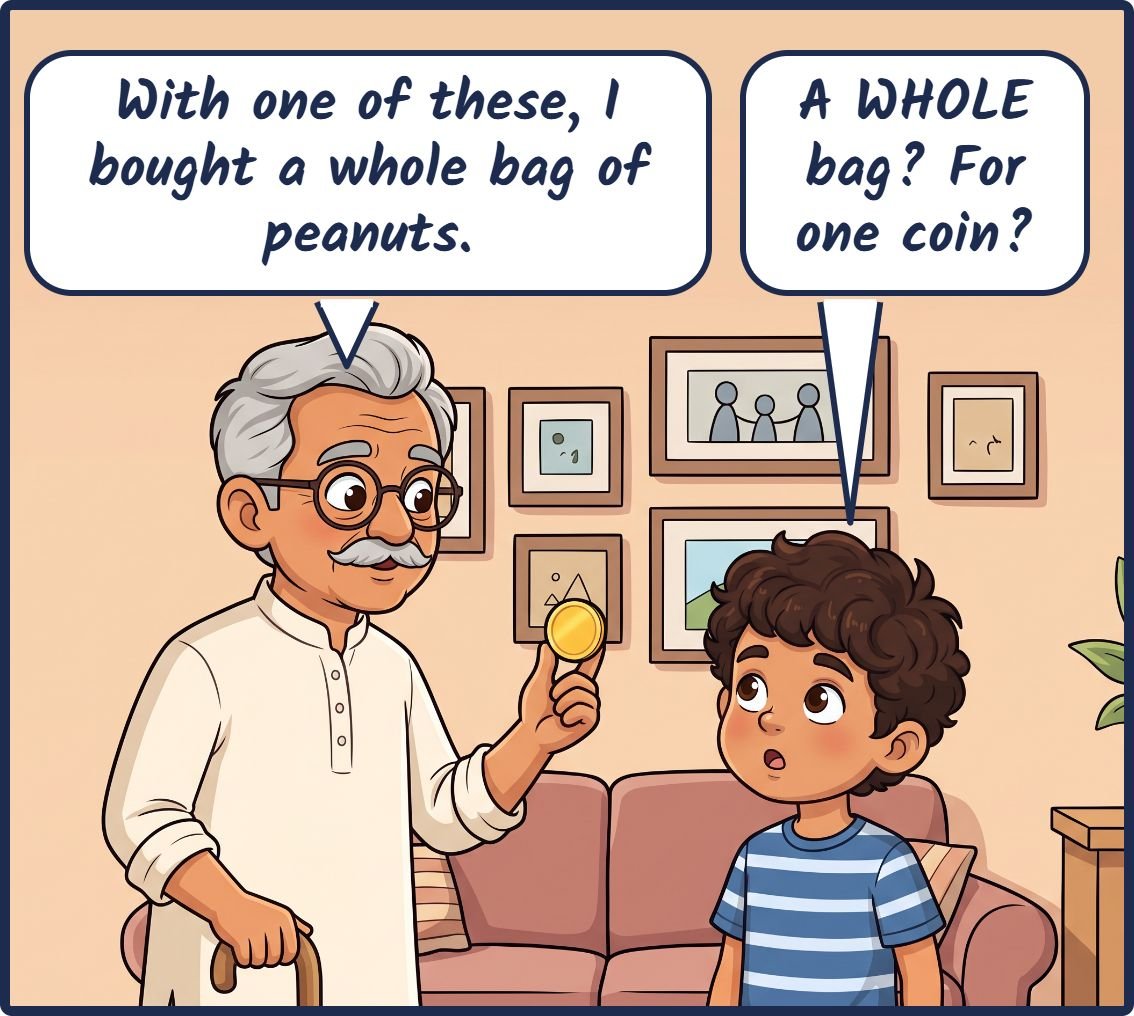
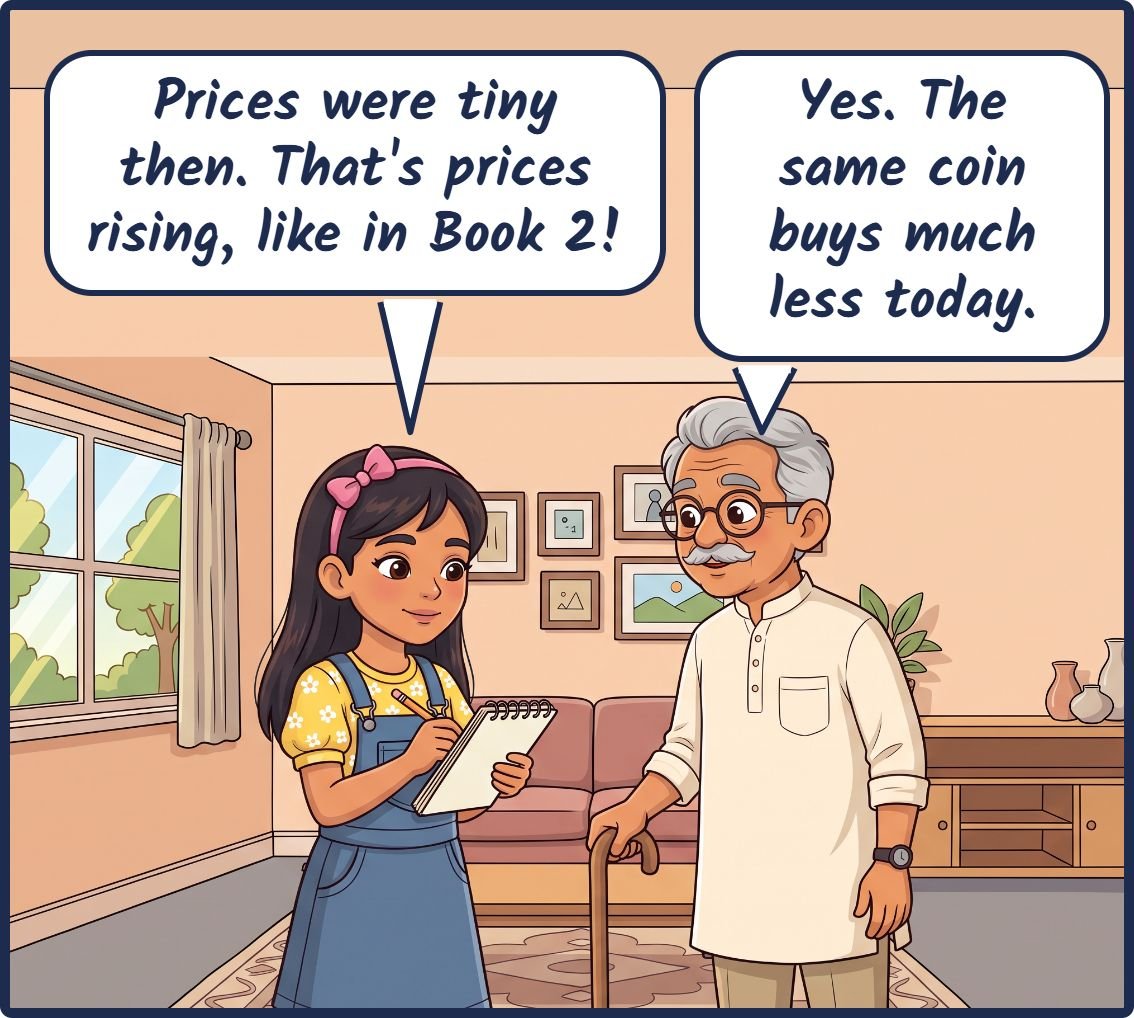
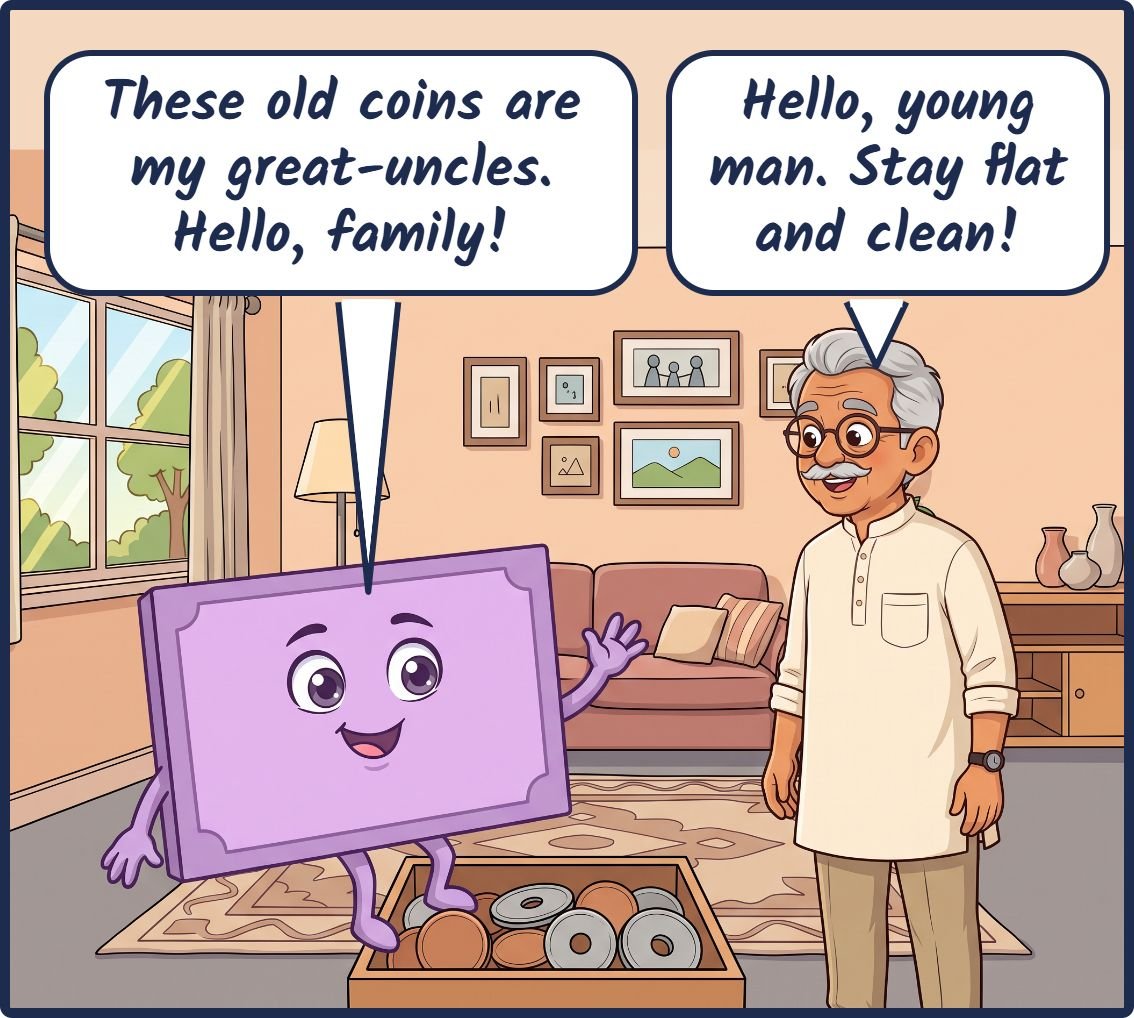
I hear you're talking about money's history. Look what I kept! Your old wooden box, Ajja! Paisa coins from when I was a boy. Some even had a hole in the middle! Coins with holes? Like doughnuts! With one of these, I bought a whole bag of peanuts. A WHOLE bag? For one coin? Prices were tiny then. That's prices rising, like in Book 2! Yes. The same coin buys much less today. These old coins are my great-uncles. Hello, family! Hello, young man. Stay flat and clean!
Sau's lesson
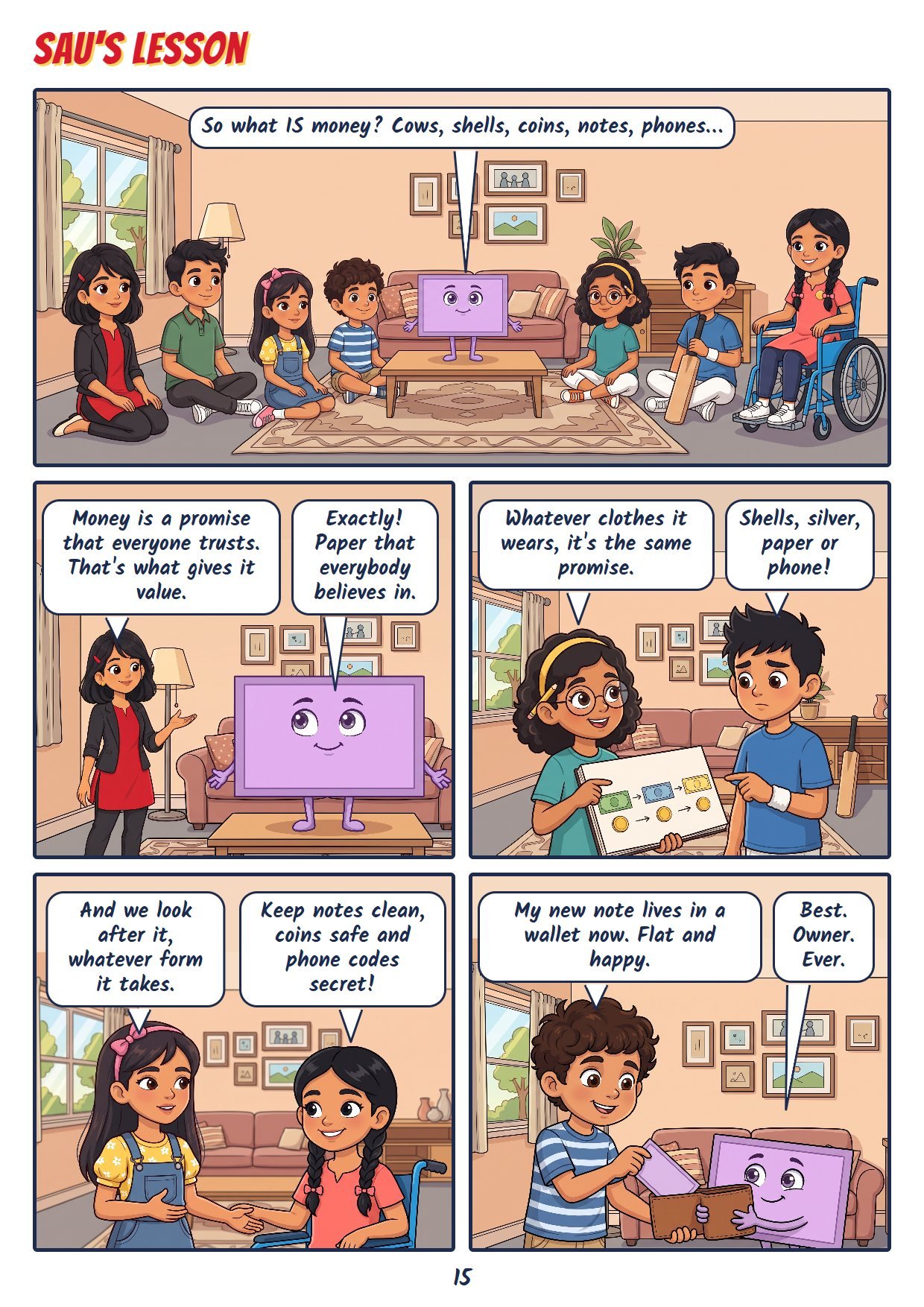
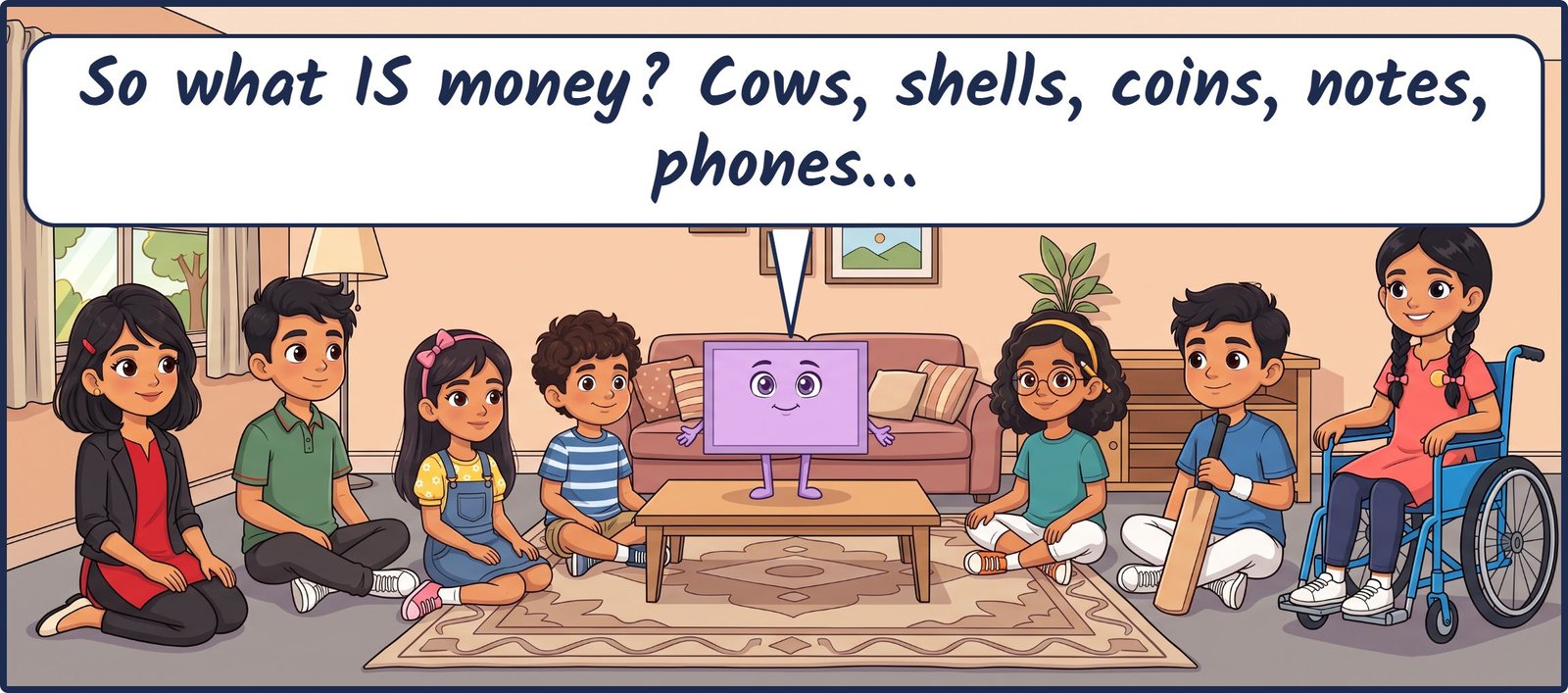
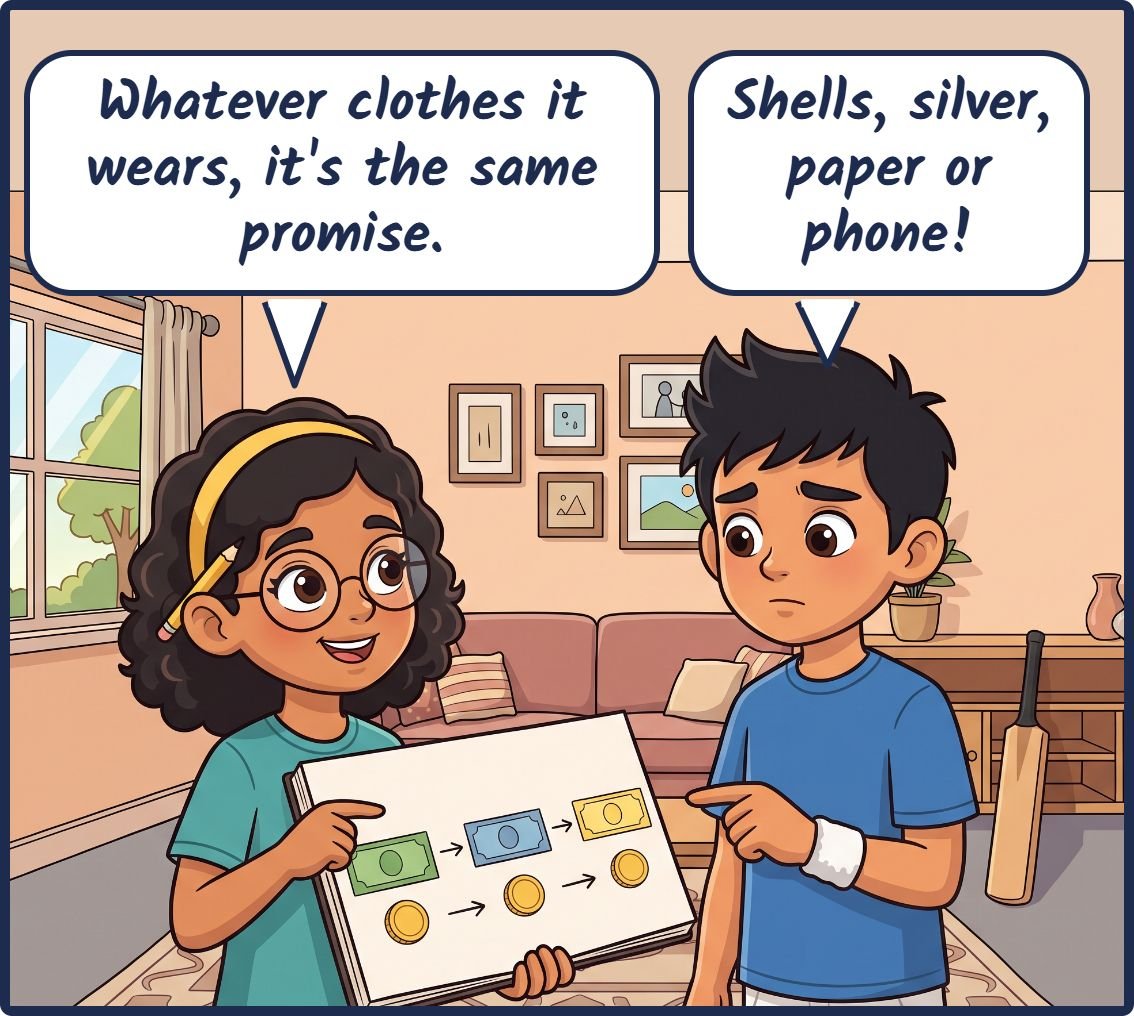
So what IS money? Cows, shells, coins, notes, phones… Money is a promise that everyone trusts. That's what gives it value. Exactly! Paper that everybody believes in. Whatever clothes it wears, it's the same promise. Shells, silver, paper or phone! And we look after it, whatever form it takes. Keep notes clean, coins safe and phone codes secret! My new note lives in a wallet now. Flat and happy. Best. Owner. Ever.
Journey's end

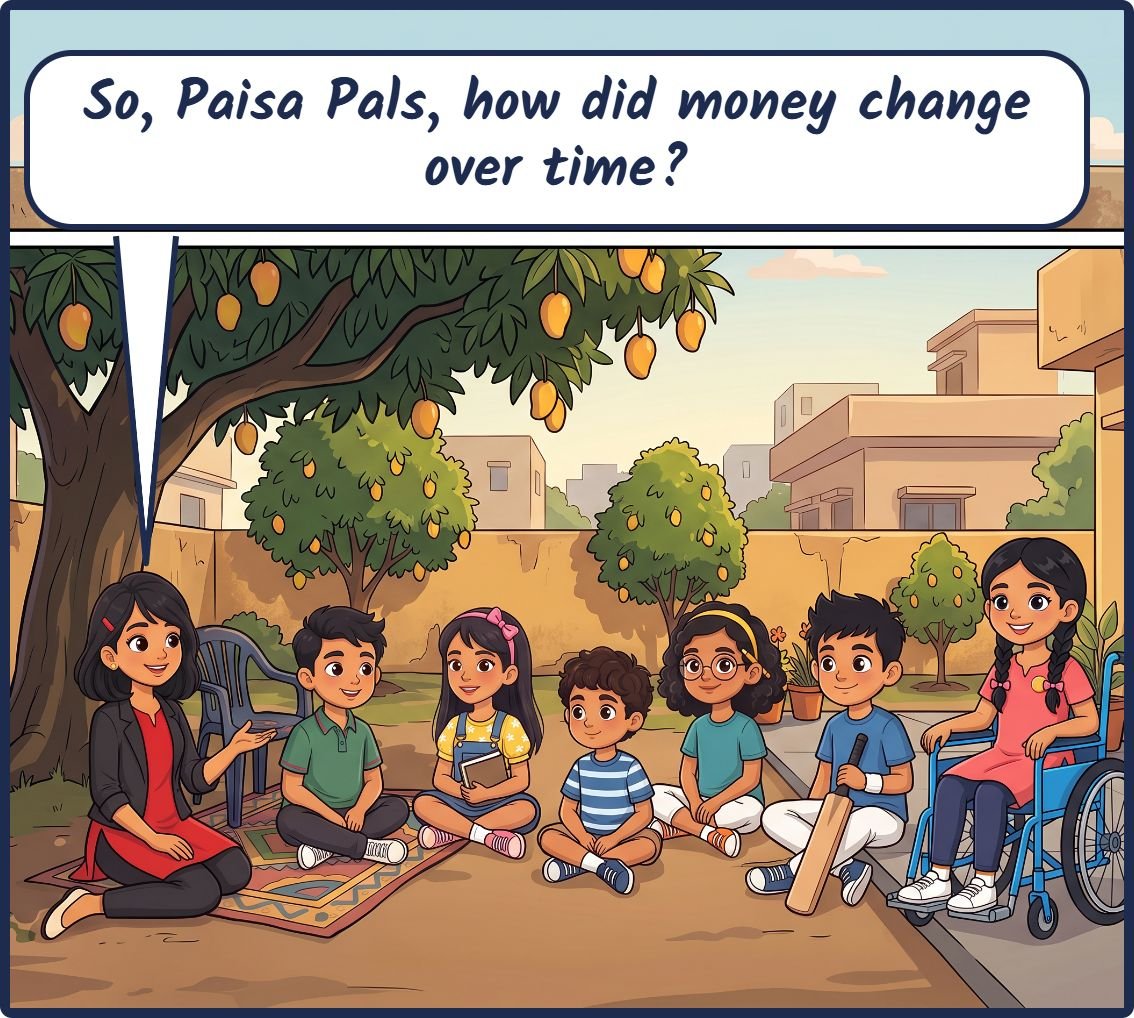
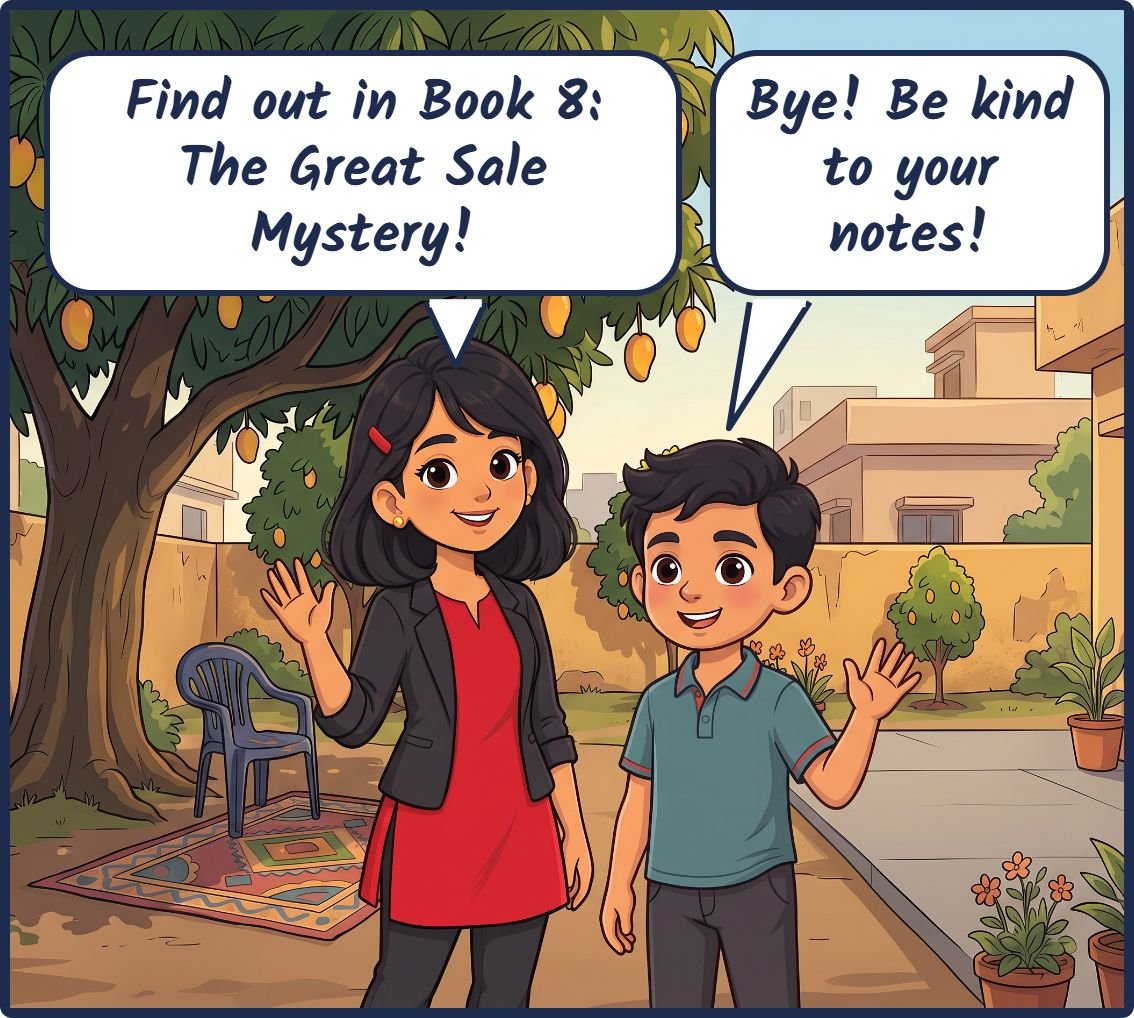
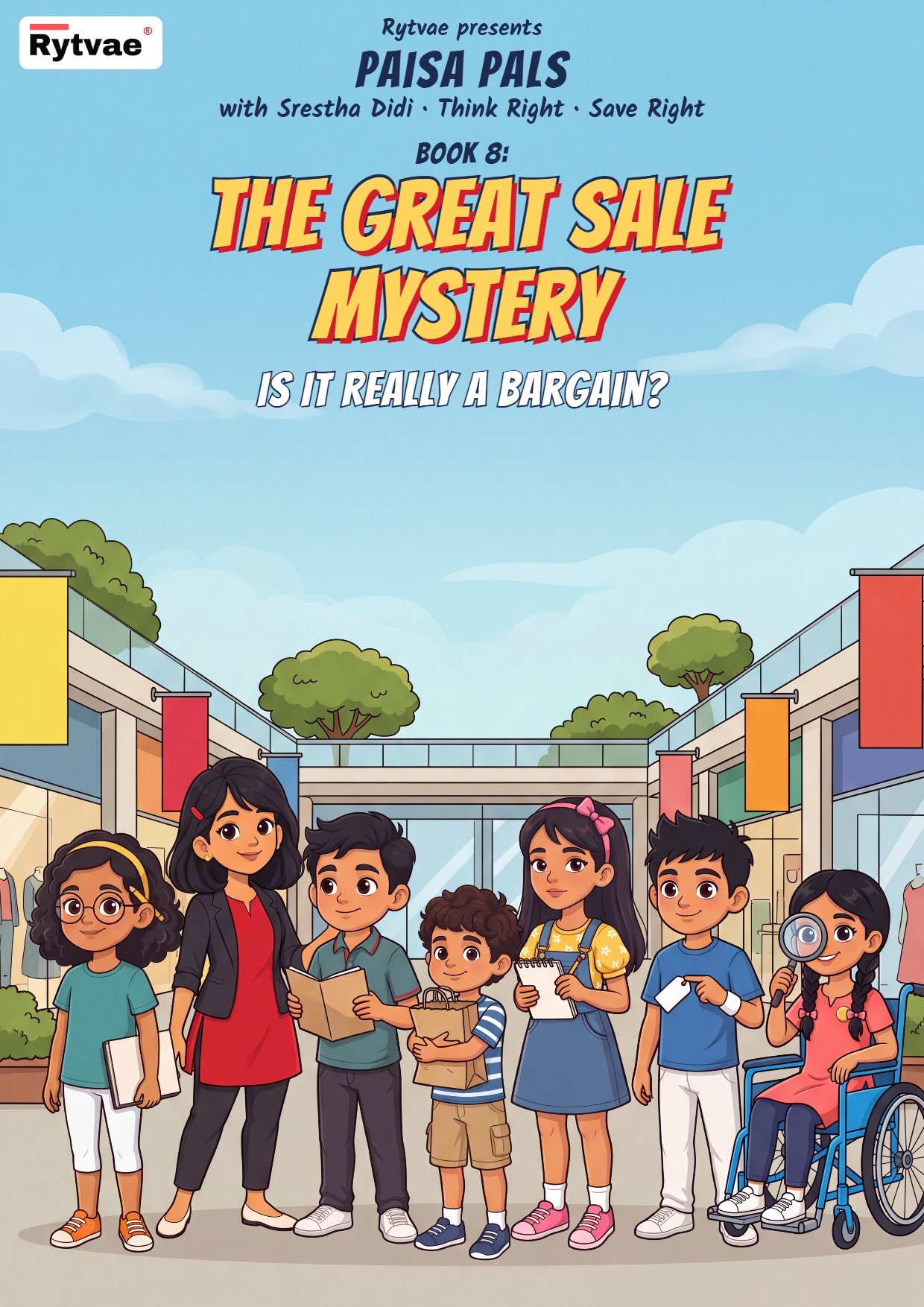
So, Paisa Pals, how did money change over time? Barter, then shells and grain, then coins, then paper notes! Now cards and UPI too. Same money, new clothes! And notes need kindness: no writing, no staples, no tight folds! Perfect, Kabir. Squeak! Will you take cowrie shells for cheese? Guess what? There's a giant sale at the mall on Saturday! A SALE? I want everything! Find out in Book 8: The Great Sale Mystery! Bye! Be kind to your notes!
Srestha's Money Tips
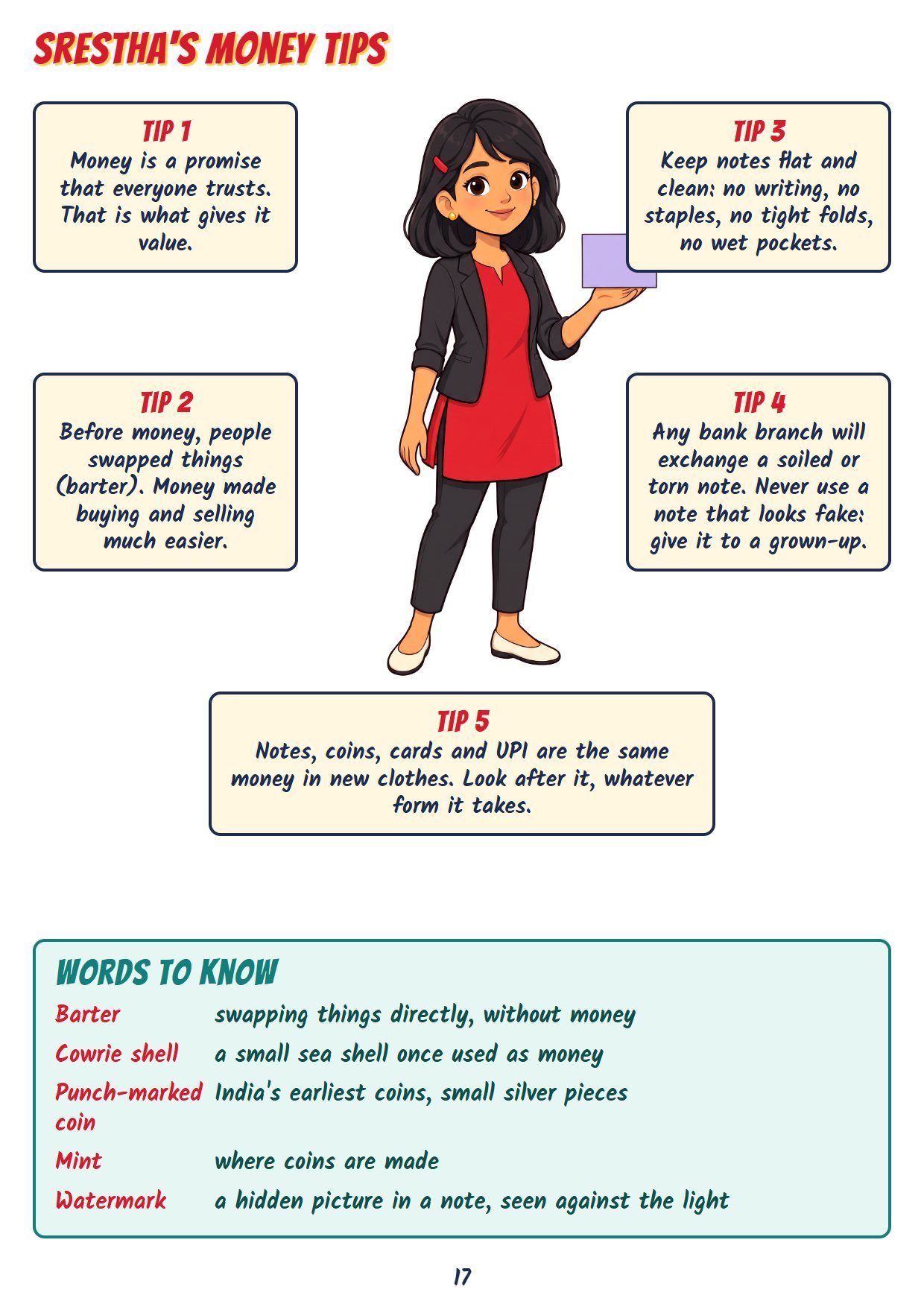
- Money is a promise that everyone trusts. That is what gives it value.
- Before money, people swapped things (barter). Money made buying and selling much easier.
- Keep notes flat and clean: no writing, no staples, no tight folds, no wet pockets.
- Any bank branch will exchange a soiled or torn note. Never use a note that looks fake: give it to a grown-up.
- Notes, coins, cards and UPI are the same money in new clothes. Look after it, whatever form it takes.
Words to know
- Barter
- swapping things directly, without money
- Cowrie shell
- a small sea shell once used as money
- Punch-marked coin
- India's earliest coins, small silver pieces
- Mint
- where coins are made
- Watermark
- a hidden picture in a note, seen against the light
Quiz time!

1. What was the big problem with barter?- Both people had to want each other's things
- Cows were too small
- Rice was free
2. What did people use as early money?- Pebbles from the river
- Grain and cowrie shells
- Leaves
3. Where does the word rupee come from?- A river
- A king's horse
- Sher Shah Suri's silver rupiya
4. Where are Indian coins made?- At the government's mints
- In bakeries
- At the ATM
5. What should you do with a torn or soiled note?- Staple it together
- Exchange it at a bank branch
- Throw it away
6. When did UPI start in India?- 1935
- 1540
- 2016
Answers: 1-a 2-b 3-c 4-a 5-b 6-c
Try this at home

Draw a line from each kind of money to its time.
| Money | When |
|---|
| Swapping a cow for rice | About 2,500 years ago |
| Cowrie shells | Today |
| Punch-marked silver coin | On phones, since 2016 |
| Paper note | Long, long ago |
| UPI | Early money |
Be a Money Historian
- Ask a grandparent or an older relative about the coins and notes they used as a child.
- Ask what a few things cost back then: a snack, a bus ticket, a notebook.
- Look at a coin or note with a grown-up: can you spot the watermark or the shiny thread?
- Draw your own money timeline: barter, shells, coins, paper notes, cards and phones.
- Share one surprising fact with your family at dinner.
For parents and teachers

What this book teaches
How money developed, from barter to grain and cowrie shells, the first punch-marked coins, the rupiya, paper notes, cards and UPI; that money works because people trust it; where Indian notes and coins are made and who issues them; simple security features; and how to care for notes (the RBI's clean note policy and note exchange at bank branches).
Talk about it
- Why was barter hard? What would you swap if there were no money?
- How has the way our family pays changed over the years?
- How can we keep our notes clean and our phone payments safe?
Good to know
- The RBI issues banknotes; ₹1 notes and all coins are issued by the Government of India. Notes are printed at Nashik, Dewas, Mysuru and Salboni; coins are made at the mints in Mumbai, Hyderabad, Kolkata and Noida.
- Under its clean note policy the RBI re-issues only good notes; soiled and torn notes are taken out and destroyed. Every bank branch must exchange soiled or torn notes. Don't write on notes, staple them or fold them tightly.
- Never copy or deface notes. If a note looks fake, don't pass it on: hand it to a grown-up or a bank. The amounts in this book are examples.
Paisa Pals is created by Srinivas Kambhampati, AMFI-registered Mutual Fund Distributor (ARN-265474, EUIN E091320), working under the brand Rytvae Consulting. This book is for financial awareness only. It does not recommend any bank, product, investment or scheme. More free comics: rytvae.com (Kids' Corner).






























 ComicBook 8