Lunch box blues

Lunchtime at school Lemon rice. AGAIN. Fifth day in a row! At least yours has peanuts. I get sandwiches EVERY day. Want to swap? Just for today? I wish I could taste everyone's lunch. Imagine one tiffin with a bit of EVERYTHING! A bit of everything? That gives me an idea! What idea, Ma'am? You'll see on Friday. Big Tiffin Day! Big Tiffin Day? What's that?
Big Tiffin Day

On Big Tiffin Day, everyone brings ONE dish for a giant shared tiffin. And then? Then everyone gets a little bit of everything! 30 children, 30 dishes. That's 30 tastes in one lunch! Exactly, Tara. I'll bring idli. Amma's are the softest. I'll bring my Ammi's pulao! Ma'am, can Kabir join? He's in a younger class, but he LOVES food. Of course! The more dishes, the better.
A bit of everything

Friday: Big Tiffin Day! One dish each, into the Big Tiffin! Idli! Aloo paratha! Sandwiches! My mummy's special. Pulao, and a box of fruit! Ajji's curd rice! Lemon rice. You're welcome, everyone. Idli, paratha, pulao, sandwich… this is HEAVEN! Slowly, Kabir!
Oops!

SPLAT! Oh no! My curd rice! I was so excited for that. Don't worry! Look how much is still left. True! Idli, paratha, pulao… lunch is still great! Because there are so many dishes. That's spreading the risk! Spreading the risk? With ONE dish, one spill means no lunch. With many dishes, one spill doesn't matter. My plate has twelve dishes. I'm VERY spread out. The safest plate in school!
Money can share too

That evening… Didi, Big Tiffin Day was amazing! Everyone got a bit of everything. And when Joel's curd rice spilled, lunch was still great! You know what? Money can be shared just like that. Money in a tiffin? Won't it get sticky? Not a real tiffin, Kabir! Many people put their money together in one big pool. That's called a mutual fund. Mutual means shared, right? Yes! Shared by everyone who puts money in. Let me show you how it works.
How it works

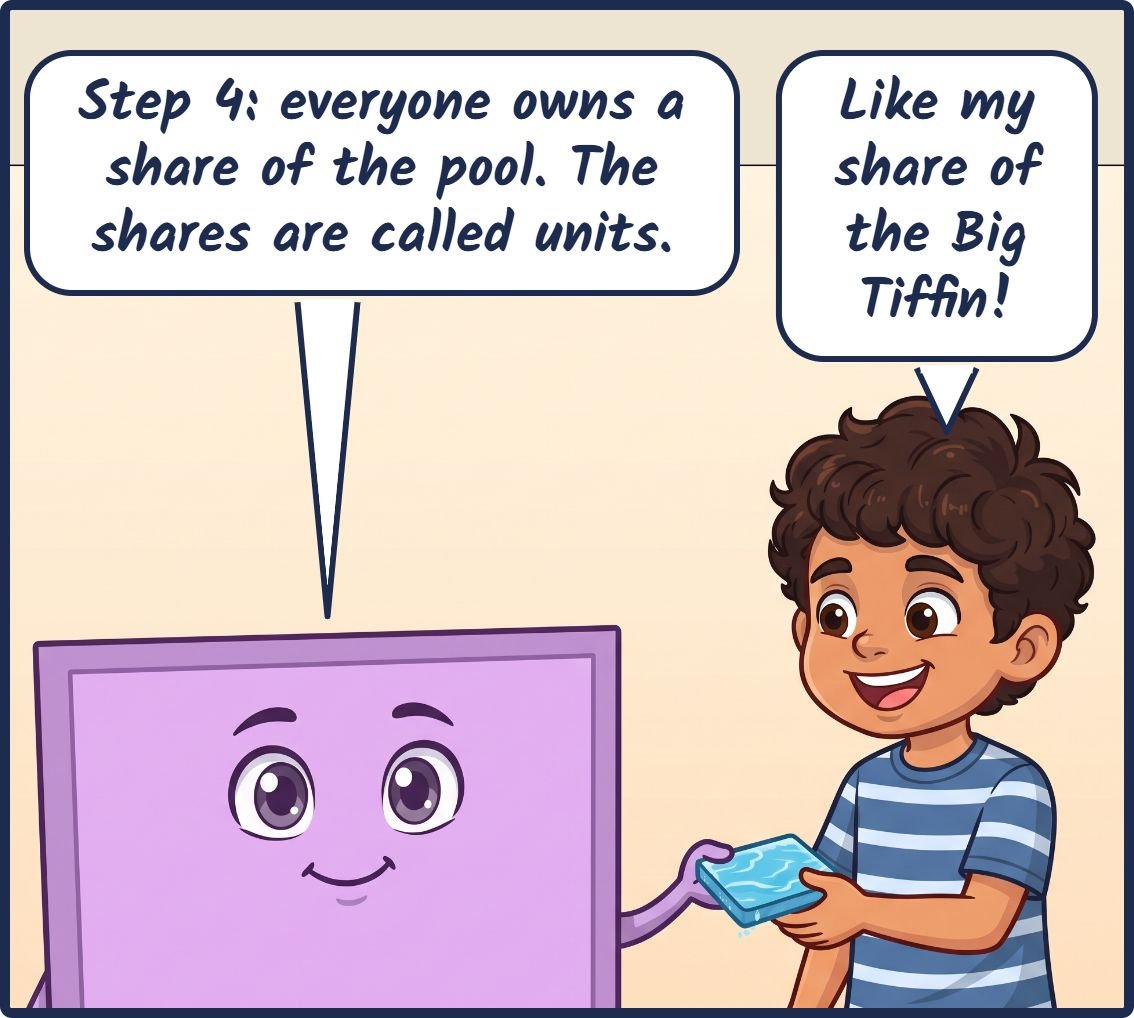
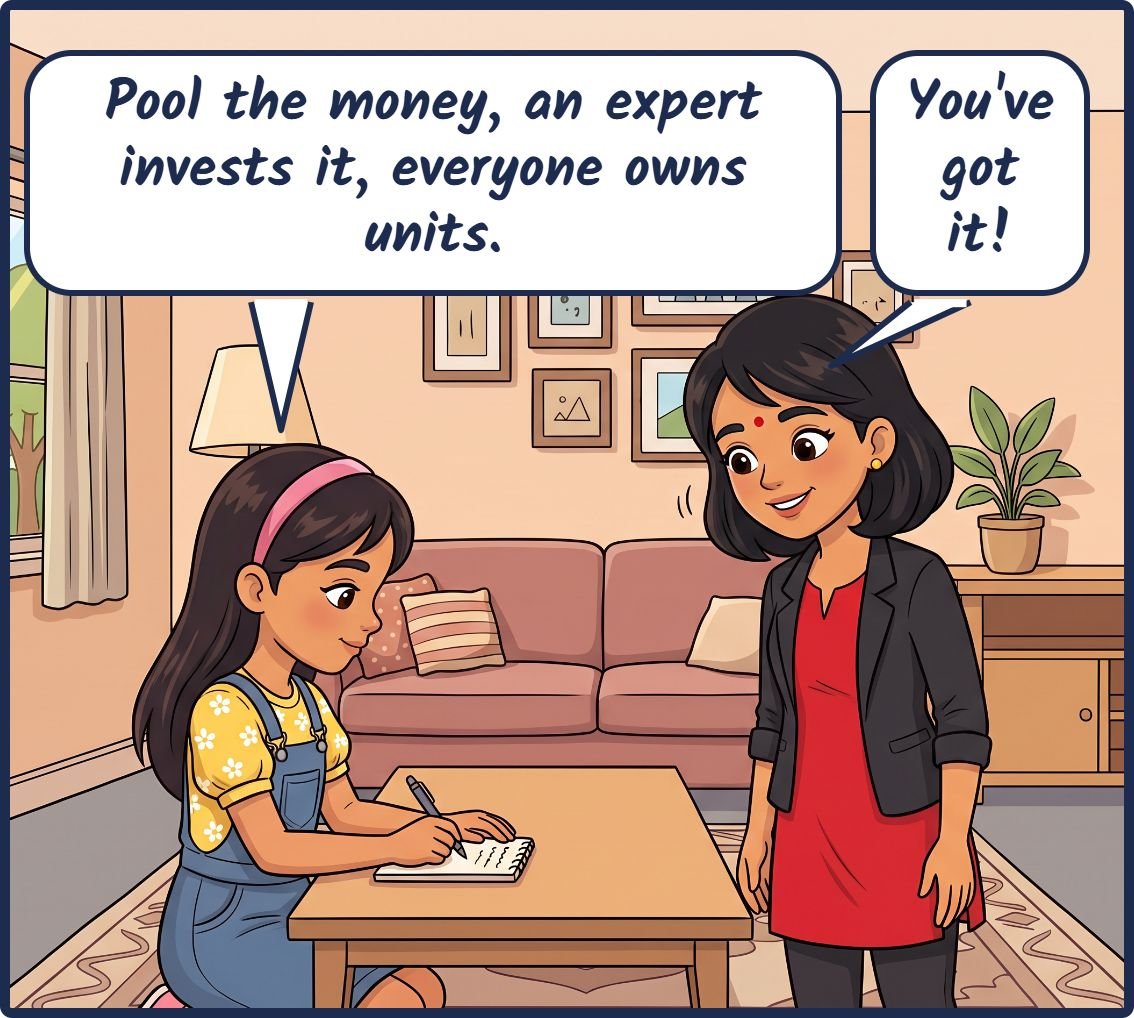
Step 1: many people put in small amounts of money. Like each of us bringing one dish! Step 2: all the money joins into one big pool. A Big Tiffin of money! Step 3: an expert called a fund manager invests it in many companies and loans. Lots of dishes, not just one! Step 4: everyone owns a share of the pool. The shares are called units. Like my share of the Big Tiffin! Pool the money, an expert invests it, everyone owns units. You've got it!
The head chef

Welcome to the Fund Kitchen! Today, I'm the head chef. A fund manager is like a head chef, picking each ingredient carefully. Can you pick chocolate? But I must follow the fund's recipe. That's its goal, written down for everyone. So you can't cook anything you like? No! If the recipe says "mild", I can't add chillies. Rules for the chef. Smart! Like a captain who must follow the team plan! And studies every player before choosing.
Units and NAV

Say one unit costs ₹10. If you put in ₹100, how many units do you get? Ten! I'm a maths genius. Right! The price of one unit is called the NAV. N-A-V? Sounds like a boat. It means Net Asset Value. It changes every day, as the fund's investments go up or down. So tomorrow, one unit might be ₹10.20. Or ₹9.80! These are just example numbers, right? Yes, just examples. Real NAVs are published every day for everyone to see. Nothing hidden!
Ups and downs

Wheee! A fund's value goes up… and down… and up again! Sau! You're going DOWN! Don't panic! Over a long ride, it can climb again. Nothing is guaranteed in a mutual fund. Values can go down too. Not like a bank FD? An FD pays a fixed interest. A mutual fund has ups and downs, and no promises. So it suits goals many years away. Goals coming soon need steadier places. A Test match, not a T20!
Different tiffins

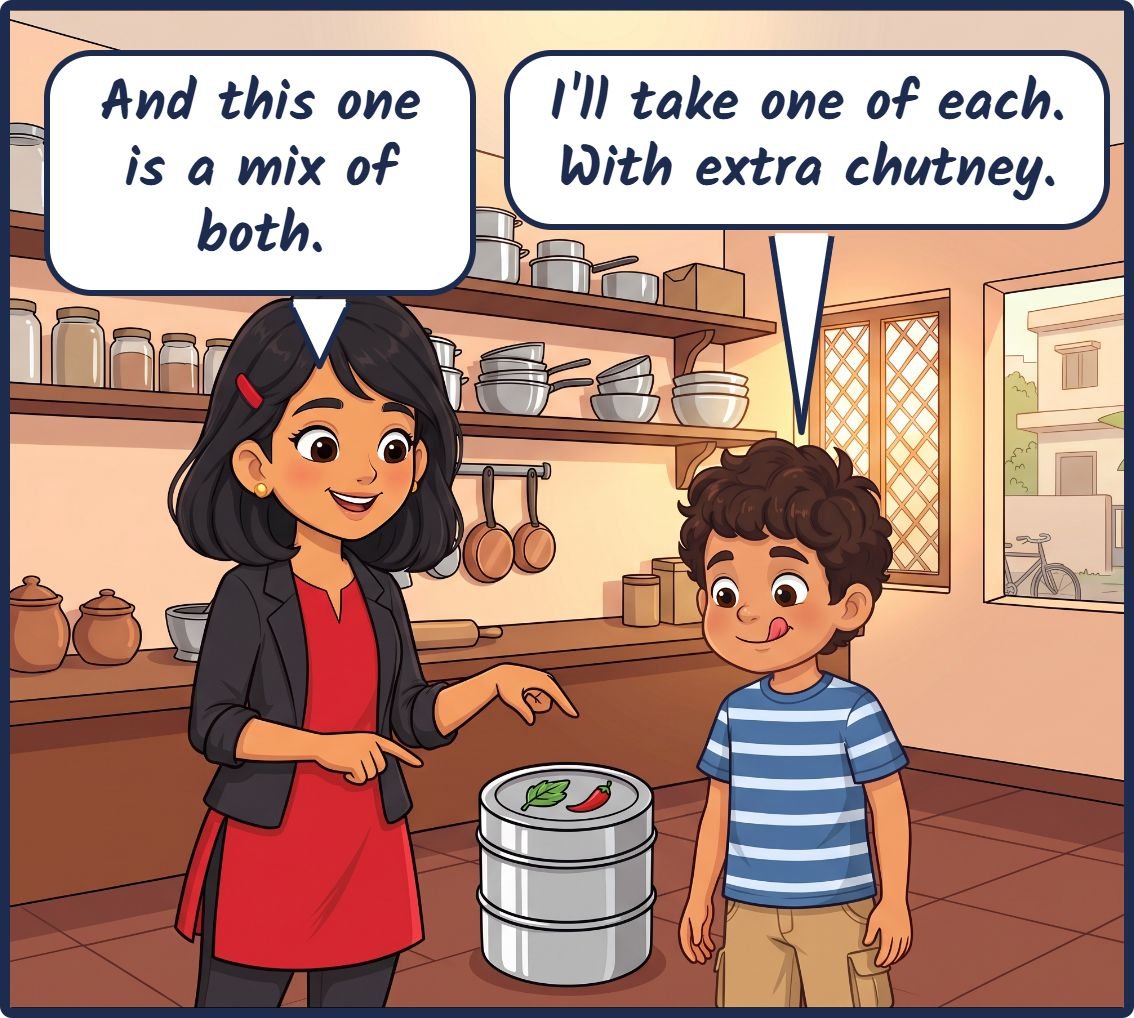
Funds are like different tiffins. This one is SPICY. What's in it? Shares of companies. More ups and downs, for goals that are far away. This one is MILD. It lends money to companies and the government. It's steadier. Less spicy, fewer surprises! And this one is a mix of both. I'll take one of each. With extra chutney. The right tiffin depends on your goal, and how long you can wait. Goal first, tiffin second!
Appa's SIP

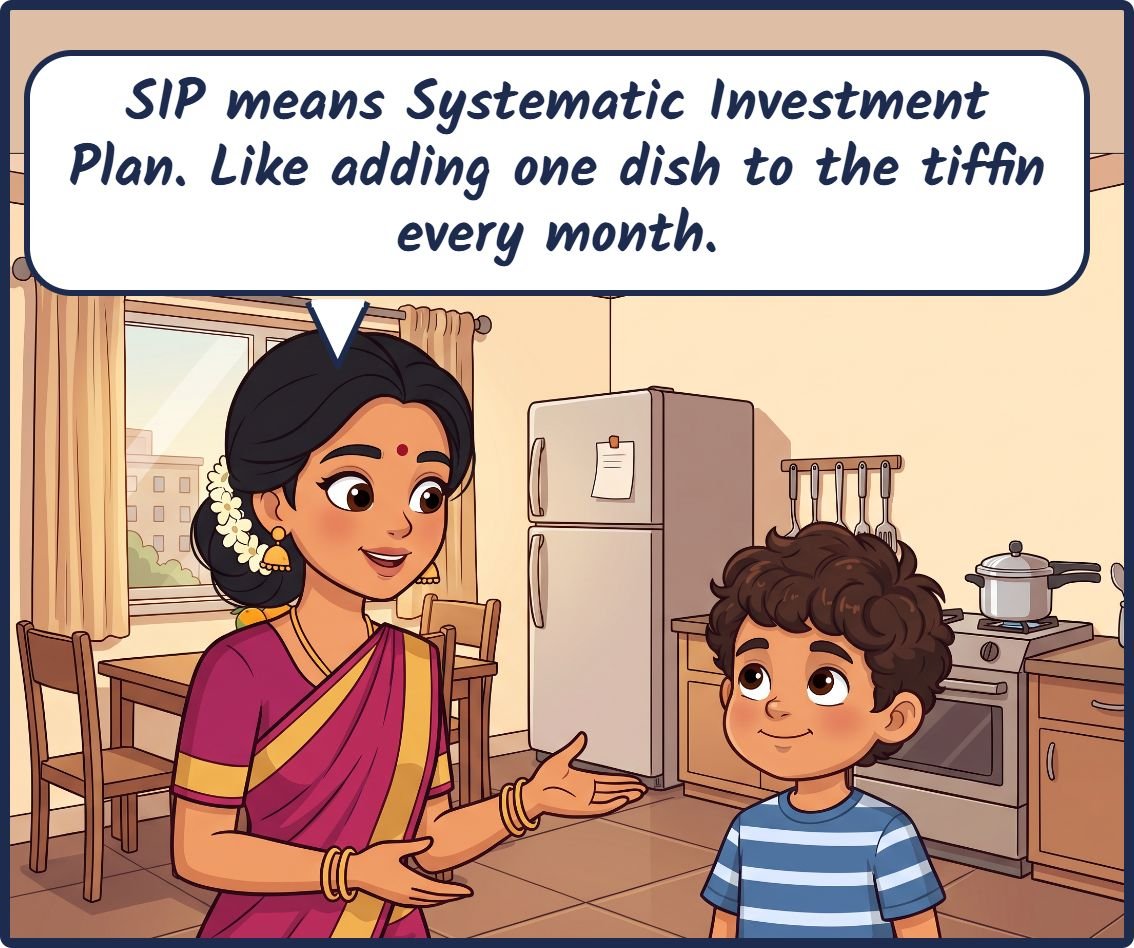
At Riya and Kabir's home Riya, I put a fixed amount in a mutual fund every month, for your doctor dream. Every month? Even when values go down? Yes, every month, ups or downs. That's called a SIP. SIP means Systematic Investment Plan. Like adding one dish to the tiffin every month. How much do you need to start? Many funds allow SIPs from ₹100 to ₹500 a month. Small amounts, many years, lots of patience. By medical college, it will have had many years to grow.
Who keeps the money safe?

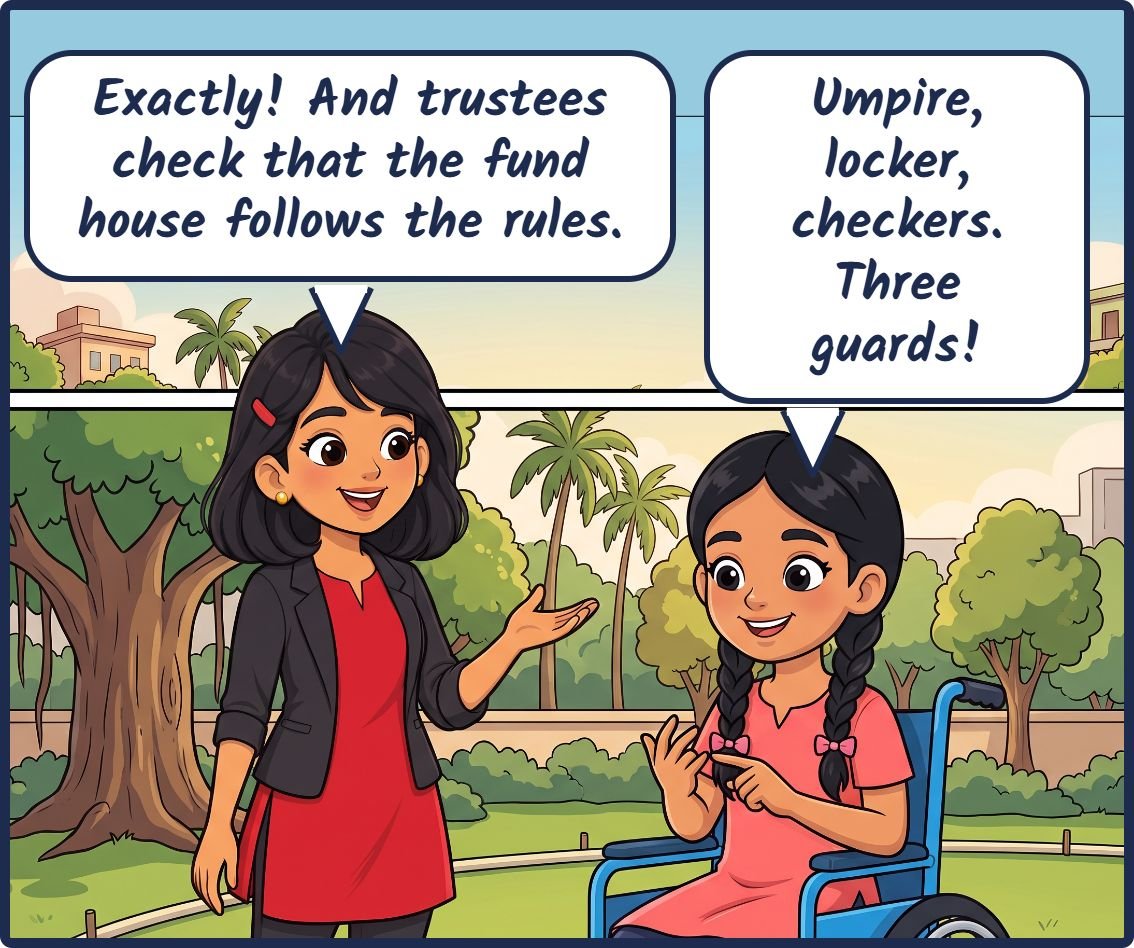
Every game needs an umpire. For mutual funds, the umpire is SEBI. I make the rules, and I watch every fund house closely! An umpire for money! Cool. The fund manager doesn't keep the money. A custodian keeps it safe, like a locker. So the chef can't take the tiffin home? Exactly! And trustees check that the fund house follows the rules. Umpire, locker, checkers. Three guards! So the money is safe from cheating? Yes, from cheating. But values still go up and down!
Not a magic pot

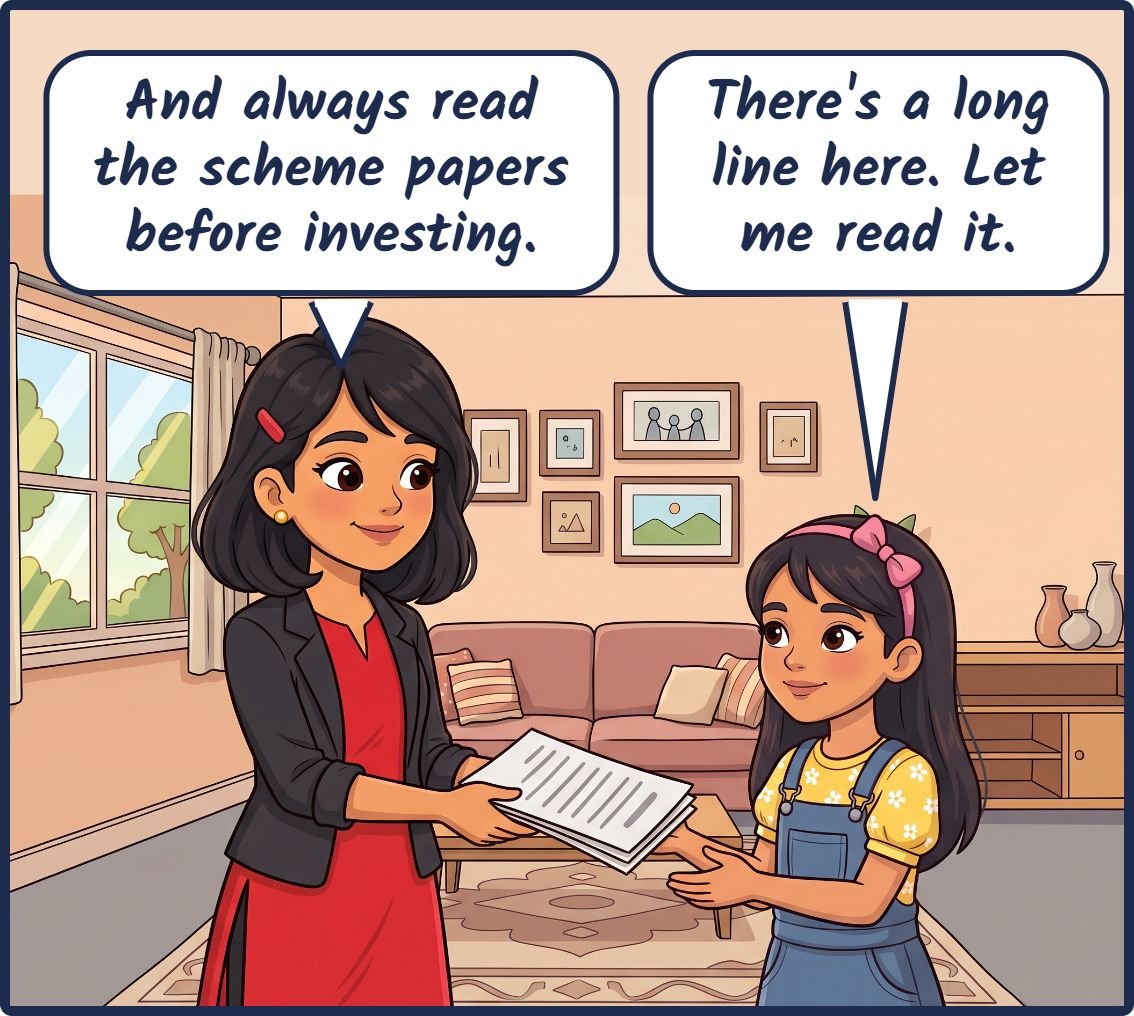
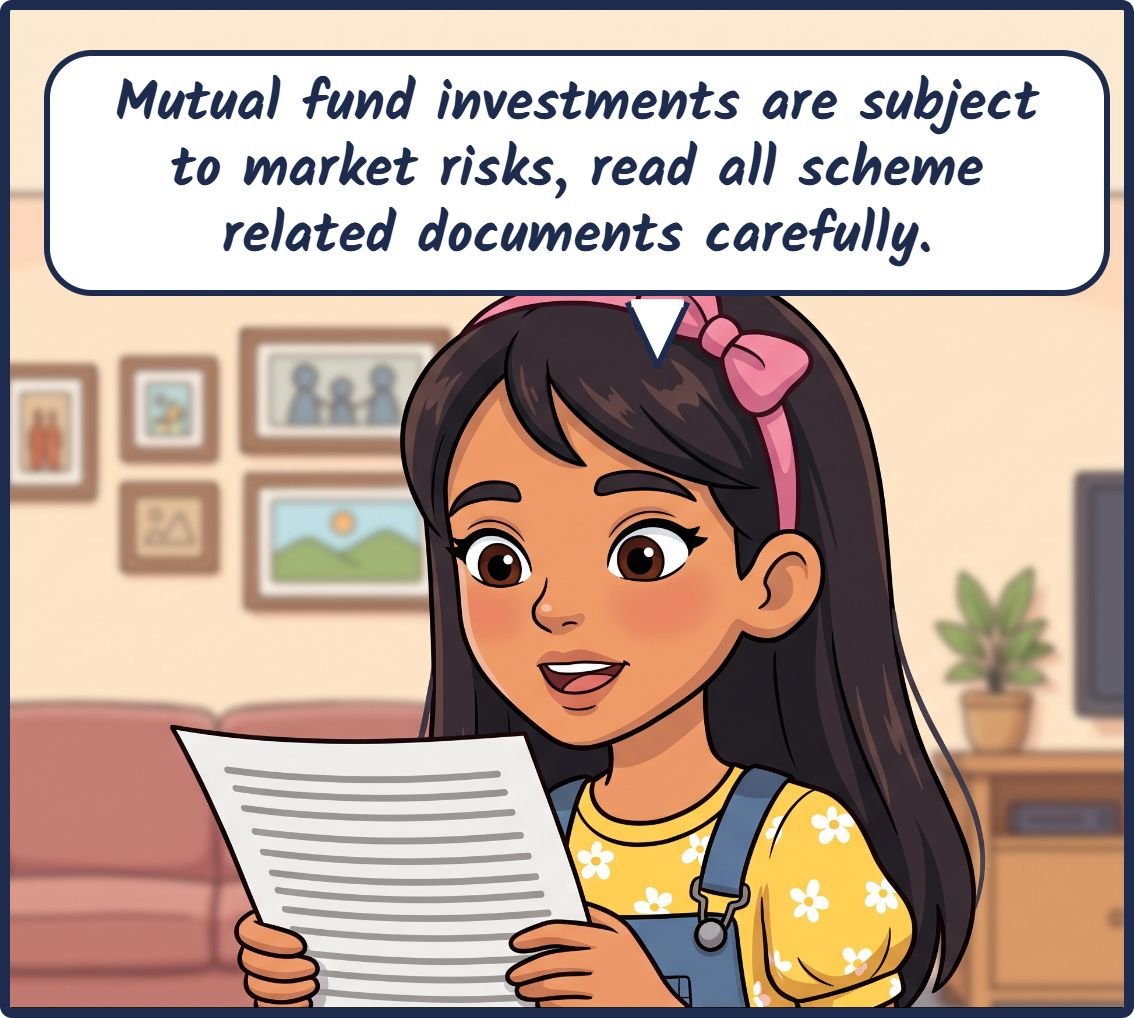
I'll put ALL my piggy bank in a fund, and be rich tomorrow! Whoa, Kabir! It doesn't work like that. No guarantees, and no "rich tomorrow". It needs patience, for years. YEARS? I can't even wait for lunch! And always read the scheme papers before investing. There's a long line here. Let me read it. Mutual fund investments are subject to market risks, read all scheme related documents carefully. That's a tongue twister! It means: values go up and down, so read before you invest.
Which jar for what?

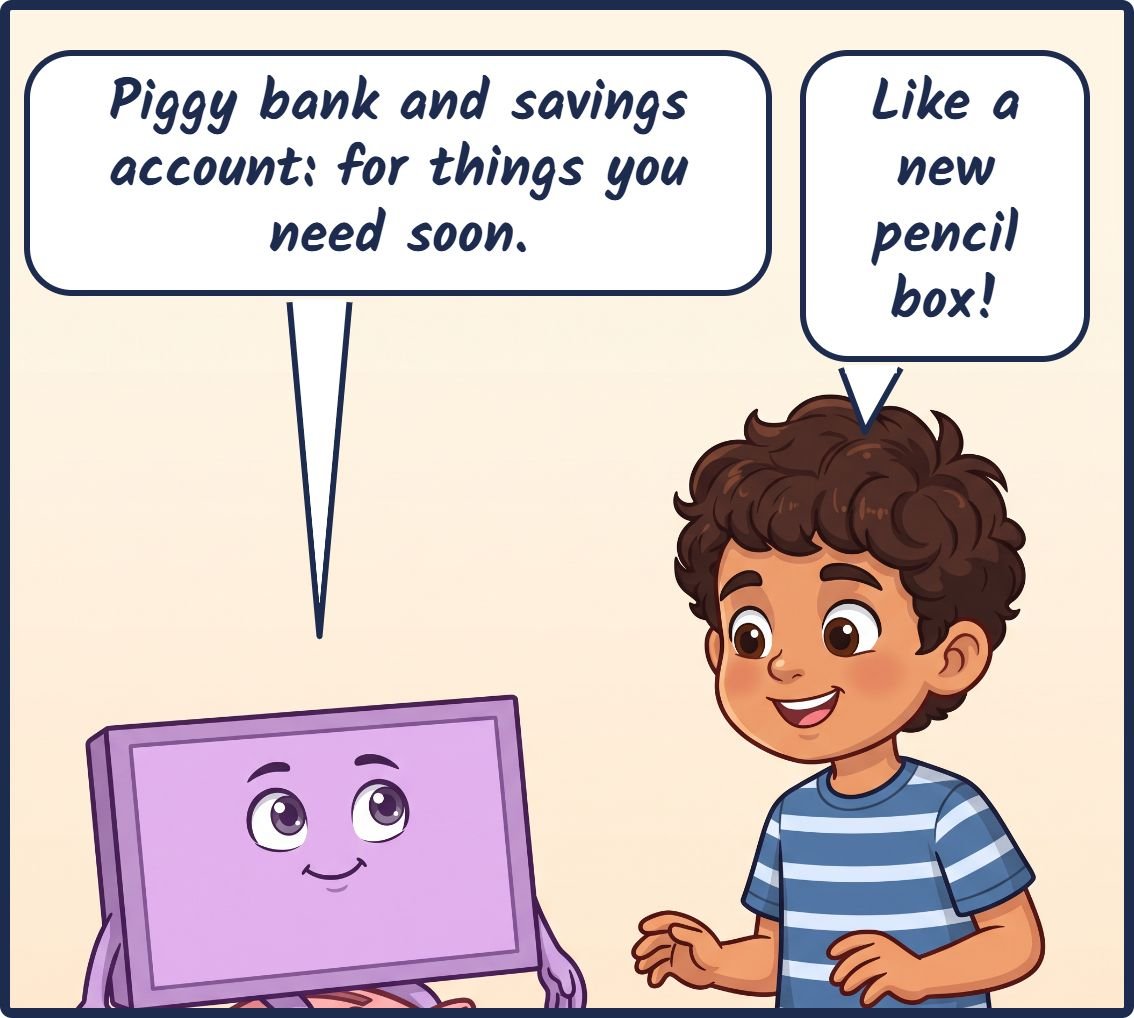
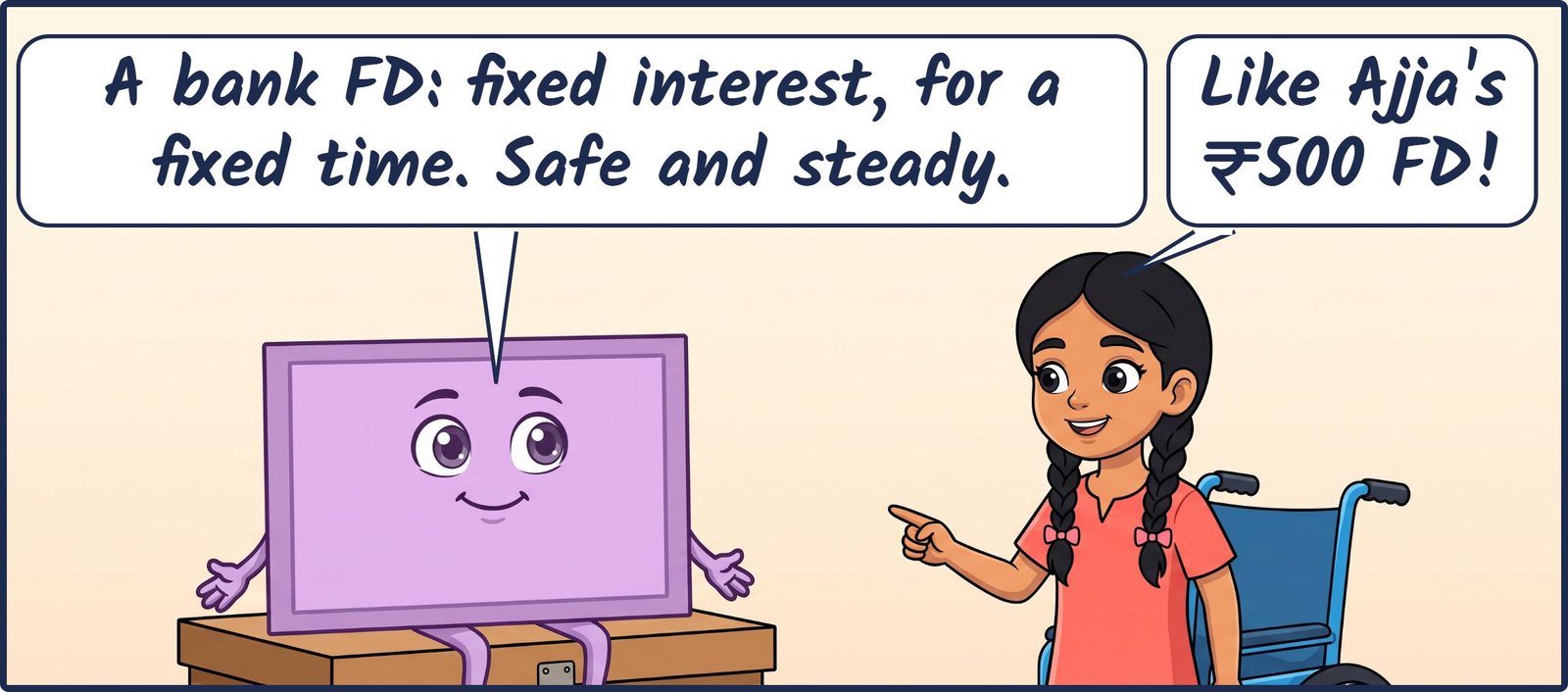
I drew our money jars. Which one is for what? Piggy bank and savings account: for things you need soon. Like a new pencil box! A bank FD: fixed interest, for a fixed time. Safe and steady. Like Ajja's ₹500 FD! Mutual funds: for goals many years away, with ups and downs. For the long innings! And remember: children invest only through a parent or guardian. So we plan WITH our families!
Tiffin Day every week

The next Friday… Big Tiffin Day was such a hit, it's now EVERY Friday! I brought curd rice again. And I'm holding it TIGHT! Spread the risk, and hold it tight! Pool together, share the risk, follow the recipe. And be patient. Good things take time. For our class wall, Ma'am: the Big Tiffin Box! Beautiful, Zoya! Ma'am, can I be head chef next week? Only if you follow the recipe, Kabir!
A bit of everything

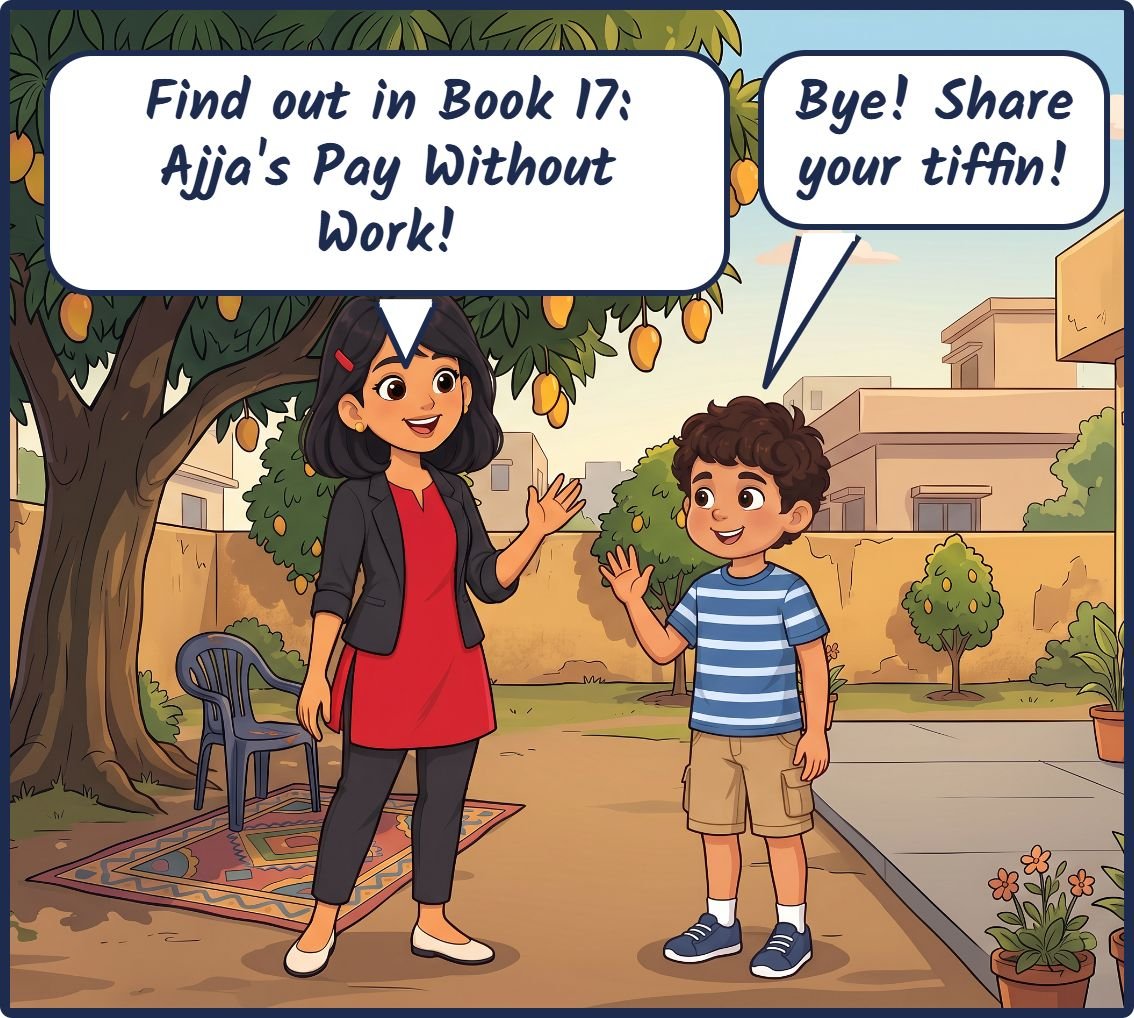
So, Paisa Pals, what is a mutual fund? Many people pool money, and an expert invests it in many things. Everyone owns units, and SEBI watches over it all. And it goes up AND down, so be patient and read the papers! Perfect! A Big Tiffin, for long goals. Squeak! My mutual crumb fund! Siddu, Ajja doesn't go to office. Where does HIS money come from? Good question! Find out in Book 17: Ajja's Pay Without Work! Bye! Share your tiffin!
Srestha's Money Tips
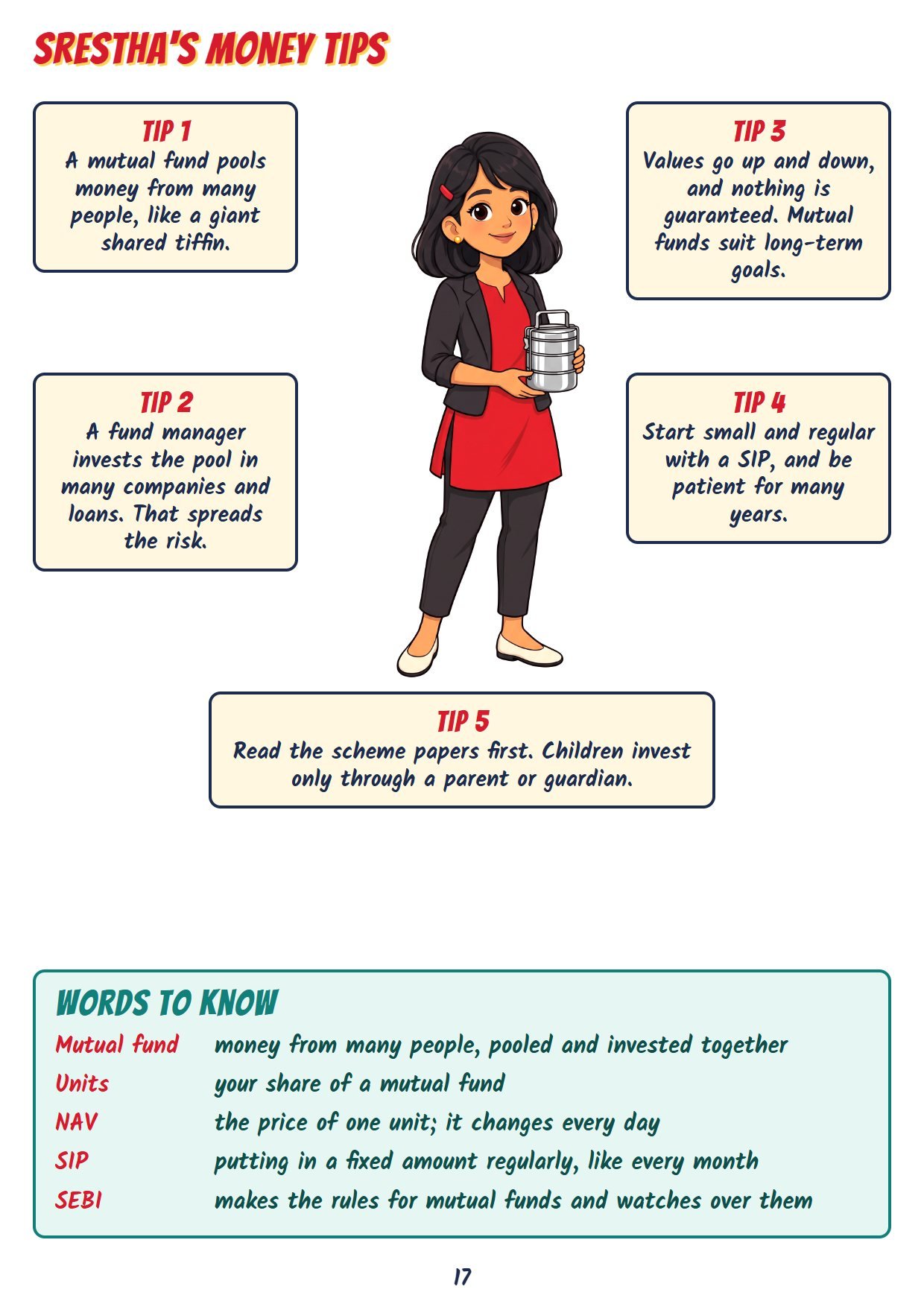
- A mutual fund pools money from many people, like a giant shared tiffin.
- A fund manager invests the pool in many companies and loans. That spreads the risk.
- Values go up and down, and nothing is guaranteed. Mutual funds suit long-term goals.
- Start small and regular with a SIP, and be patient for many years.
- Read the scheme papers first. Children invest only through a parent or guardian.
Words to know
- Mutual fund
- money from many people, pooled and invested together
- Units
- your share of a mutual fund
- NAV
- the price of one unit; it changes every day
- SIP
- putting in a fixed amount regularly, like every month
- SEBI
- makes the rules for mutual funds and watches over them
Quiz time!

1. Why was lunch still great after Joel's curd rice spilled?- There were many other dishes
- Kabir shared his plate
- The teacher bought pizza
2. In a mutual fund, many people's money is…- Kept under a pillow
- Pooled together
- Spent on snacks
3. Who makes the rules for mutual funds in India?- The fund manager
- Kabir
- SEBI
4. One unit costs ₹10. How many units does ₹100 buy?- 10
- 100
- 1
5. Can a mutual fund's value go down?- No, never
- Yes, values go up and down
- Only on Sundays
6. SIP means…- A fizzy drink
- Saving In Pots
- Systematic Investment Plan
Answers: 1-a 2-b 3-c 4-a 5-b 6-c
Try this at home

Draw a line from each tiffin idea to its mutual fund word.
| Tiffin idea | Mutual fund word |
|---|
| Sharing dishes | Fund manager |
| Many dishes | Units |
| The head chef | SEBI |
| Your share of the tiffin | Pooling money |
| The umpire | Spreading risk |
Hold a Big Tiffin Day
- With a grown-up, plan a Big Tiffin Day at home or with friends.
- Everyone brings or makes one dish. Put them all together.
- Share it so that everyone gets a little of everything.
- Talk about it: if one dish spilled, would lunch still be good? Why?
- Draw your Big Tiffin, and write what 'spreading the risk' means.
For parents and teachers
What this book teaches
What a mutual fund is: pooling money; a fund manager investing according to the fund's goal; units and NAV; spreading risk across many investments; ups and downs, with no guaranteed returns; SIPs and patience; and who keeps investors' money safe (SEBI, custodians and trustees).
Talk about it
- What goals does our family have that are many years away?
- Why is it safer to have many dishes than one big dish?
- Why should we read the papers before we invest in anything?
Good to know
- Minors invest only through a parent or guardian. Choose by goal and time: money needed soon belongs in steadier places.
- Mutual fund values go up and down, and no returns are guaranteed. Many funds allow SIPs from ₹100–₹500 a month; start small and stay regular.
- The amounts in this book are examples. SEBI regulates mutual funds; a custodian holds investors' money, and trustees oversee the fund house.
Paisa Pals is created by Srinivas Kambhampati, AMFI-registered Mutual Fund Distributor (ARN-265474, EUIN E091320), working under the brand Rytvae Consulting. This book is for financial awareness only. It does not recommend any bank, product, investment or scheme. More free comics: rytvae.com (Kids' Corner). Mutual fund investments are subject to market risks, read all scheme related documents carefully.
















































 ComicBook 17

