The shocking bill

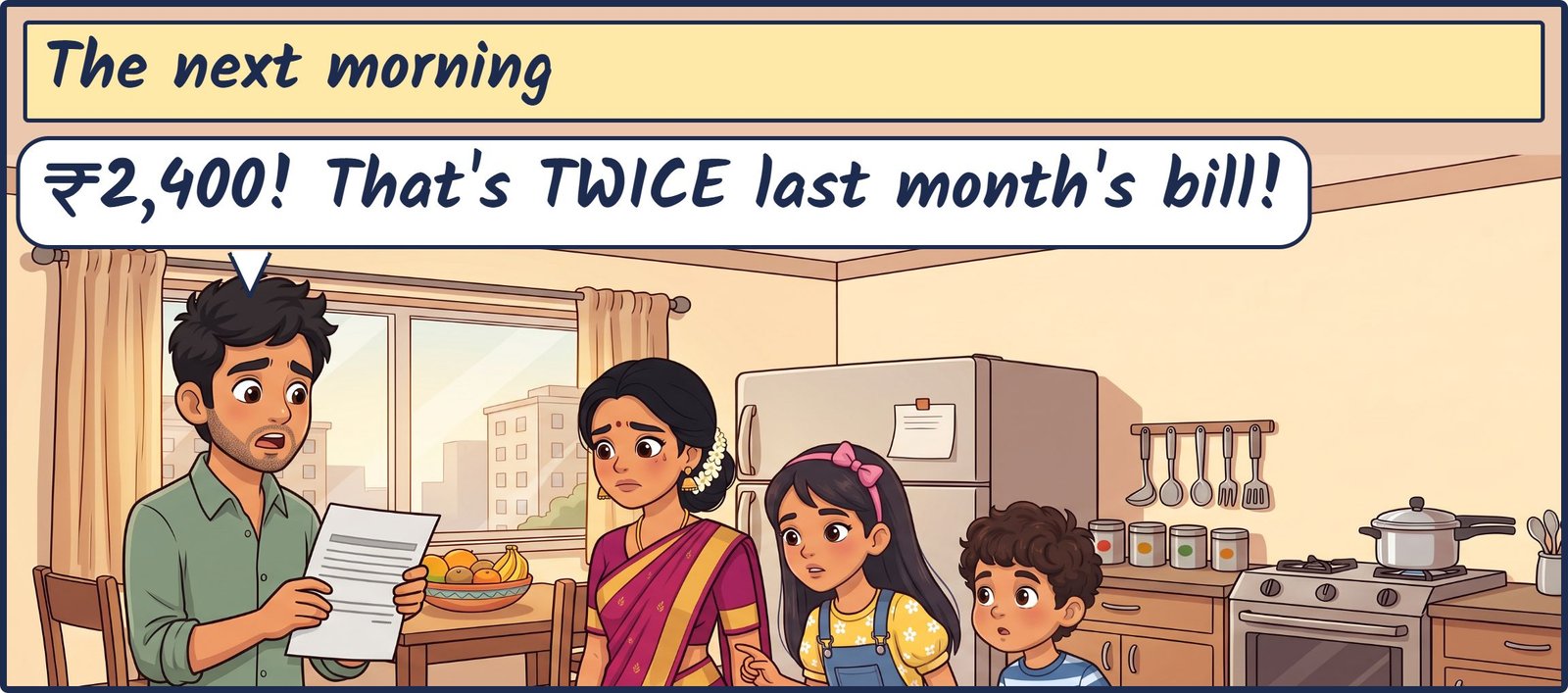
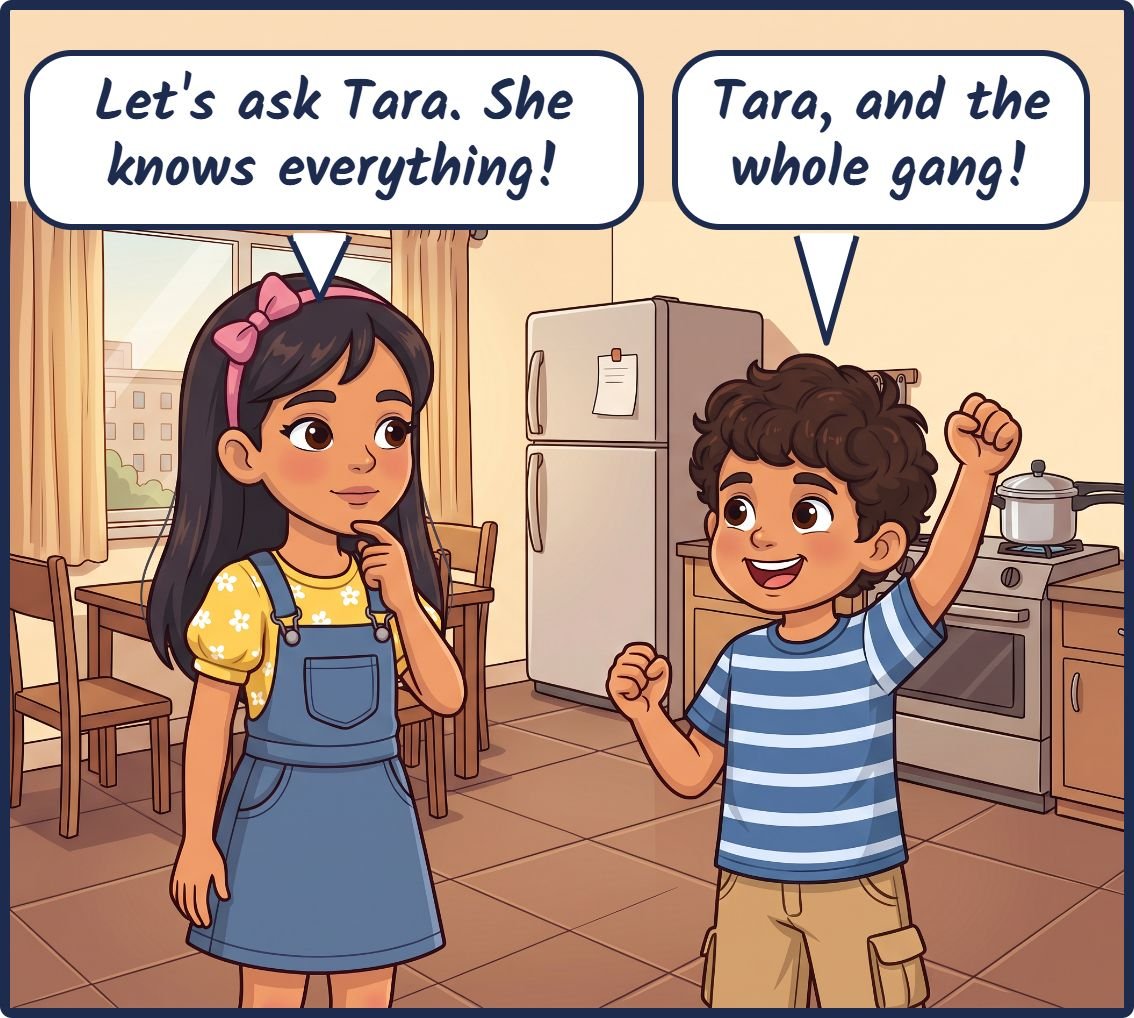
The next morning ₹2,400! That's TWICE last month's bill! It's summer. The AC and fans ran all month. But TWICE as much? Is electricity made of GOLD? At this price, it might as well be! Where does all the electricity go? Good question. Nobody in this house knows! Let's ask Tara. She knows everything! Tara, and the whole gang!
What is a unit?

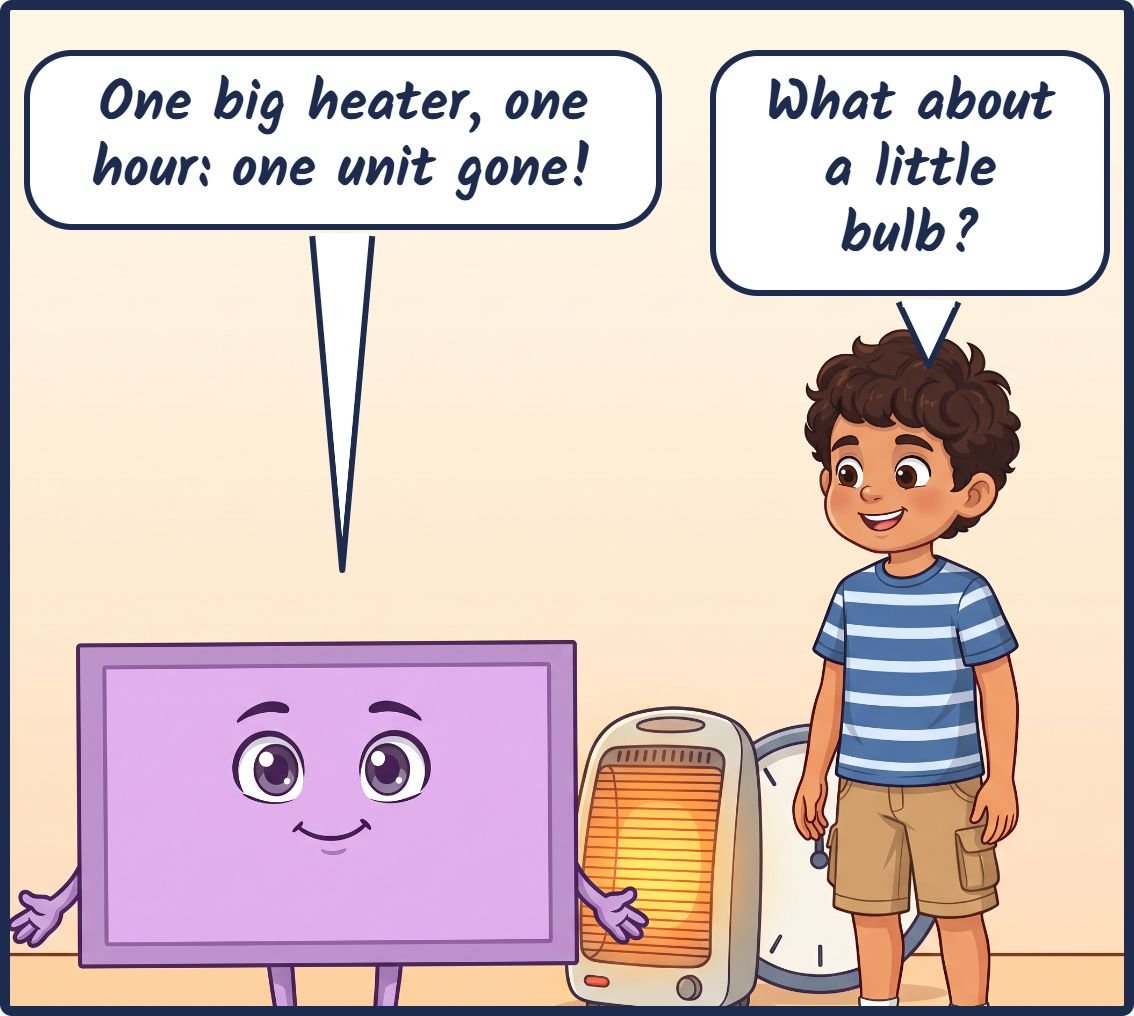
Our bill says 300 units. What's a unit? 1 unit is 1 kilowatt-hour. Like a 1,000-watt heater running for 1 hour. So more units means a bigger bill! One big heater, one hour: one unit gone! What about a little bulb? A small LED bulb uses much less. It glows for hours and hours on one unit! Bulbs are nibblers. Heaters are HUNGRY! Every unit costs money. Waste units, and you waste money. Every wasted unit is a run given away!
The Waste-Not Gang
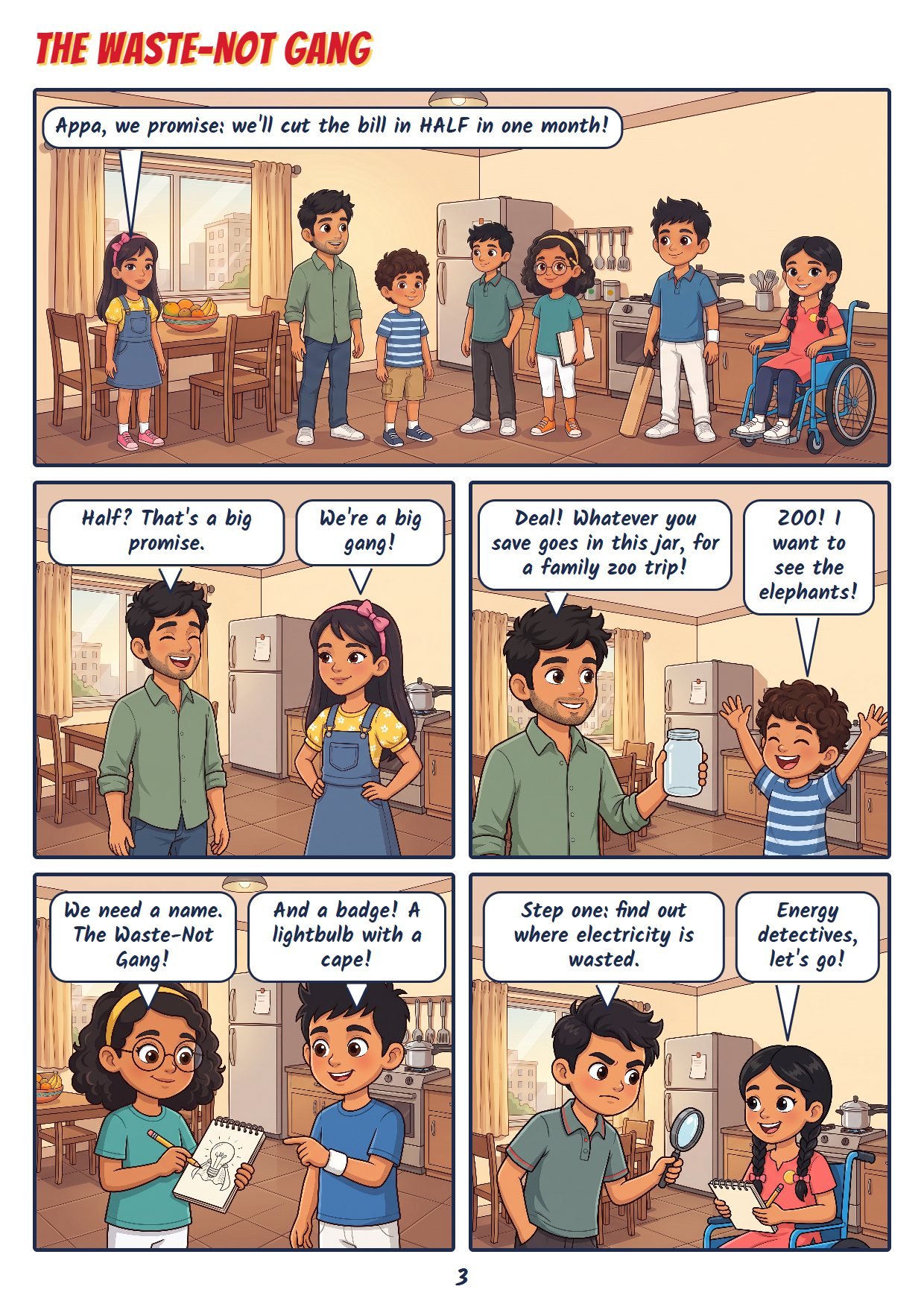
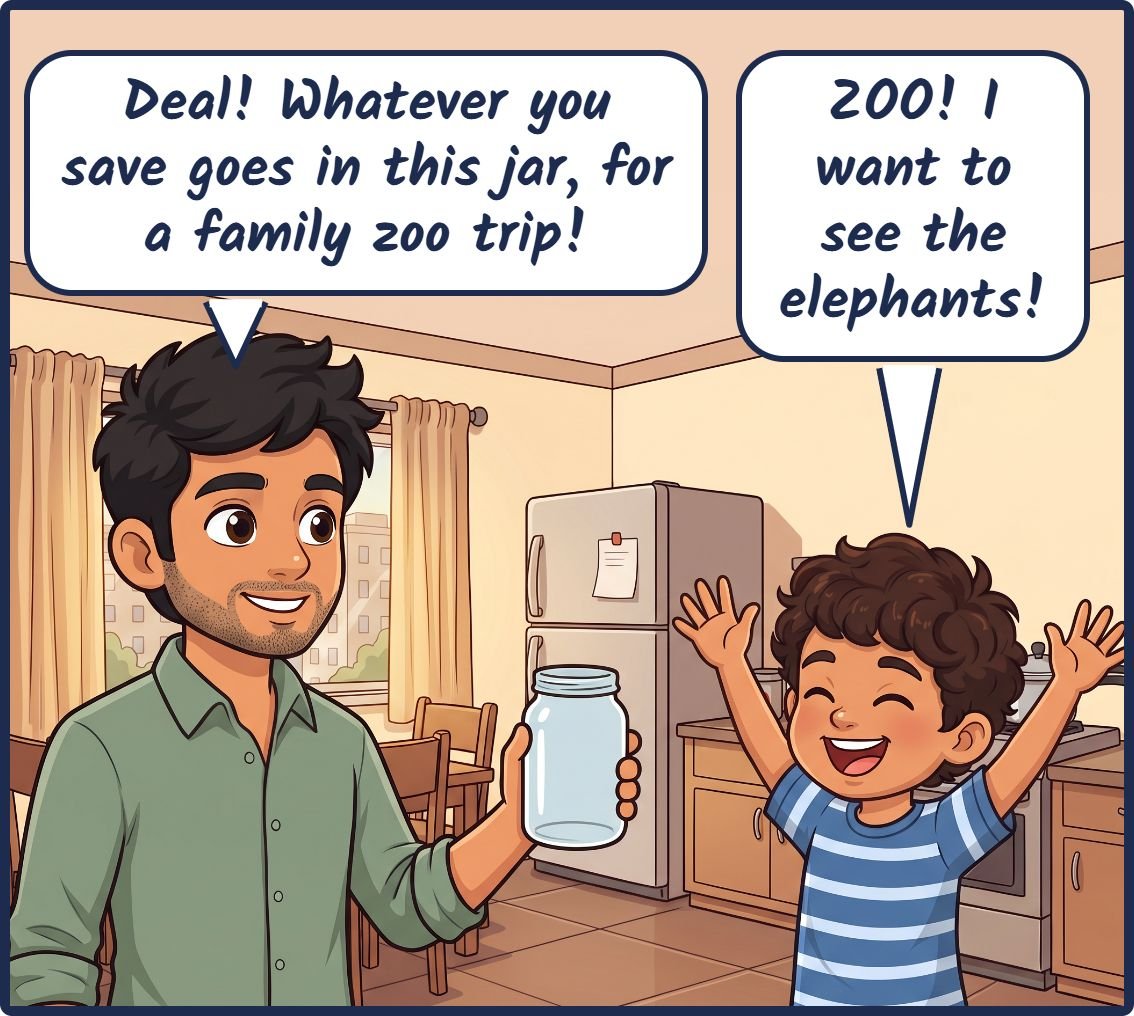
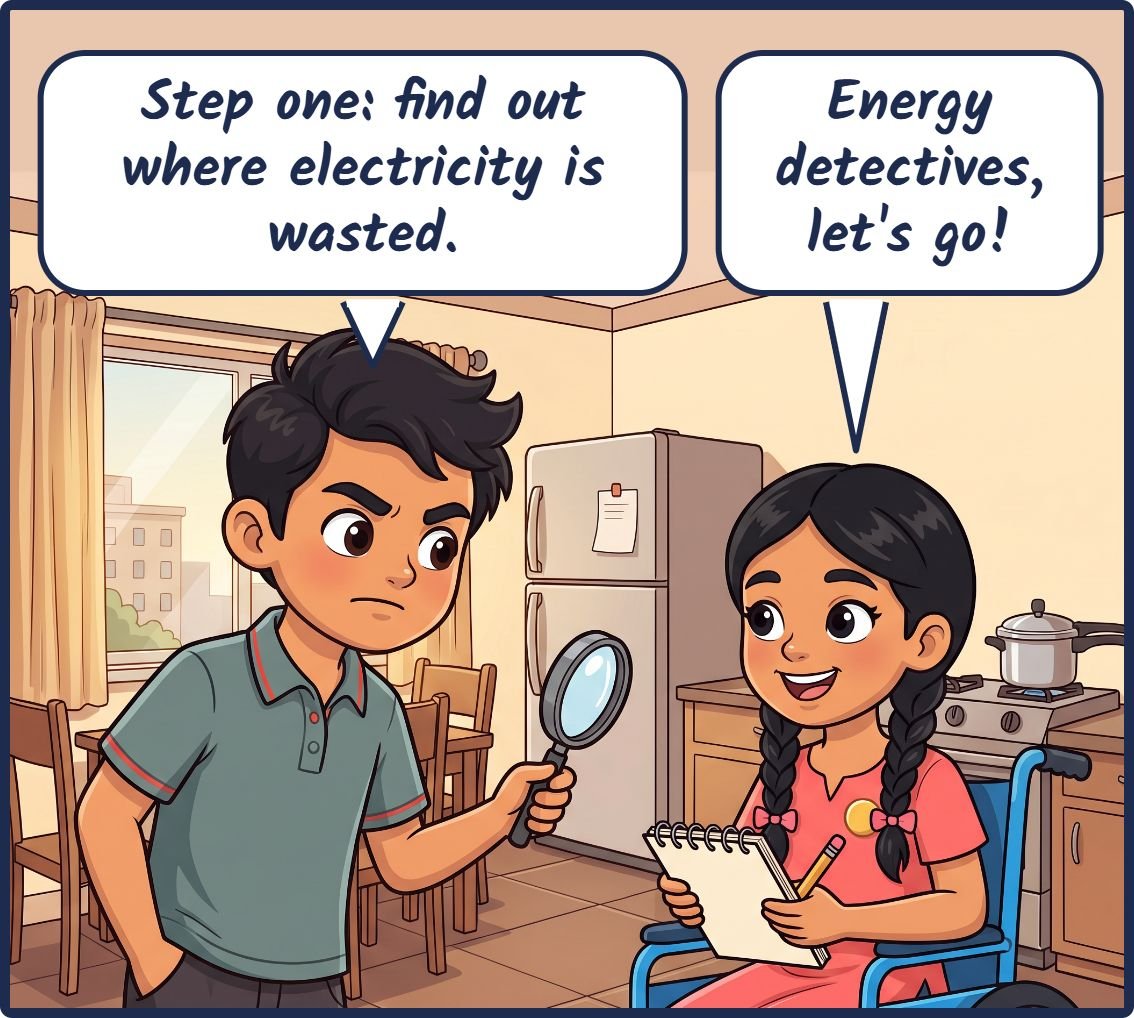
Appa, we promise: we'll cut the bill in HALF in one month! Half? That's a big promise. We're a big gang! Deal! Whatever you save goes in this jar, for a family zoo trip! ZOO! I want to see the elephants! We need a name. The Waste-Not Gang! And a badge! A lightbulb with a cape! Step one: find out where electricity is wasted. Energy detectives, let's go!
Energy detectives

Clue 1: lights and a fan, on in an EMPTY room! That's Kabir's room. Clue 2: the TV is off, but its red light is on. Standby uses power! And a charger plugged in with no phone! Clue 3: Kabir, staring into the open fridge… for five minutes! I'm THINKING! Think FIRST, then open. Every second, the cold escapes! But the cold air feels so nice… Empty rooms, standby, chargers, the open fridge… And one more: the AC!
The AC secret

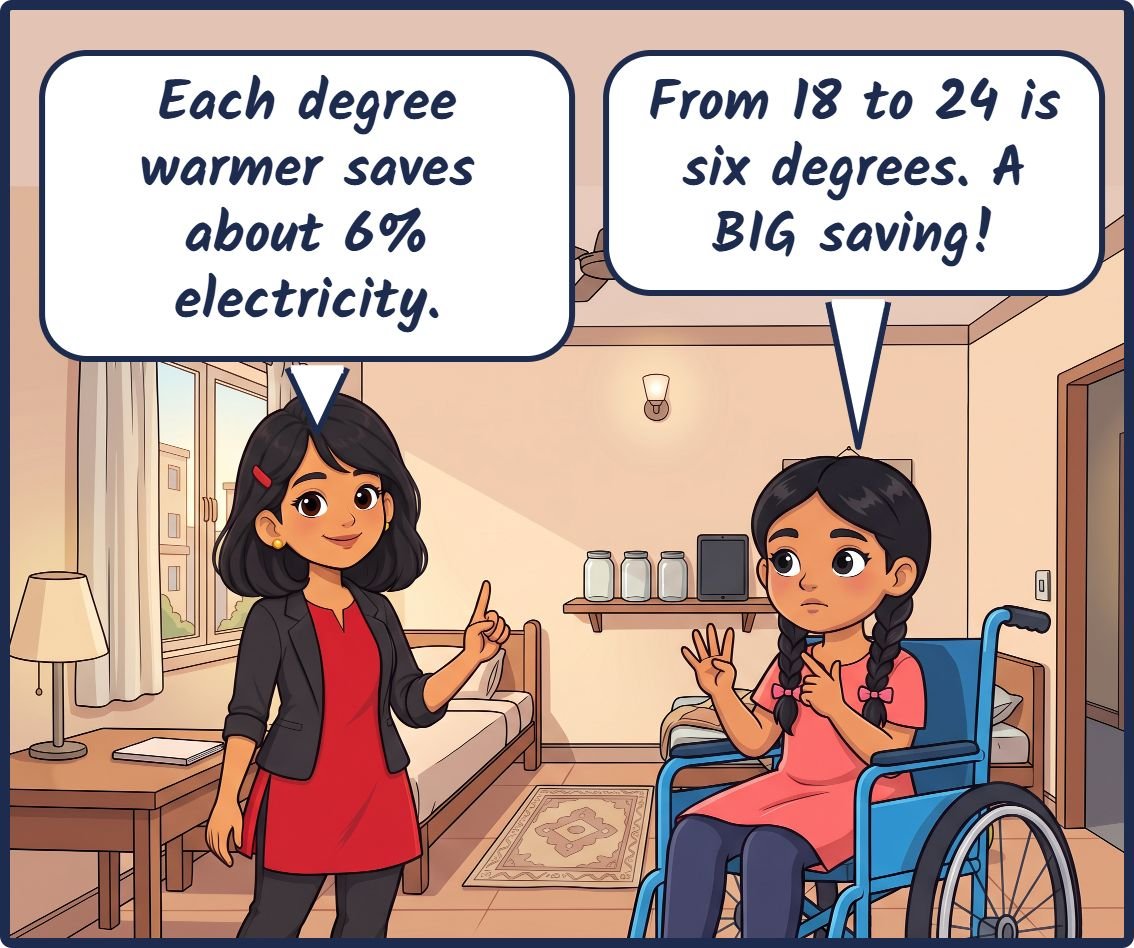
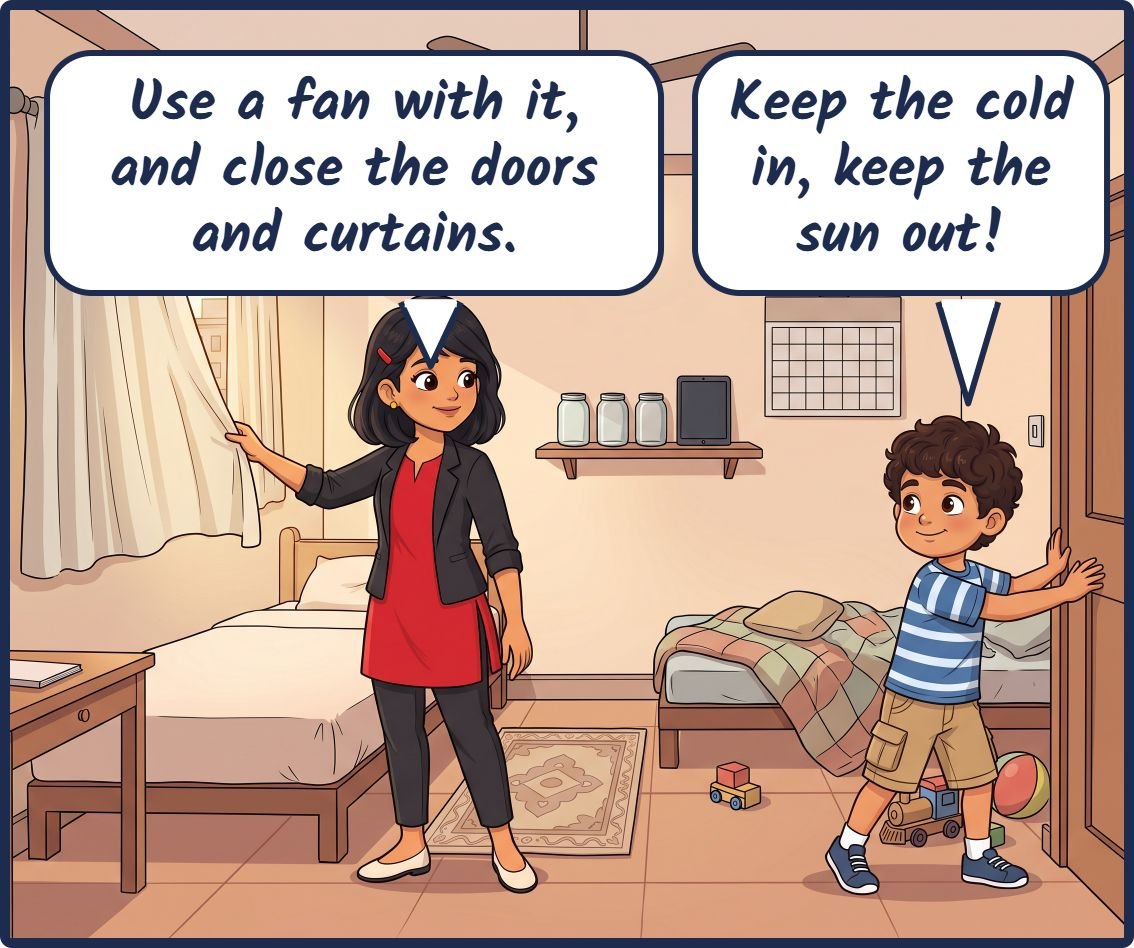
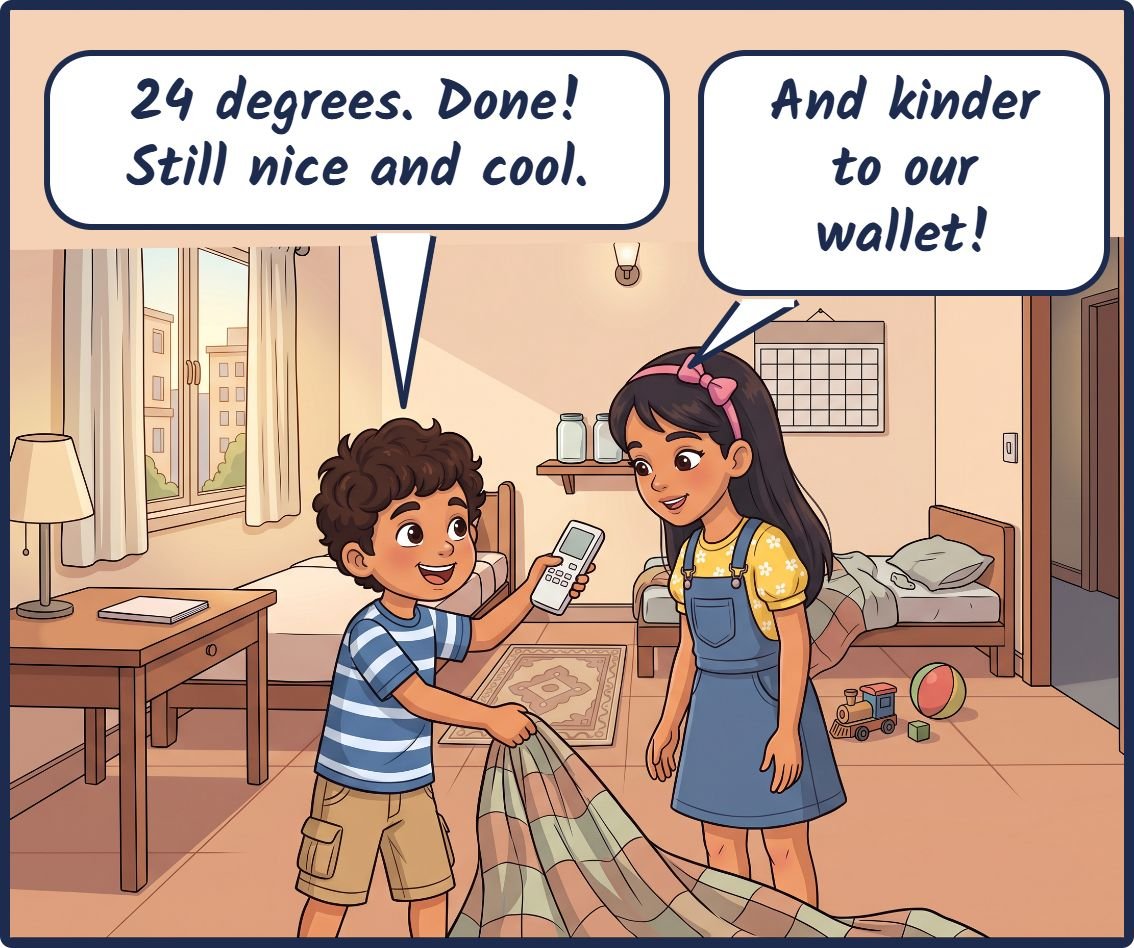
The AC is set to 18. It's like a mountain top! Brrr. No wonder the bill is huge. The Bureau of Energy Efficiency says 24 degrees is comfortable for most people. And new ACs come set to 24! Each degree warmer saves about 6% electricity. From 18 to 24 is six degrees. A BIG saving! Use a fan with it, and close the doors and curtains. Keep the cold in, keep the sun out! 24 degrees. Done! Still nice and cool. And kinder to our wallet!
Stars and bulbs

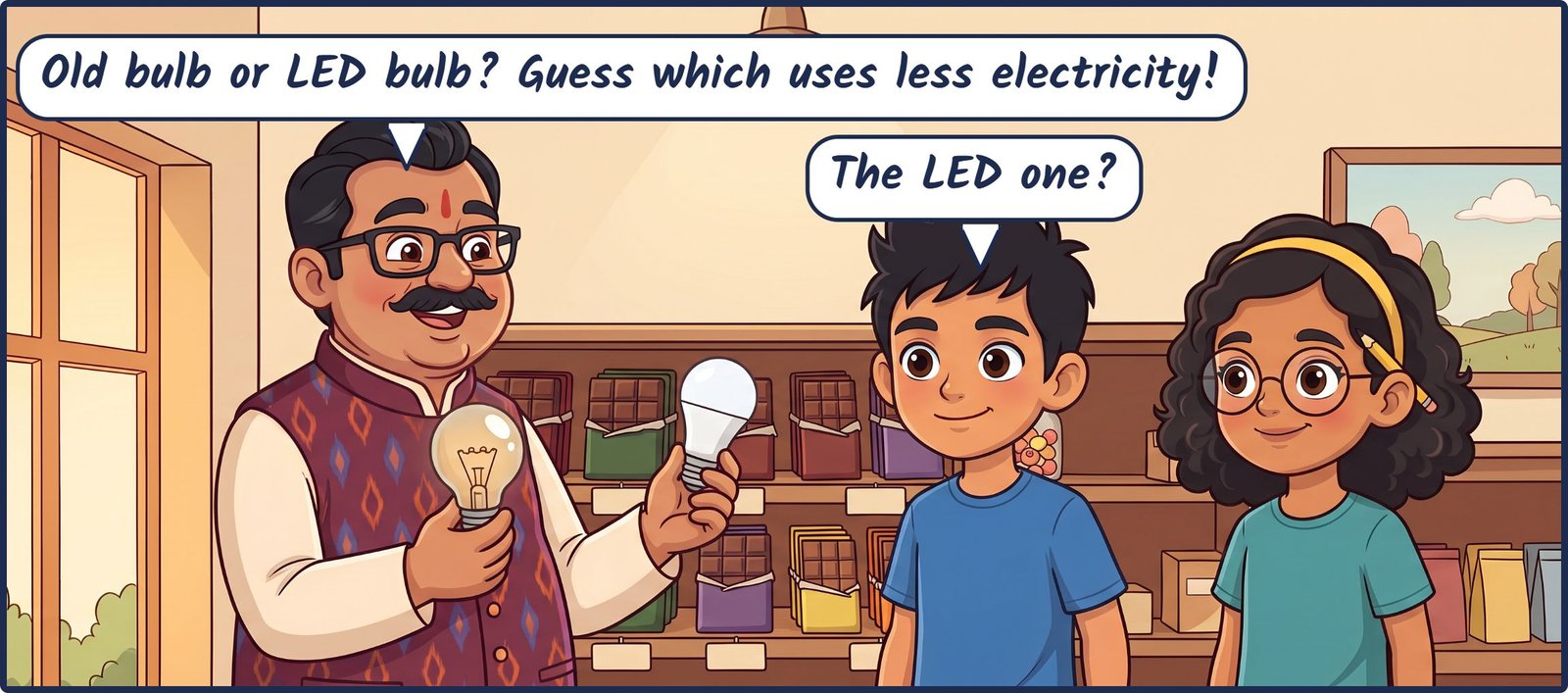
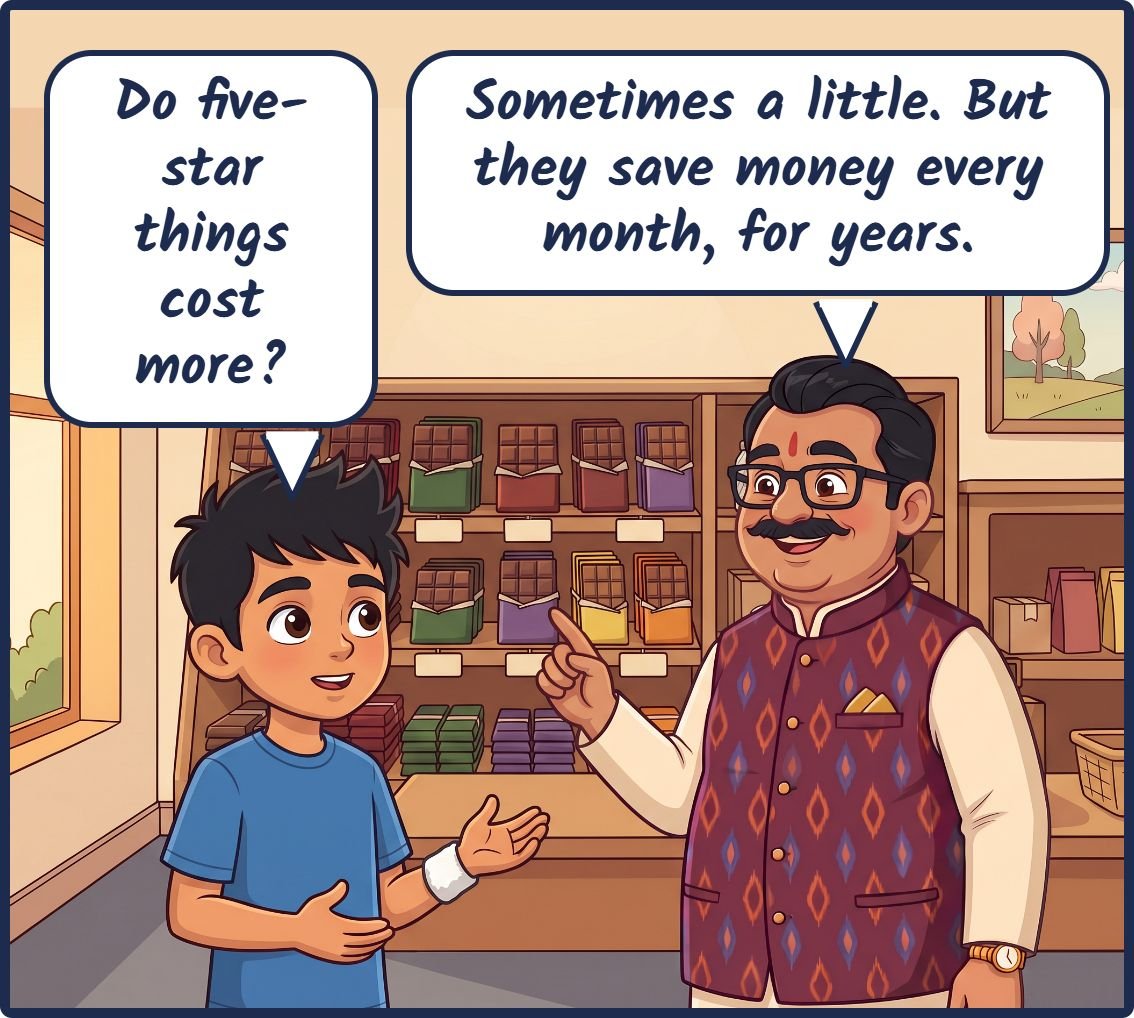
Old bulb or LED bulb? Guess which uses less electricity! The LED one? Right! An LED gives the same light with much less electricity. Same light, less money. Easy win! And see this label? More stars mean less electricity. Five stars, like a fancy hotel! Do five-star things cost more? Sometimes a little. But they save money every month, for years. Clue: LEDs and more stars save electricity. Let's tell Appa before he buys a new fan!
Water warriors

DRIP… DRIP… DRIP… Appa, this tap drips all night! Just a worn-out washer. A tiny rubber ring, and it's fixed! One drip at a time, buckets get wasted. A bucket bath uses much less water than a long shower. And it's faster. More time for breakfast! And turn the tap OFF while brushing! Mmf-mmf! (That means okay.) Water costs money too. And clean water is precious for everyone. Water warriors, ACTIVATE!
Water's second life

Our water purifier throws away some water. We collect it here. What for? For mopping the floor! It's clean enough for that. Water with a second job! And the water I wash rice in goes to my plants. Do the plants like it? They love it! Look how green my tulsi is. Water that gets used twice! In my village, we never wasted a single drop. Ajji, you were the first Waste-Not Gang!
Repair, don't replace

My shoe is TALKING! I need new shoes! New ones cost ₹800. Let's ask Mani Anna first. At Mani Anna's stall Only the sole is loose, beta. I can stitch it for ₹60. Just ₹60? Instead of ₹800? And these shoes will last many more months! That saves ₹740! These are example prices, Kabir. Repairing is my work. It saves families money every day. Good as new! Thank you, Mani Anna! Come back anytime. Shoes, bags, umbrellas!
Reuse magic
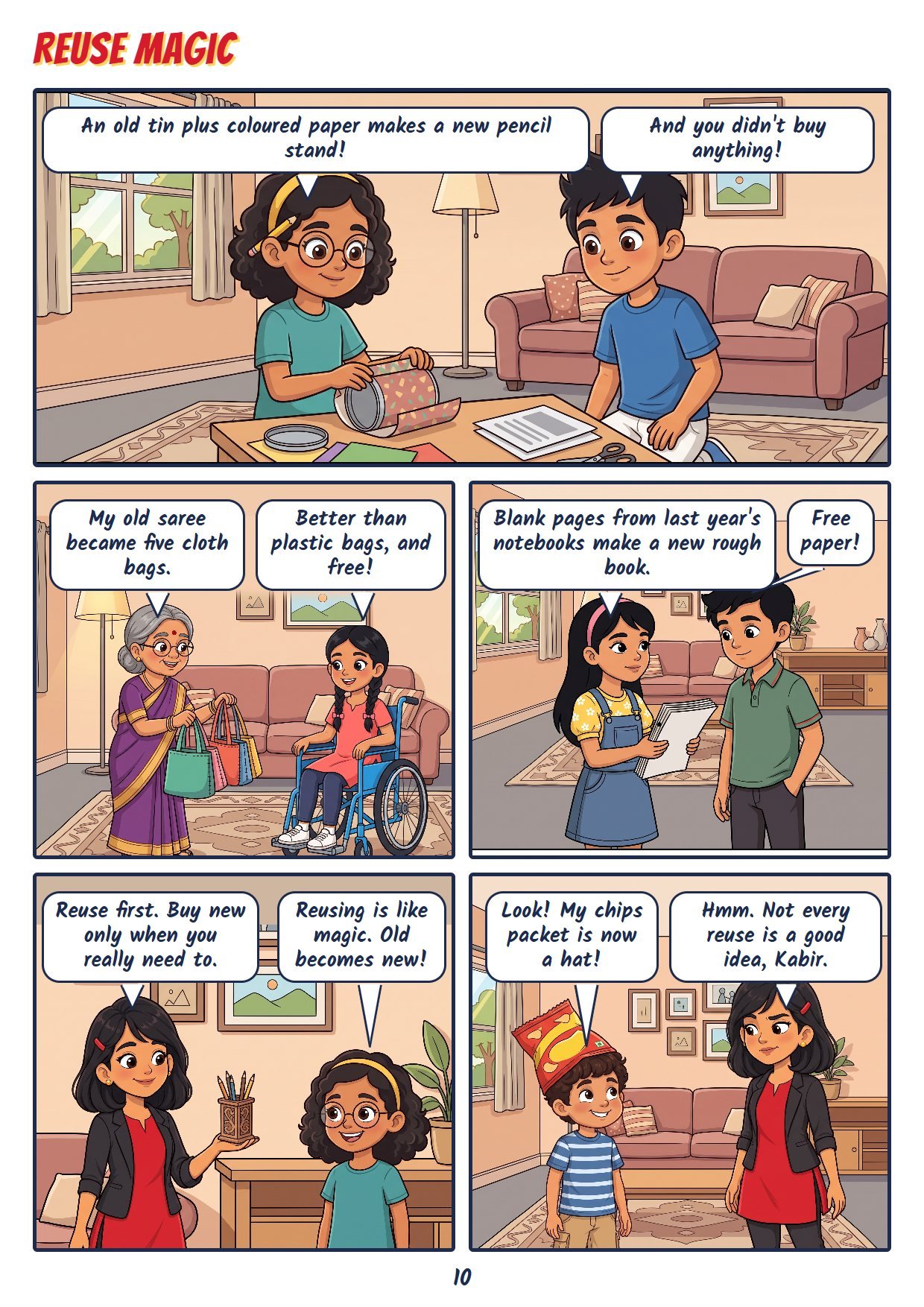
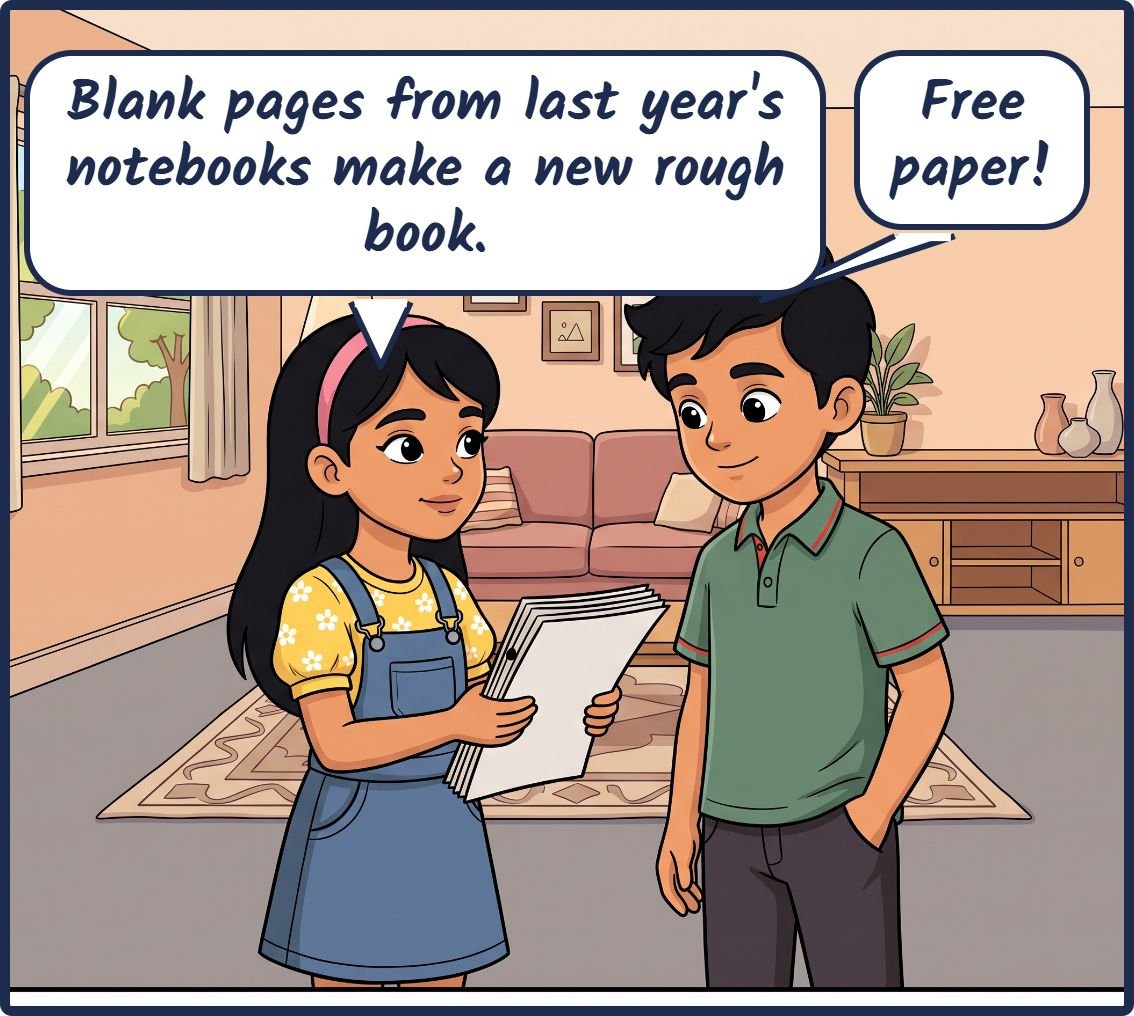
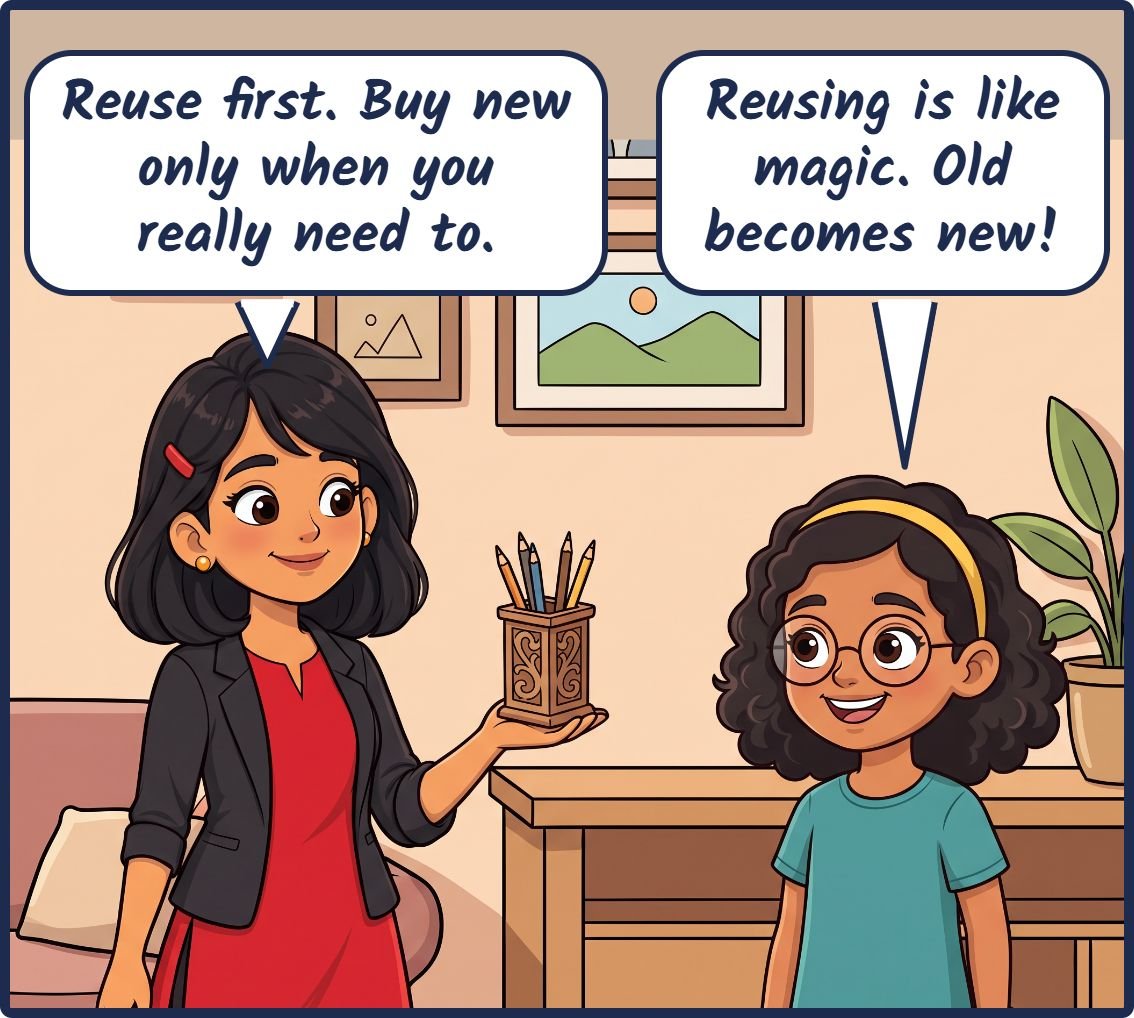
An old tin plus coloured paper makes a new pencil stand! And you didn't buy anything! My old saree became five cloth bags. Better than plastic bags, and free! Blank pages from last year's notebooks make a new rough book. Free paper! Reuse first. Buy new only when you really need to. Reusing is like magic. Old becomes new! Look! My chips packet is now a hat! Hmm. Not every reuse is a good idea, Kabir.
Food is precious

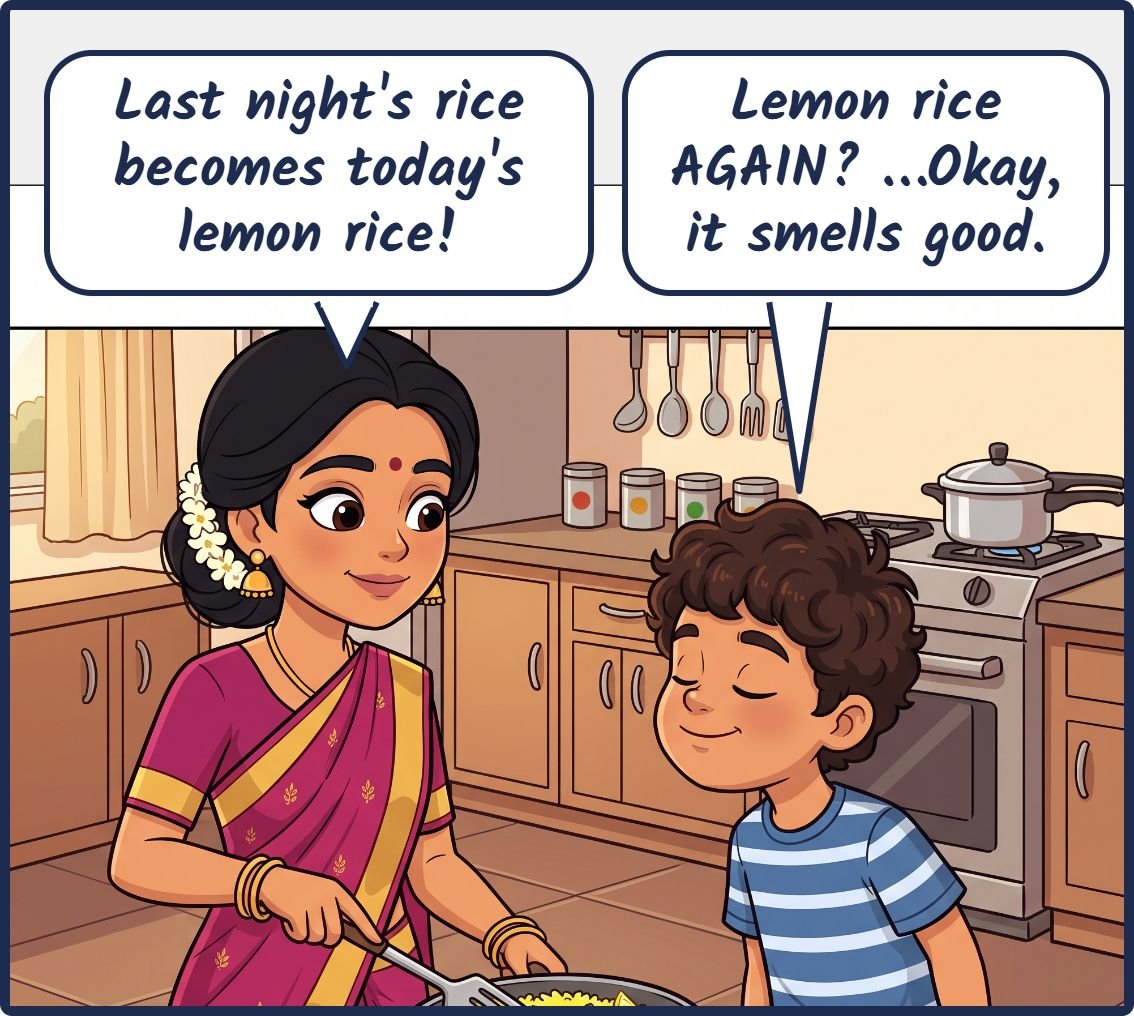
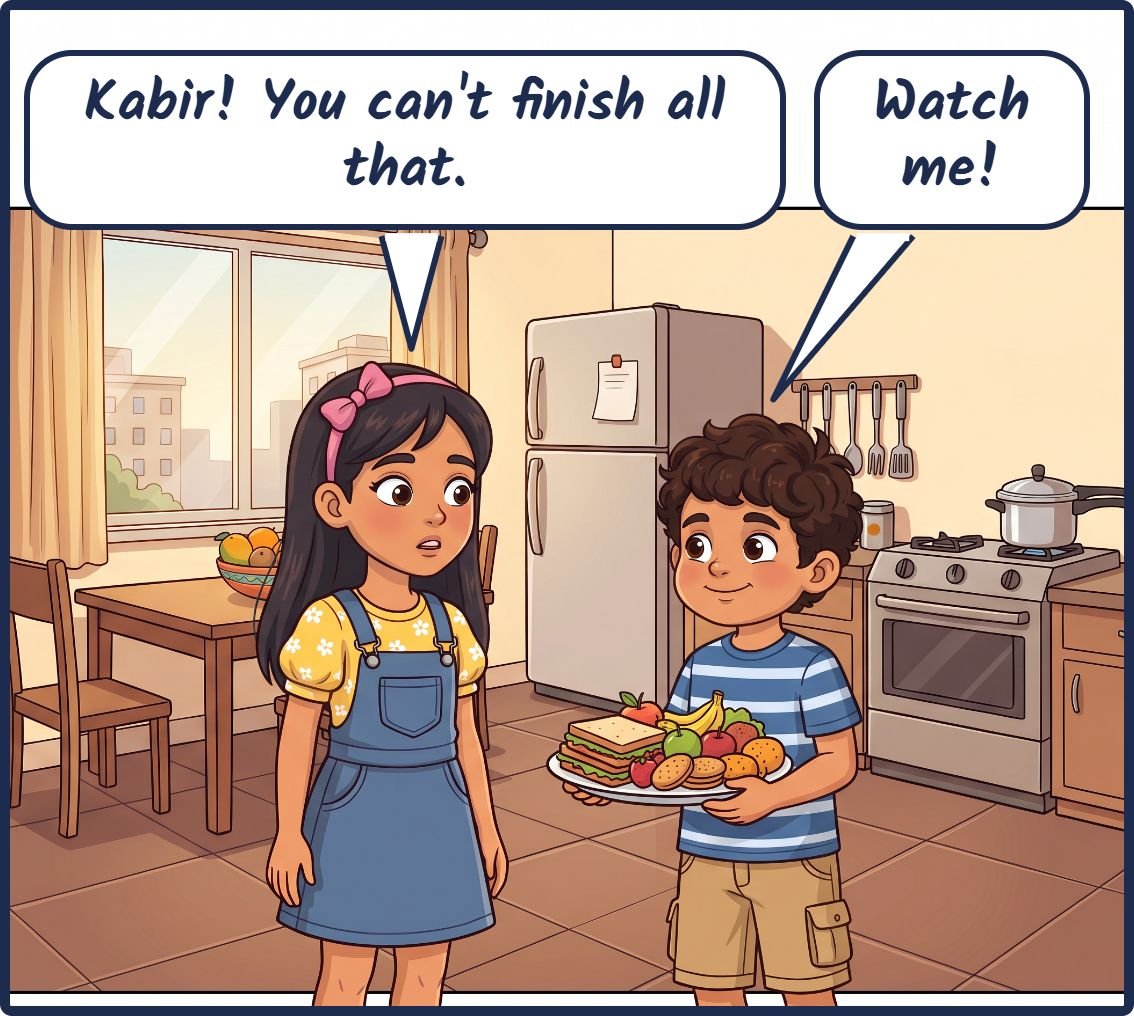
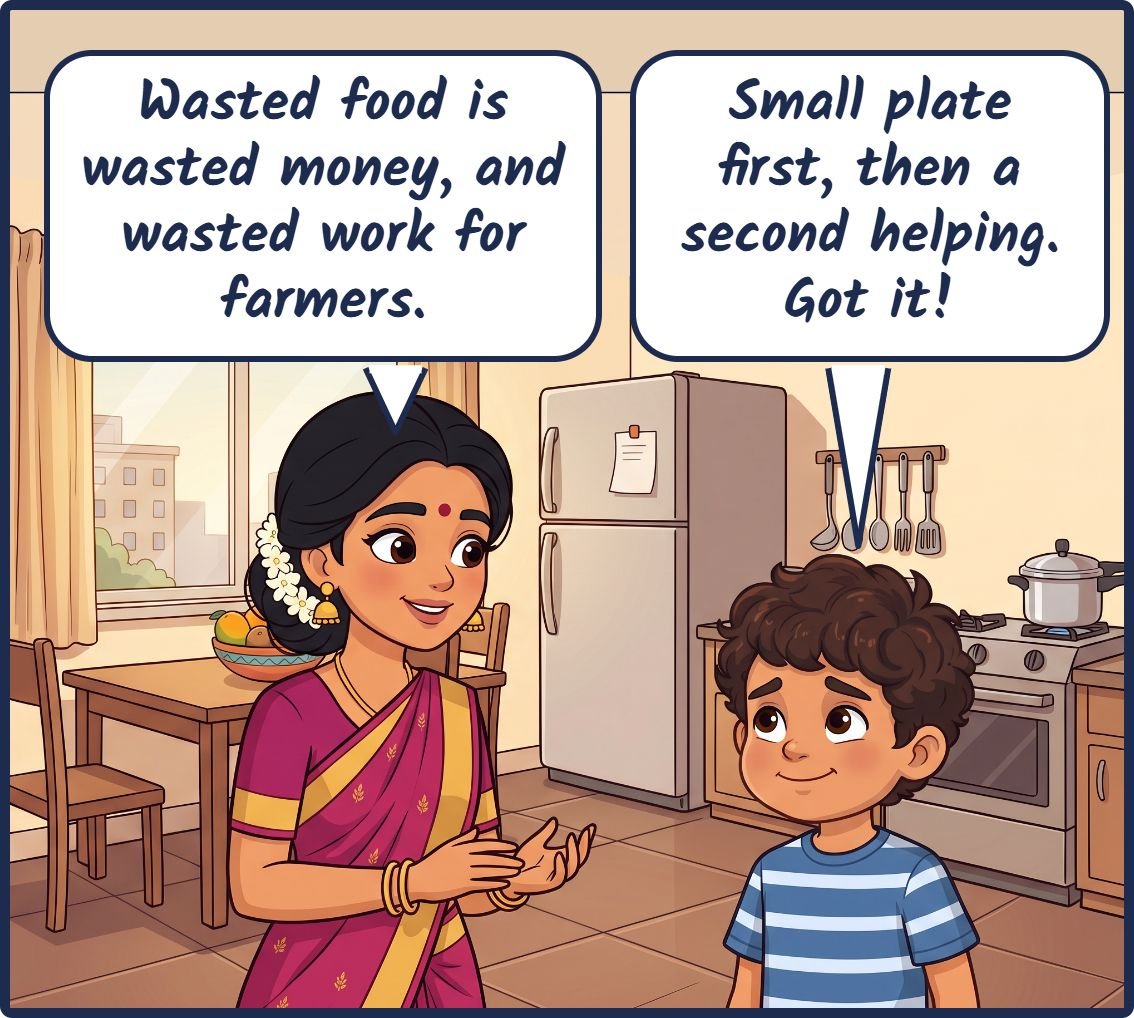
Cook the right amount, and less food goes in the bin. Food costs money too! Last night's rice becomes today's lemon rice! Lemon rice AGAIN? …Okay, it smells good. Kabir! You can't finish all that. Watch me! I… can't… finish… Take only what you can eat. You can always take more. Wasted food is wasted money, and wasted work for farmers. Small plate first, then a second helping. Got it!
Small savings add up

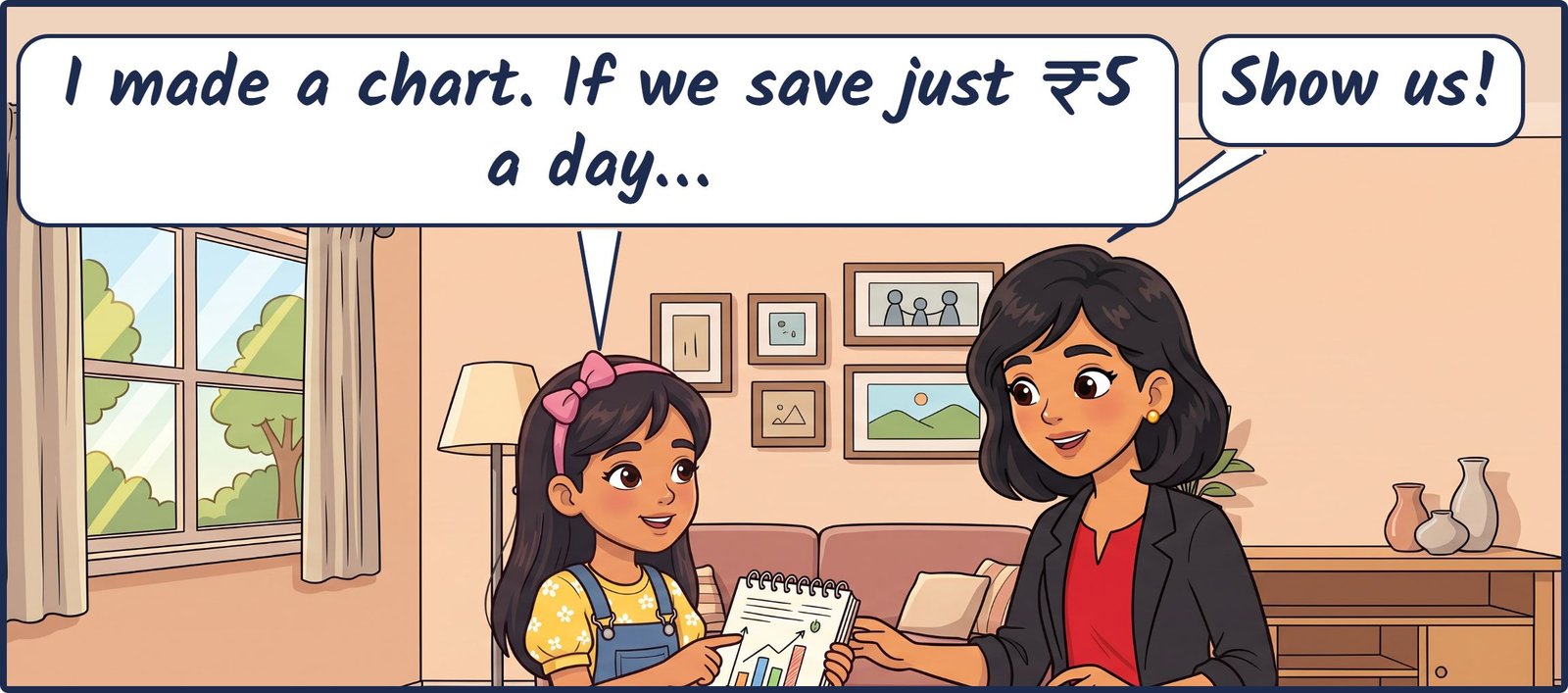
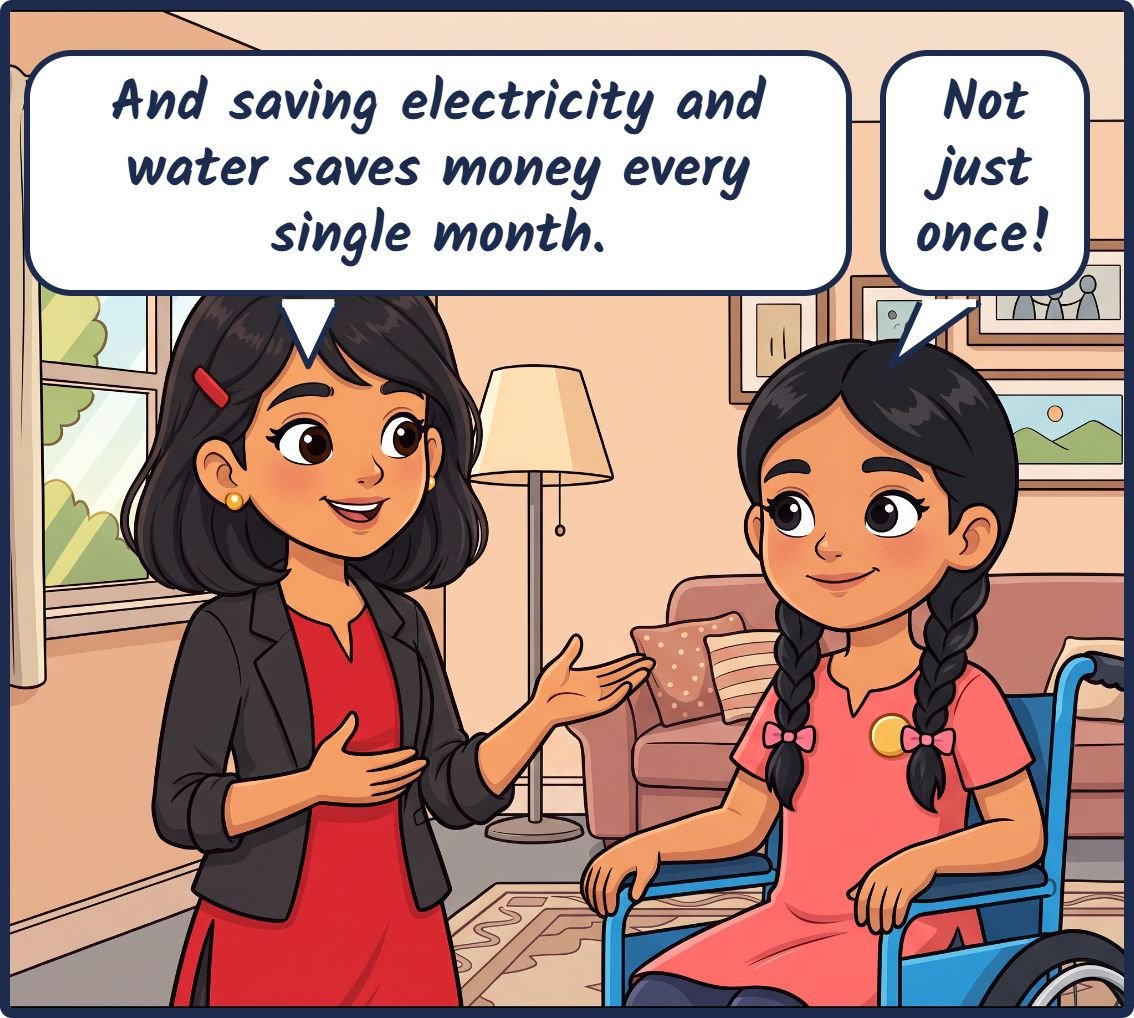
I made a chart. If we save just ₹5 a day… Show us! ₹5 a day is ₹150 a month! And ₹1,800 a year! ₹1,800, just from switching things off? Small savings add up, like drops filling a bucket! And saving electricity and water saves money every single month. Not just once! Singles win matches, not just sixes! And small drops fill big buckets.
Halfway check

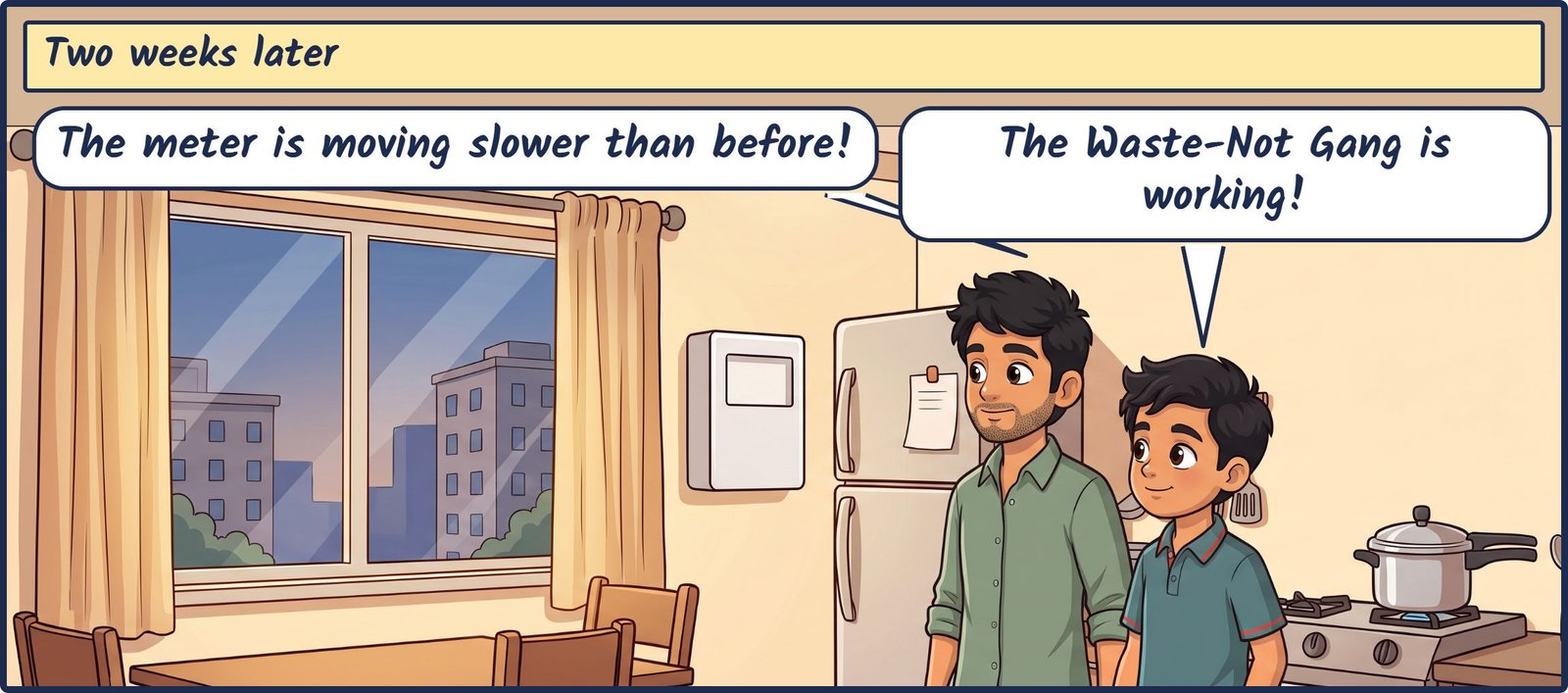
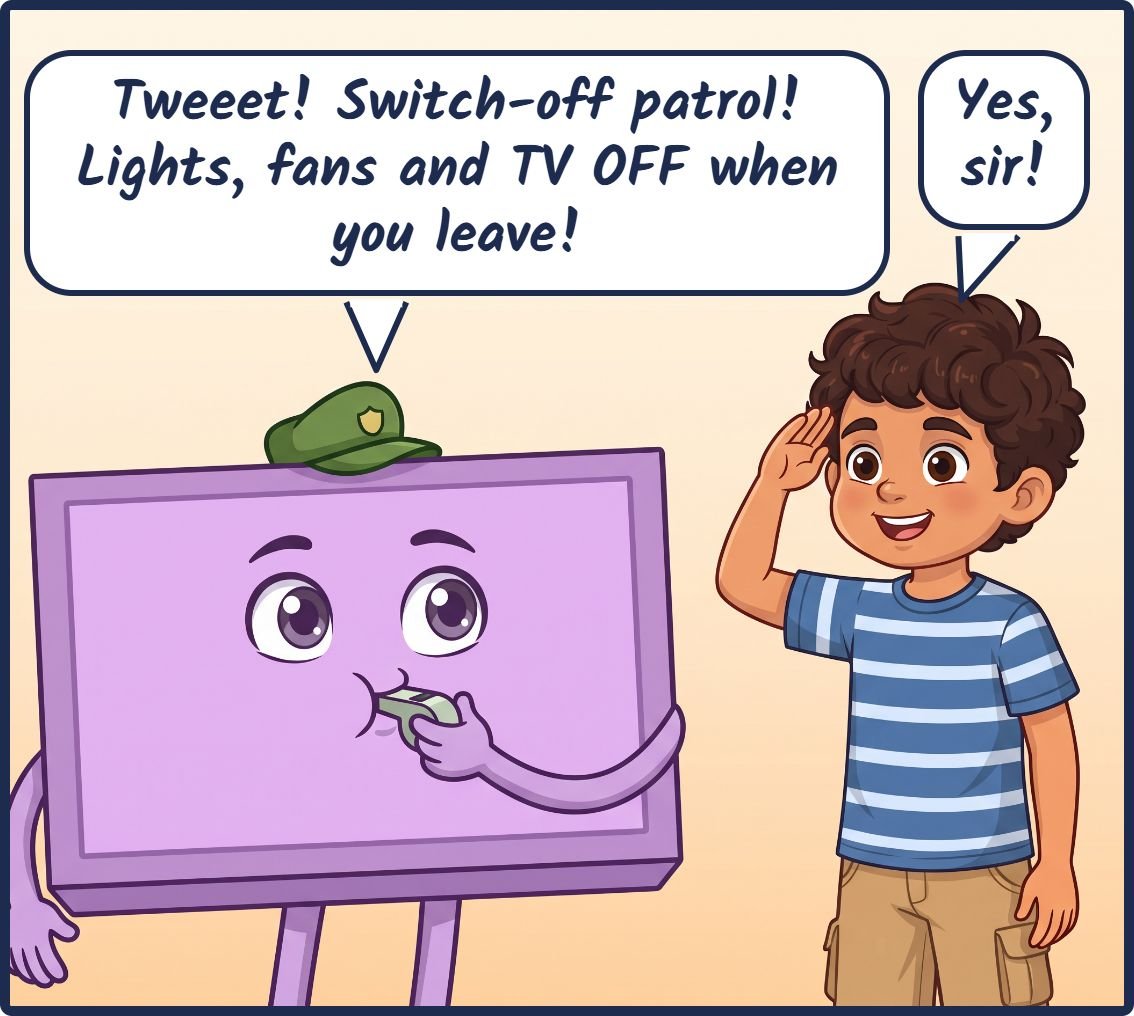
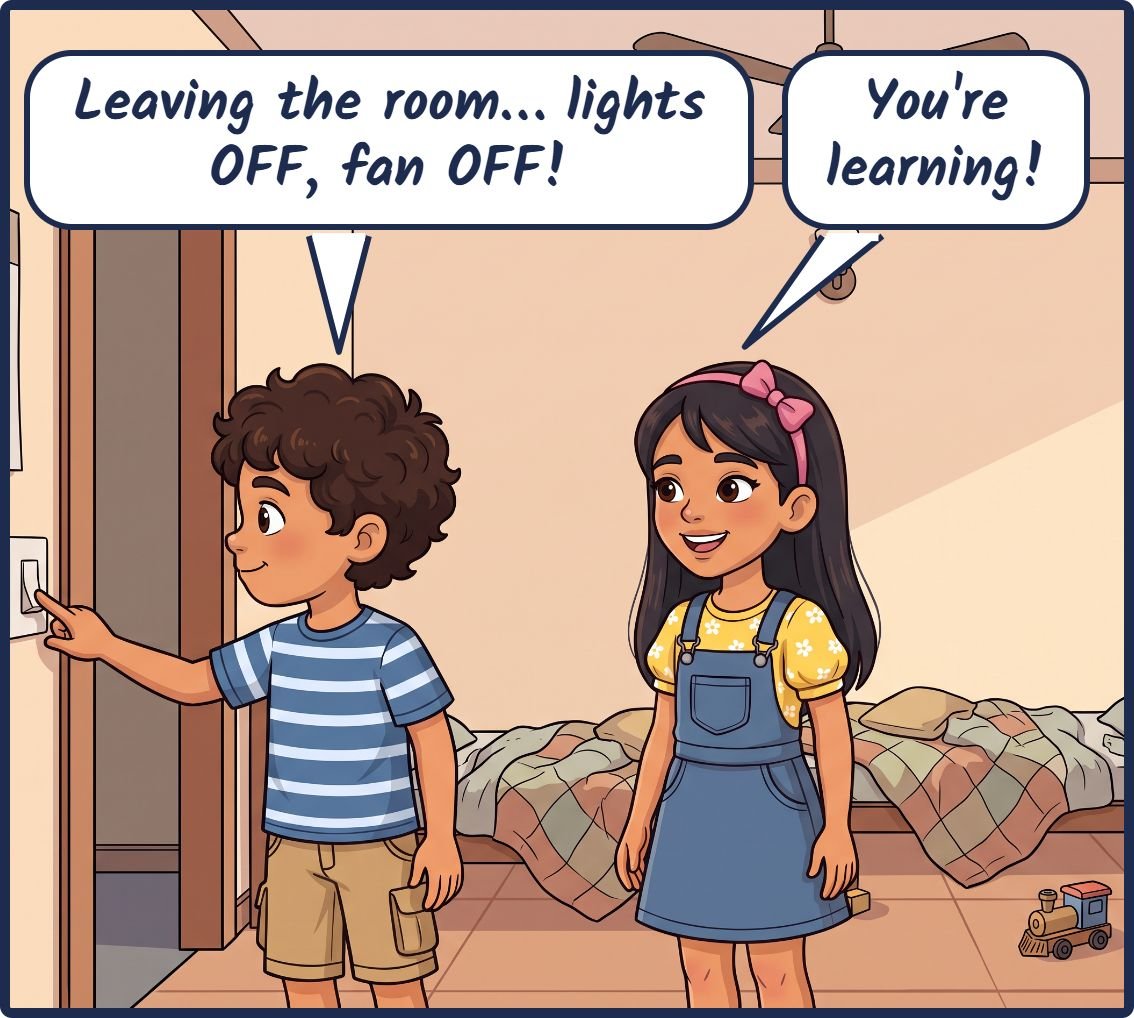
Two weeks later The meter is moving slower than before! The Waste-Not Gang is working! Kabir! The TV is on, and you were in the kitchen! Oops. I was… guarding the snacks. Tweeet! Switch-off patrol! Lights, fans and TV OFF when you leave! Yes, sir! Leaving the room… lights OFF, fan OFF! You're learning! I made reminders for every switch! Can I have one shaped like a cricket bat?
The new bill

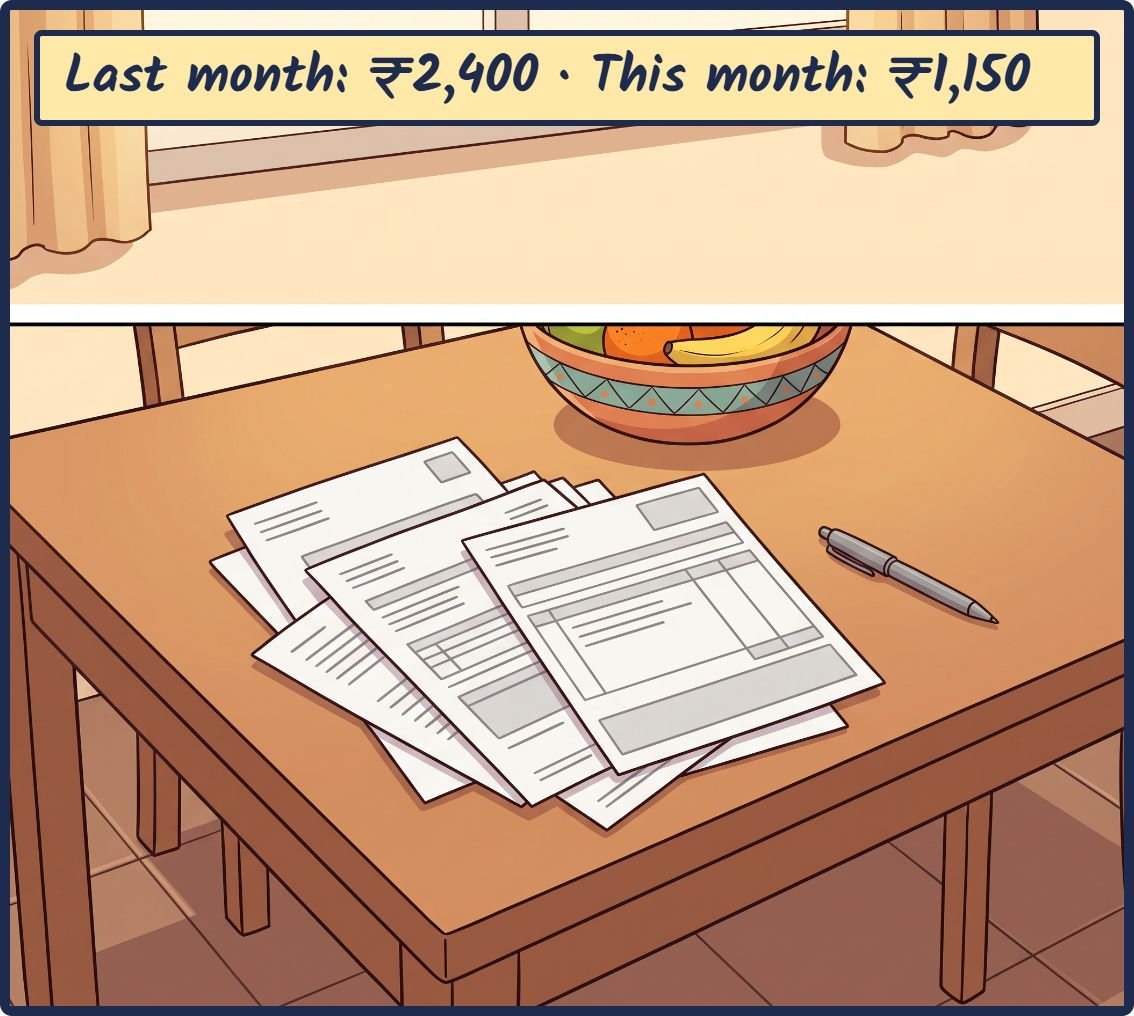
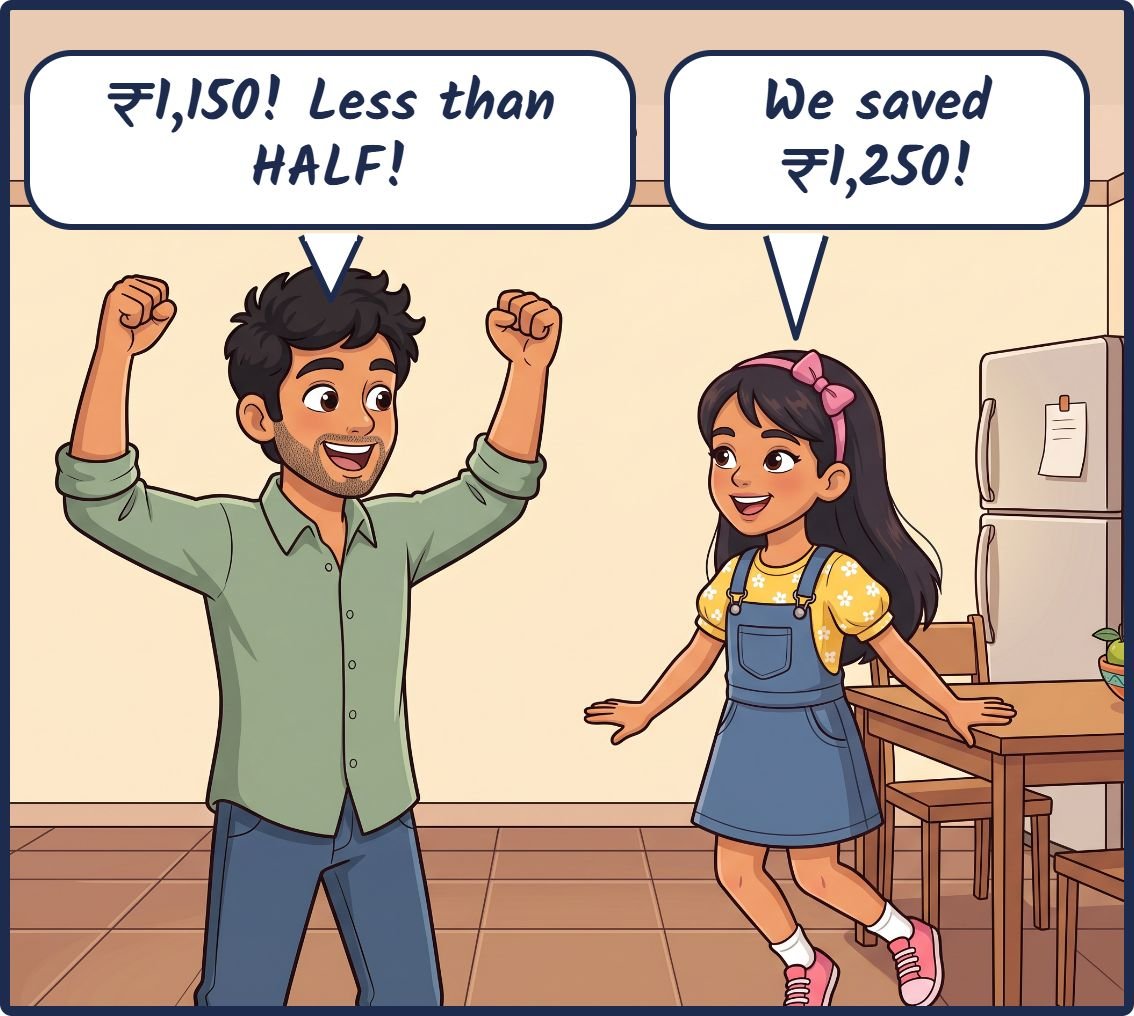
One month later: the new bill! The new bill is… Last month: ₹2,400 · This month: ₹1,150 ₹1,150! Less than HALF! We saved ₹1,250! As promised: ₹1,250 goes into the zoo-trip jar! ELEPHANTS, here we come! You saved money, and nobody was less comfortable. Just smarter!
Good for the Earth
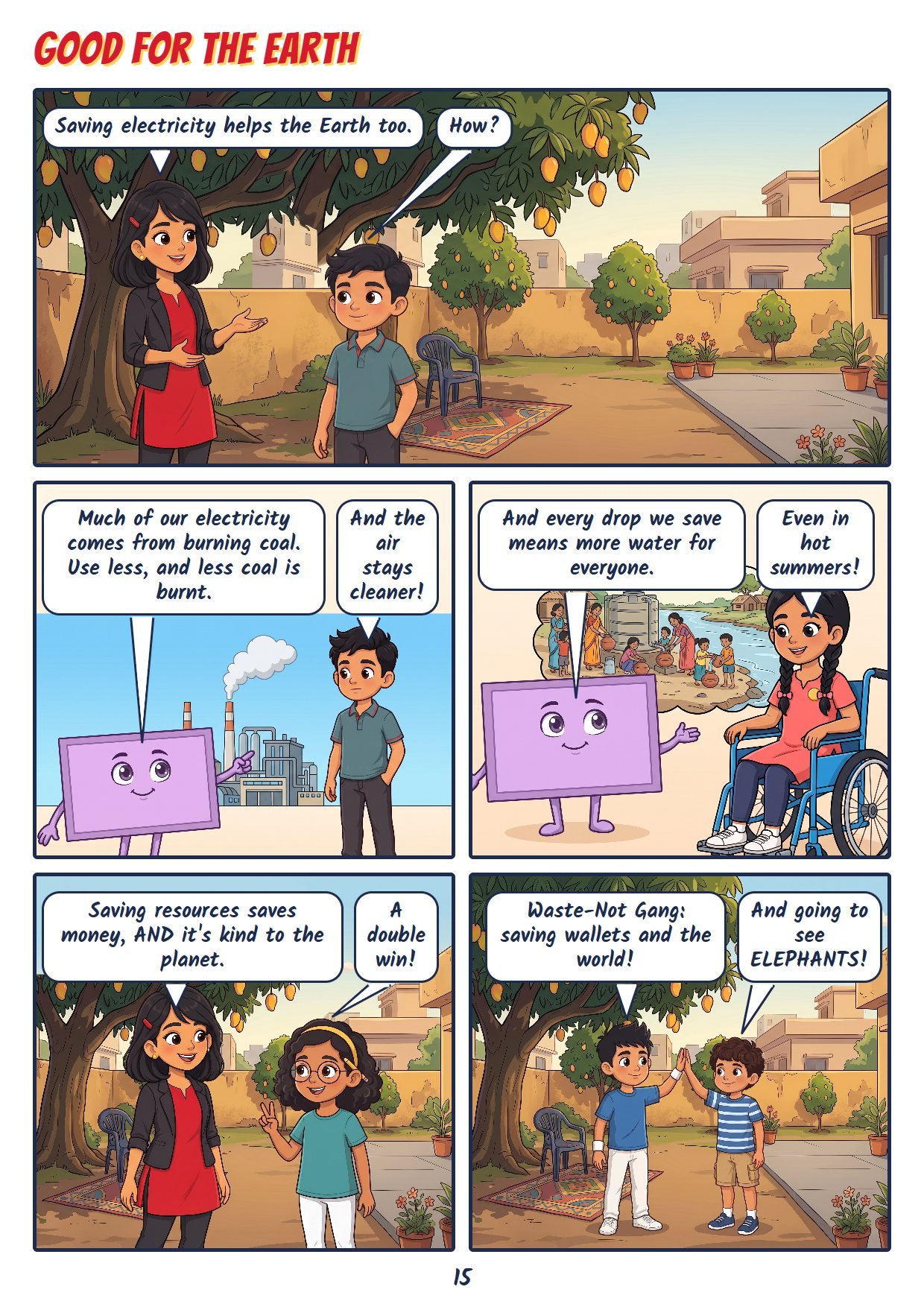
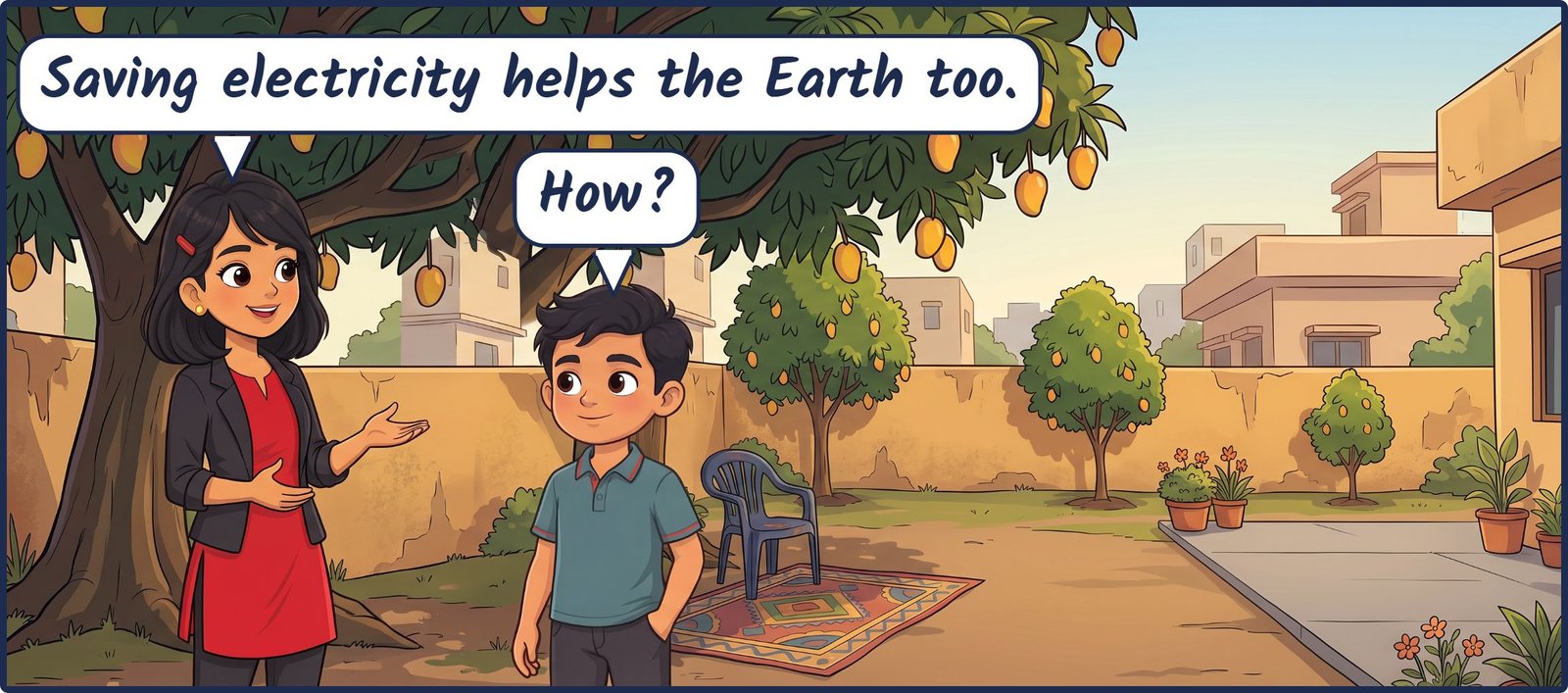
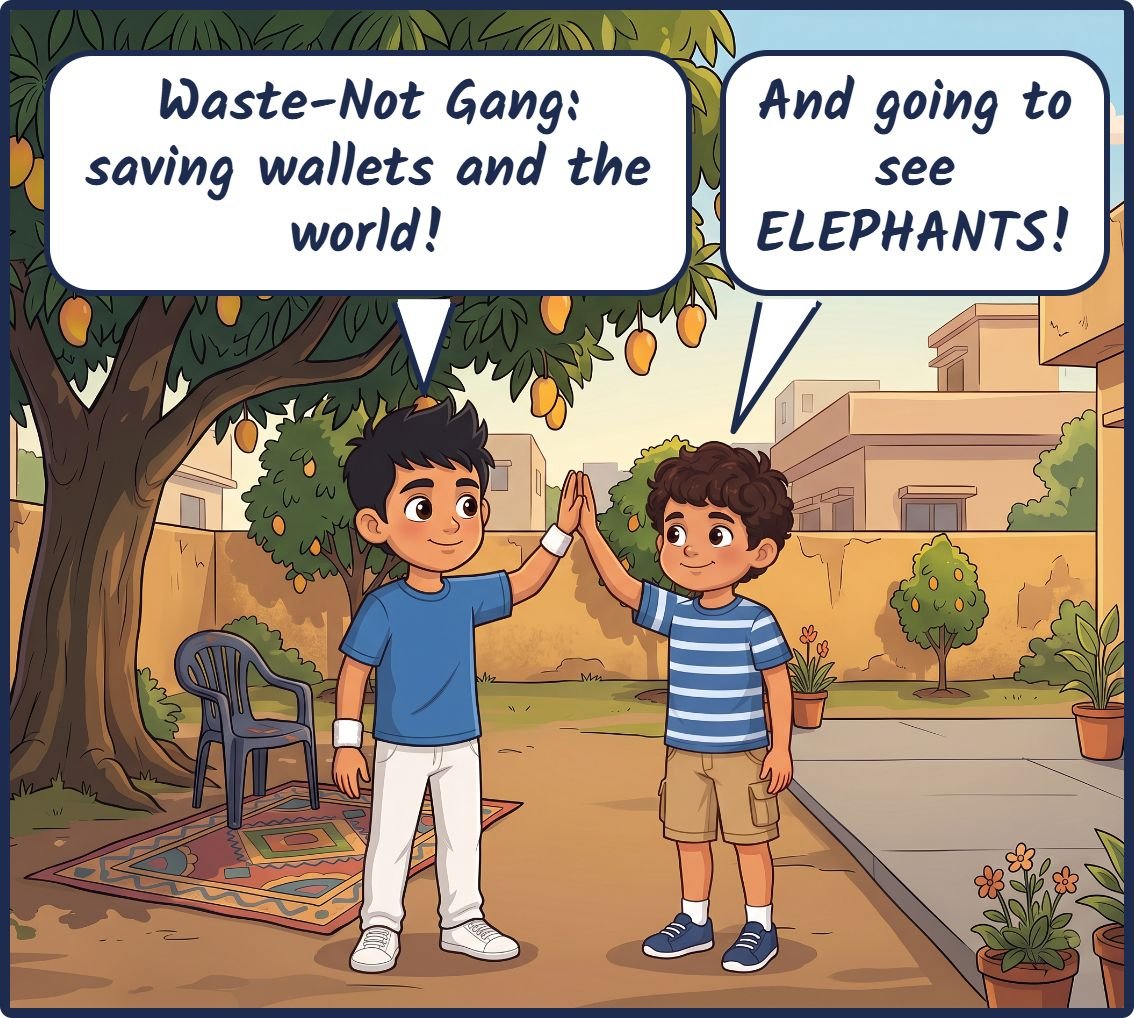
Saving electricity helps the Earth too. How? Much of our electricity comes from burning coal. Use less, and less coal is burnt. And the air stays cleaner! And every drop we save means more water for everyone. Even in hot summers! Saving resources saves money, AND it's kind to the planet. A double win! Waste-Not Gang: saving wallets and the world! And going to see ELEPHANTS!
Waste-Not forever

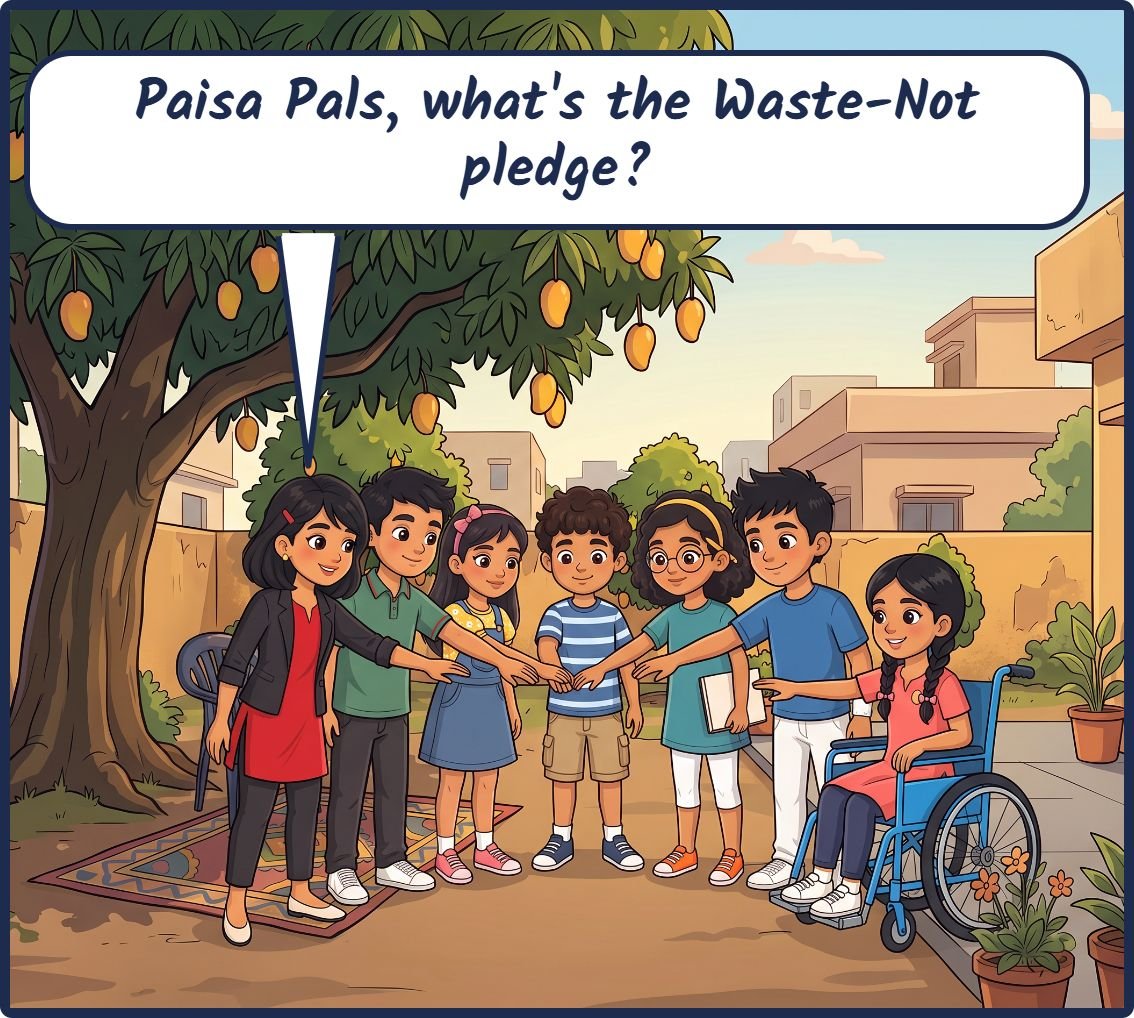
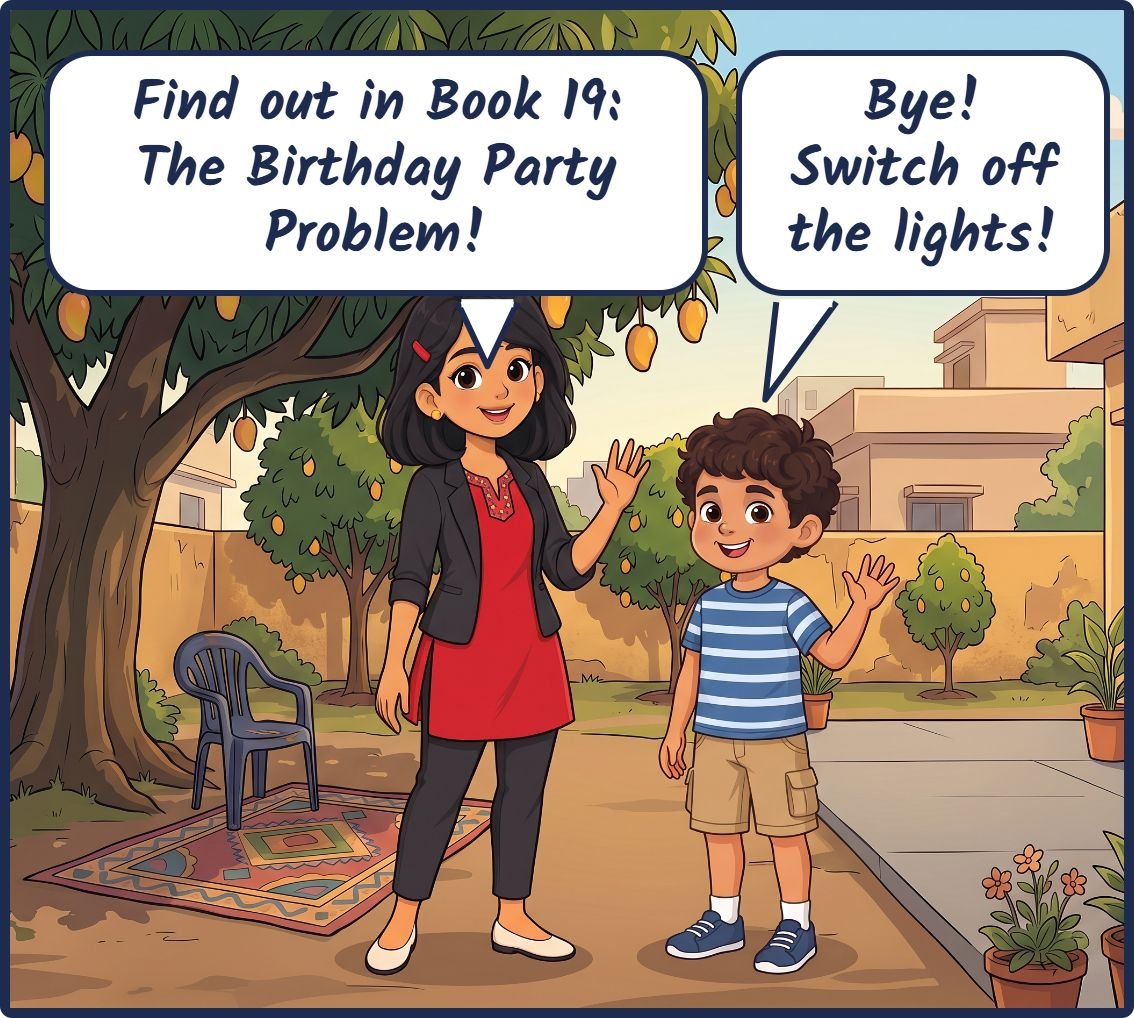
Paisa Pals, what's the Waste-Not pledge? Switch off what you don't use. AC at 24. Fix every drip. Repair, reuse, and take only what you can eat! And small savings add up, every single month! Waste-Not, forever! Squeak! Lights off! My birthday is next month. I want a party BIGGER than Rohan's! Uh-oh. Find out in Book 19: The Birthday Party Problem! Bye! Switch off the lights!
Srestha's Money Tips
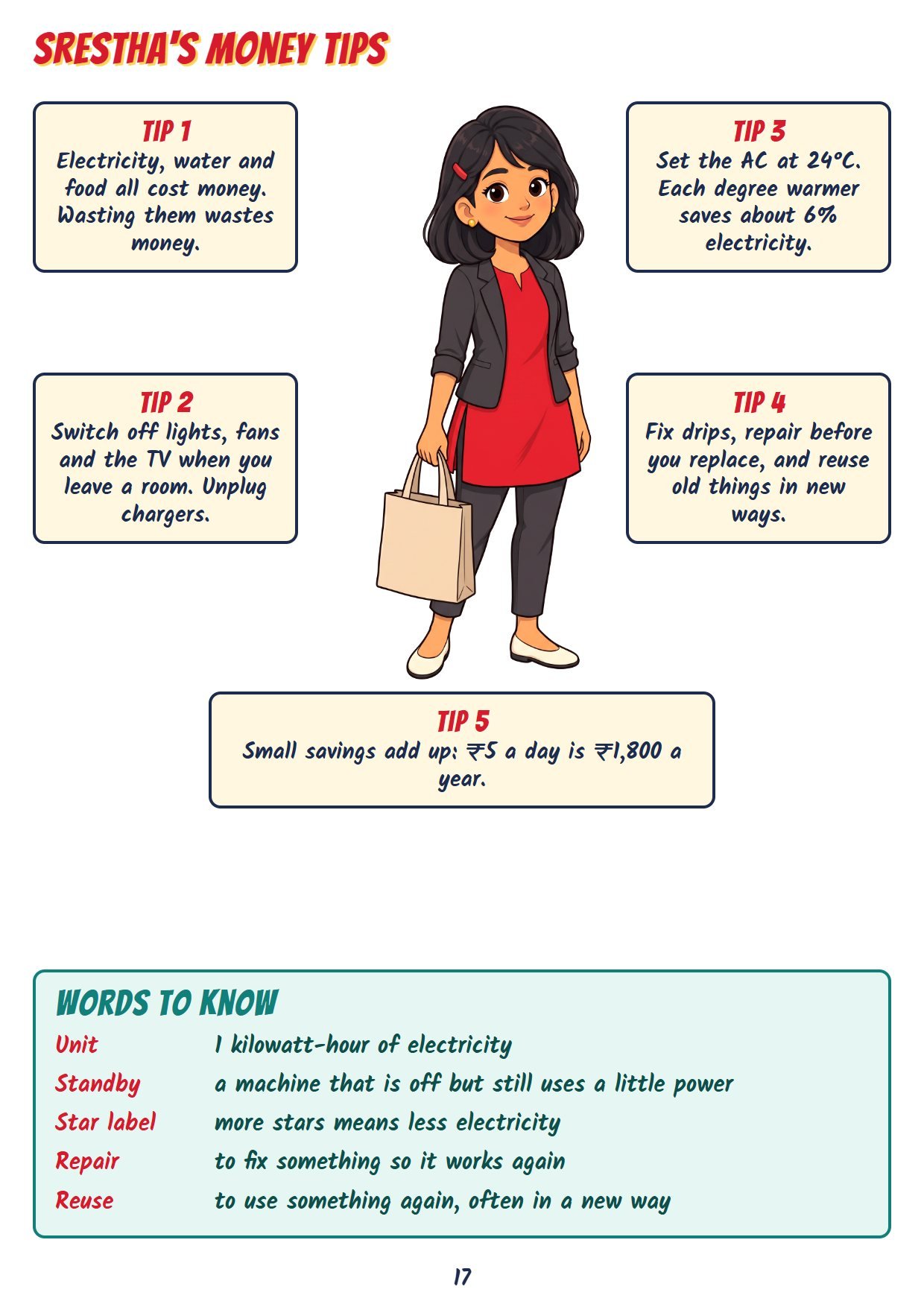
- Electricity, water and food all cost money. Wasting them wastes money.
- Switch off lights, fans and the TV when you leave a room. Unplug chargers.
- Set the AC at 24°C. Each degree warmer saves about 6% electricity.
- Fix drips, repair before you replace, and reuse old things in new ways.
- Small savings add up: ₹5 a day is ₹1,800 a year.
Words to know
- Unit
- 1 kilowatt-hour of electricity
- Standby
- a machine that is off but still uses a little power
- Star label
- more stars means less electricity
- Repair
- to fix something so it works again
- Reuse
- to use something again, often in a new way
Quiz time!

1. 1 unit of electricity is…- A 1,000-watt heater on for 1 hour
- One light switch
- One plug
2. What AC setting does the BEE suggest?- 16°C
- 24°C
- 30°C
3. What do more stars on an energy label mean?- A prettier box
- More electricity
- Less electricity
4. Kabir's shoe sole came loose. What was the smart choice?- Repair it for ₹60
- Buy new shoes
- Throw it away
5. ₹5 saved every day is how much in a year?- ₹150
- ₹1,800
- ₹5
6. Why does saving electricity help the Earth?- It doesn't
- Electricity is made of gold
- Less coal is burnt
Answers: 1-a 2-b 3-c 4-a 5-b 6-c
Try this at home

Draw a line from each waste to its fix.
| The waste | The fix |
|---|
| Lights on in an empty room | Set it to 24°C |
| A dripping tap | Repair it |
| The AC at 18°C | Make lemon rice |
| A loose shoe sole | Switch them off |
| Leftover rice | Change the washer |
Be the Waste-Not Gang for 4 weeks
- With a grown-up, read the electricity meter once a week and write it down.
- Be the switch-off patrol: lights, fans, TV and chargers off when not in use.
- Find one dripping tap or one wasteful habit, and fix it together.
- Repair one thing instead of buying a new one.
- Put the money you save in a family jar, and decide together what it is for.
For parents and teachers
What this book teaches
That saving electricity, water and food saves money; what a unit of electricity is; standby power; setting the AC at 24°C and reading BEE star labels; repairing and reusing; cooking and serving the right amount; and how small daily savings add up.
Talk about it
- Where is energy or water wasted in our home?
- What could we repair instead of replacing?
- What shall we do with the money we save?
Good to know
- The amounts in this book are examples. Involve children in reading the electricity bill and the meter; it makes the savings real.
- The Bureau of Energy Efficiency says each 1°C warmer on an AC saves about 6% electricity; ACs come set to 24°C by default. More stars on the BEE label means less electricity.
- Repairing and reusing build good money habits and cut waste.
Paisa Pals is created by Srinivas Kambhampati, AMFI-registered Mutual Fund Distributor (ARN-265474, EUIN E091320), working under the brand Rytvae Consulting. This book is for financial awareness only. It does not recommend any bank, product, investment or scheme. More free comics: rytvae.com (Kids' Corner).































 ComicBook 19