The chocolate mystery

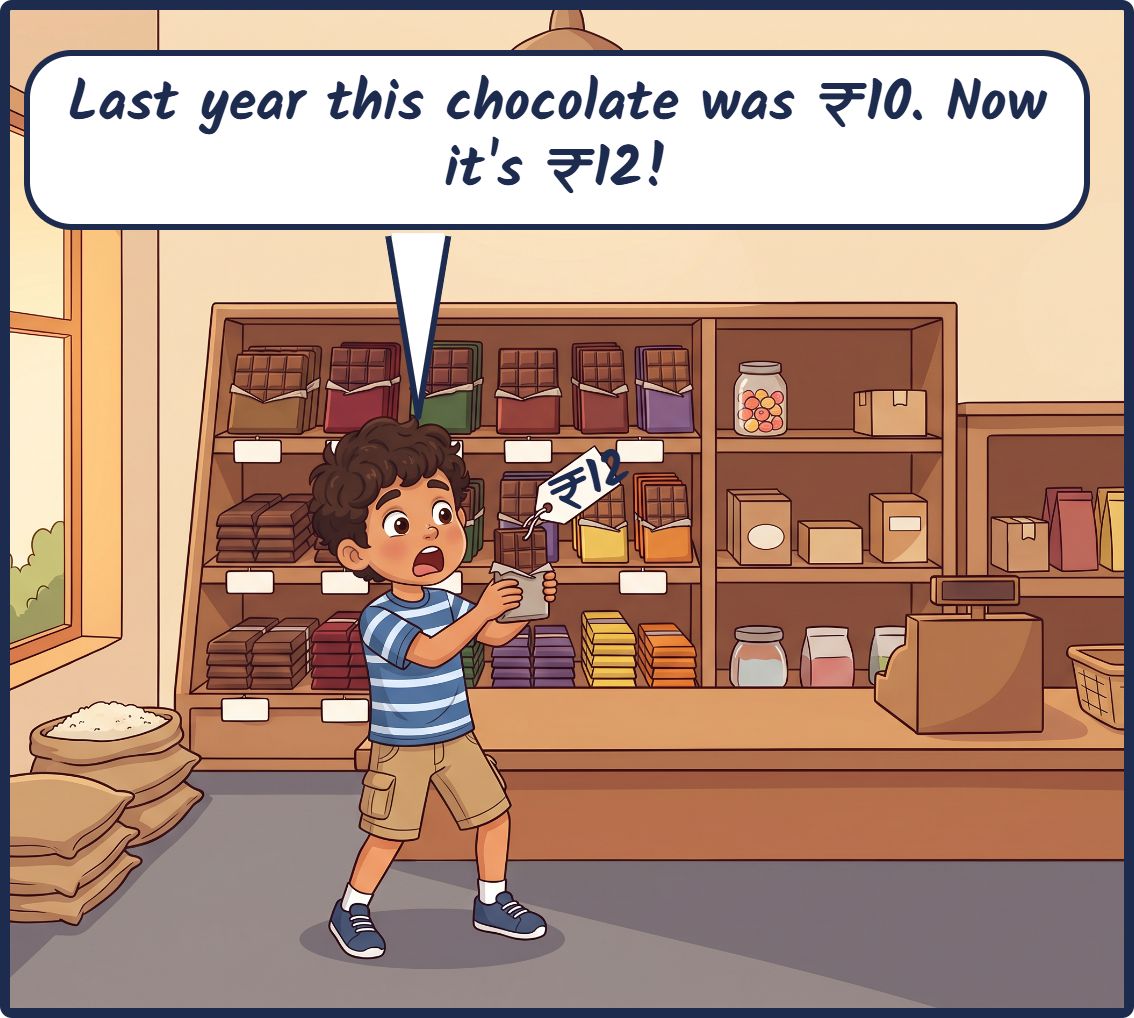
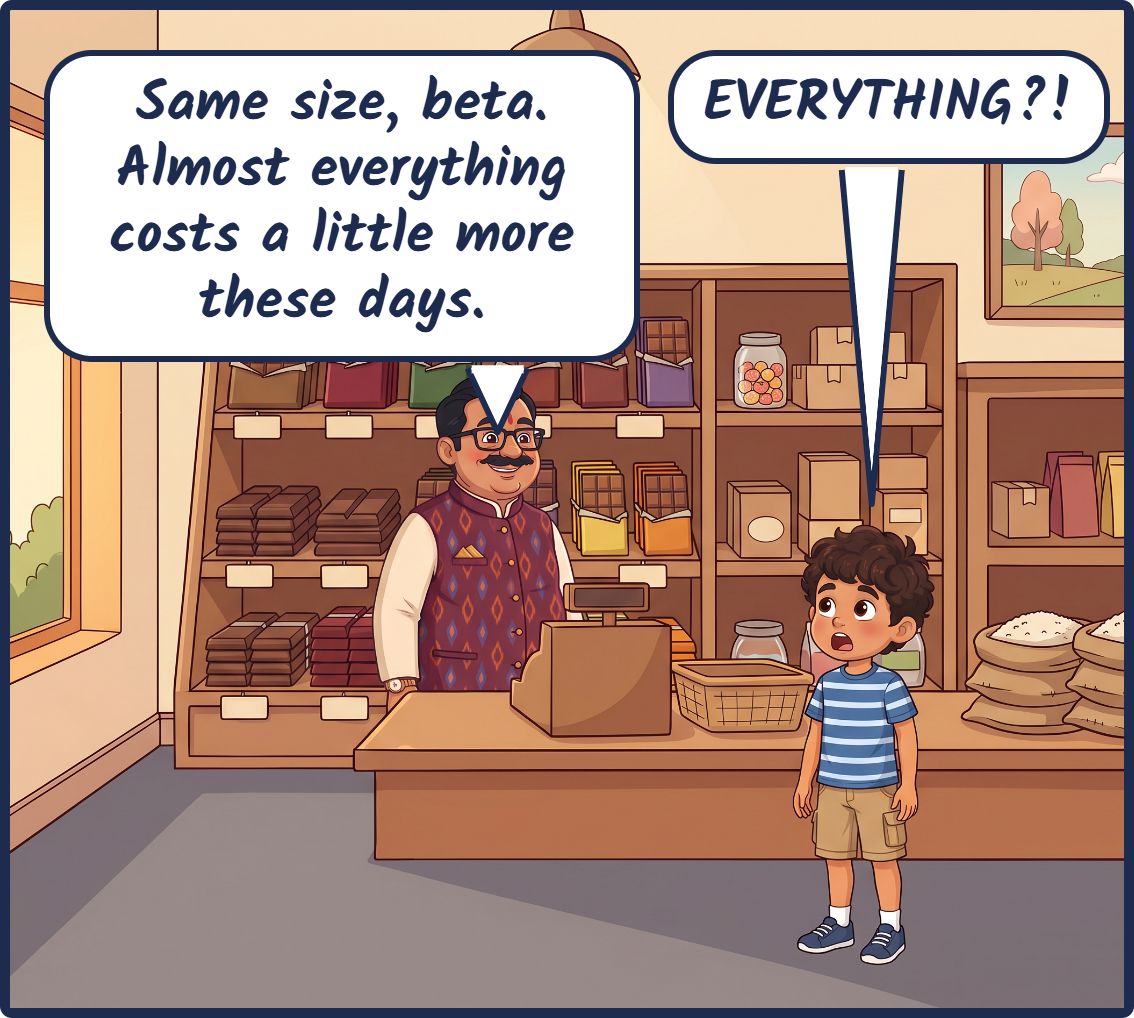
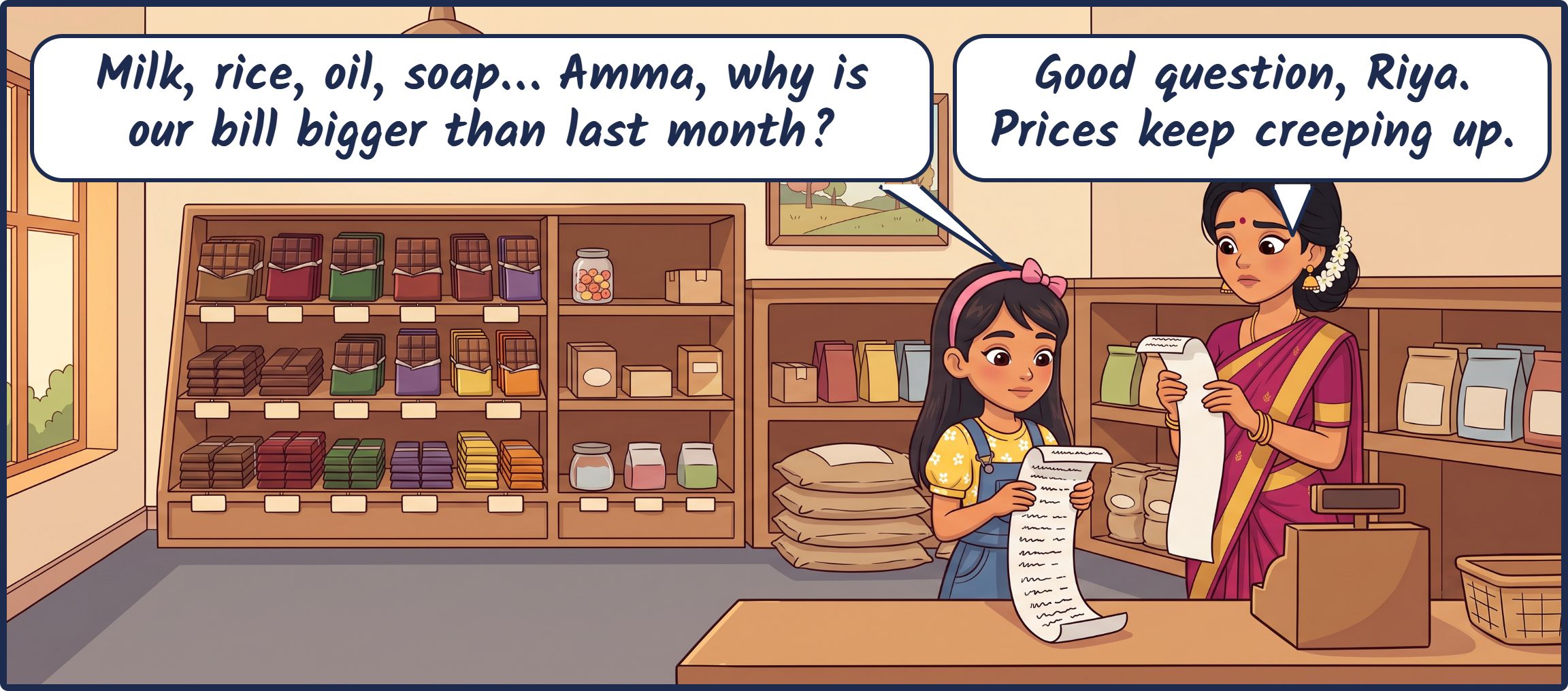
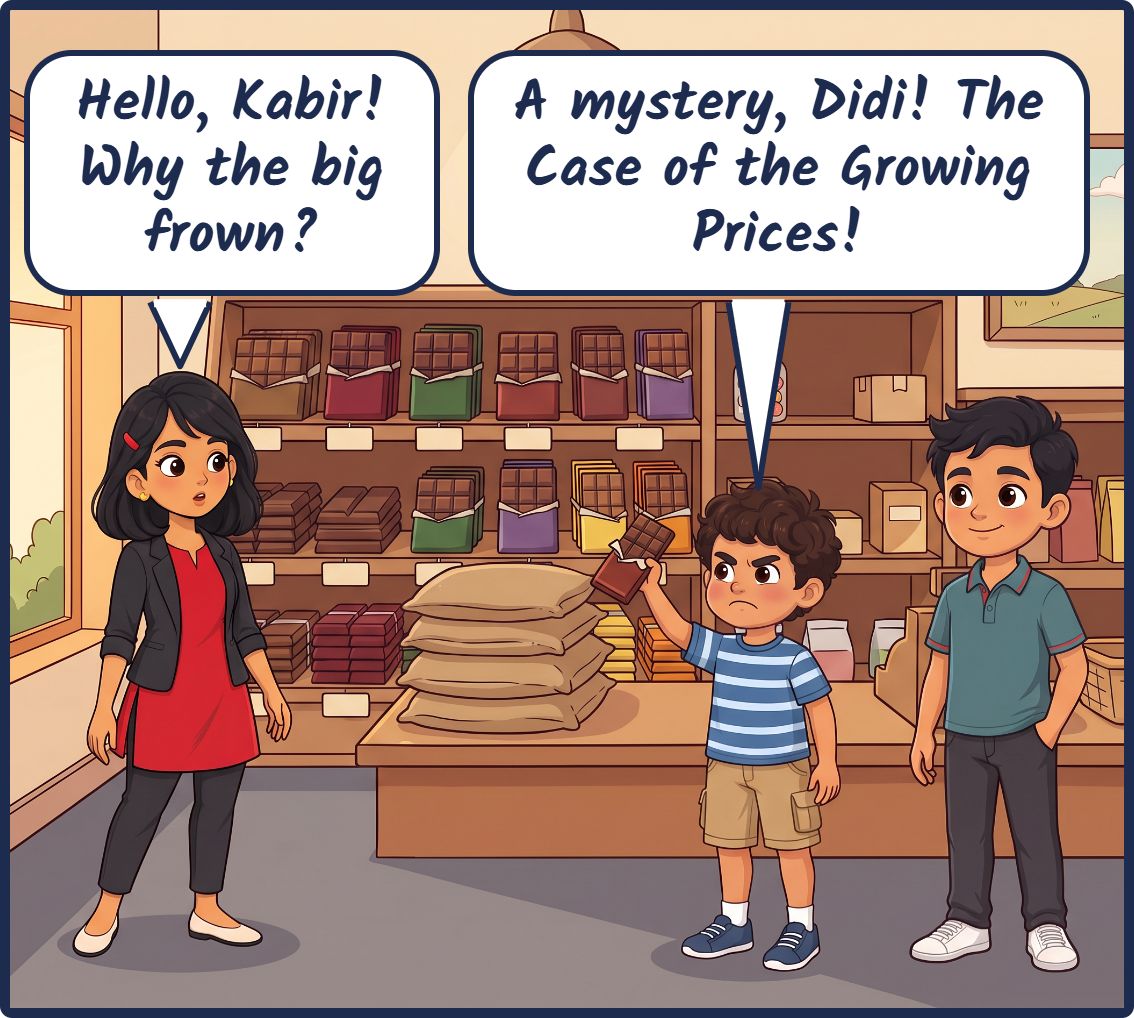
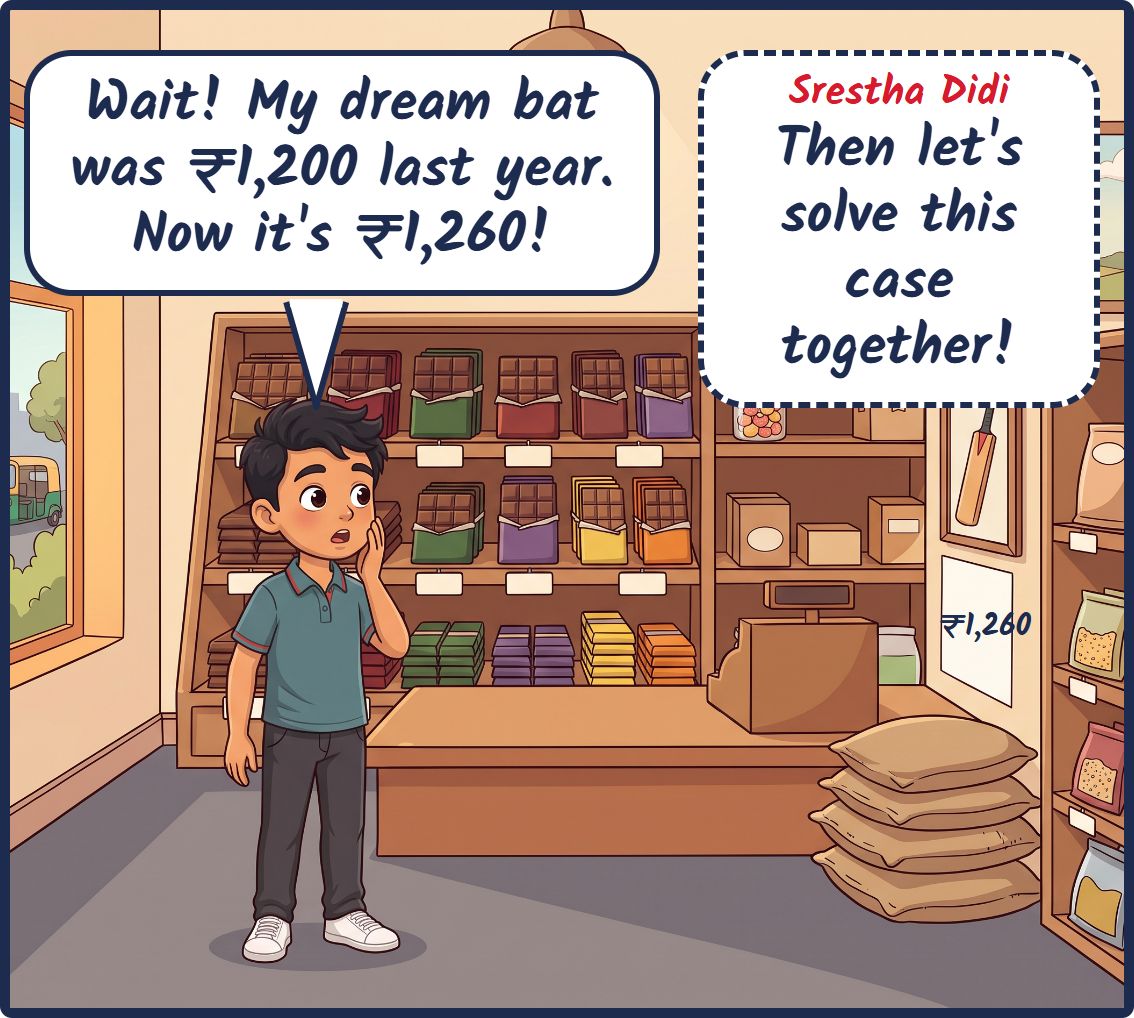
Last year this chocolate was ₹10. Now it's ₹12! Same size, beta. Almost everything costs a little more these days. EVERYTHING?! Milk, rice, oil, soap… Amma, why is our bill bigger than last month? Good question, Riya. Prices keep creeping up. Hello, Kabir! Why the big frown? A mystery, Didi! The Case of the Growing Prices! Wait! My dream bat was ₹1,200 last year. Now it's ₹1,260! Then let's solve this case together!
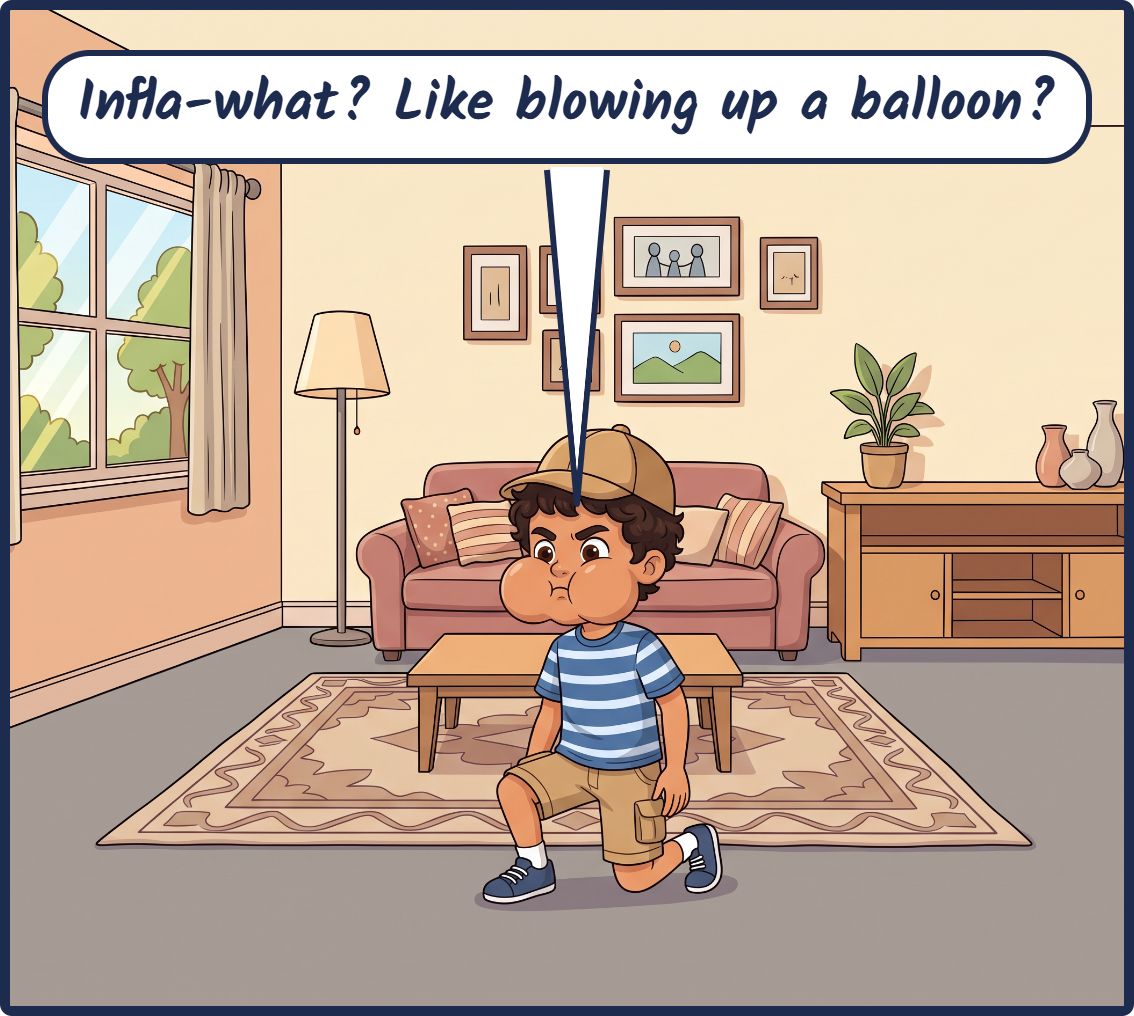
Like a balloon?
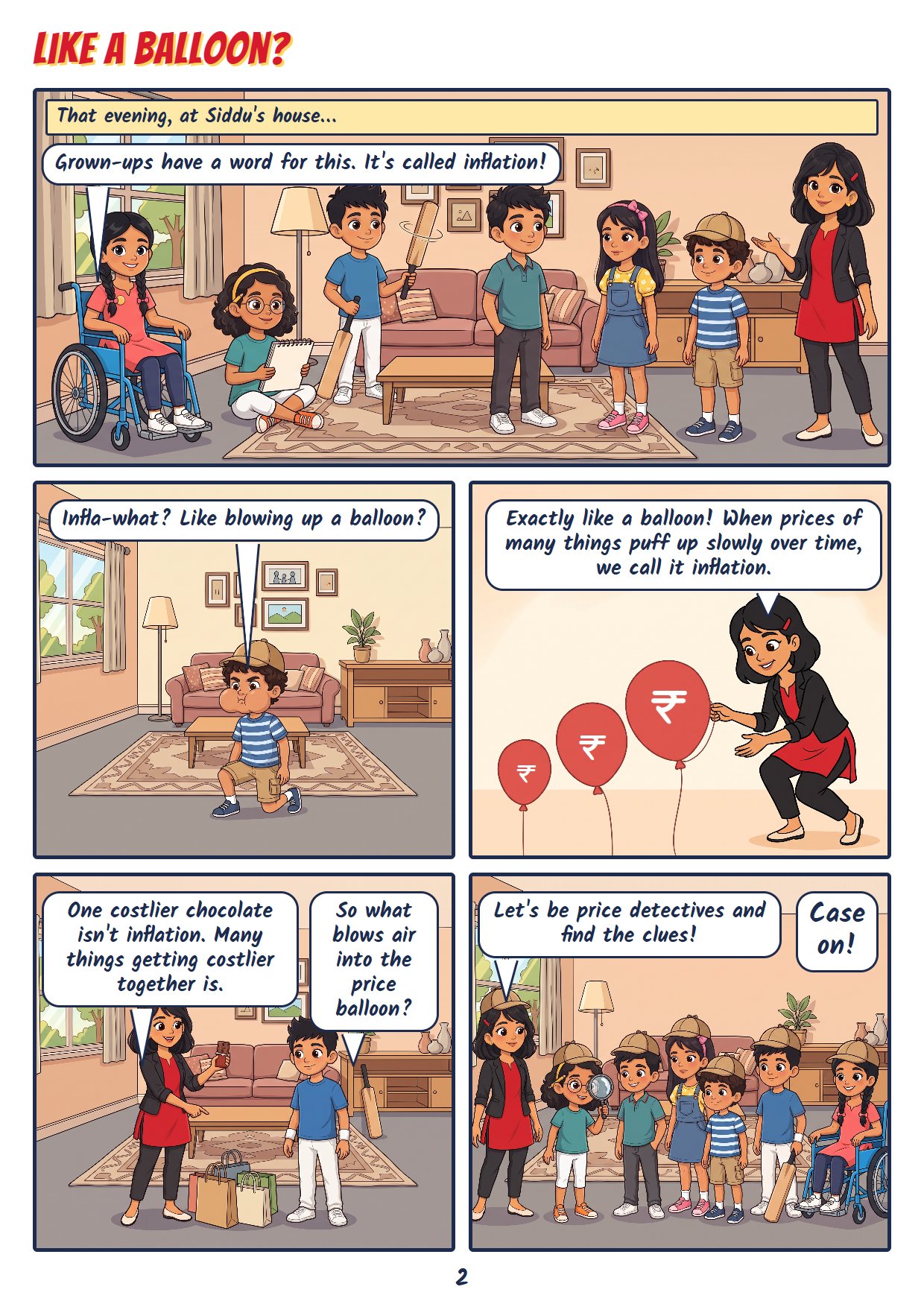
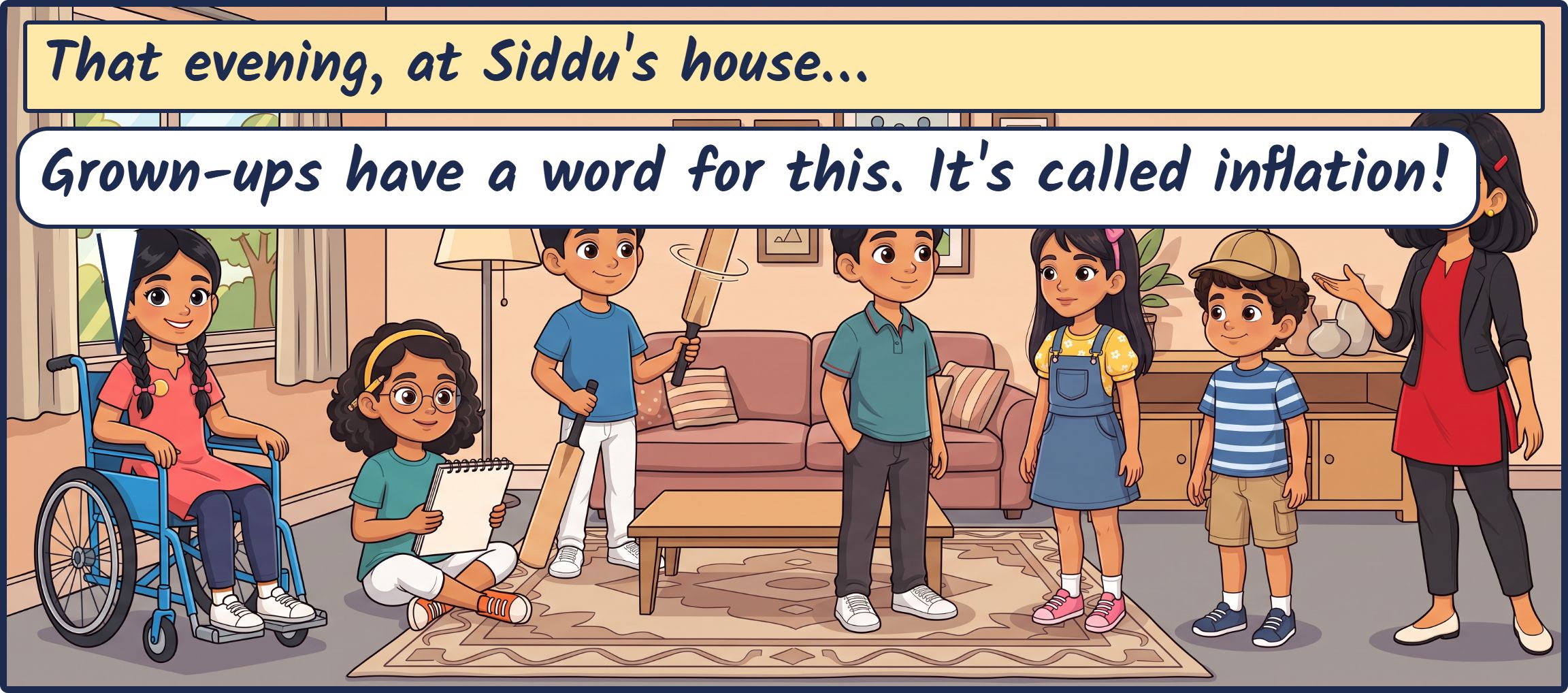
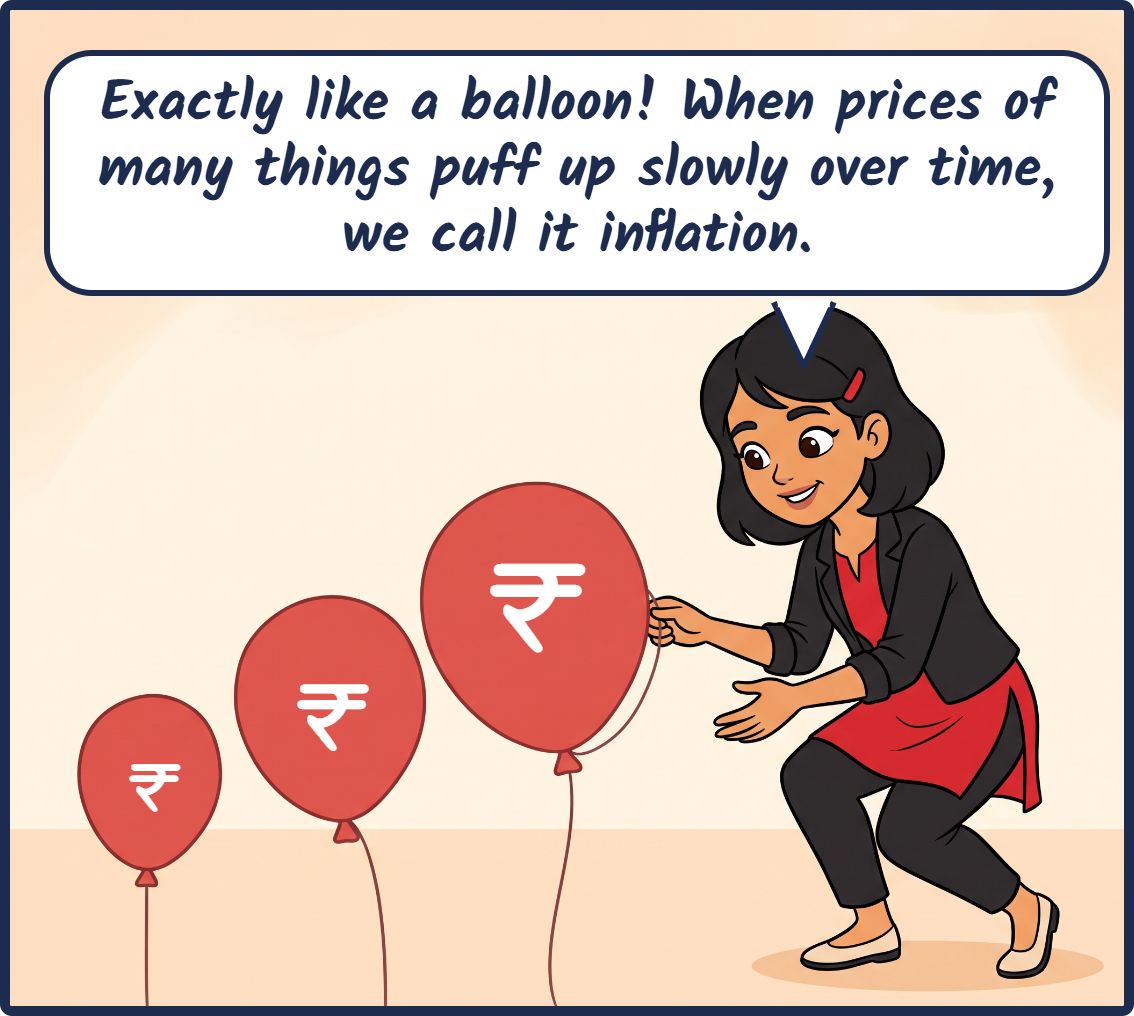
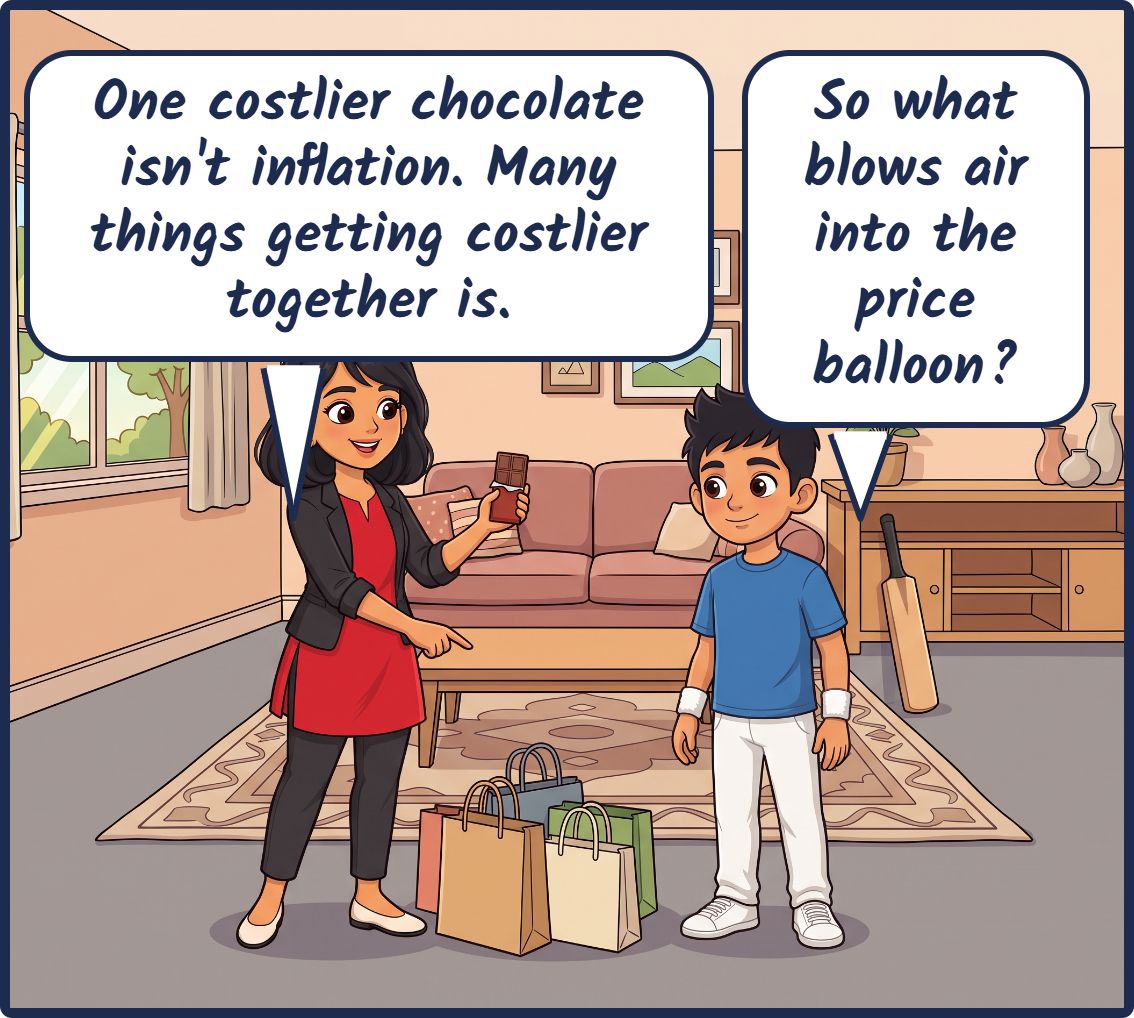
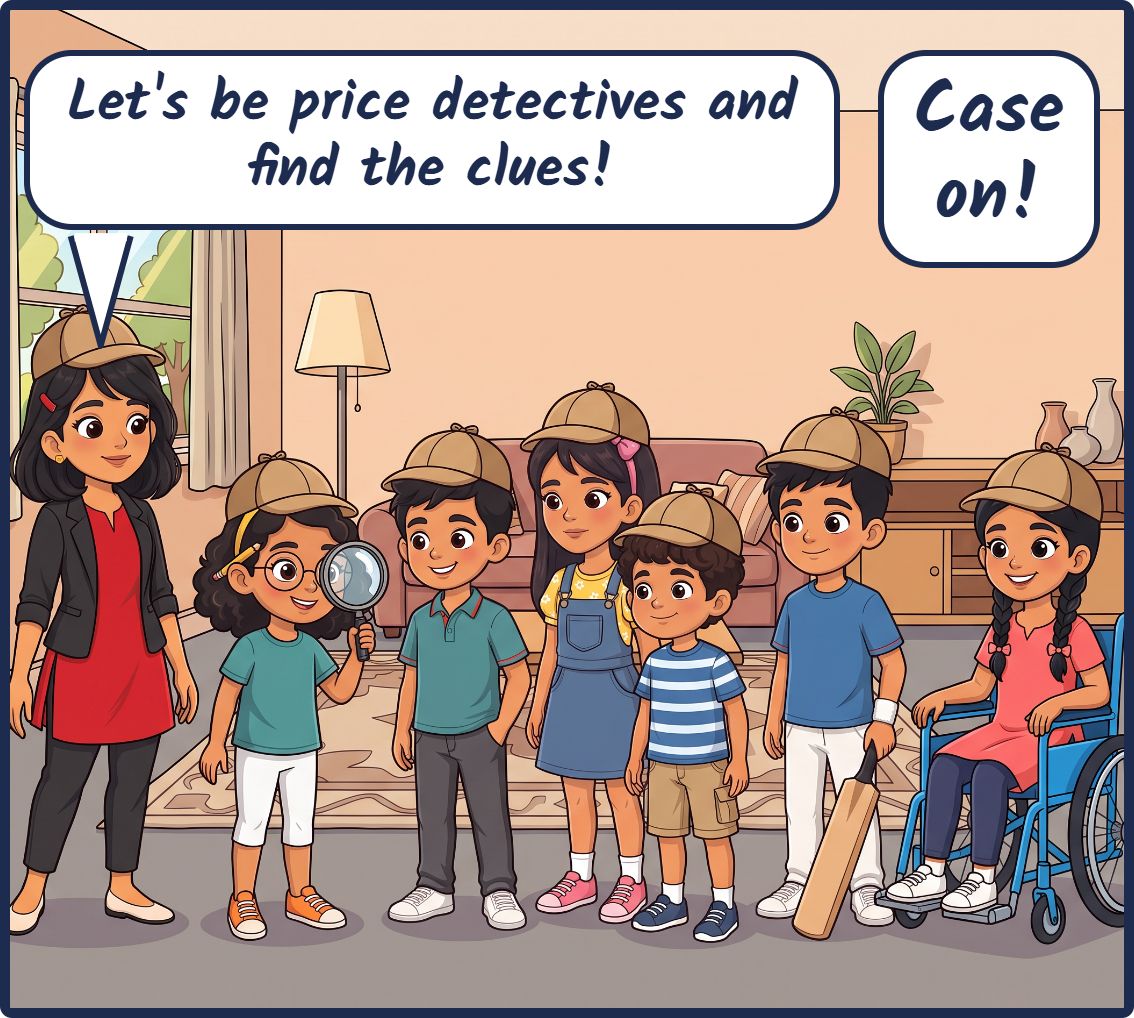
That evening, at Siddu's house… Grown-ups have a word for this. It's called inflation! Infla-what? Like blowing up a balloon? Exactly like a balloon! When prices of many things puff up slowly over time, we call it inflation. One costlier chocolate isn't inflation. Many things getting costlier together is. So what blows air into the price balloon? Let's be price detectives and find the clues! Case on!
Clue 1: Rain and tomatoes
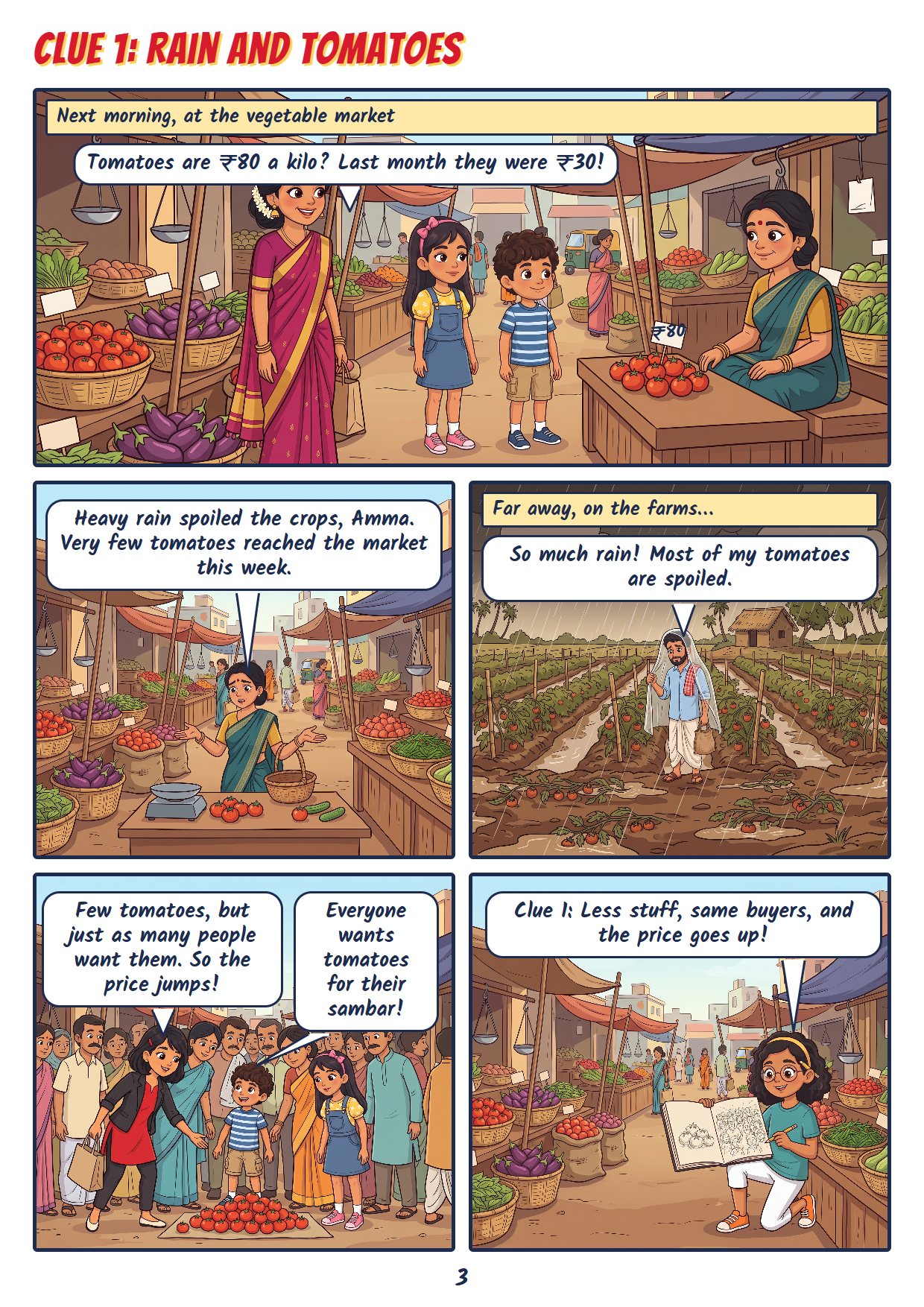
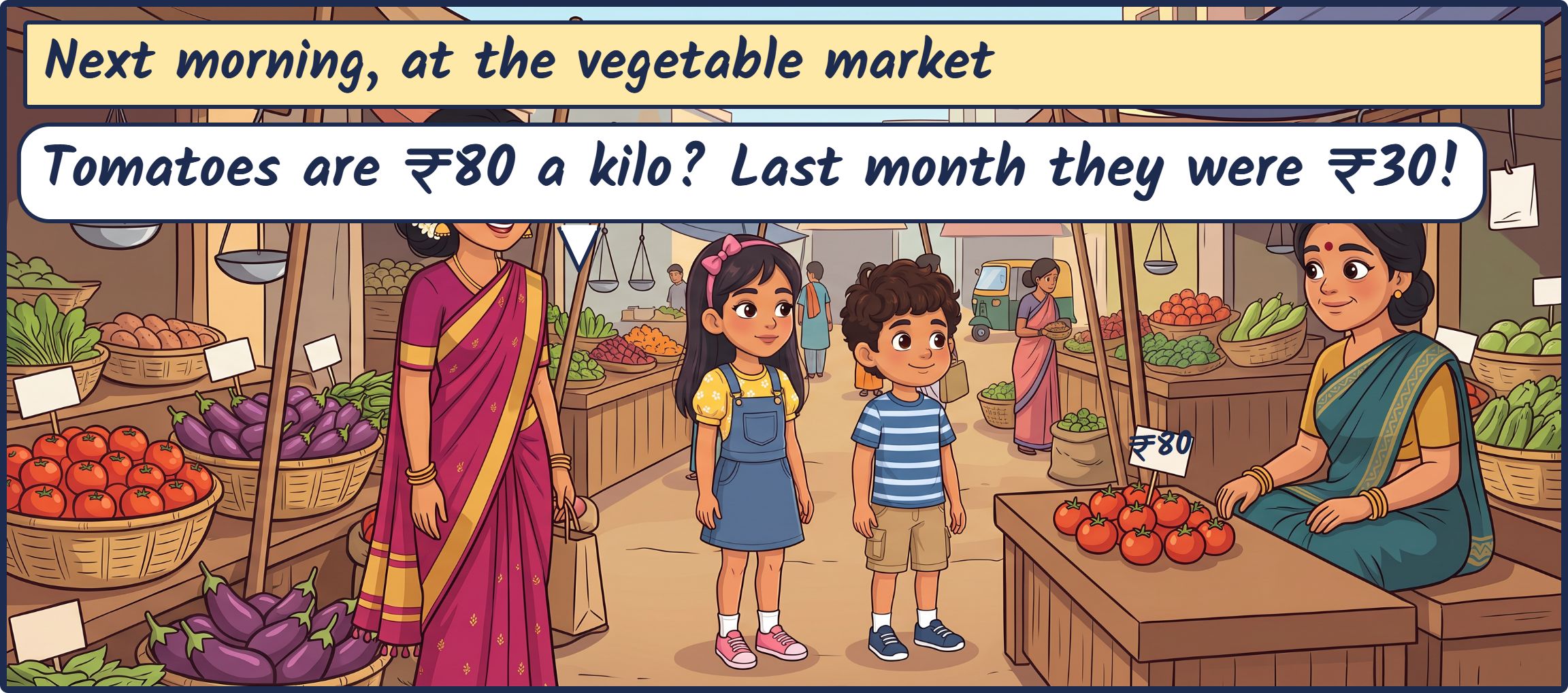
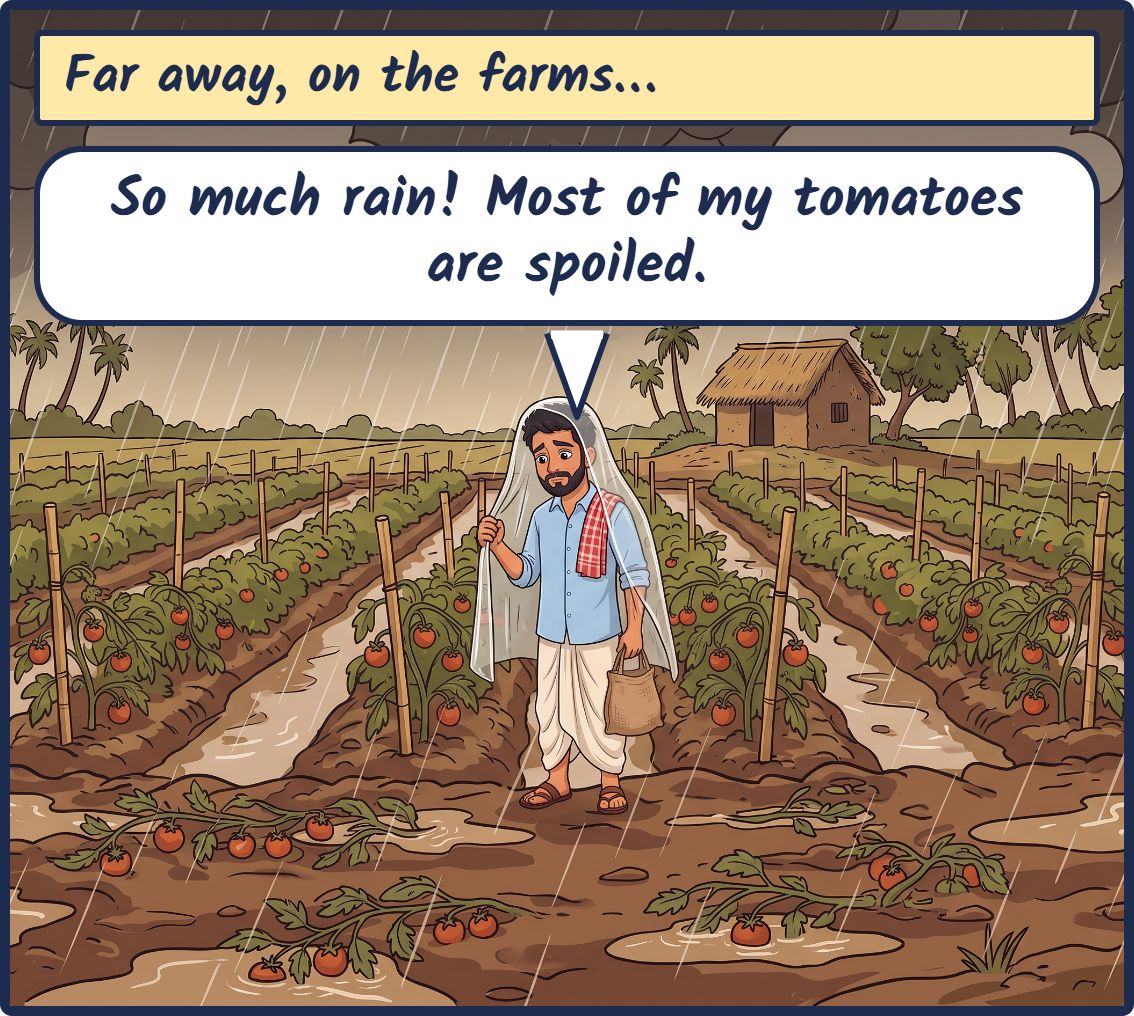
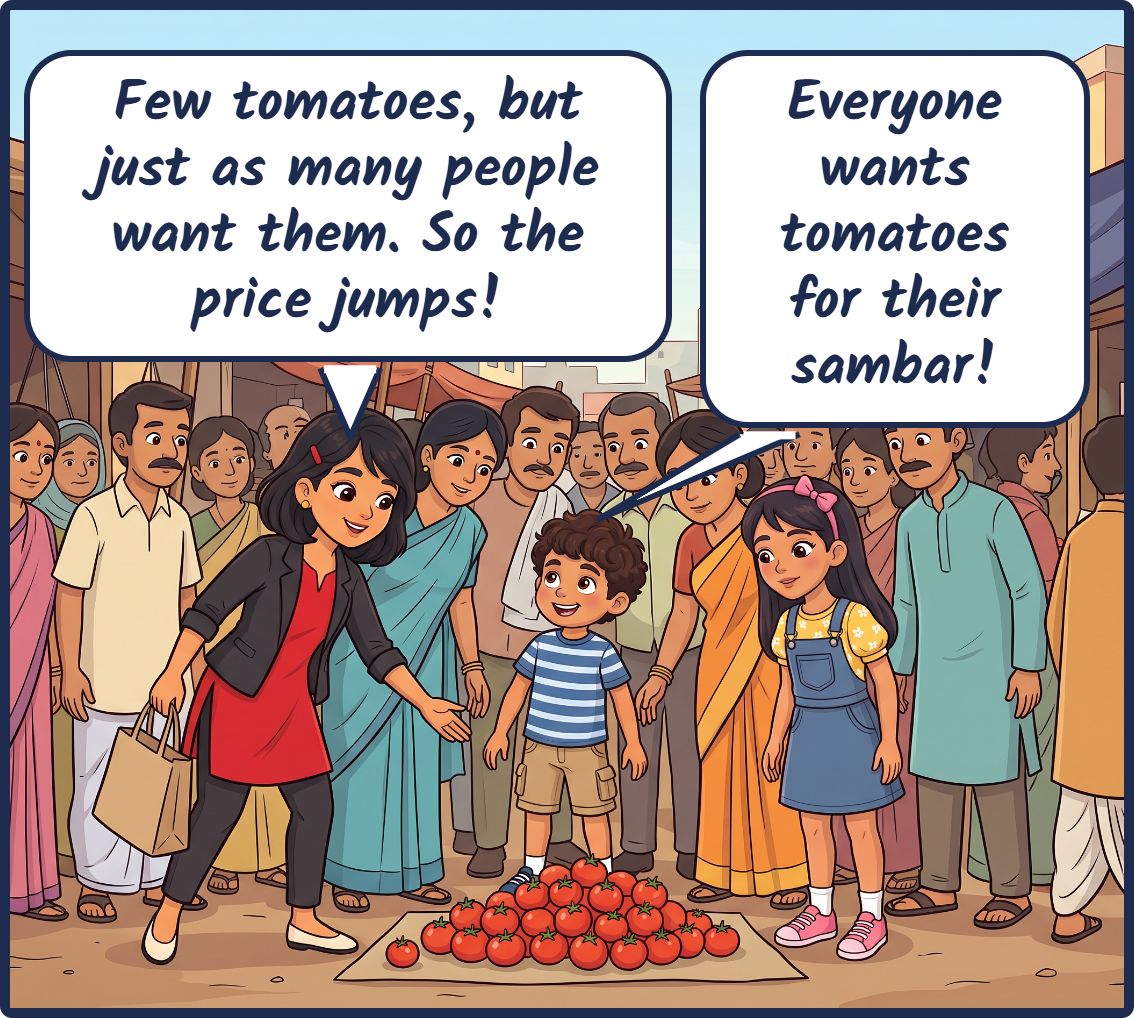
Next morning, at the vegetable market Tomatoes are ₹80 a kilo? Last month they were ₹30! Heavy rain spoiled the crops, Amma. Very few tomatoes reached the market this week. Far away, on the farms… So much rain! Most of my tomatoes are spoiled. Few tomatoes, but just as many people want them. So the price jumps! Everyone wants tomatoes for their sambar! Clue 1: Less stuff, same buyers, and the price goes up!
When the rain stops
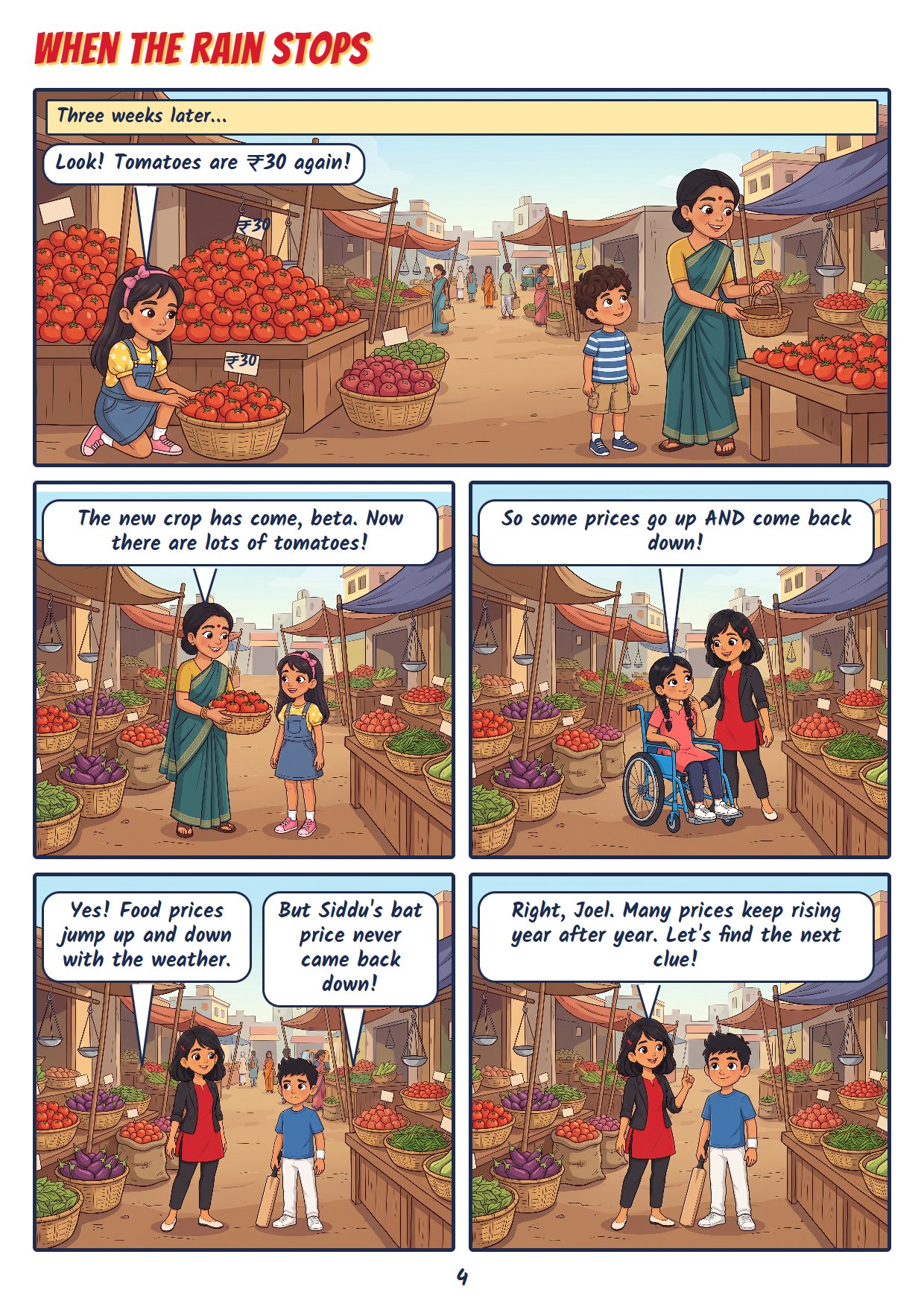
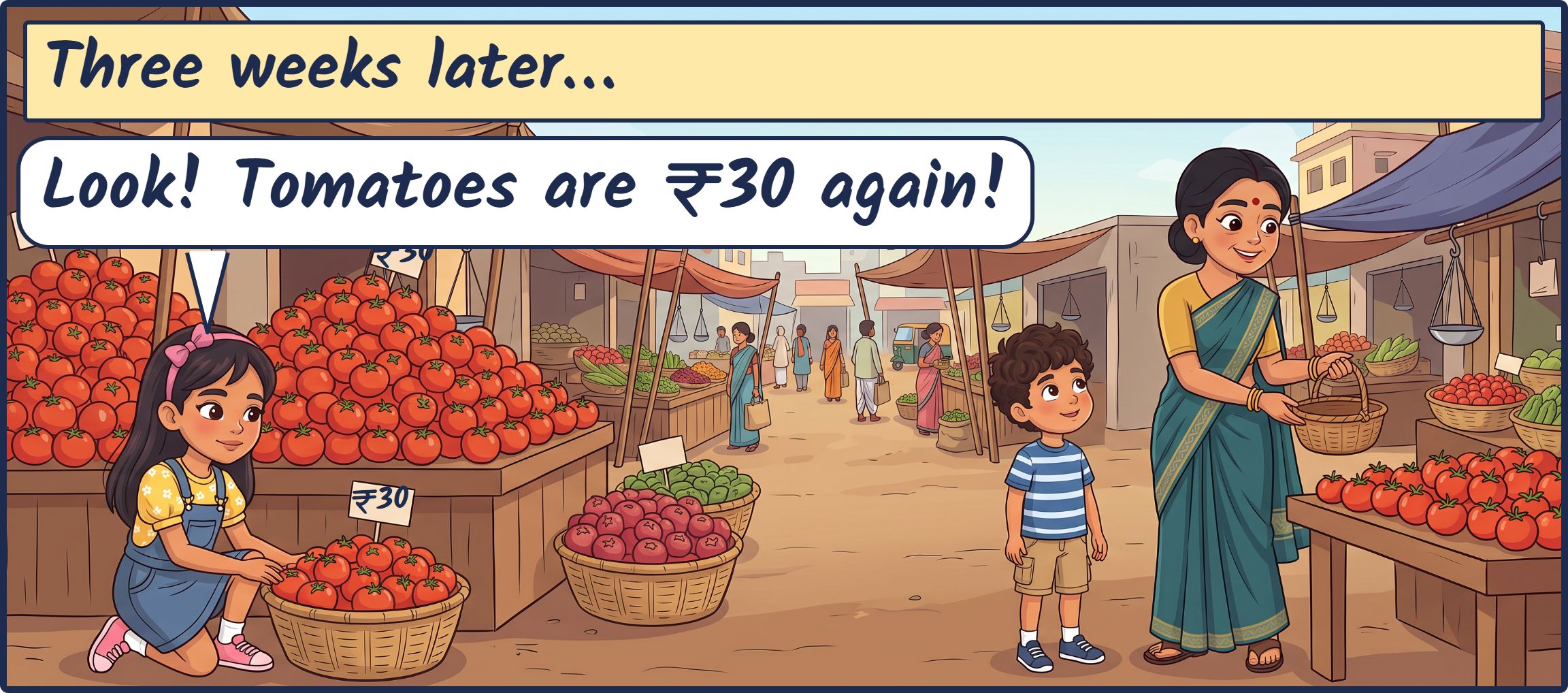
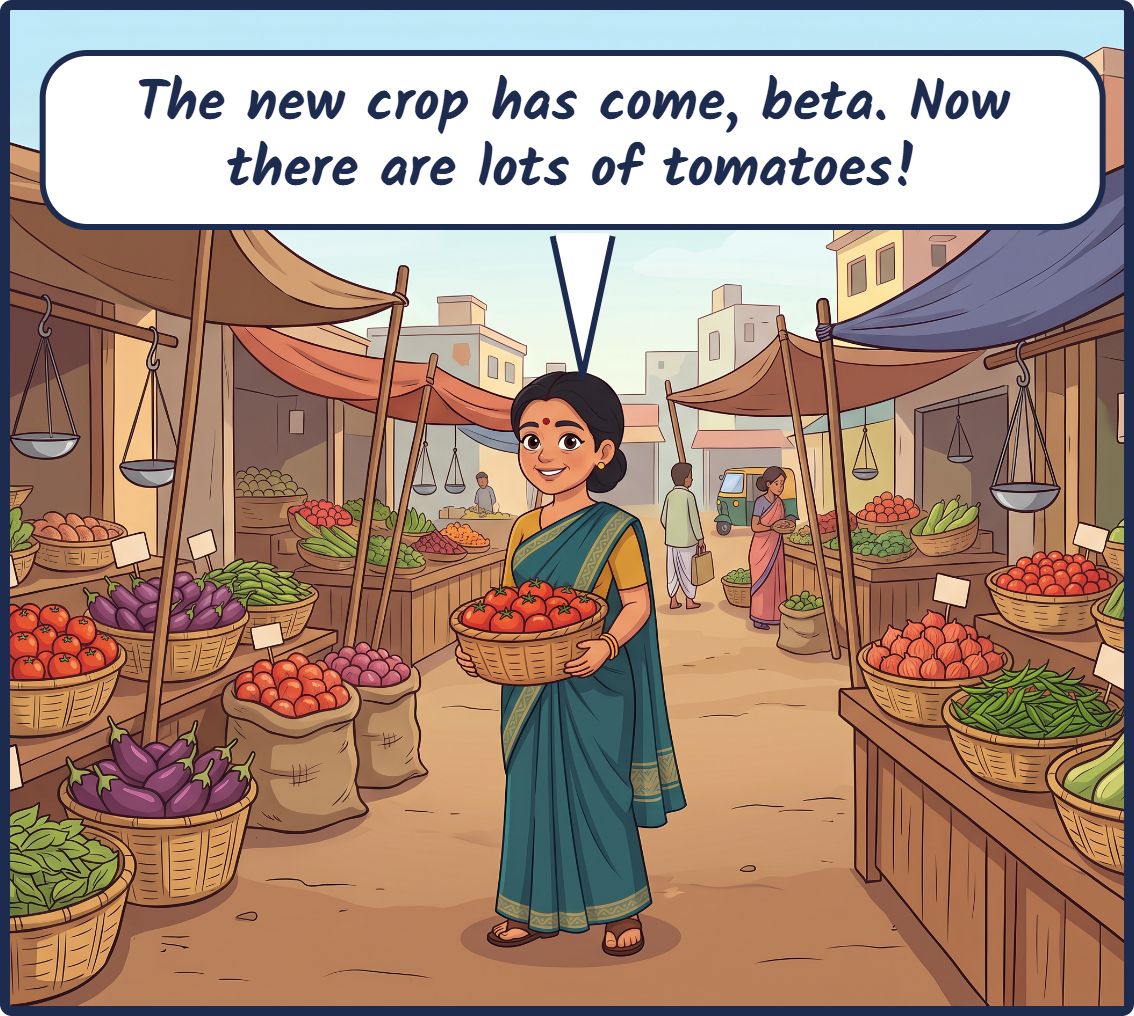
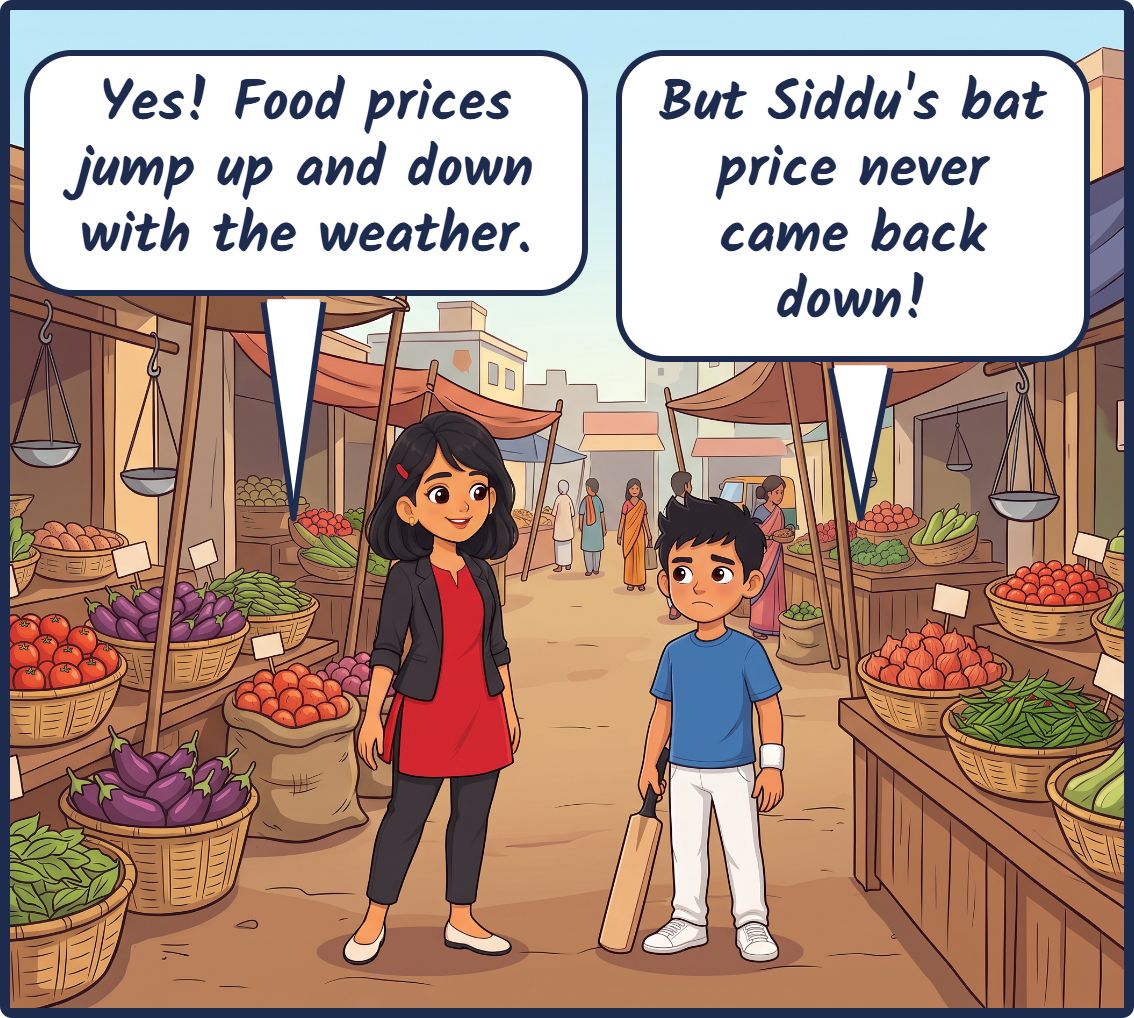
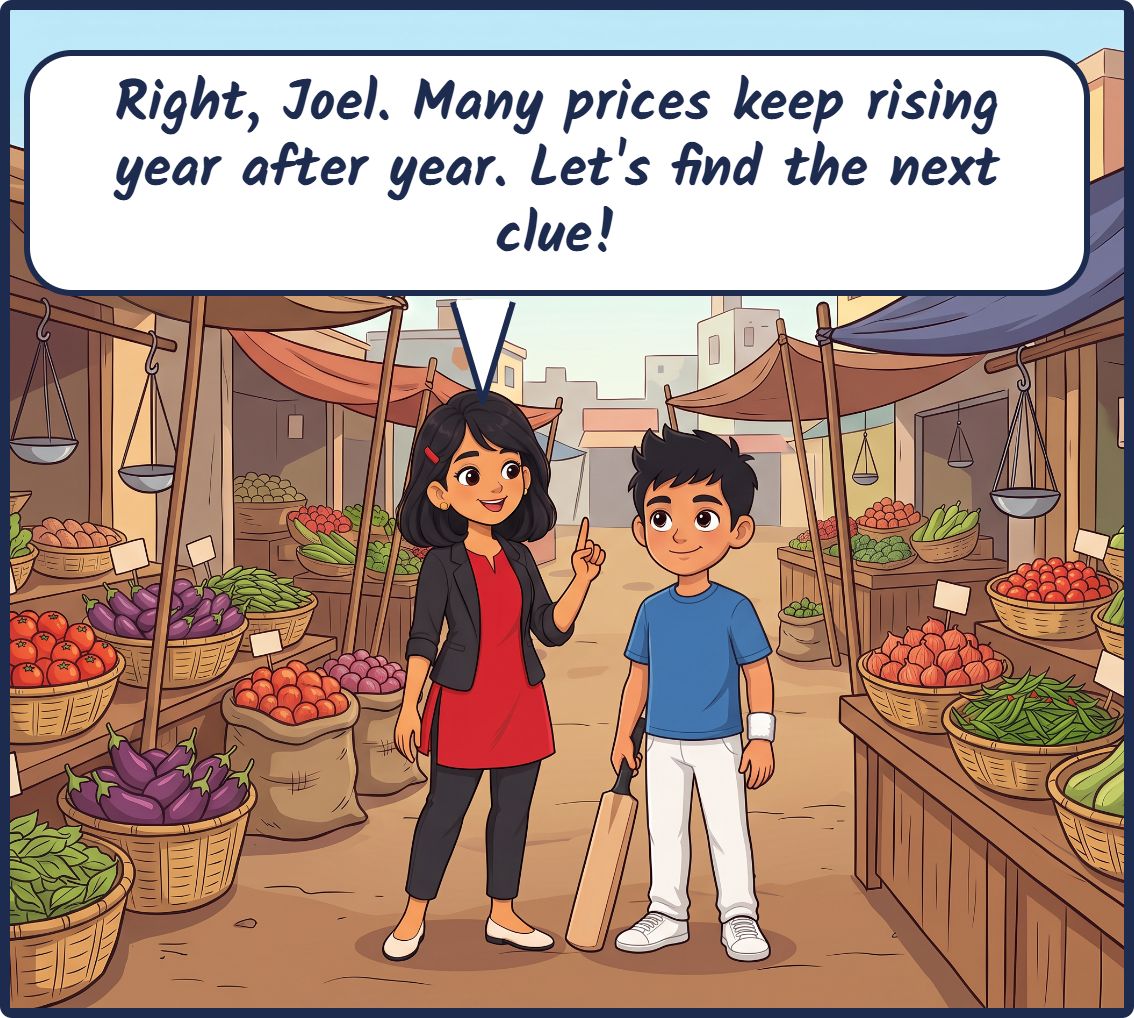
Three weeks later… Look! Tomatoes are ₹30 again! The new crop has come, beta. Now there are lots of tomatoes! So some prices go up AND come back down! Yes! Food prices jump up and down with the weather. But Siddu's bat price never came back down! Right, Joel. Many prices keep rising year after year. Let's find the next clue!
Clue 2: Vikram Uncle's buns

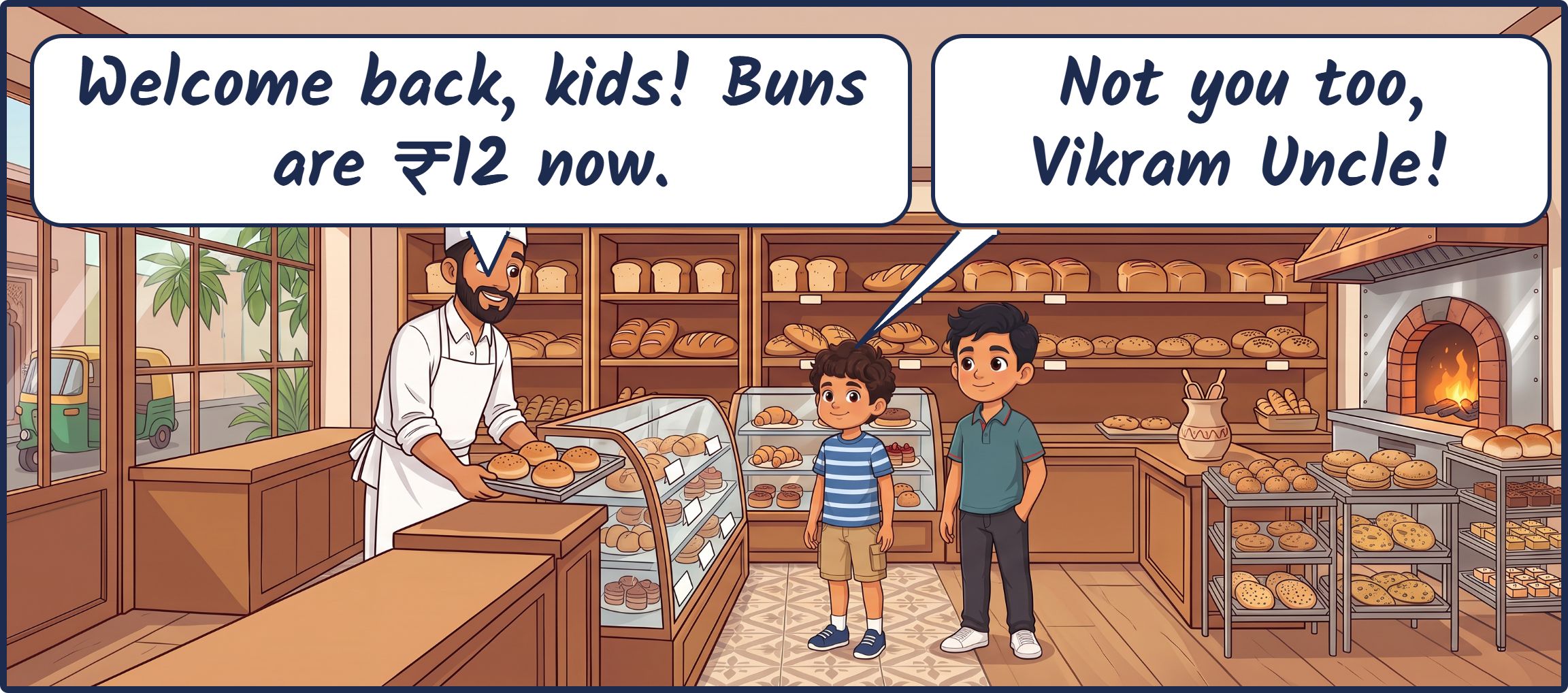
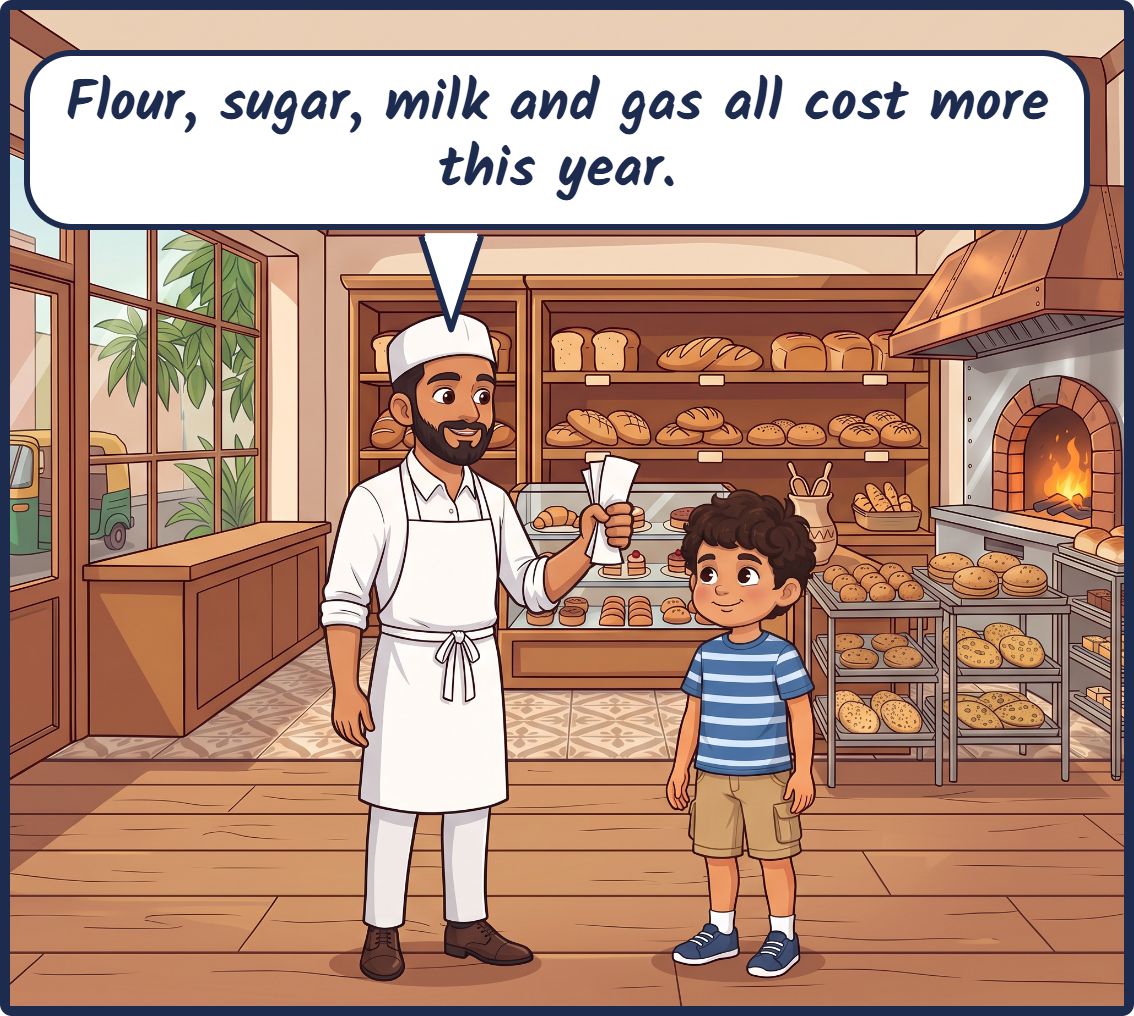
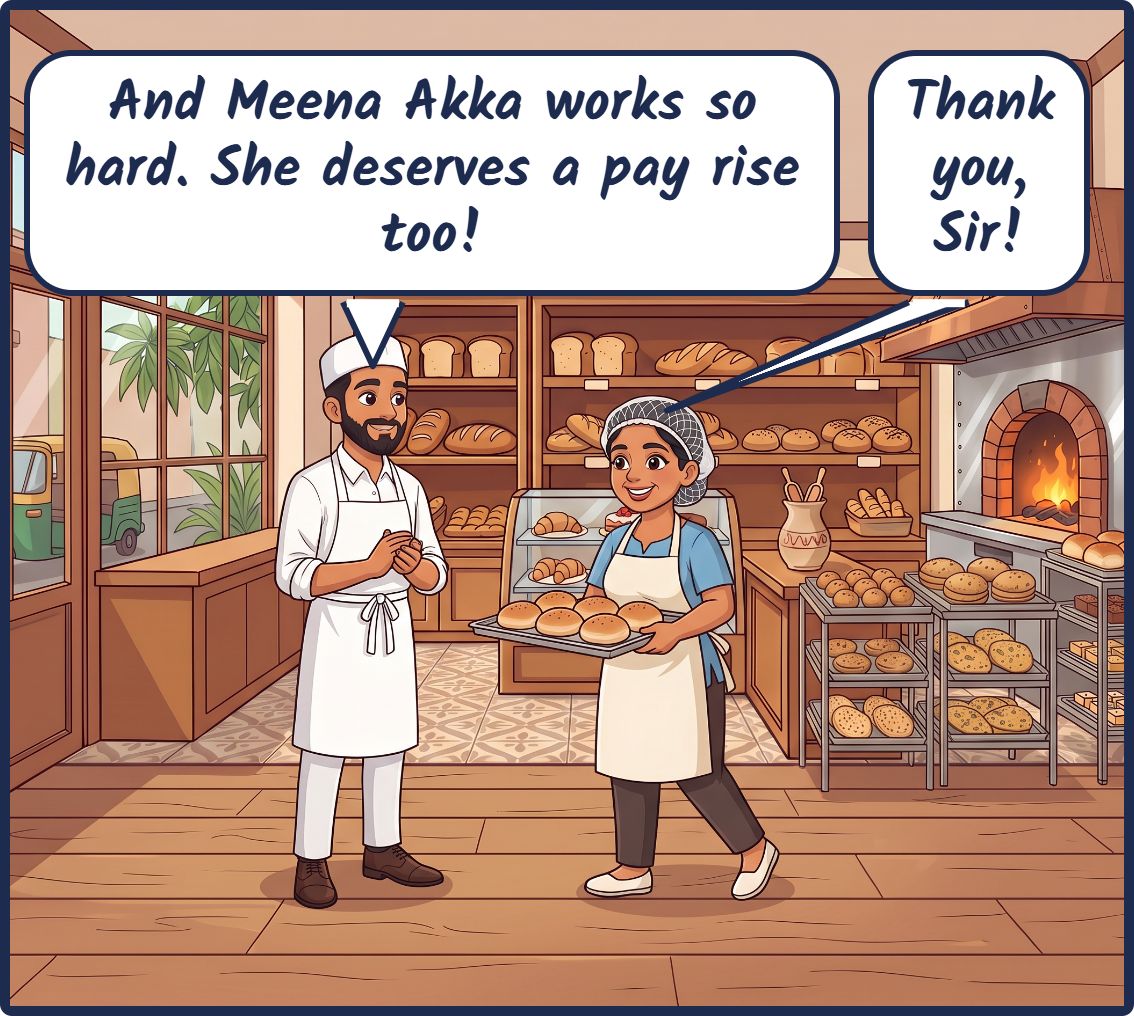
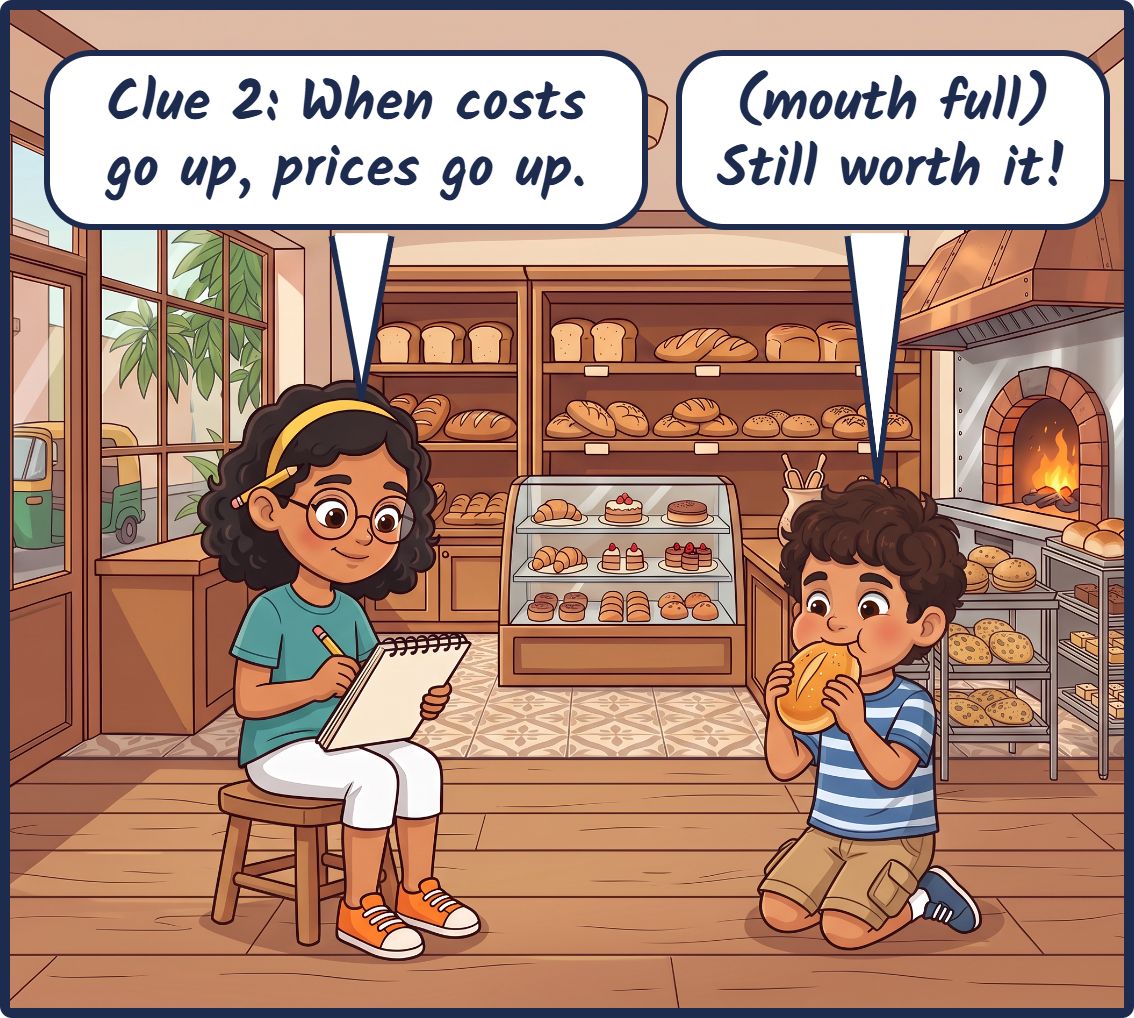
Welcome back, kids! Buns are ₹12 now. Not you too, Vikram Uncle! Flour, sugar, milk and gas all cost more this year. And Meena Akka works so hard. She deserves a pay rise too! Thank you, Sir! So when making something costs more, its price goes up too. That's fair. Vikram Uncle has bills to pay! Clue 2: When costs go up, prices go up. (mouth full) Still worth it!
From farm to shop
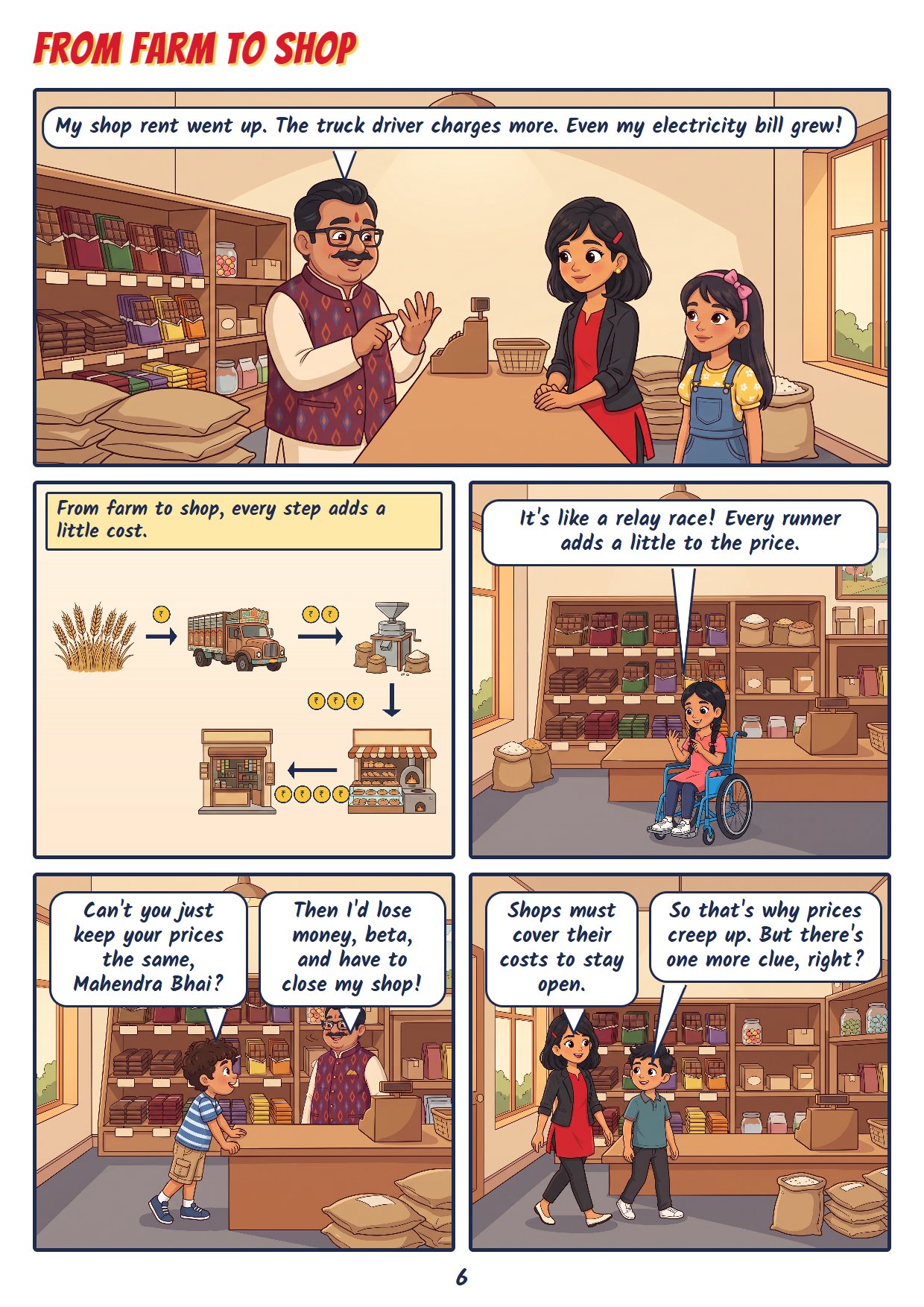
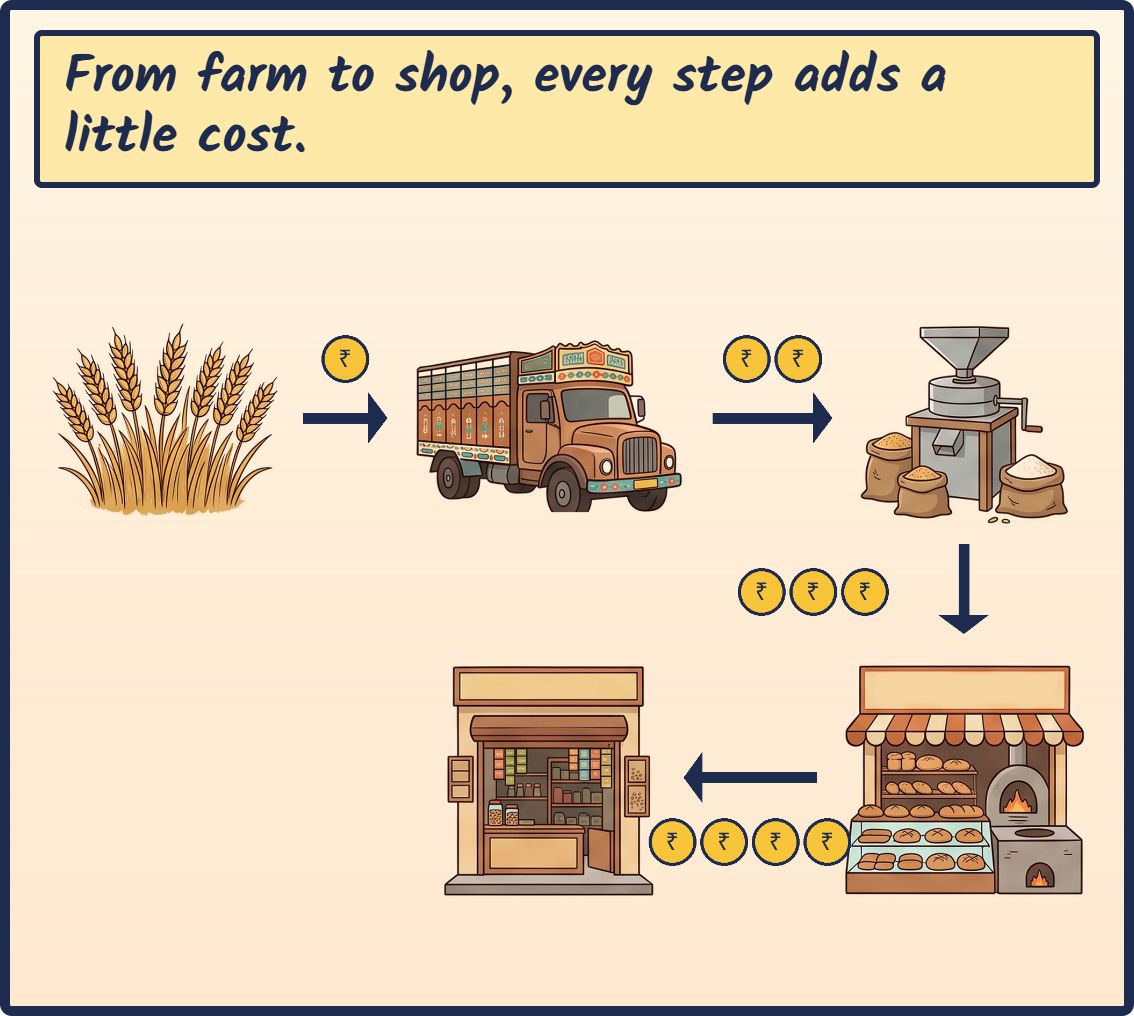
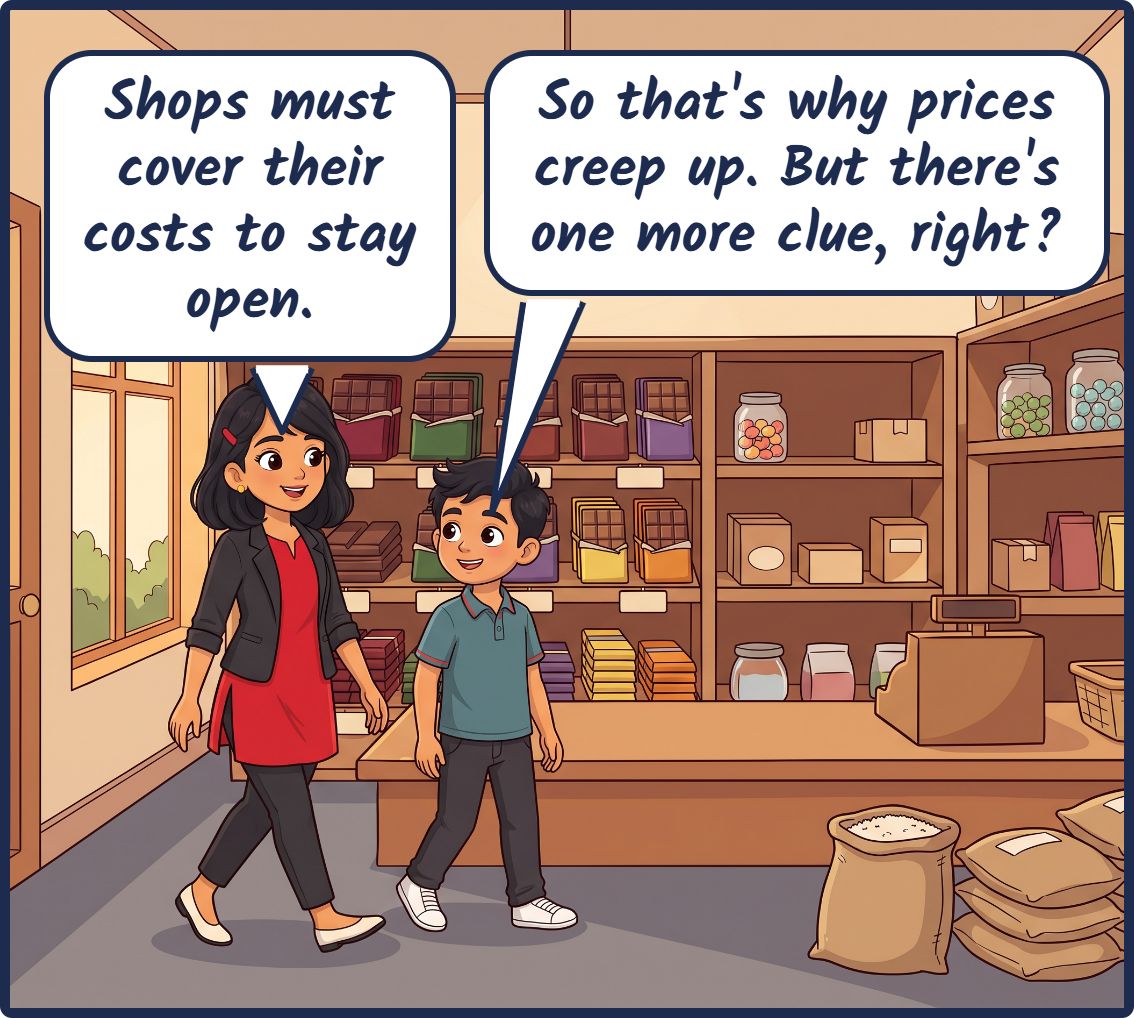
My shop rent went up. The truck driver charges more. Even my electricity bill grew! From farm to shop, every step adds a little cost. It's like a relay race! Every runner adds a little to the price. Can't you just keep your prices the same, Mahendra Bhai? Then I'd lose money, beta, and have to close my shop! Shops must cover their costs to stay open. So that's why prices creep up. But there's one more clue, right?
Clue 3: The bat auction
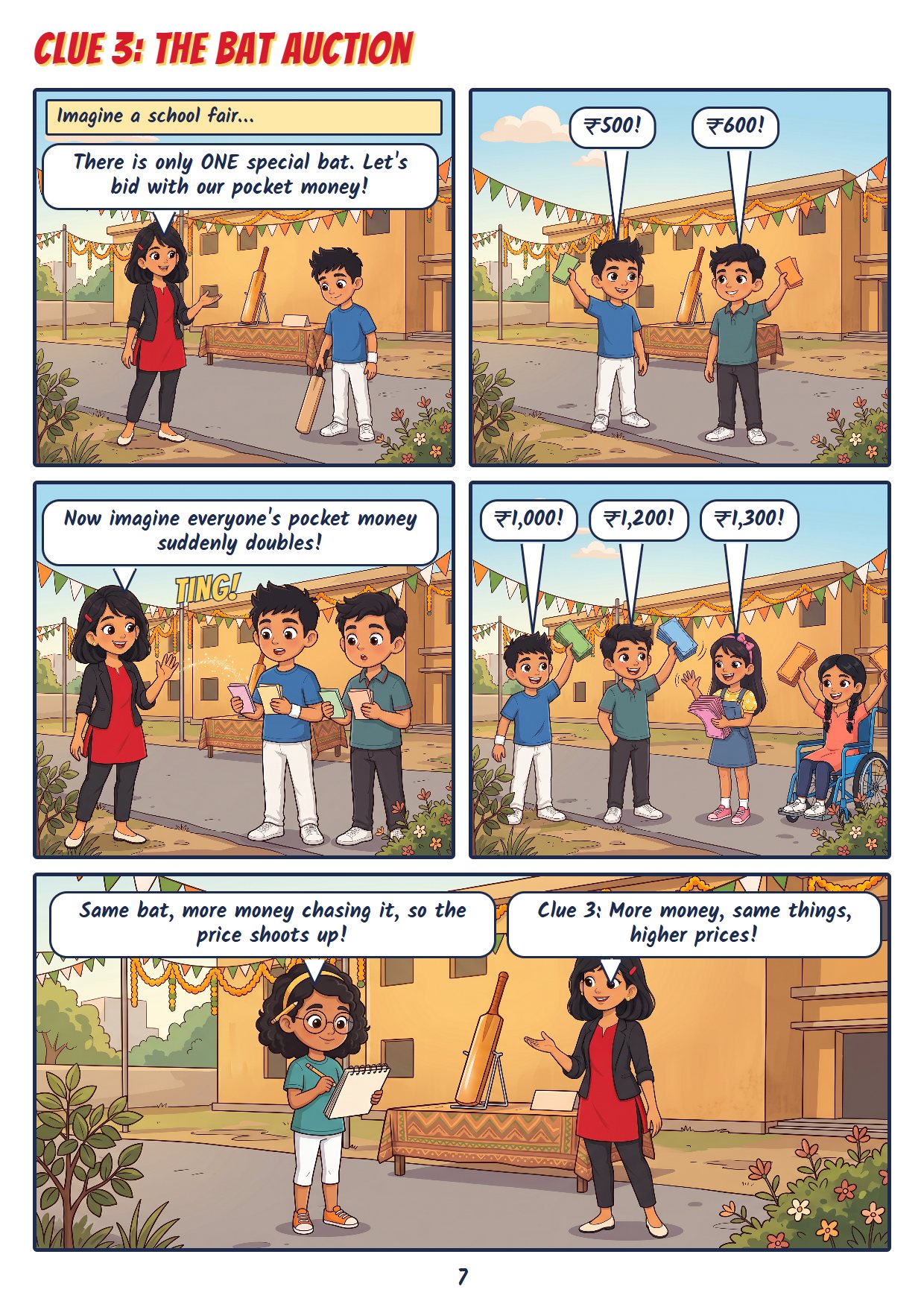
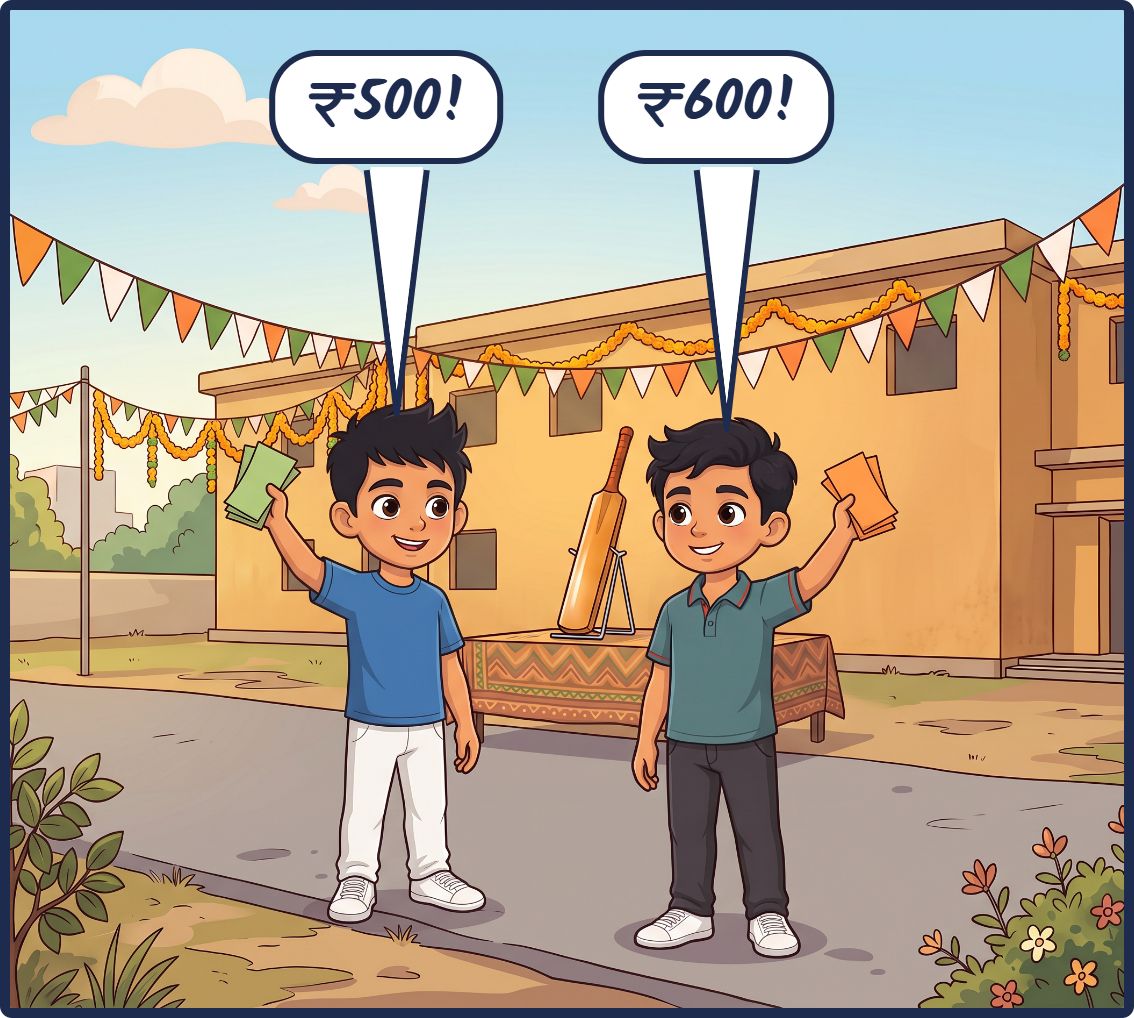
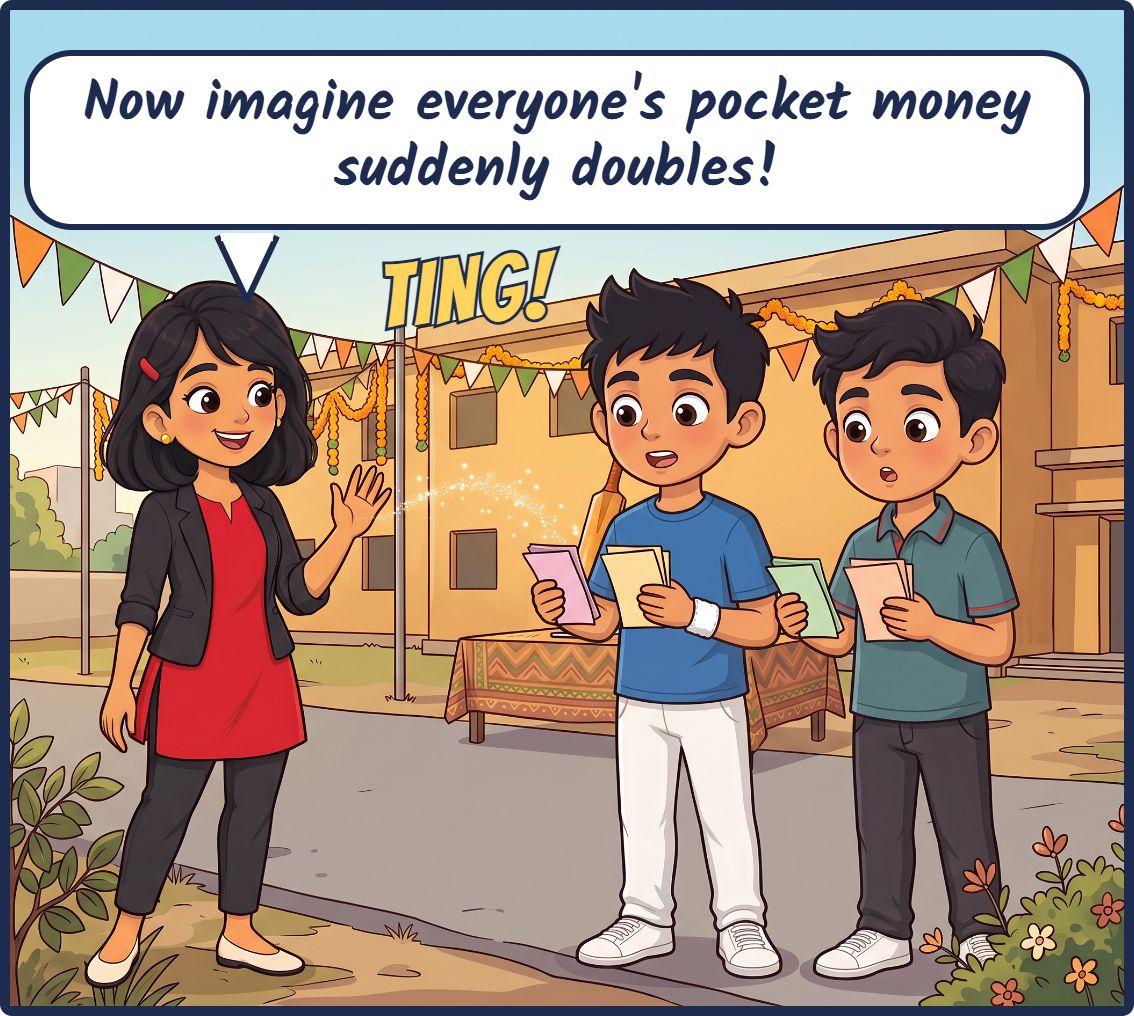
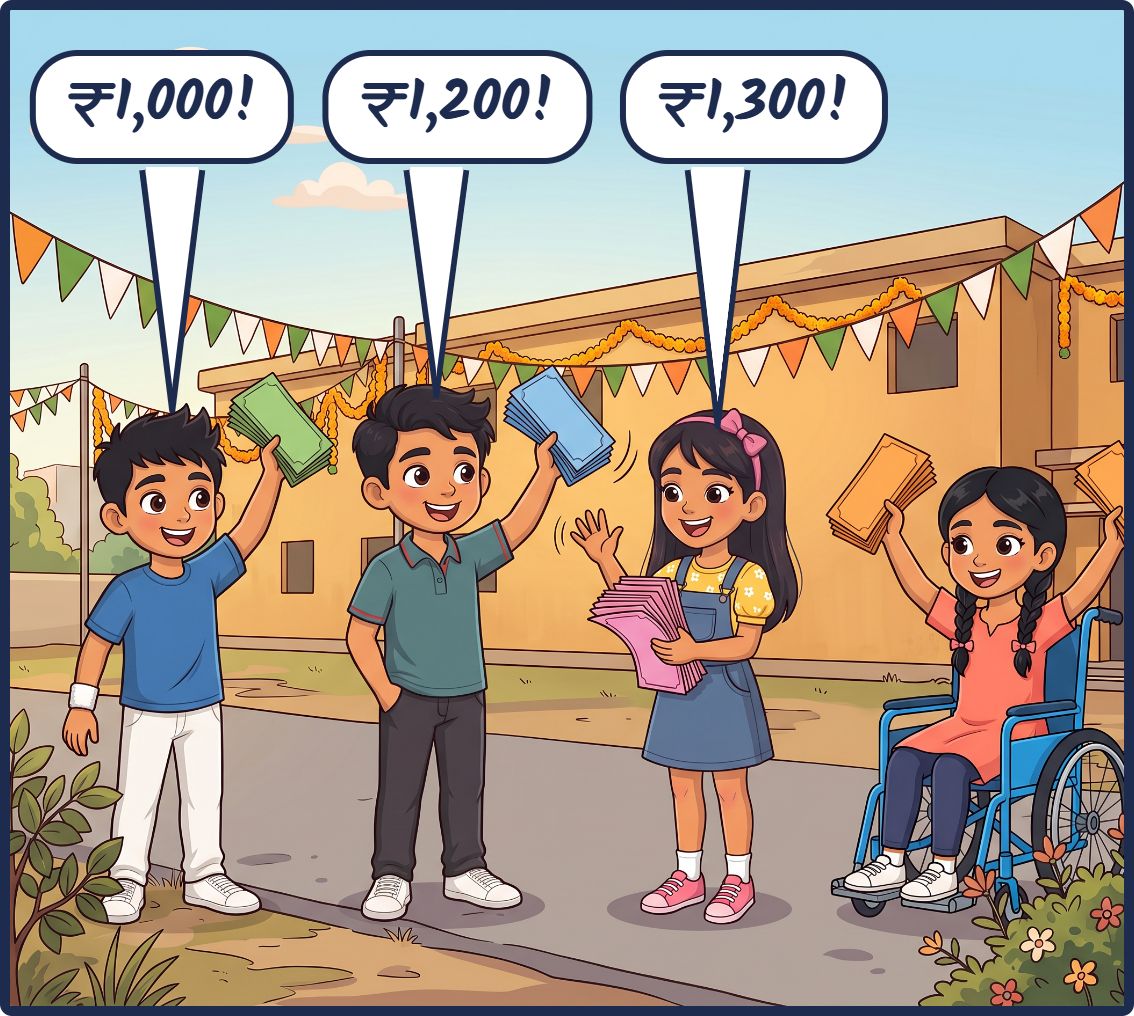
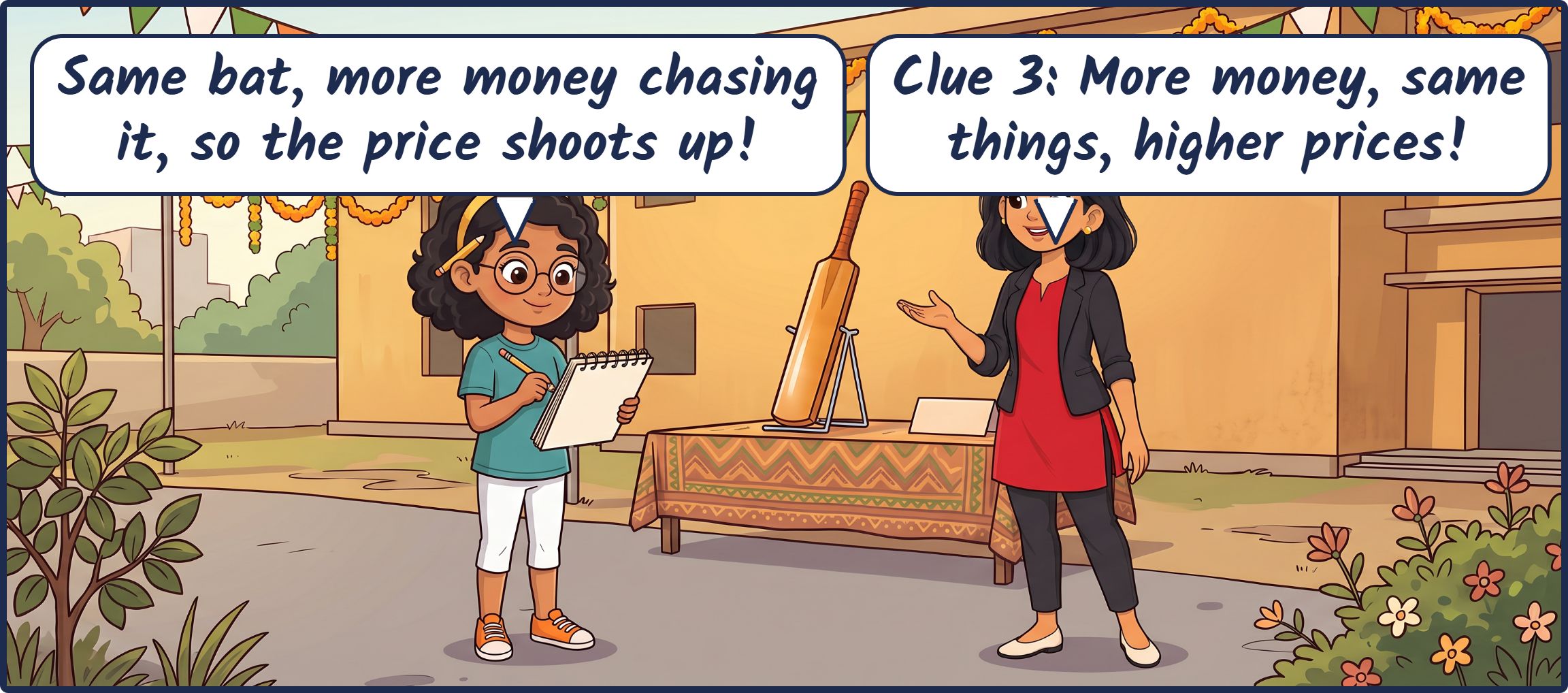
Imagine a school fair… There is only ONE special bat. Let's bid with our pocket money! ₹500! ₹600! Now imagine everyone's pocket money suddenly doubles! TING! ₹1,000! ₹1,200! ₹1,300! Same bat, more money chasing it, so the price shoots up! Clue 3: More money, same things, higher prices!
Why not print more money?

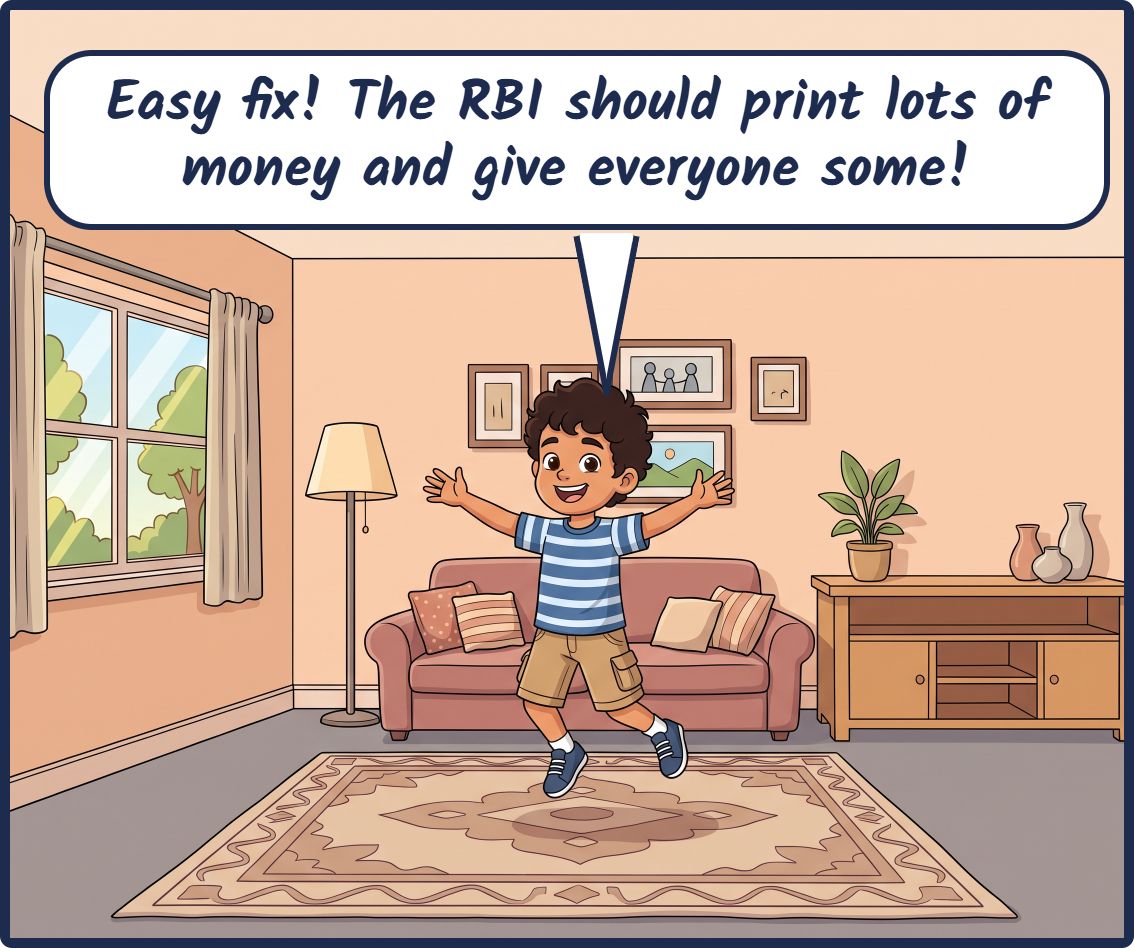
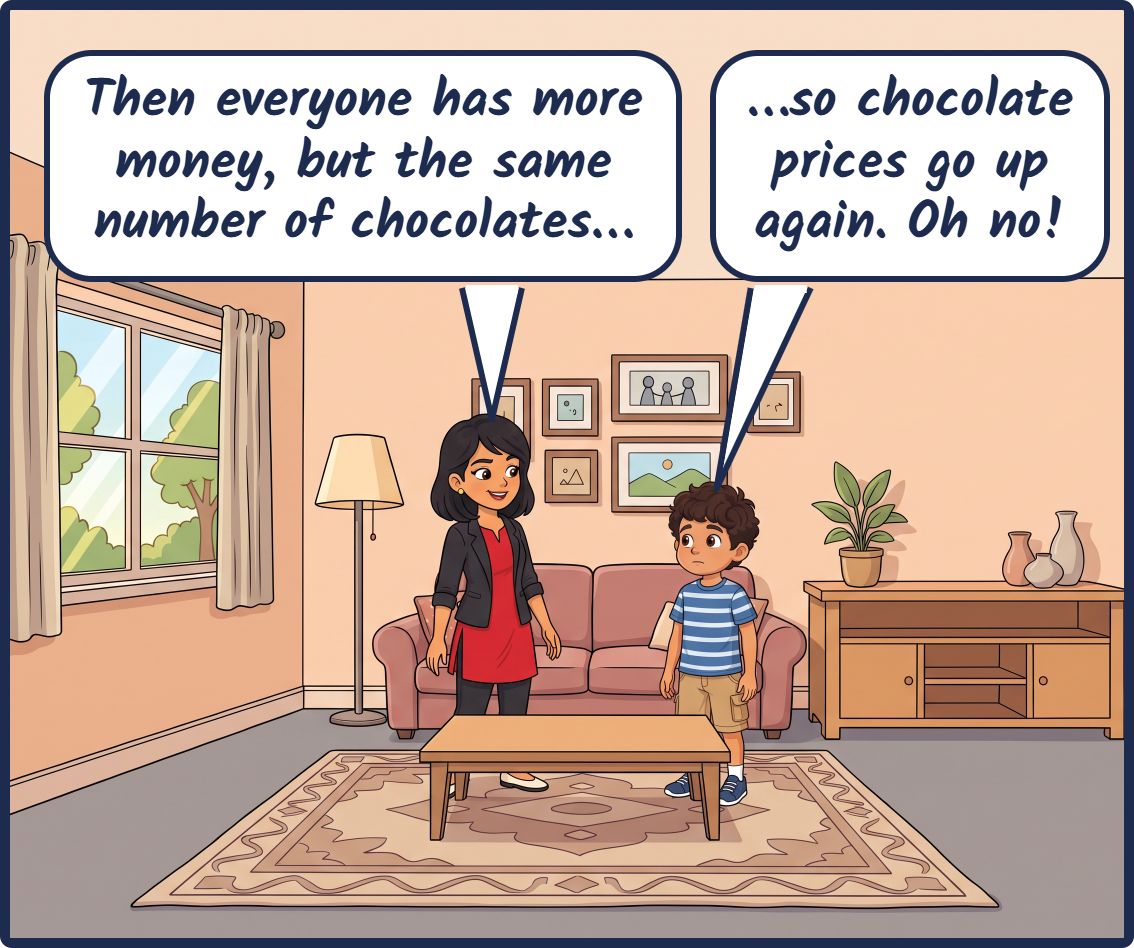
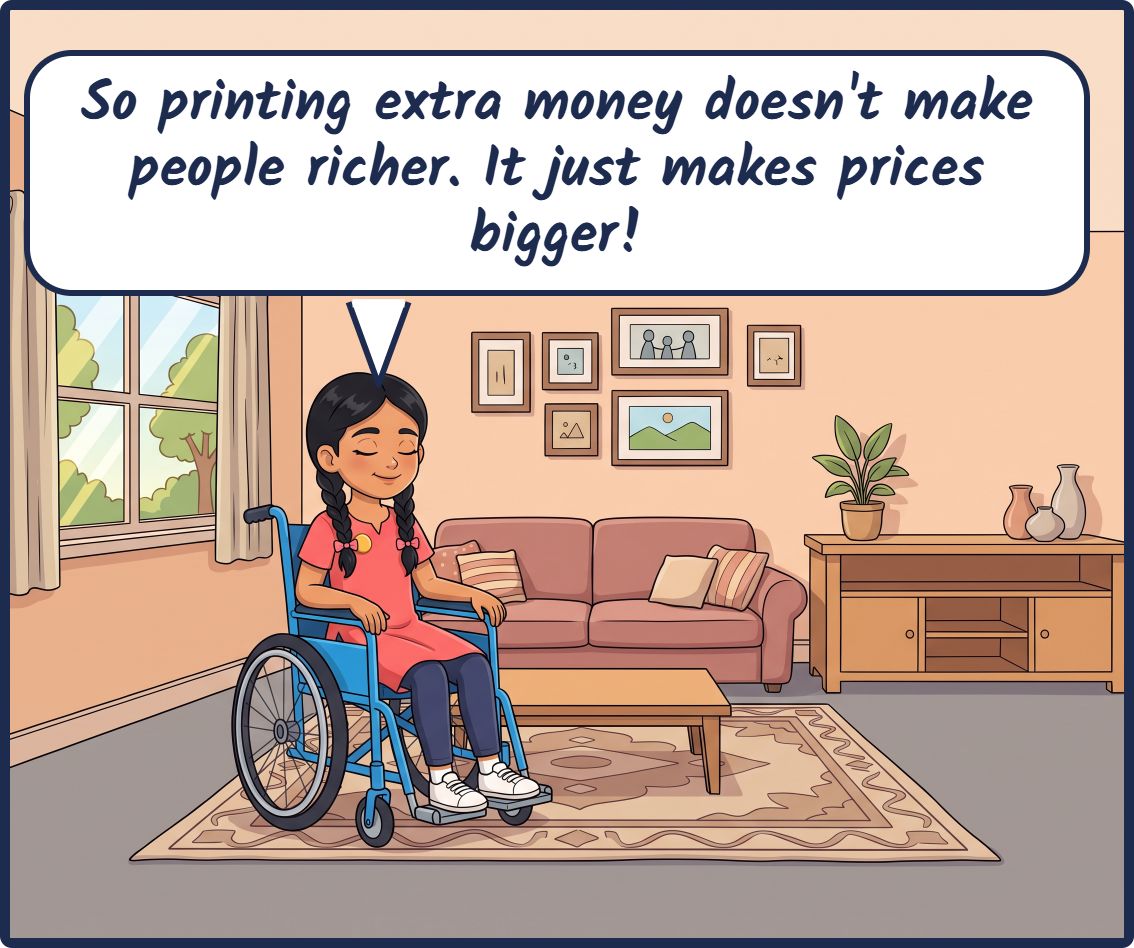
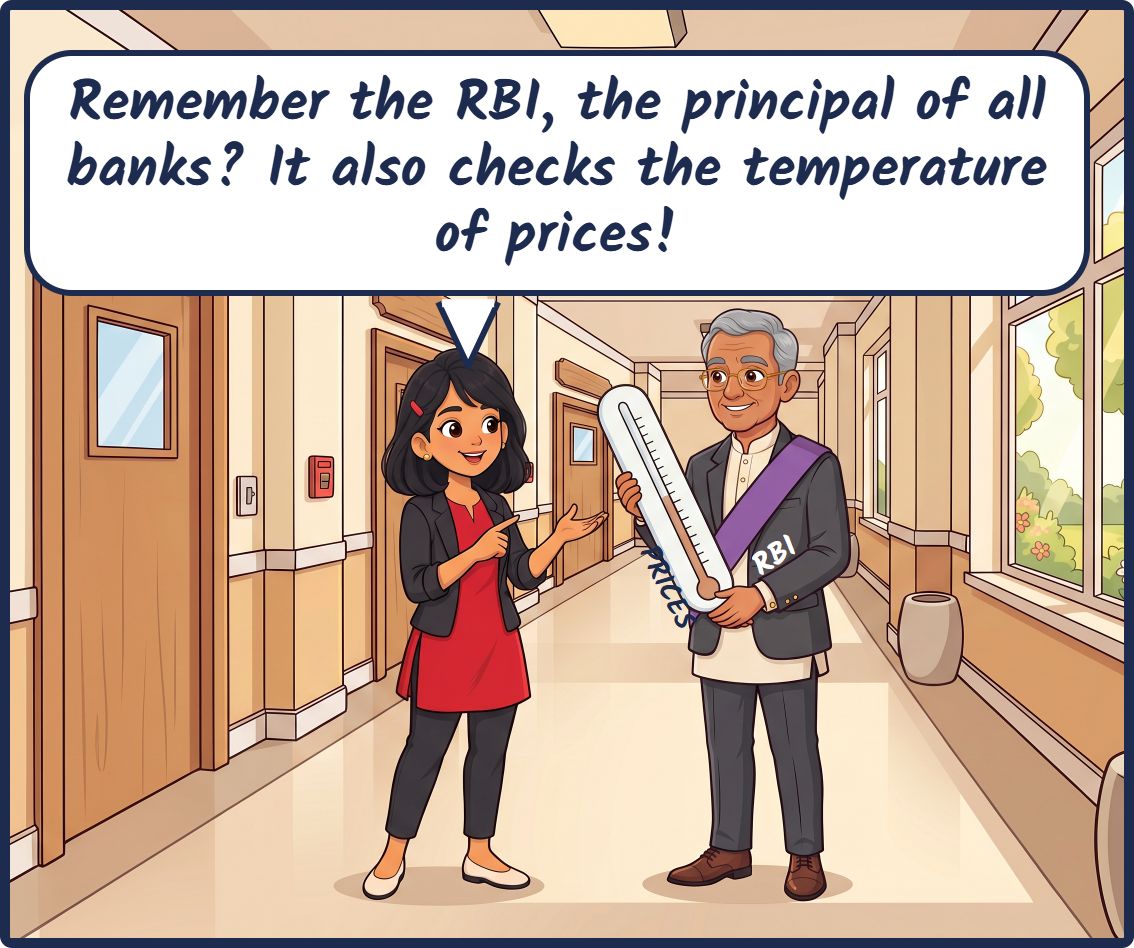
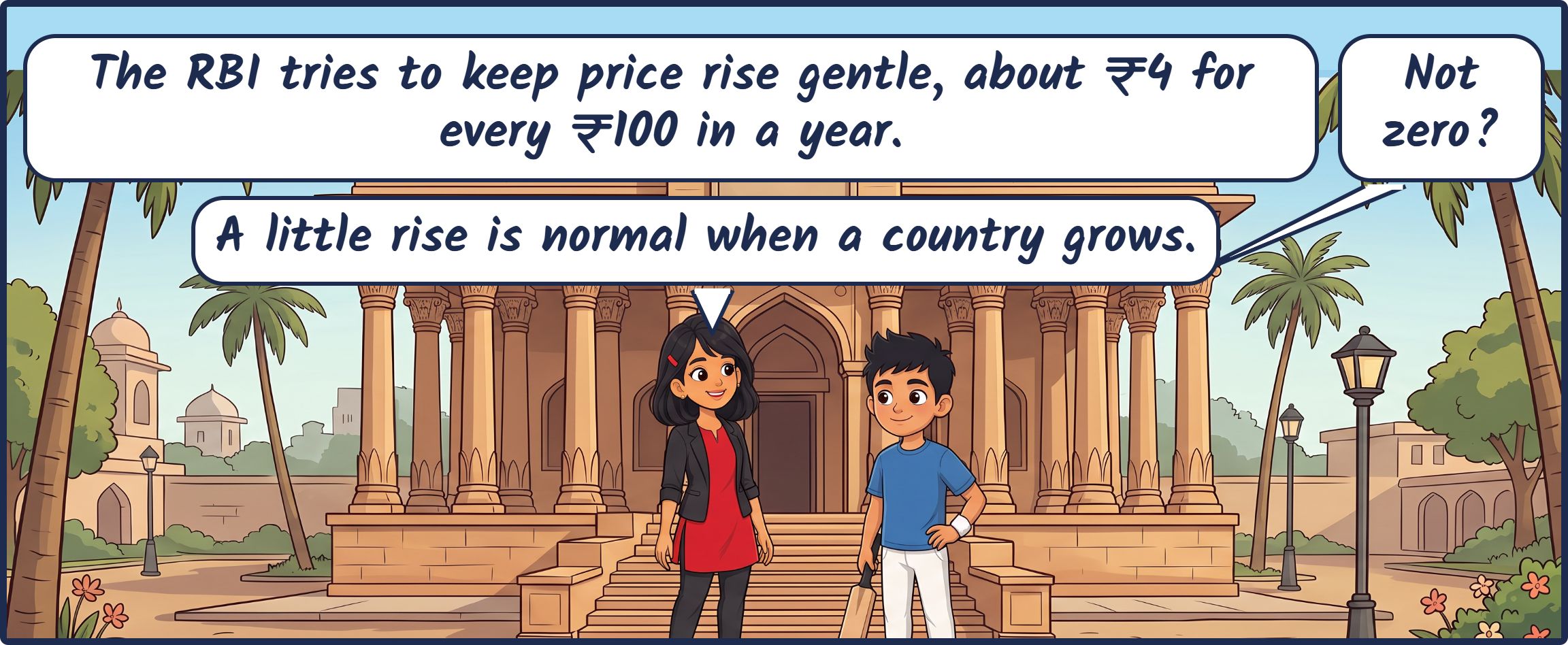
Easy fix! The RBI should print lots of money and give everyone some! Then everyone has more money, but the same number of chocolates… …so chocolate prices go up again. Oh no! So printing extra money doesn't make people richer. It just makes prices bigger! Remember the RBI, the principal of all banks? It also checks the temperature of prices! The RBI tries to keep price rise gentle, about ₹4 for every ₹100 in a year. Not zero? A little rise is normal when a country grows.
The price regulator
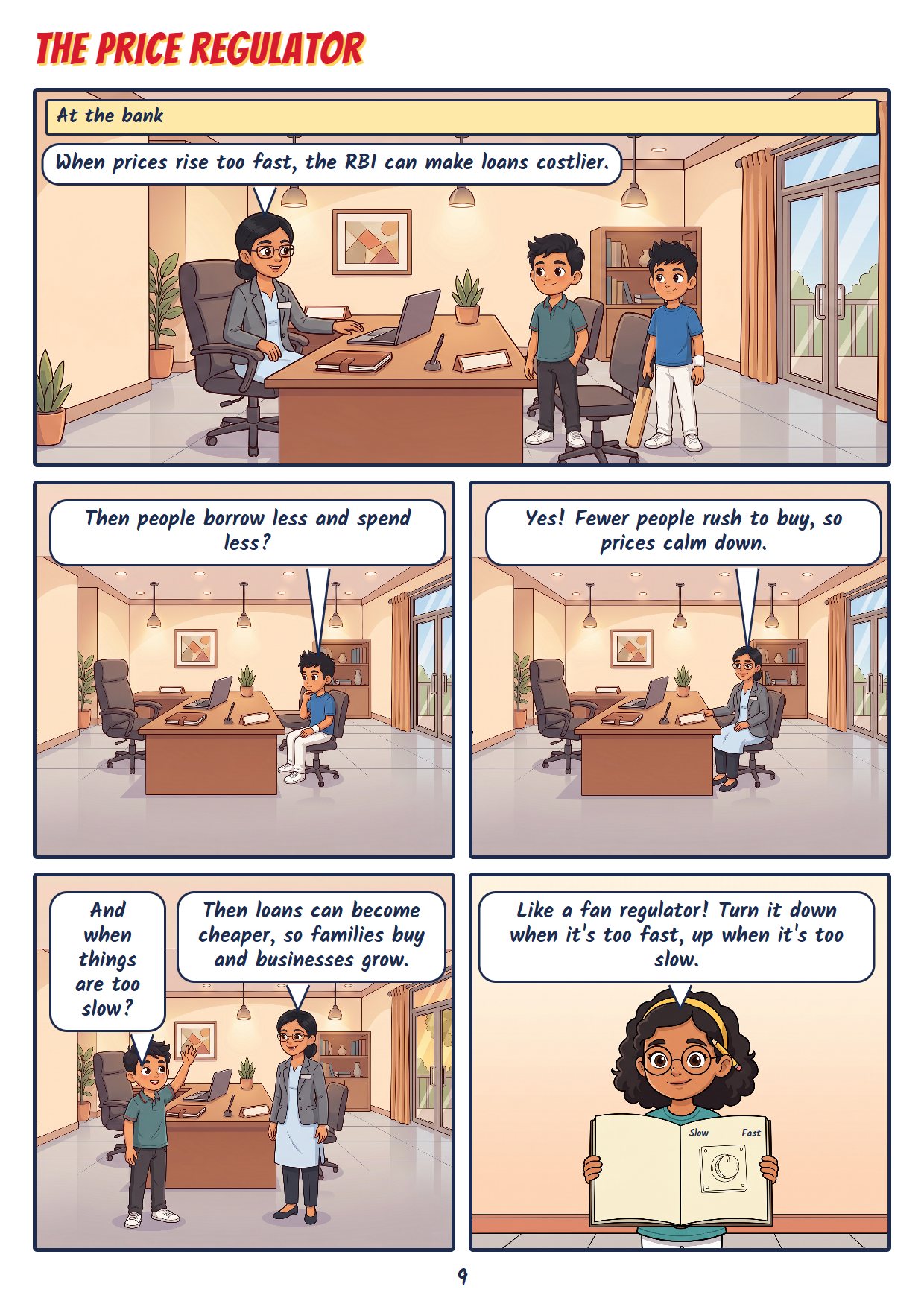
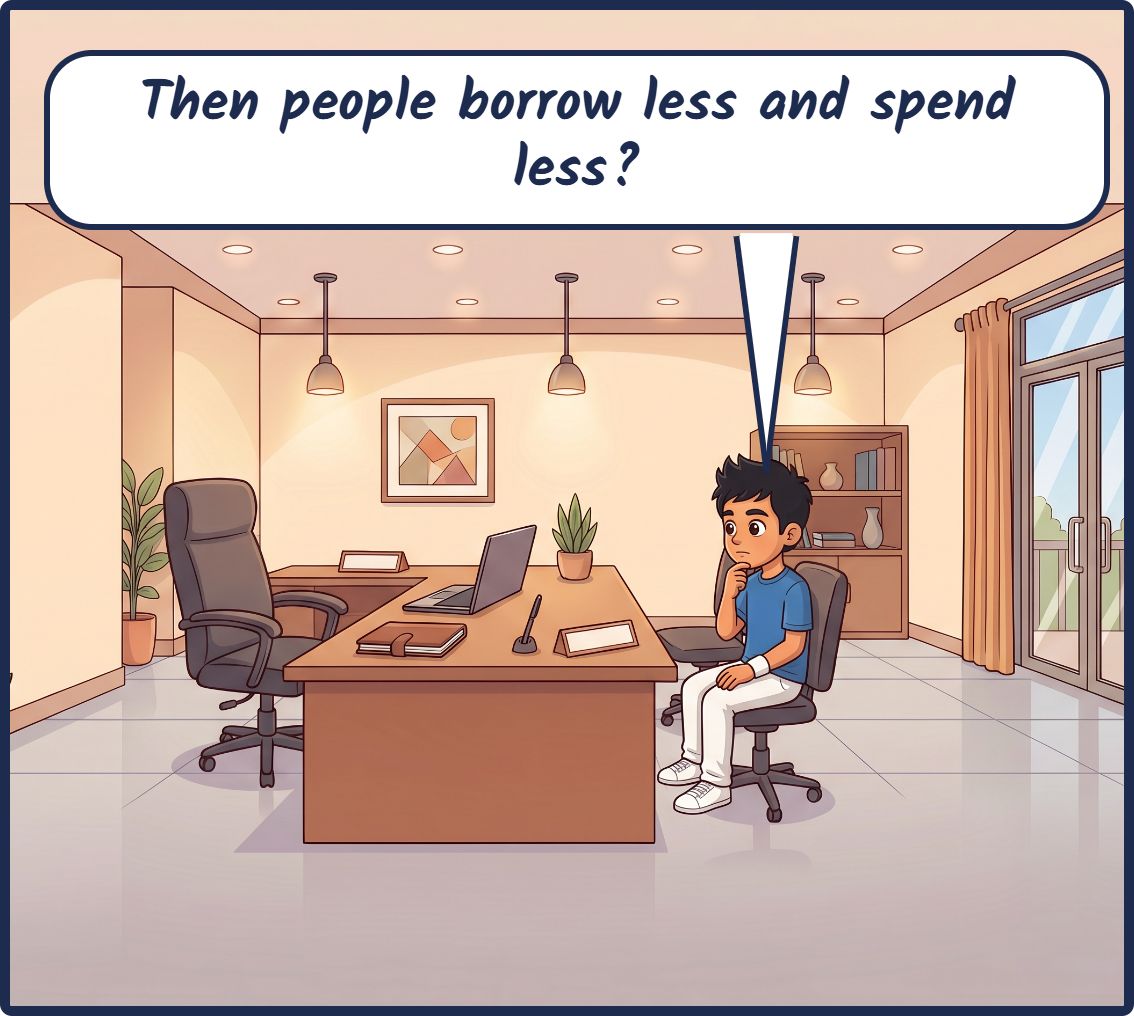
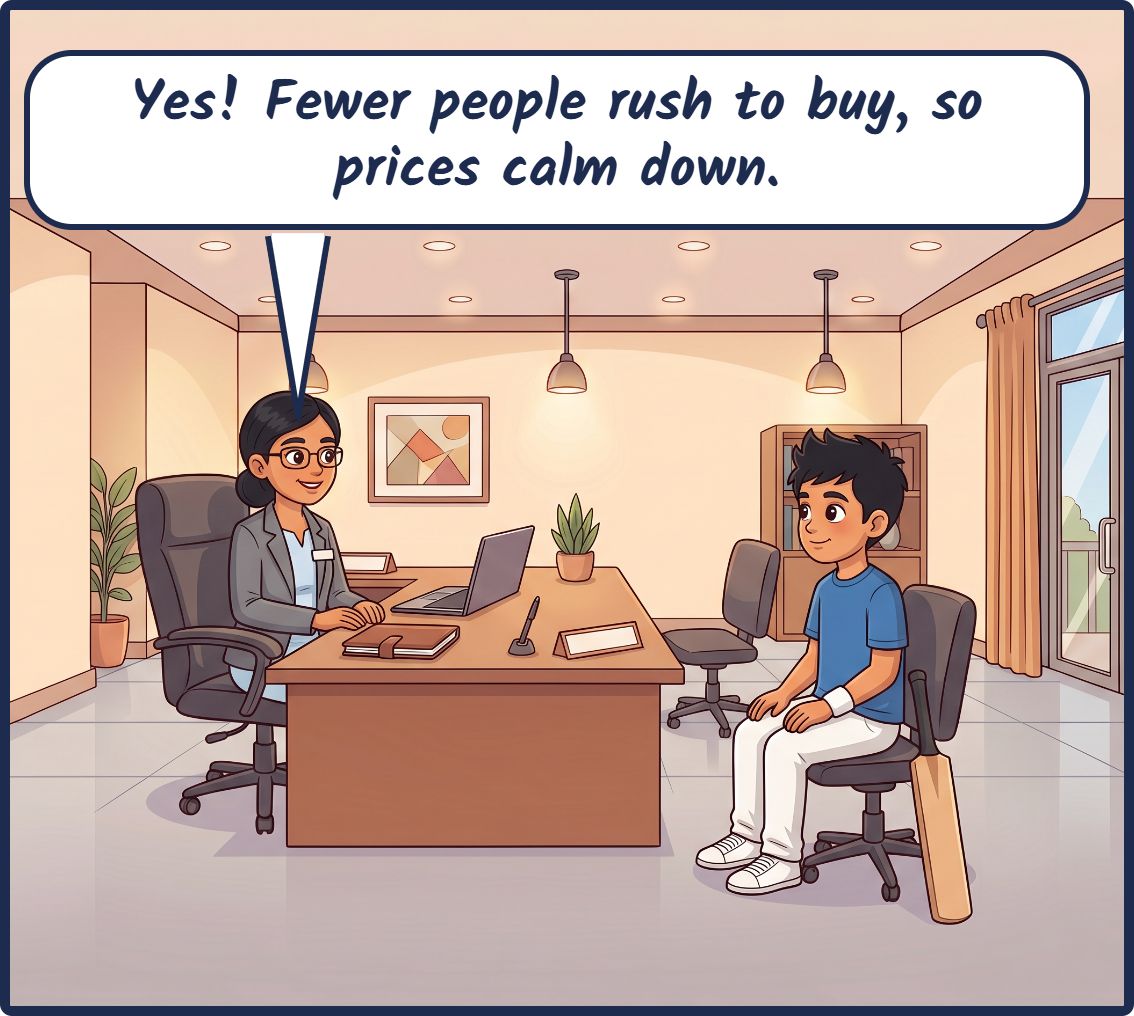
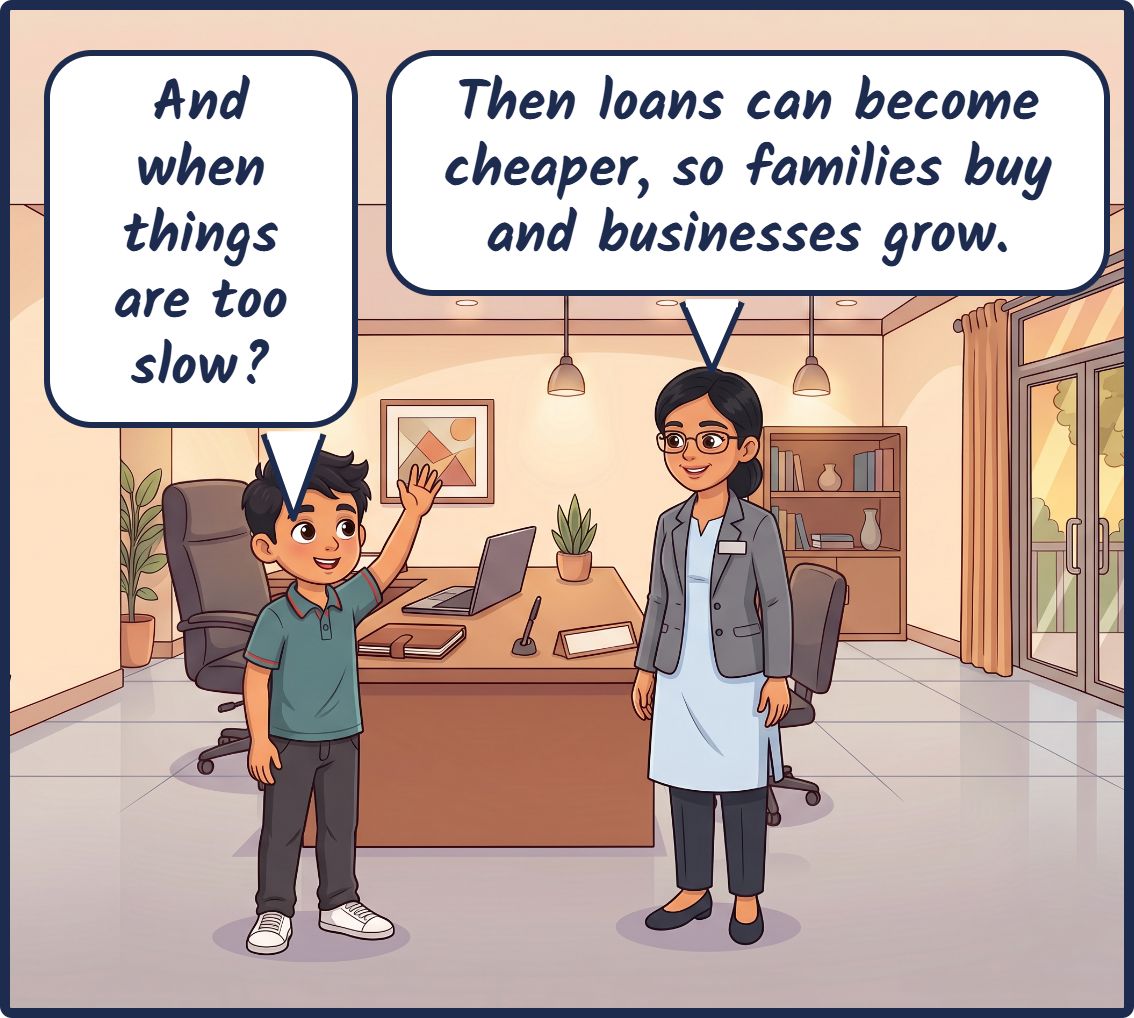
At the bank When prices rise too fast, the RBI can make loans costlier. Then people borrow less and spend less? Yes! Fewer people rush to buy, so prices calm down. And when things are too slow? Then loans can become cheaper, so families buy and businesses grow. Like a fan regulator! Turn it down when it's too fast, up when it's too slow.
The price detectives

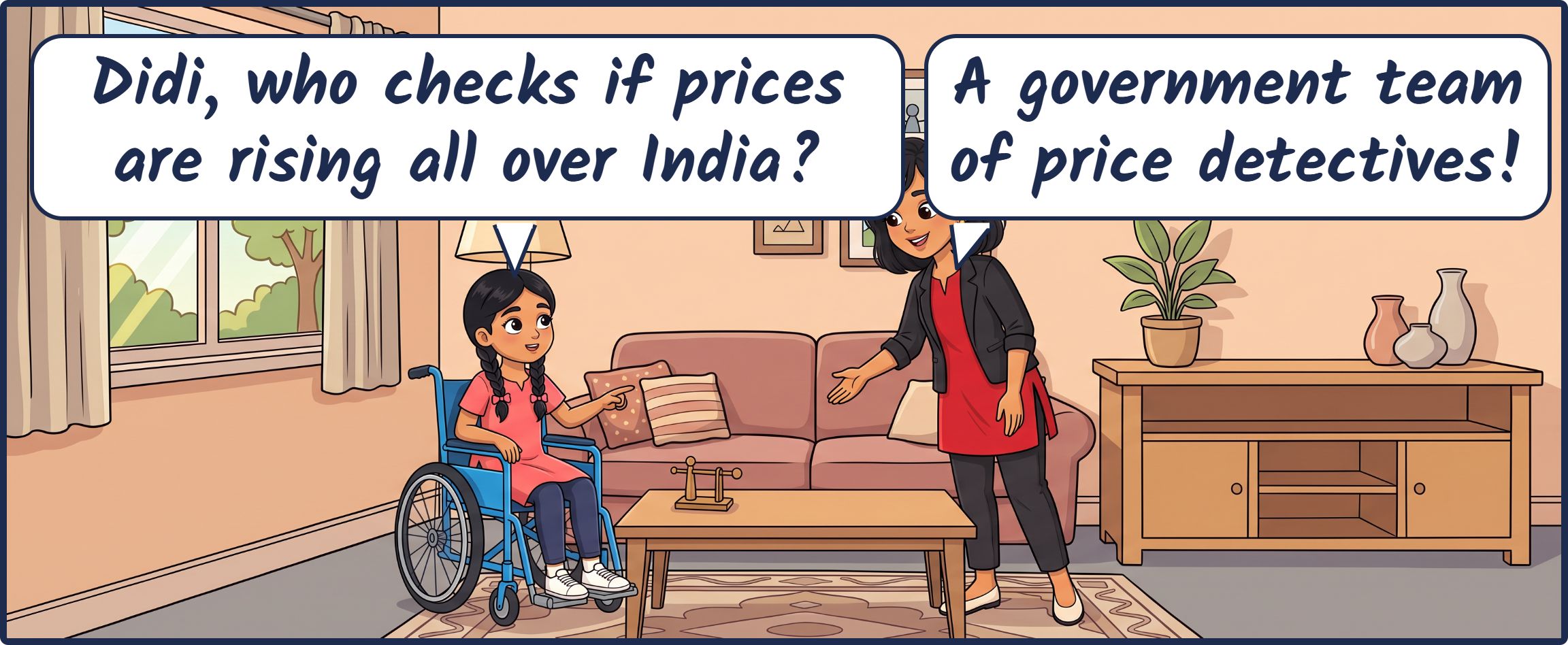
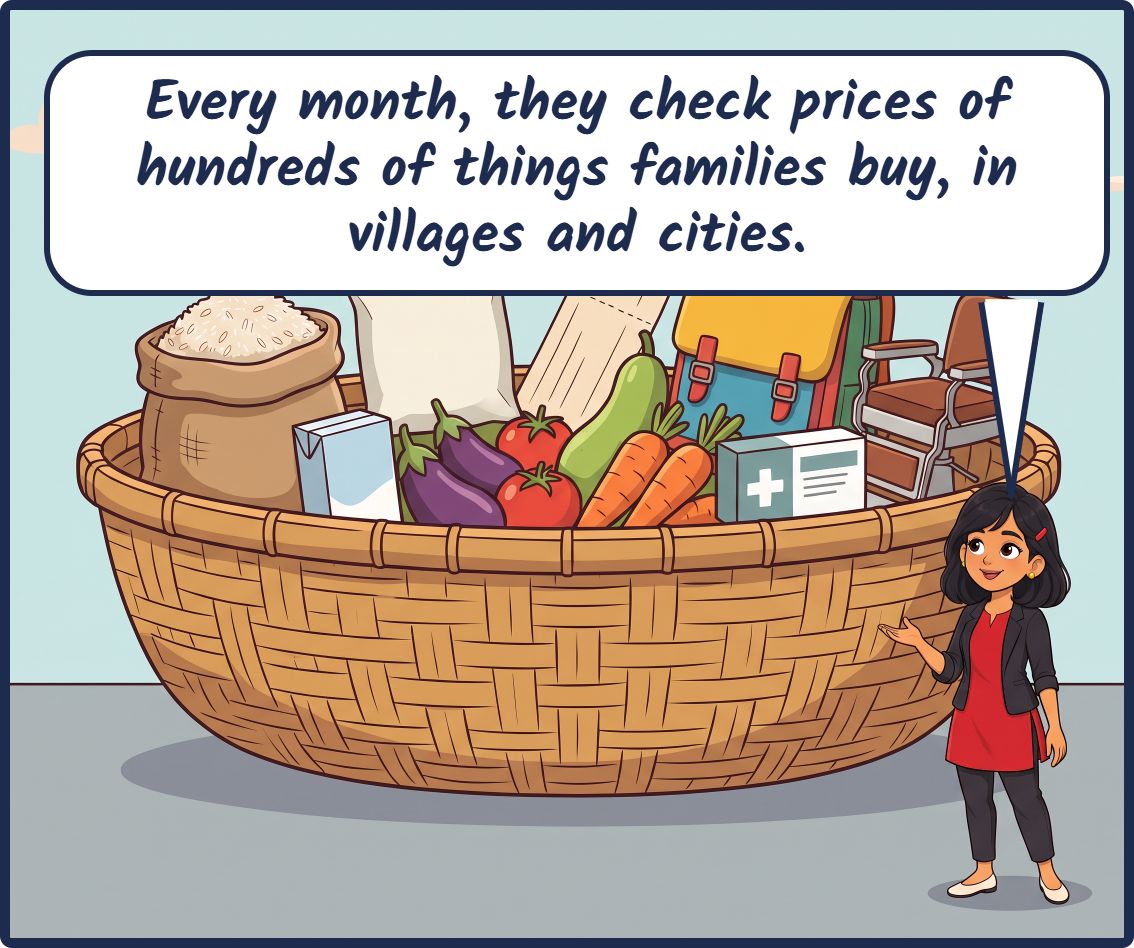
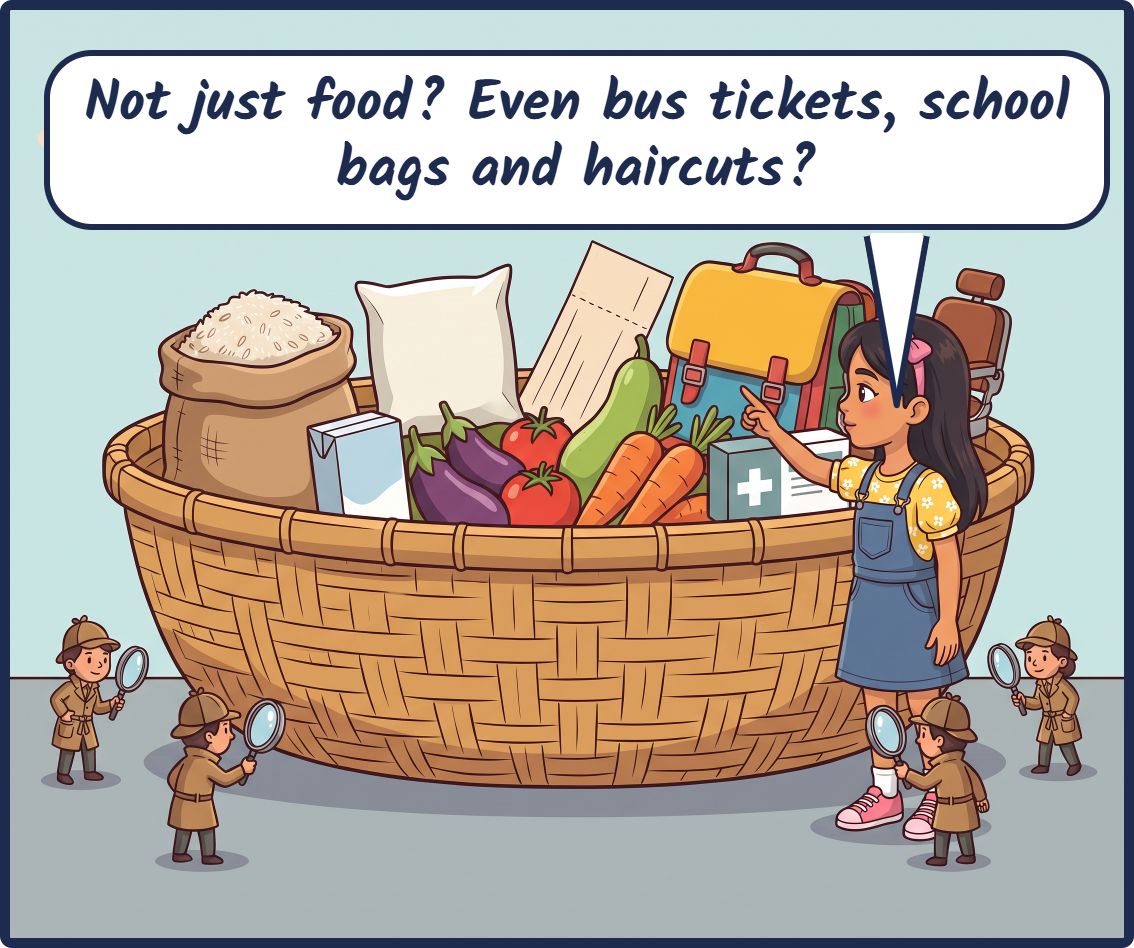
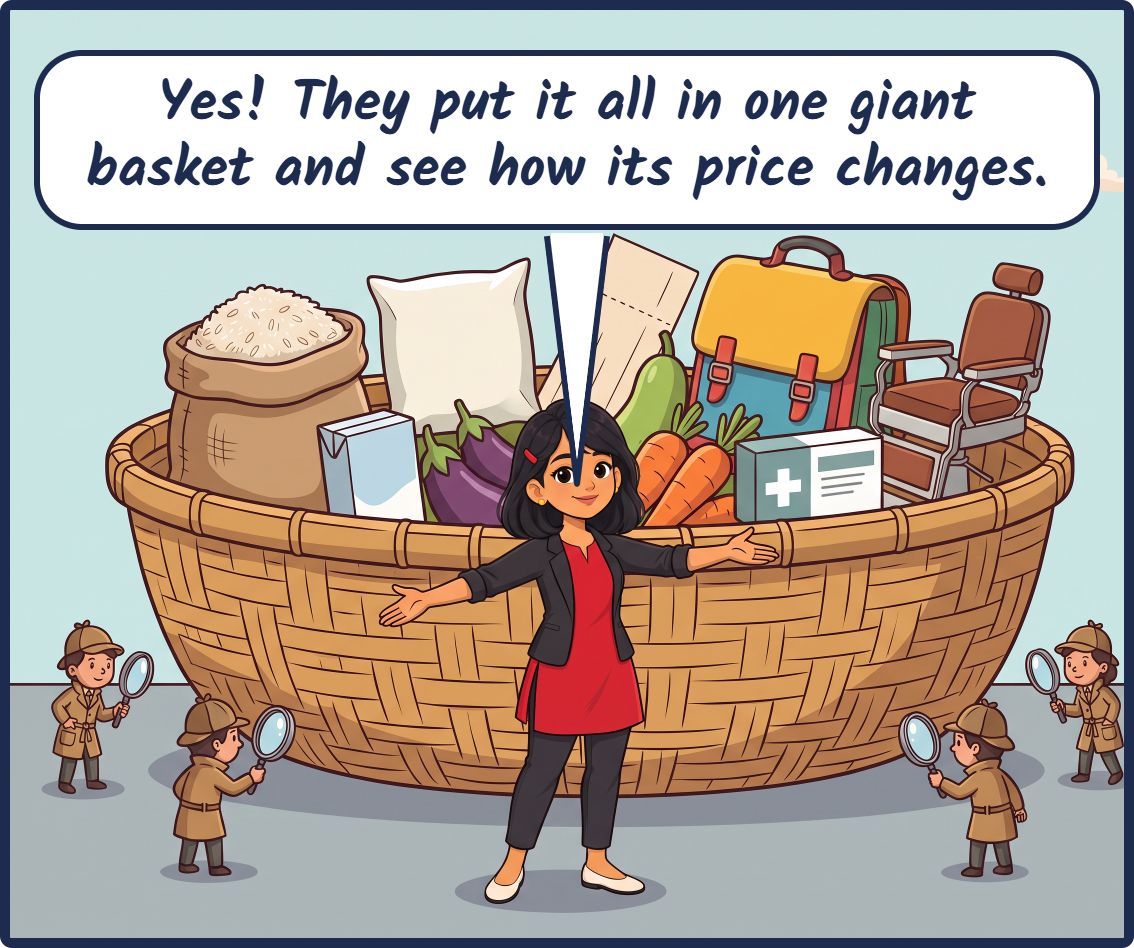
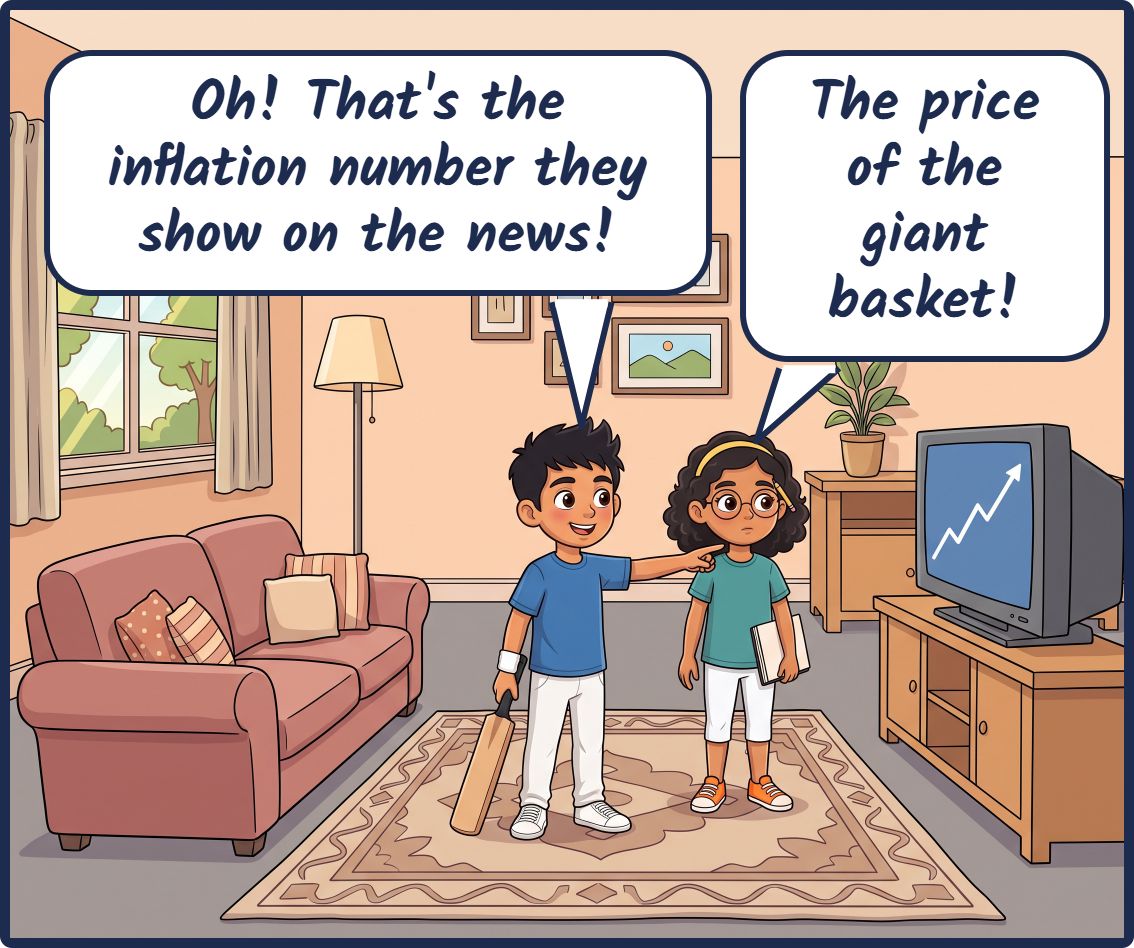
Didi, who checks if prices are rising all over India? A government team of price detectives! Every month, they check prices of hundreds of things families buy, in villages and cities. Not just food? Even bus tickets, school bags and haircuts? Yes! They put it all in one giant basket and see how its price changes. Oh! That's the inflation number they show on the news! The price of the giant basket!
Sau's shrinking shopping bag
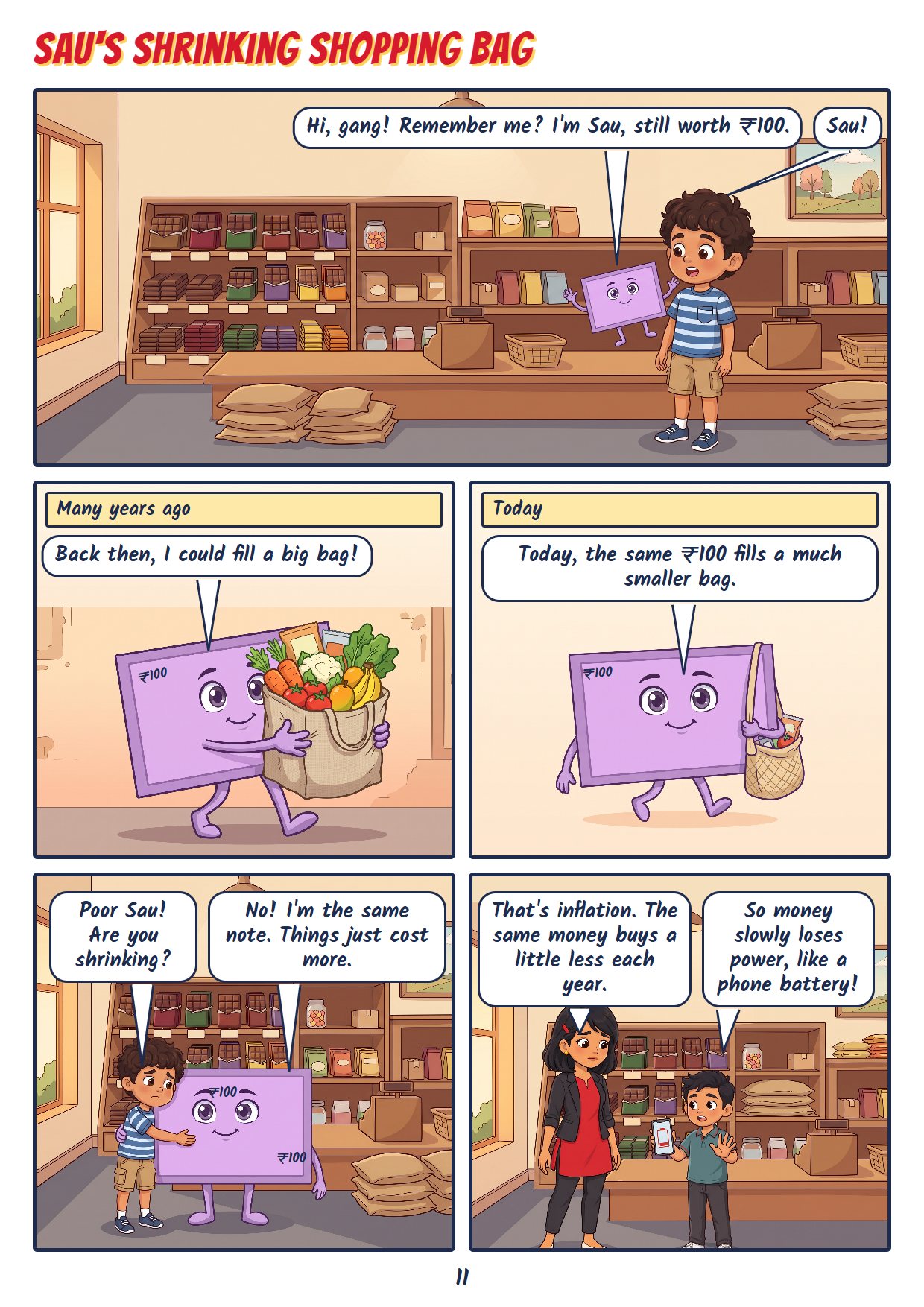
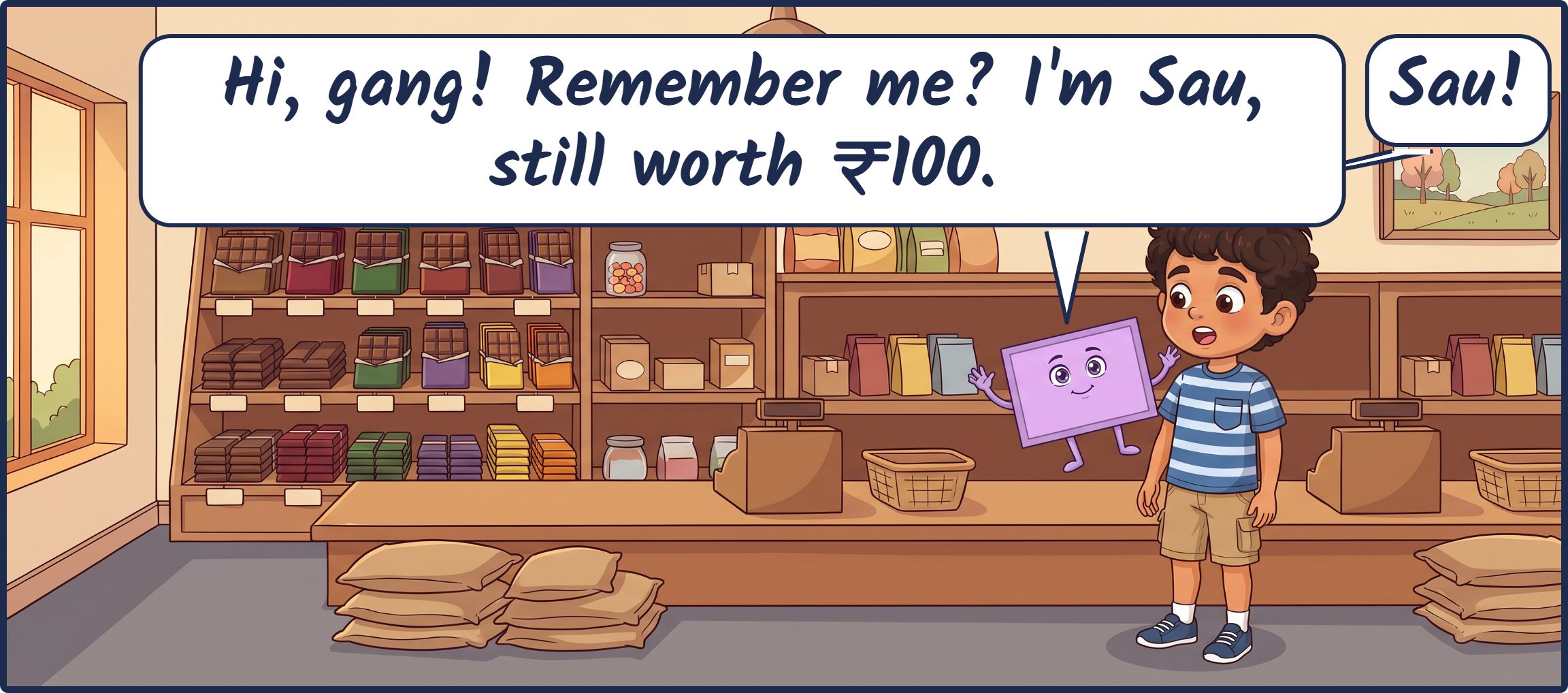
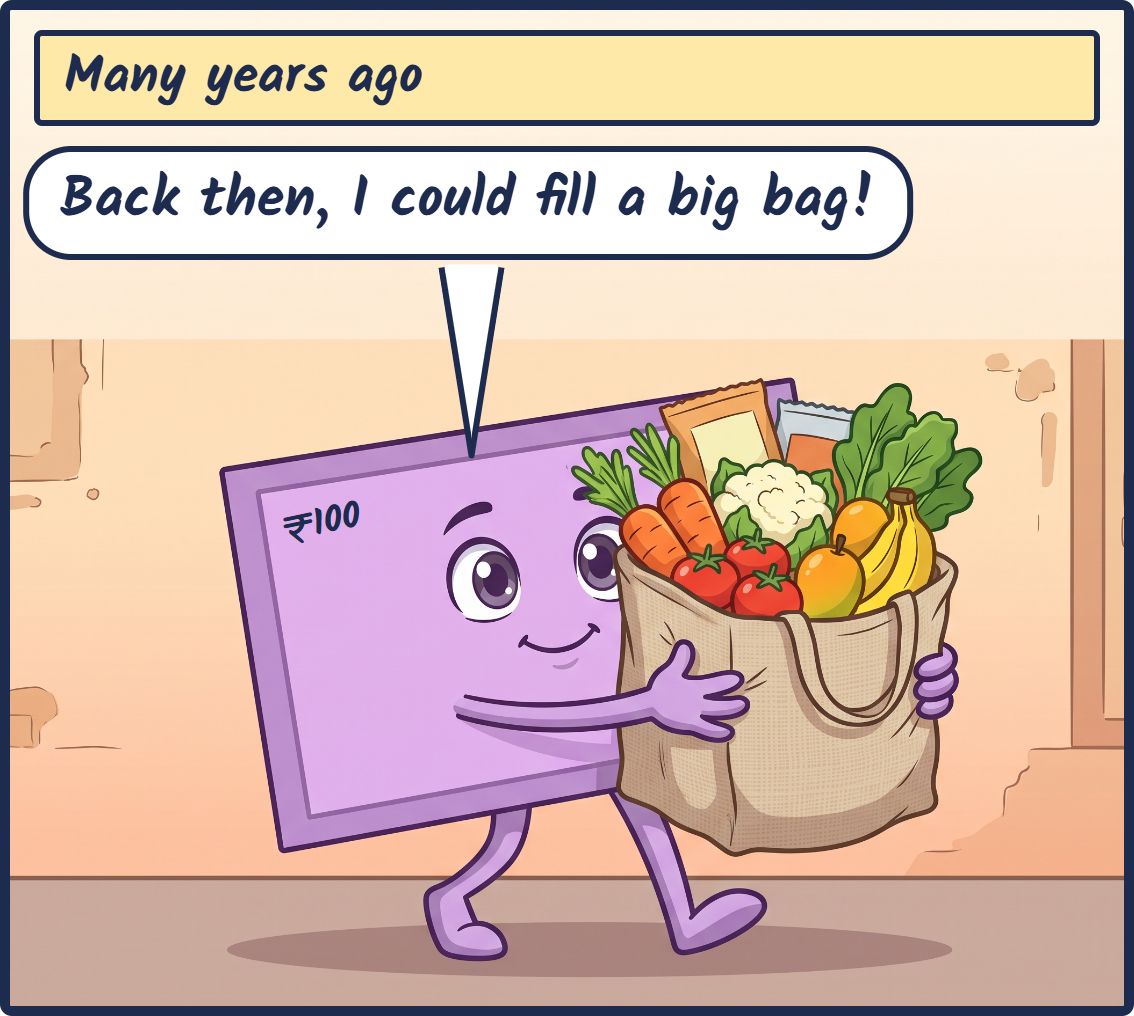
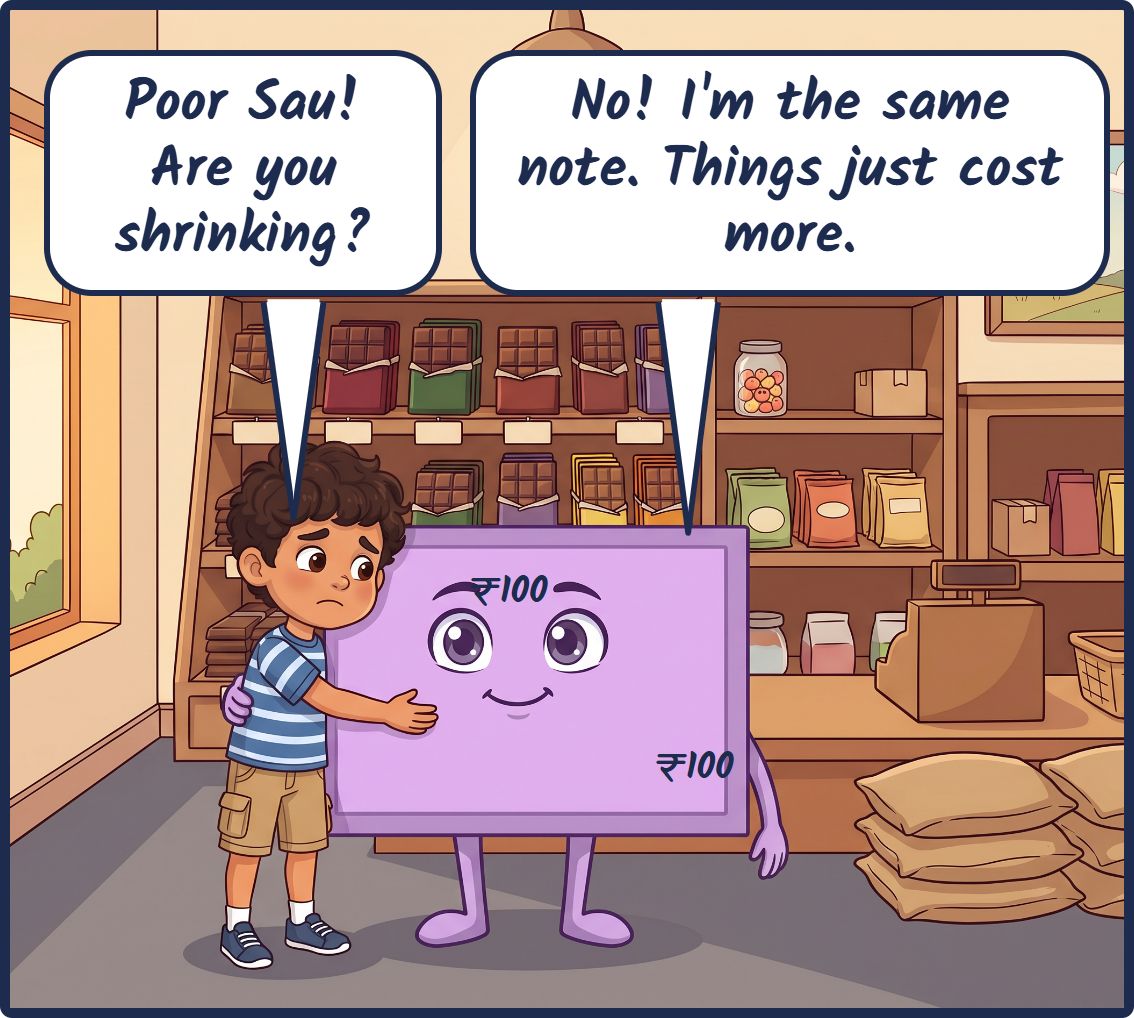
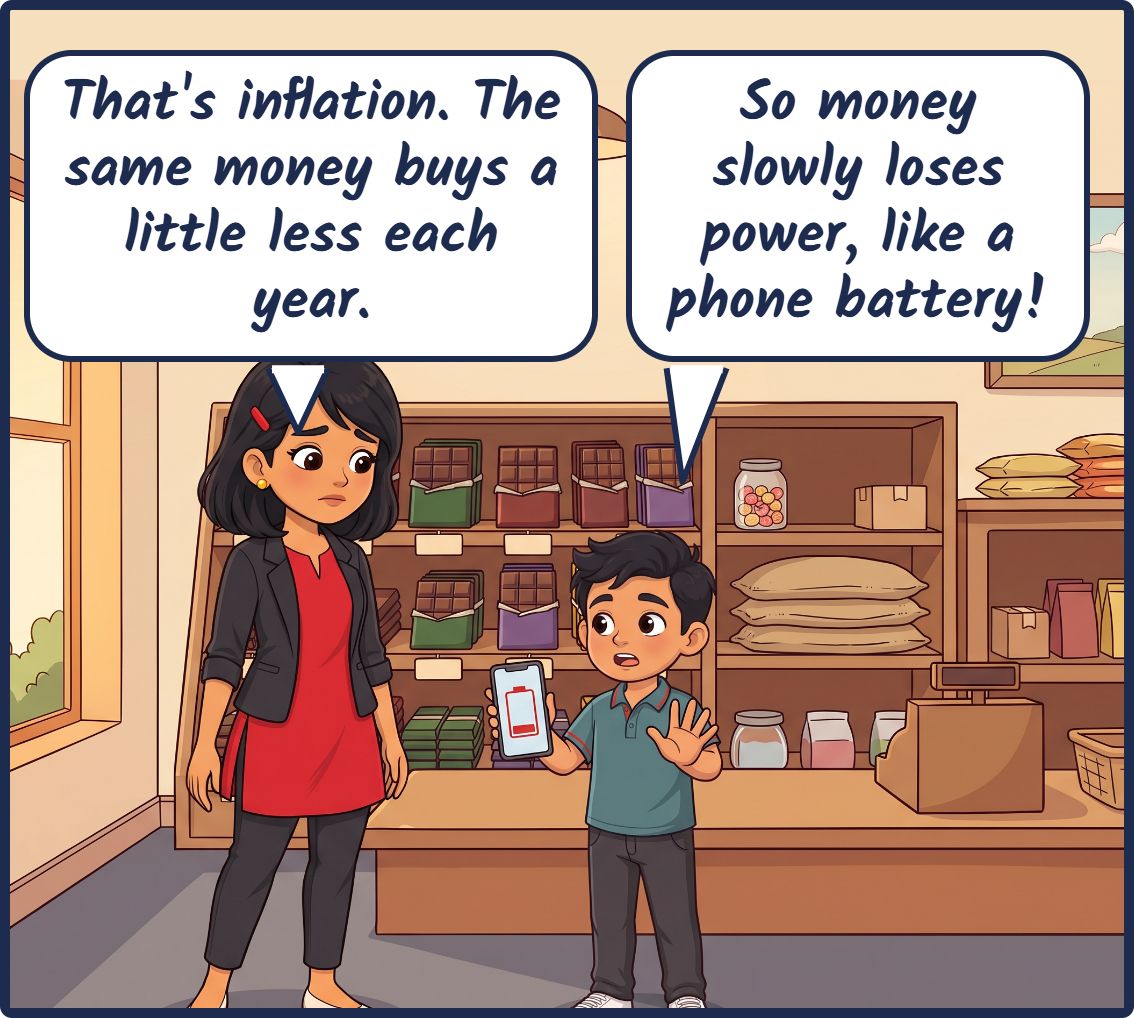
Hi, gang! Remember me? I'm Sau, still worth ₹100. Sau! Many years ago Back then, I could fill a big bag! Today Today, the same ₹100 fills a much smaller bag. Poor Sau! Are you shrinking? No! I'm the same note. Things just cost more. That's inflation. The same money buys a little less each year. So money slowly loses power, like a phone battery!
Ajja's idli story
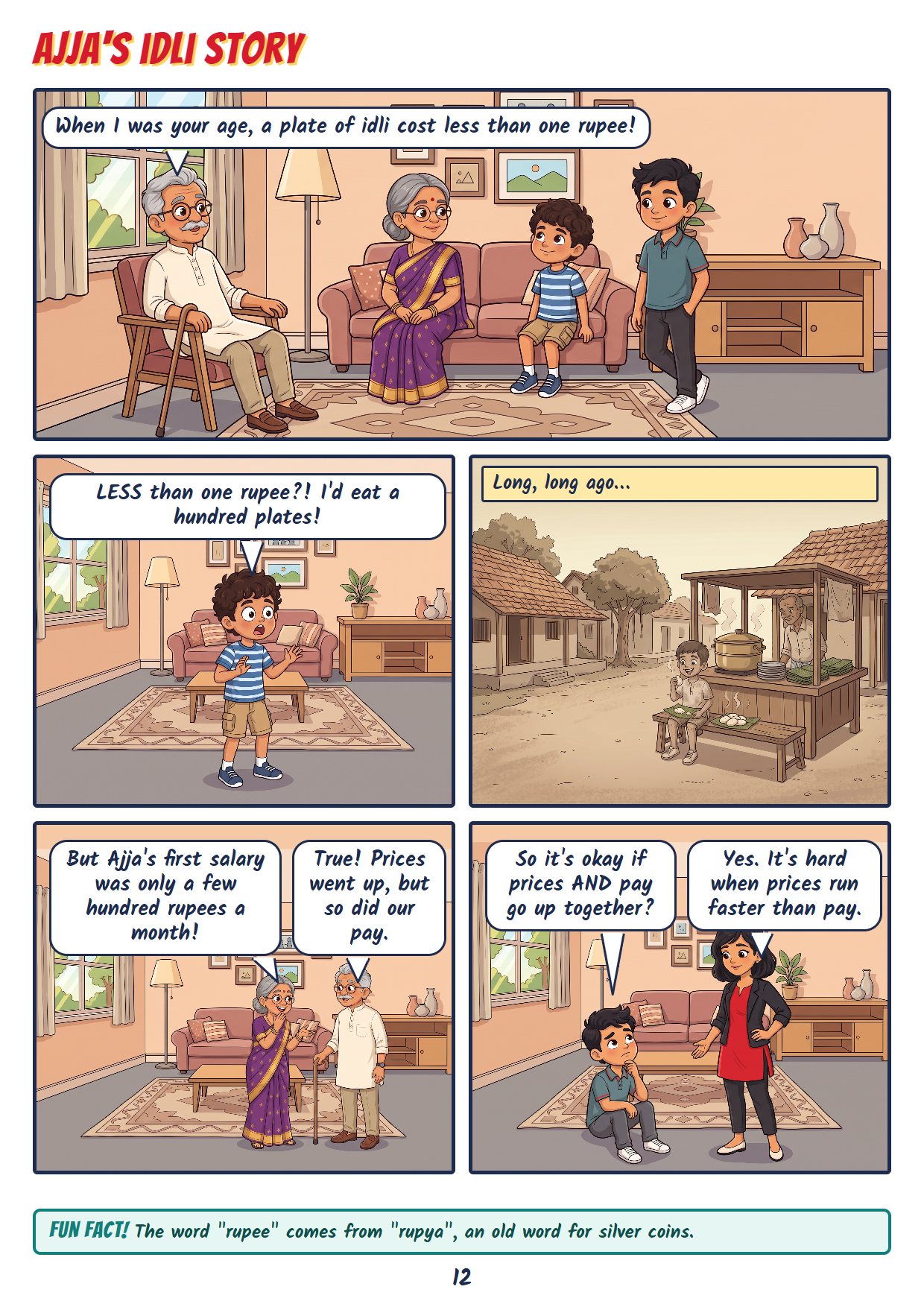
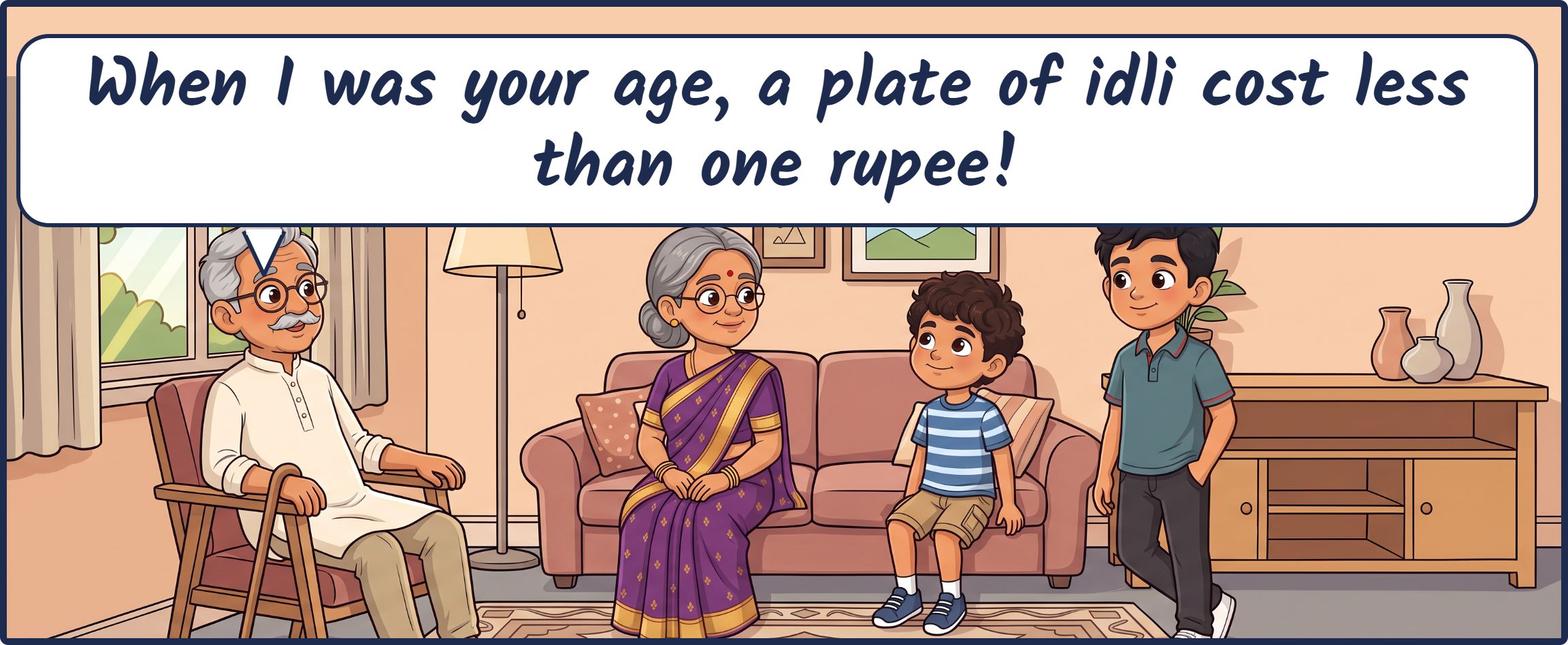
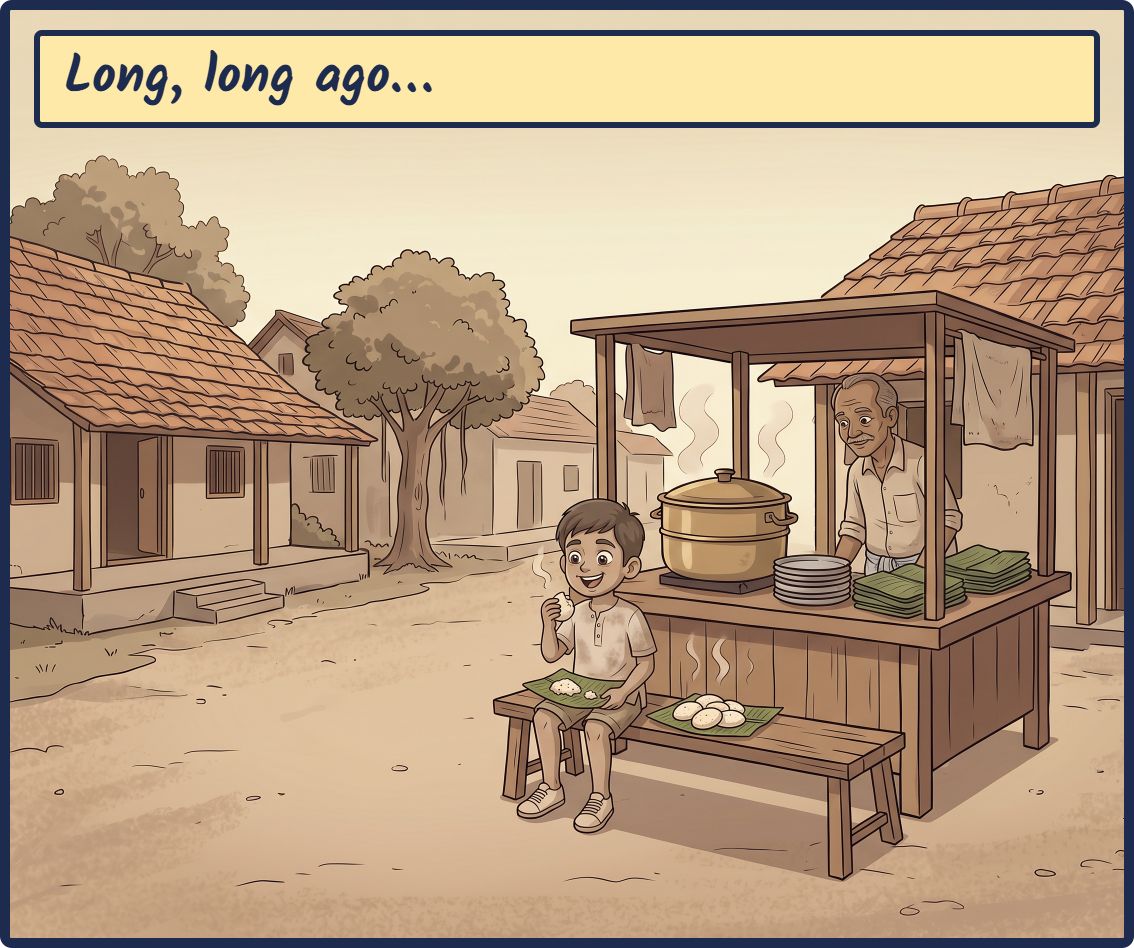
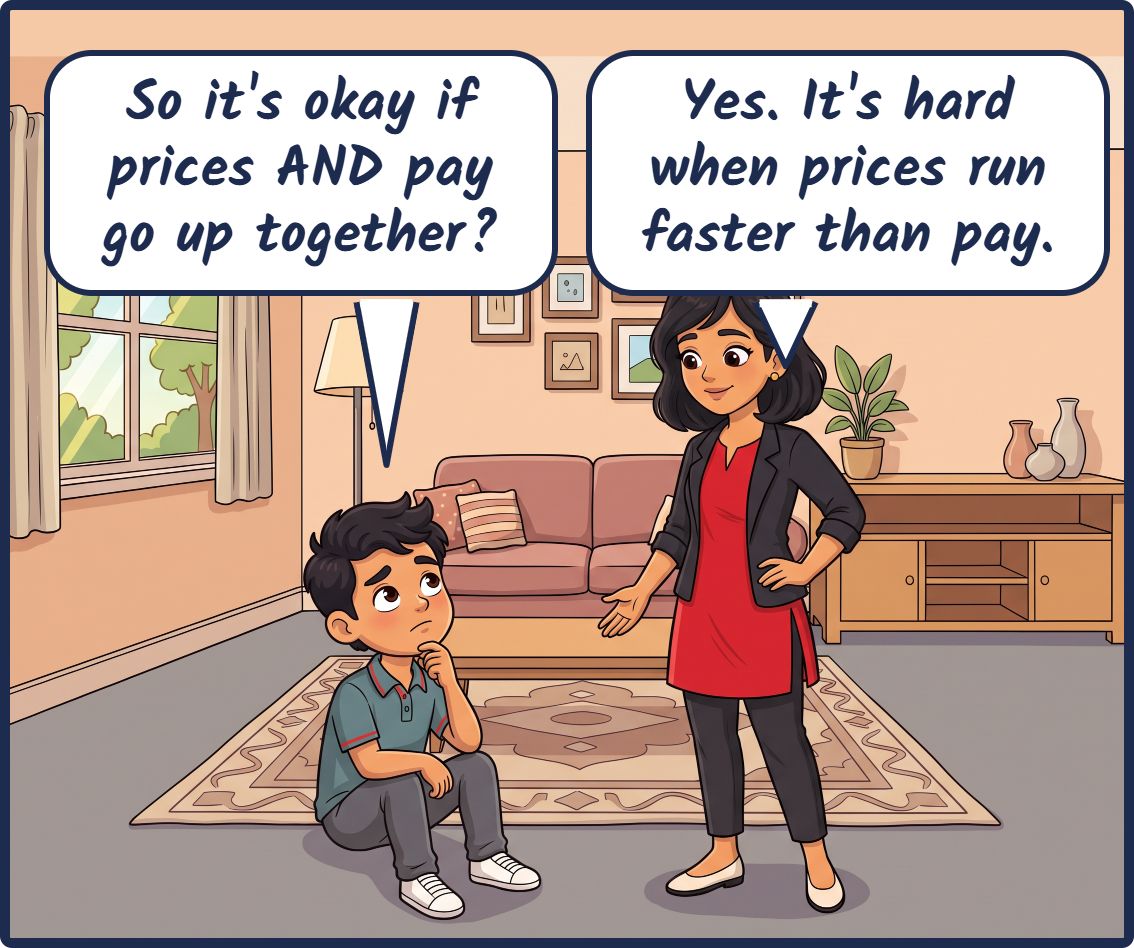
When I was your age, a plate of idli cost less than one rupee! LESS than one rupee?! I'd eat a hundred plates! Long, long ago… But Ajja's first salary was only a few hundred rupees a month! True! Prices went up, but so did our pay. So it's okay if prices AND pay go up together? Yes. It's hard when prices run faster than pay.
Good or bad?

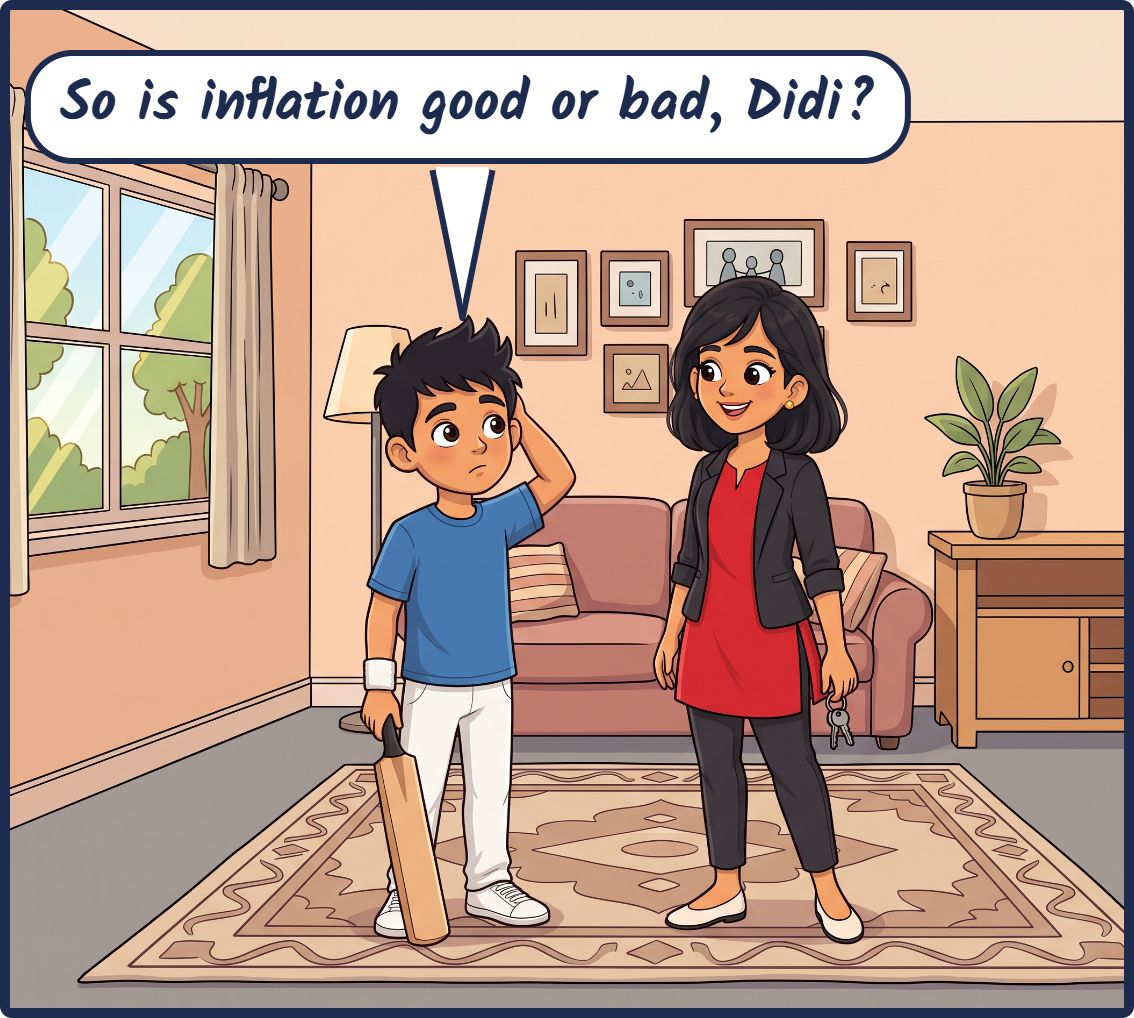
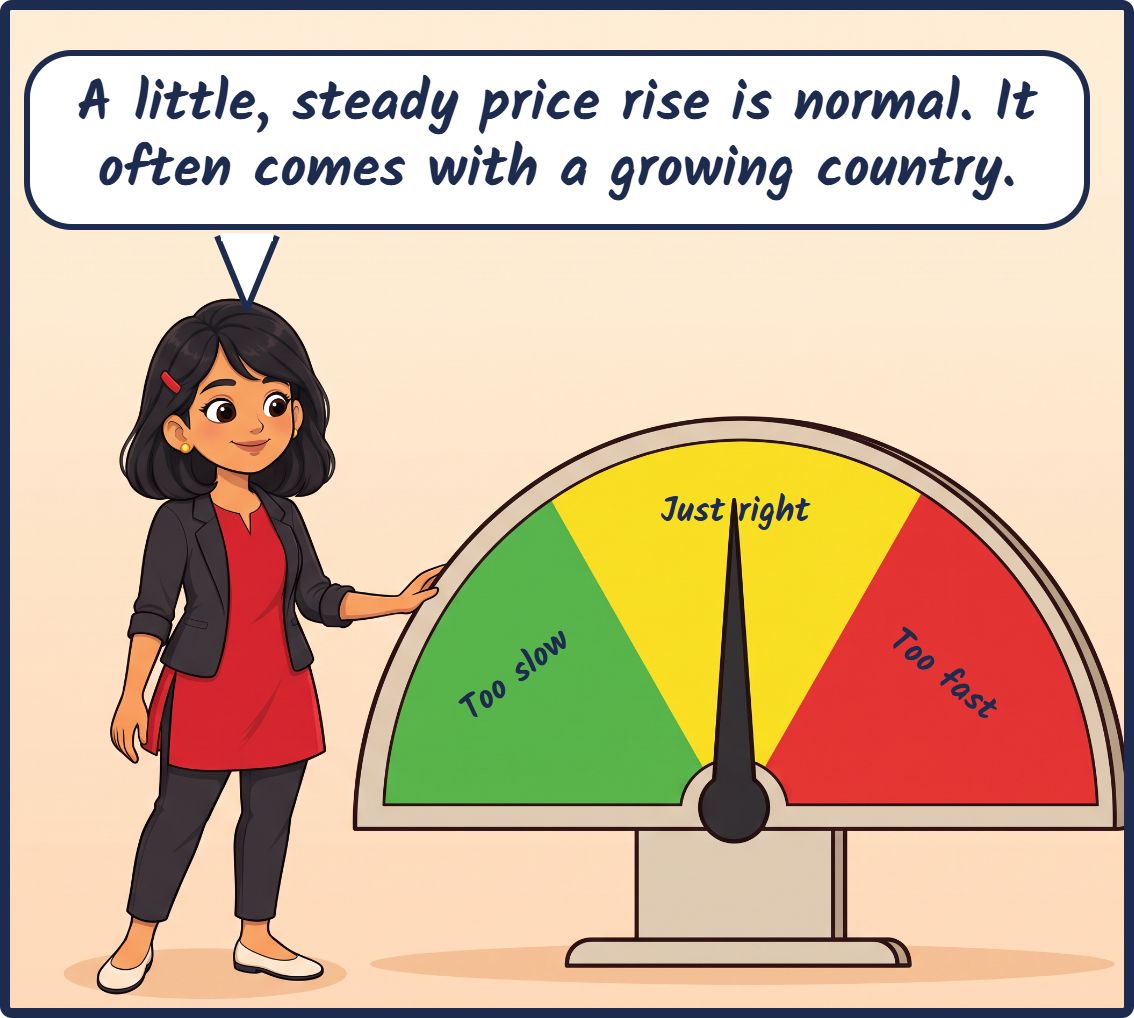
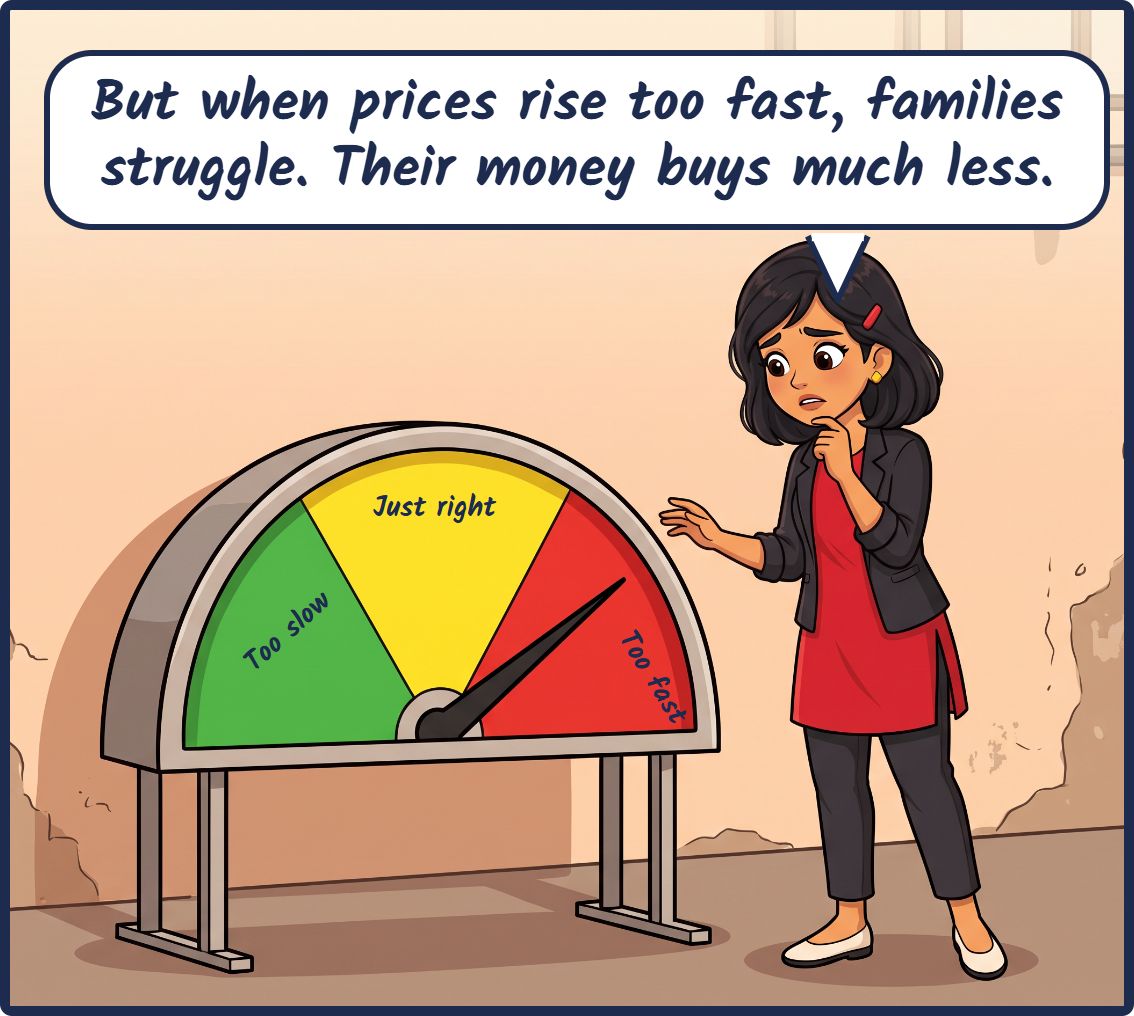
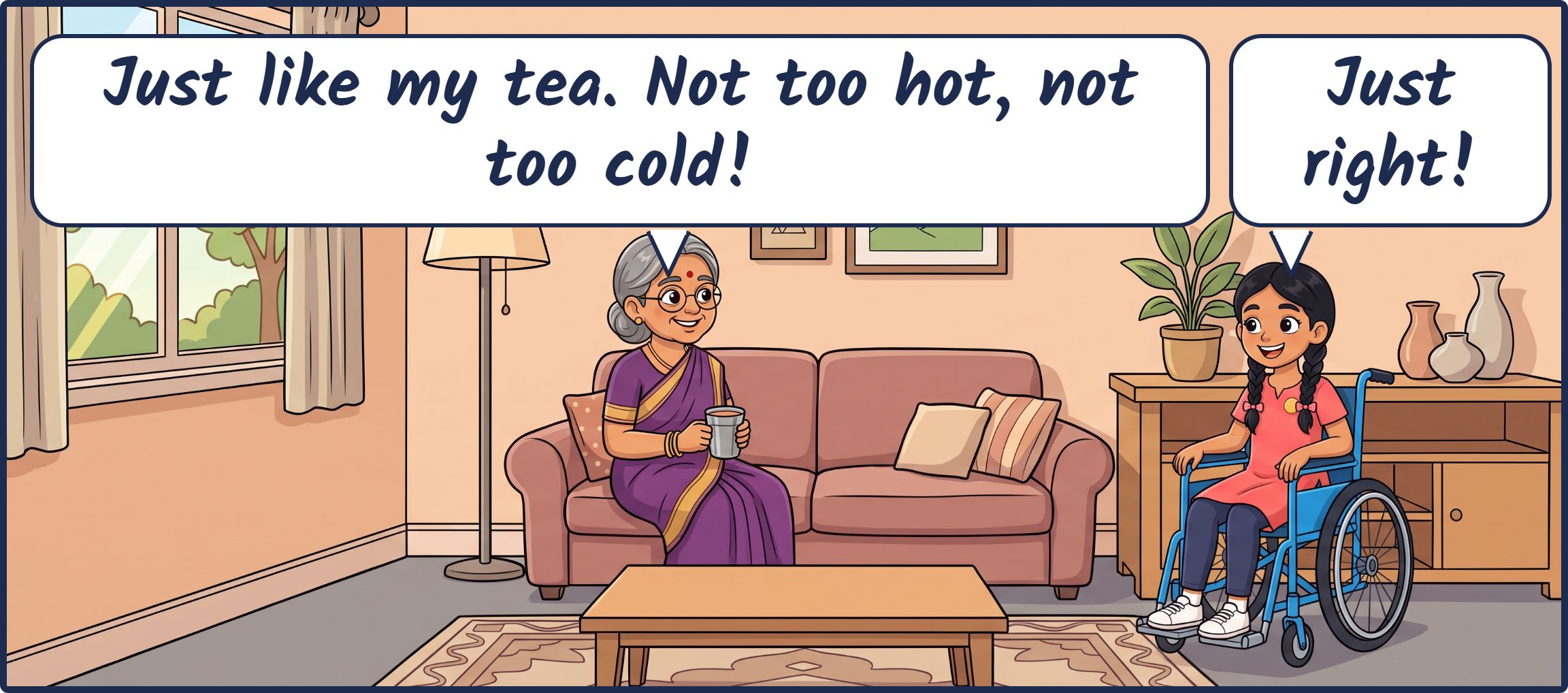
So is inflation good or bad, Didi? A little, steady price rise is normal. It often comes with a growing country. But when prices rise too fast, families struggle. Their money buys much less. It's hardest for people whose pay doesn't go up. Just like my tea. Not too hot, not too cold! Just right!
Siddu's savings race
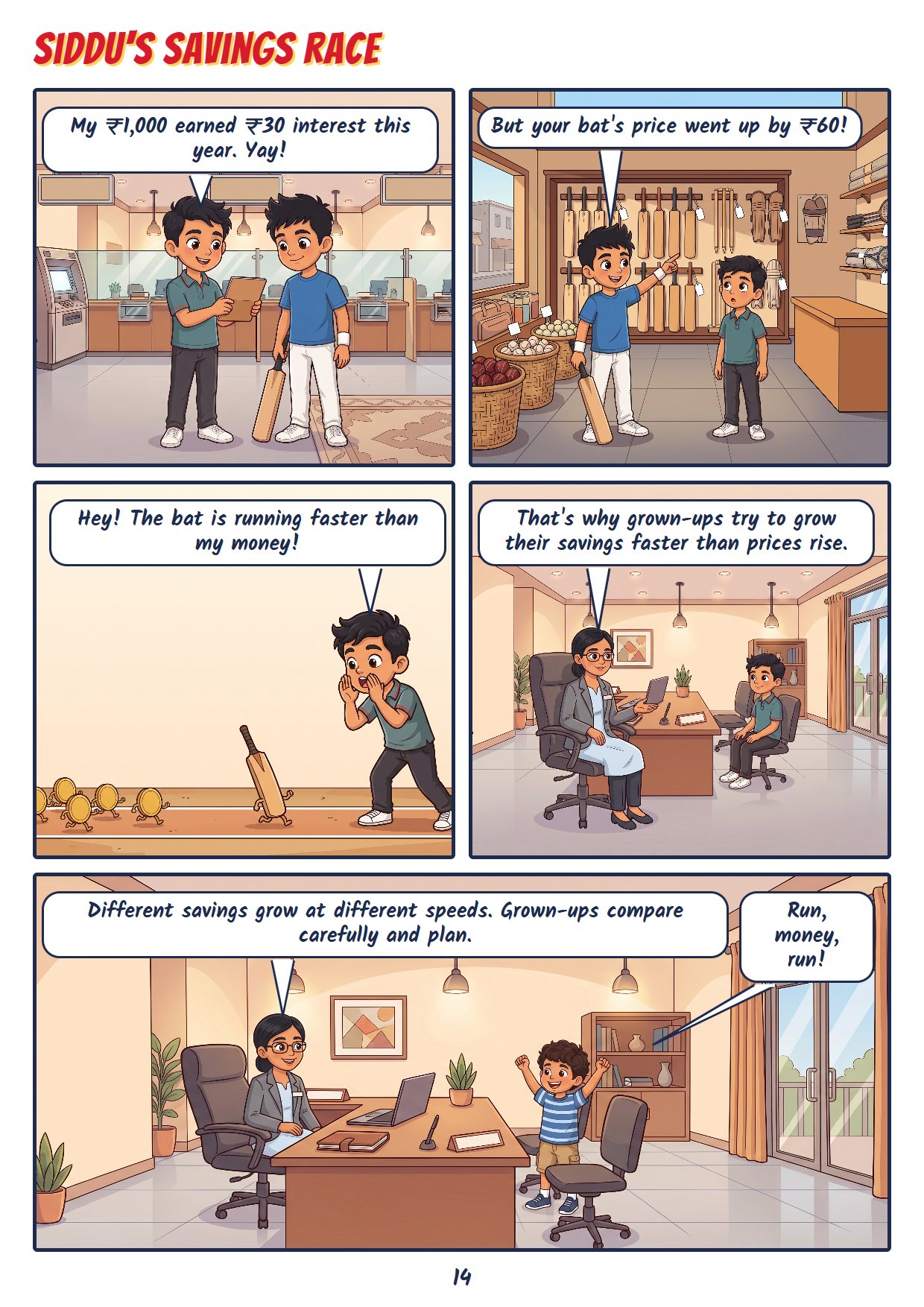
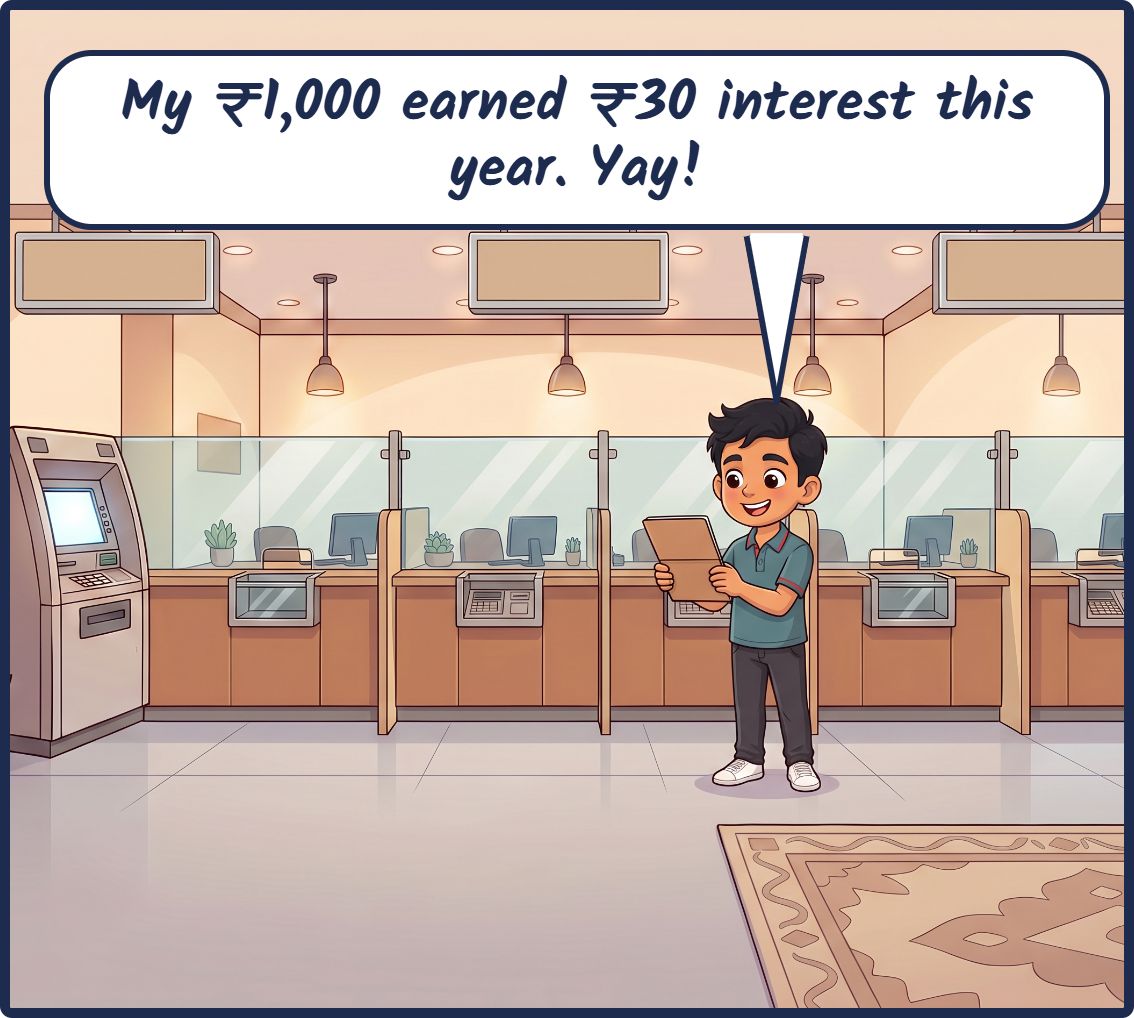
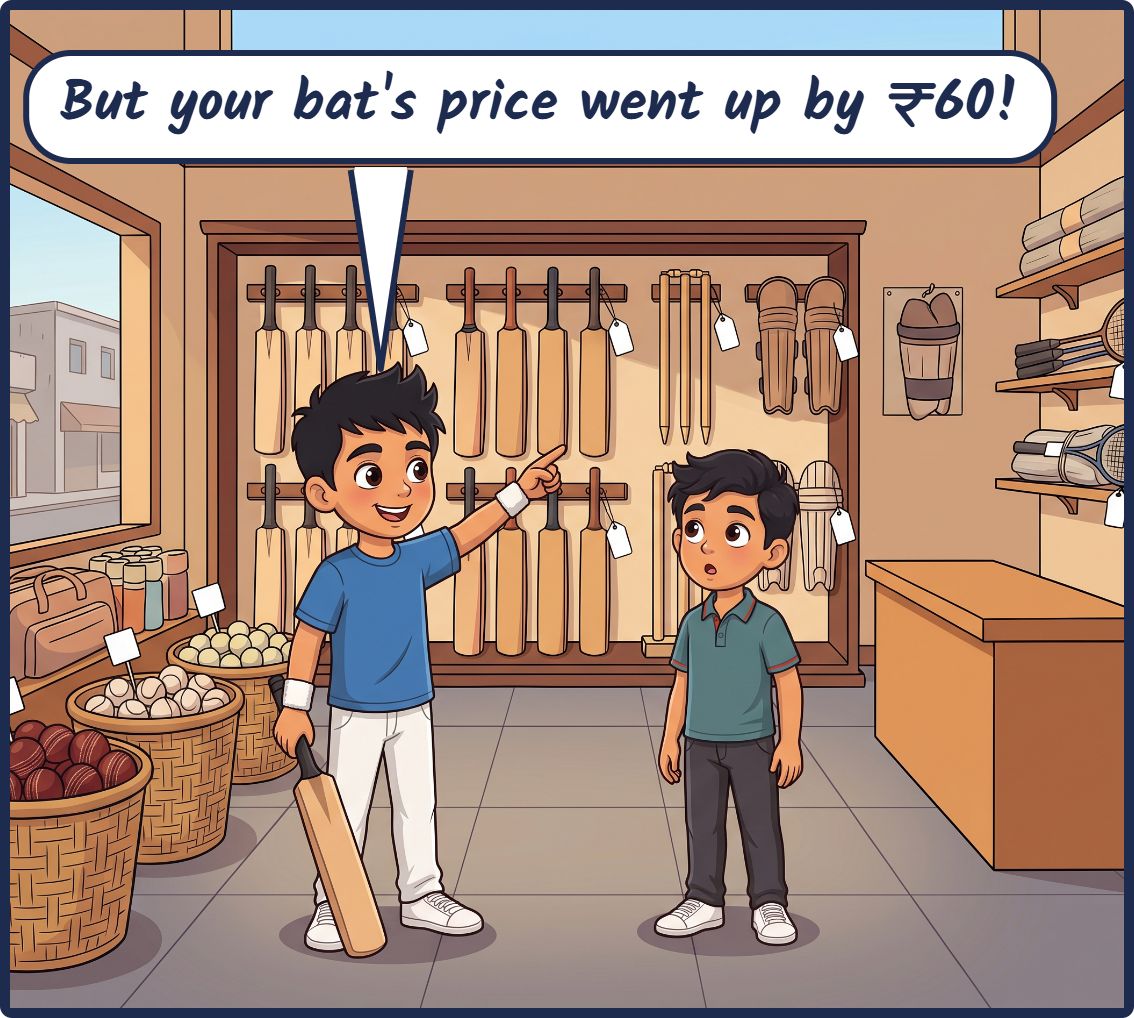
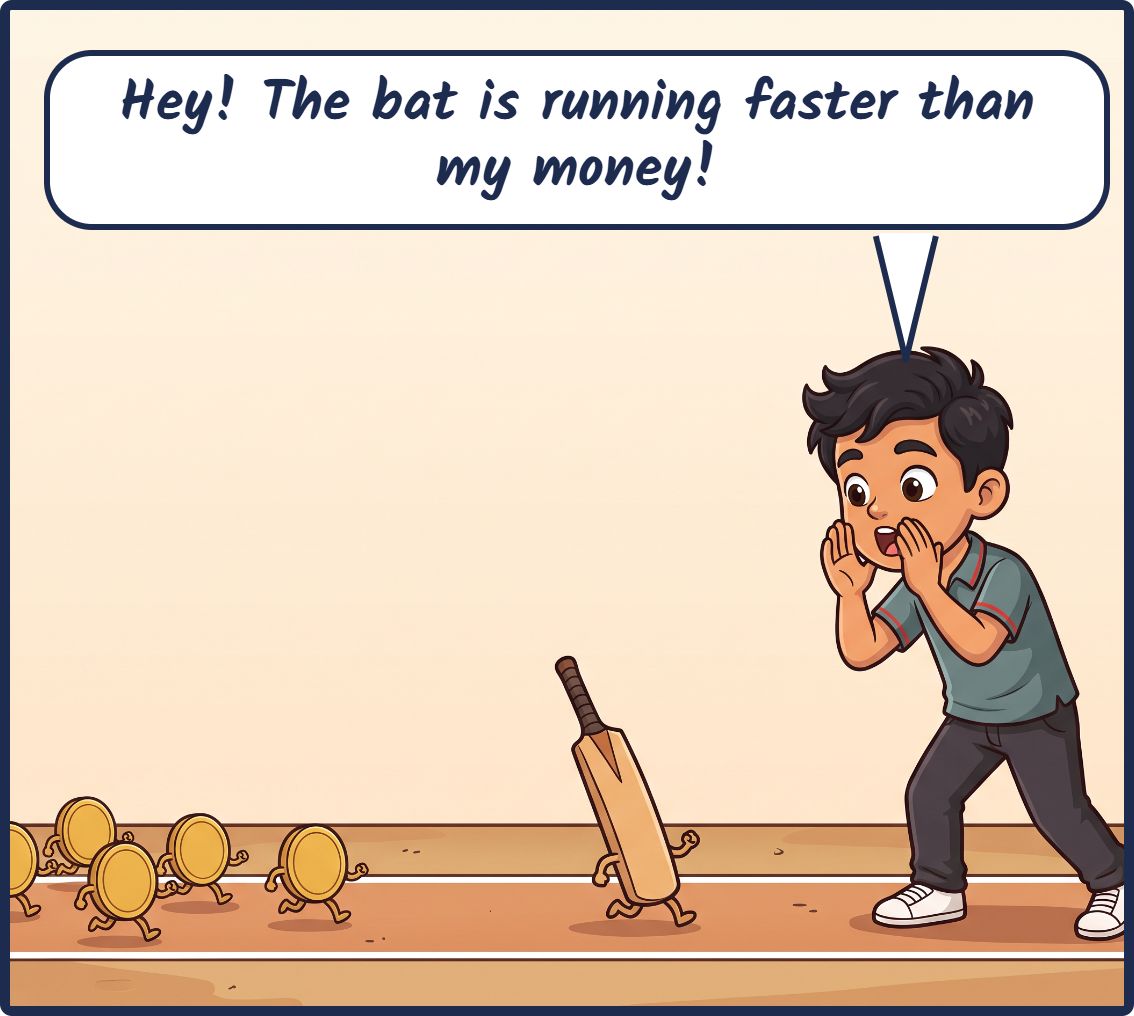
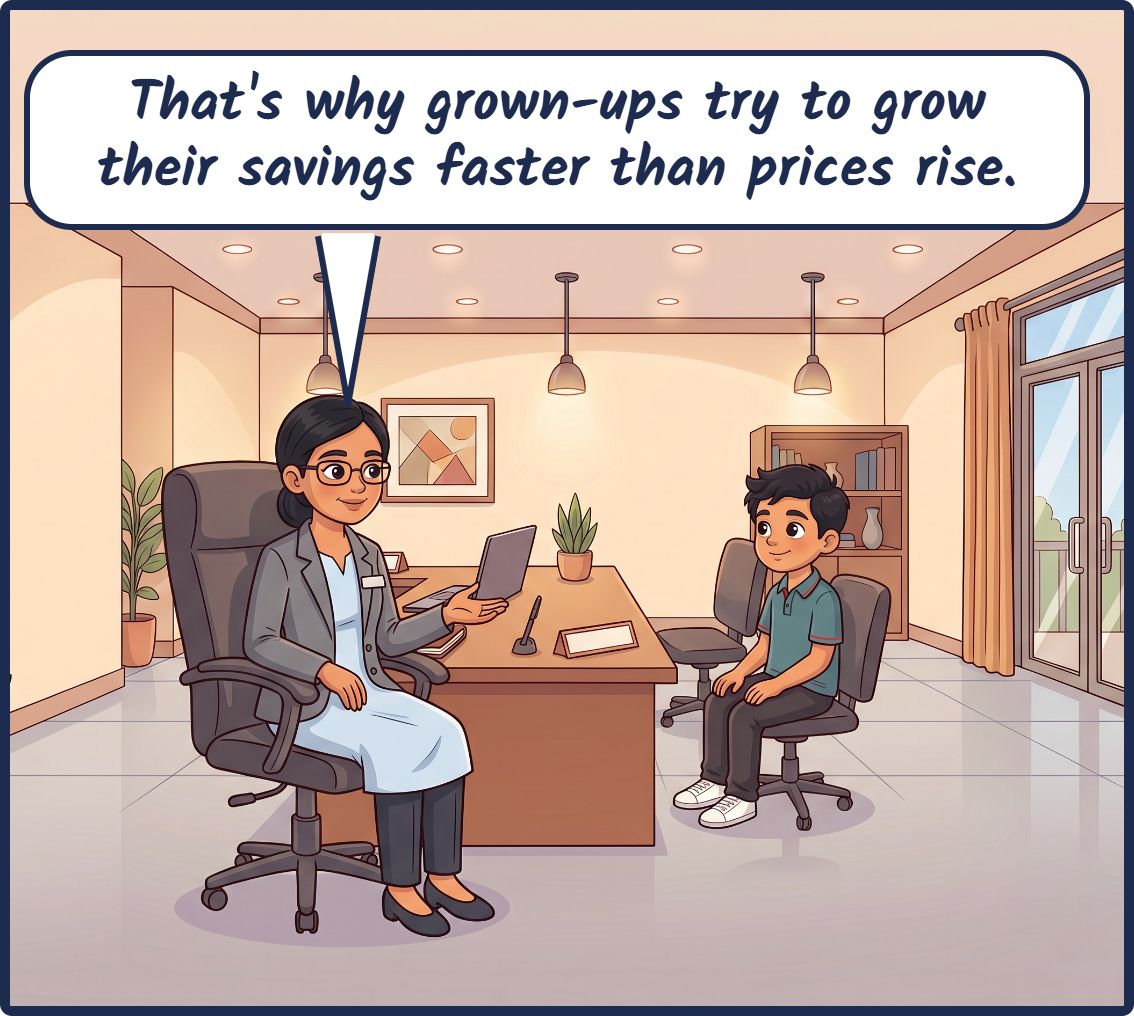
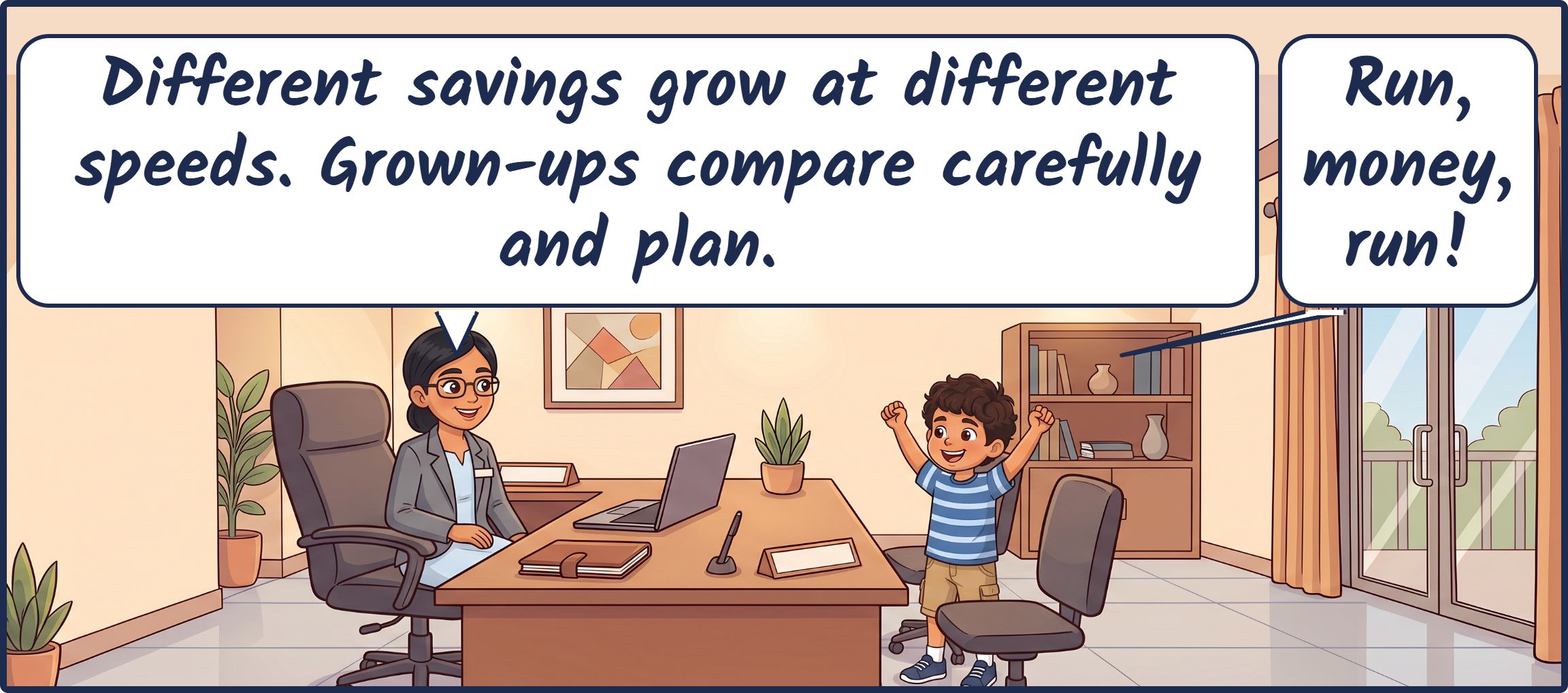
My ₹1,000 earned ₹30 interest this year. Yay! But your bat's price went up by ₹60! Hey! The bat is running faster than my money! That's why grown-ups try to grow their savings faster than prices rise. Different savings grow at different speeds. Grown-ups compare carefully and plan. Run, money, run!
What families can do
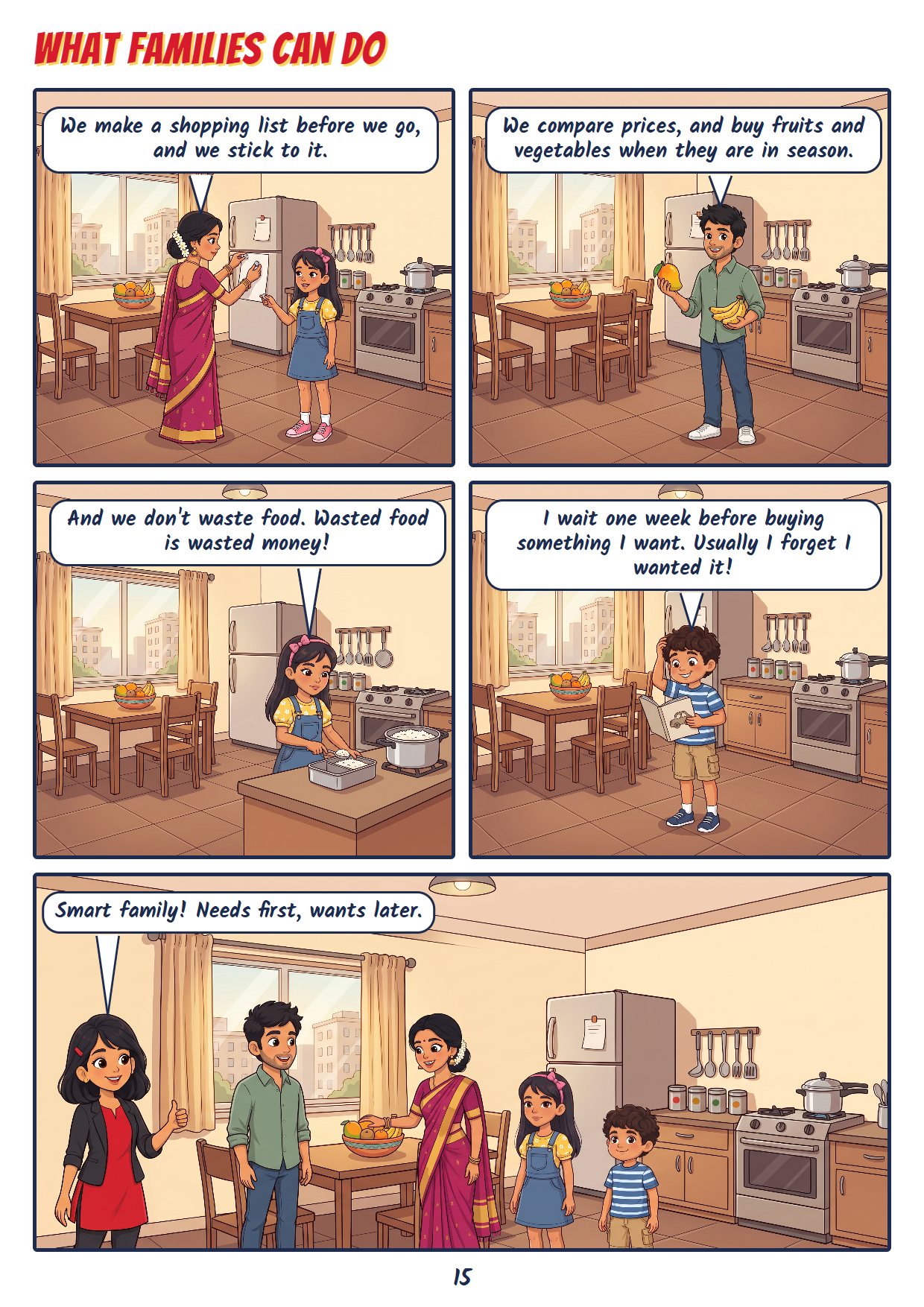
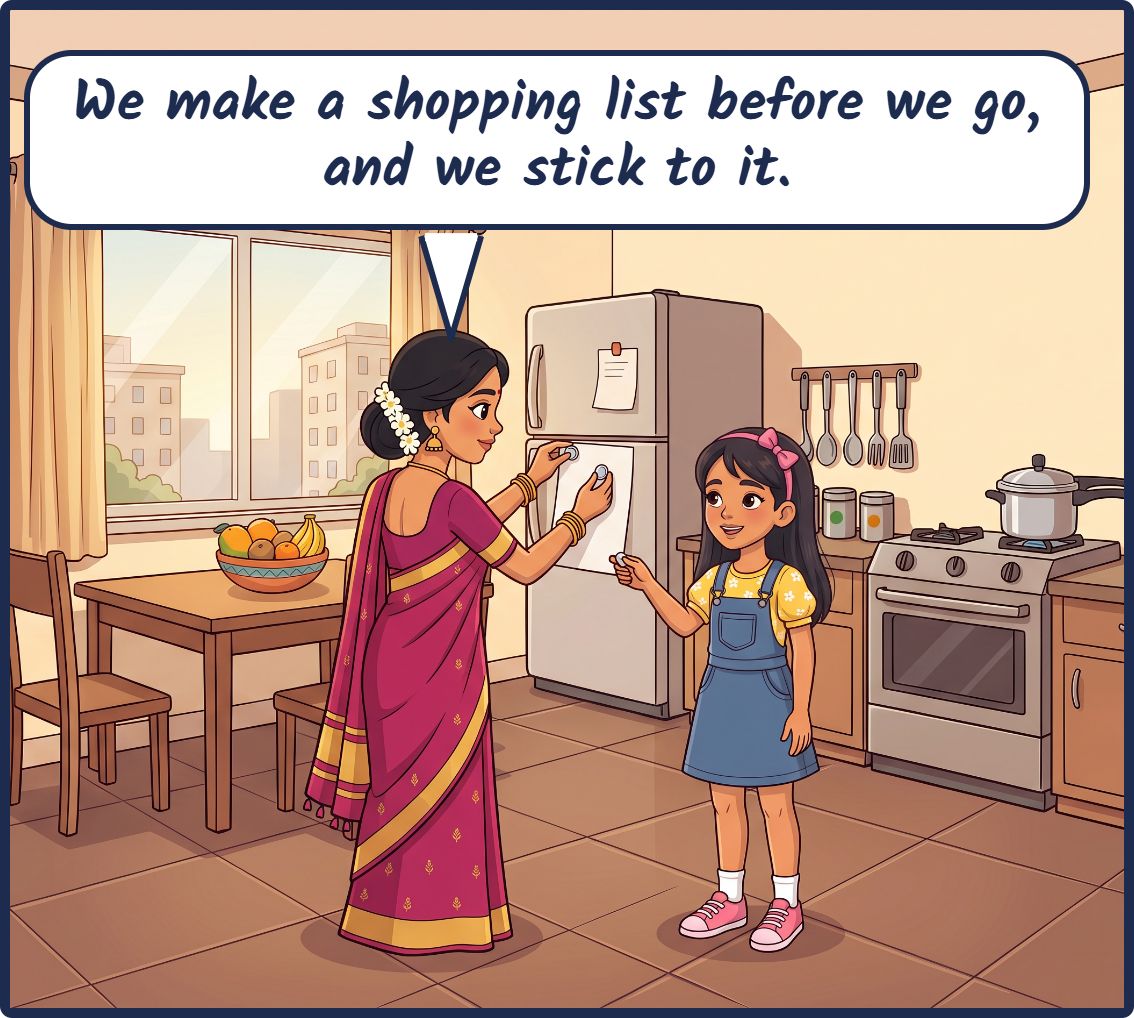
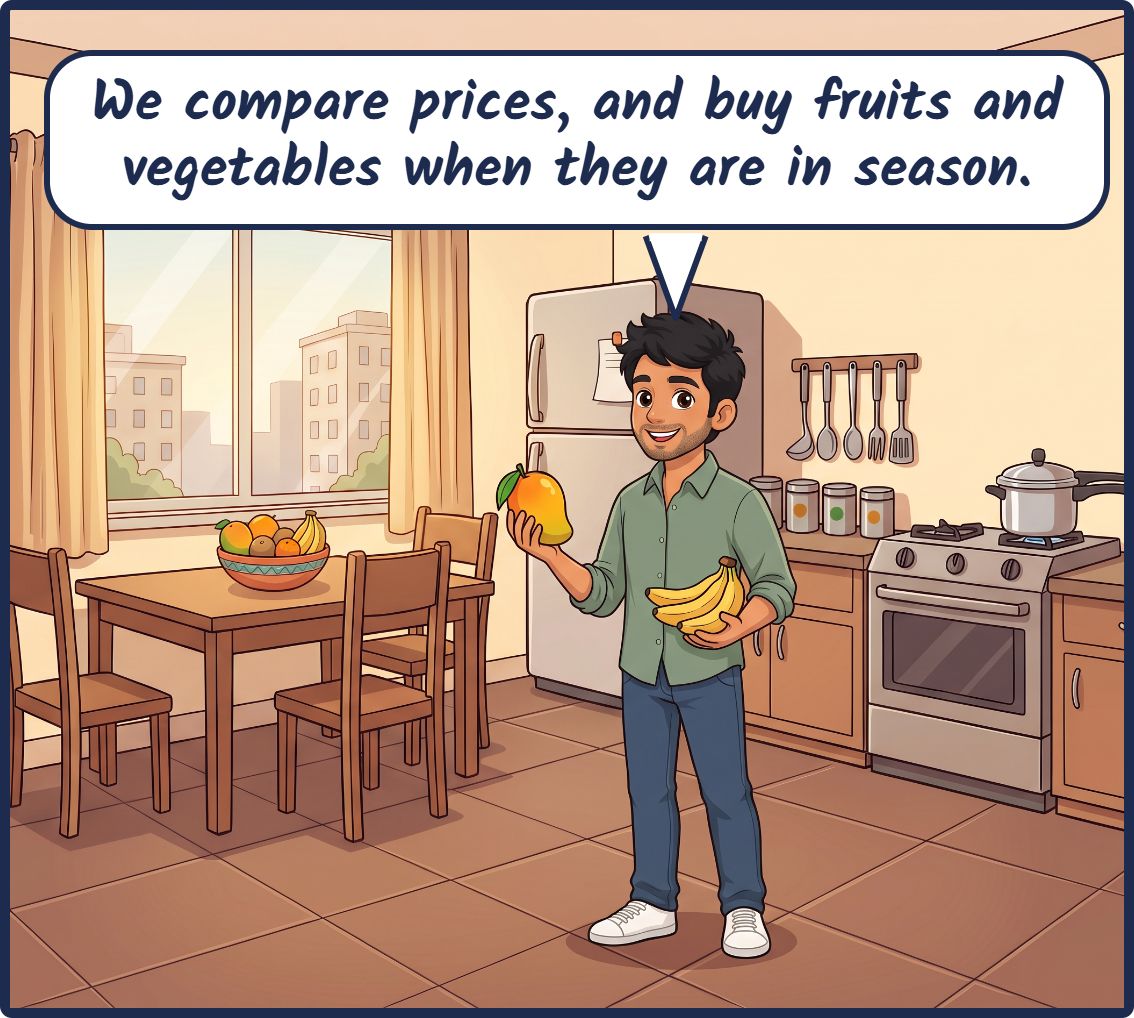
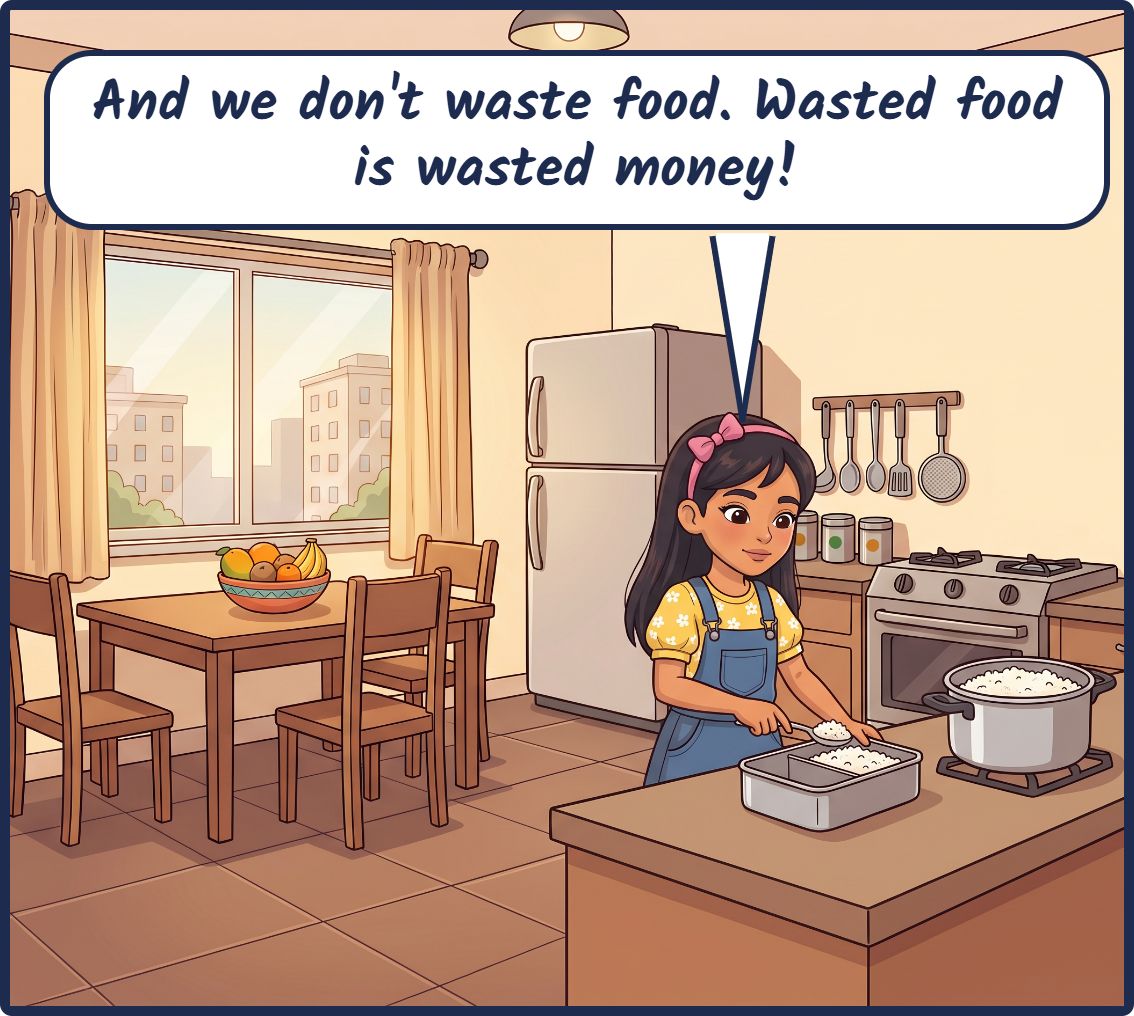
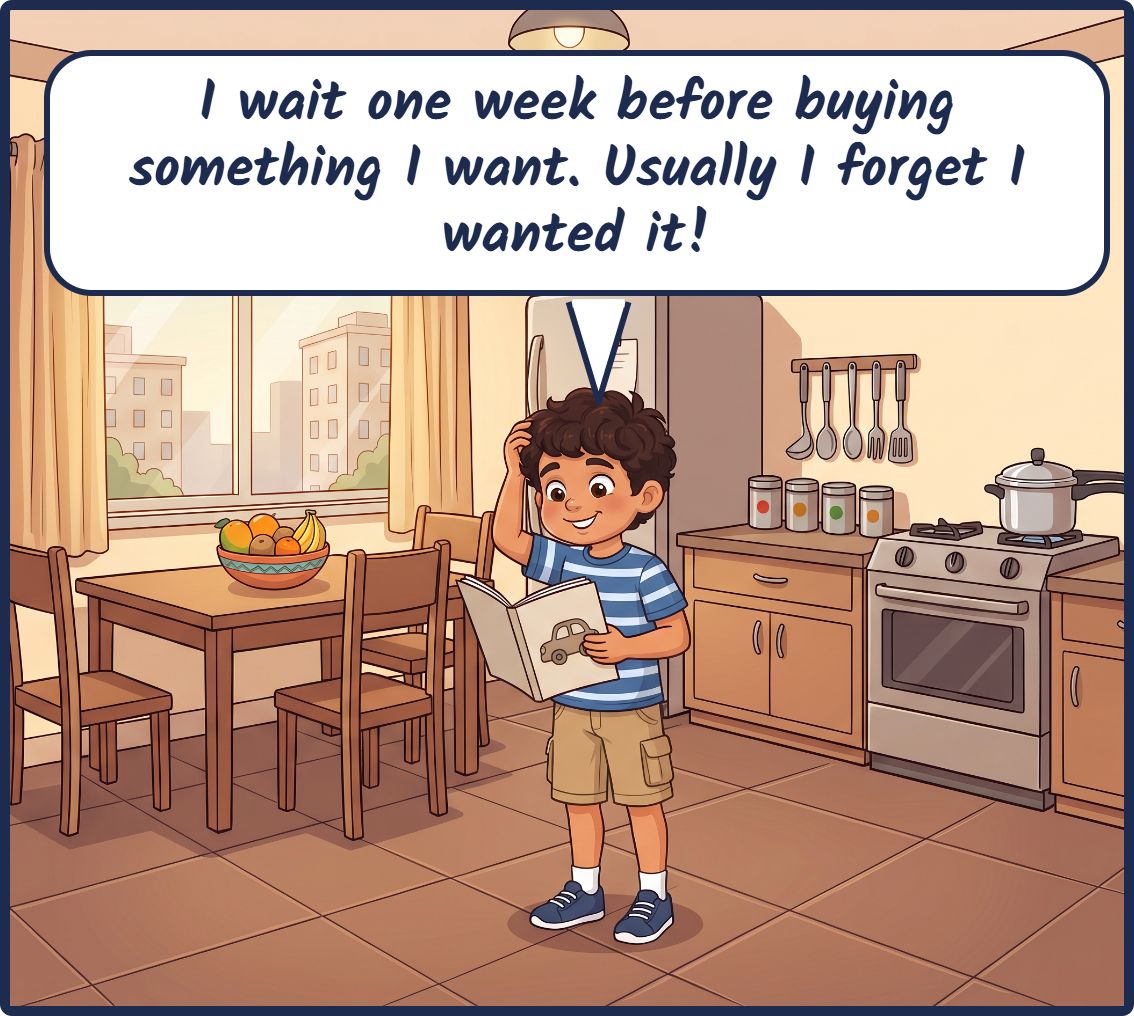
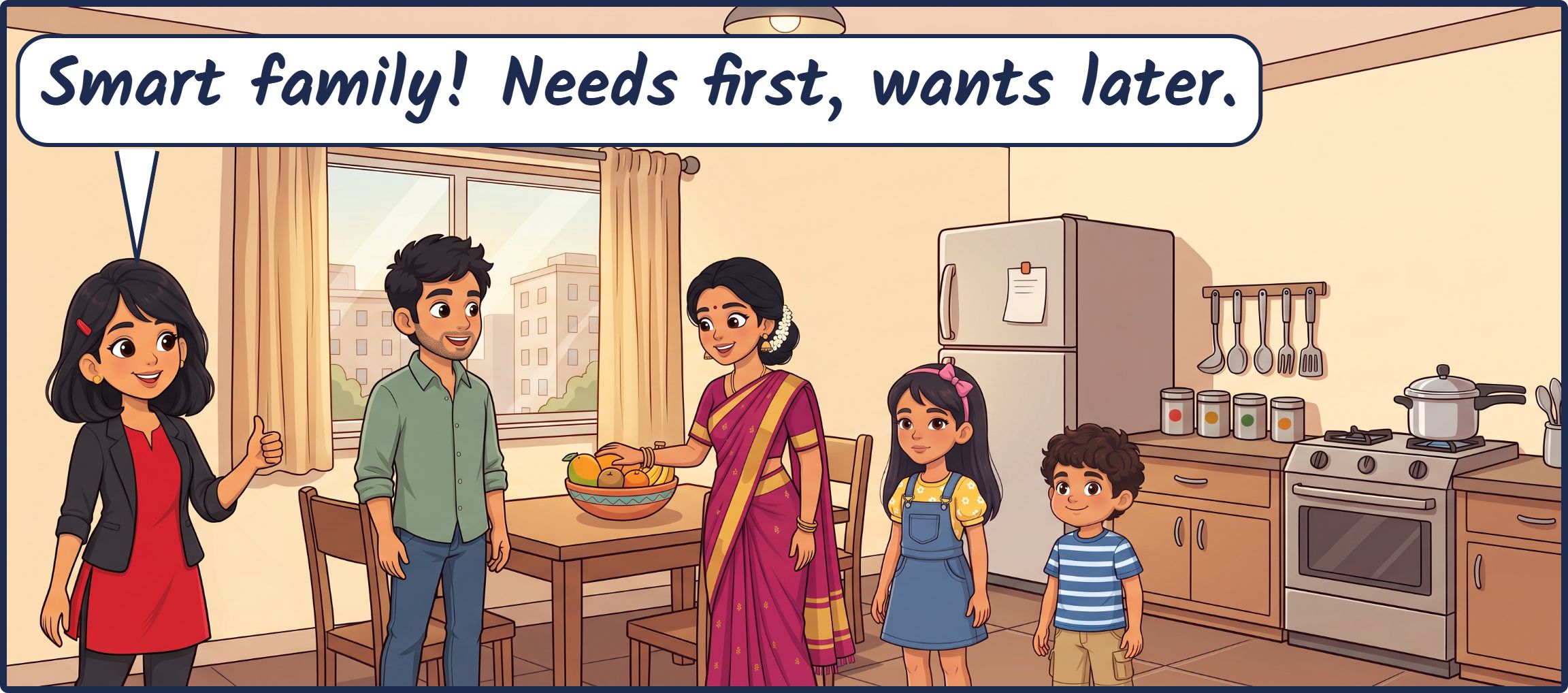
We make a shopping list before we go, and we stick to it. We compare prices, and buy fruits and vegetables when they are in season. And we don't waste food. Wasted food is wasted money! I wait one week before buying something I want. Usually I forget I wanted it! Smart family! Needs first, wants later.
Case closed!

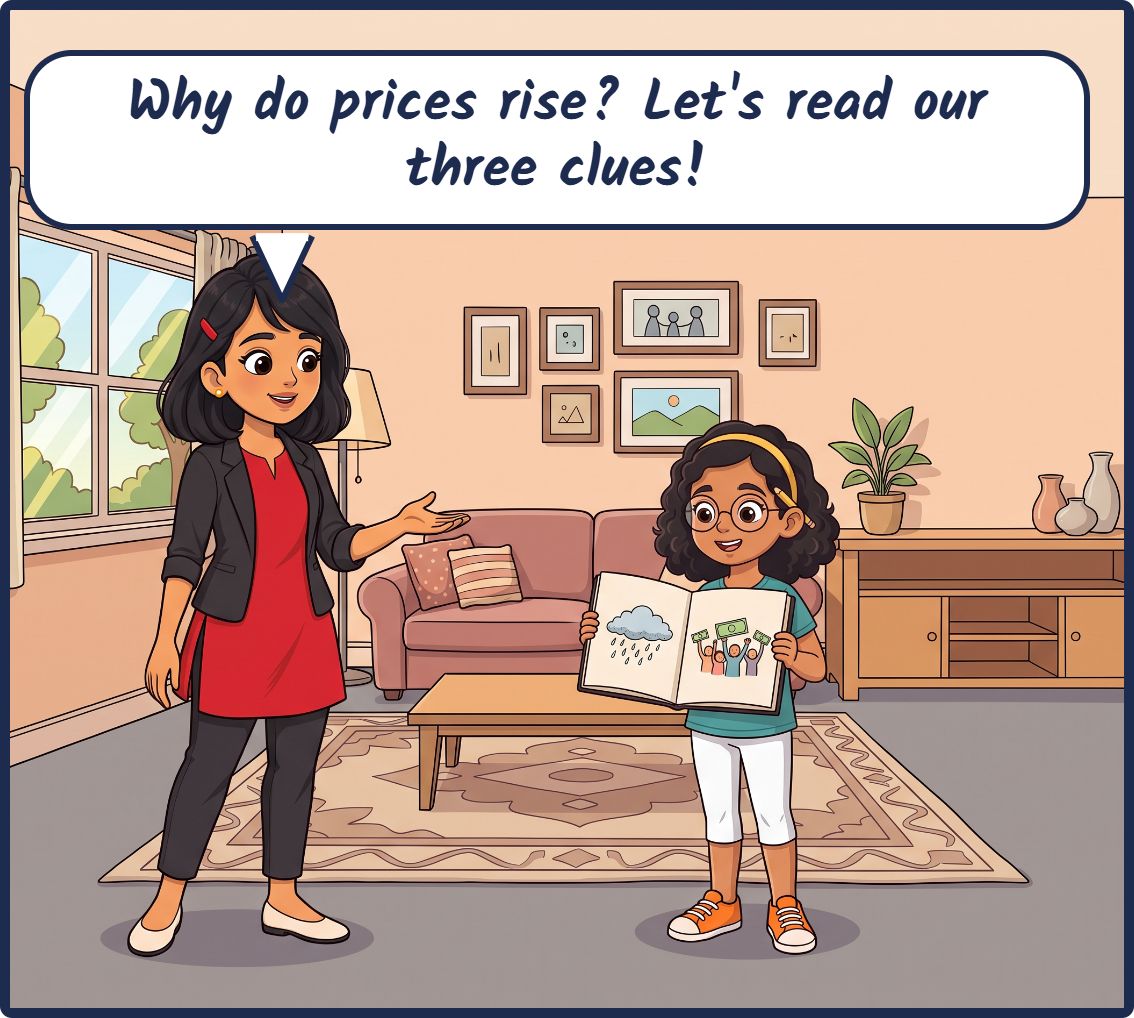
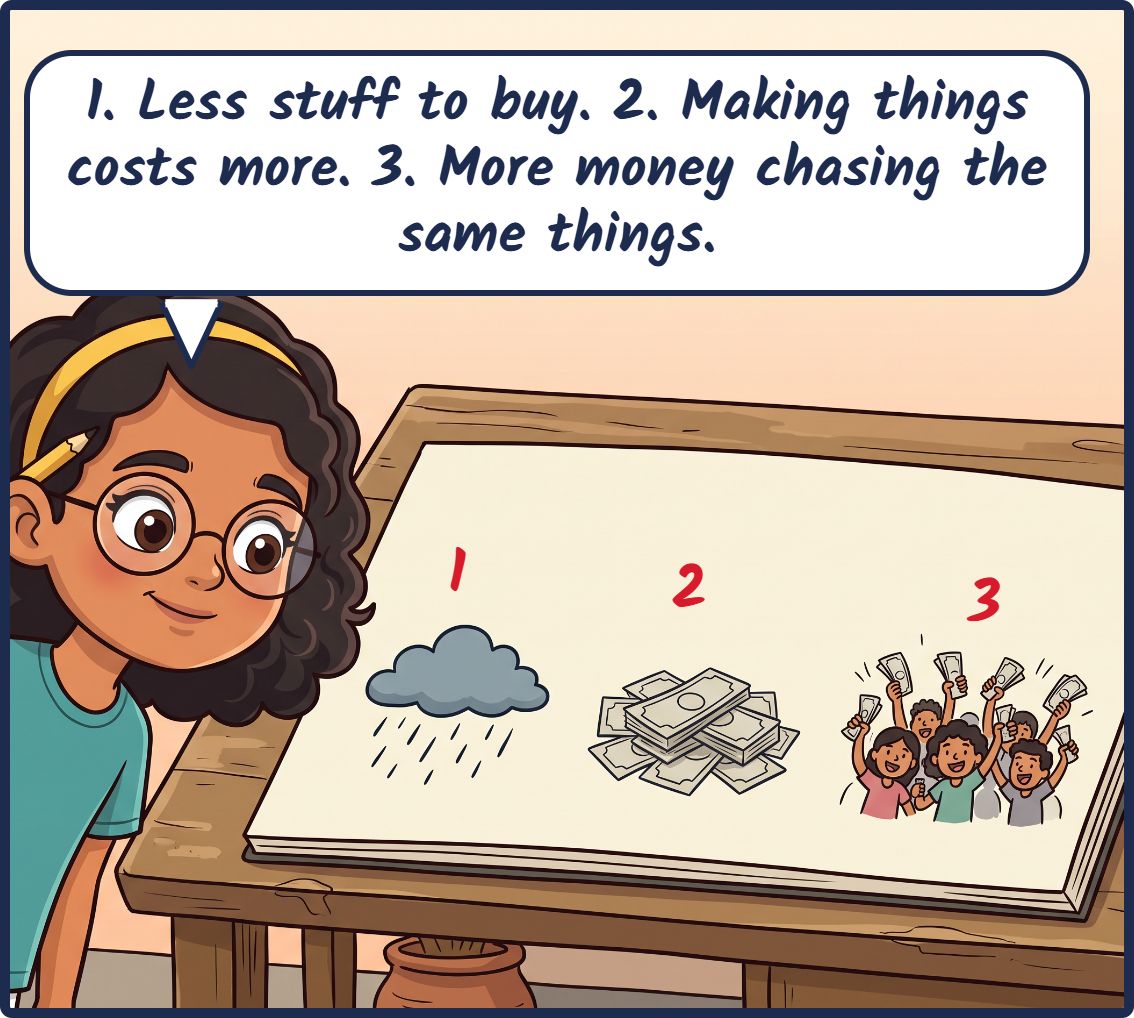
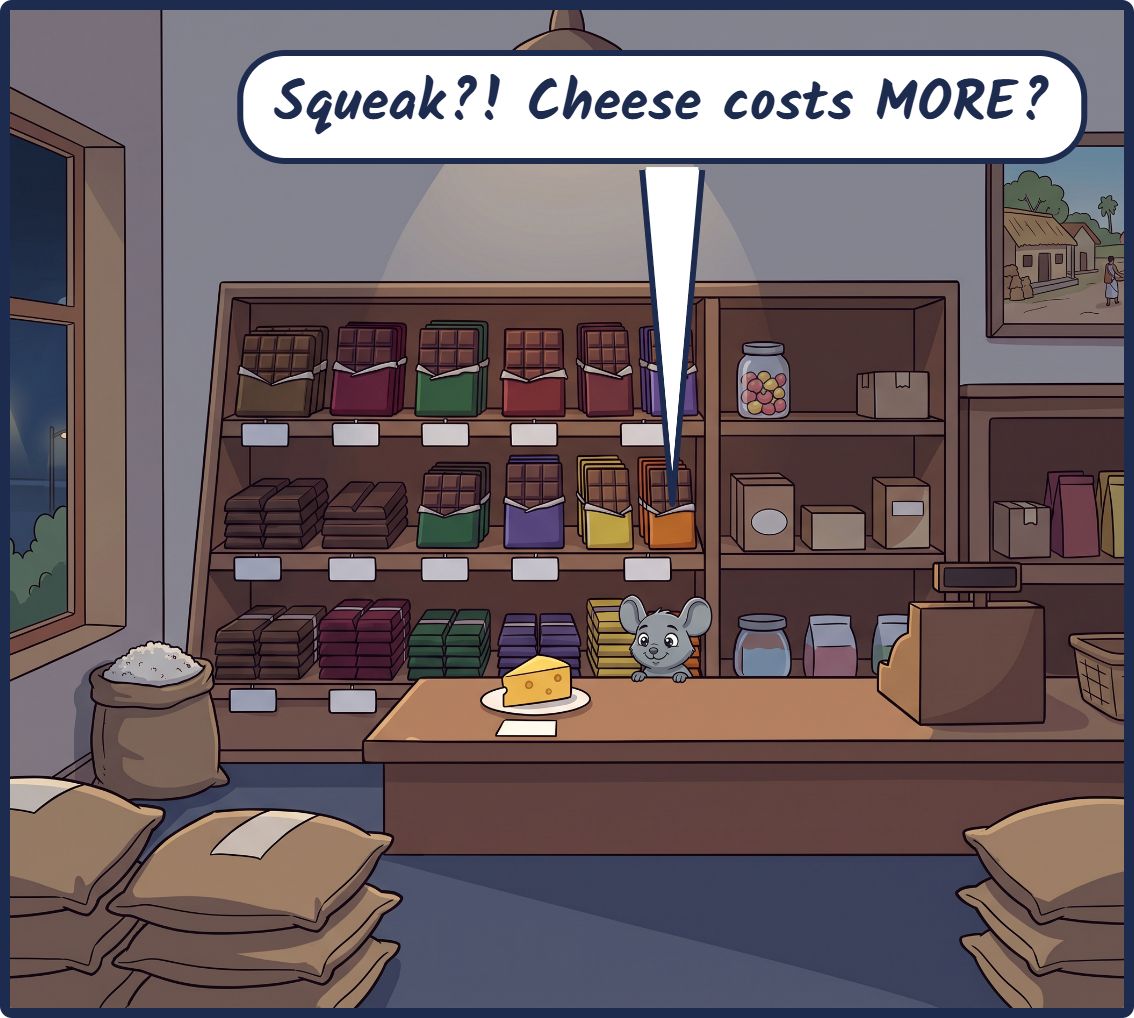
Why do prices rise? Let's read our three clues! 1. Less stuff to buy. 2. Making things costs more. 3. More money chasing the same things. Case closed! Okay, ₹12. But I'm sharing half with Sau! Aww, thank you! Squeak?! Cheese costs MORE? See you in Book 3, Paisa Pals!
Srestha's Money Tips
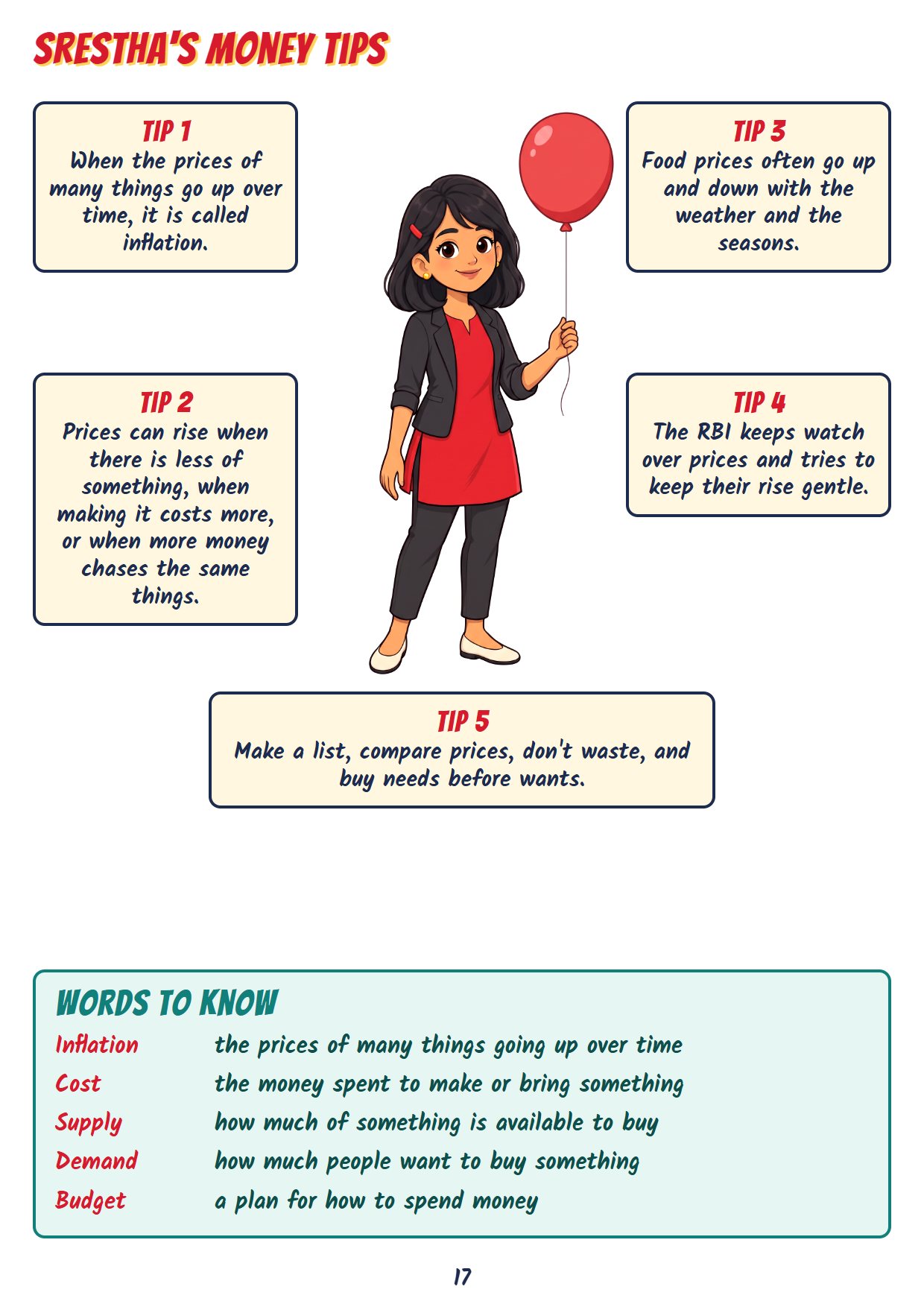
- When the prices of many things go up over time, it is called inflation.
- Prices can rise when there is less of something, when making it costs more, or when more money chases the same things.
- Food prices often go up and down with the weather and the seasons.
- The RBI keeps watch over prices and tries to keep their rise gentle.
- Make a list, compare prices, don't waste, and buy needs before wants.
Words to know
- Inflation
- the prices of many things going up over time
- Cost
- the money spent to make or bring something
- Supply
- how much of something is available to buy
- Demand
- how much people want to buy something
- Budget
- a plan for how to spend money
Quiz time!
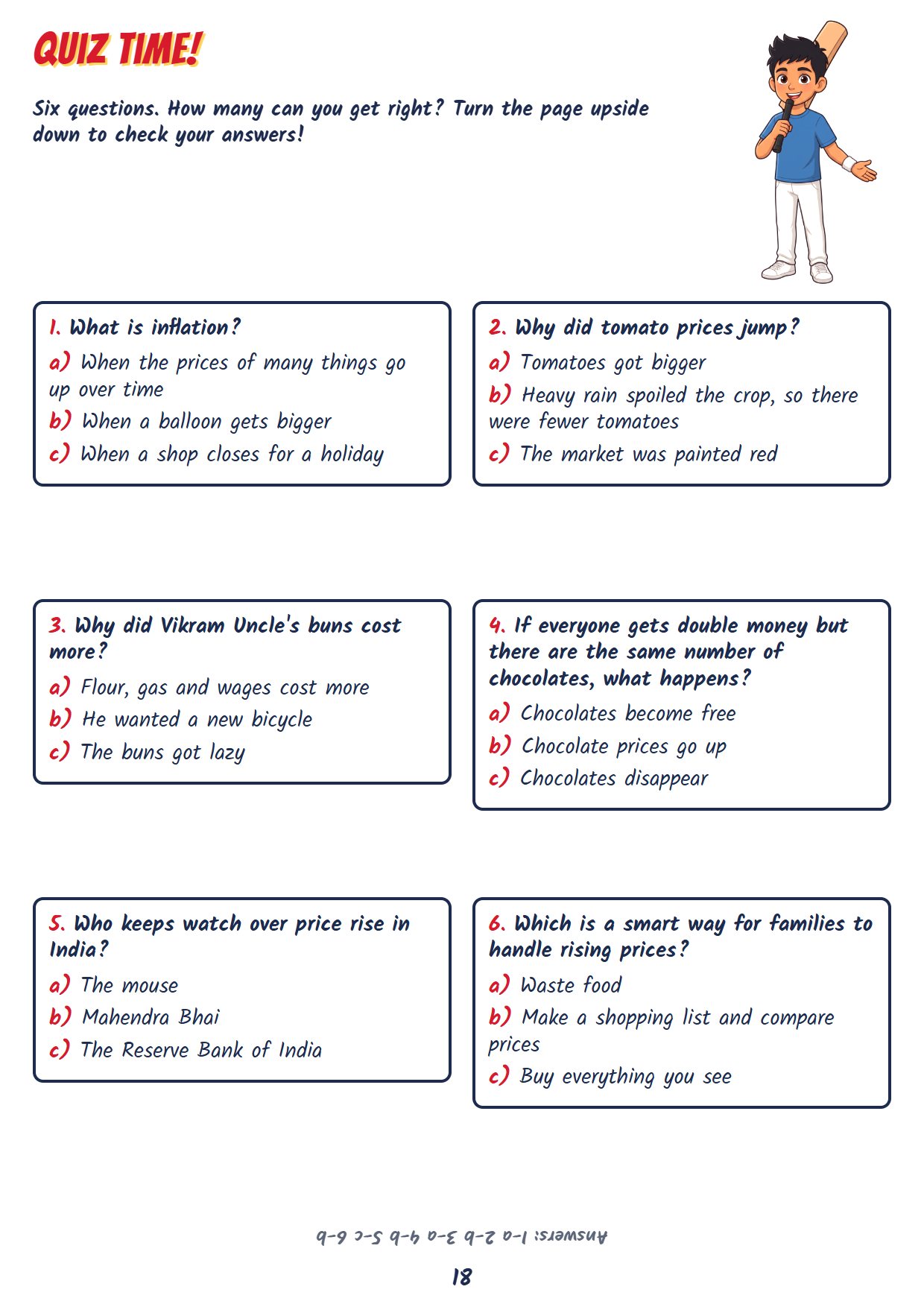
1. What is inflation?- When the prices of many things go up over time
- When a balloon gets bigger
- When a shop closes for a holiday
2. Why did tomato prices jump?- Tomatoes got bigger
- Heavy rain spoiled the crop, so there were fewer tomatoes
- The market was painted red
3. Why did Vikram Uncle's buns cost more?- Flour, gas and wages cost more
- He wanted a new bicycle
- The buns got lazy
4. If everyone gets double money but there are the same number of chocolates, what happens?- Chocolates become free
- Chocolate prices go up
- Chocolates disappear
5. Who keeps watch over price rise in India?- The mouse
- Mahendra Bhai
- The Reserve Bank of India
6. Which is a smart way for families to handle rising prices?- Waste food
- Make a shopping list and compare prices
- Buy everything you see
Answers: 1-a 2-b 3-a 4-b 5-c 6-b
Try this at home
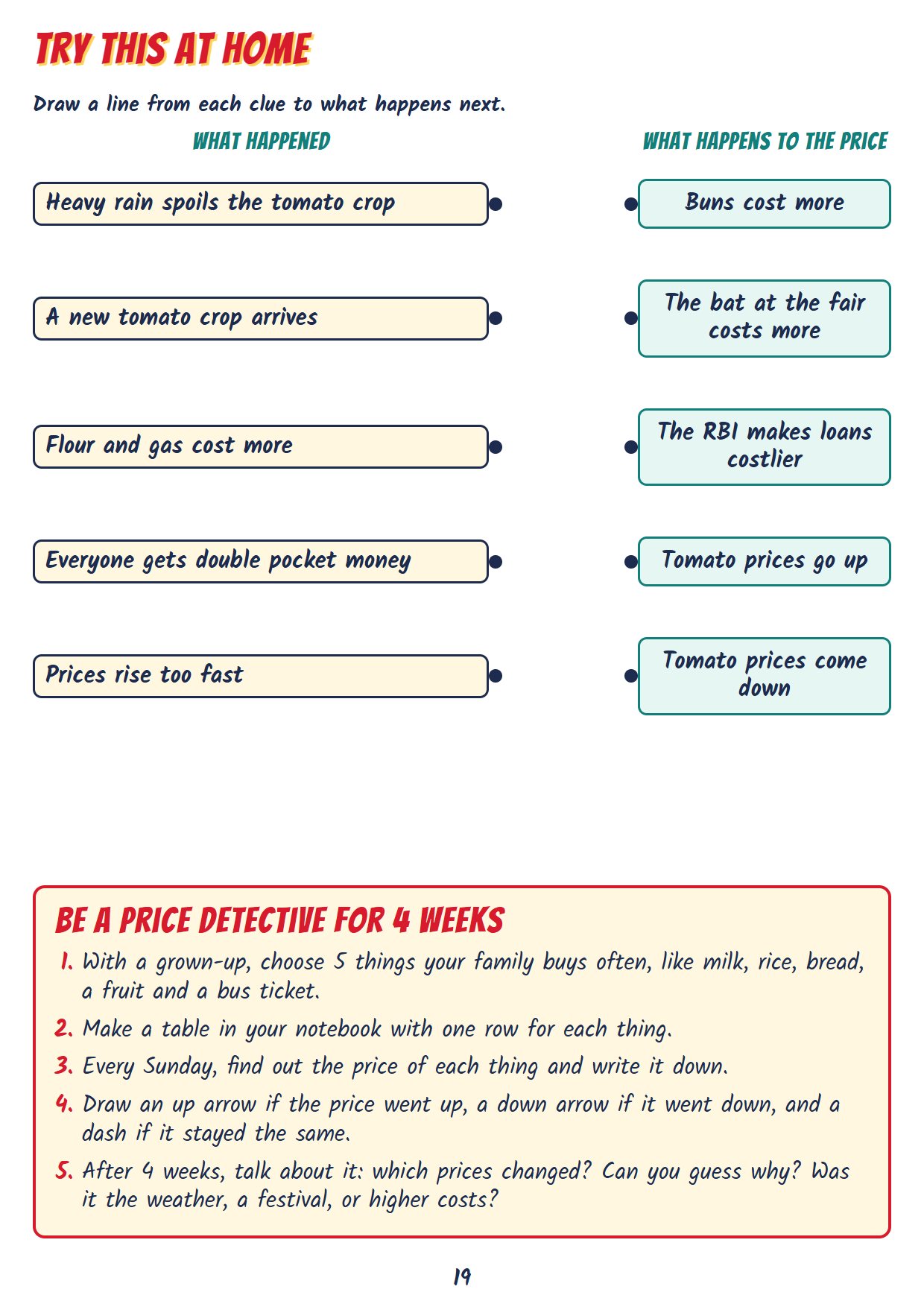
Draw a line from each clue to what happens next.
| What happened | What happens to the price |
|---|
| Heavy rain spoils the tomato crop | Buns cost more |
| A new tomato crop arrives | The bat at the fair costs more |
| Flour and gas cost more | The RBI makes loans costlier |
| Everyone gets double pocket money | Tomato prices go up |
| Prices rise too fast | Tomato prices come down |
Be a Price Detective for 4 weeks
- With a grown-up, choose 5 things your family buys often, like milk, rice, bread, a fruit and a bus ticket.
- Make a table in your notebook with one row for each thing.
- Every Sunday, find out the price of each thing and write it down.
- Draw an up arrow if the price went up, a down arrow if it went down, and a dash if it stayed the same.
- After 4 weeks, talk about it: which prices changed? Can you guess why? Was it the weather, a festival, or higher costs?
For parents and teachers
What this book teaches
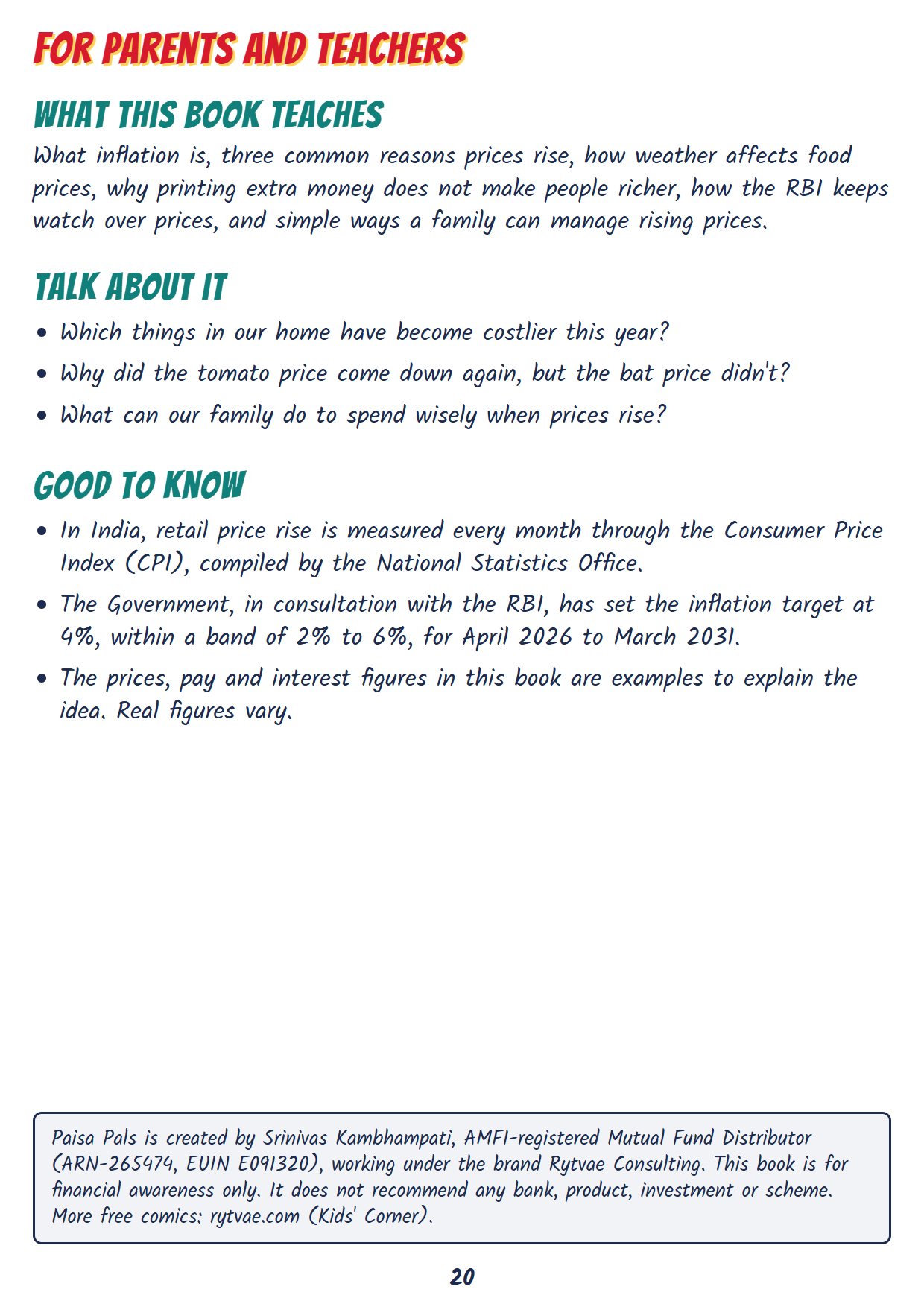
What inflation is, three common reasons prices rise, how weather affects food prices, why printing extra money does not make people richer, how the RBI keeps watch over prices, and simple ways a family can manage rising prices.
Talk about it
- Which things in our home have become costlier this year?
- Why did the tomato price come down again, but the bat price didn't?
- What can our family do to spend wisely when prices rise?
Good to know
- In India, retail price rise is measured every month through the Consumer Price Index (CPI), compiled by the National Statistics Office.
- The Government, in consultation with the RBI, has set the inflation target at 4%, within a band of 2% to 6%, for April 2026 to March 2031.
- The prices, pay and interest figures in this book are examples to explain the idea. Real figures vary.
Paisa Pals is created by Srinivas Kambhampati, AMFI-registered Mutual Fund Distributor (ARN-265474, EUIN E091320), working under the brand Rytvae Consulting. This book is for financial awareness only. It does not recommend any bank, product, investment or scheme. More free comics: rytvae.com (Kids' Corner).


















 ComicBook 1