The secret shoebox
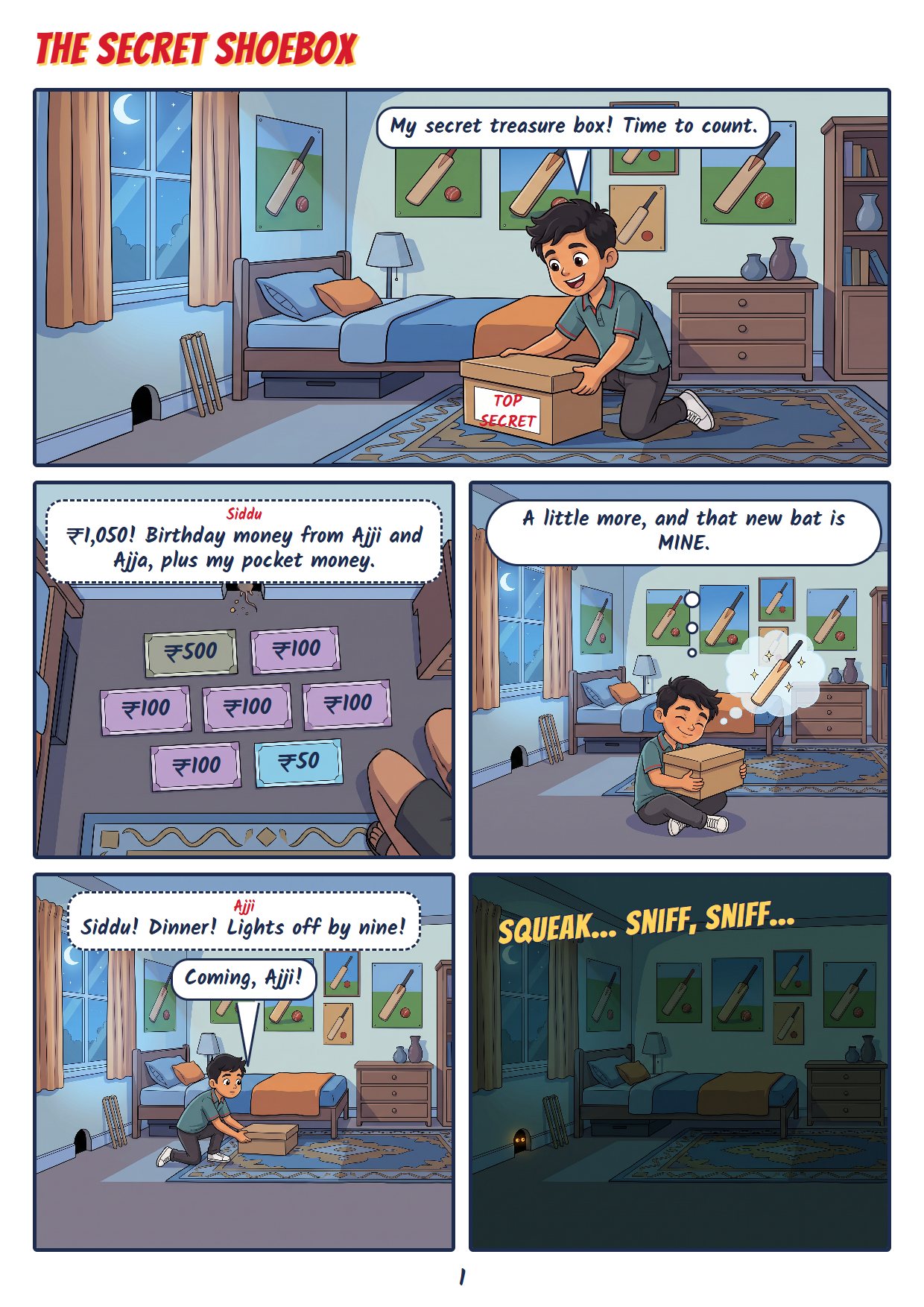
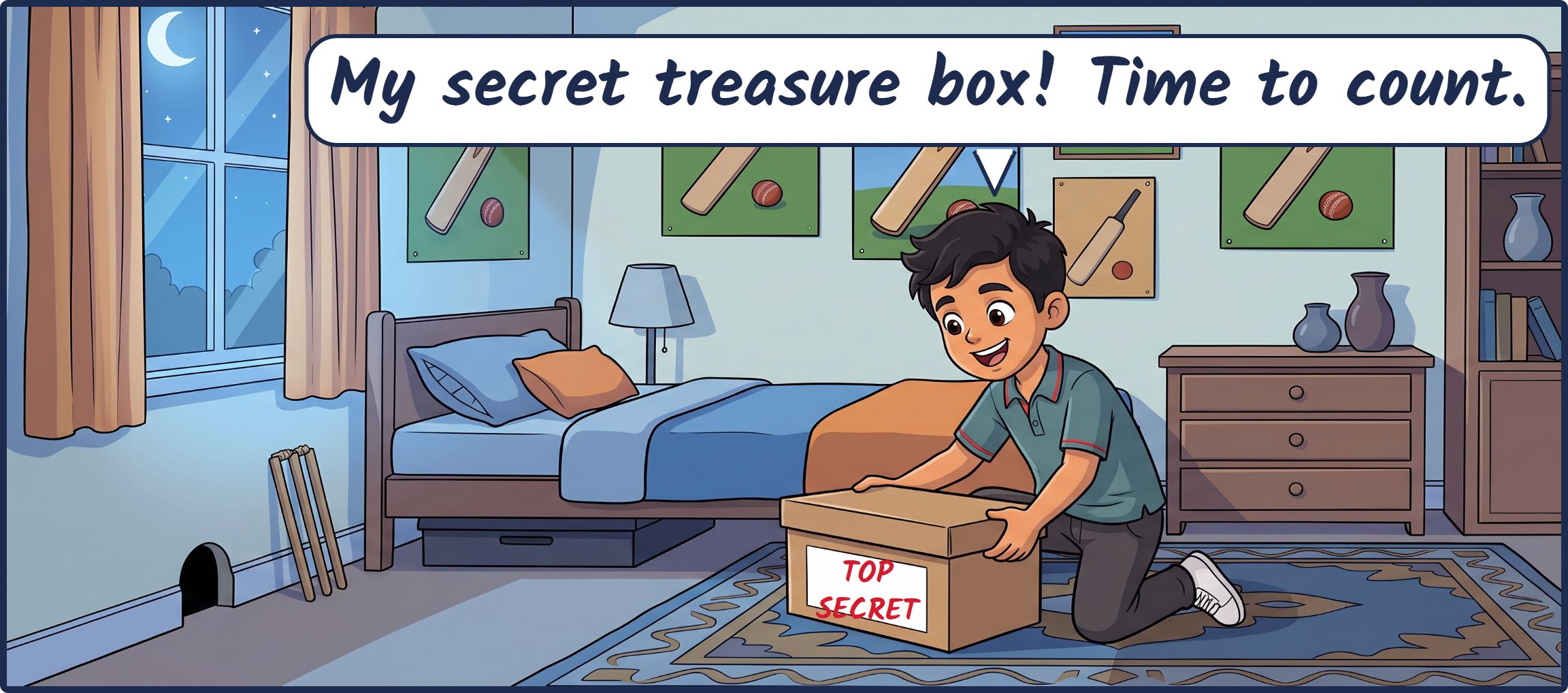
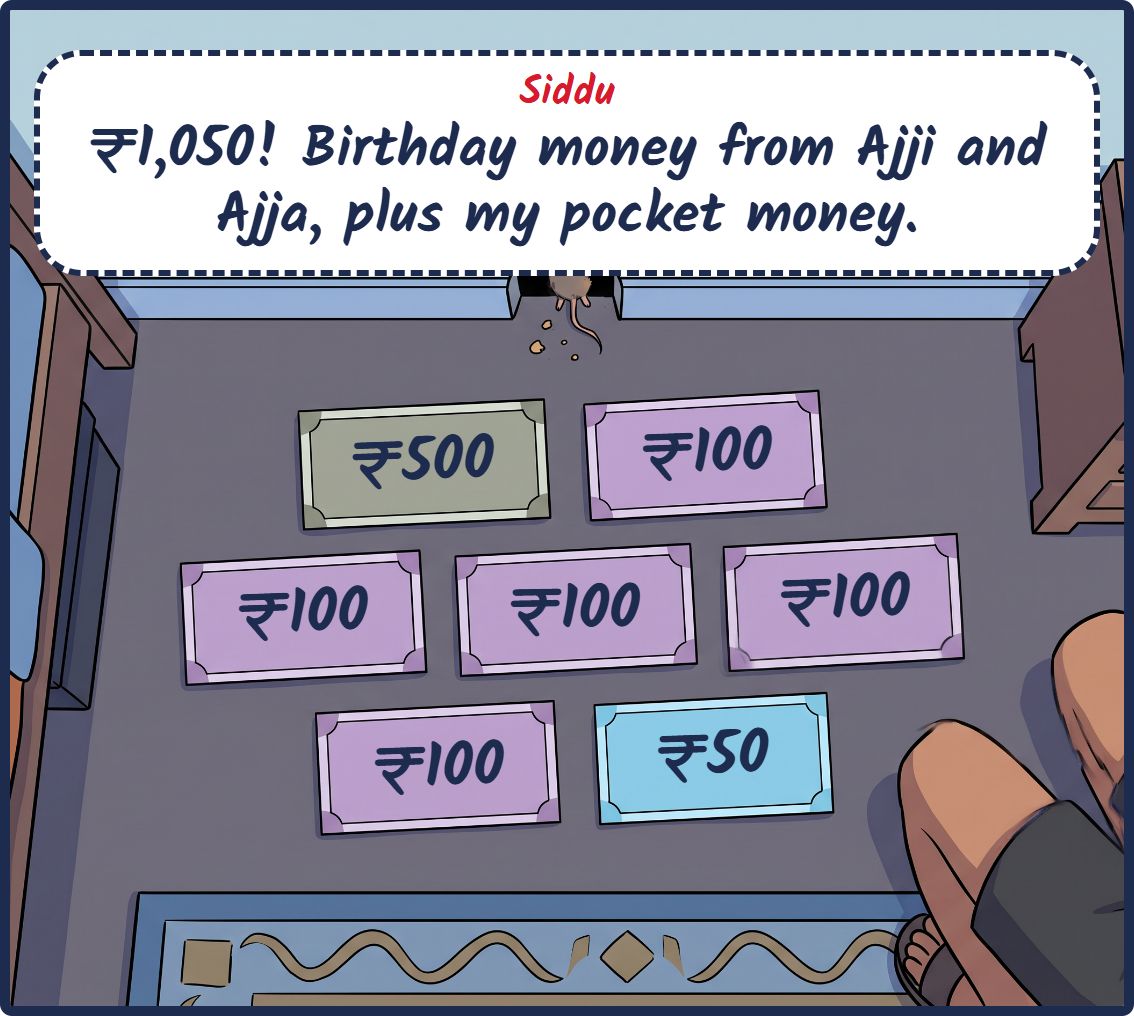
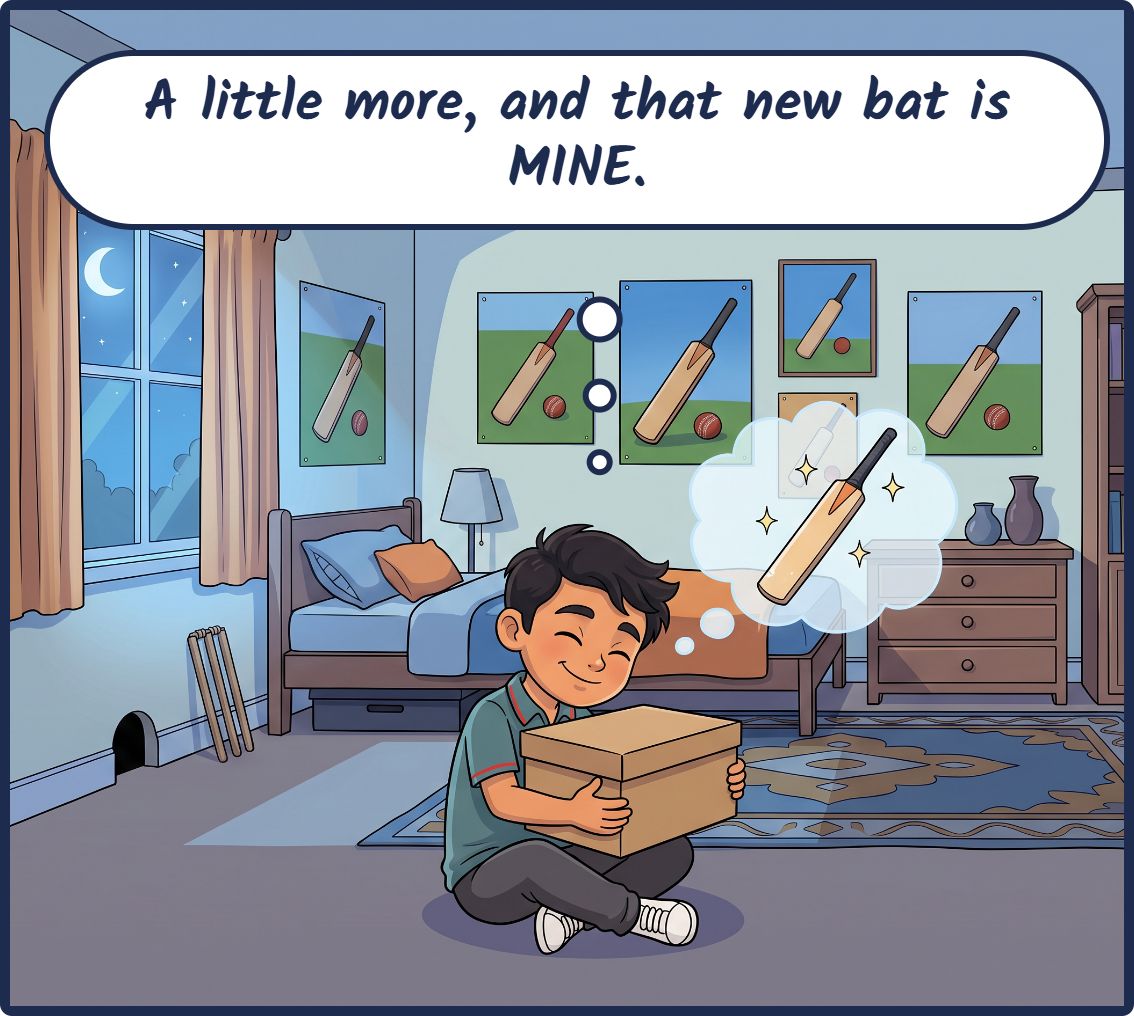
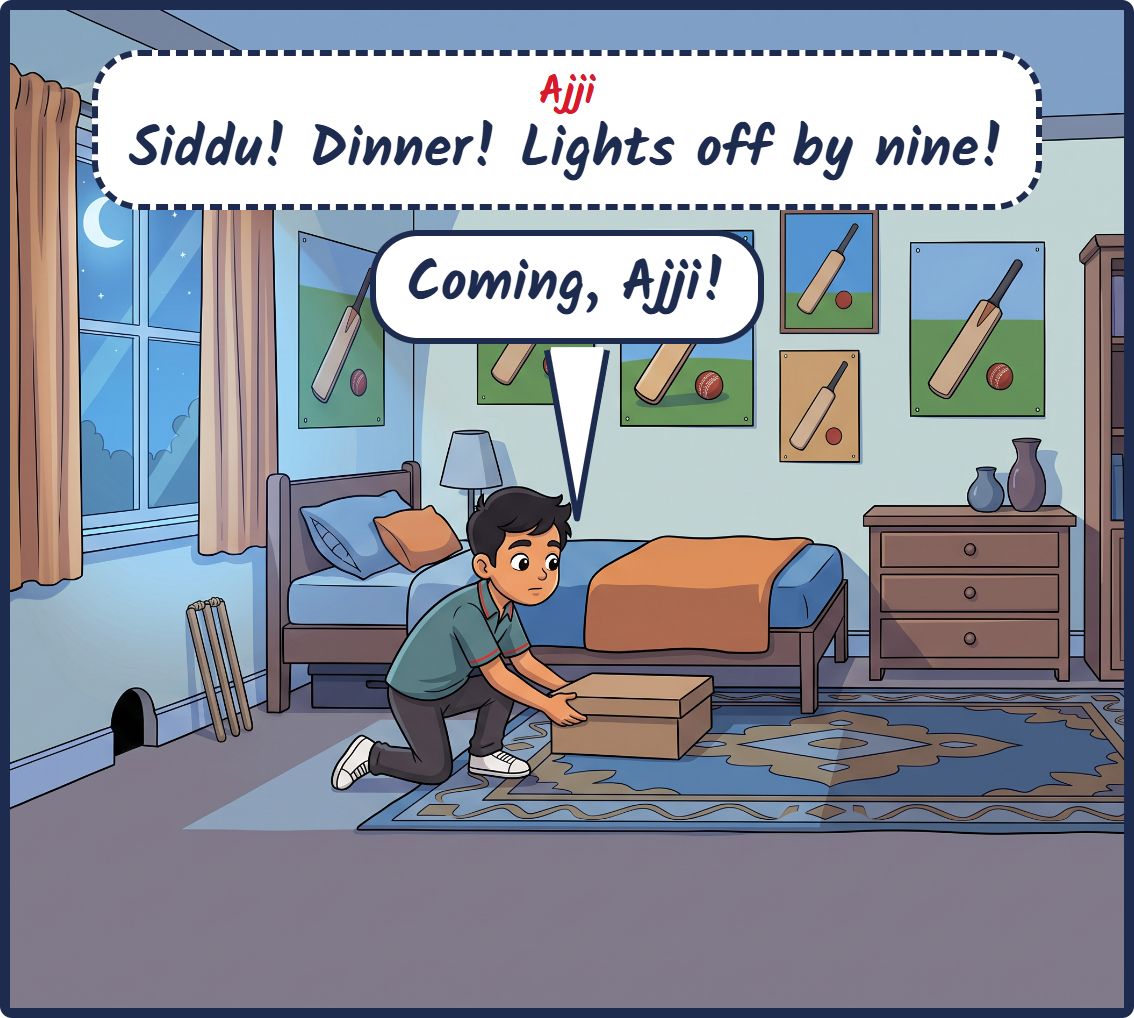
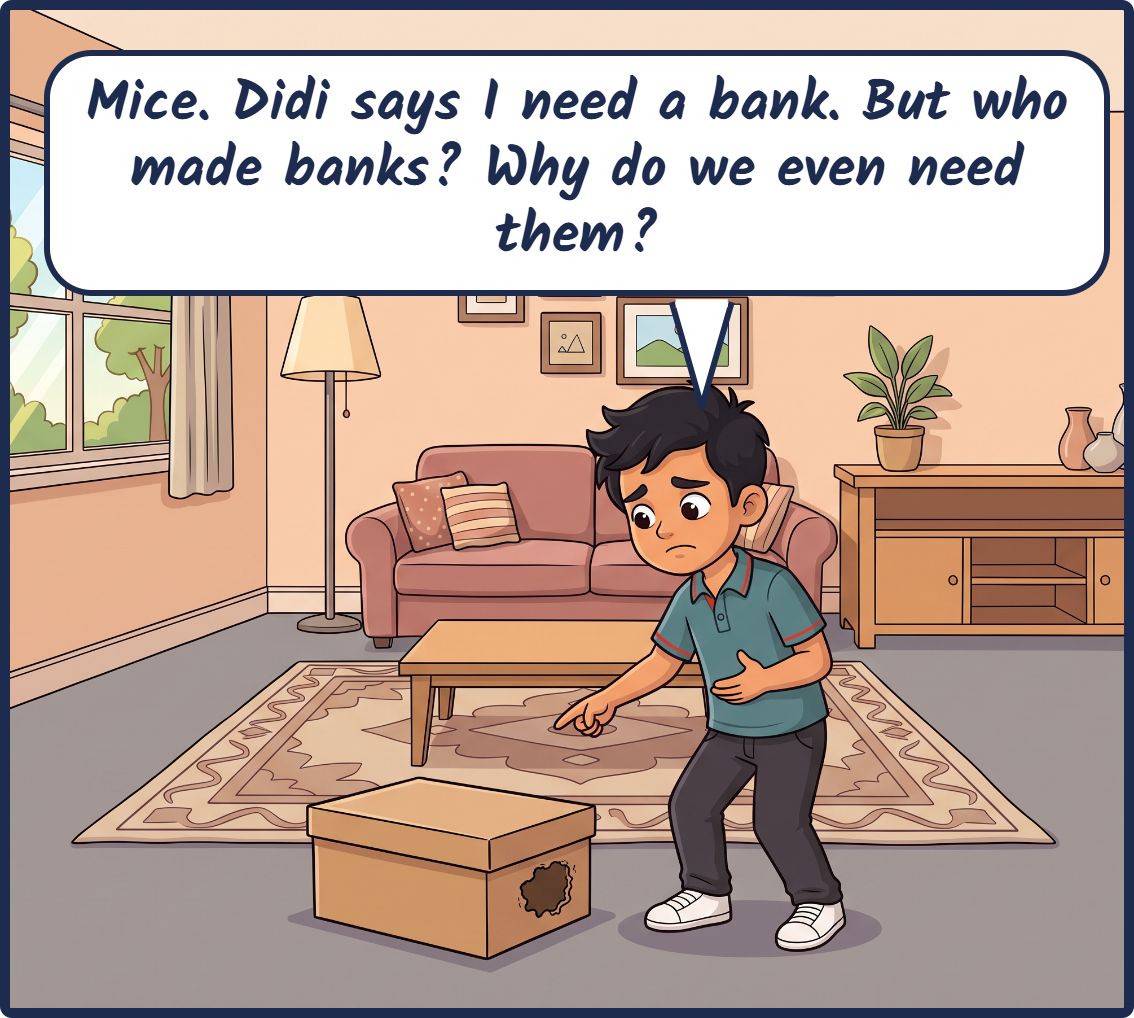
My secret treasure box! Time to count. ₹1,050! Birthday money from Ajji and Ajja, plus my pocket money. A little more, and that new bat is MINE. Siddu! Dinner! Lights off by nine! Coming, Ajji! Squeak… sniff, sniff…
Morning surprise
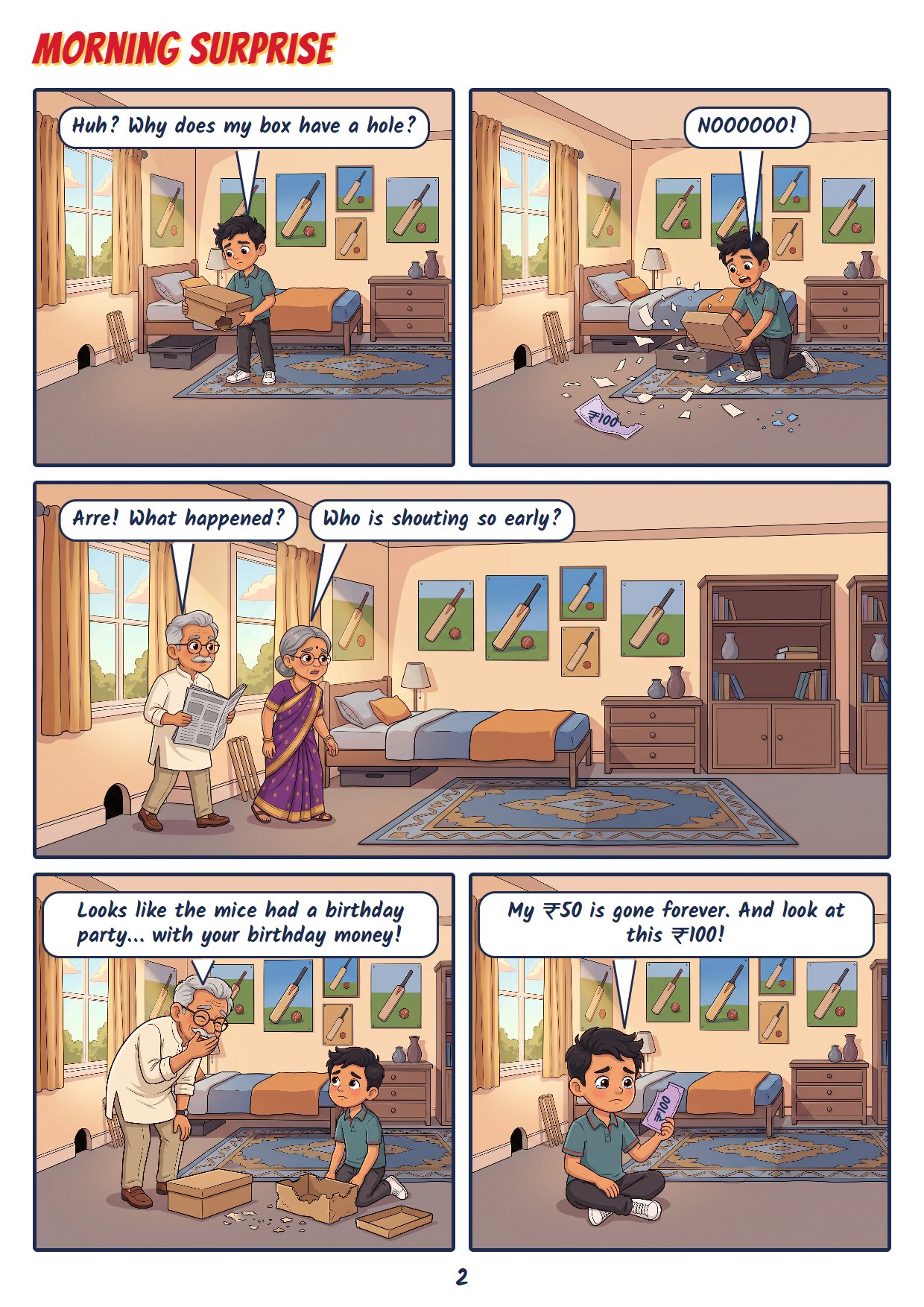
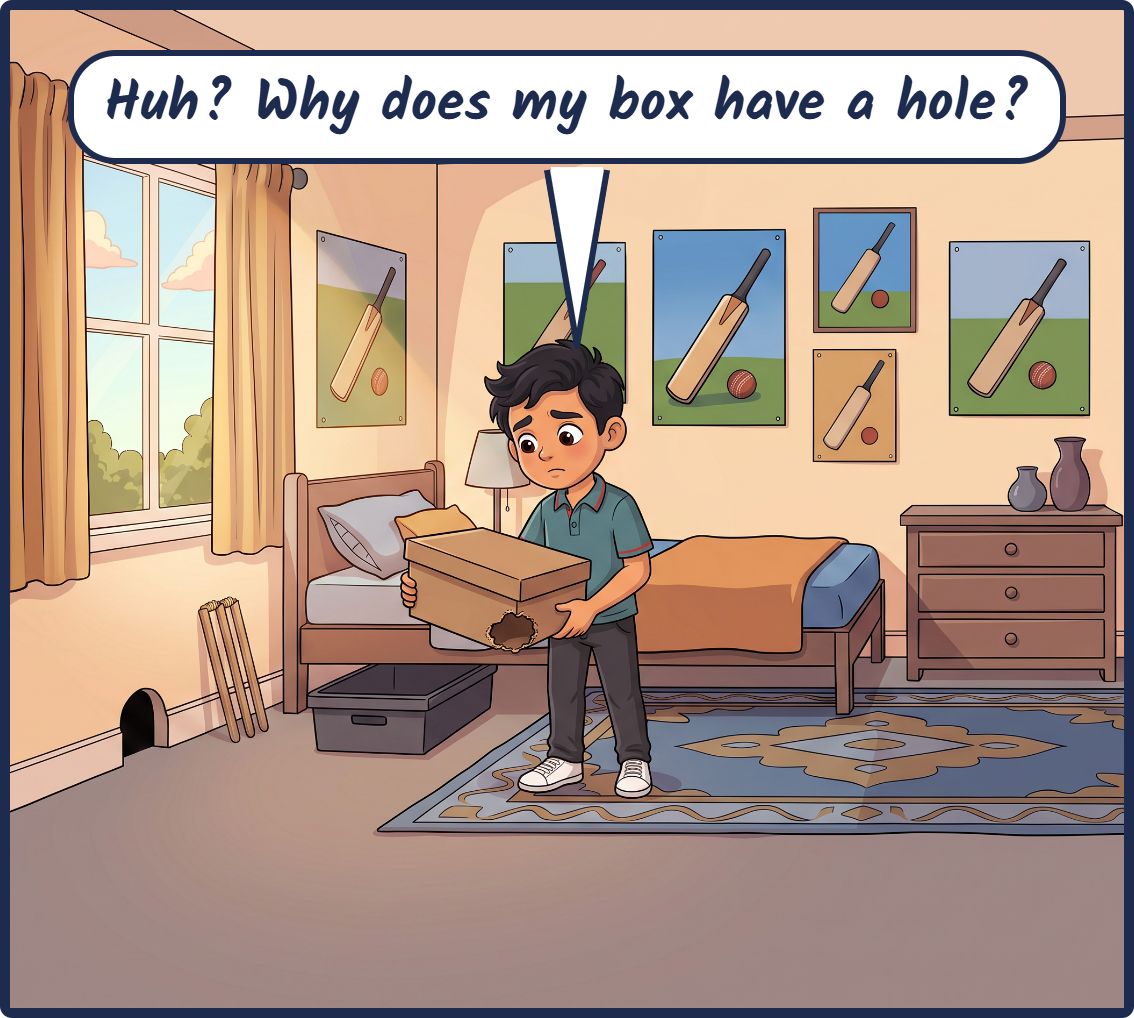
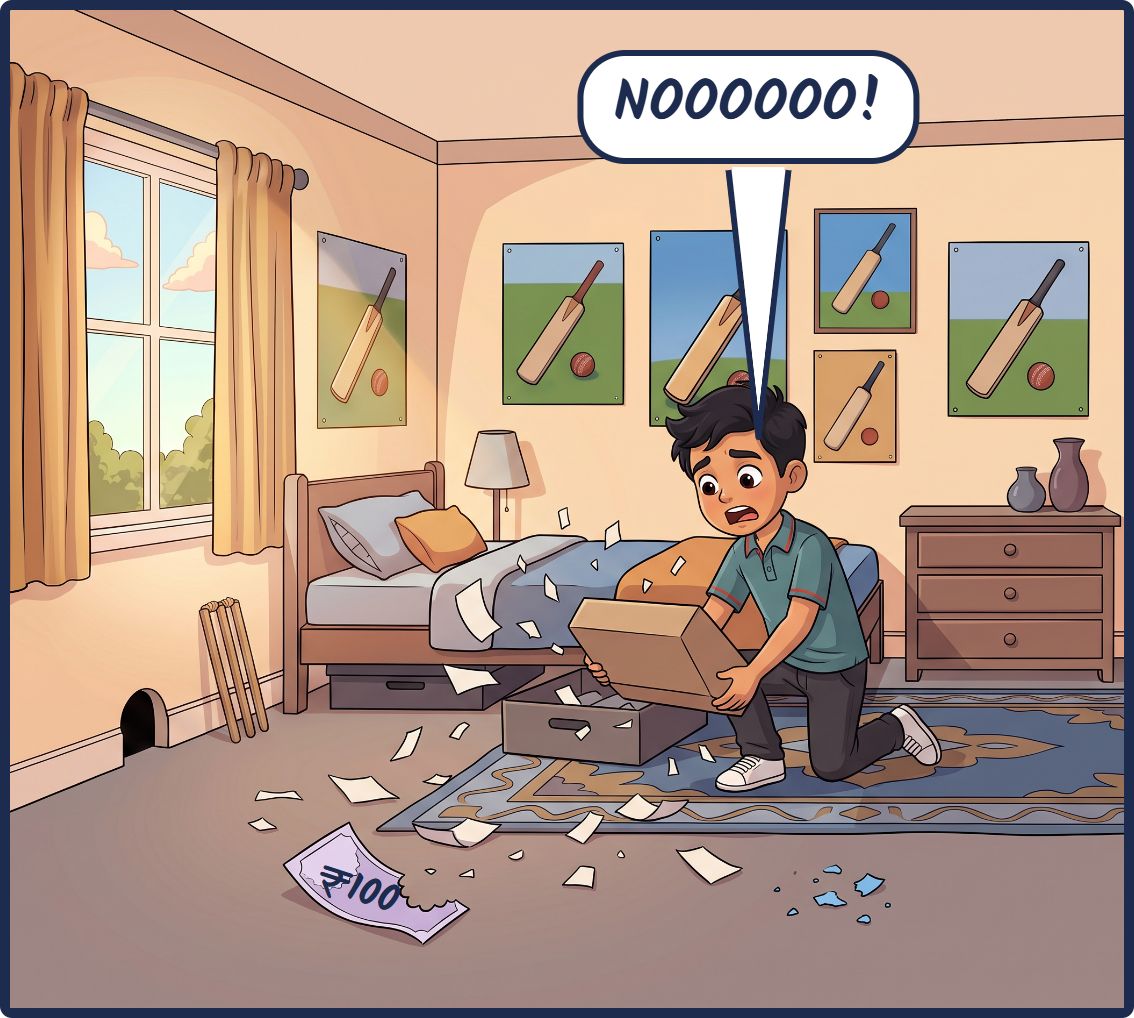
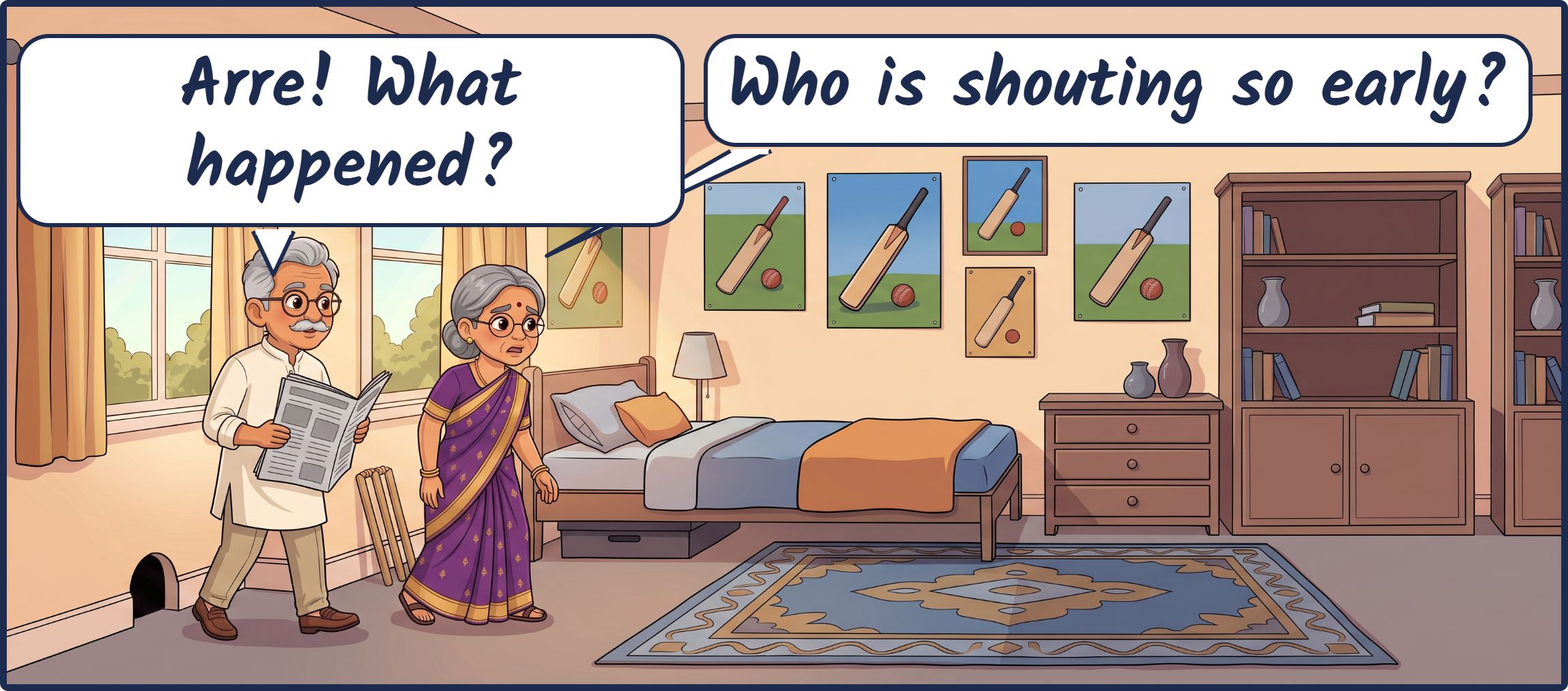
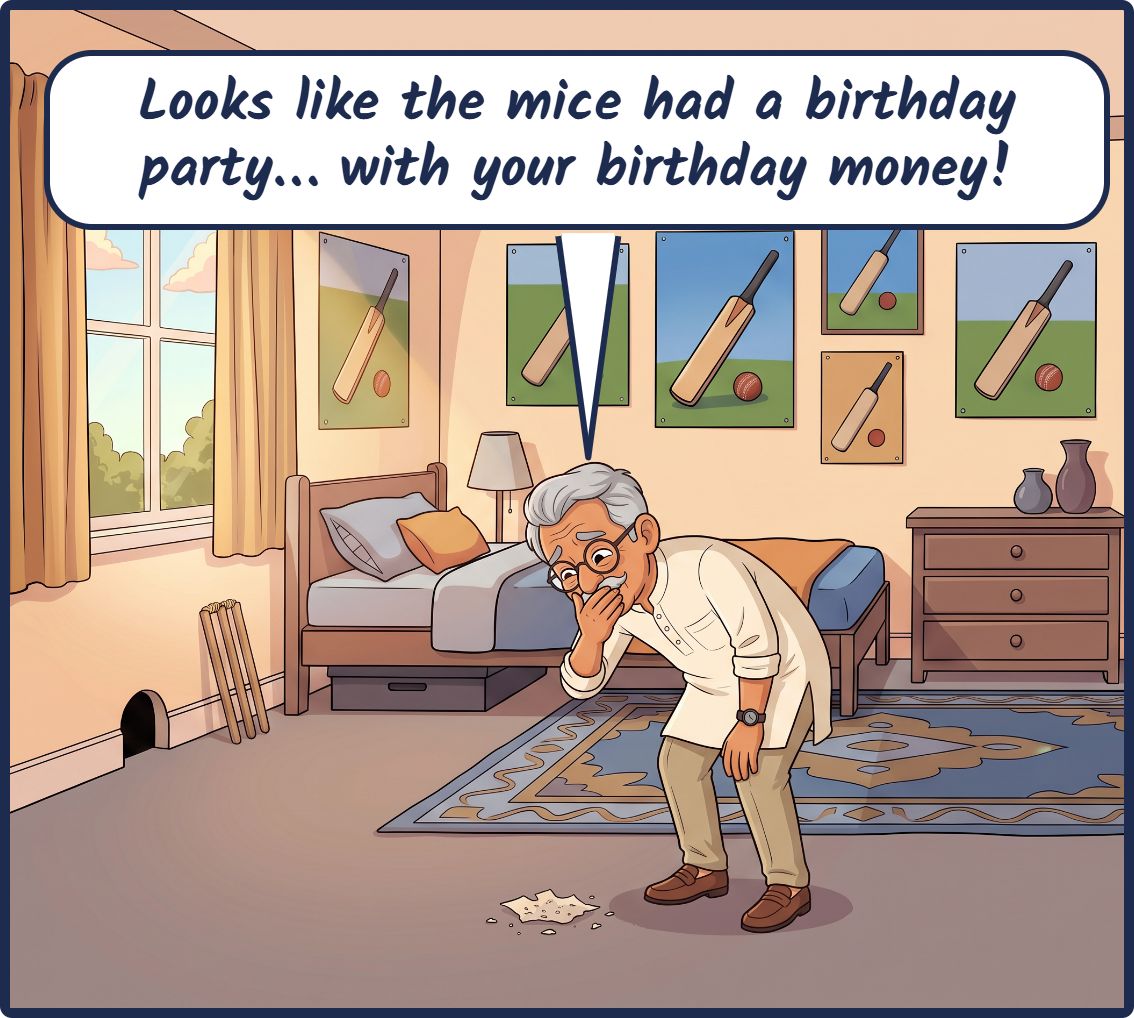
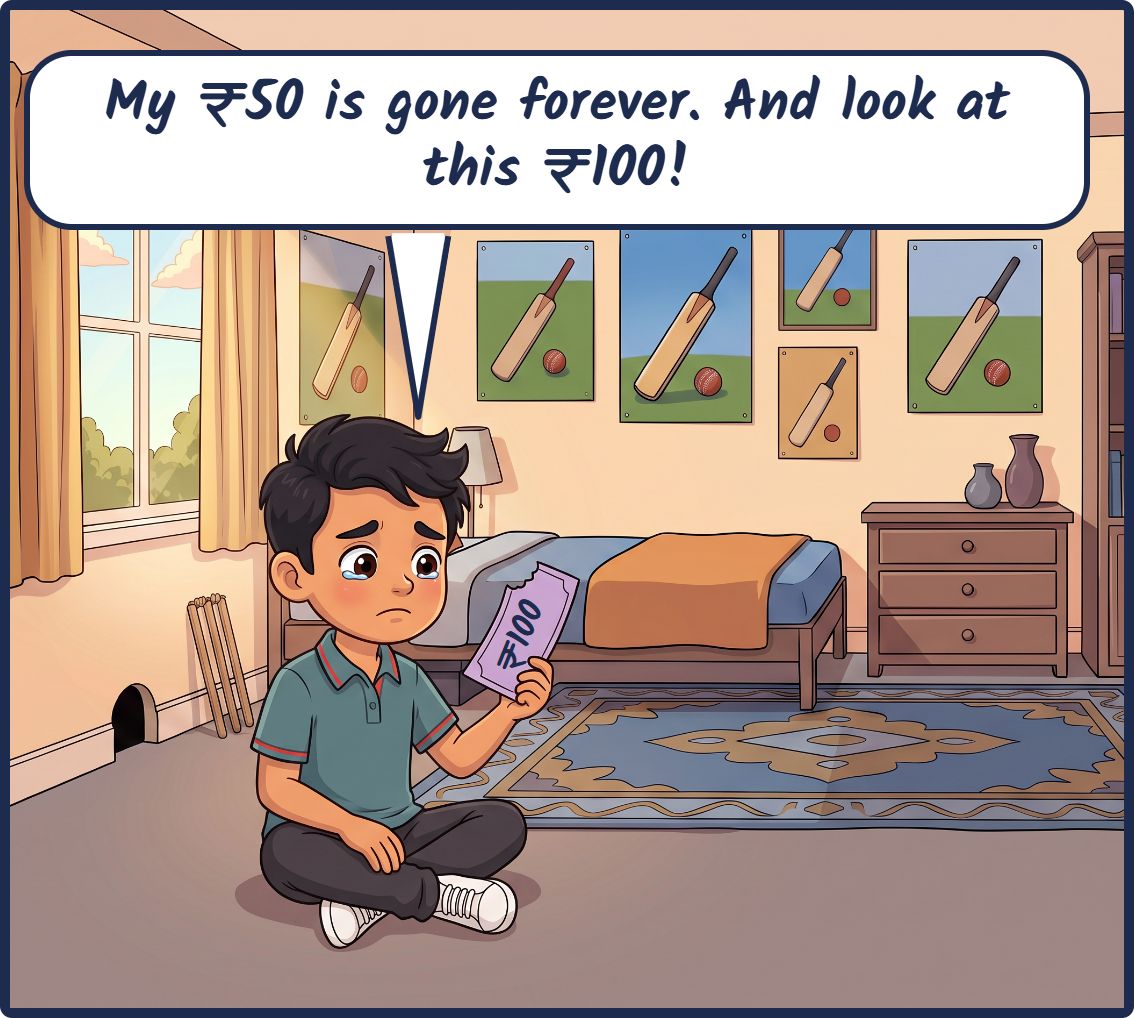
Huh? Why does my box have a hole? NOOOOOO! Arre! What happened? Who is shouting so early? Looks like the mice had a birthday party… with your birthday money! My ₹50 is gone forever. And look at this ₹100!
Money at home is not safe
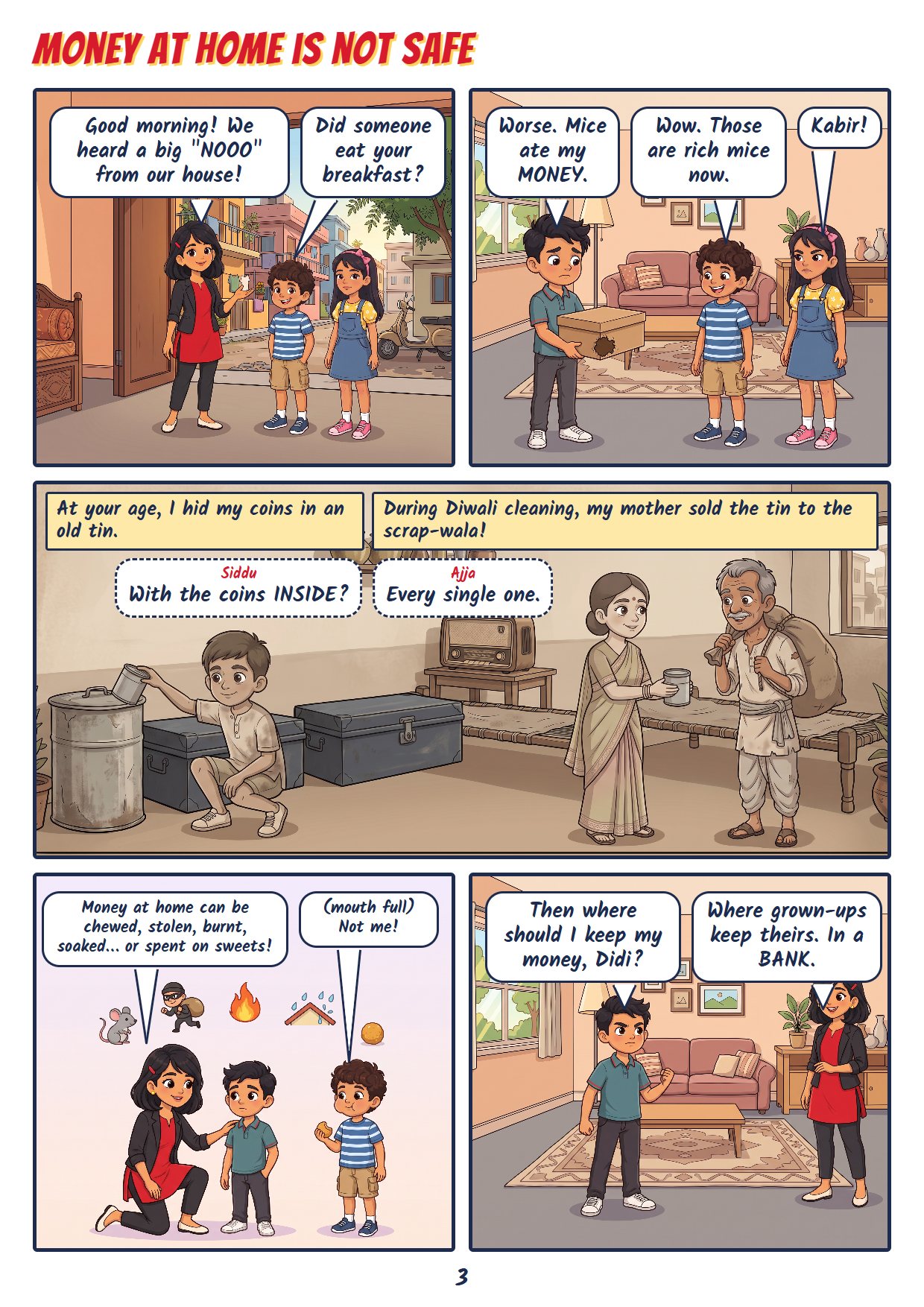
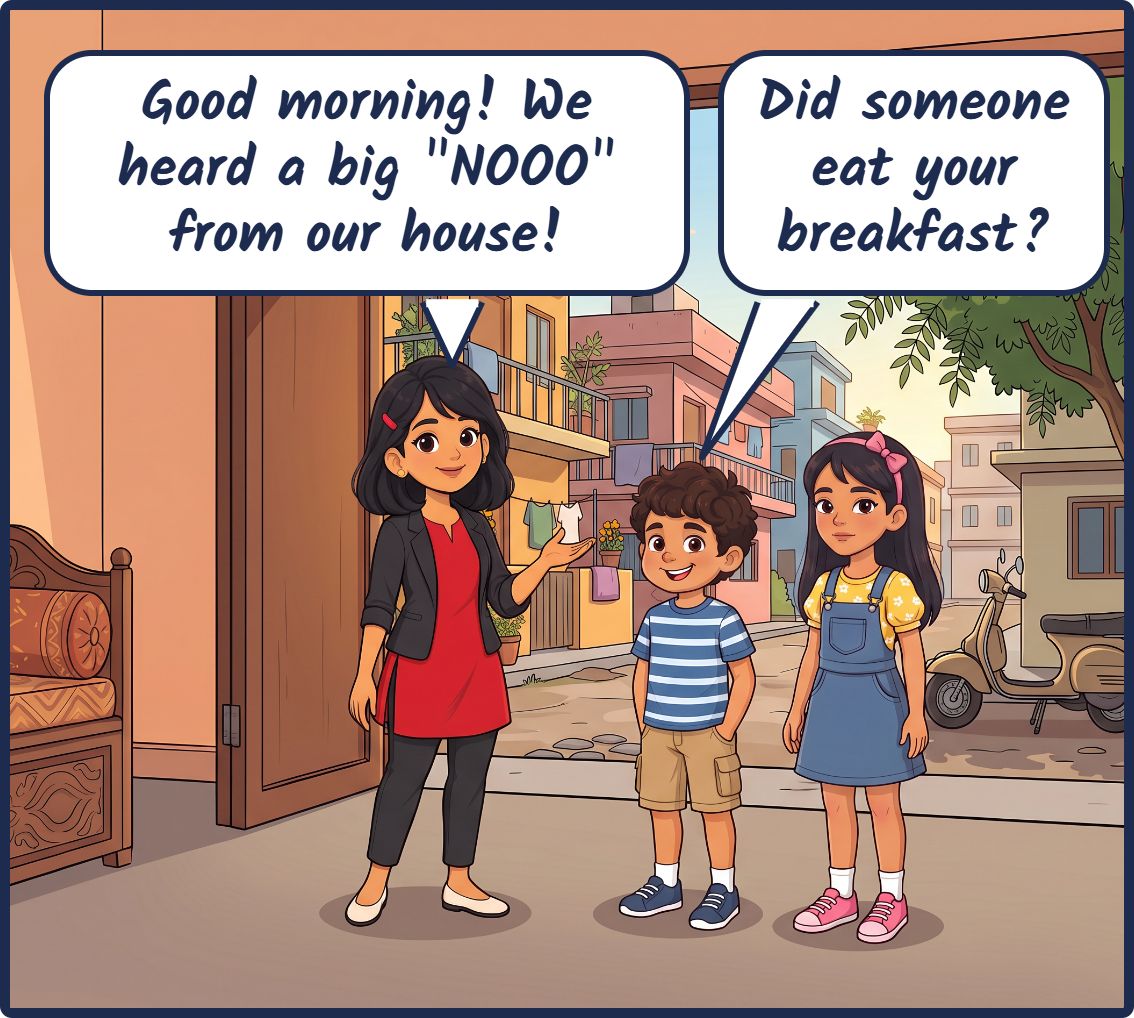
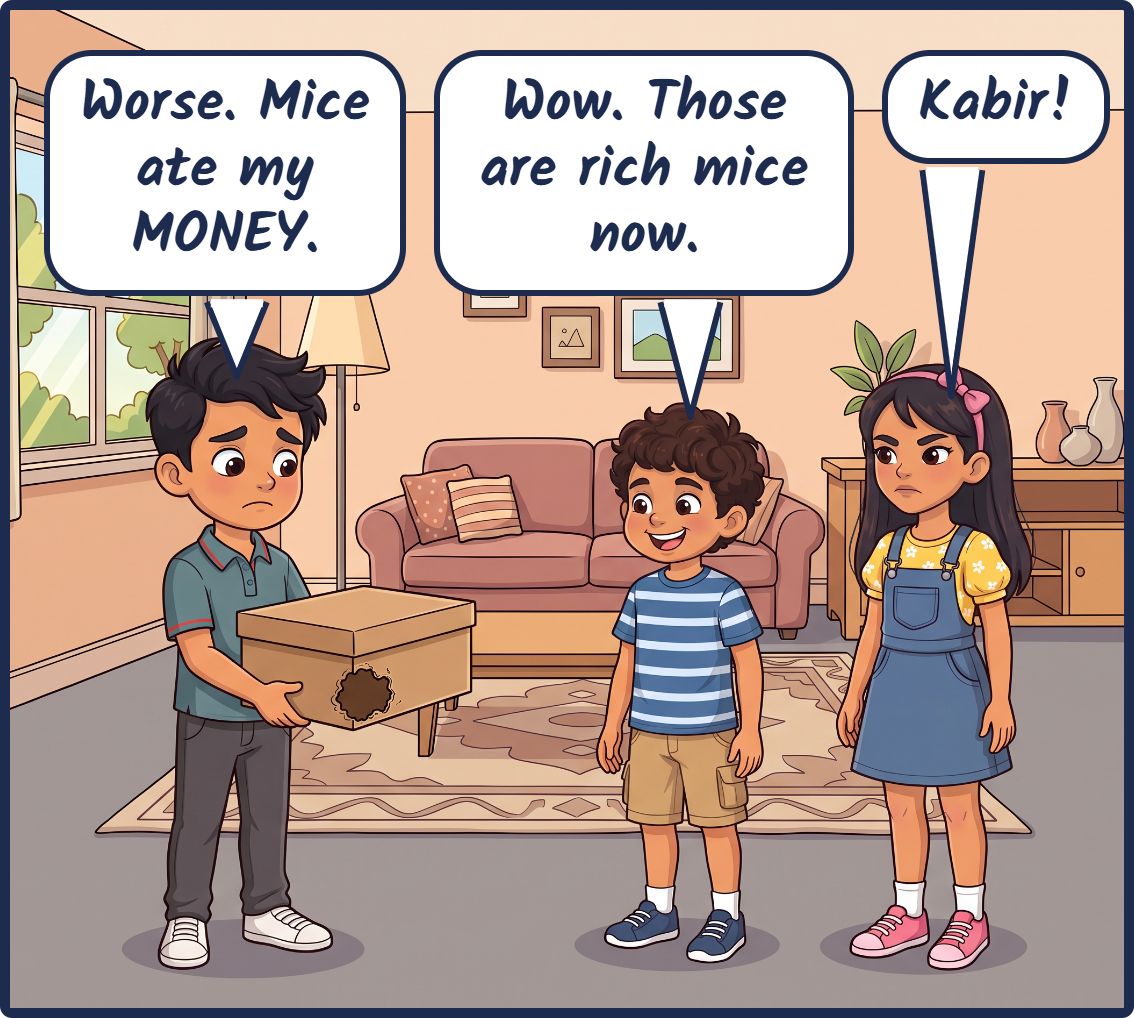
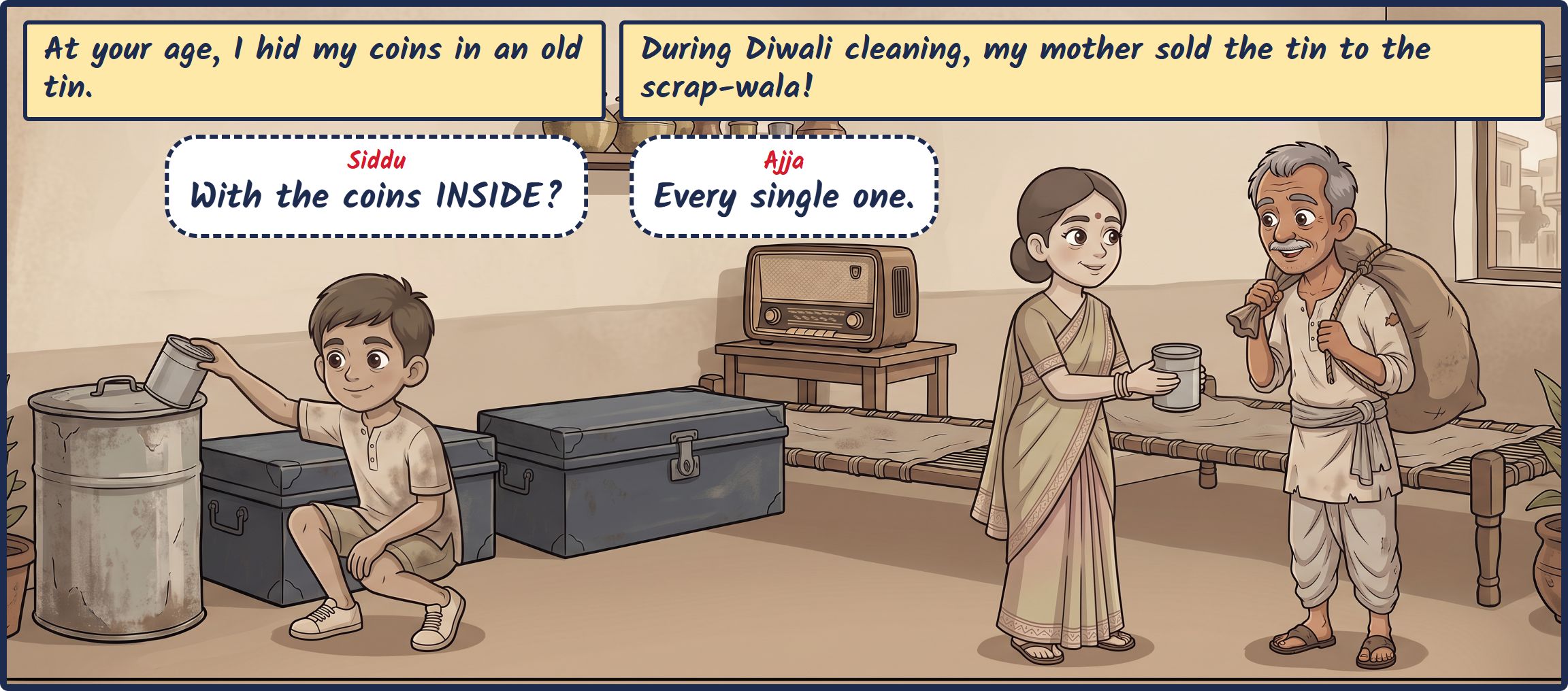
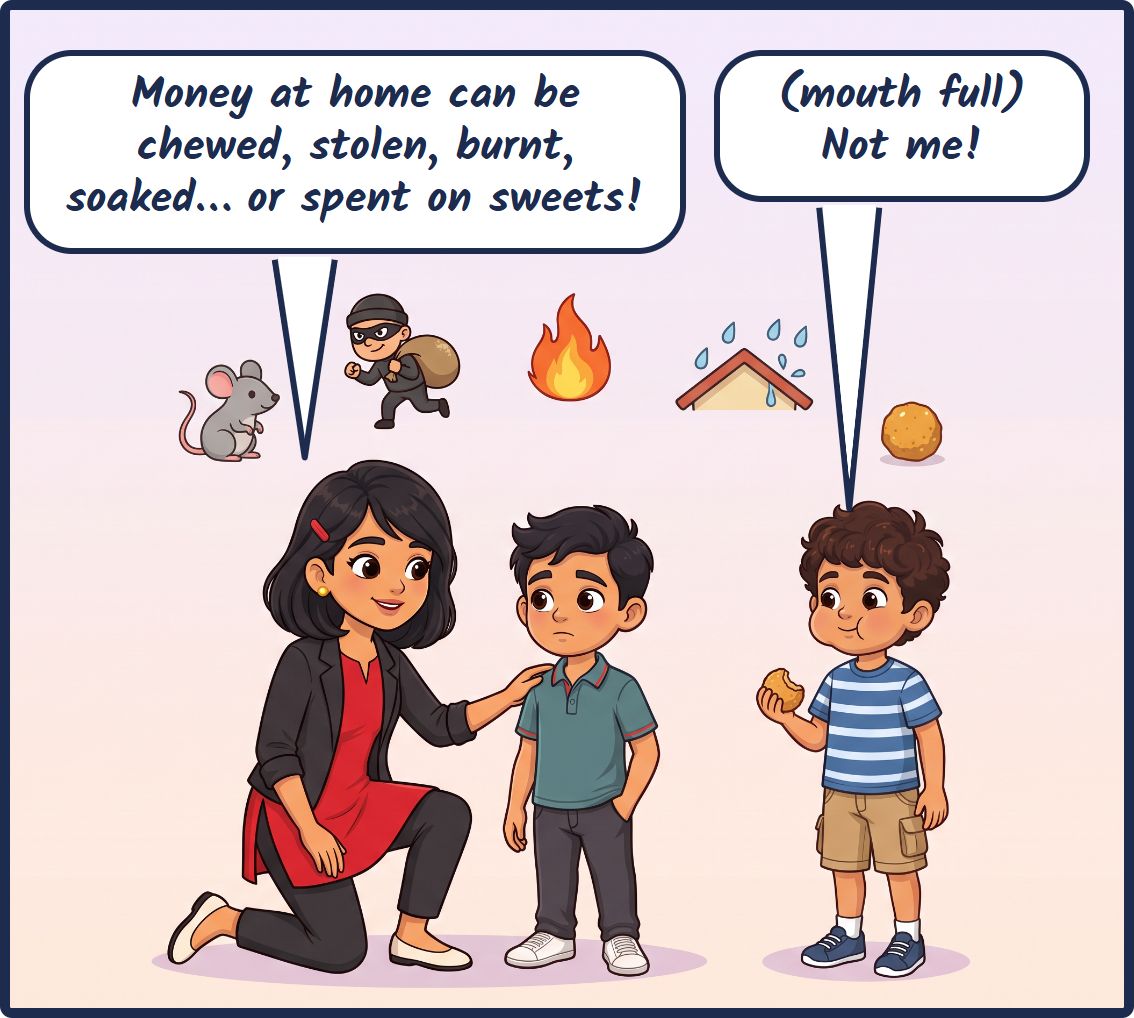
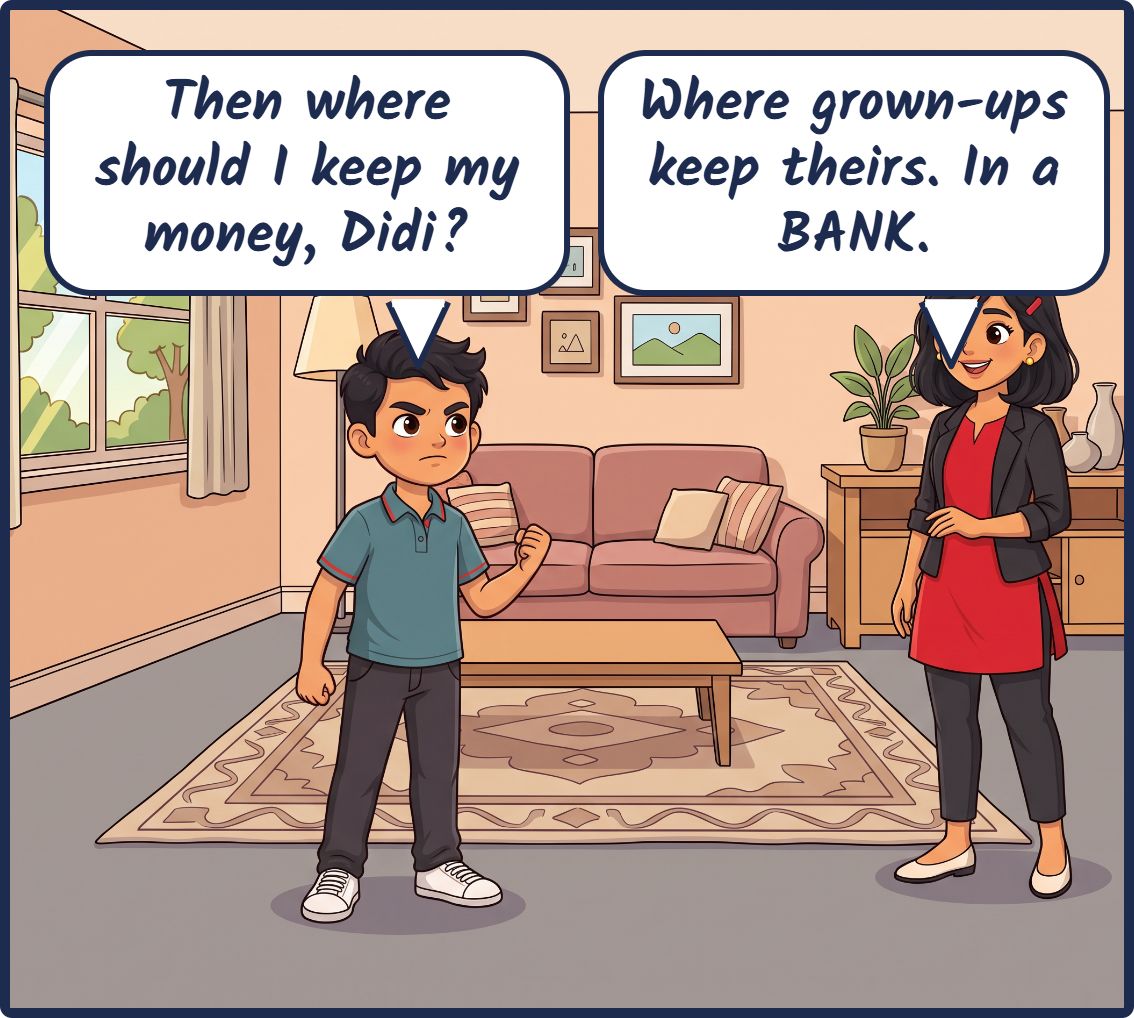
Good morning! We heard a big "NOOO" from our house! Did someone eat your breakfast? Worse. Mice ate my MONEY. Wow. Those are rich mice now. Kabir! At your age, I hid my coins in an old tin. During Diwali cleaning, my mother sold the tin to the scrap-wala! With the coins INSIDE? Every single one. Money at home can be chewed, stolen, burnt, soaked… or spent on sweets! (mouth full) Not me! Then where should I keep my money, Didi? Where grown-ups keep theirs. In a BANK.
Into Ajja's passbook
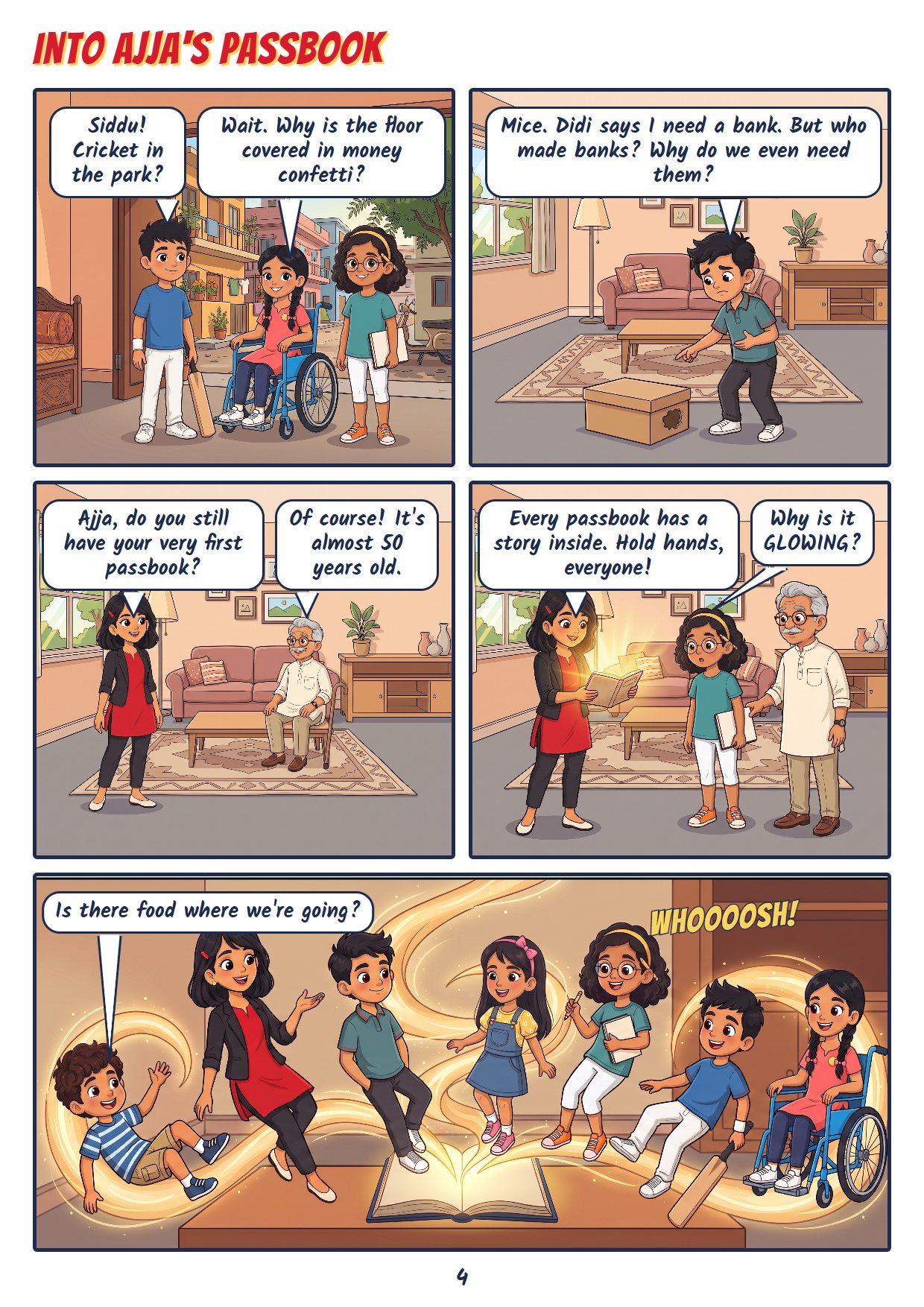
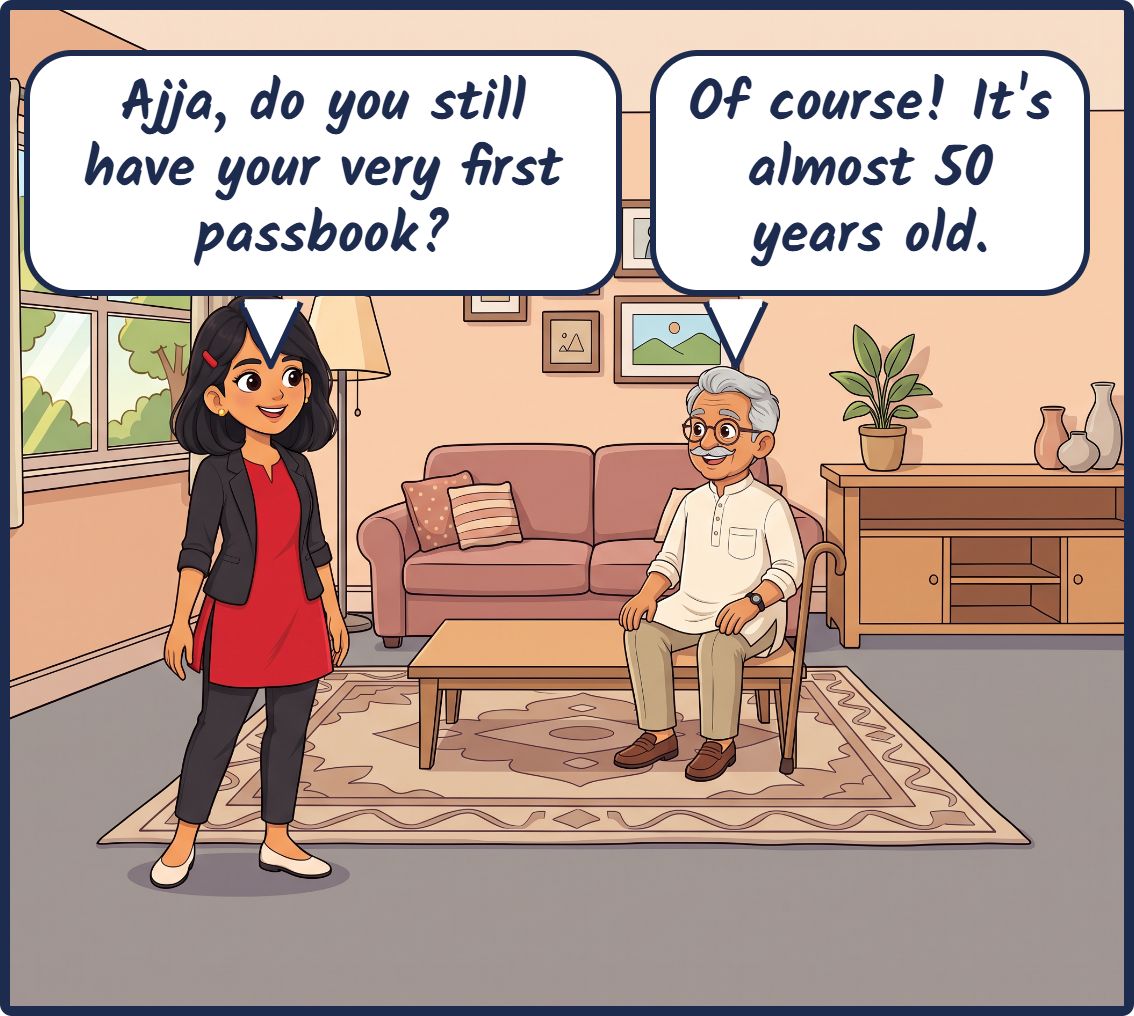
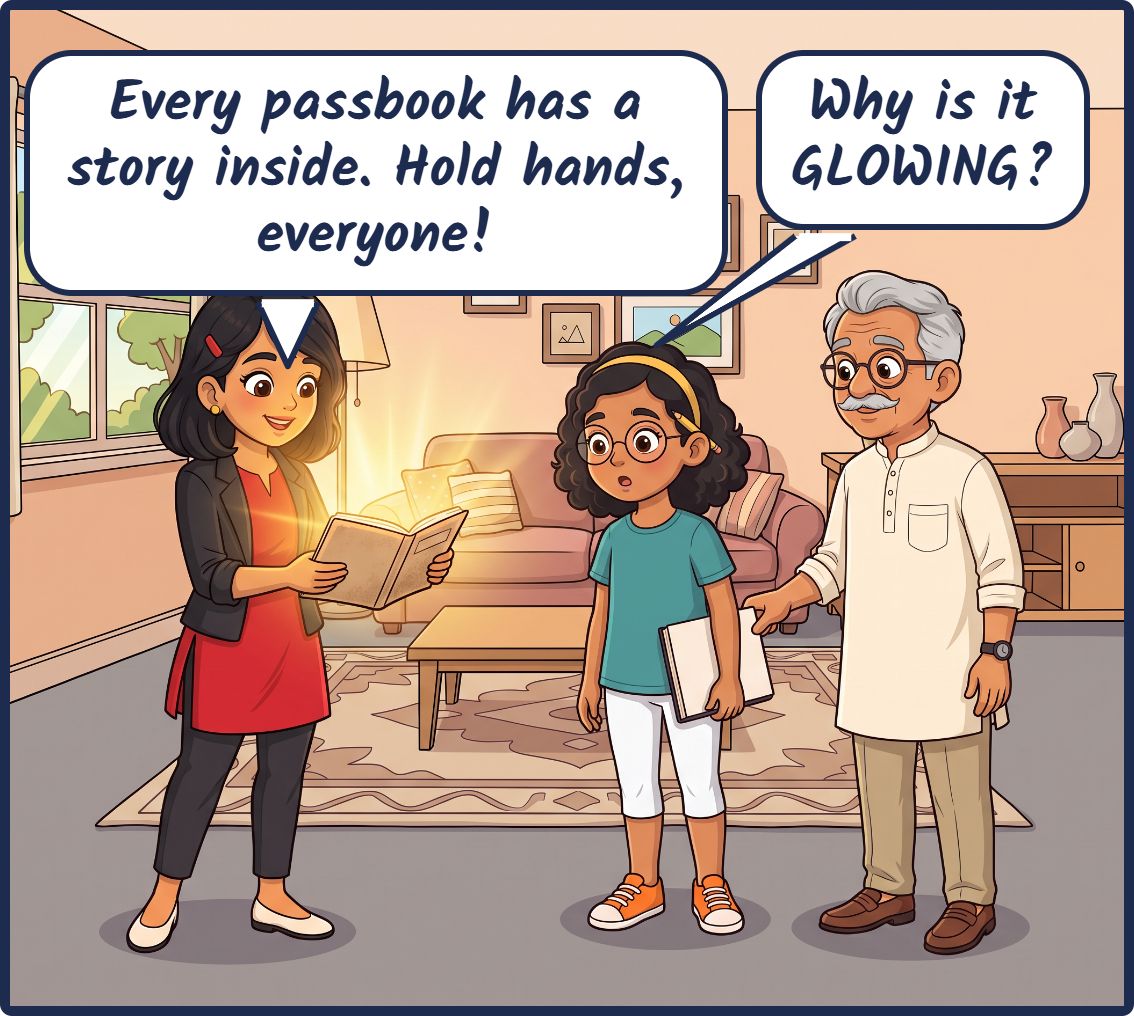
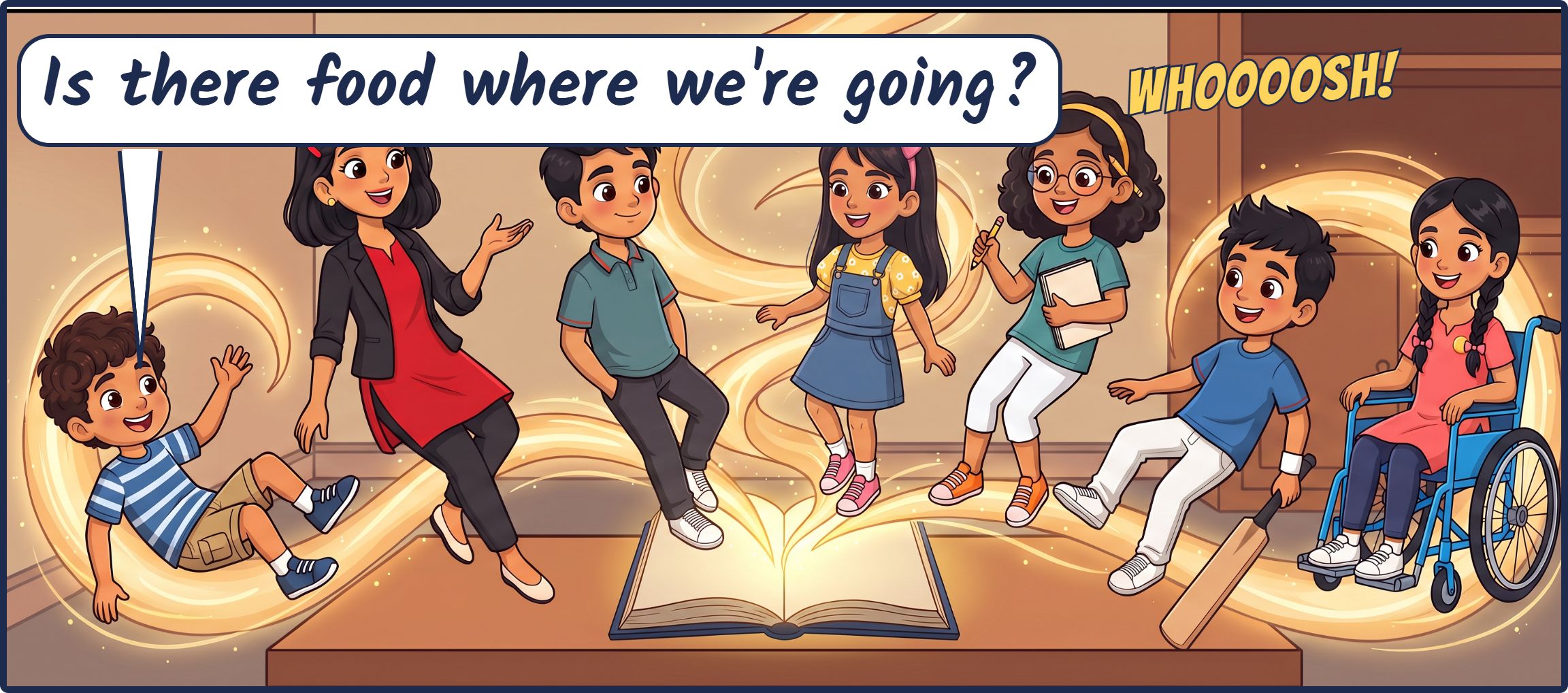
Siddu! Cricket in the park? Wait. Why is the floor covered in money confetti? Mice. Didi says I need a bank. But who made banks? Why do we even need them? Ajja, do you still have your very first passbook? Of course! It's almost 50 years old. Every passbook has a story inside. Hold hands, everyone! Why is it GLOWING? WHOOOOSH! Is there food where we're going?
Long, long ago
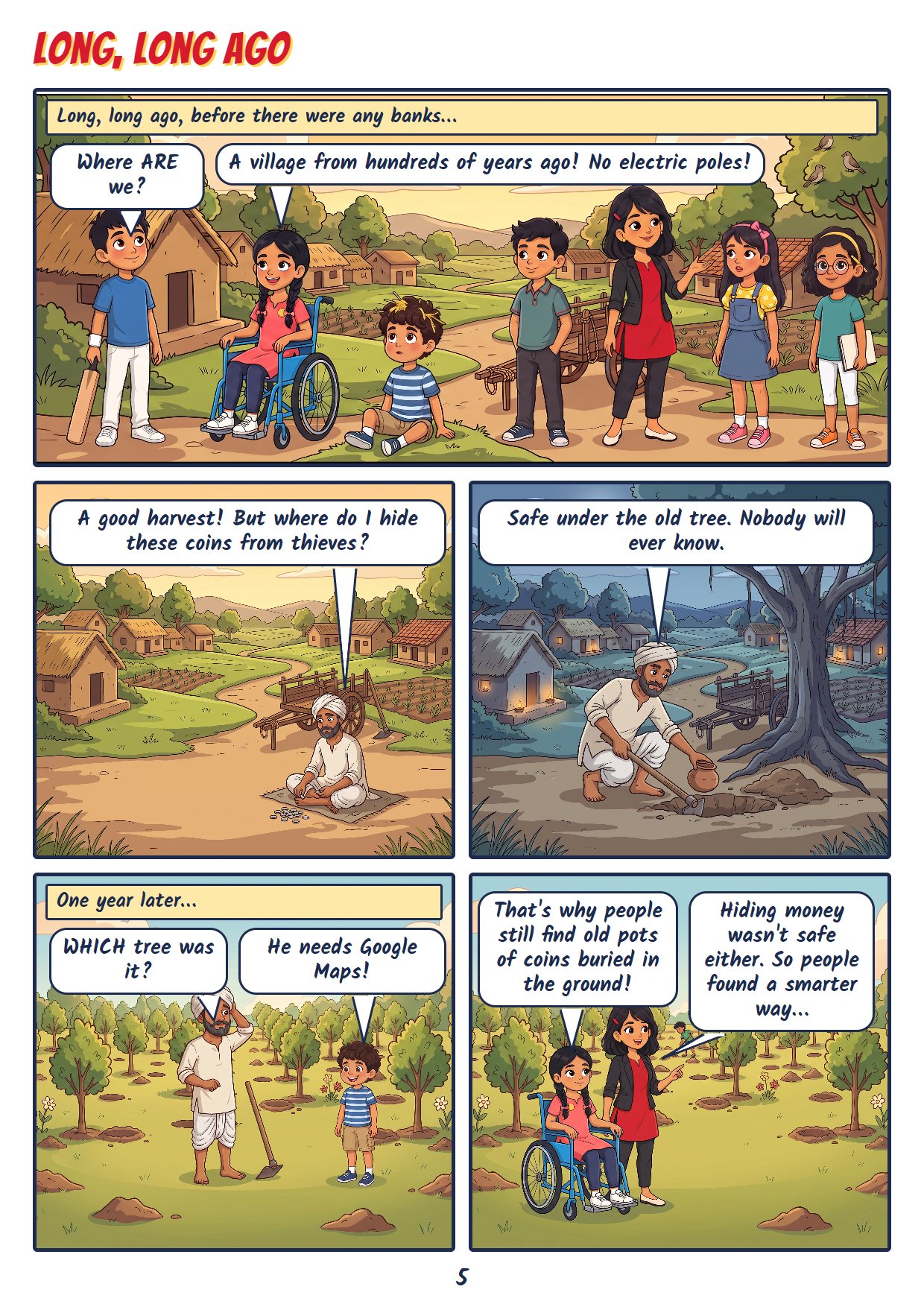
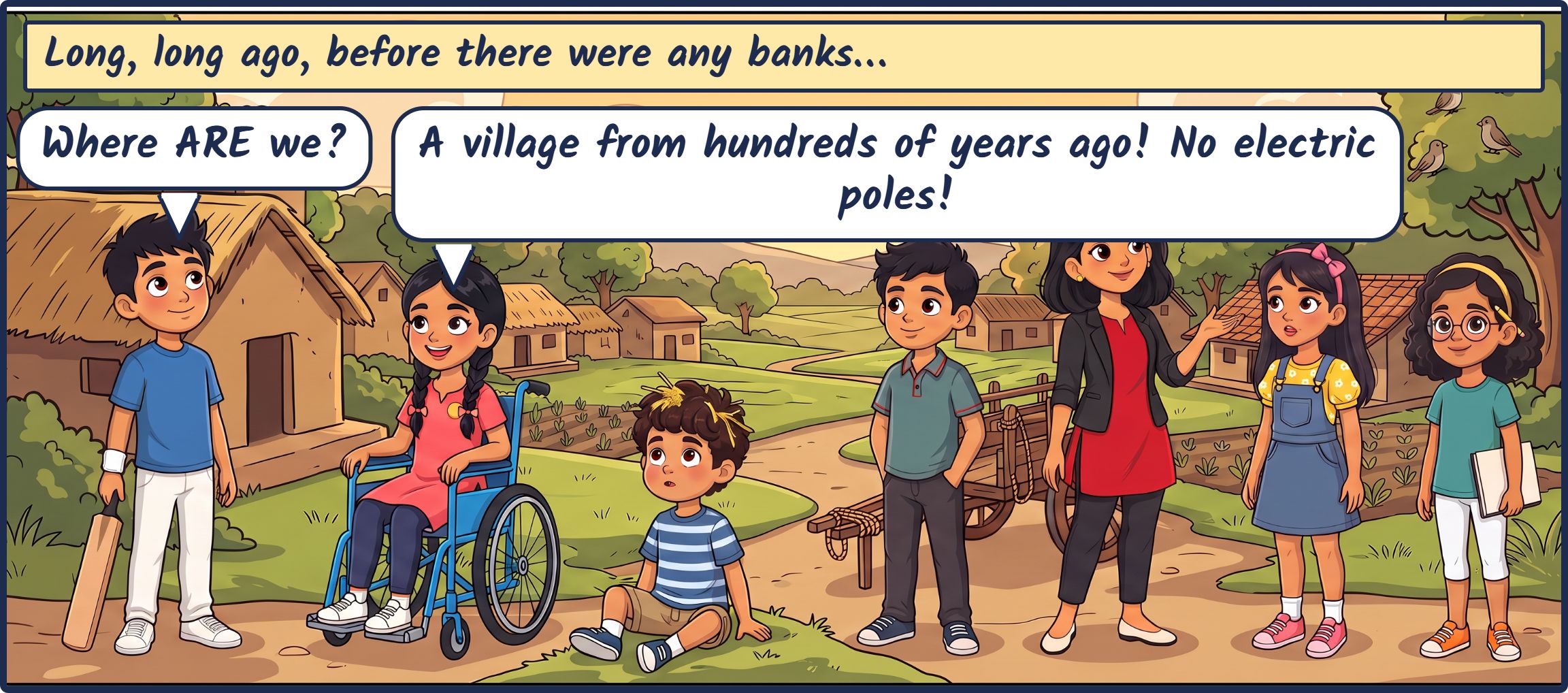
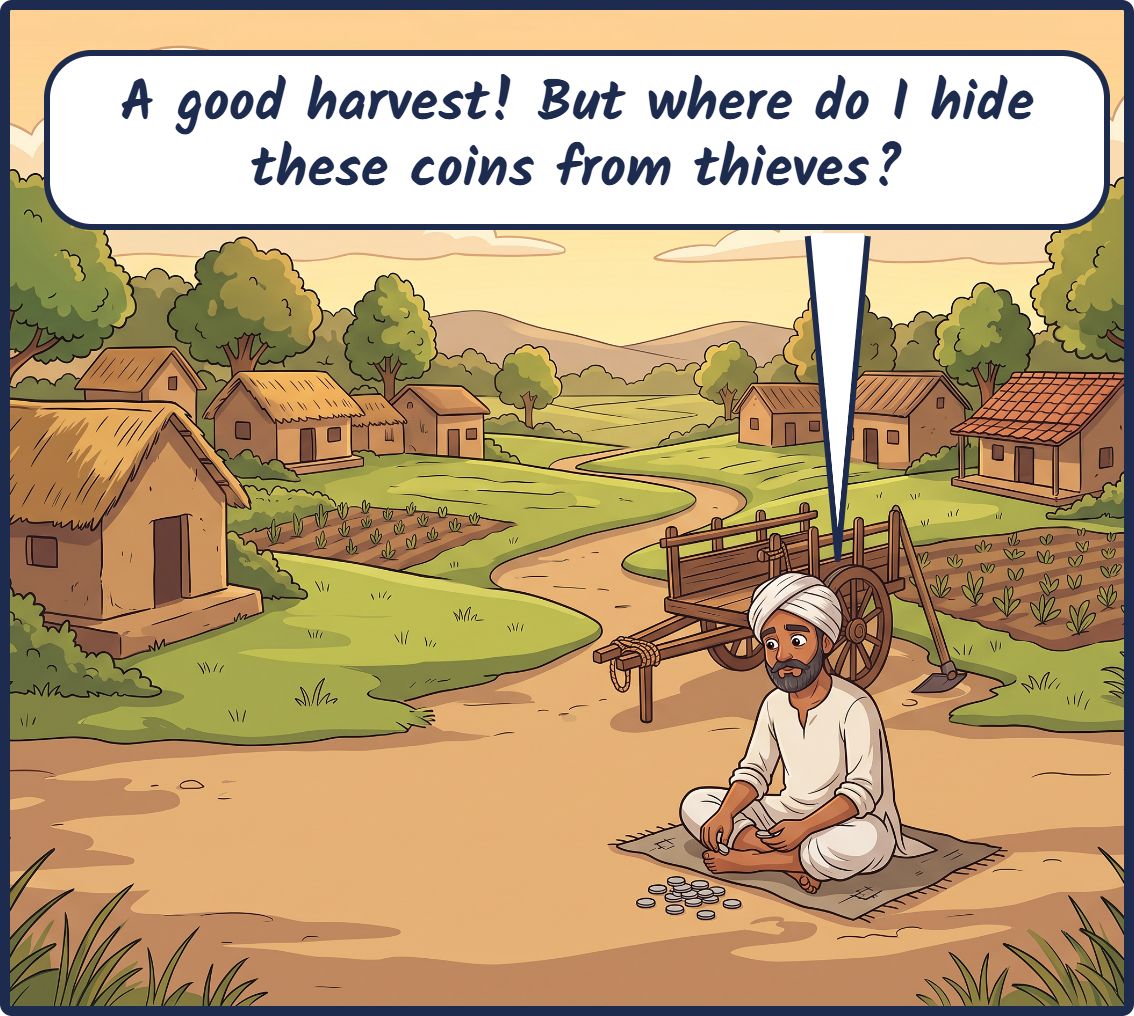
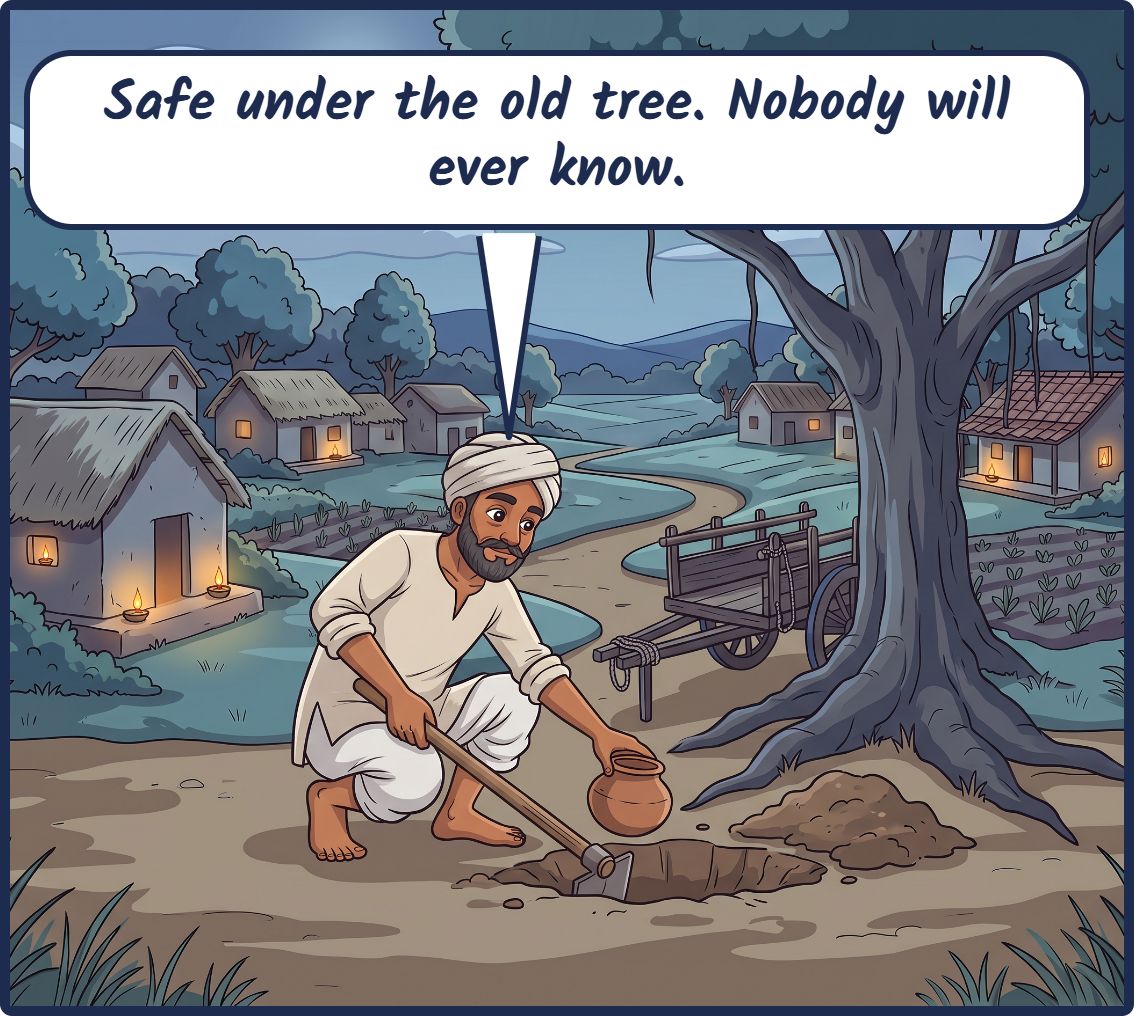
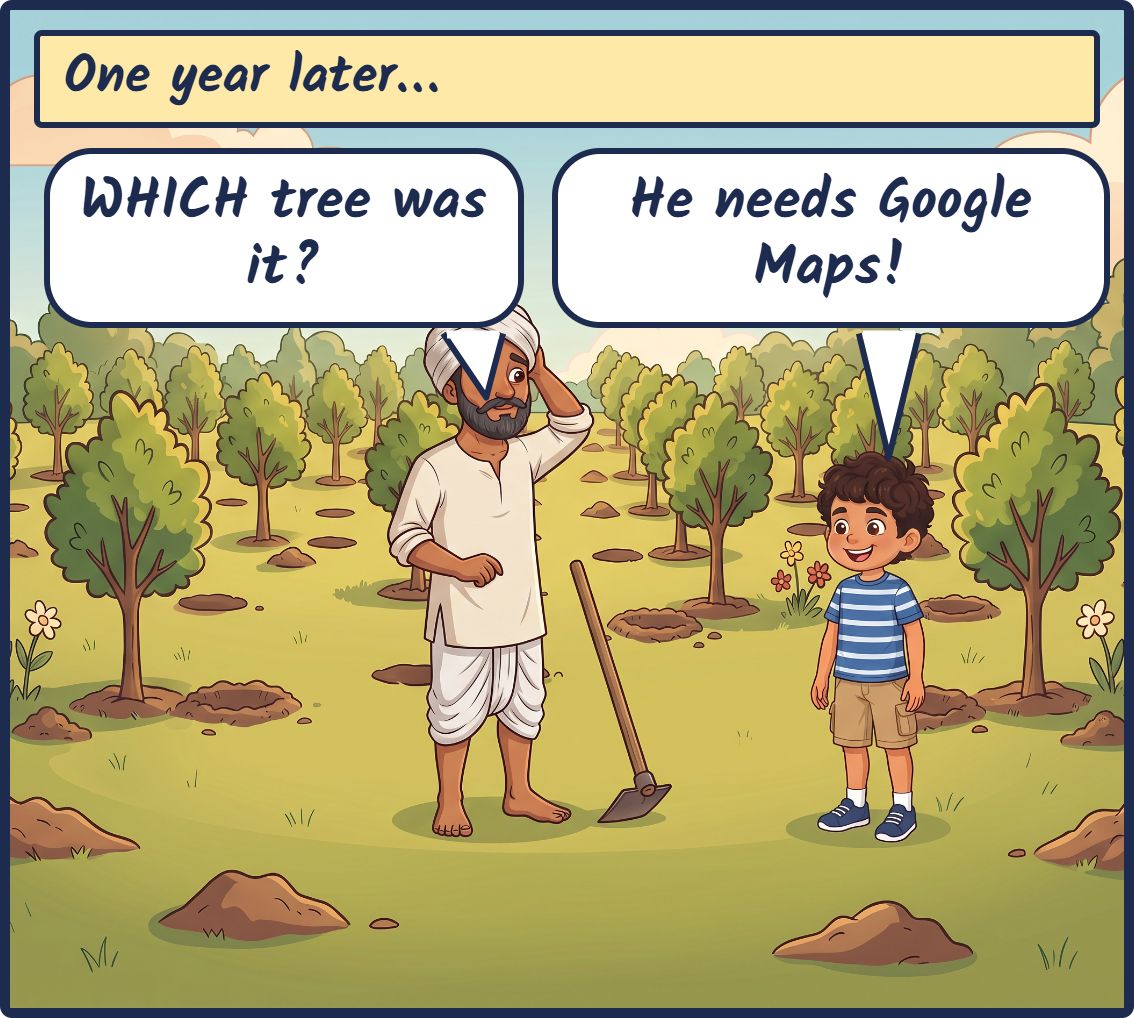
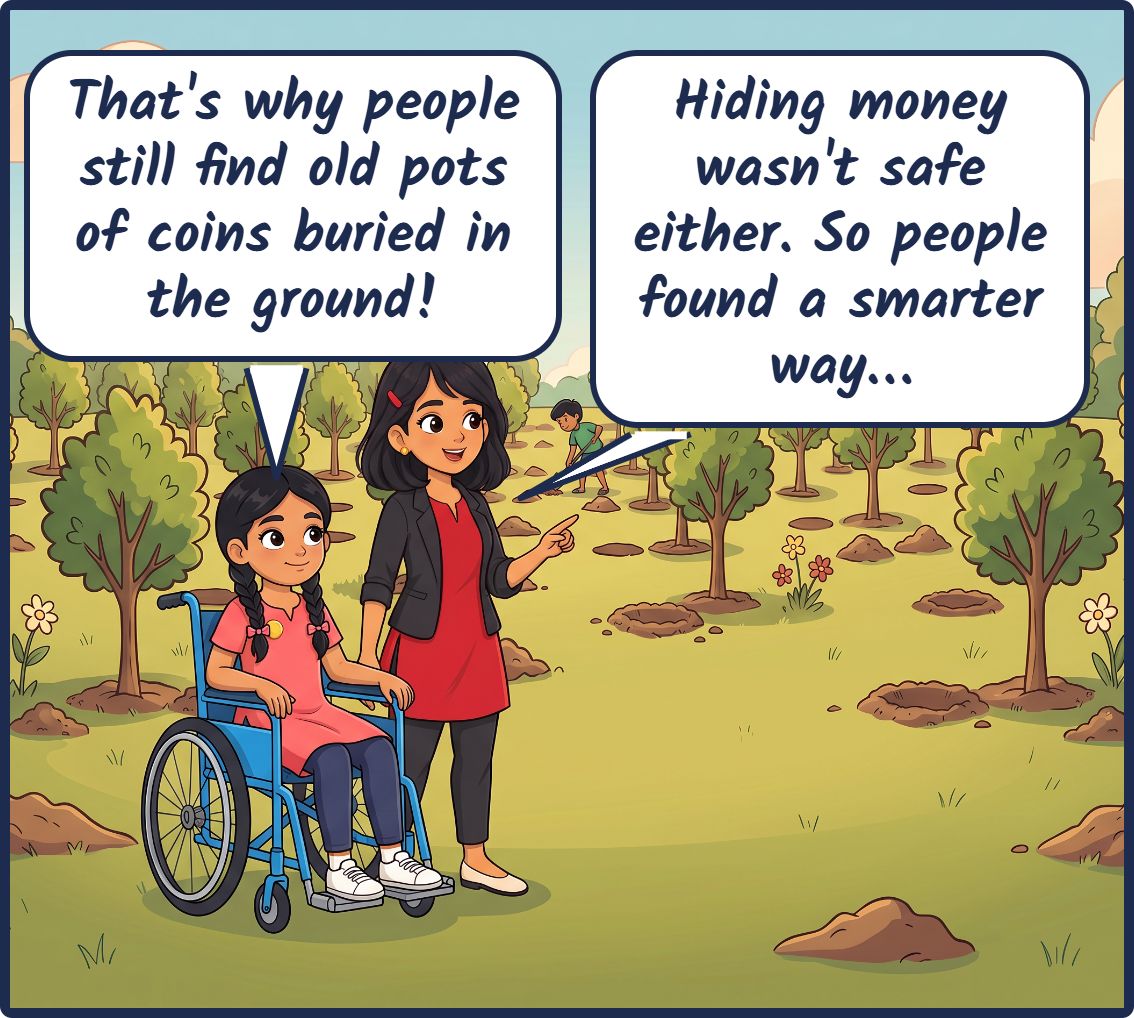
Long, long ago, before there were any banks… Where ARE we? A village from hundreds of years ago! No electric poles! A good harvest! But where do I hide these coins from thieves? Safe under the old tree. Nobody will ever know. One year later… WHICH tree was it? He needs Google Maps! That's why people still find old pots of coins buried in the ground! Hiding money wasn't safe either. So people found a smarter way…
The trusted goldsmith
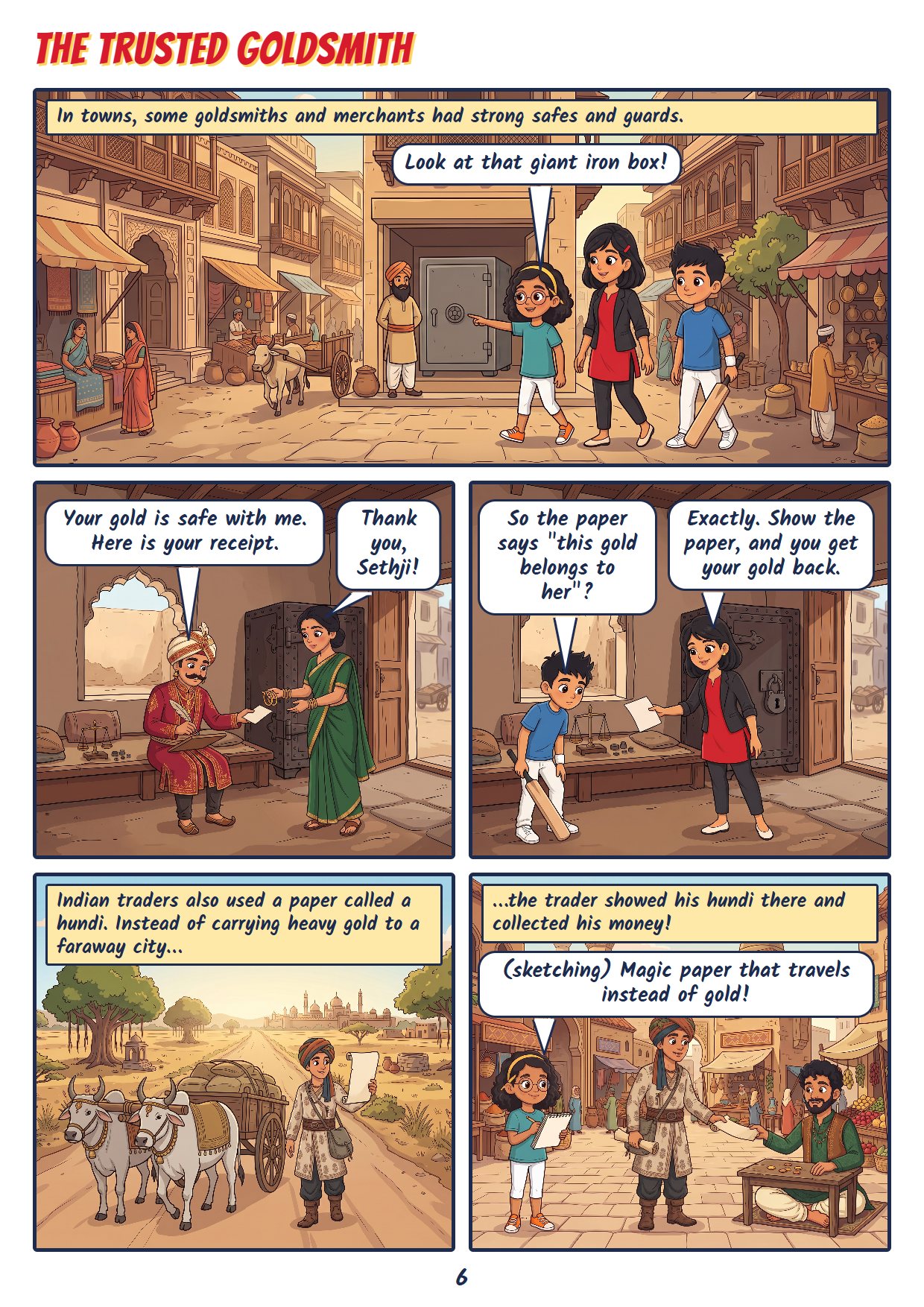
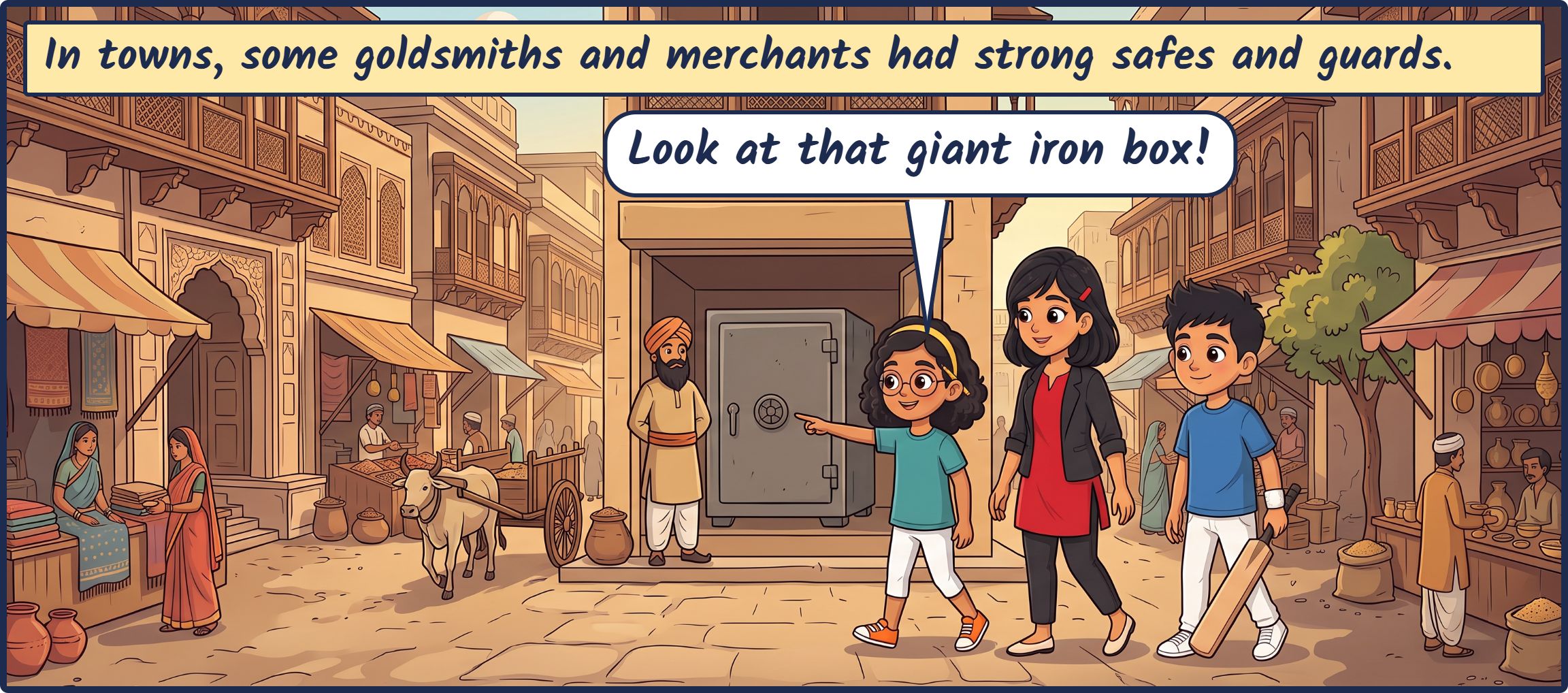
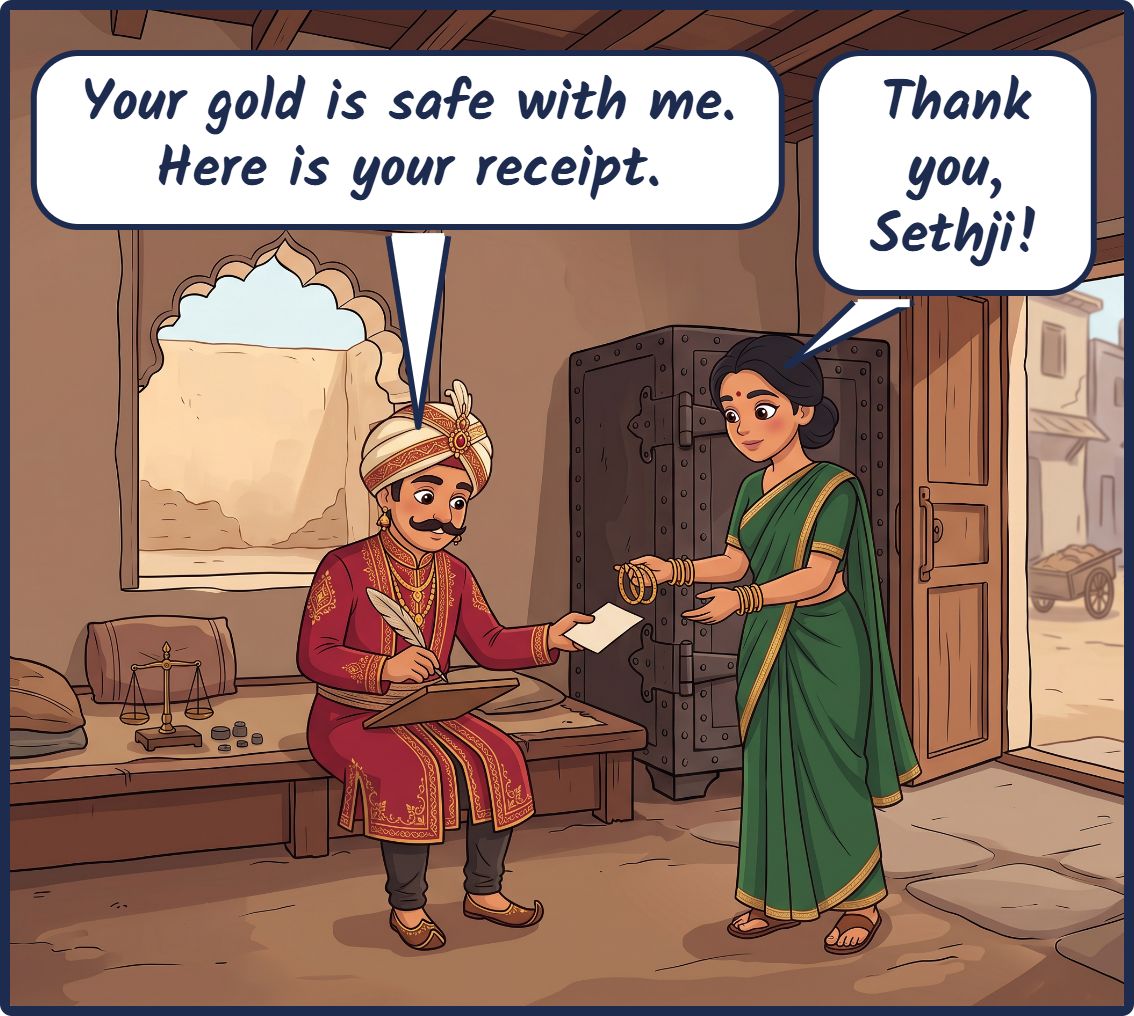
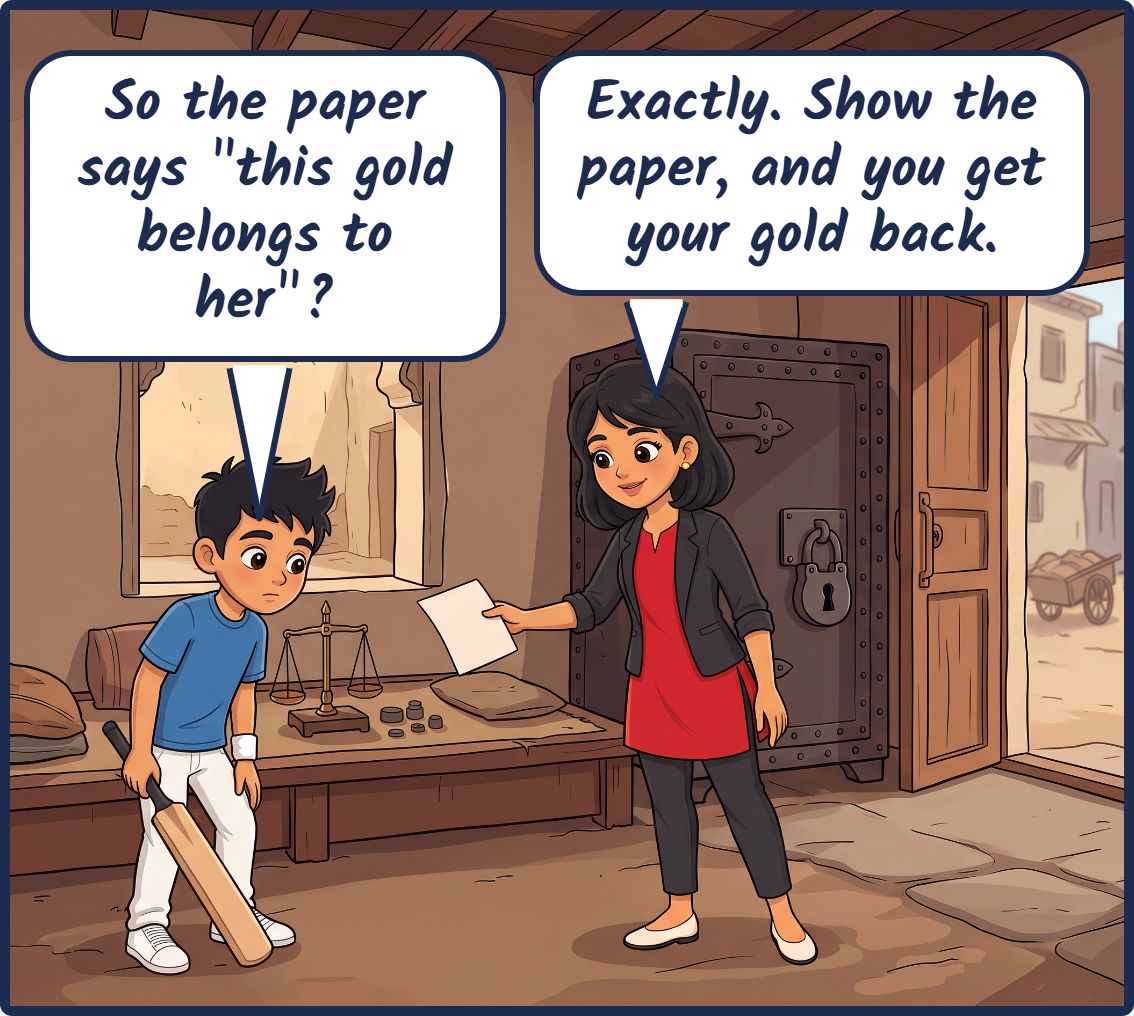
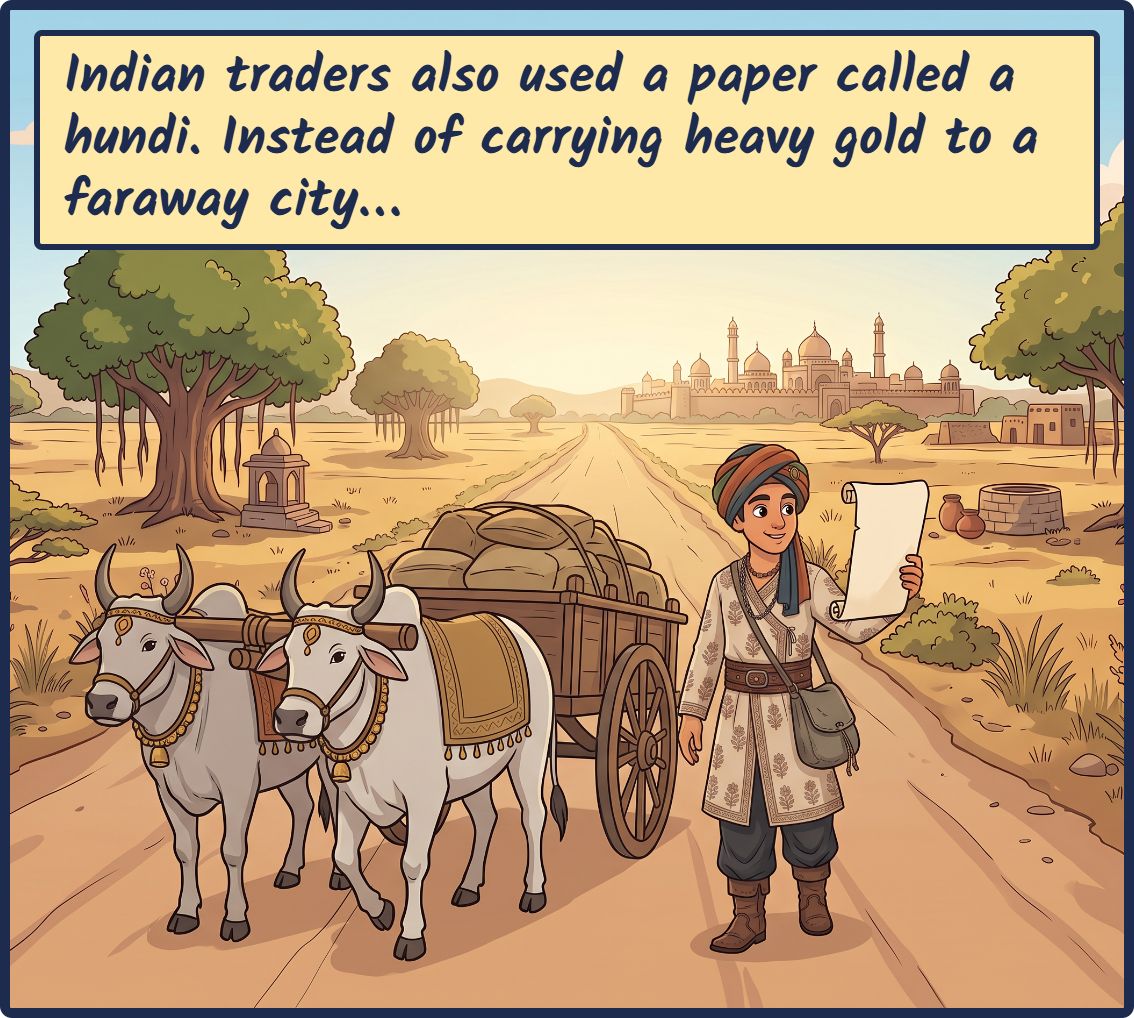
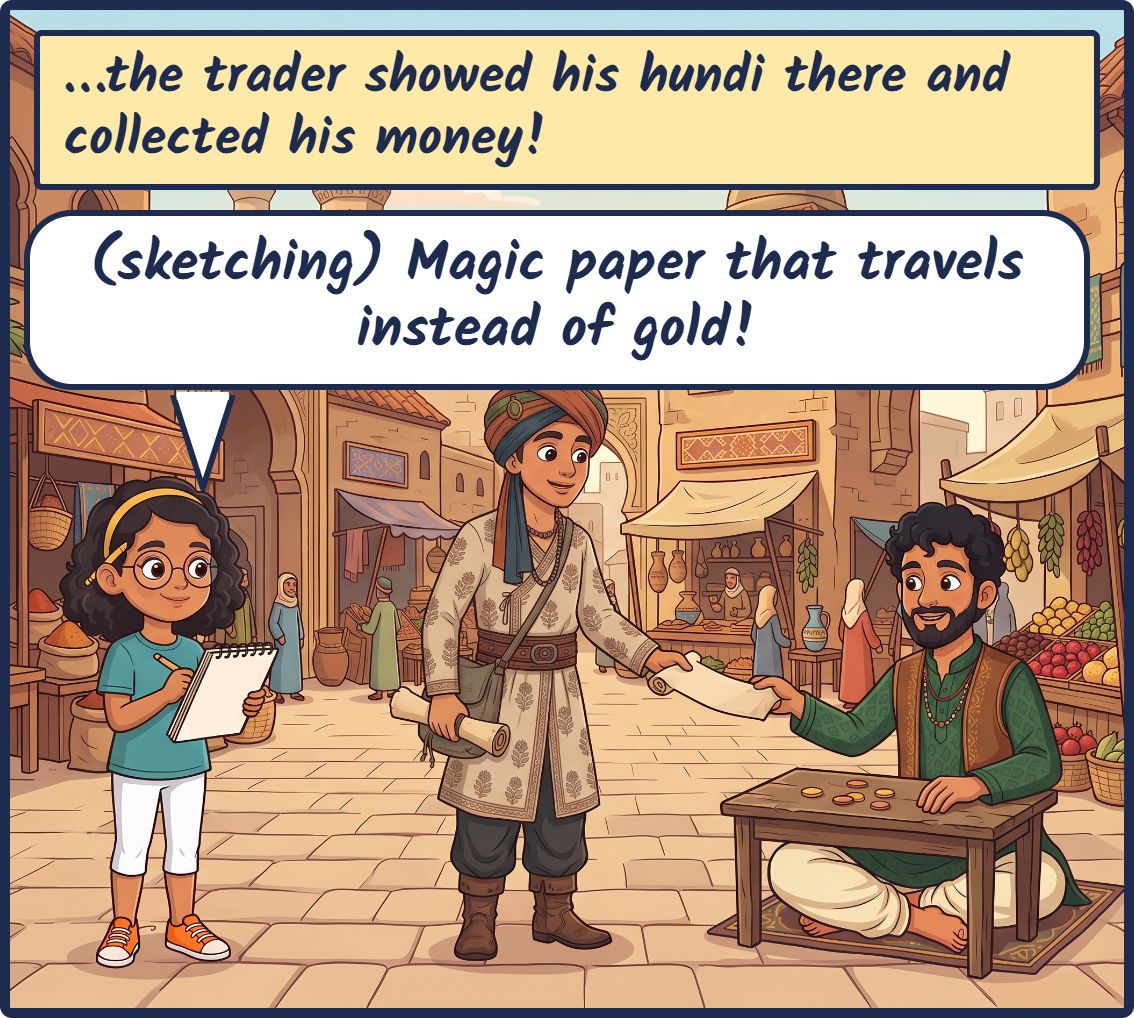
In towns, some goldsmiths and merchants had strong safes and guards. Look at that giant iron box! Your gold is safe with me. Here is your receipt. Thank you, Sethji! So the paper says "this gold belongs to her"? Exactly. Show the paper, and you get your gold back. Indian traders also used a paper called a hundi. Instead of carrying heavy gold to a faraway city… …the trader showed his hundi there and collected his money! (sketching) Magic paper that travels instead of gold!
The big idea
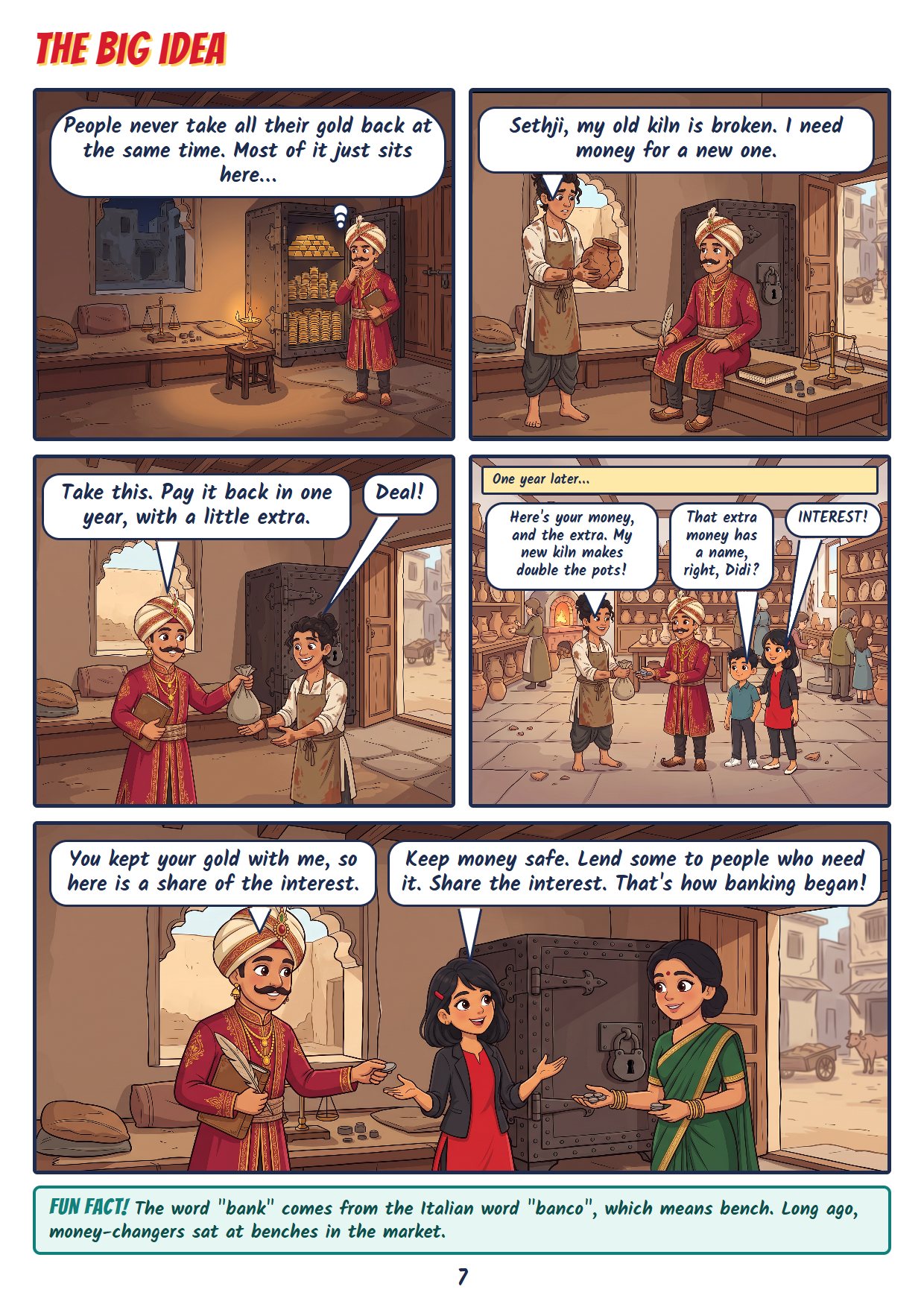
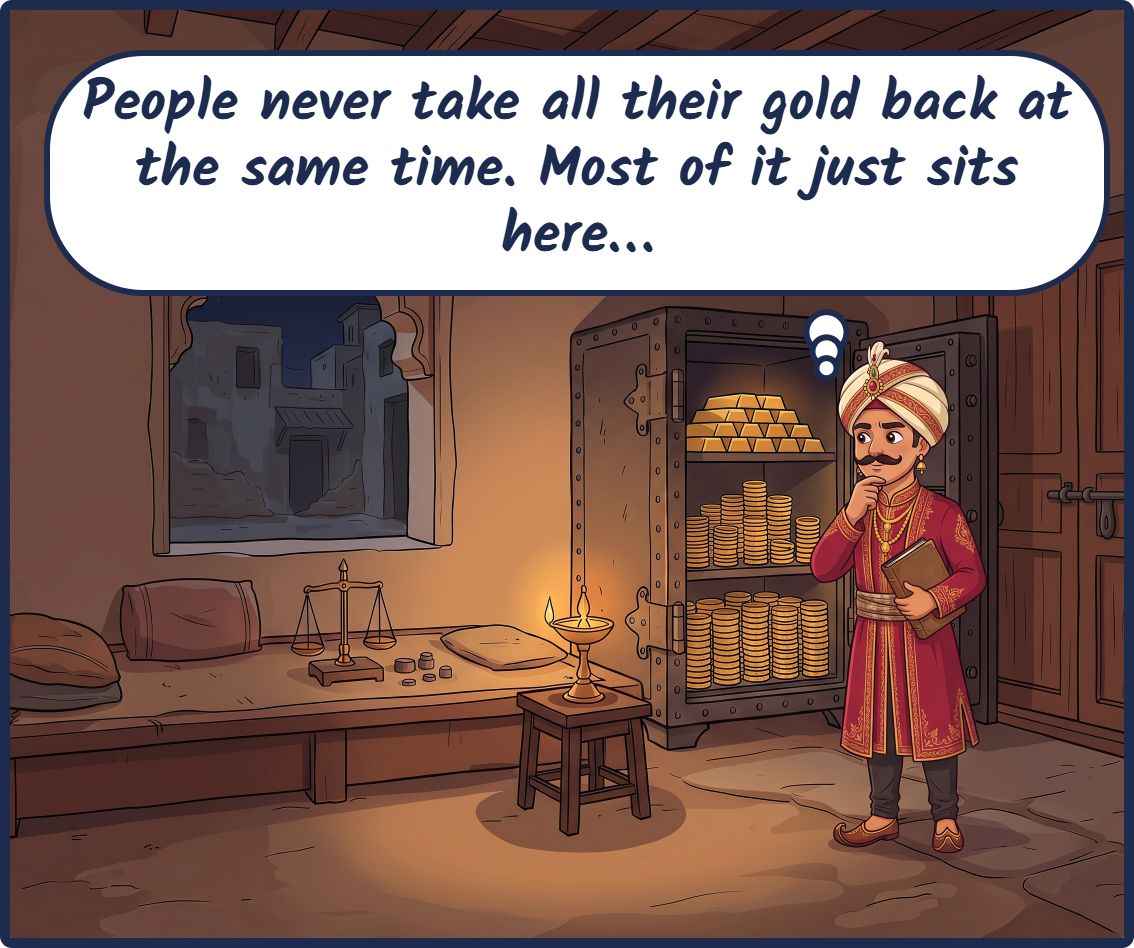
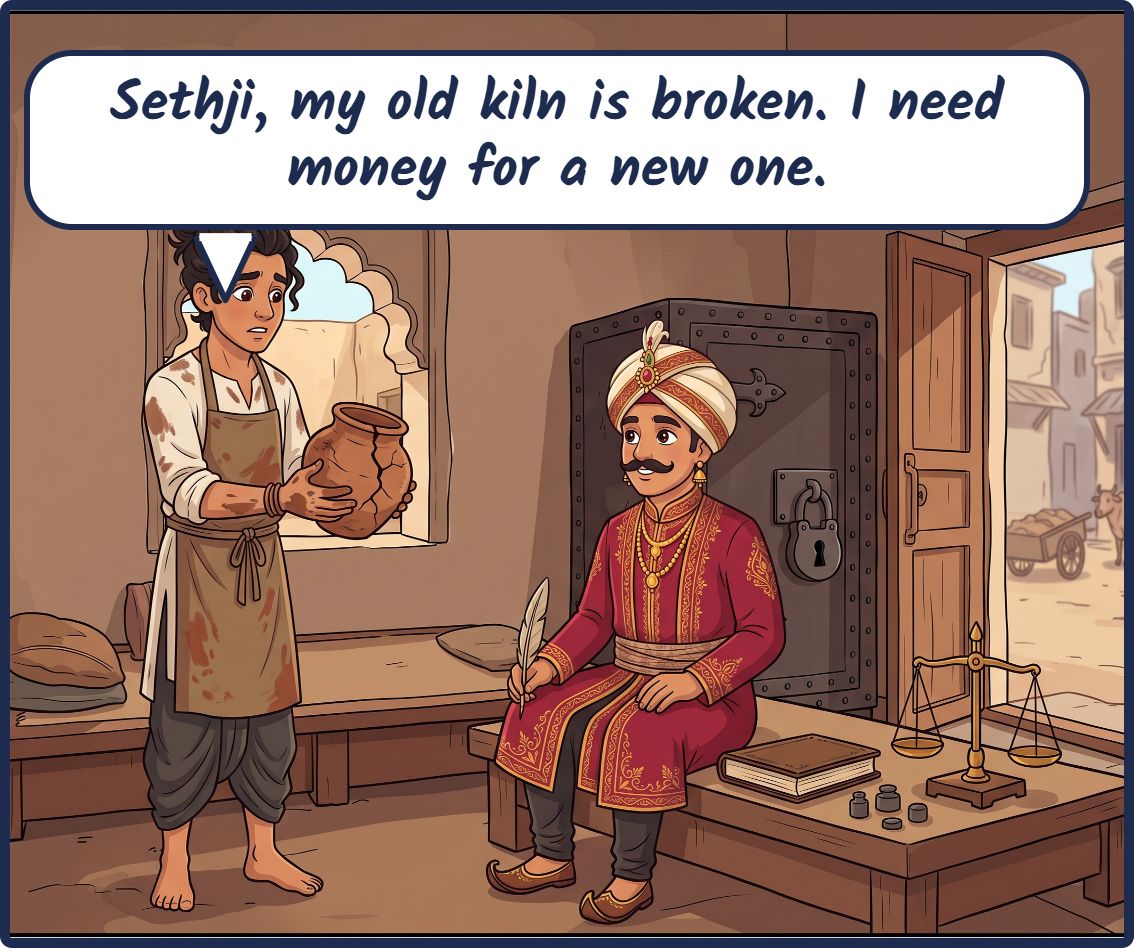
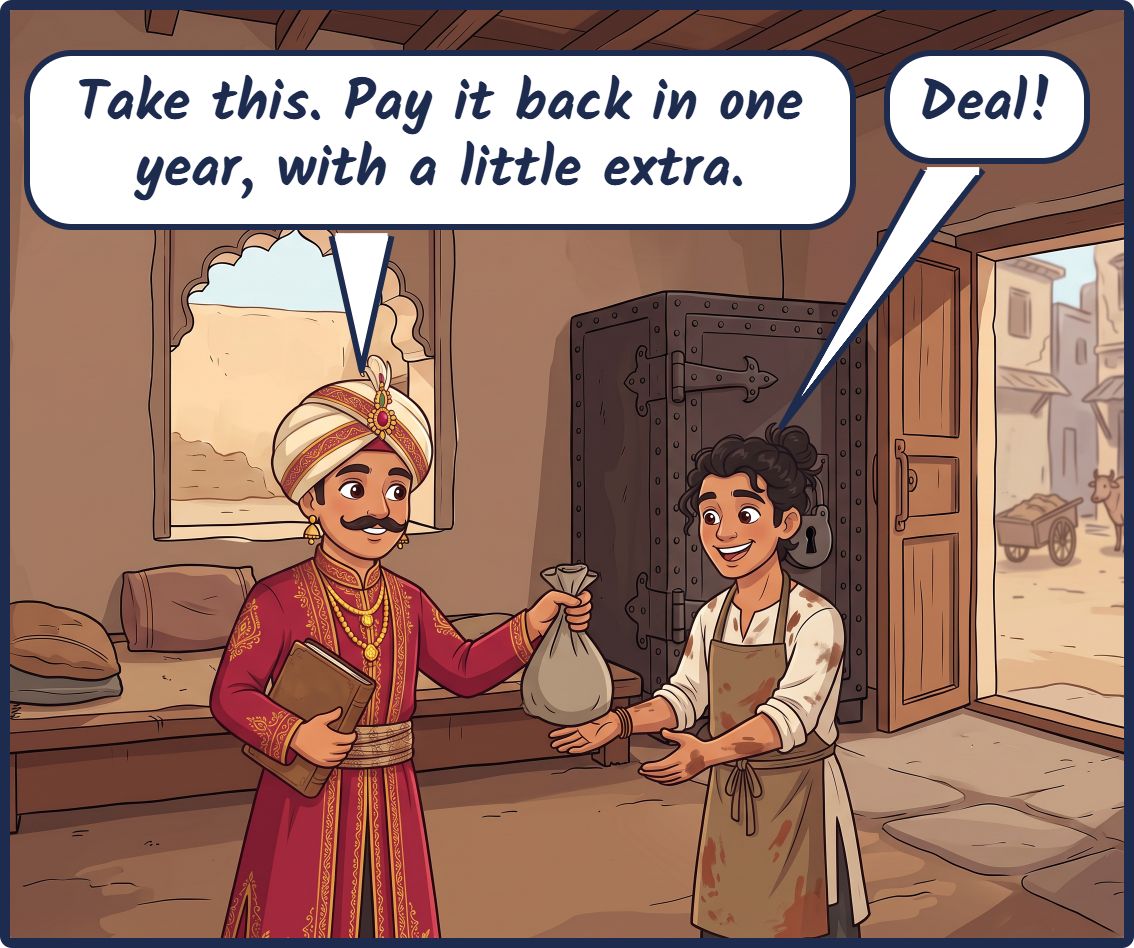
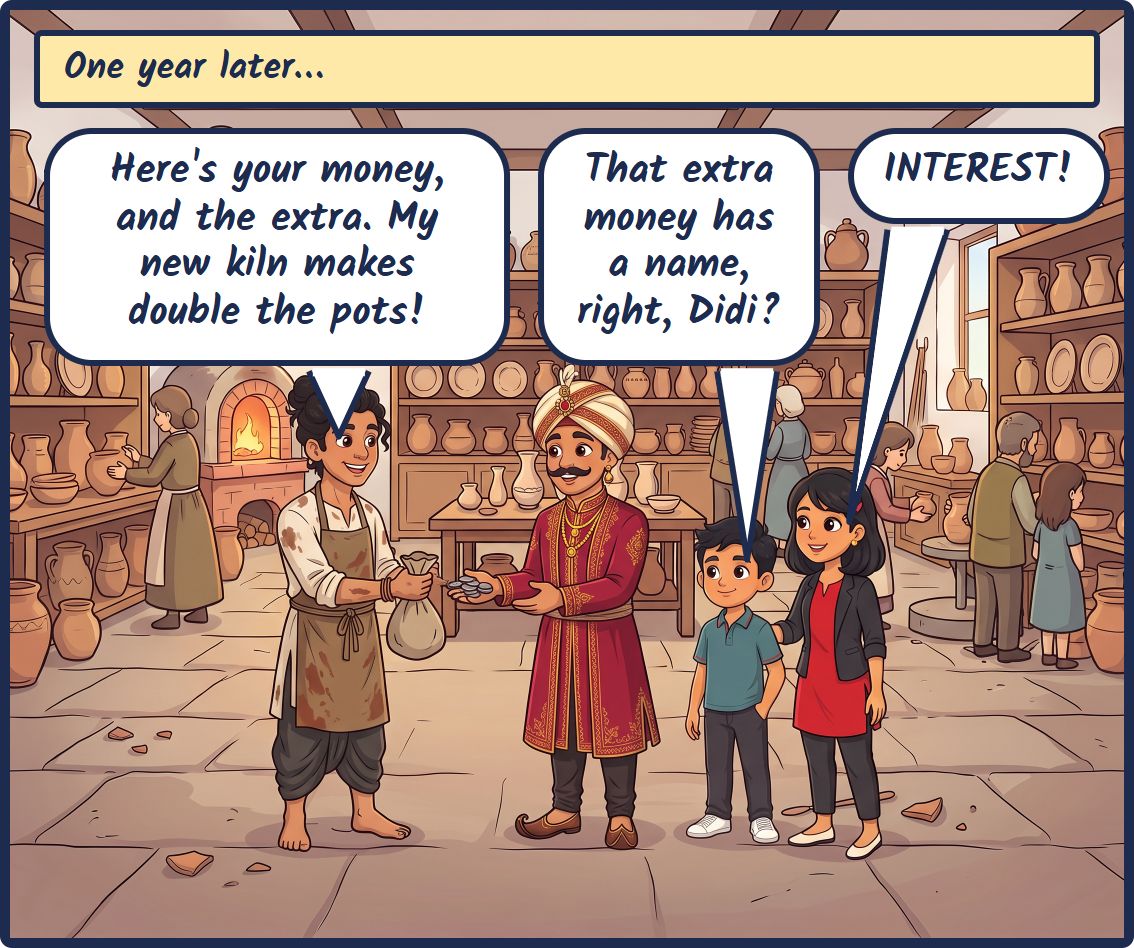
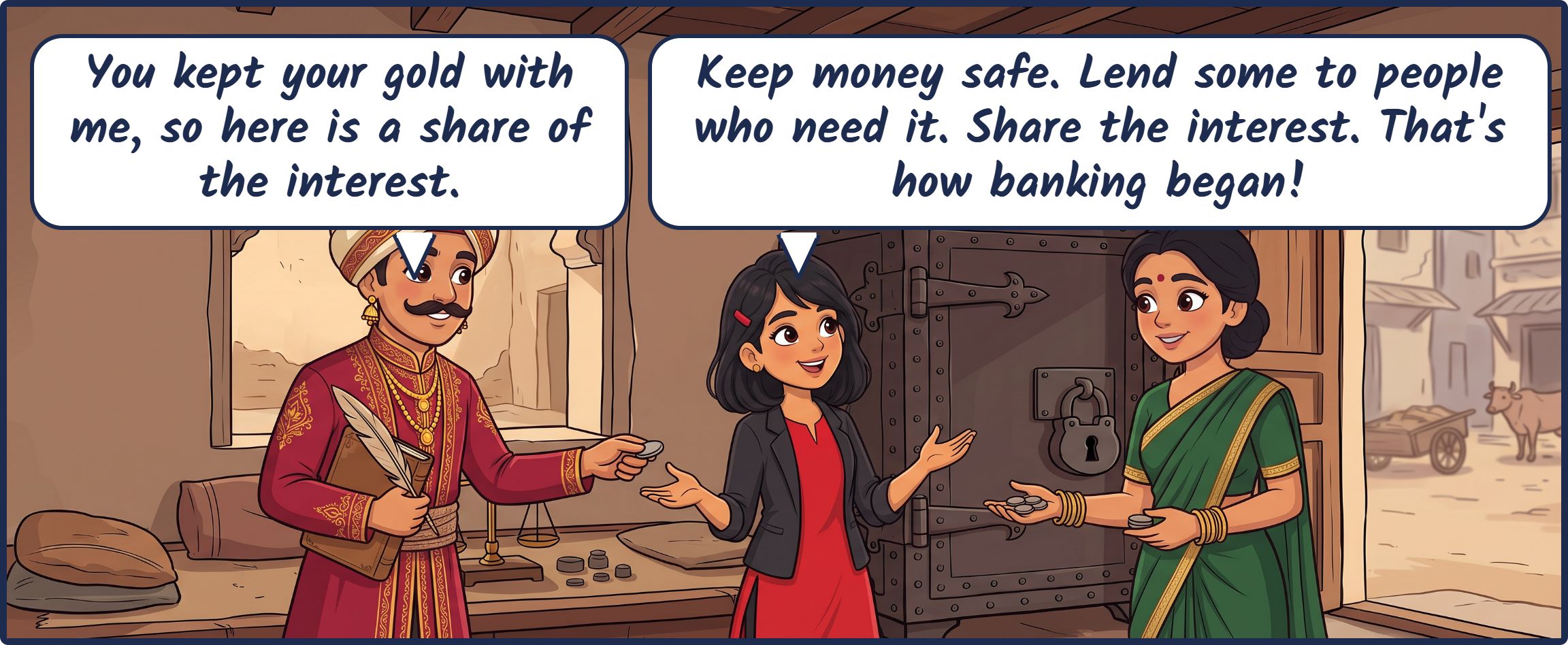
People never take all their gold back at the same time. Most of it just sits here… Sethji, my old kiln is broken. I need money for a new one. Take this. Pay it back in one year, with a little extra. Deal! One year later… Here's your money, and the extra. My new kiln makes double the pots! That extra money has a name, right, Didi? INTEREST! You kept your gold with me, so here is a share of the interest. Keep money safe. Lend some to people who need it. Share the interest. That's how banking began!
India's first banks
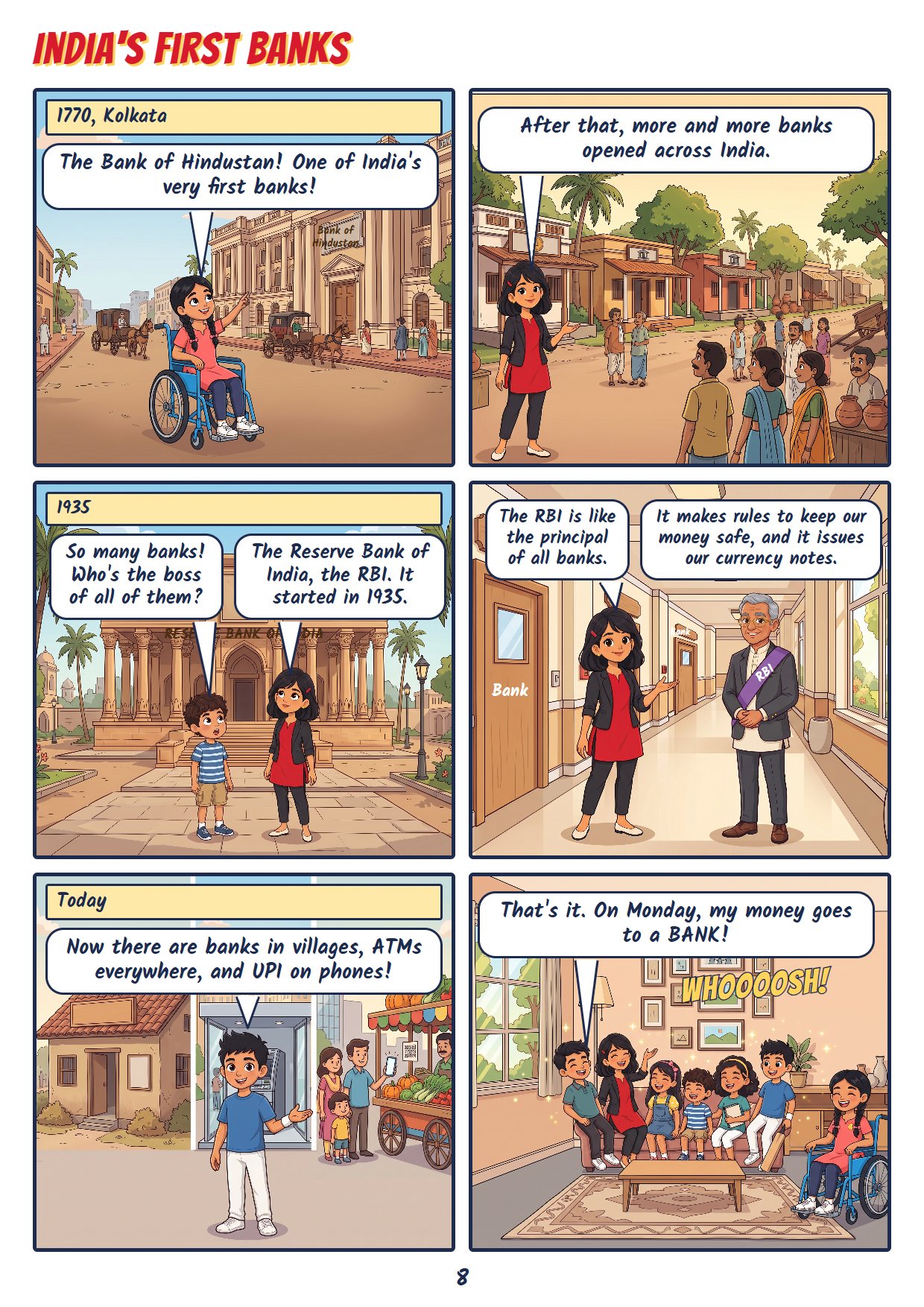
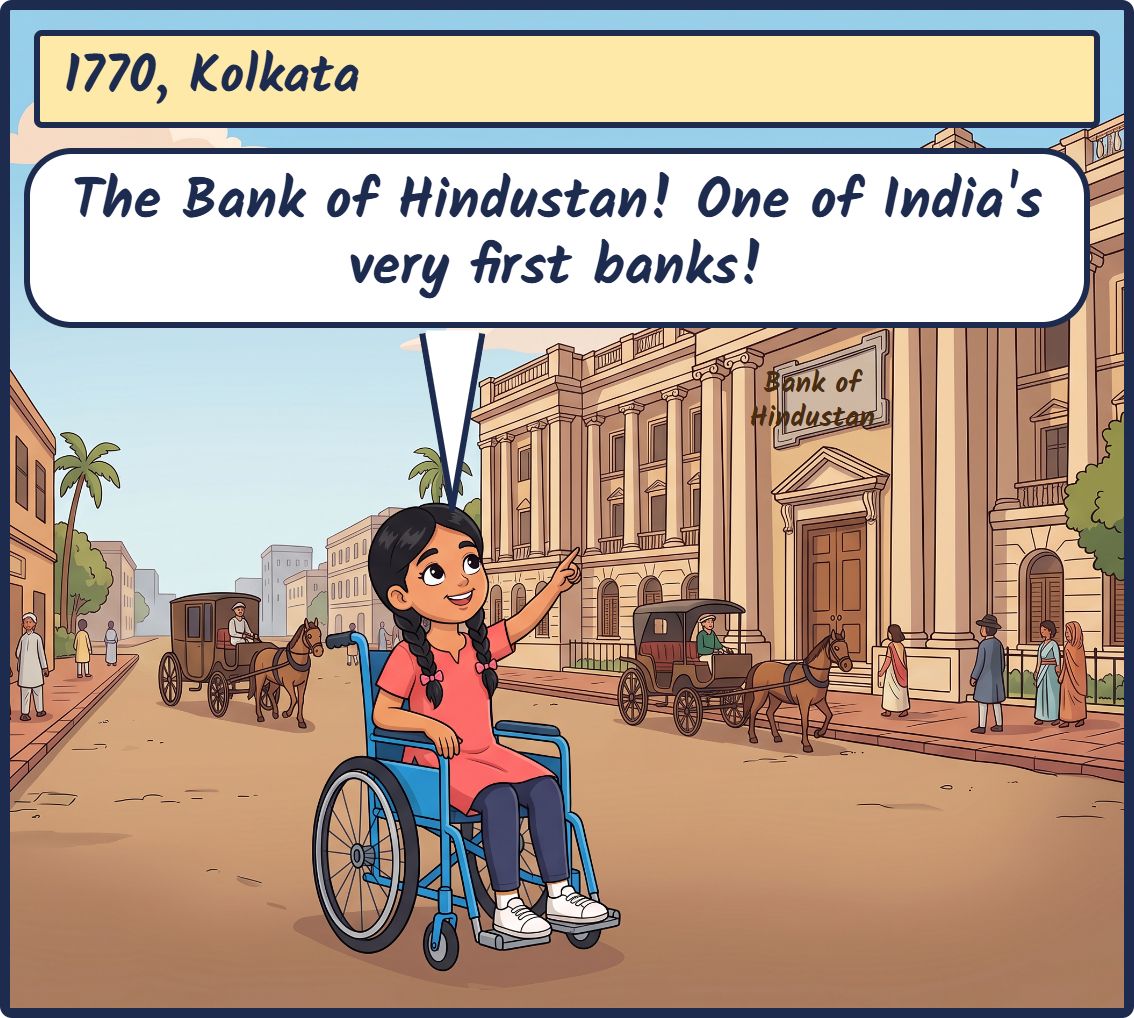
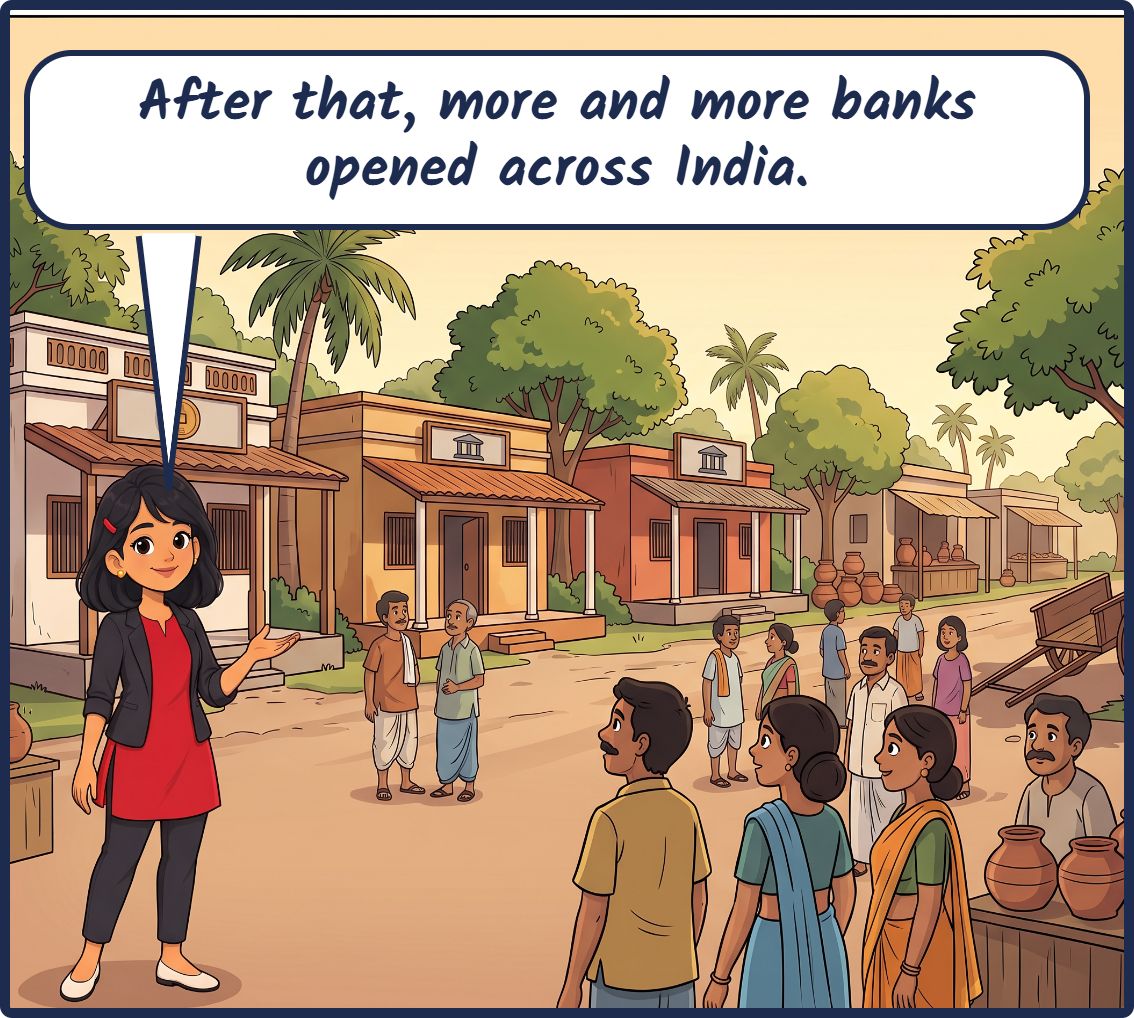
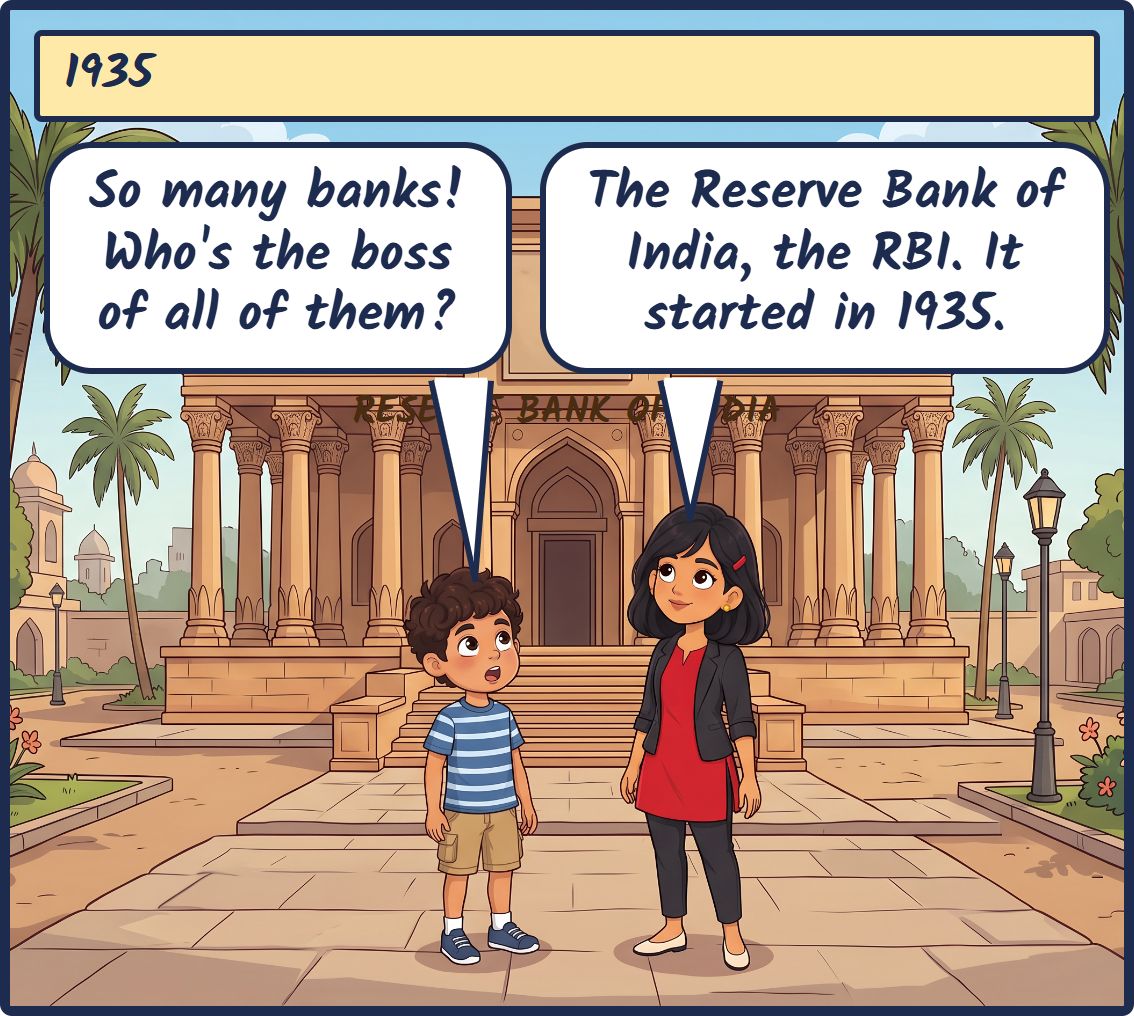
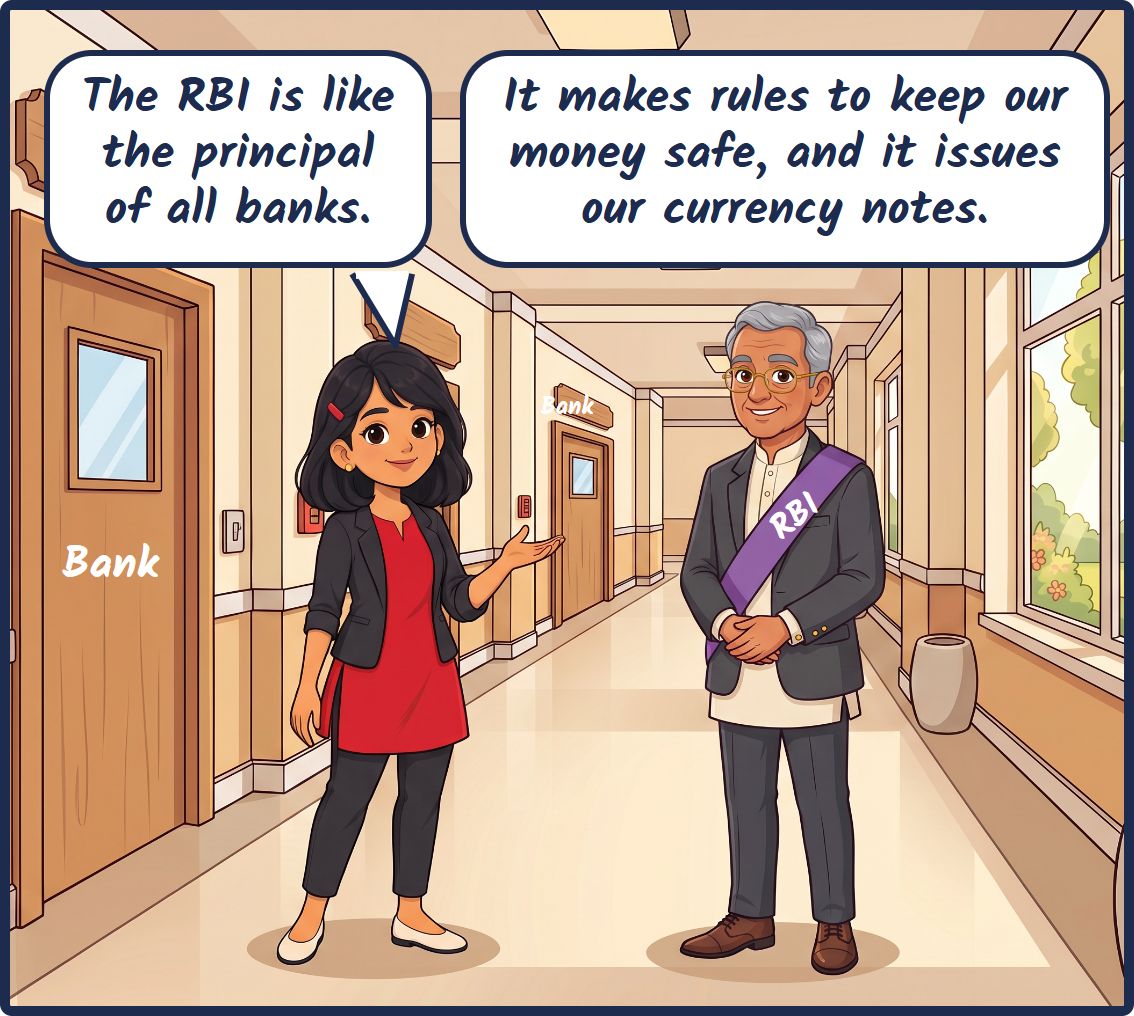
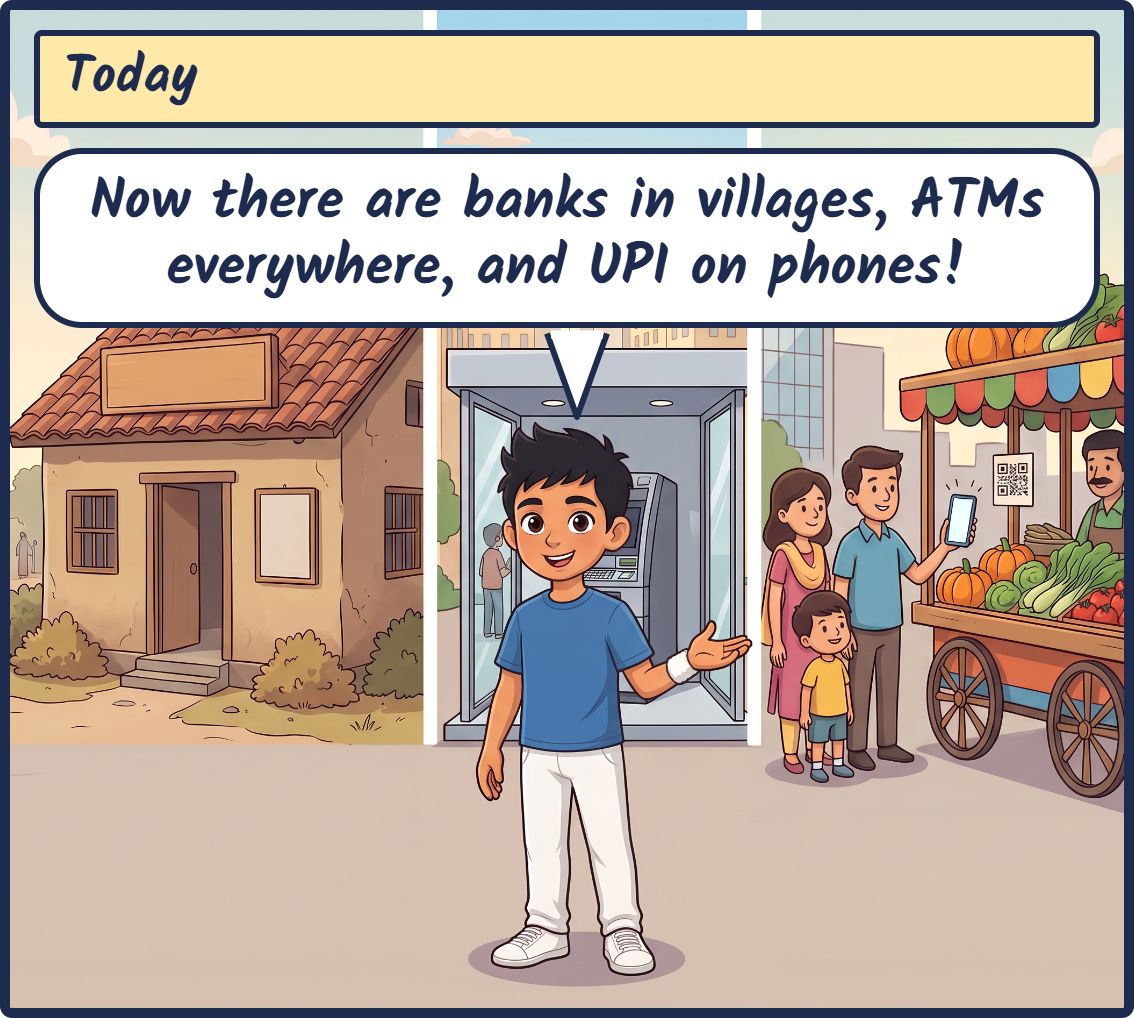
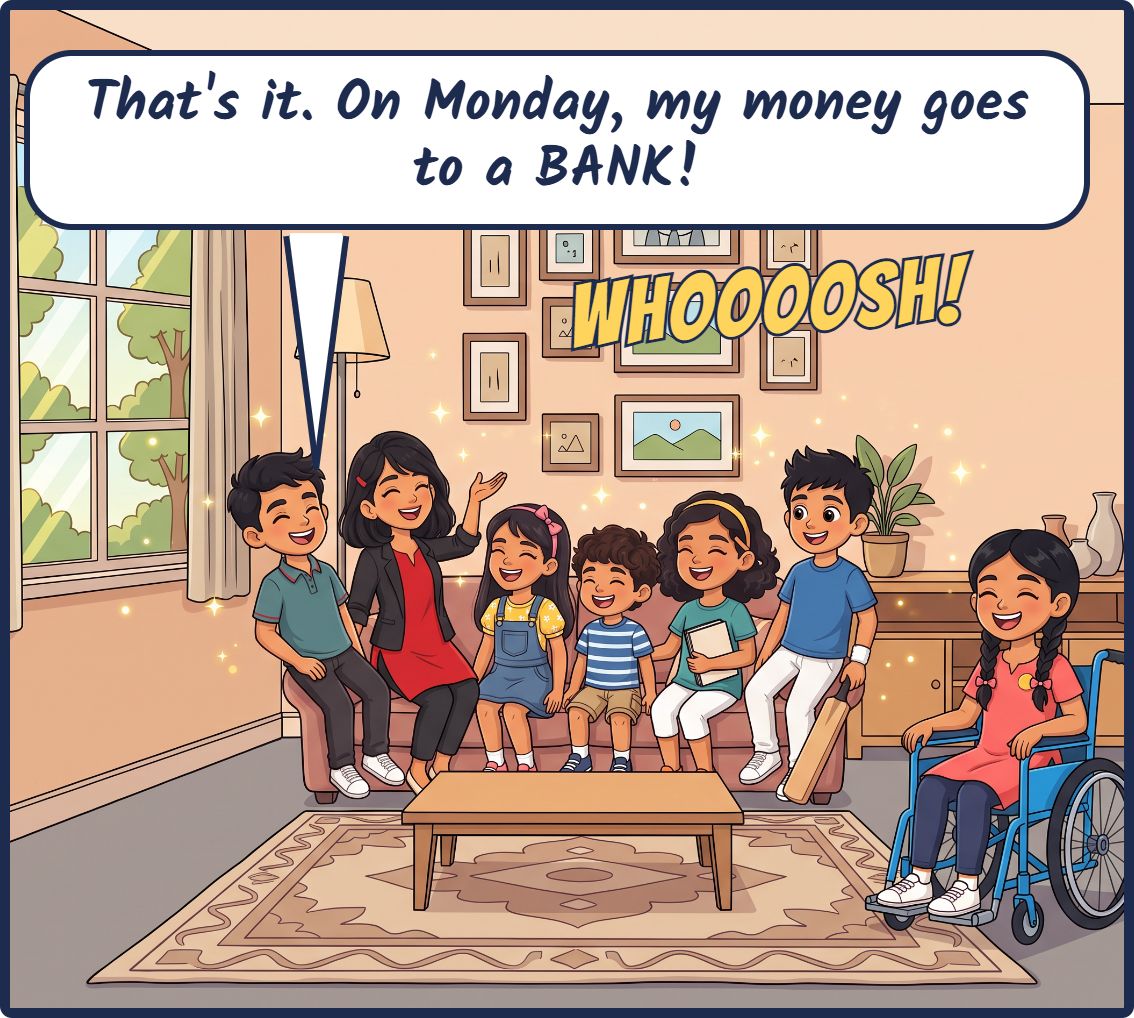
1770, Kolkata The Bank of Hindustan! One of India's very first banks! After that, more and more banks opened across India. 1935 So many banks! Who's the boss of all of them? The Reserve Bank of India, the RBI. It started in 1935. The RBI is like the principal of all banks. It makes rules to keep our money safe, and it issues our currency notes. Today Now there are banks in villages, ATMs everywhere, and UPI on phones! WHOOOOSH! That's it. On Monday, my money goes to a BANK!
At the bank
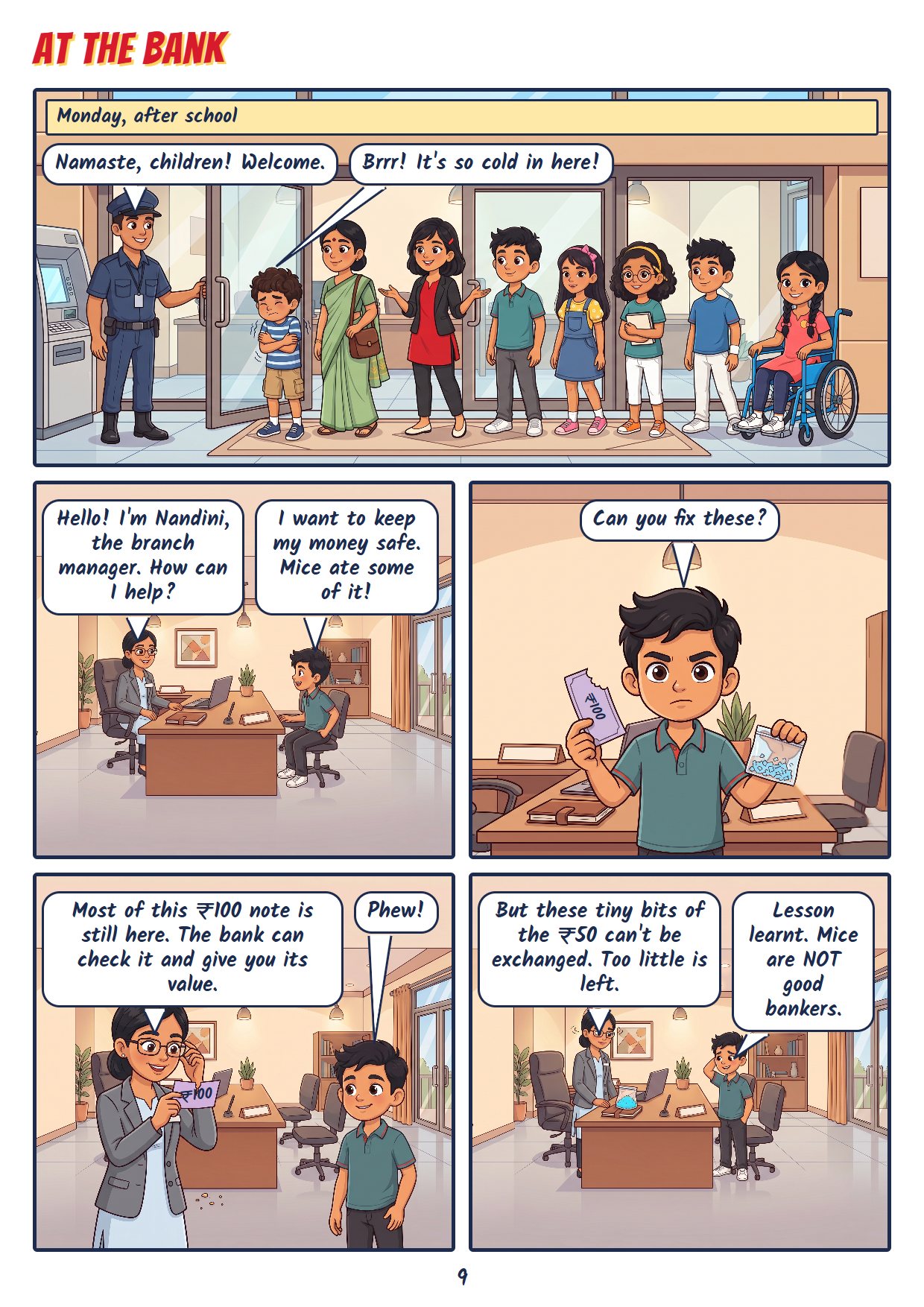
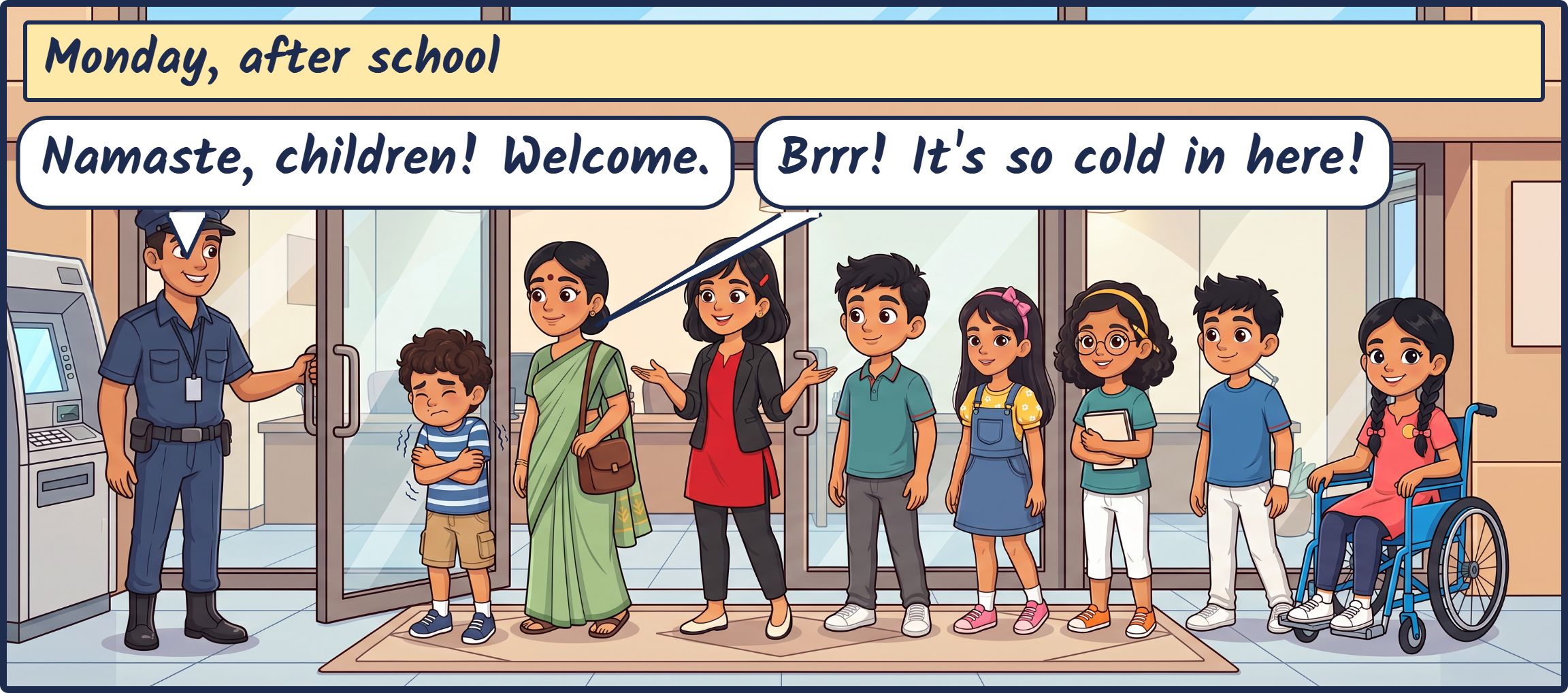
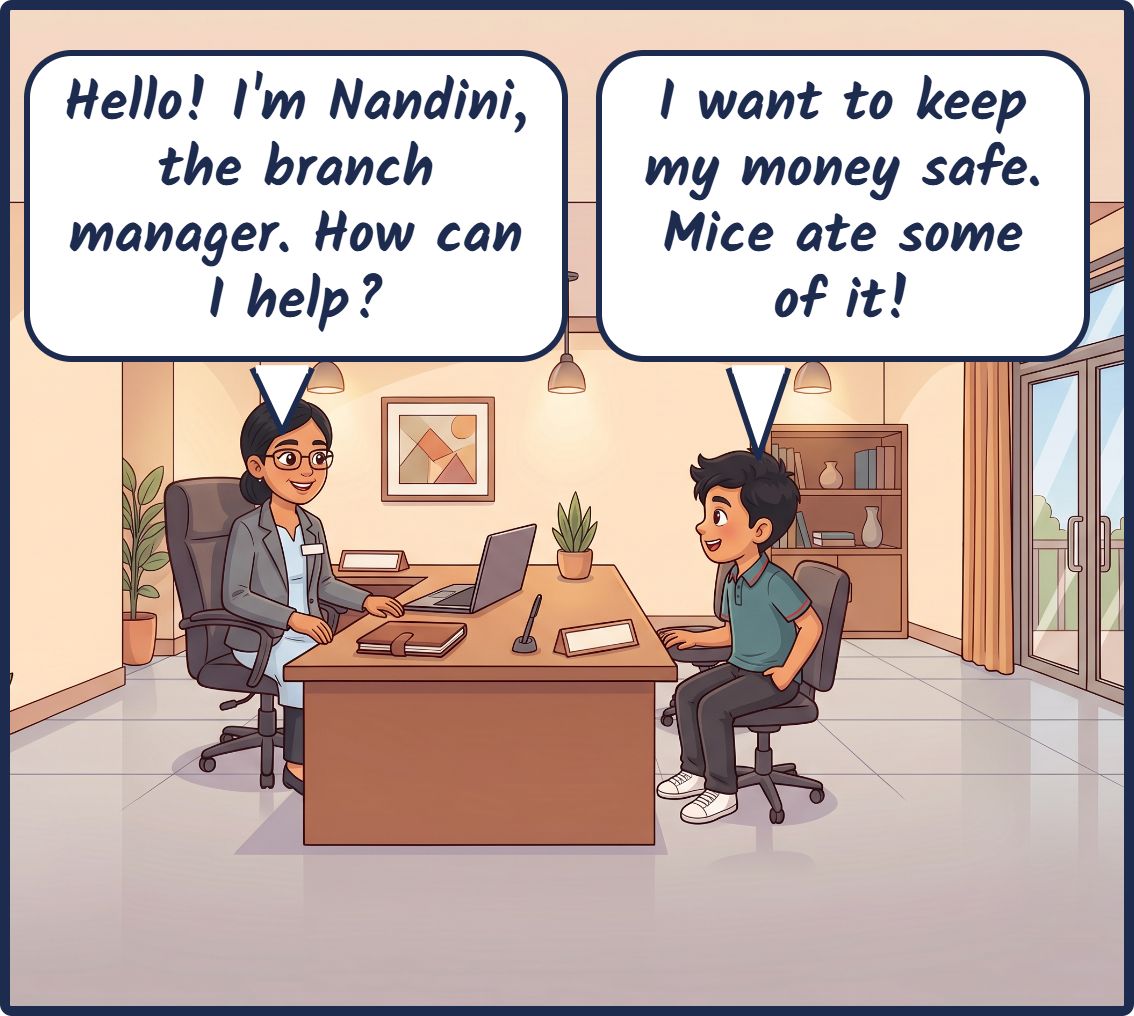
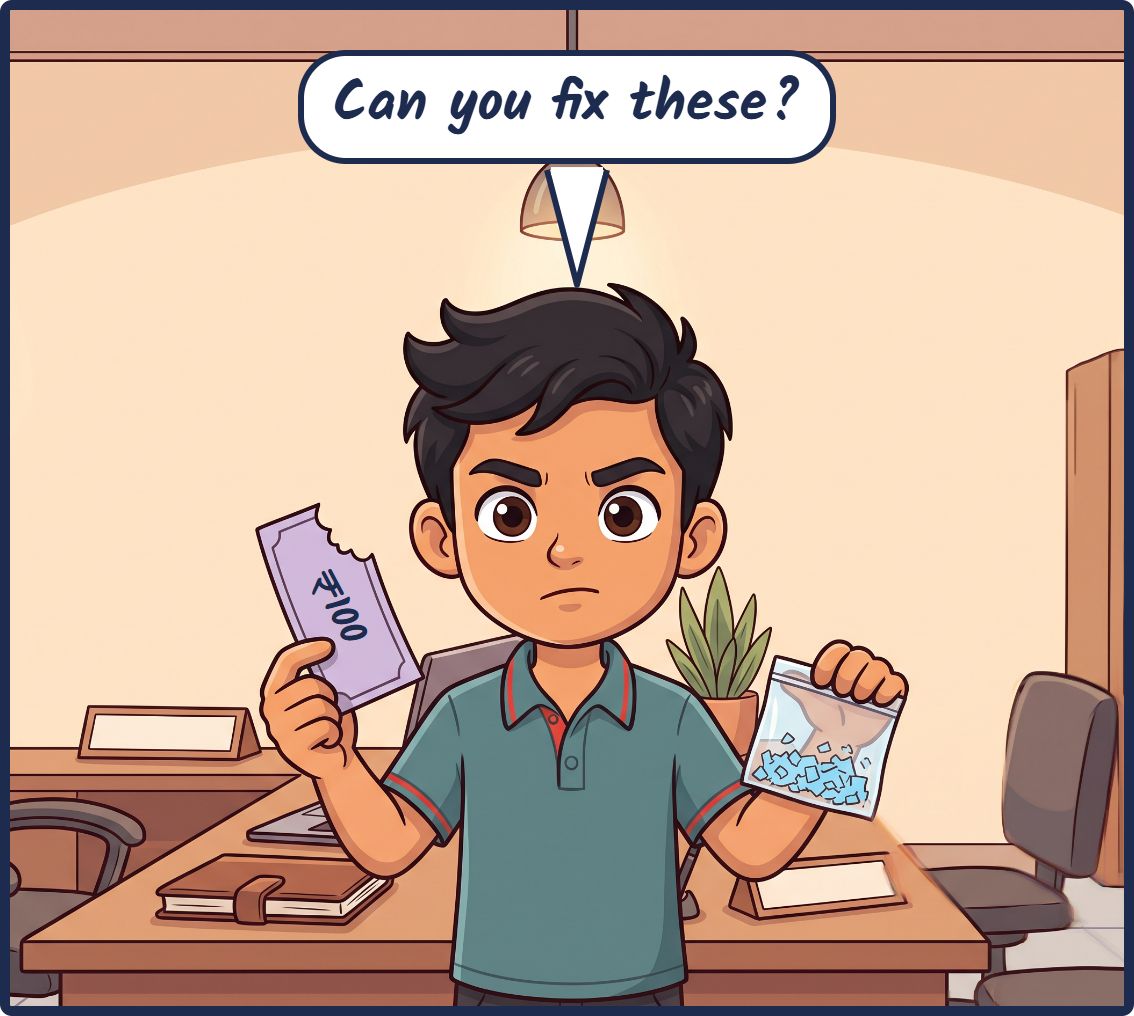
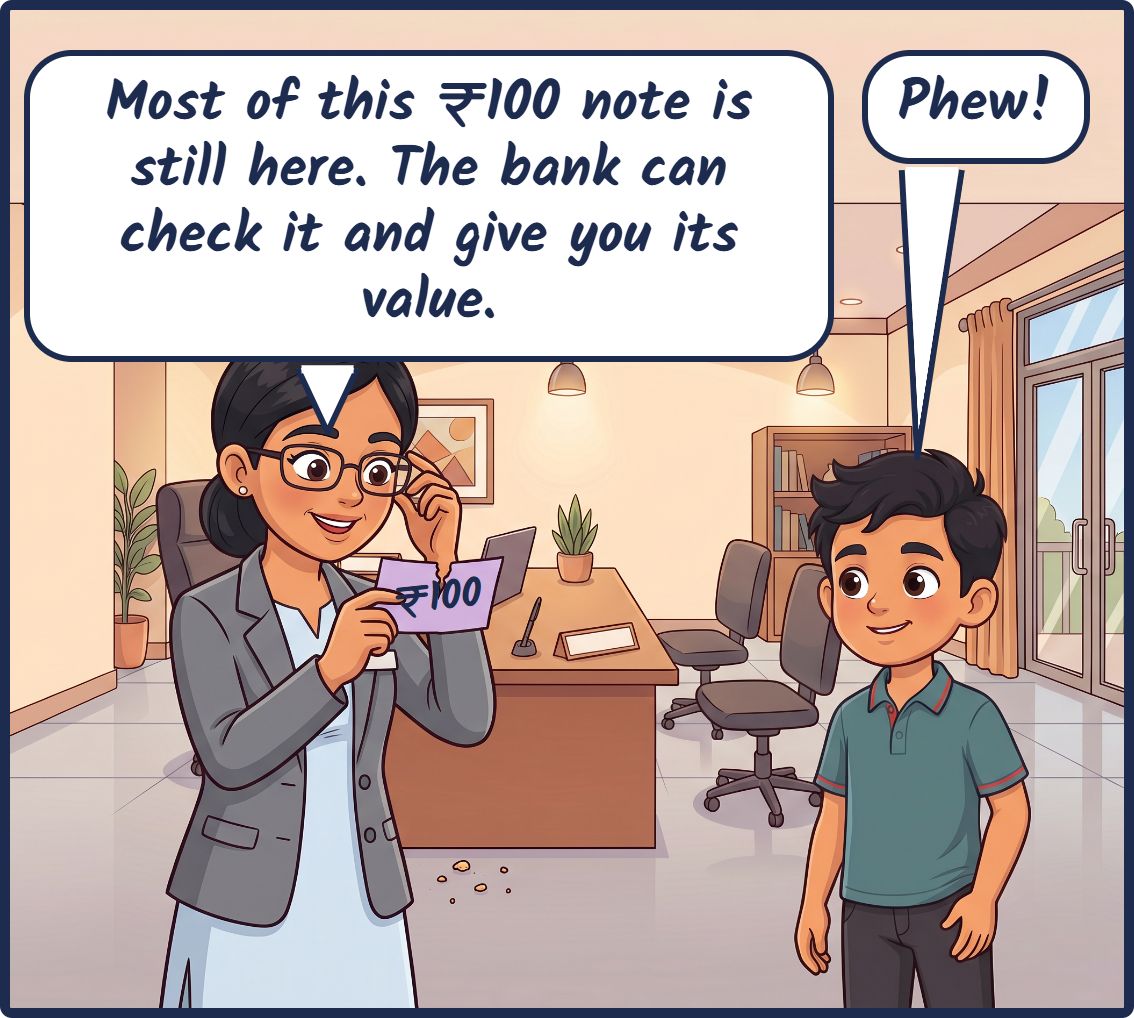
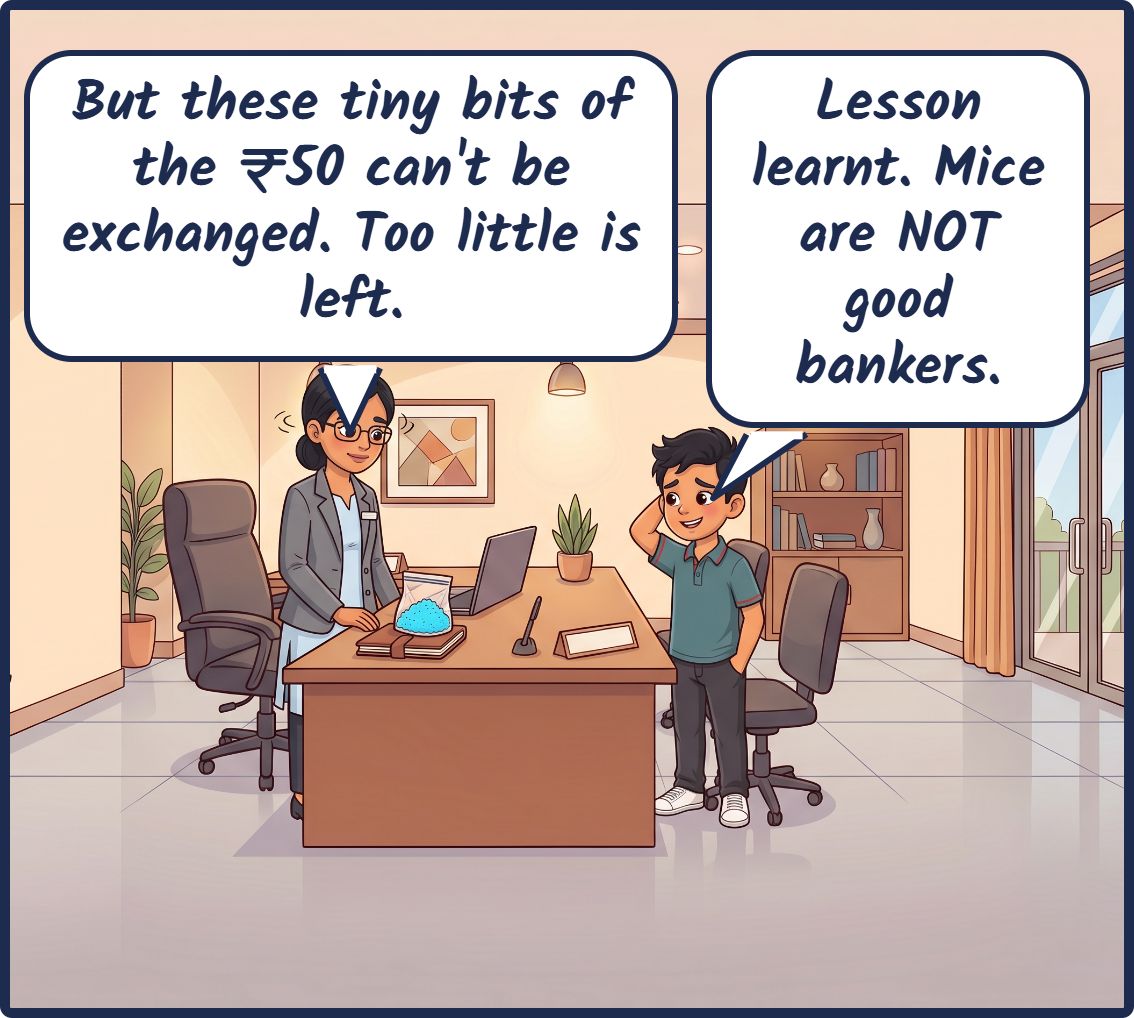
Monday, after school Namaste, children! Welcome. Brrr! It's so cold in here! Hello! I'm Nandini, the branch manager. How can I help? I want to keep my money safe. Mice ate some of it! Can you fix these? Most of this ₹100 note is still here. The bank can check it and give you its value. Phew! But these tiny bits of the ₹50 can't be exchanged. Too little is left. Lesson learnt. Mice are NOT good bankers.
Where does my money go?
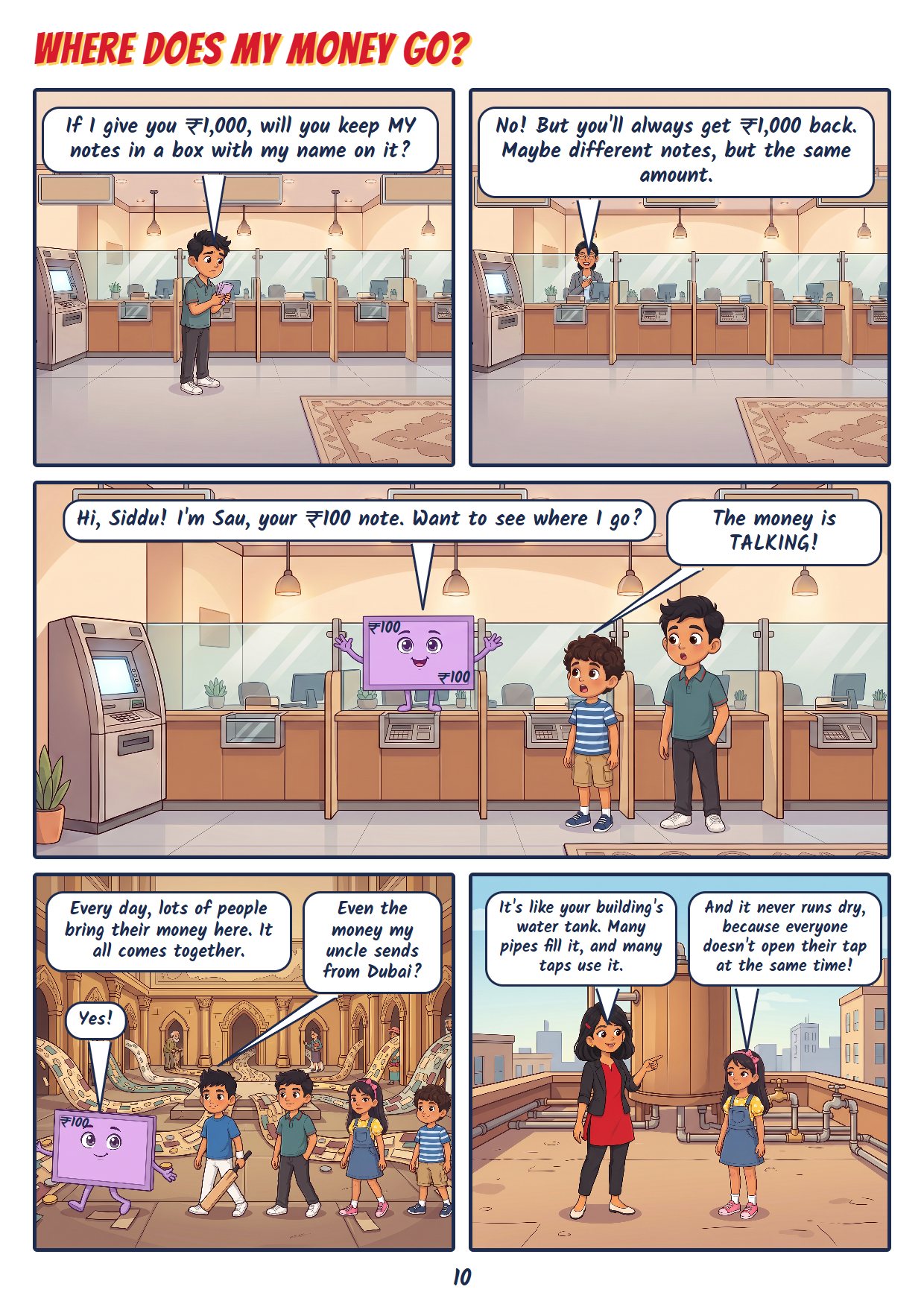
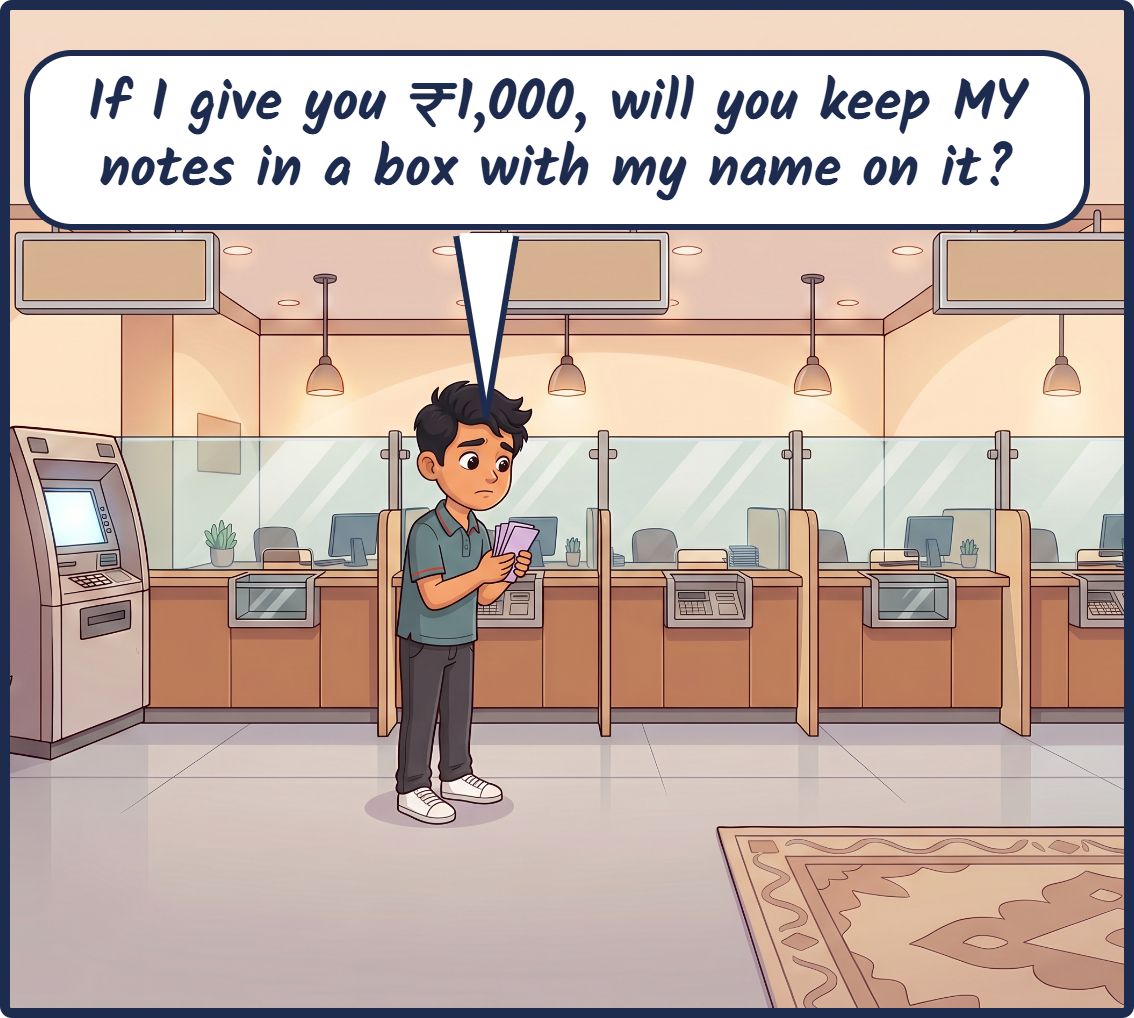
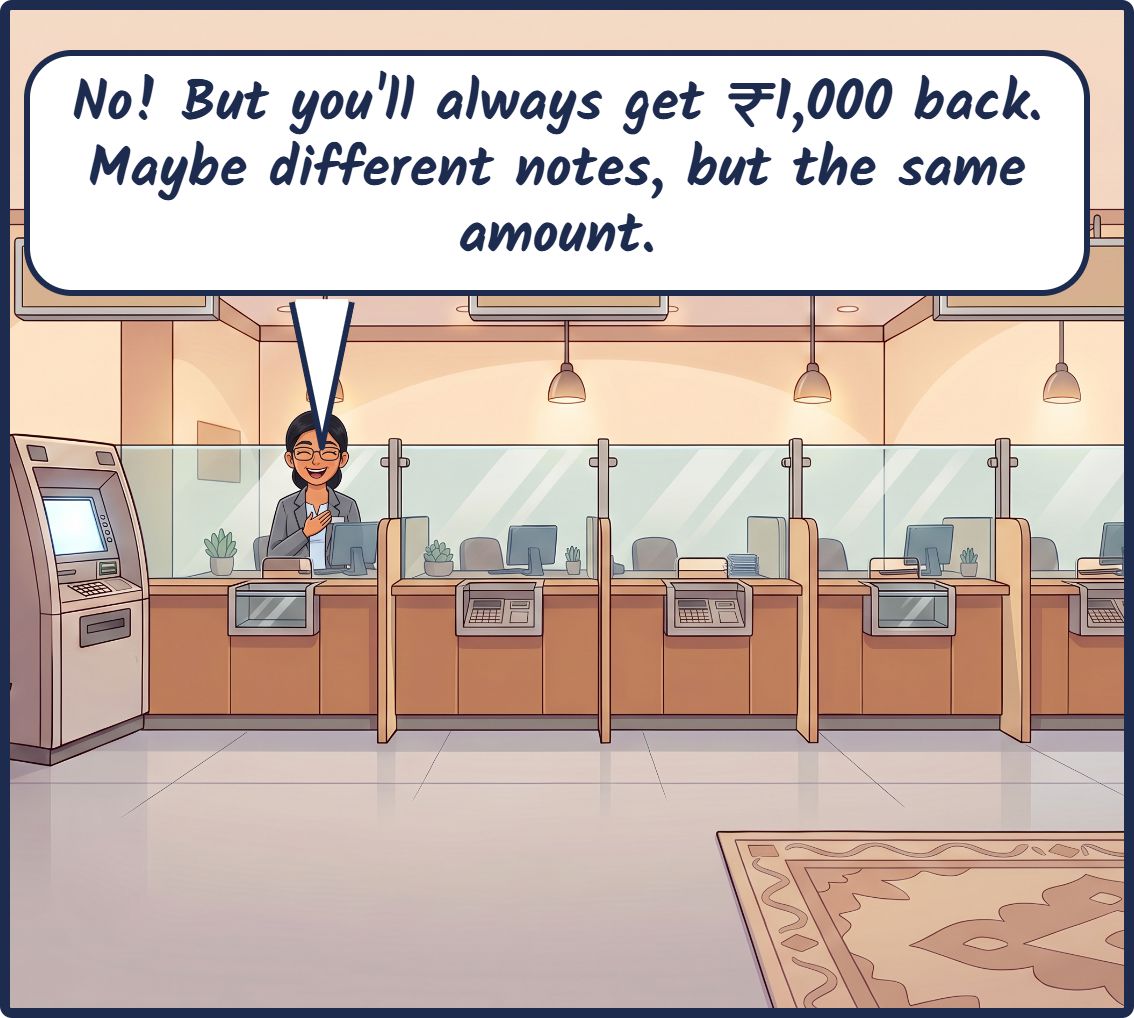
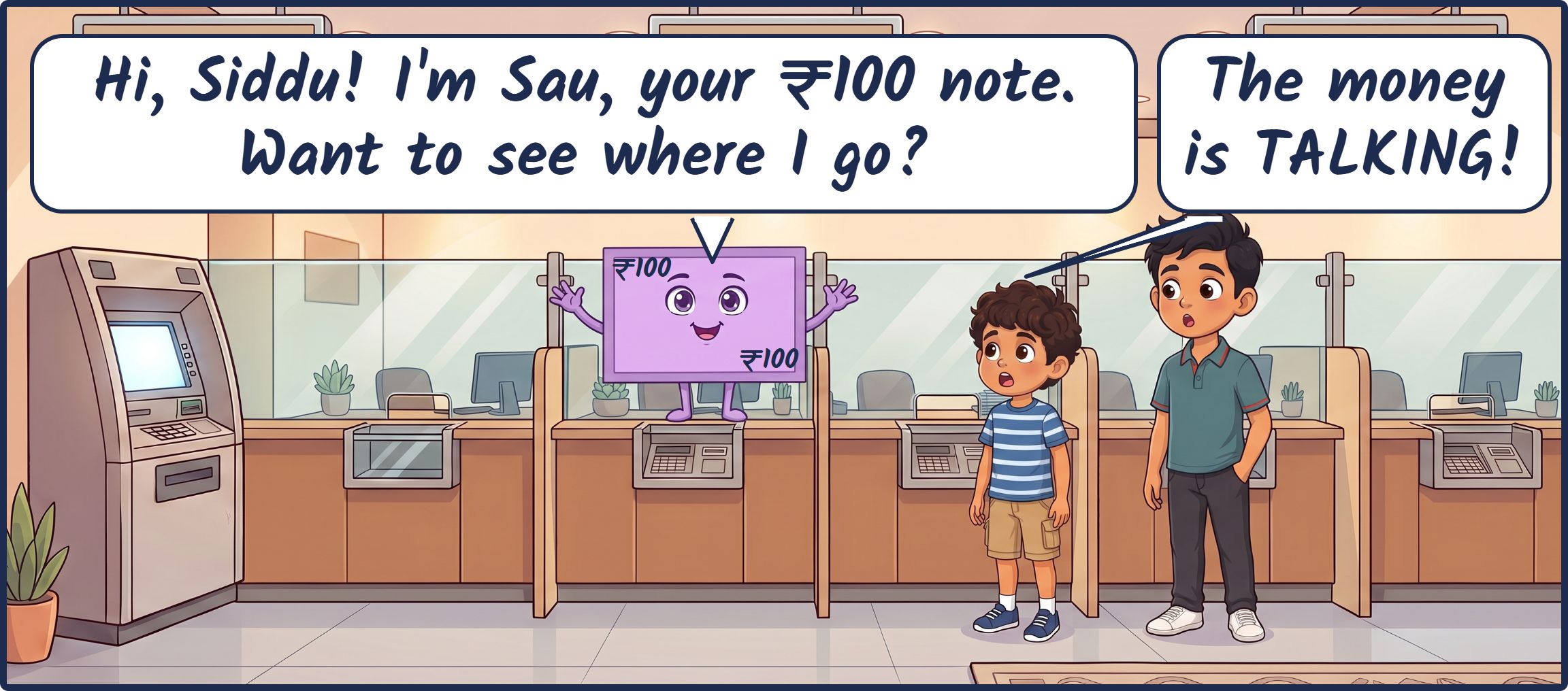
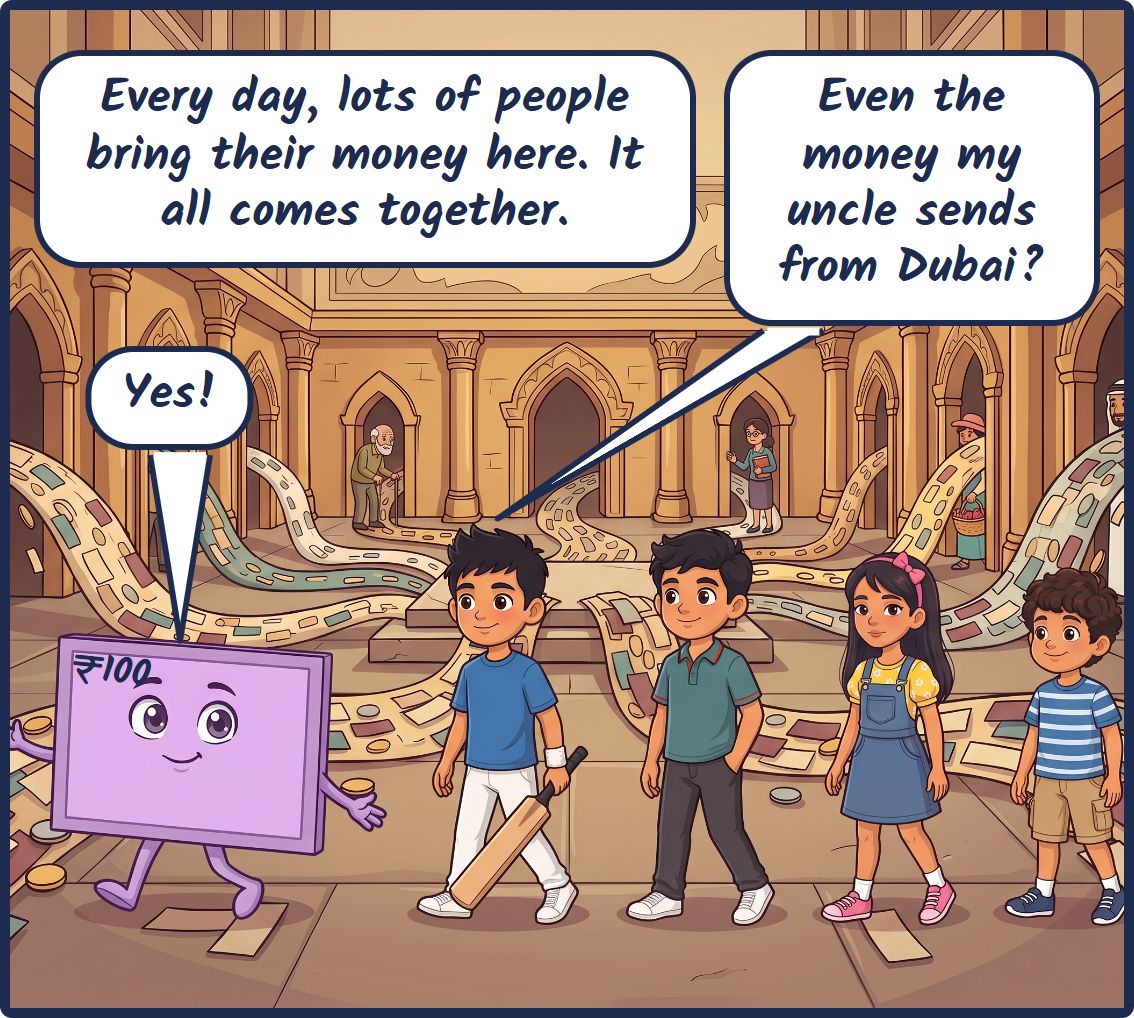
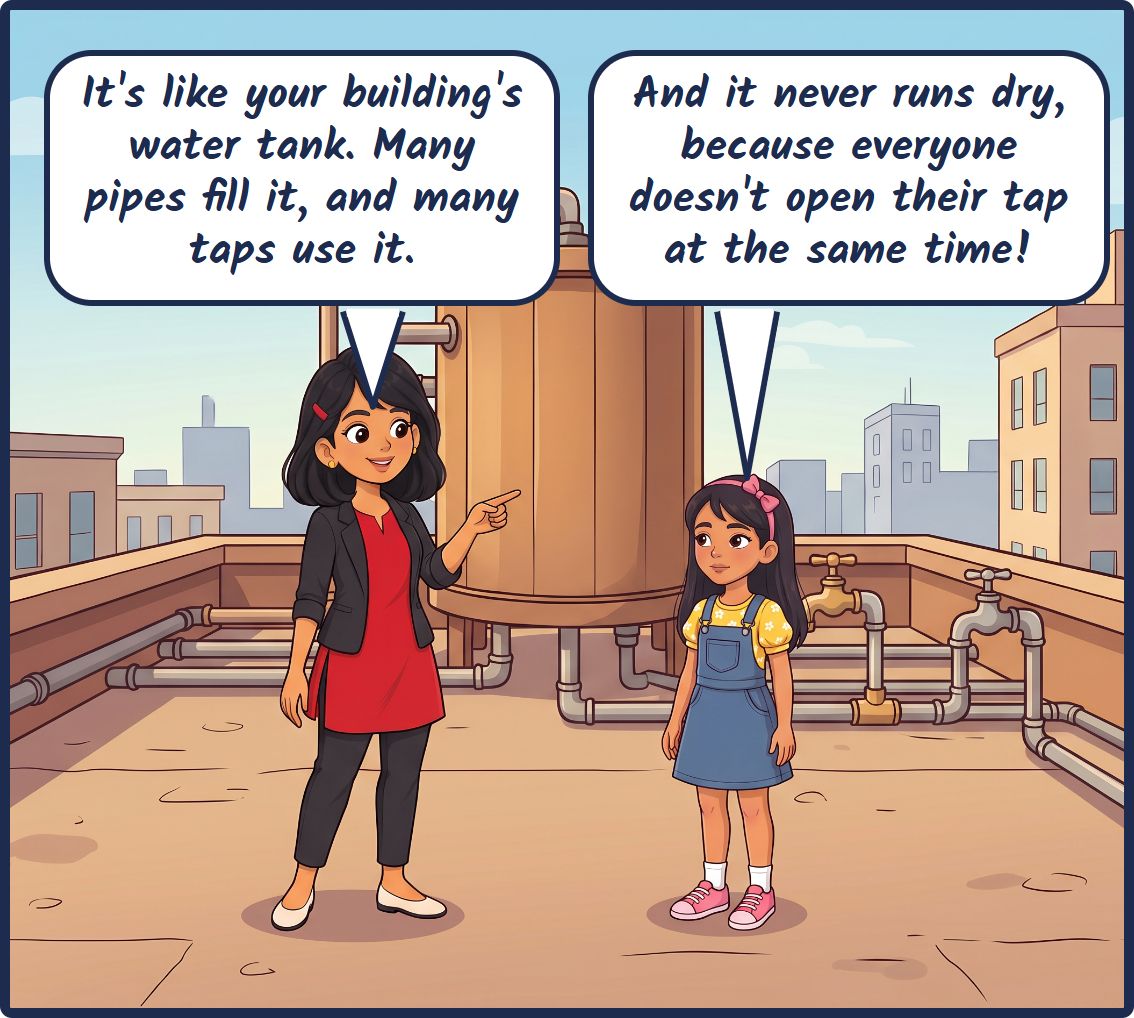
If I give you ₹1,000, will you keep MY notes in a box with my name on it? No! But you'll always get ₹1,000 back. Maybe different notes, but the same amount. Hi, Siddu! I'm Sau, your ₹100 note. Want to see where I go? The money is TALKING! Every day, lots of people bring their money here. It all comes together. Even the money my uncle sends from Dubai? Yes! It's like your building's water tank. Many pipes fill it, and many taps use it. And it never runs dry, because everyone doesn't open their tap at the same time!
Sau goes on a journey
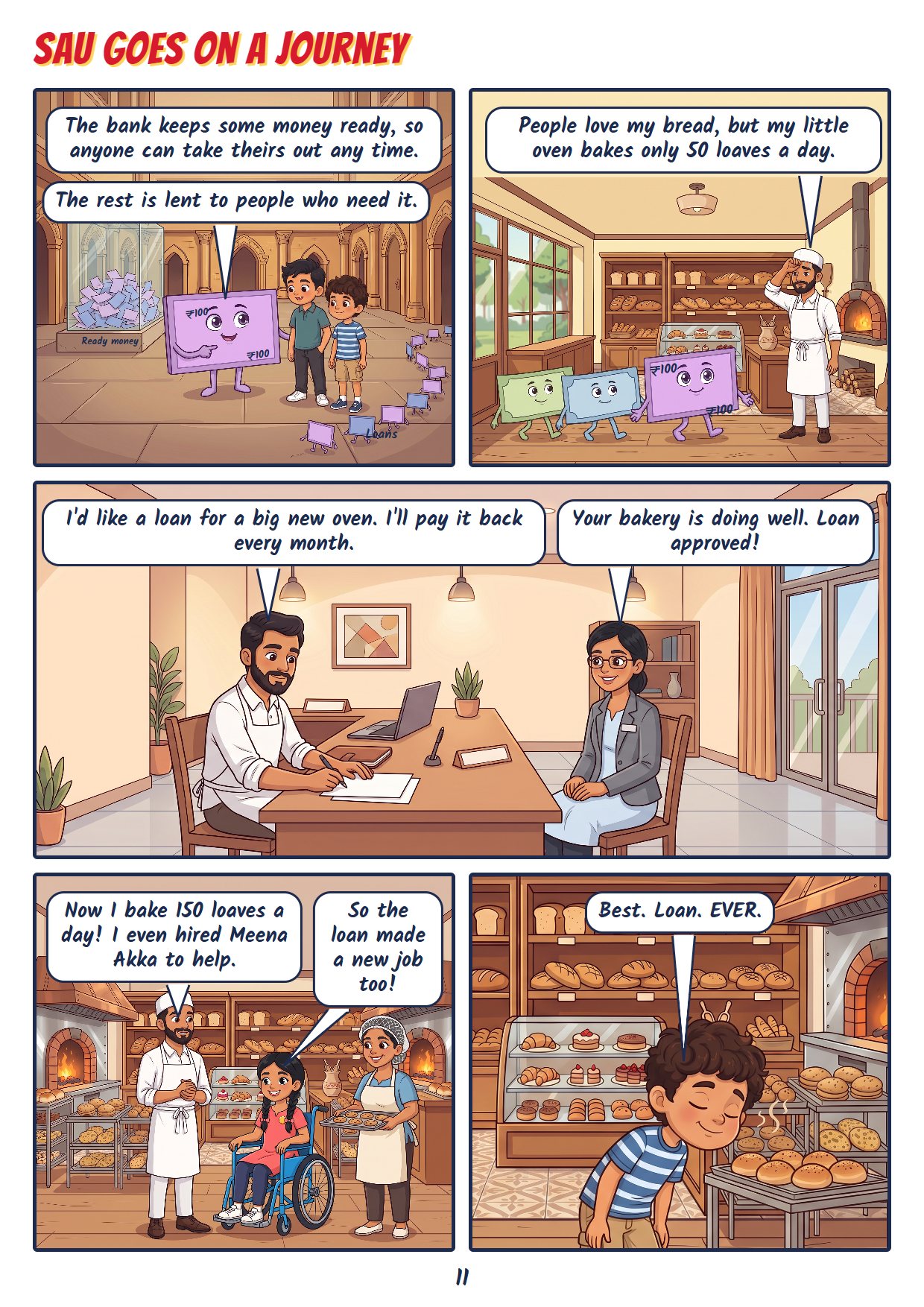
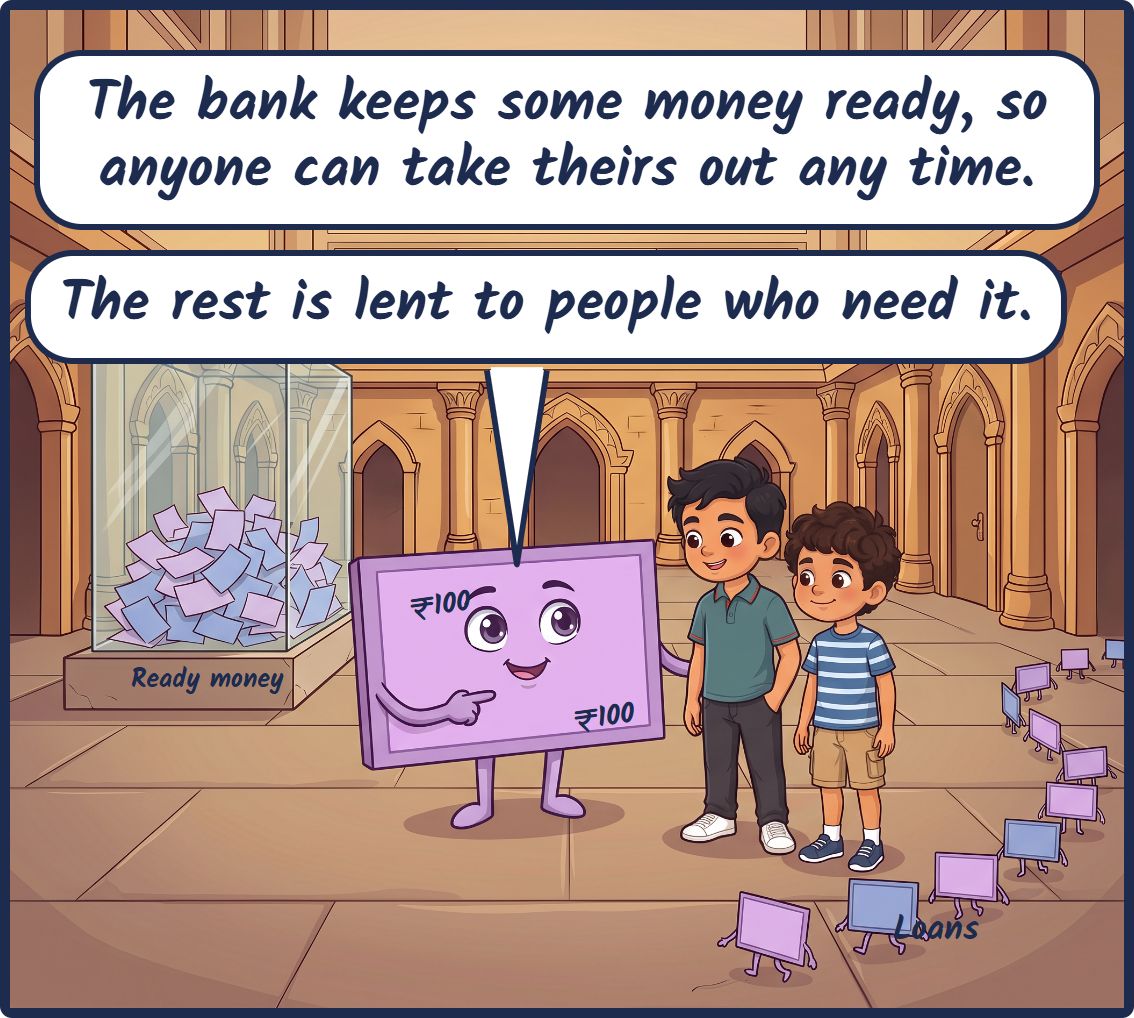
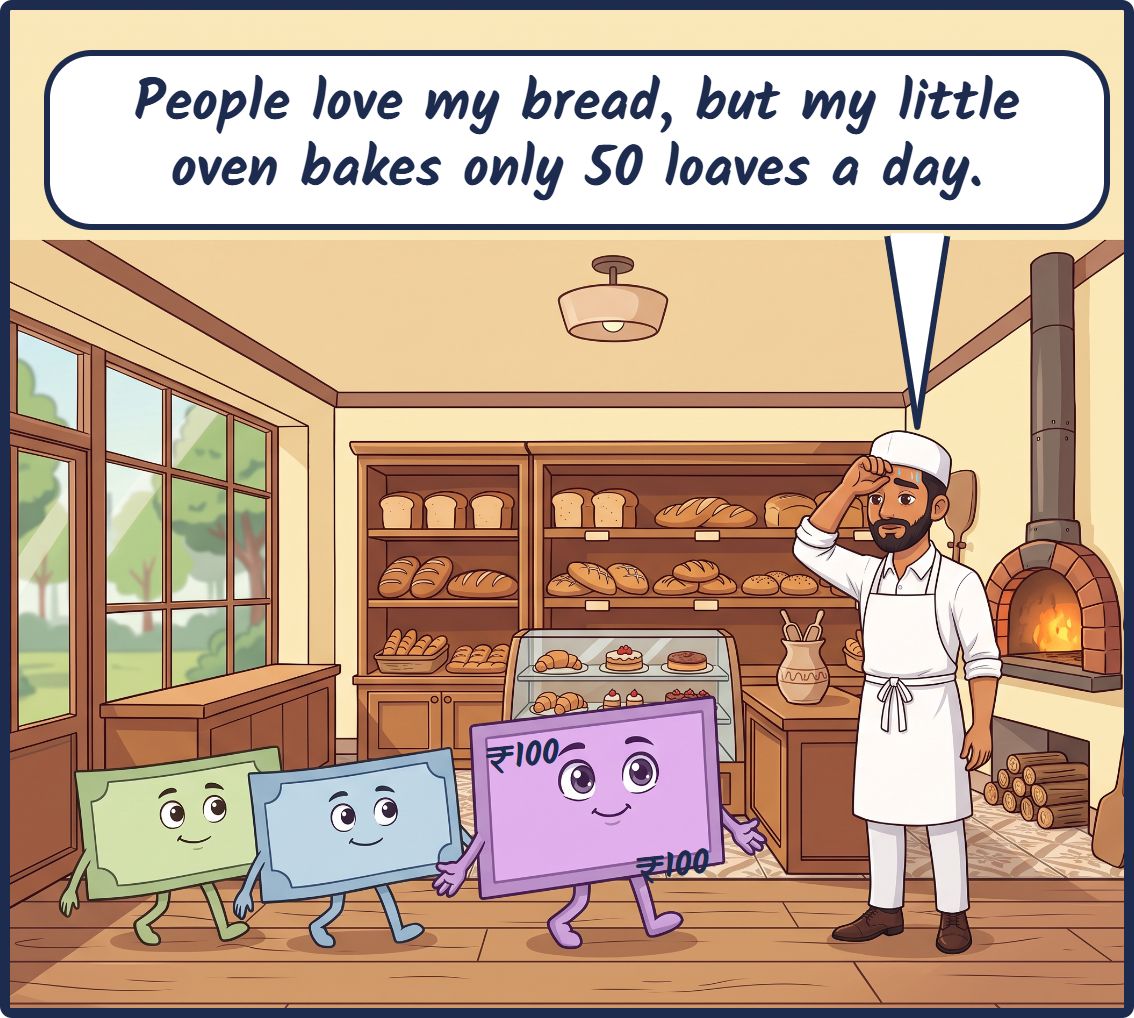
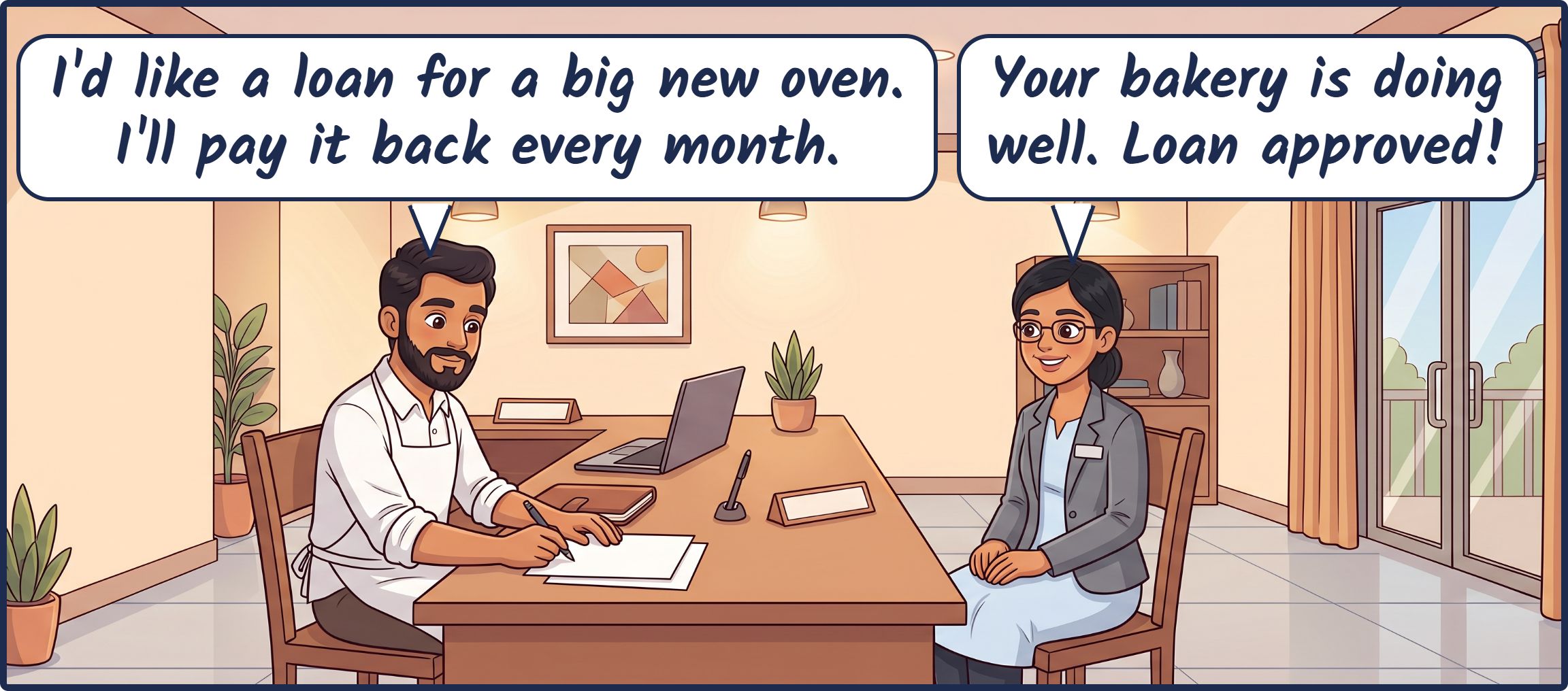
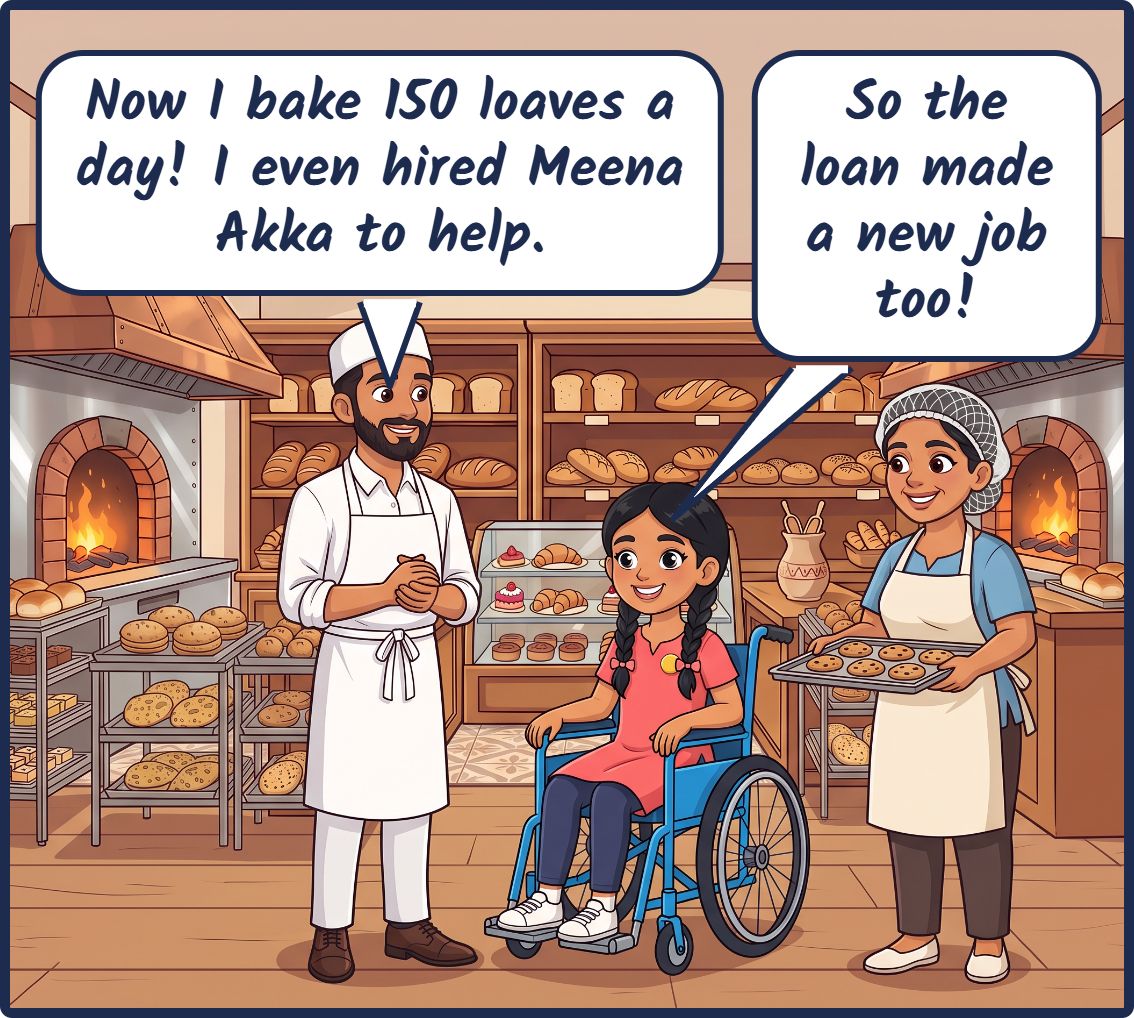
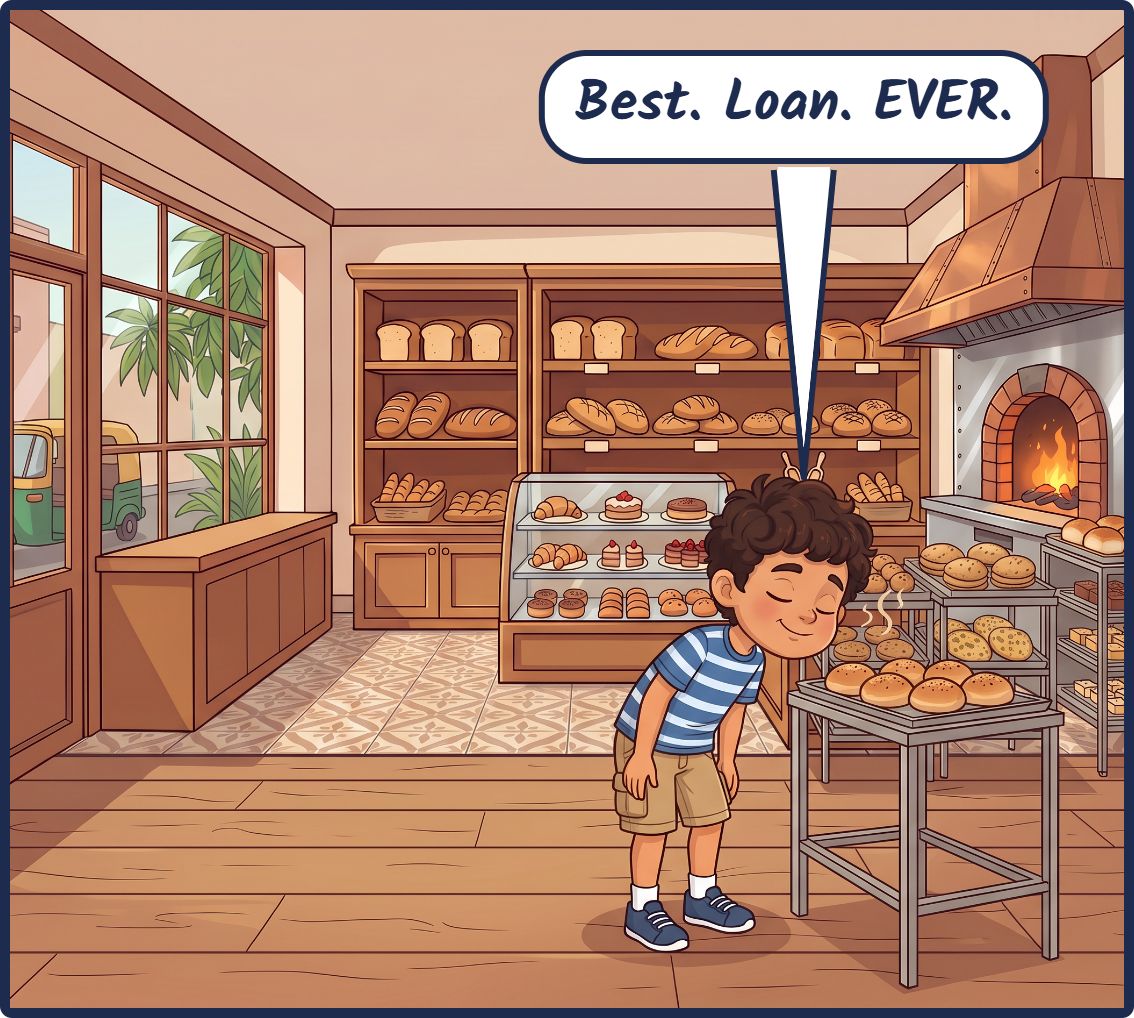
The bank keeps some money ready, so anyone can take theirs out any time. The rest is lent to people who need it. People love my bread, but my little oven bakes only 50 loaves a day. I'd like a loan for a big new oven. I'll pay it back every month. Your bakery is doing well. Loan approved! Now I bake 150 loaves a day! I even hired Meena Akka to help. So the loan made a new job too! Best. Loan. EVER.
The money circle
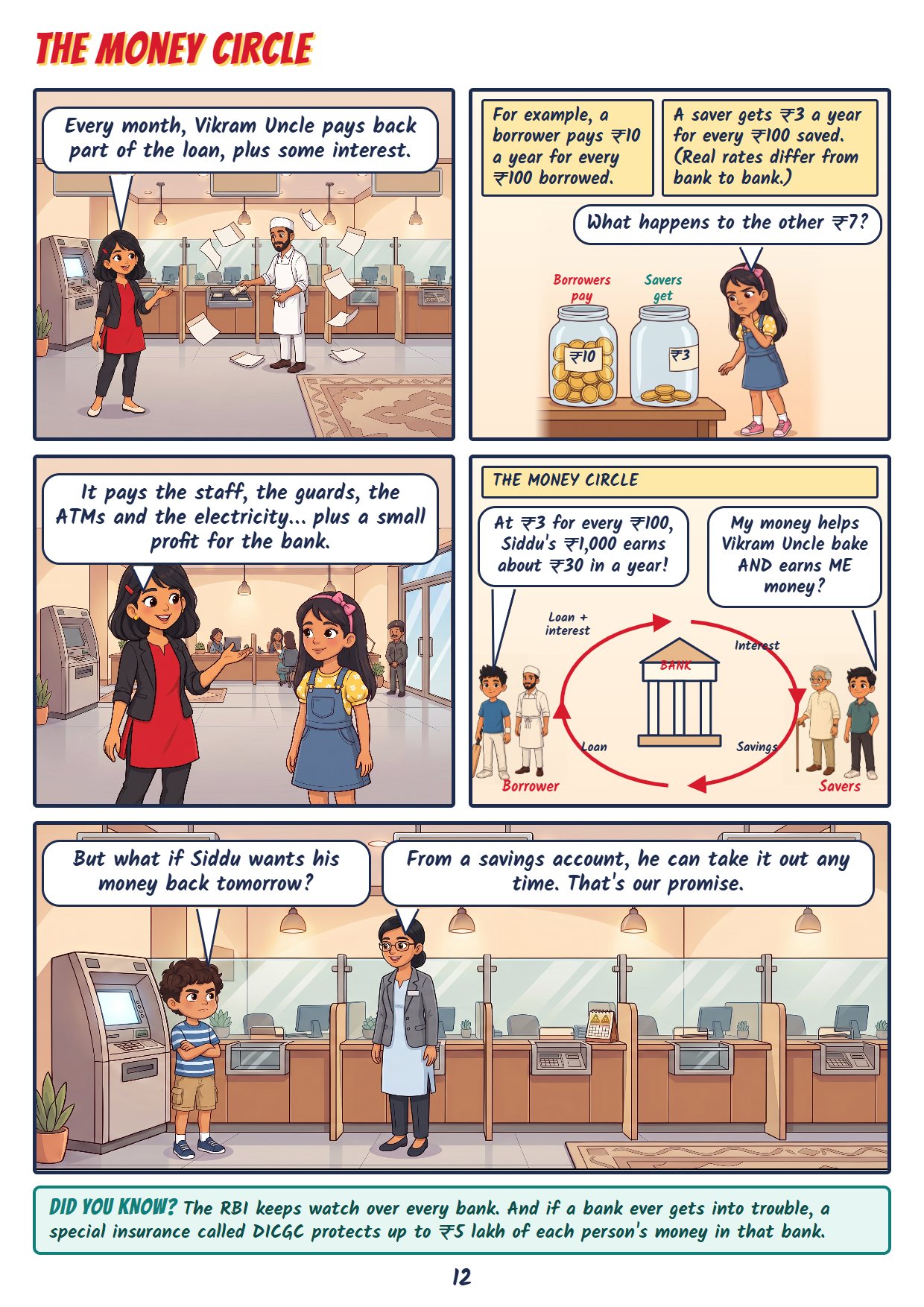
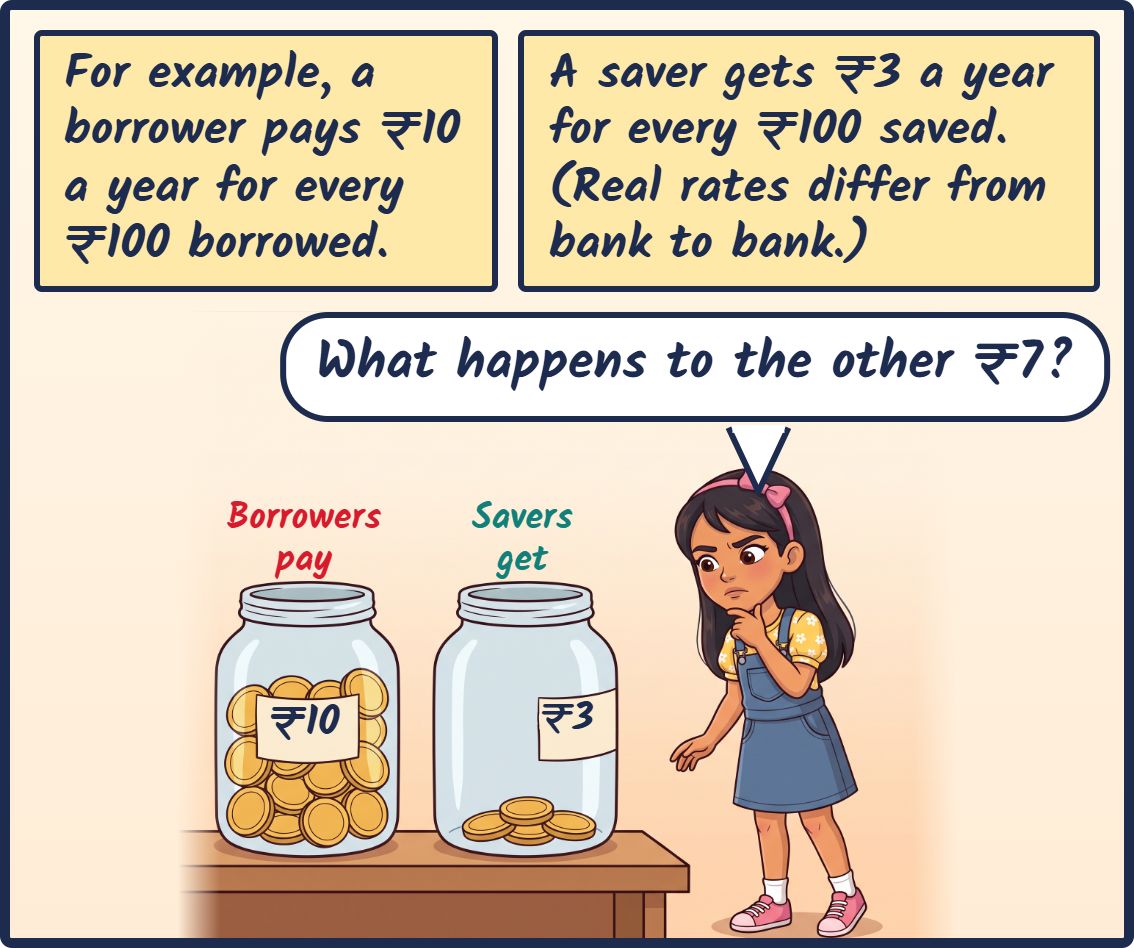
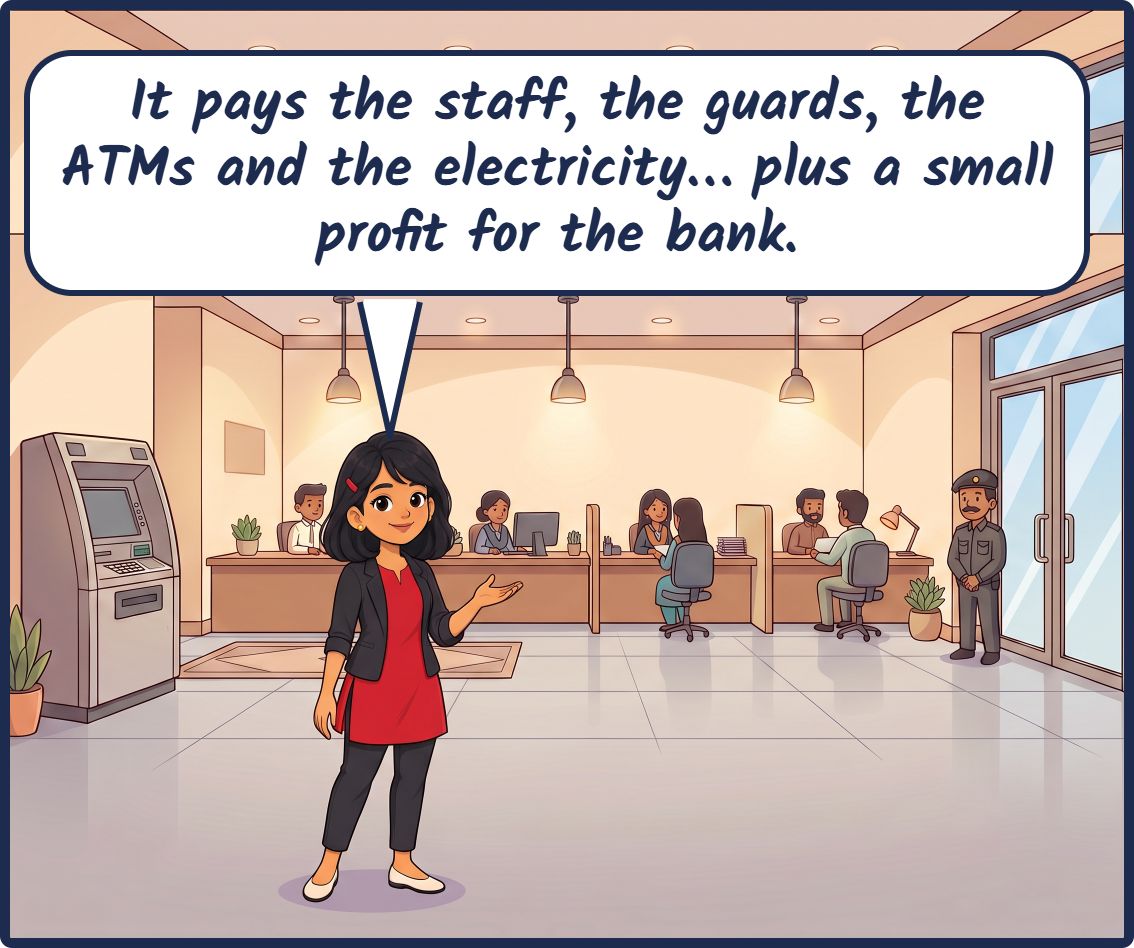
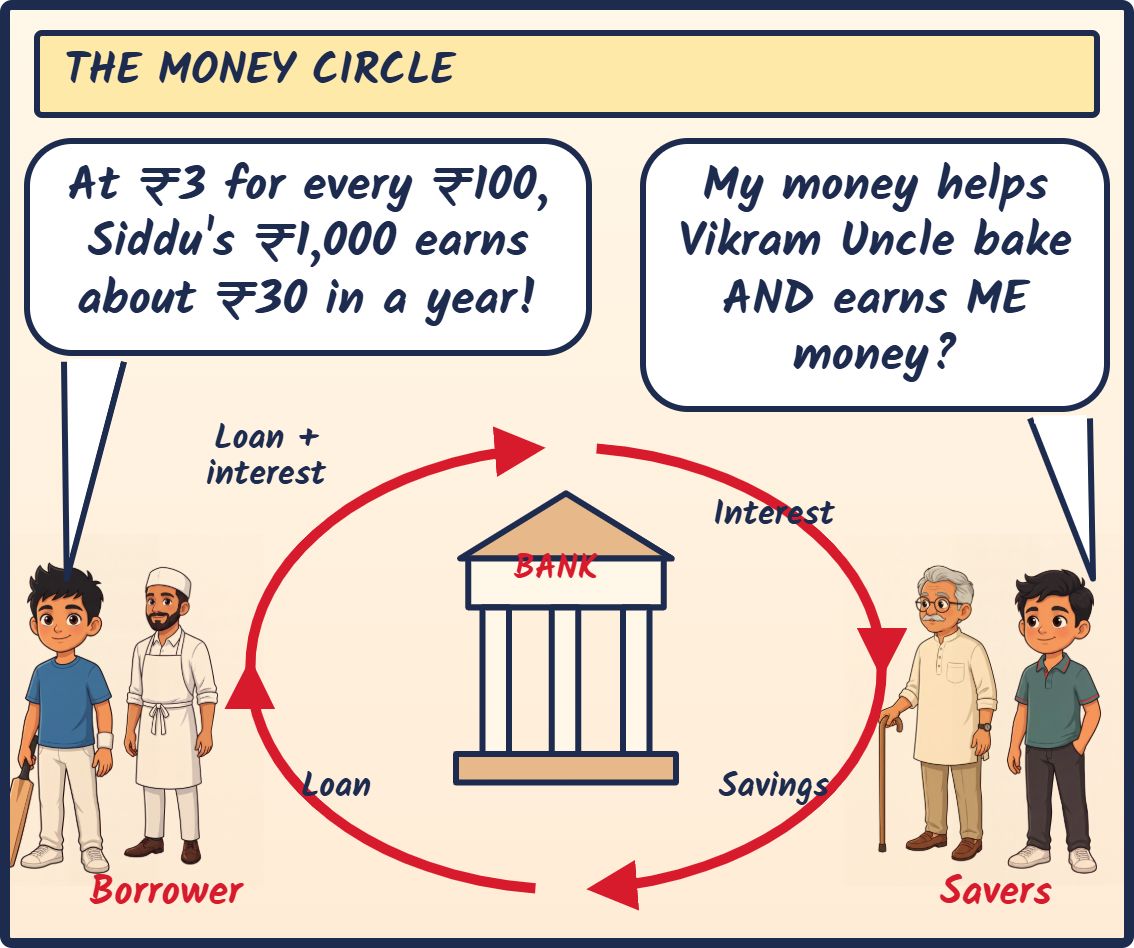
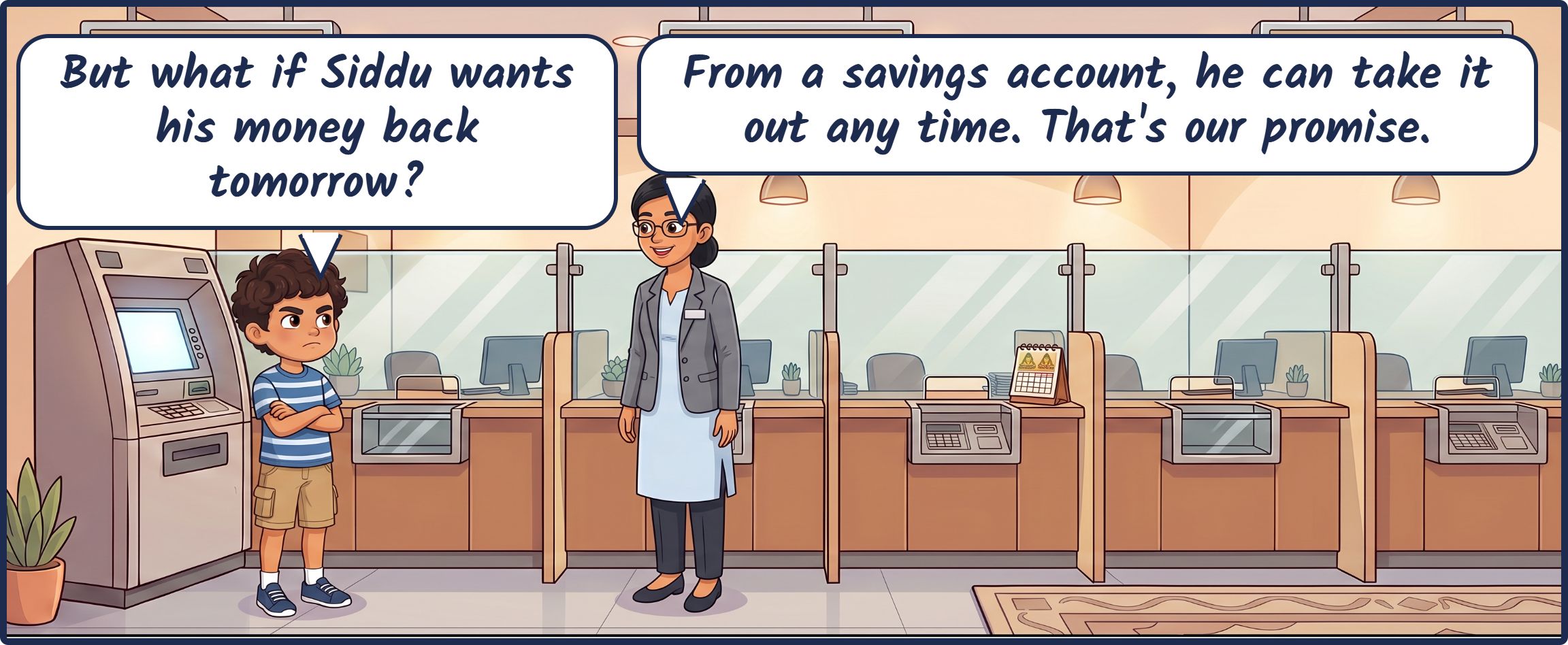
Every month, Vikram Uncle pays back part of the loan, plus some interest. For example, a borrower pays ₹10 a year for every ₹100 borrowed. A saver gets ₹3 a year for every ₹100 saved. (Real rates differ from bank to bank.) What happens to the other ₹7? It pays the staff, the guards, the ATMs and the electricity… plus a small profit for the bank. THE MONEY CIRCLE At ₹3 for every ₹100, Siddu's ₹1,000 earns about ₹30 in a year! My money helps Vikram Uncle bake AND earns ME money? But what if Siddu wants his money back tomorrow? From a savings account, he can take it out any time. That's our promise.
The bank's menu card
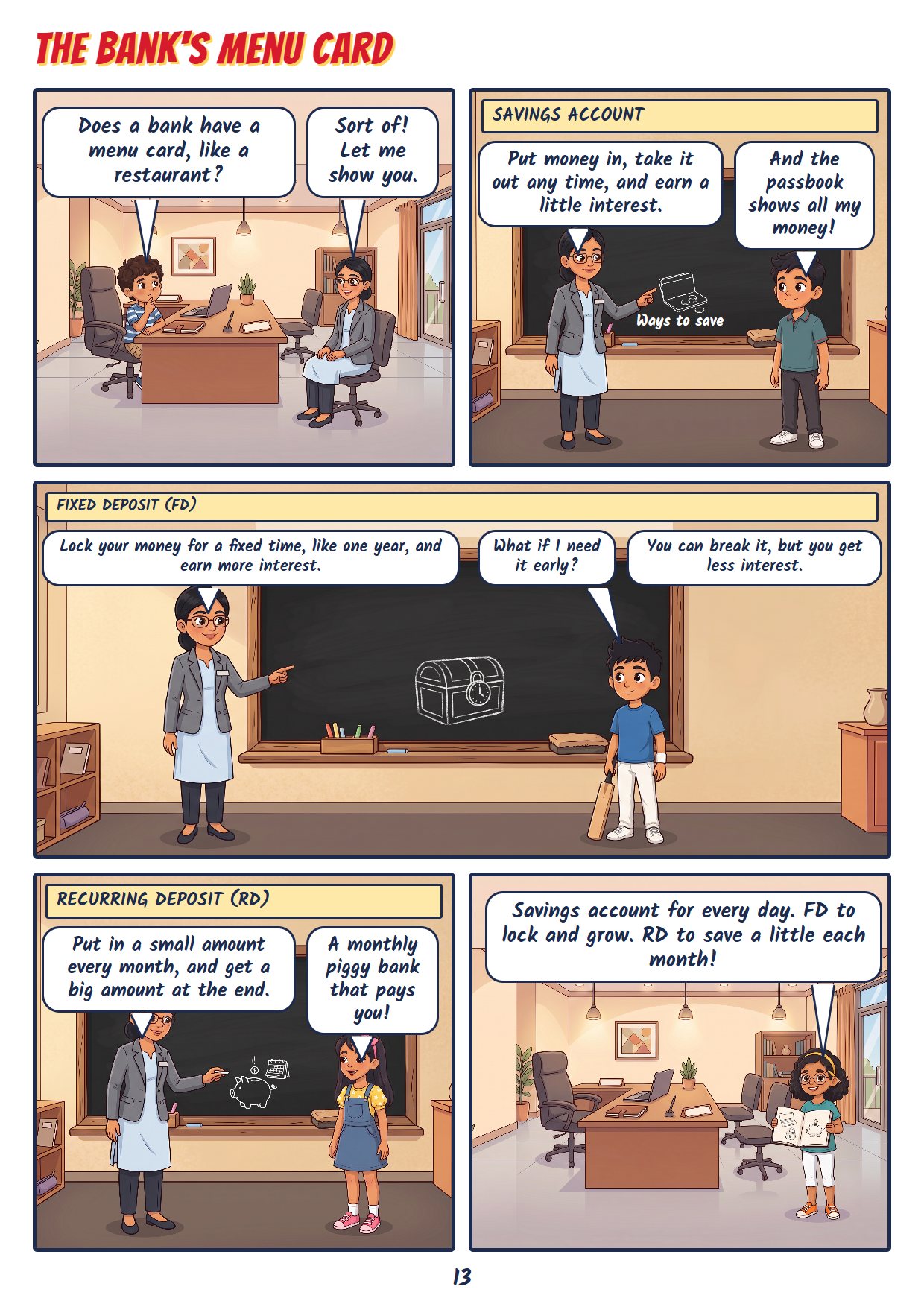
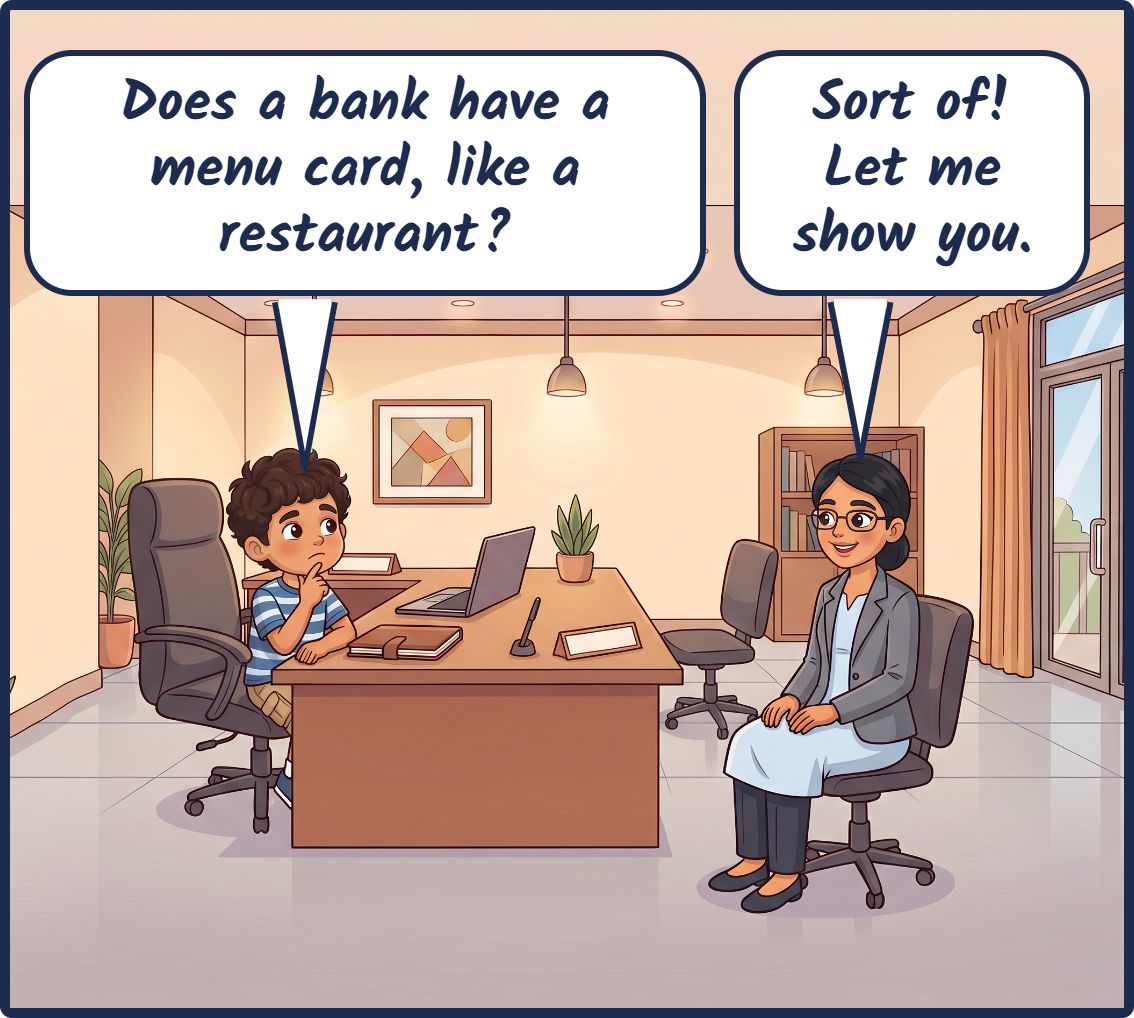
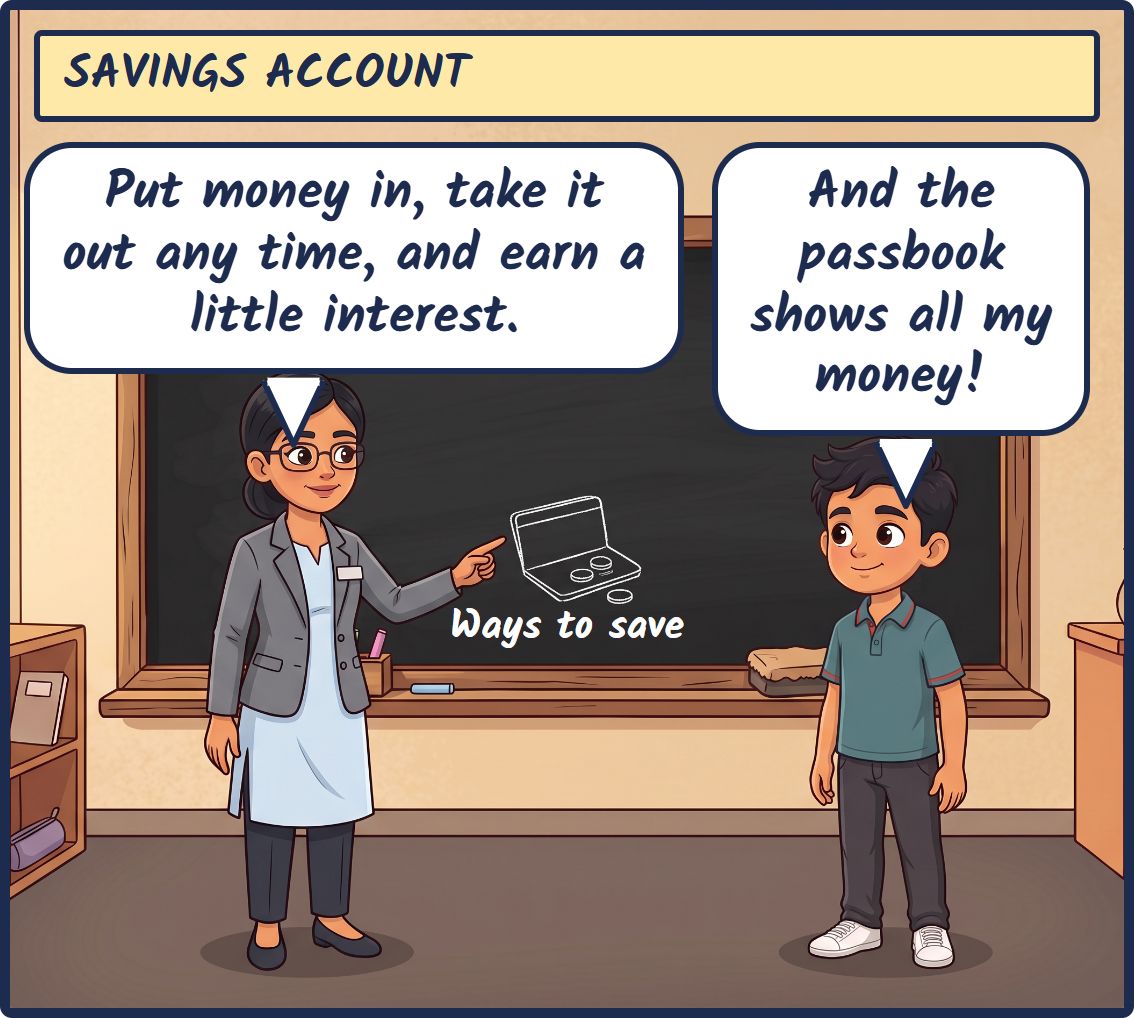
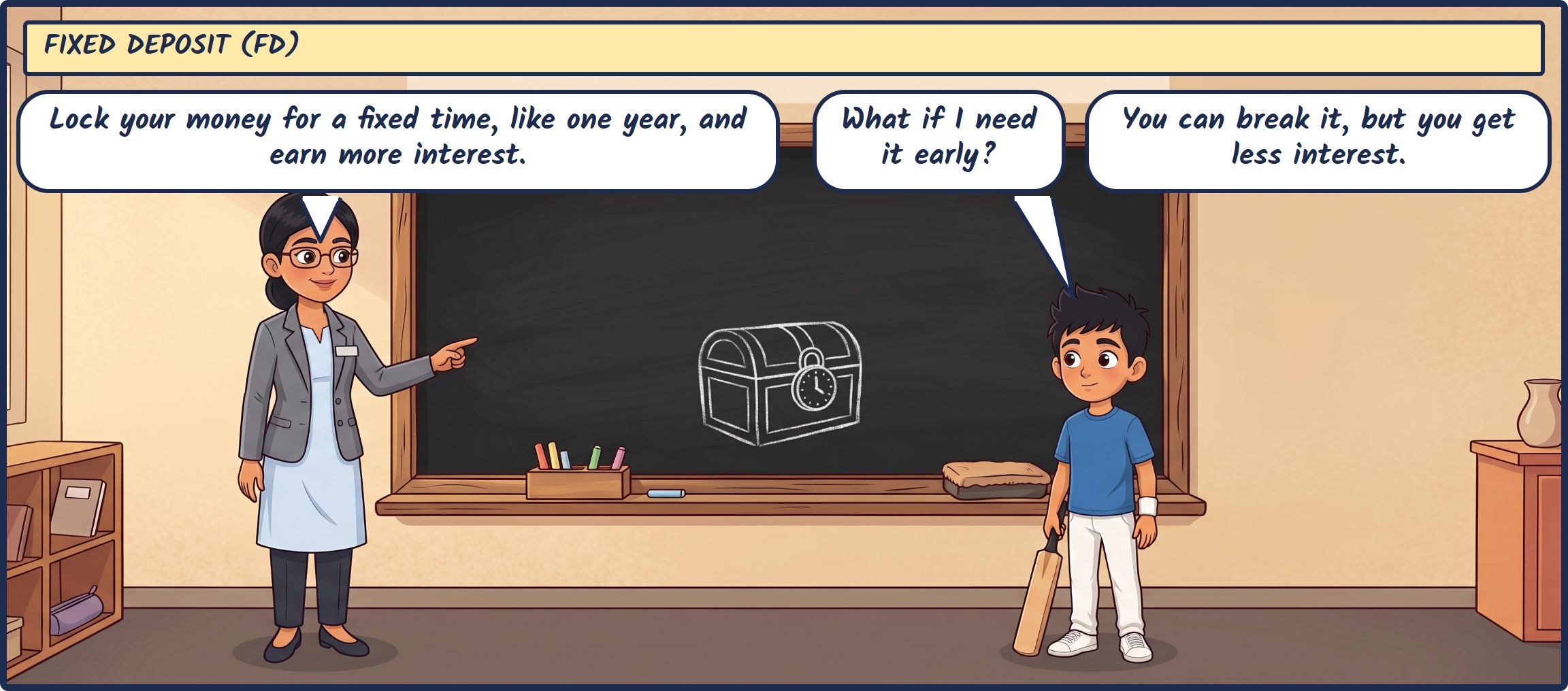
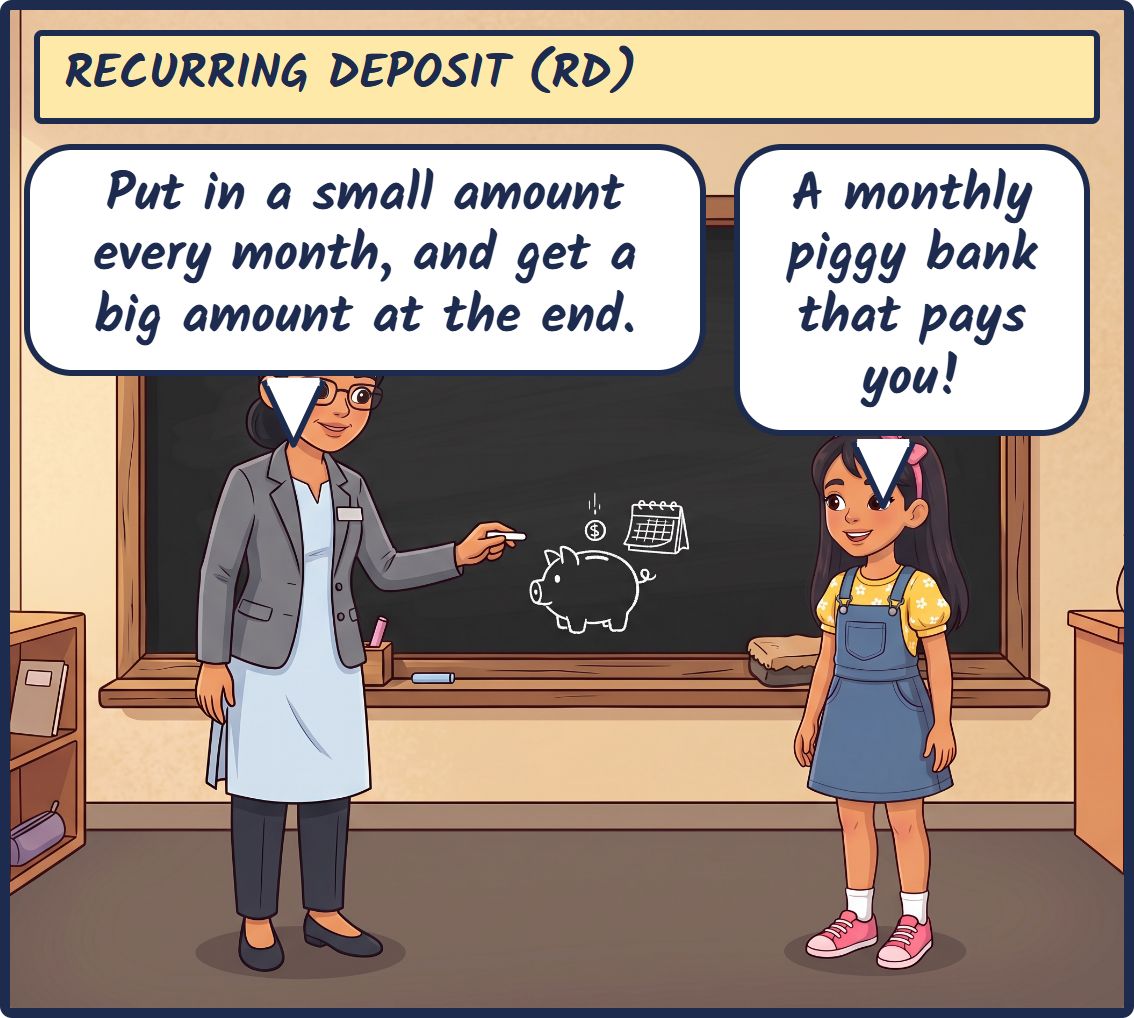
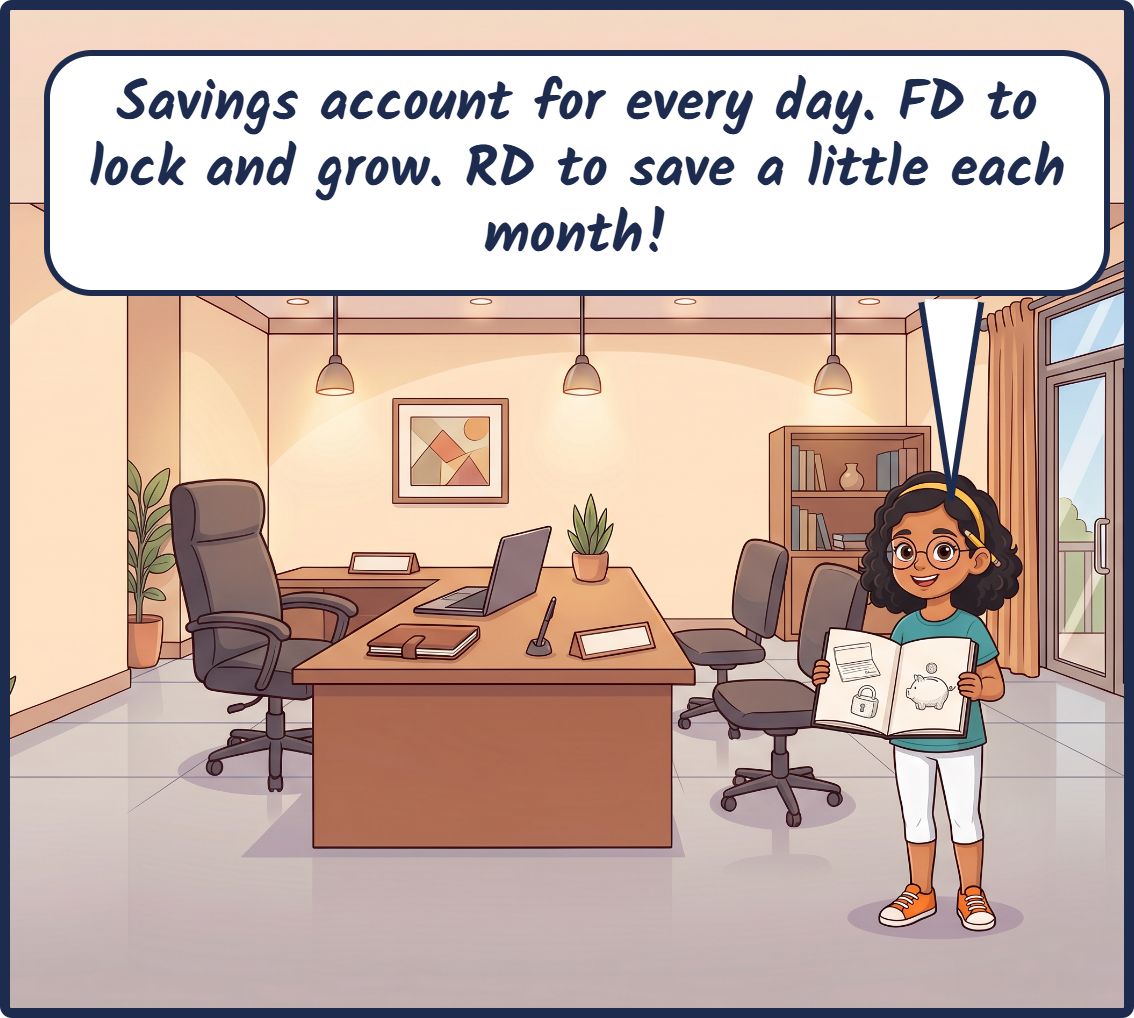
Does a bank have a menu card, like a restaurant? Sort of! Let me show you. SAVINGS ACCOUNT Put money in, take it out any time, and earn a little interest. And the passbook shows all my money! FIXED DEPOSIT (FD) Lock your money for a fixed time, like one year, and earn more interest. What if I need it early? You can break it, but you get less interest. RECURRING DEPOSIT (RD) Put in a small amount every month, and get a big amount at the end. A monthly piggy bank that pays you! Savings account for every day. FD to lock and grow. RD to save a little each month!
More bank helpers
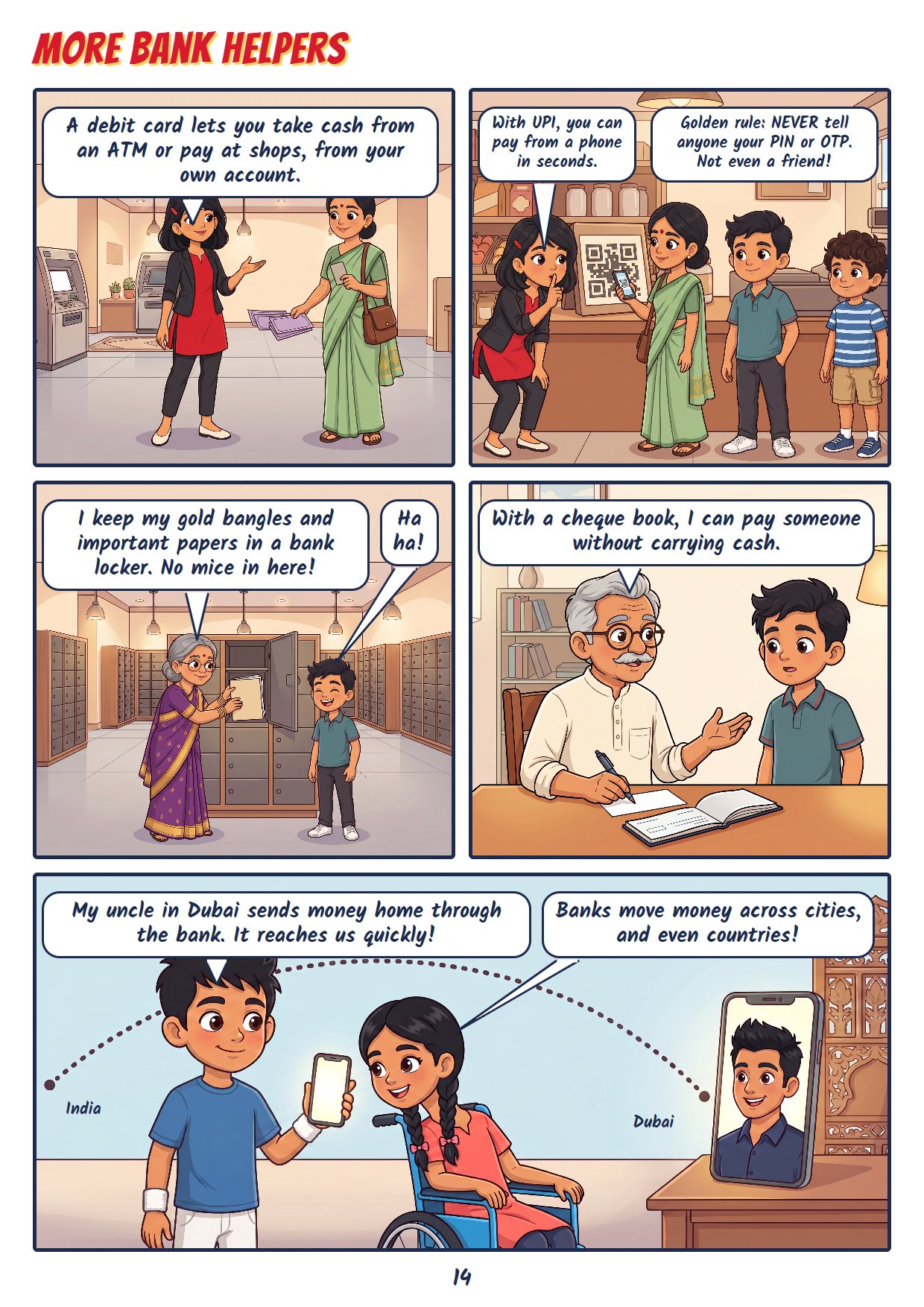
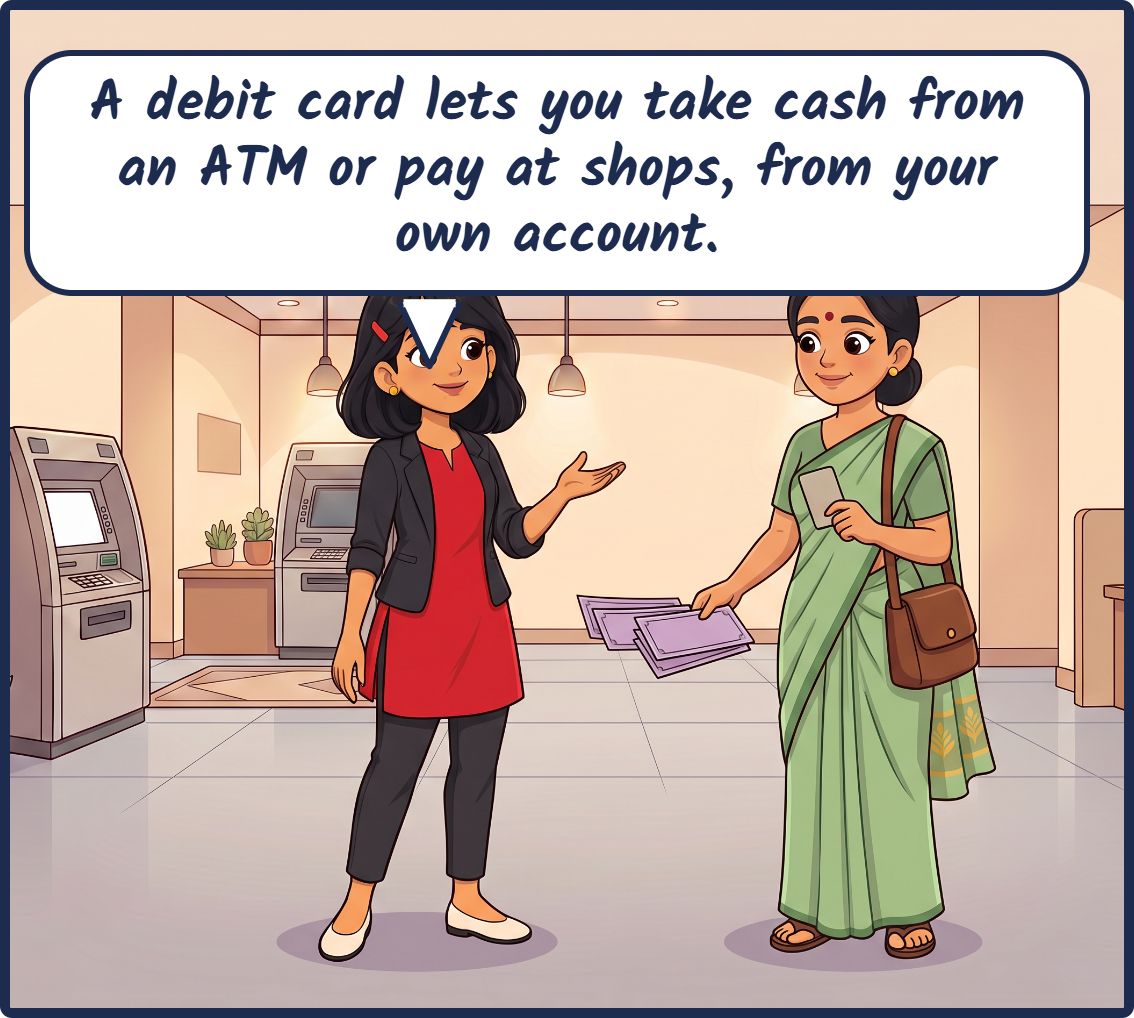
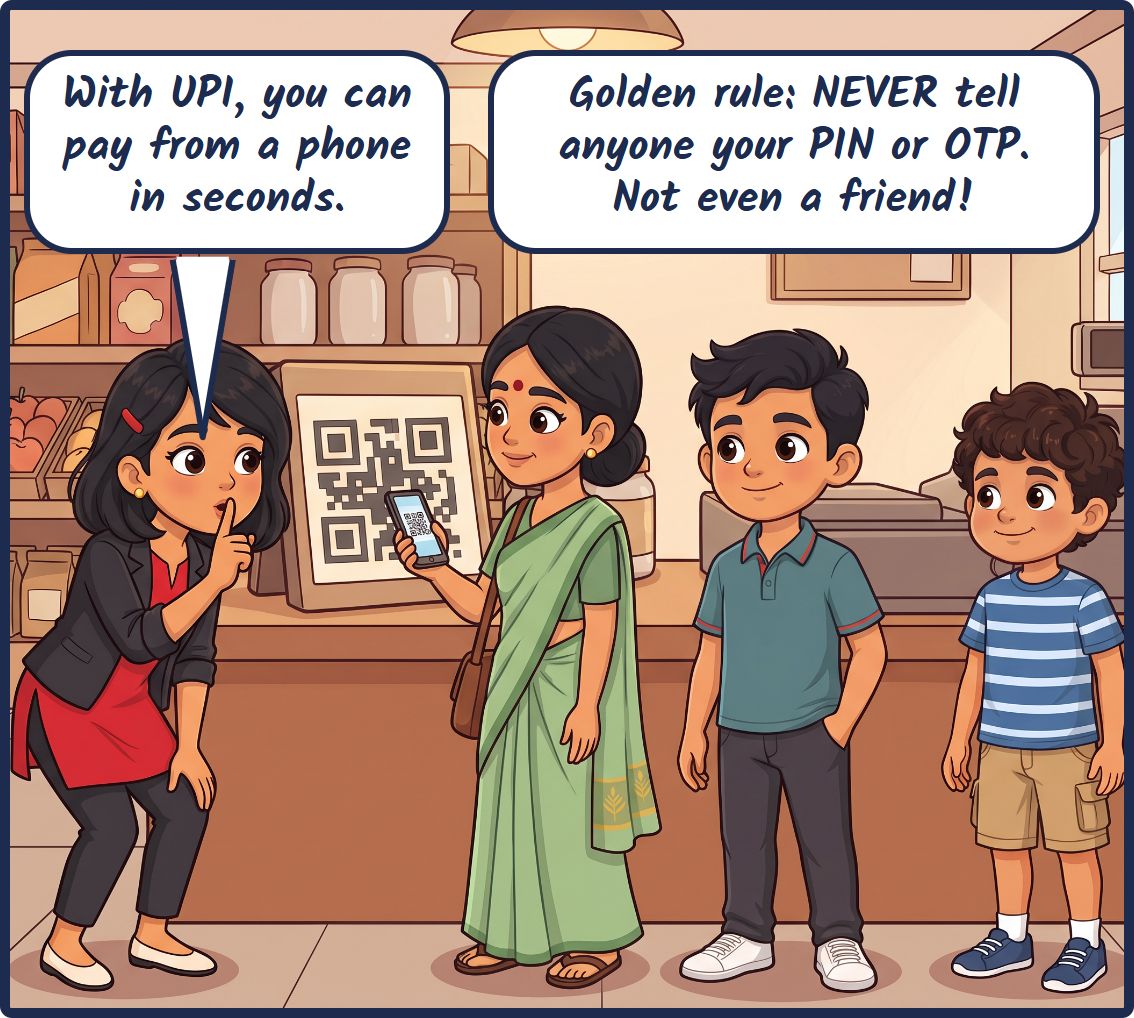
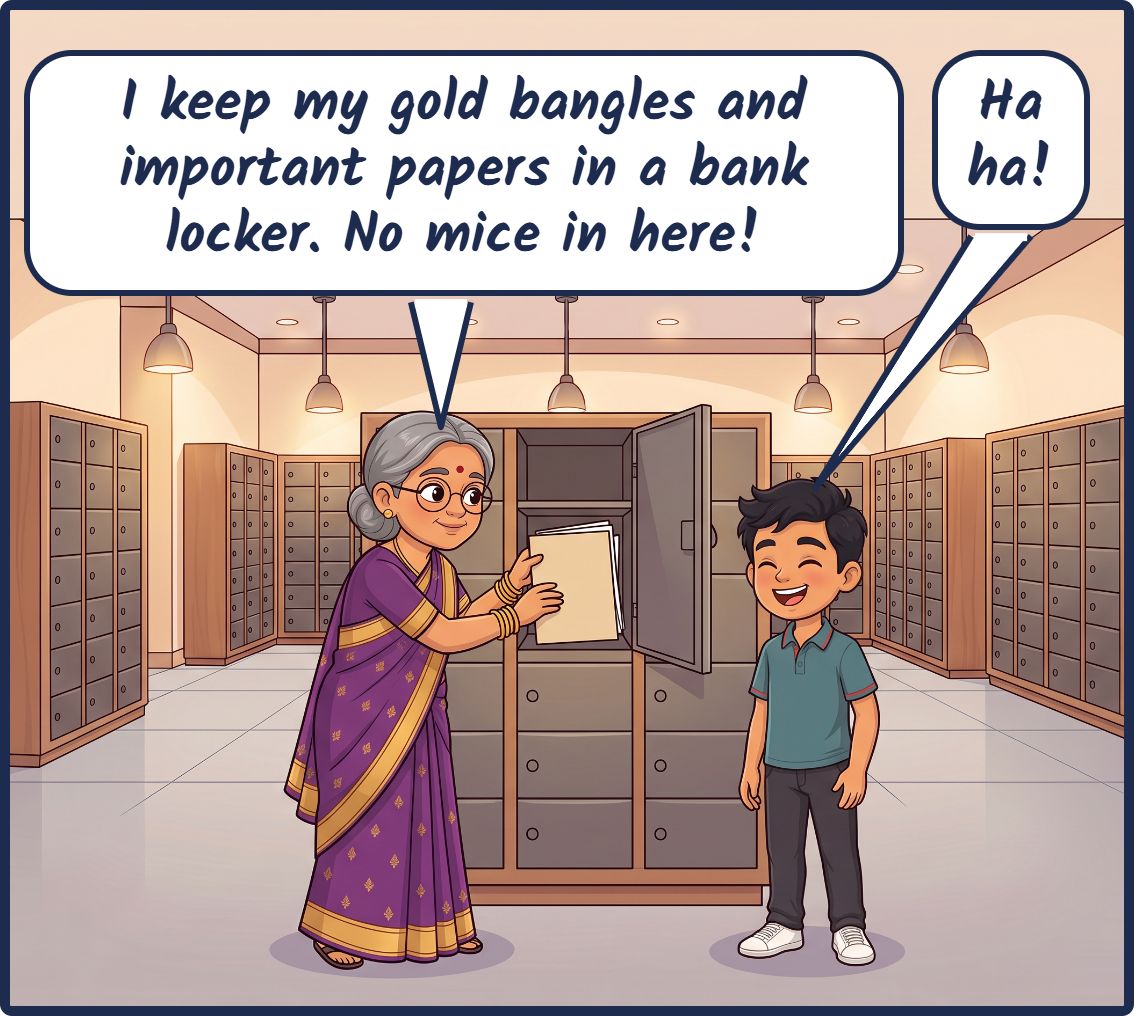
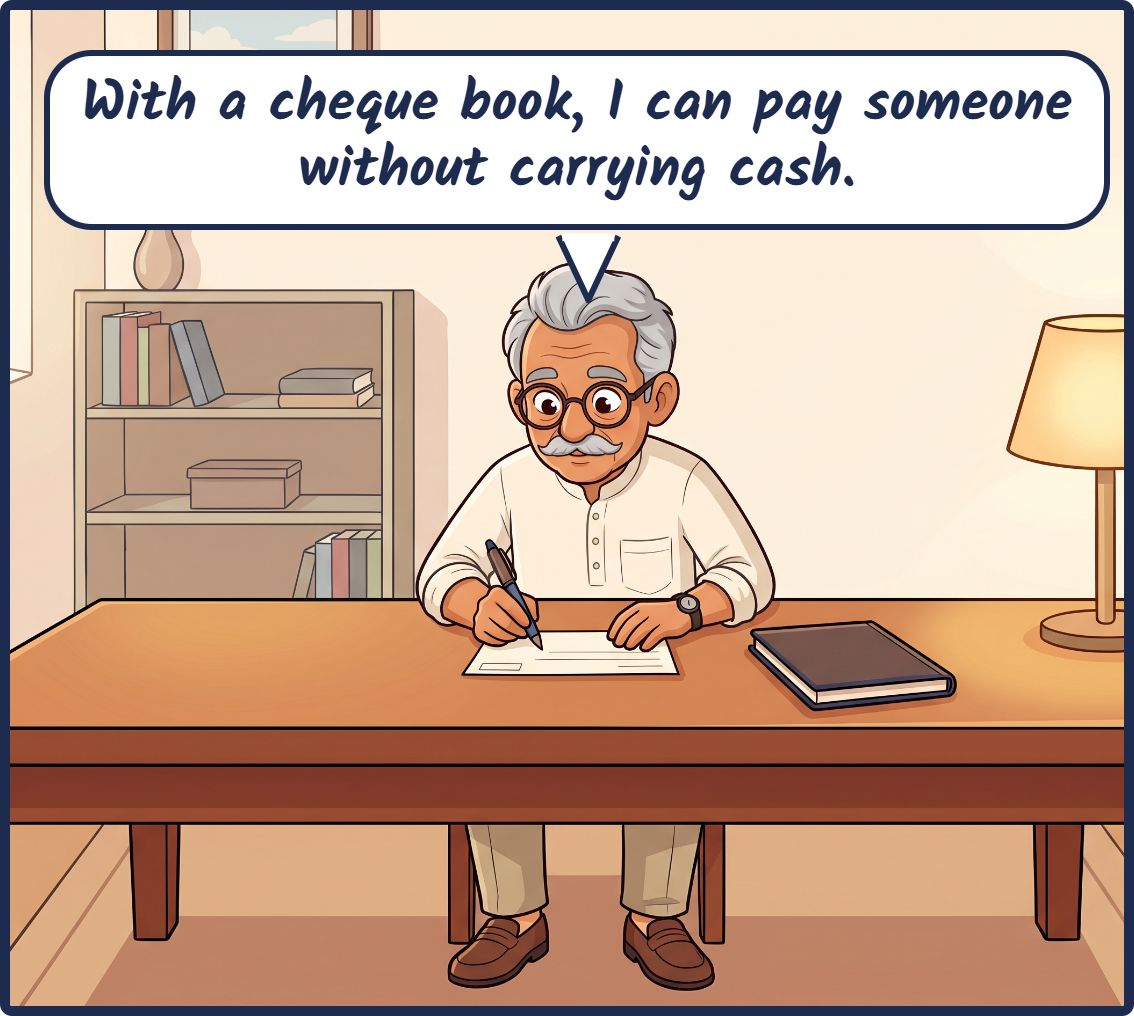
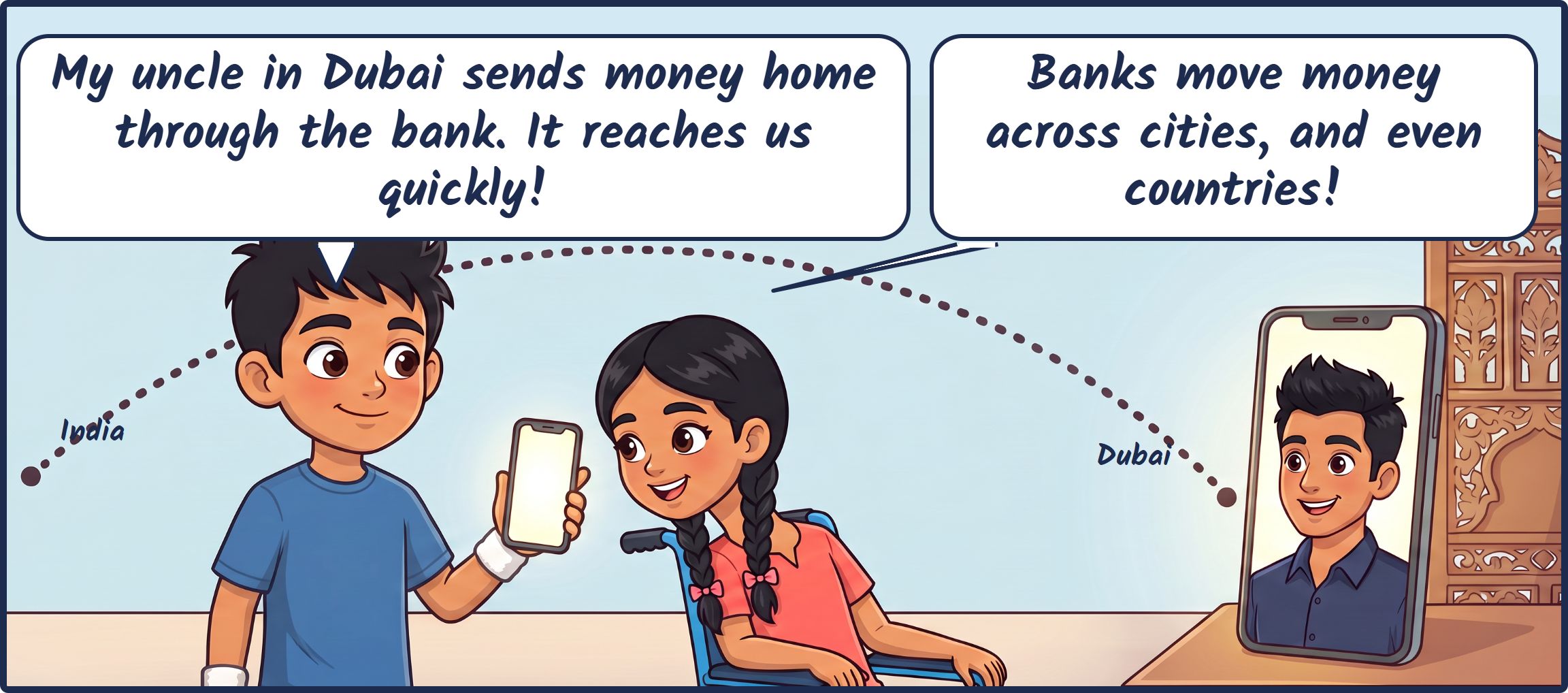
A debit card lets you take cash from an ATM or pay at shops, from your own account. With UPI, you can pay from a phone in seconds. Golden rule: NEVER tell anyone your PIN or OTP. Not even a friend! I keep my gold bangles and important papers in a bank locker. No mice in here! Ha ha! With a cheque book, I can pay someone without carrying cash. My uncle in Dubai sends money home through the bank. It reaches us quickly! Banks move money across cities, and even countries!
Loans help people grow
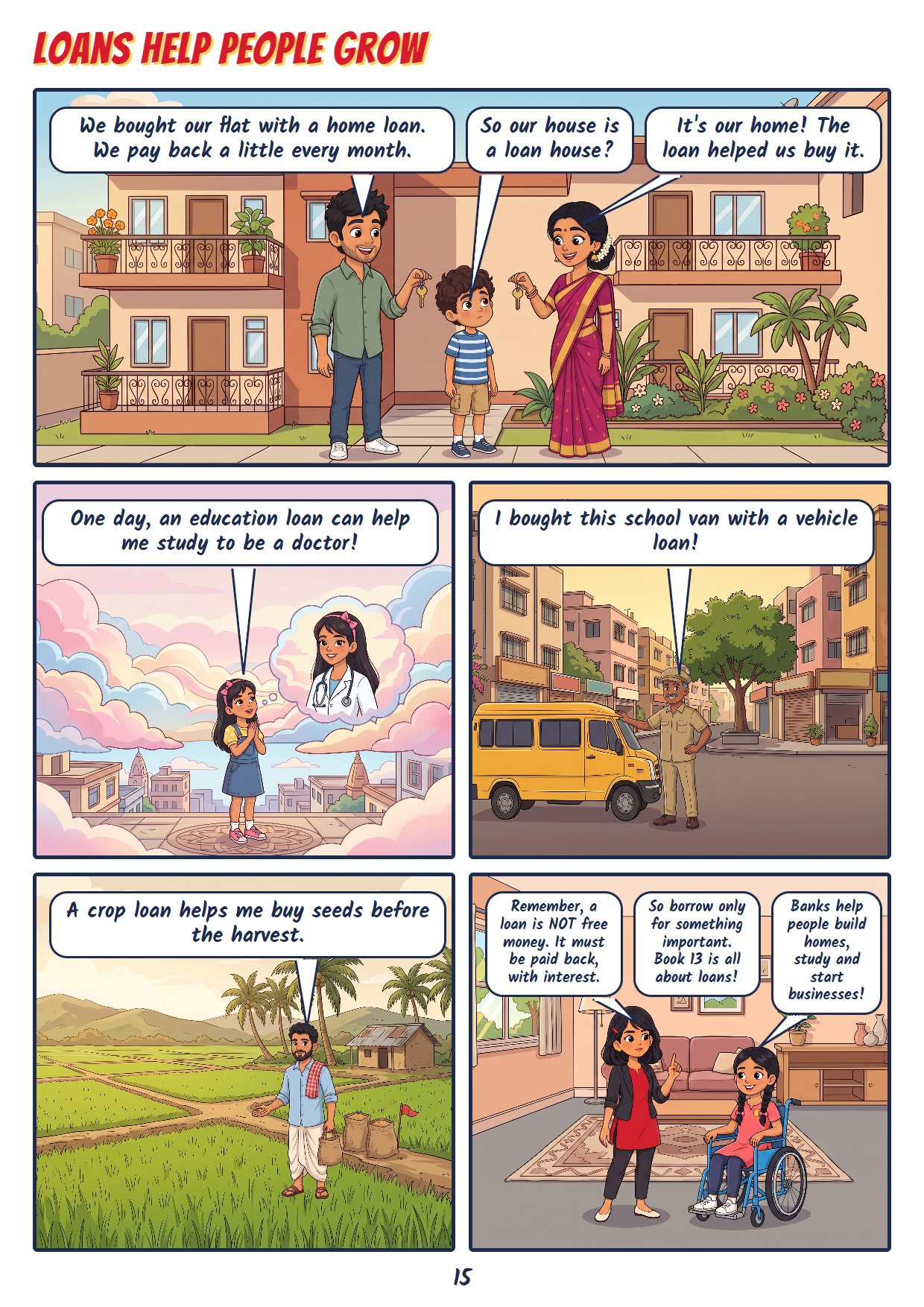
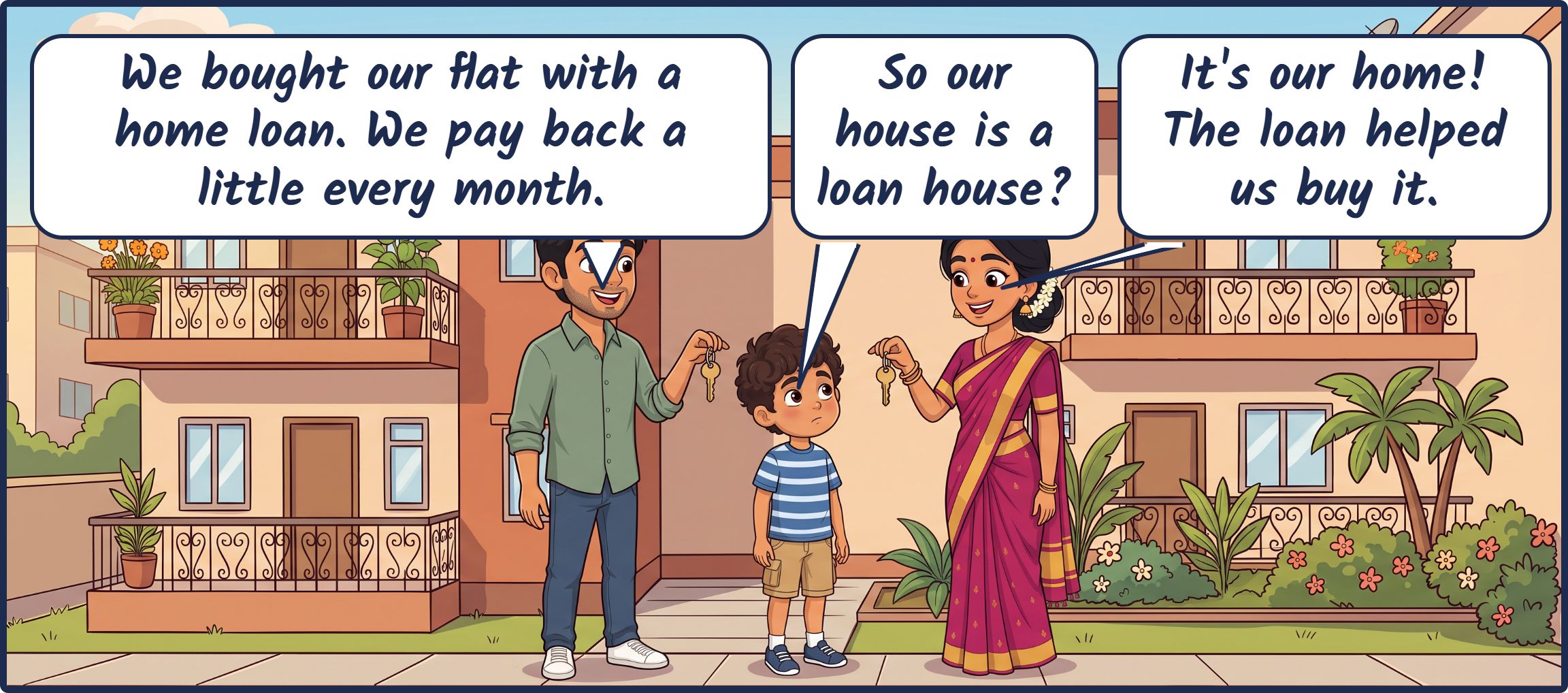
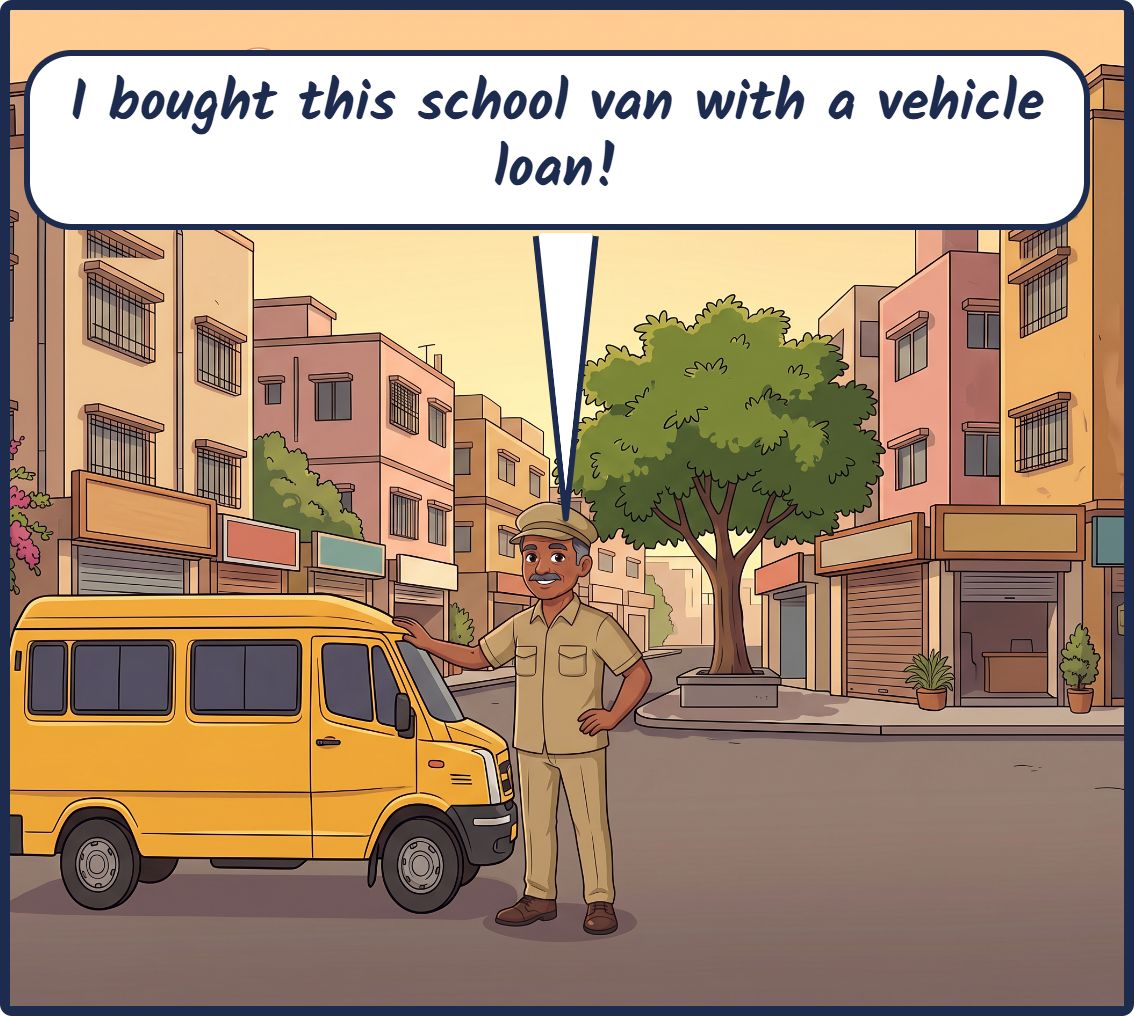
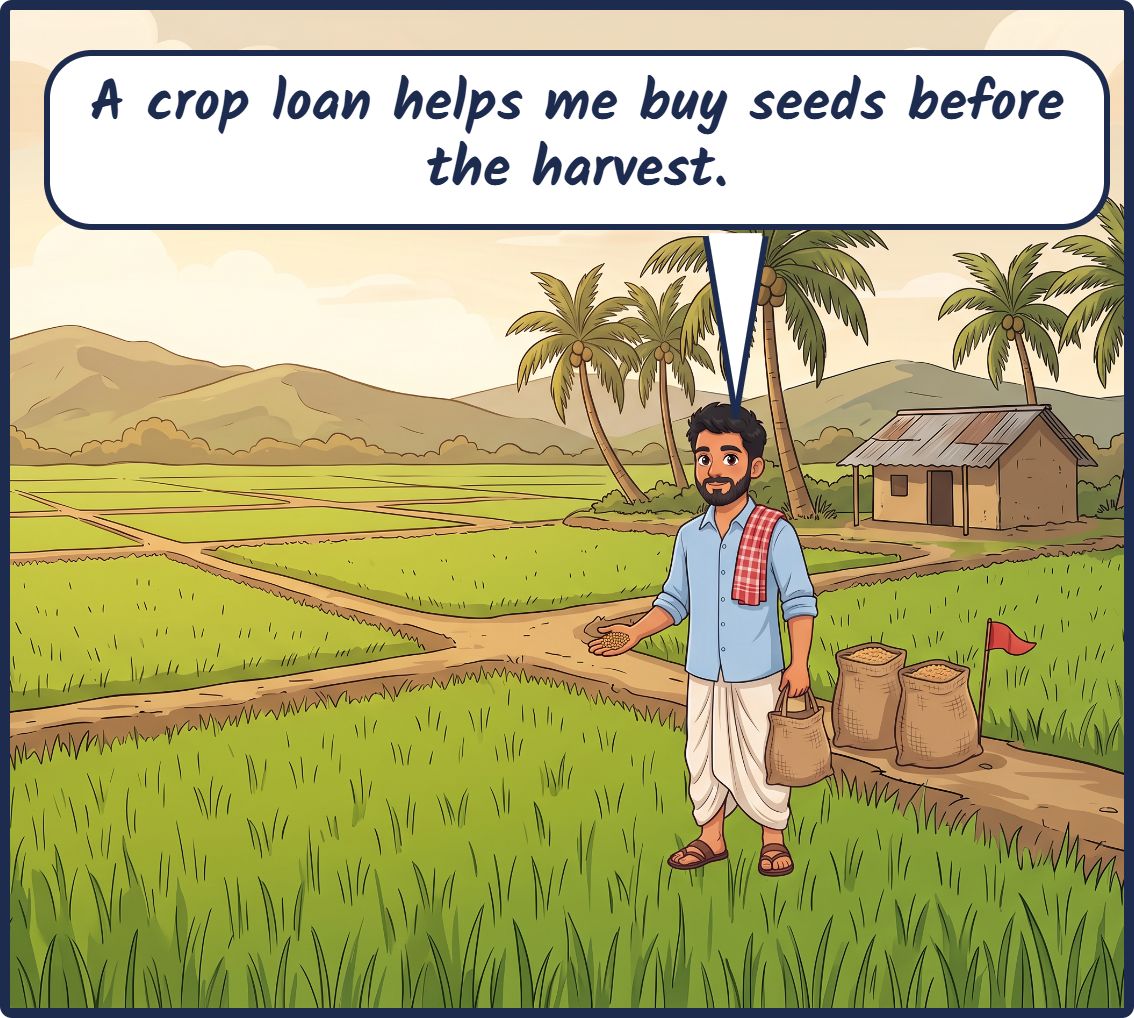
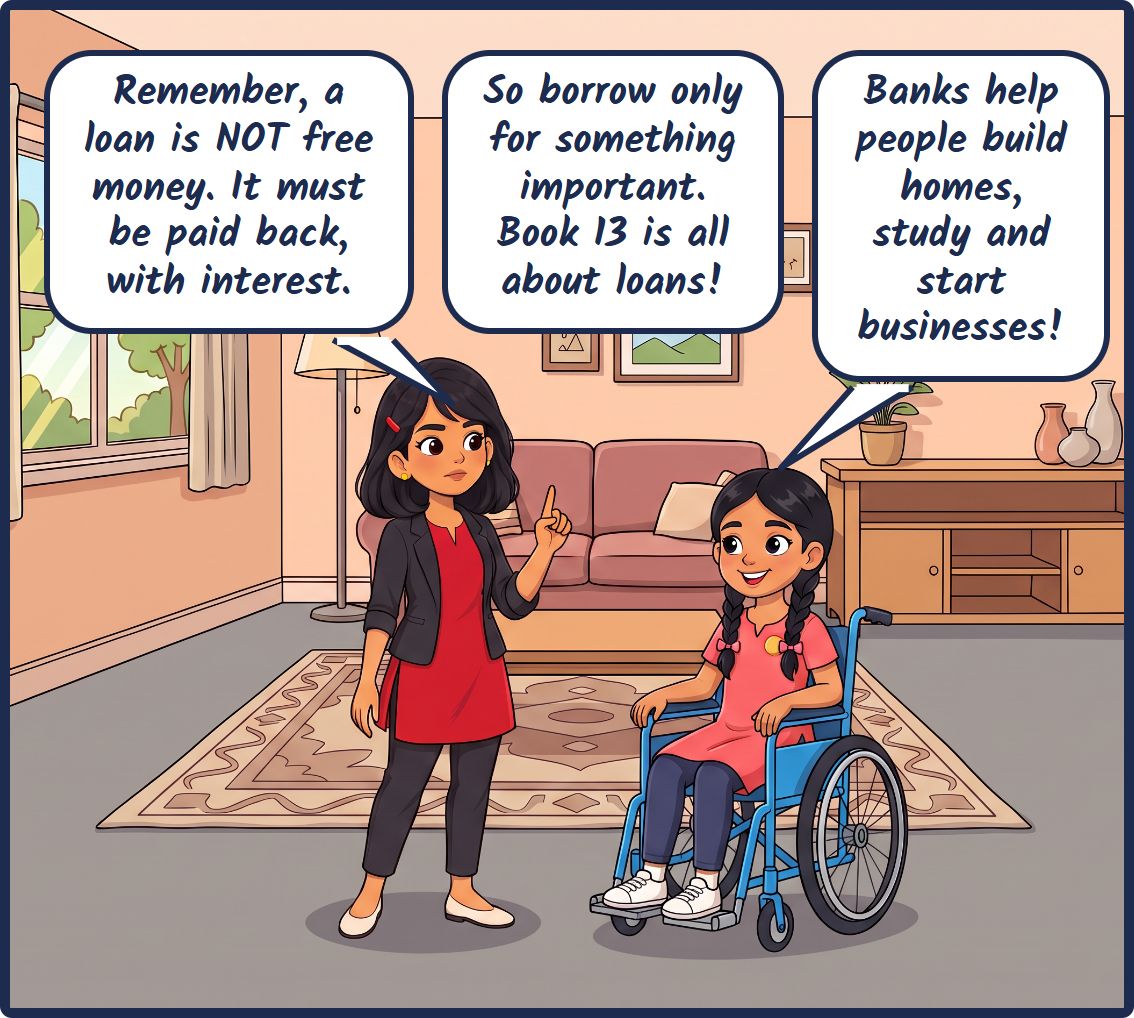
We bought our flat with a home loan. We pay back a little every month. So our house is a loan house? It's our home! The loan helped us buy it. One day, an education loan can help me study to be a doctor! I bought this school van with a vehicle loan! A crop loan helps me buy seeds before the harvest. Remember, a loan is NOT free money. It must be paid back, with interest. So borrow only for something important. Book 13 is all about loans! Banks help people build homes, study and start businesses!
Siddu's first account
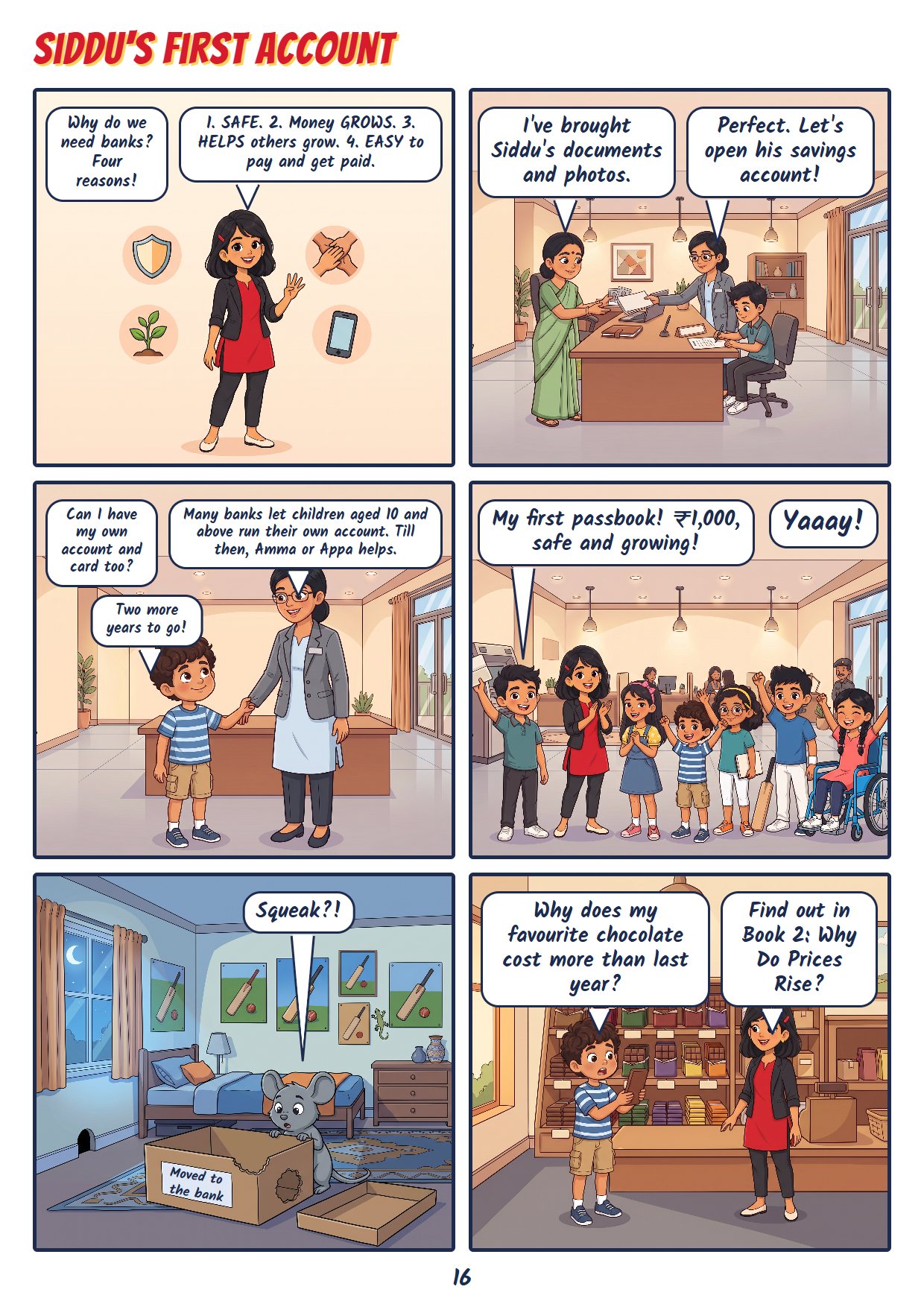
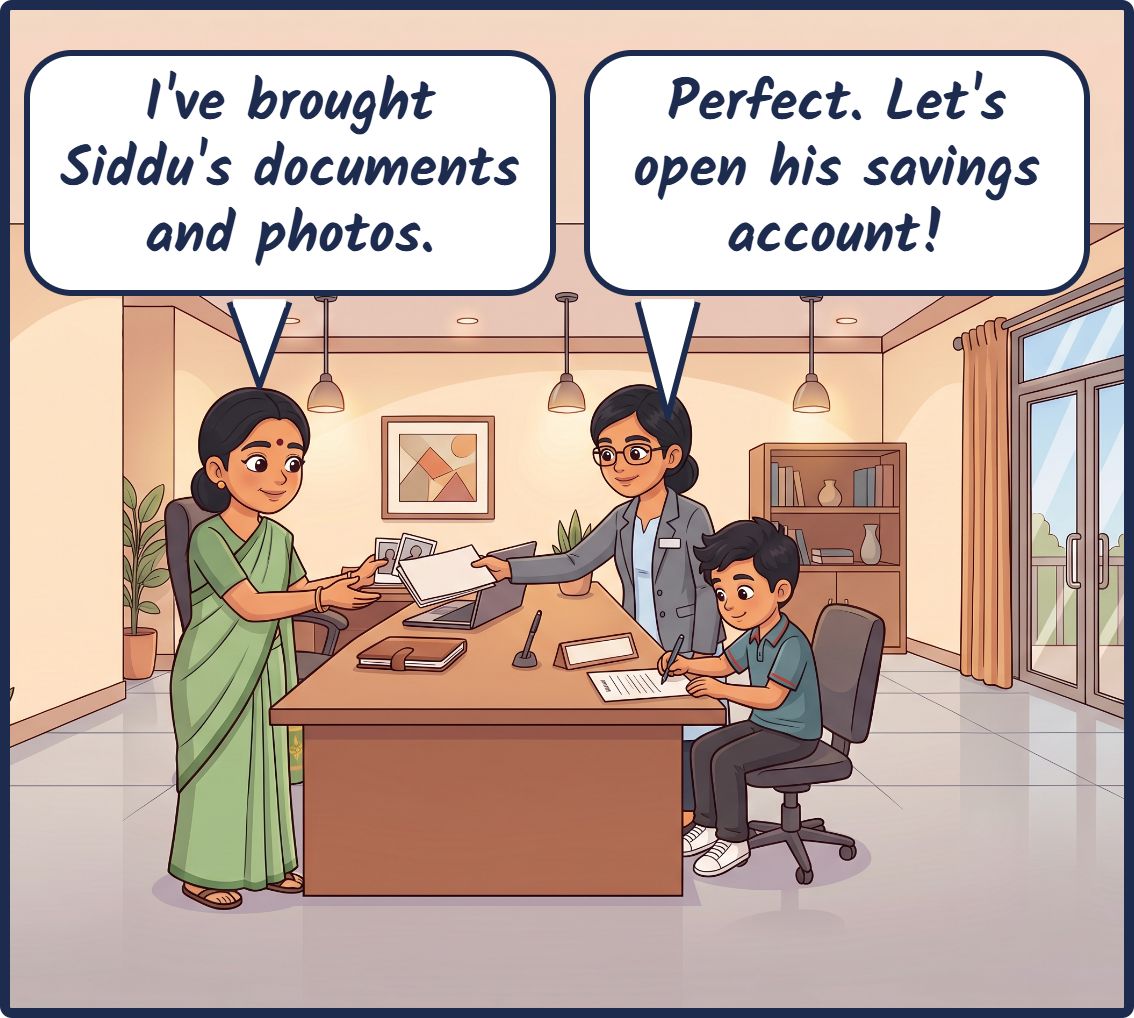
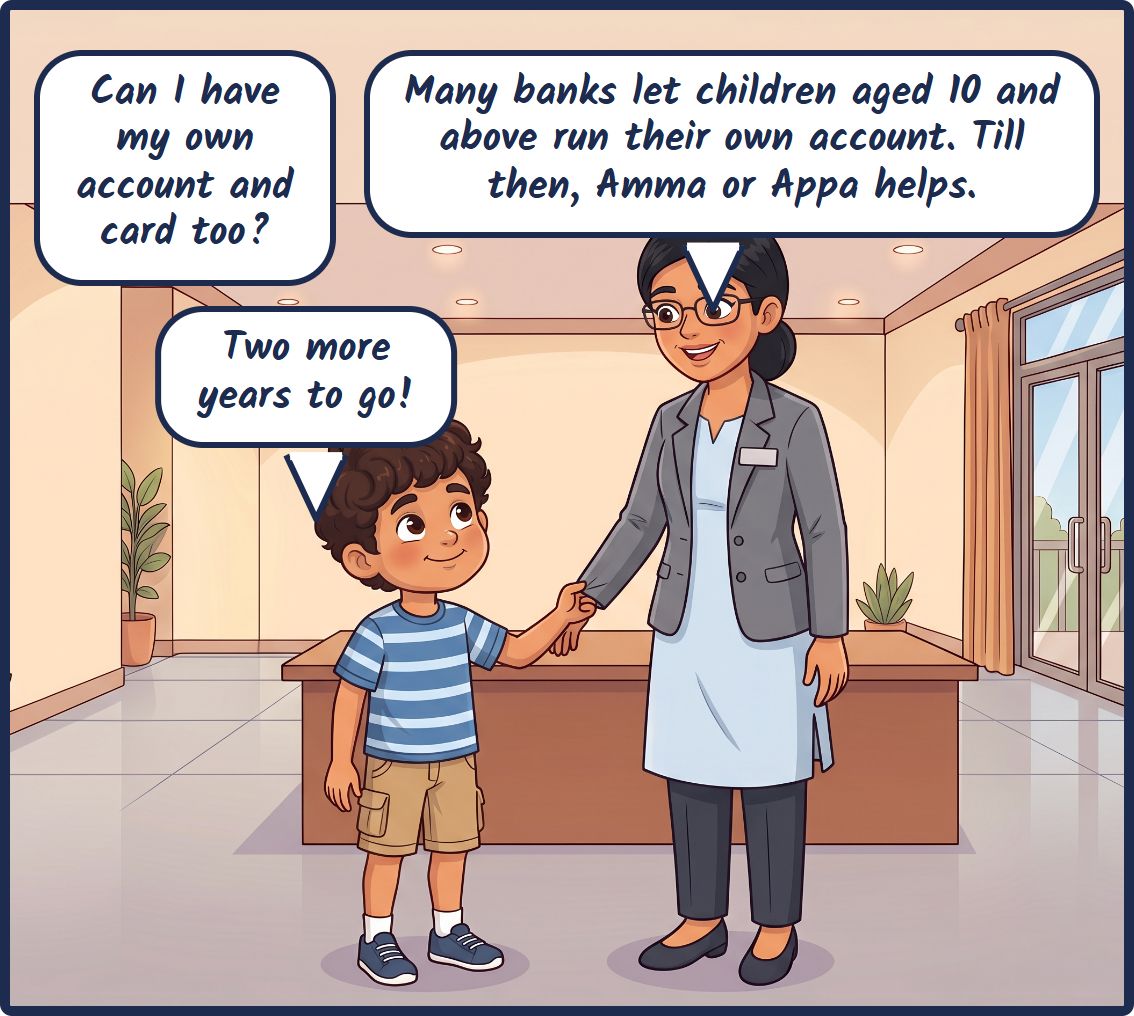
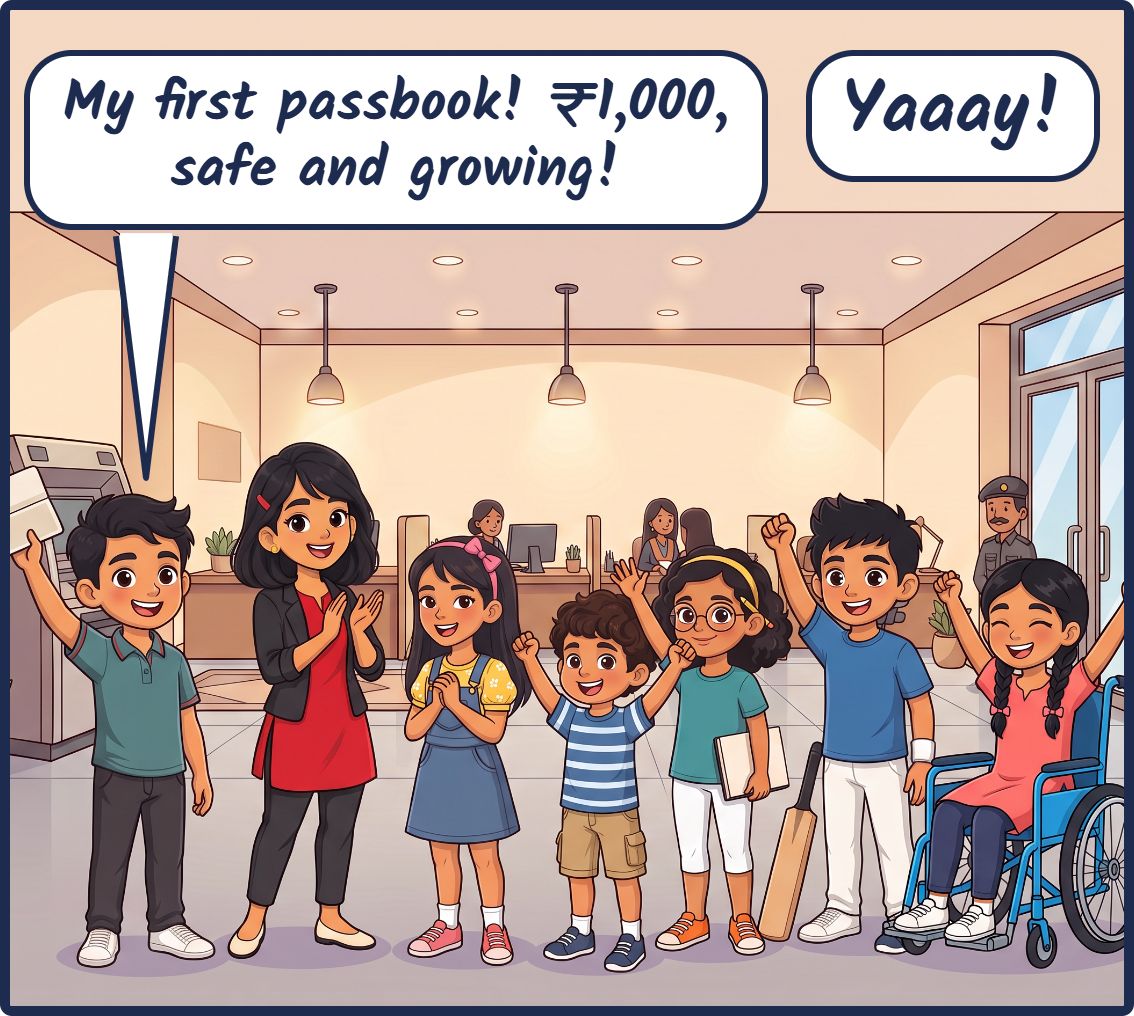
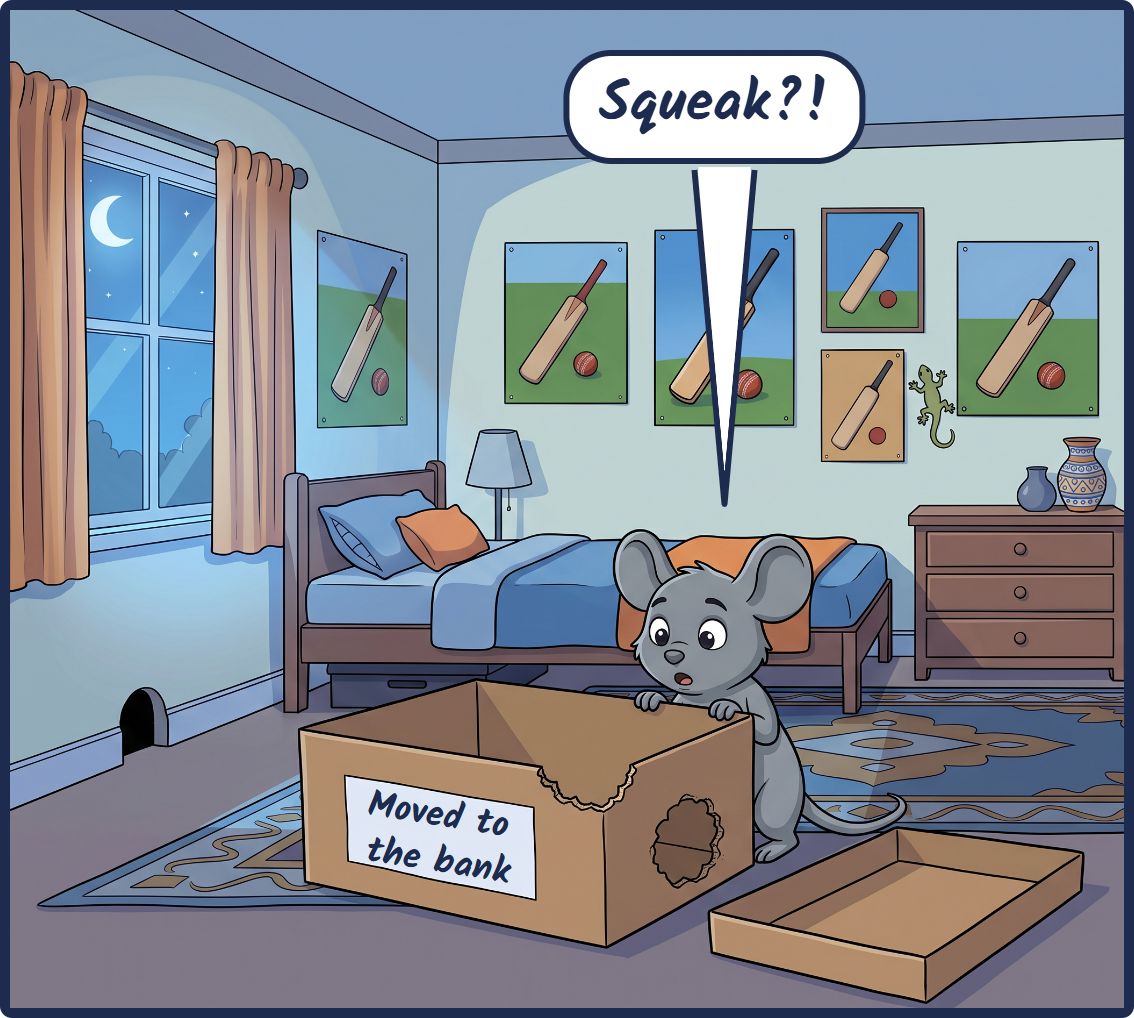
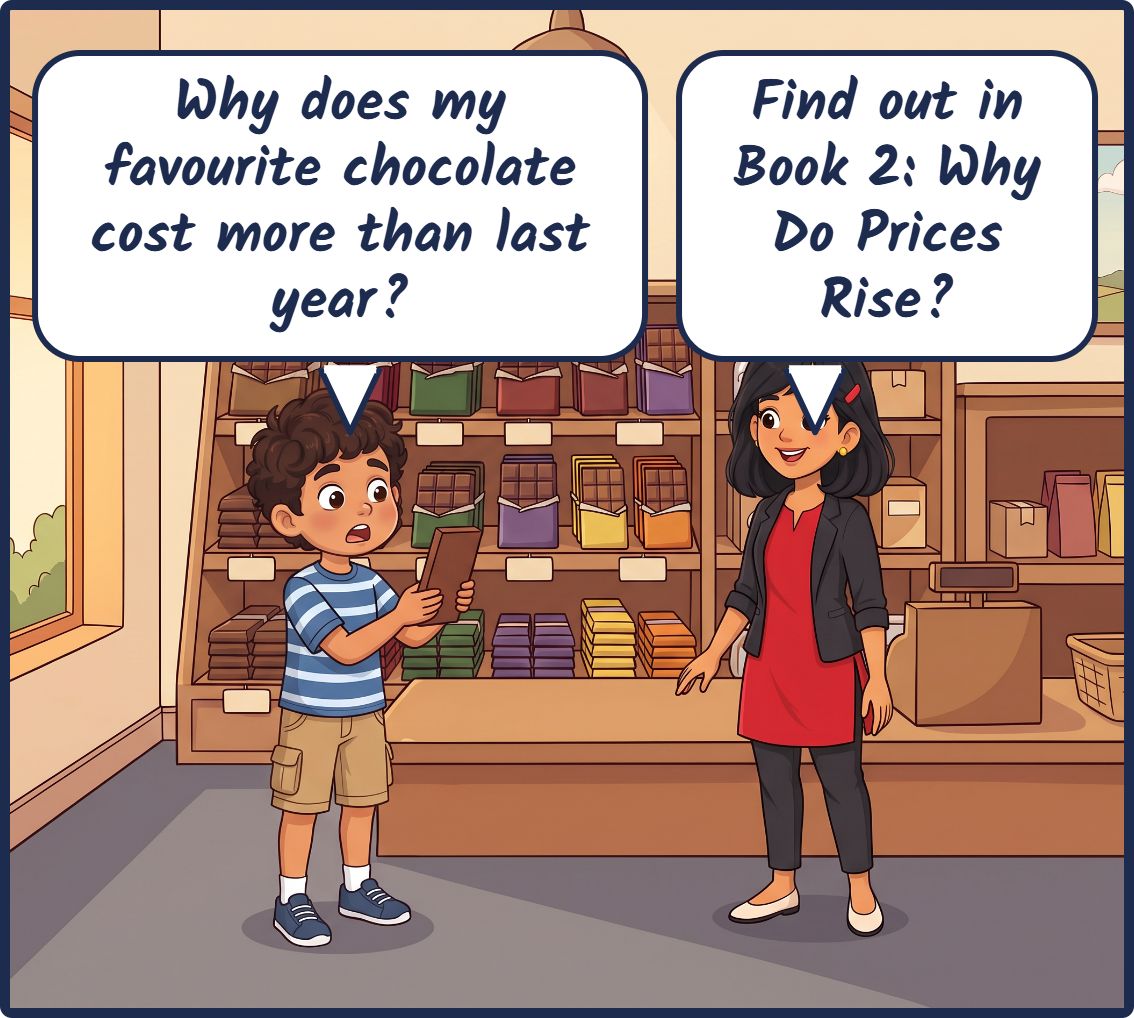
Why do we need banks? Four reasons! 1. SAFE. 2. Money GROWS. 3. HELPS others grow. 4. EASY to pay and get paid. I've brought Siddu's documents and photos. Perfect. Let's open his savings account! Can I have my own account and card too? Many banks let children aged 10 and above run their own account. Till then, Amma or Appa helps. Two more years to go! My first passbook! ₹1,000, safe and growing! Yaaay! Squeak?! Why does my favourite chocolate cost more than last year? Find out in Book 2: Why Do Prices Rise?
Srestha's Money Tips
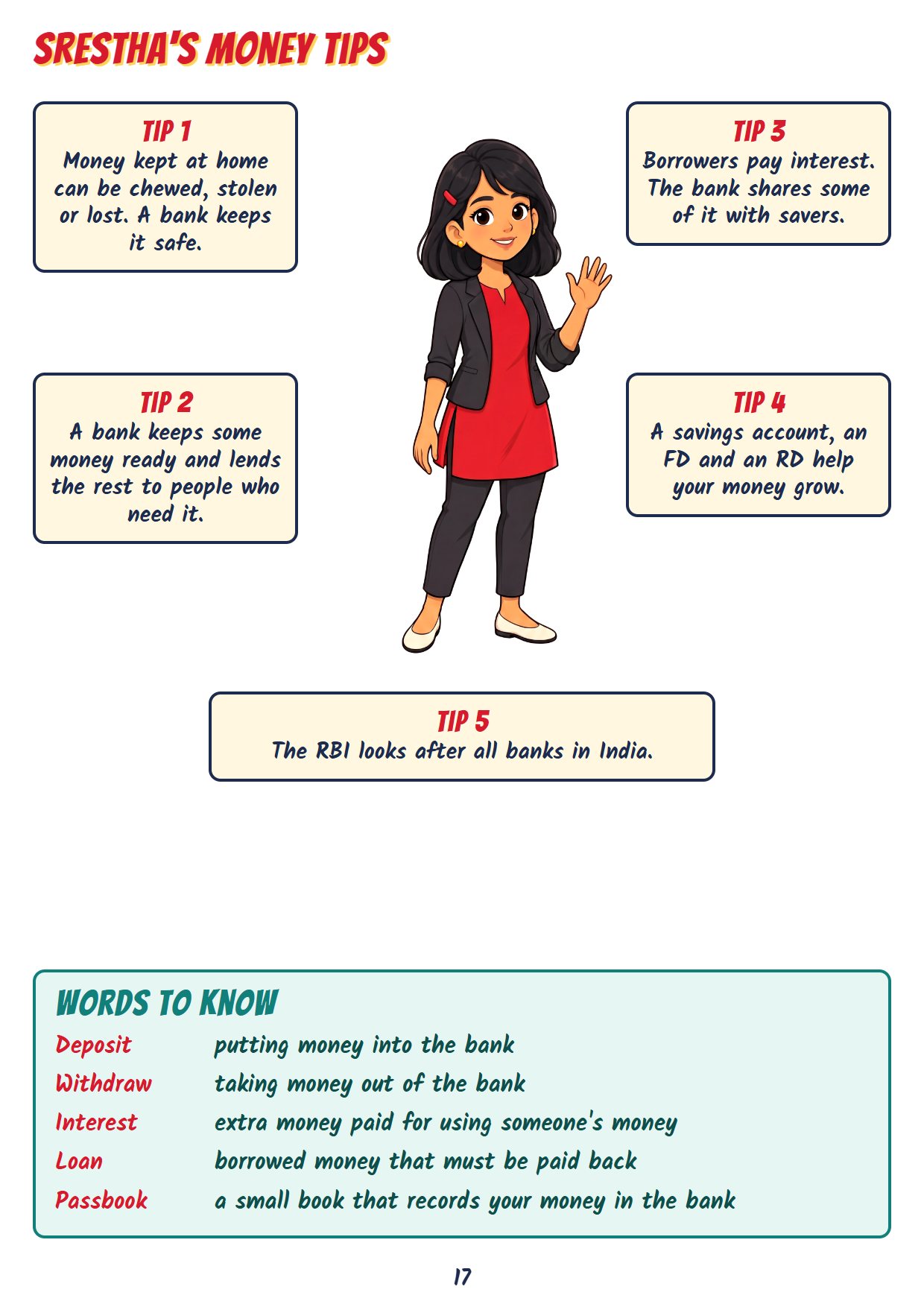
- Money kept at home can be chewed, stolen or lost. A bank keeps it safe.
- A bank keeps some money ready and lends the rest to people who need it.
- Borrowers pay interest. The bank shares some of it with savers.
- A savings account, an FD and an RD help your money grow.
- The RBI looks after all banks in India.
Words to know
- Deposit
- putting money into the bank
- Withdraw
- taking money out of the bank
- Interest
- extra money paid for using someone's money
- Loan
- borrowed money that must be paid back
- Passbook
- a small book that records your money in the bank
Quiz time!
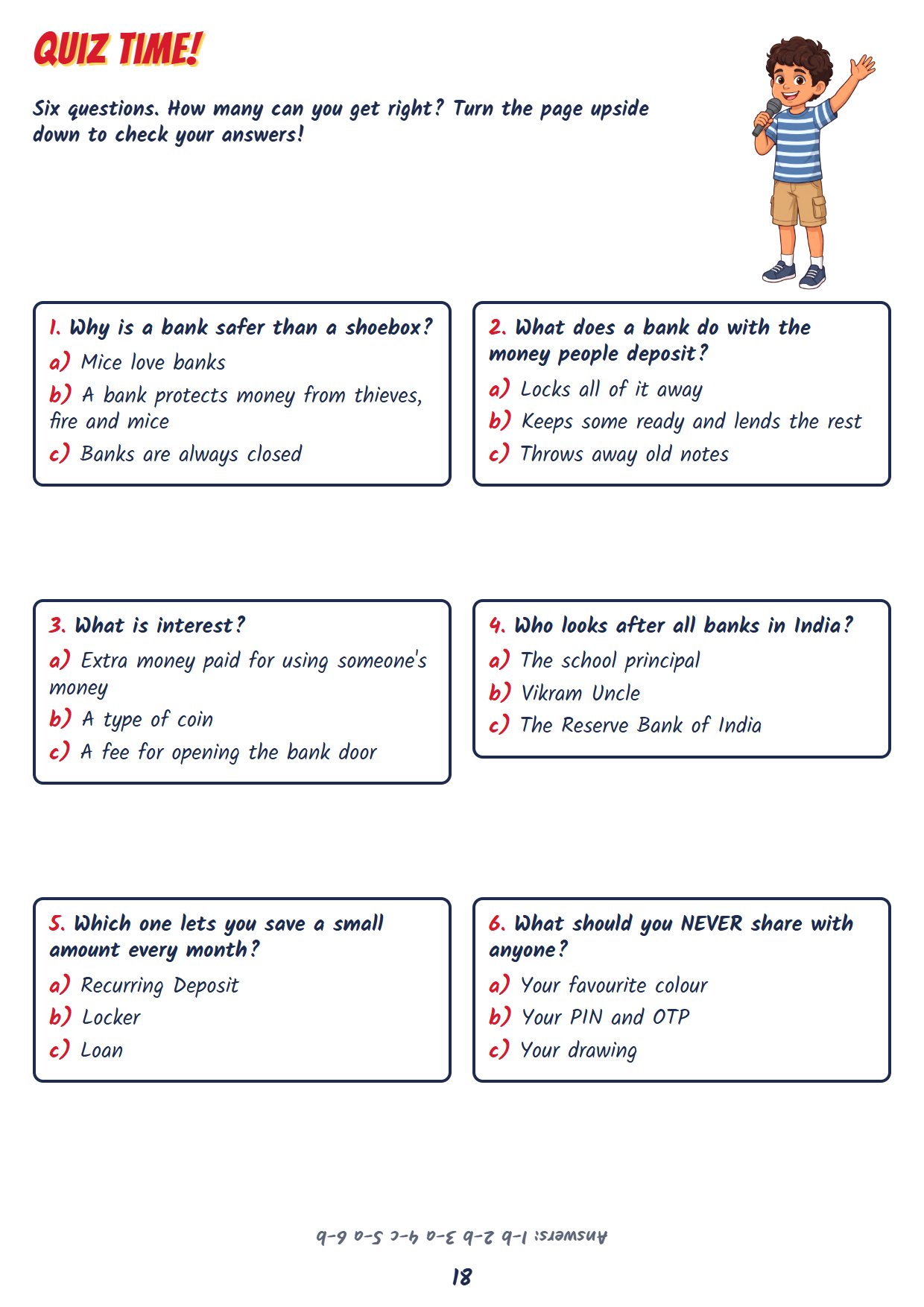
1. Why is a bank safer than a shoebox?- Mice love banks
- A bank protects money from thieves, fire and mice
- Banks are always closed
2. What does a bank do with the money people deposit?- Locks all of it away
- Keeps some ready and lends the rest
- Throws away old notes
3. What is interest?- Extra money paid for using someone's money
- A type of coin
- A fee for opening the bank door
4. Who looks after all banks in India?- The school principal
- Vikram Uncle
- The Reserve Bank of India
5. Which one lets you save a small amount every month?- Recurring Deposit
- Locker
- Loan
6. What should you NEVER share with anyone?- Your favourite colour
- Your PIN and OTP
- Your drawing
Answers: 1-b 2-b 3-a 4-c 5-a 6-b
Try this at home
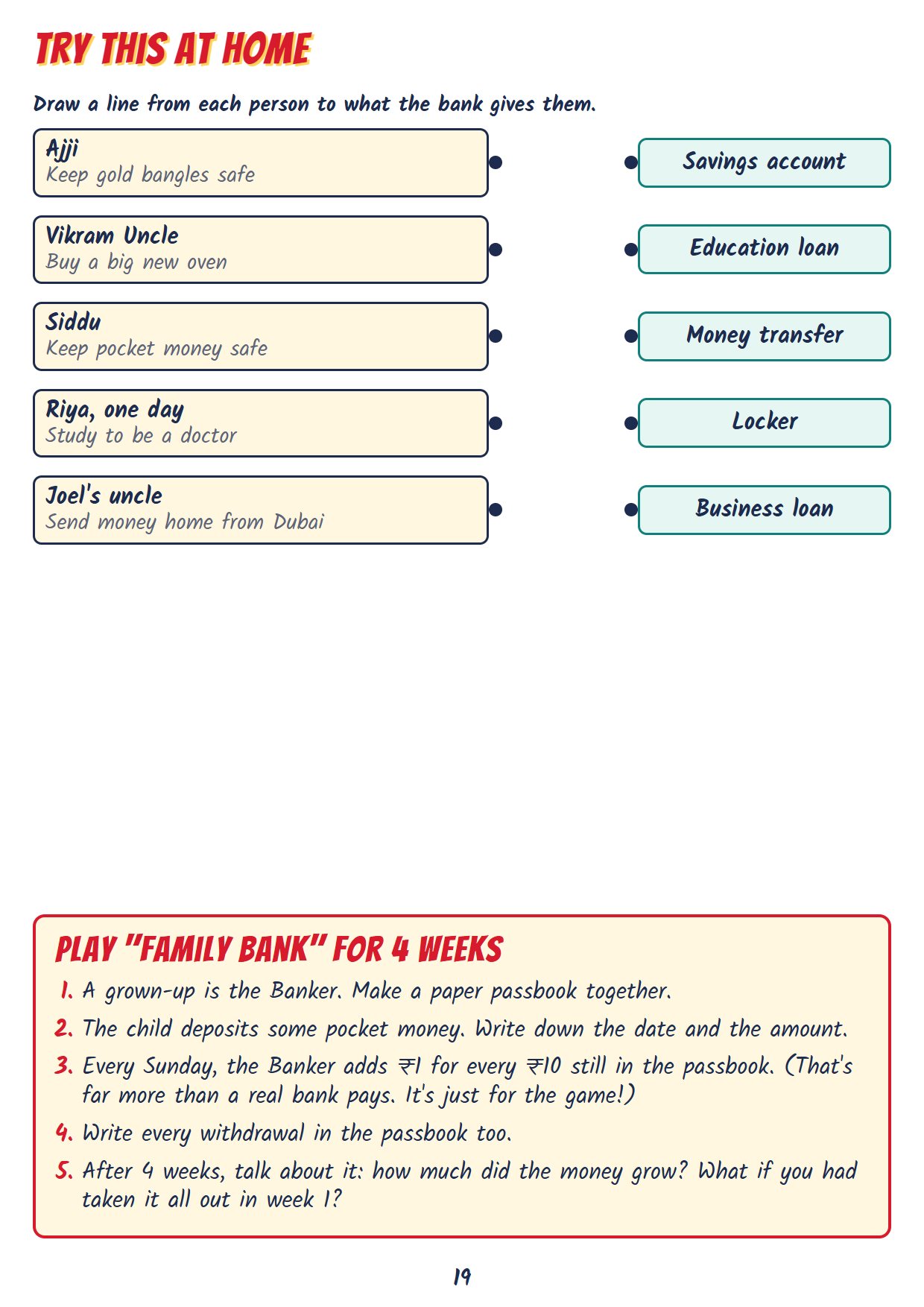
Draw a line from each person to what the bank gives them.
Ajji
Keep gold bangles safe | Savings account |
Vikram Uncle
Buy a big new oven | Education loan |
Siddu
Keep pocket money safe | Money transfer |
Riya, one day
Study to be a doctor | Locker |
Joel's uncle
Send money home from Dubai | Business loan |
Play "Family Bank" for 4 weeks
- A grown-up is the Banker. Make a paper passbook together.
- The child deposits some pocket money. Write down the date and the amount.
- Every Sunday, the Banker adds ₹1 for every ₹10 still in the passbook. (That's far more than a real bank pays. It's just for the game!)
- Write every withdrawal in the passbook too.
- After 4 weeks, talk about it: how much did the money grow? What if you had taken it all out in week 1?
For parents and teachers
What this book teaches
Why banks exist, how they began, what a bank does with deposits, and which bank products a family uses.
Talk about it
- Where does our family keep its money, and why?
- What did the bank do with Siddu's ₹1,000?
- Which bank product would you choose for your savings? Why?
Good to know
- Under RBI's April 2025 rules, a child of any age can have a savings or term deposit account through a parent or guardian. Children aged 10 and above may run their own account, within limits each bank sets.
- DICGC insurance covers up to ₹5 lakh per depositor per bank, including interest.
- The interest figures in this book are examples to explain the idea. Real rates vary from bank to bank.
Paisa Pals is created by Srinivas Kambhampati, AMFI-registered Mutual Fund Distributor (ARN-265474, EUIN E091320), working under the brand Rytvae Consulting. This book is for financial awareness only. It does not recommend any bank, product or scheme. More free comics: rytvae.com (Kids' Corner).







 ComicBook 2