The big dream
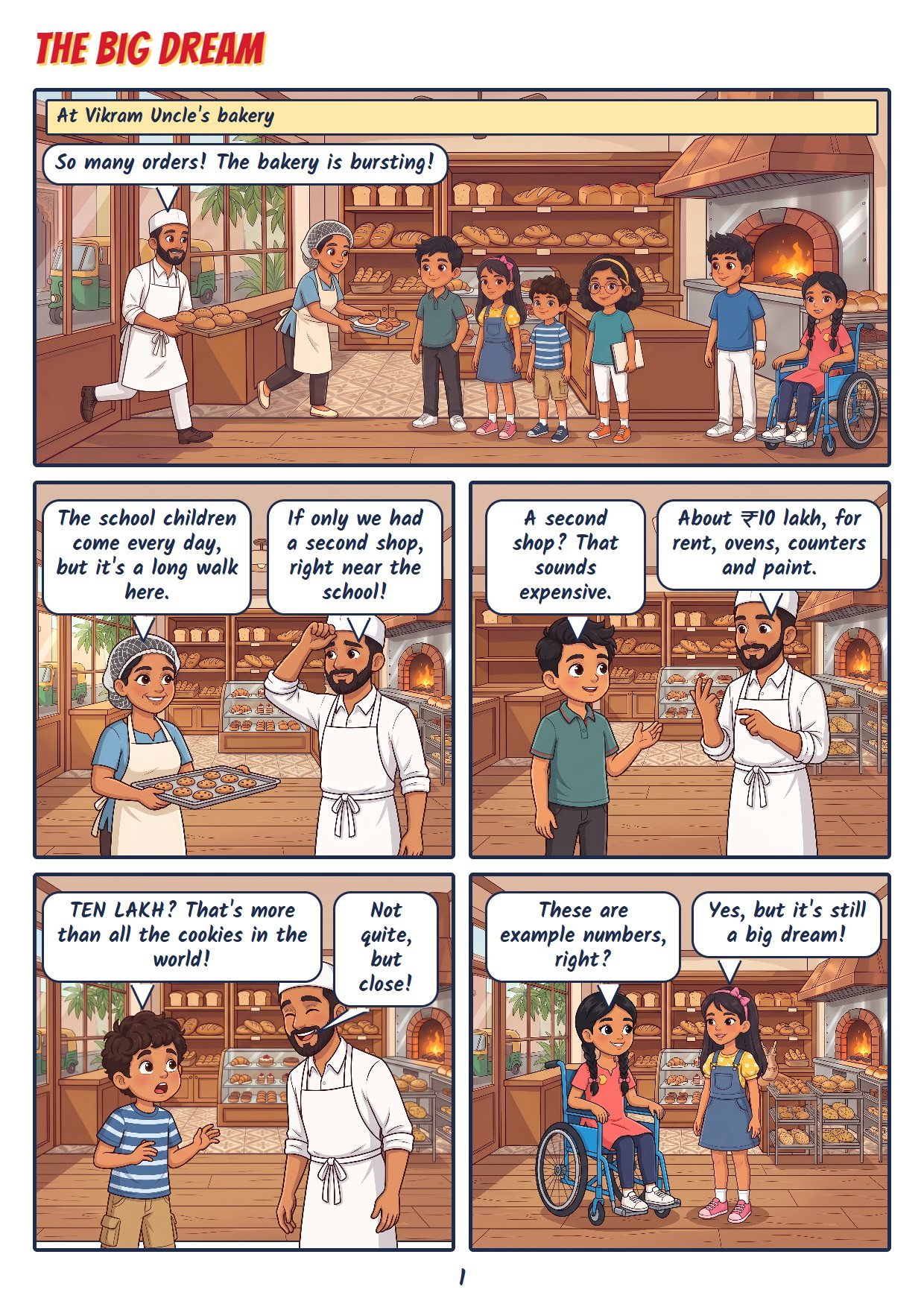
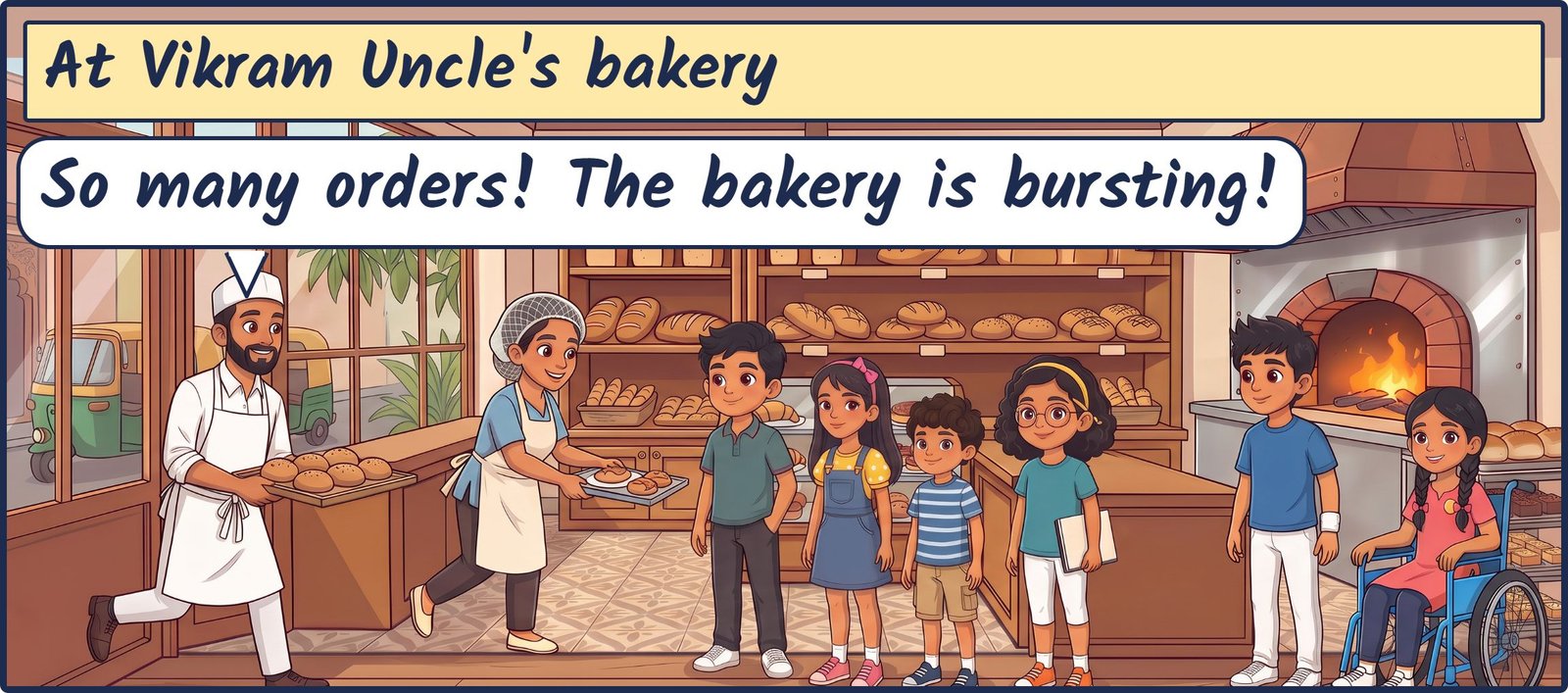
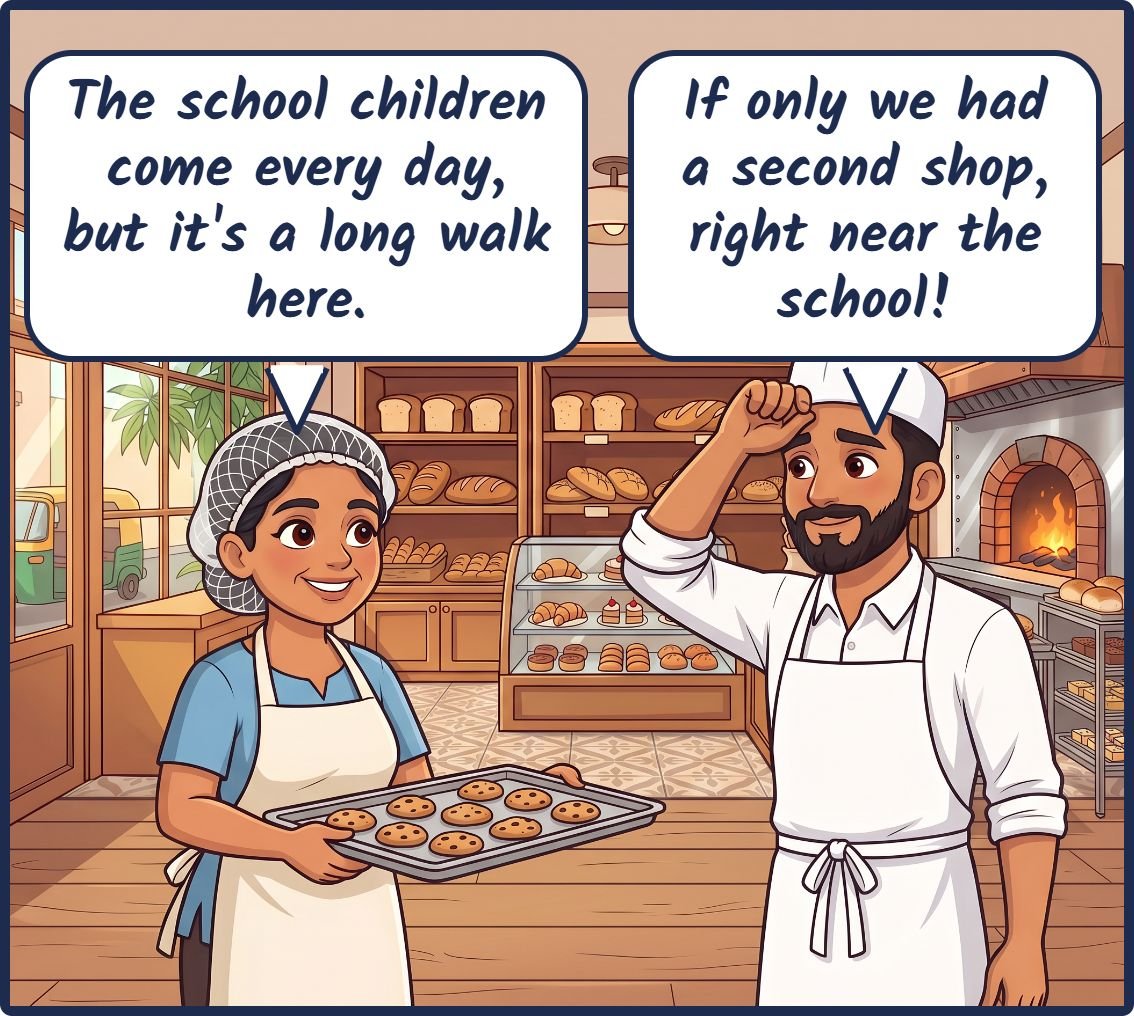
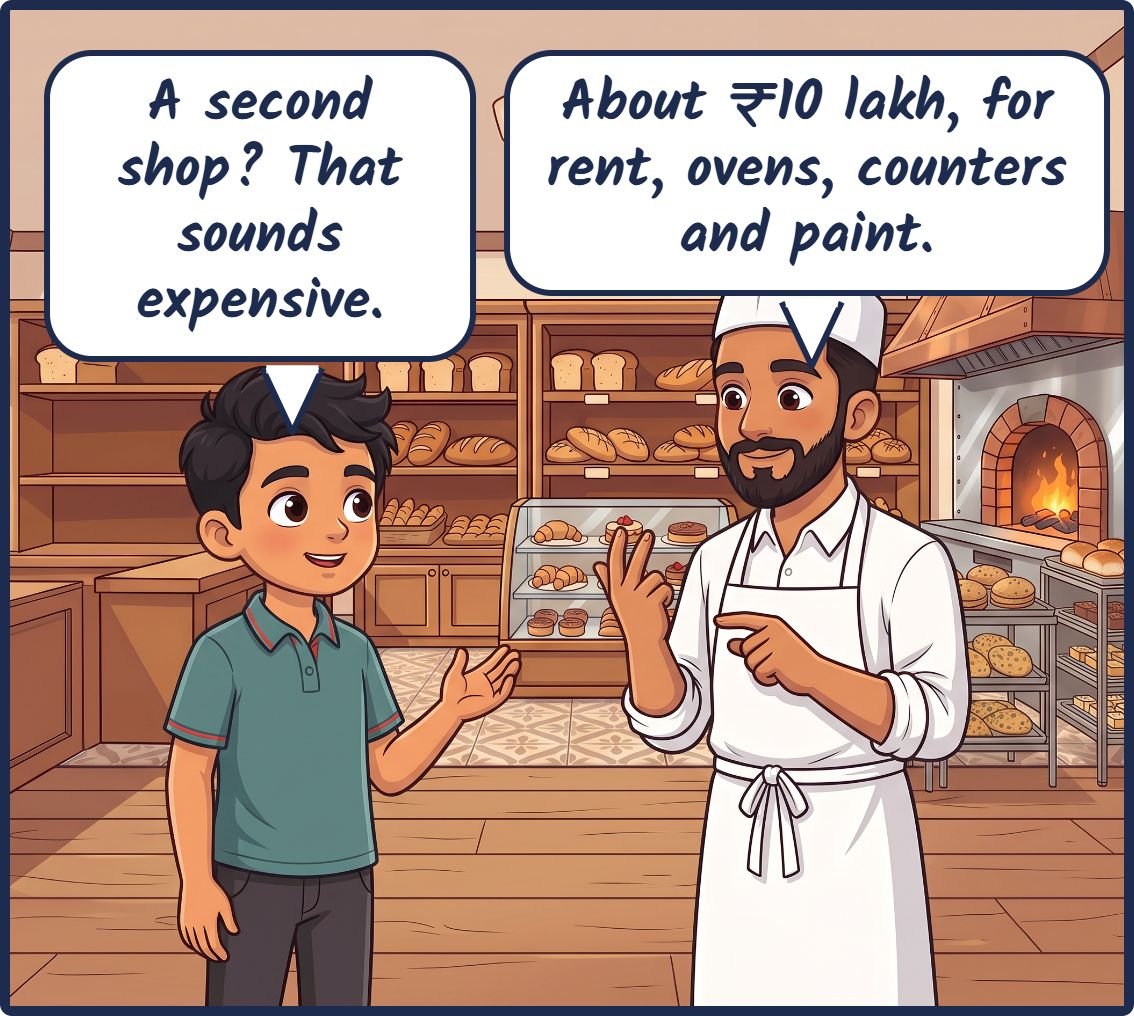
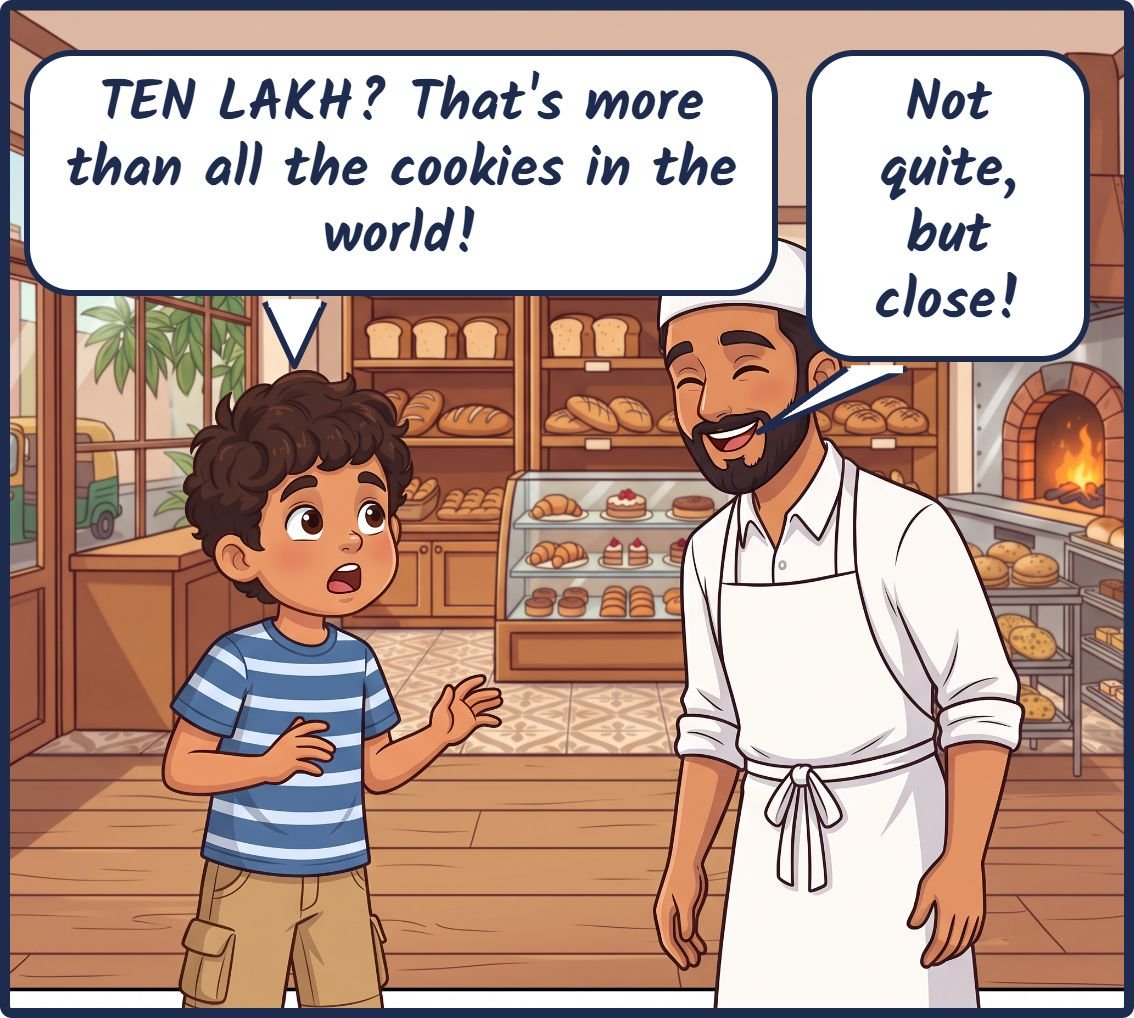
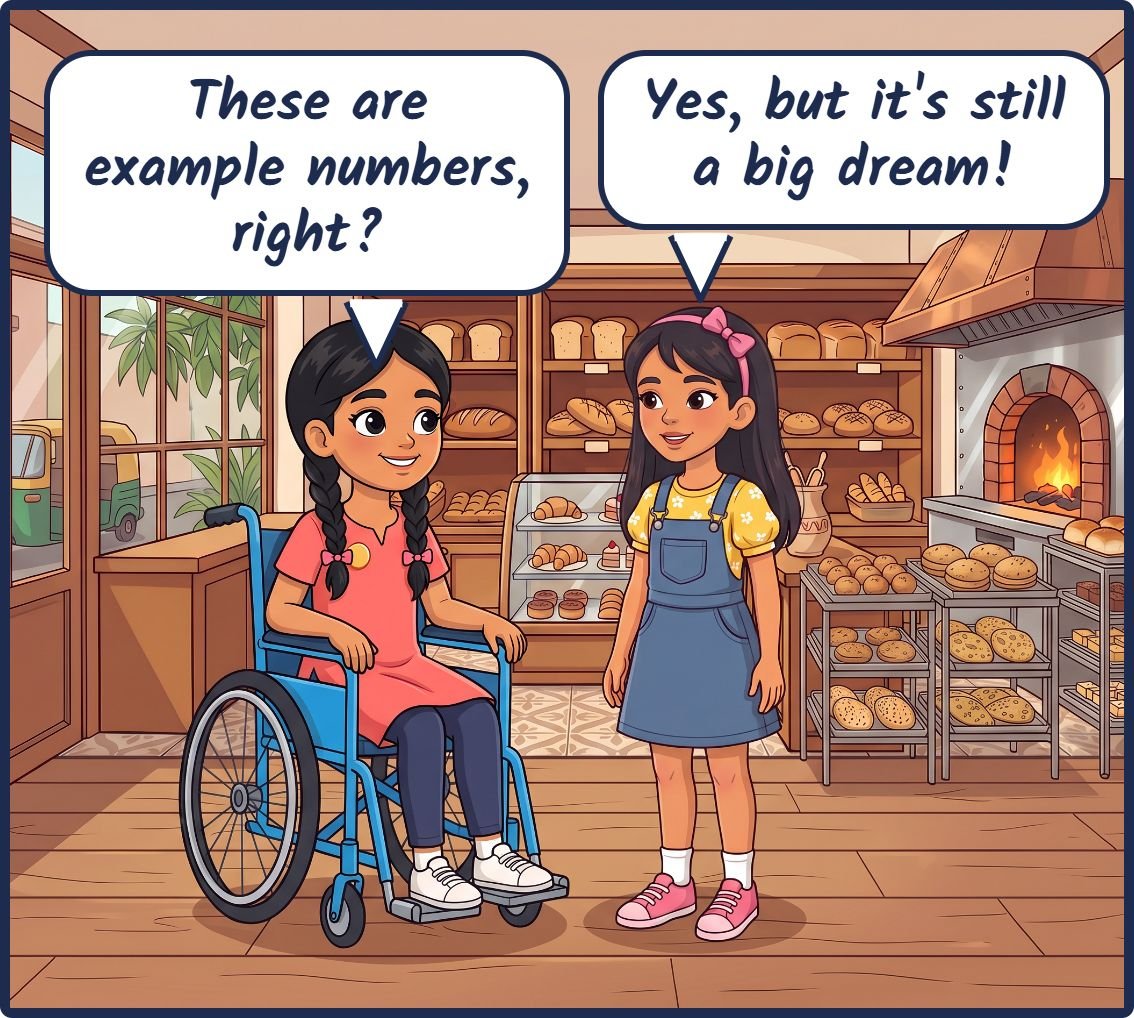
At Vikram Uncle's bakery So many orders! The bakery is bursting! The school children come every day, but it's a long walk here. If only we had a second shop, right near the school! A second shop? That sounds expensive. About ₹10 lakh, for rent, ovens, counters and paint. TEN LAKH? That's more than all the cookies in the world! Not quite, but close! These are example numbers, right? Yes, but it's still a big dream!
Two ways to raise money
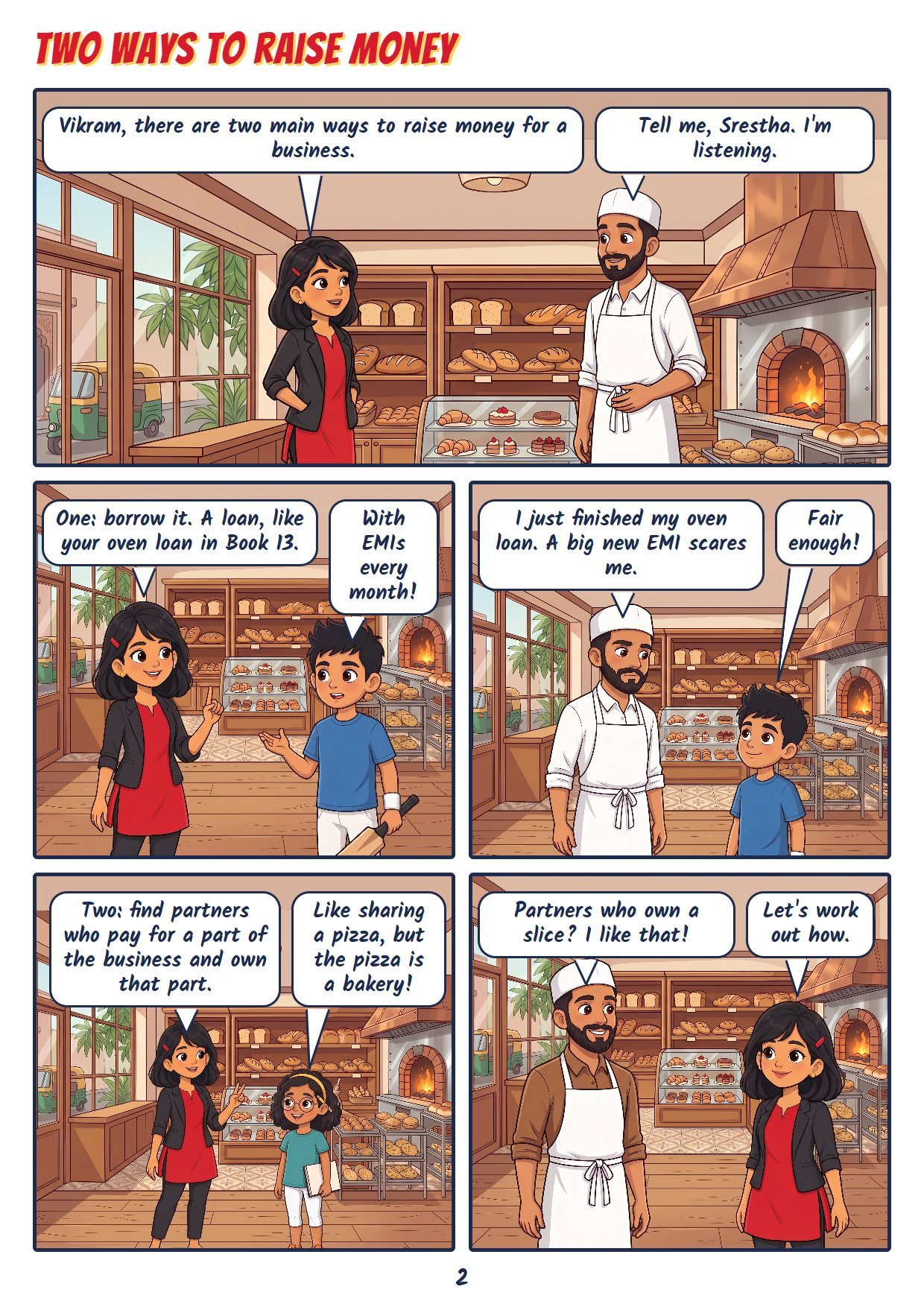
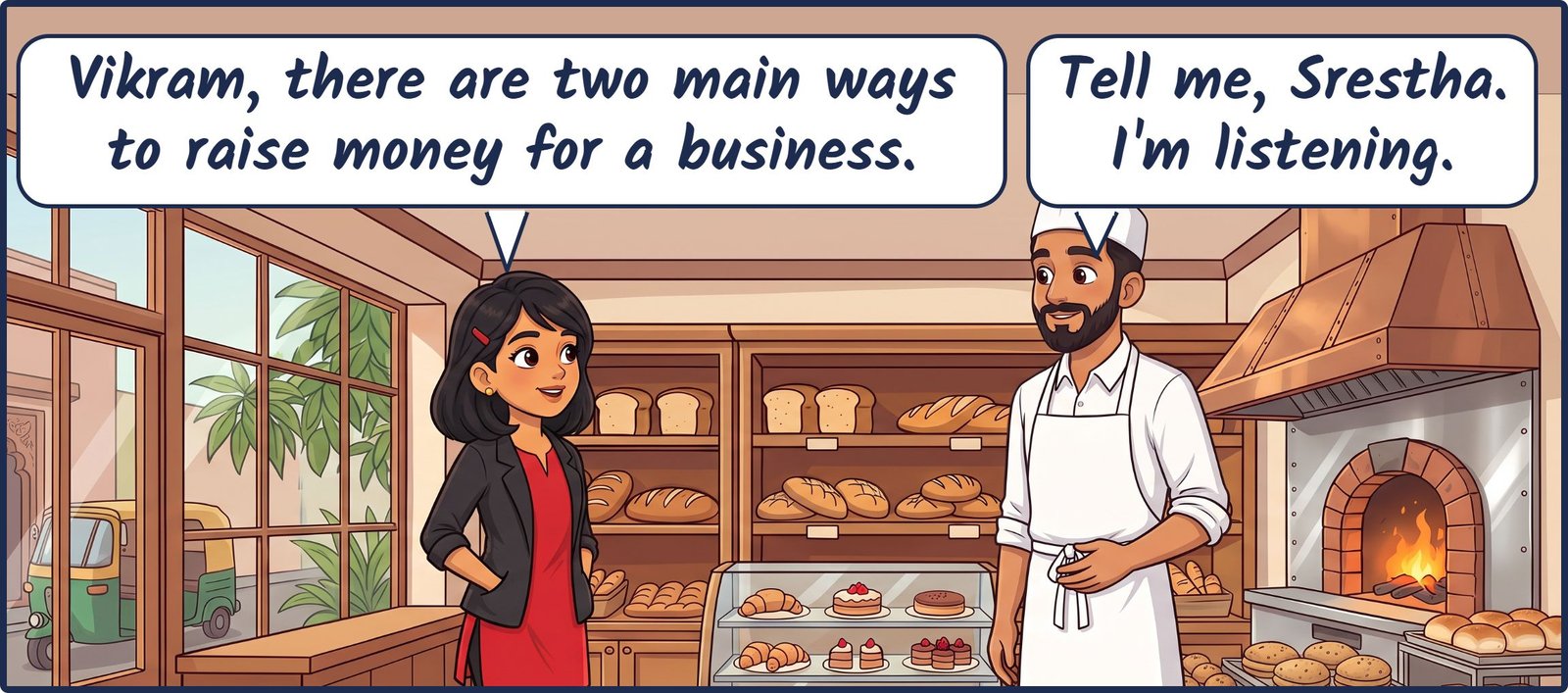
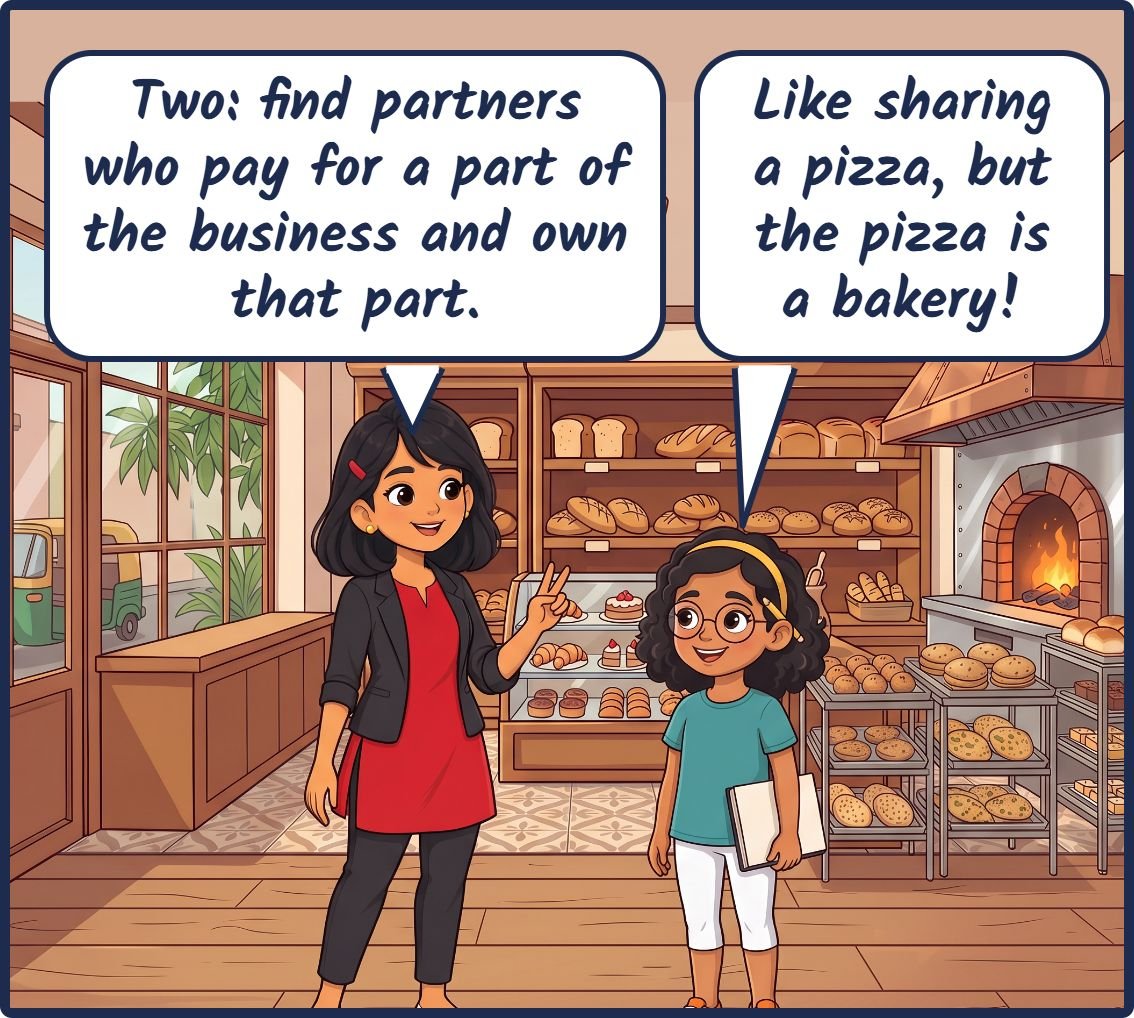
Vikram, there are two main ways to raise money for a business. Tell me, Srestha. I'm listening. One: borrow it. A loan, like your oven loan in Book 13. With EMIs every month! I just finished my oven loan. A big new EMI scares me. Fair enough! Two: find partners who pay for a part of the business and own that part. Like sharing a pizza, but the pizza is a bakery! Partners who own a slice? I like that! Let's work out how.
Slicing the bakery

First, the bakery becomes a company, owned in 100 equal parts. Each part is called a share! Each share costs ₹20,000. All 100 shares make ₹20 lakh. So the whole bakery is worth ₹20 lakh in our story! I'll keep 60 shares. I'll offer 40 to people I know. 40 times ₹20,000 is ₹8 lakh! But you need ₹10 lakh. Where's the rest? A small loan for ₹2 lakh. Much smaller EMIs! Can I buy a share with my piggy bank? Ha! Maybe a cookie-sized one, Kabir.
Who buys a slice?
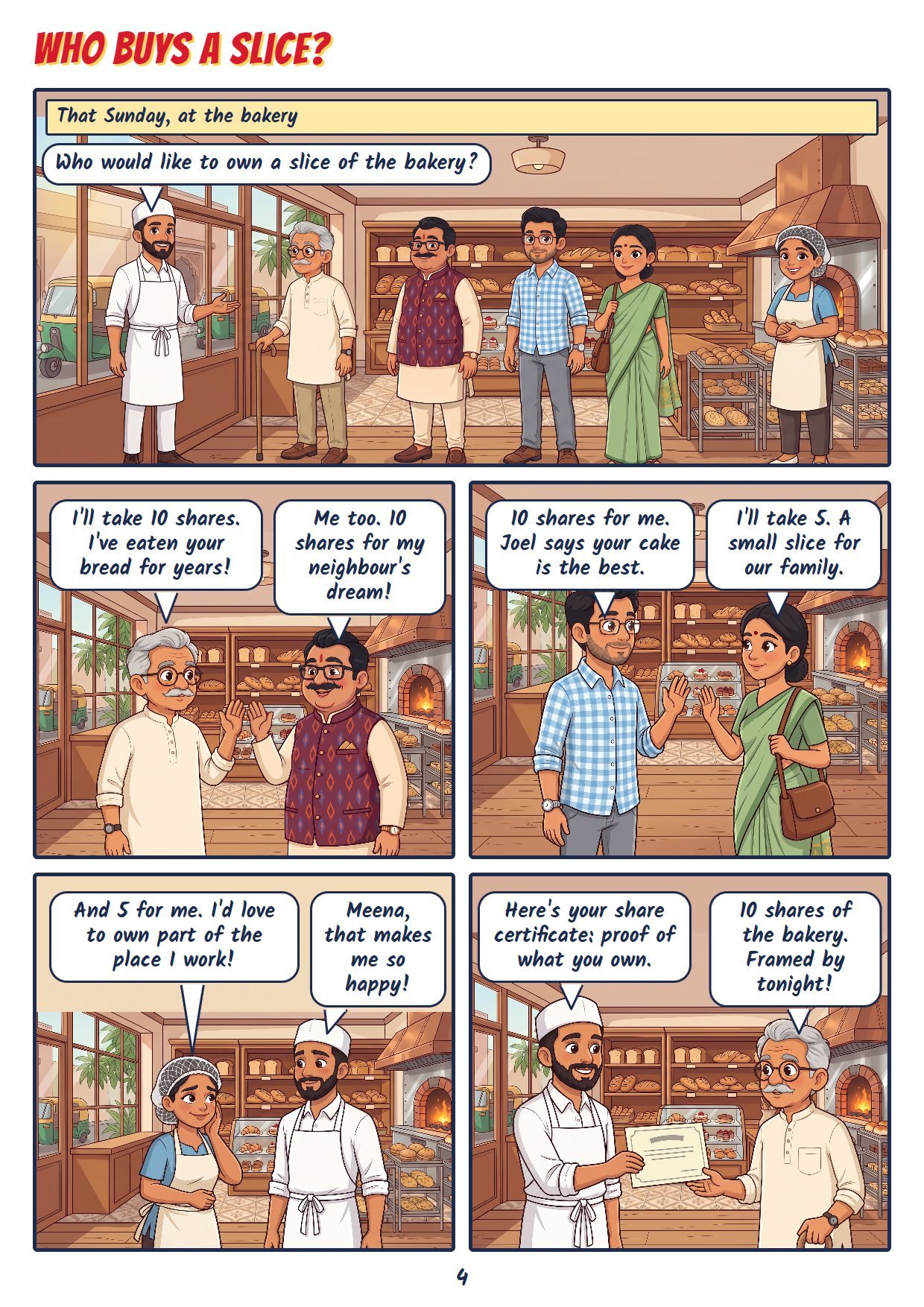
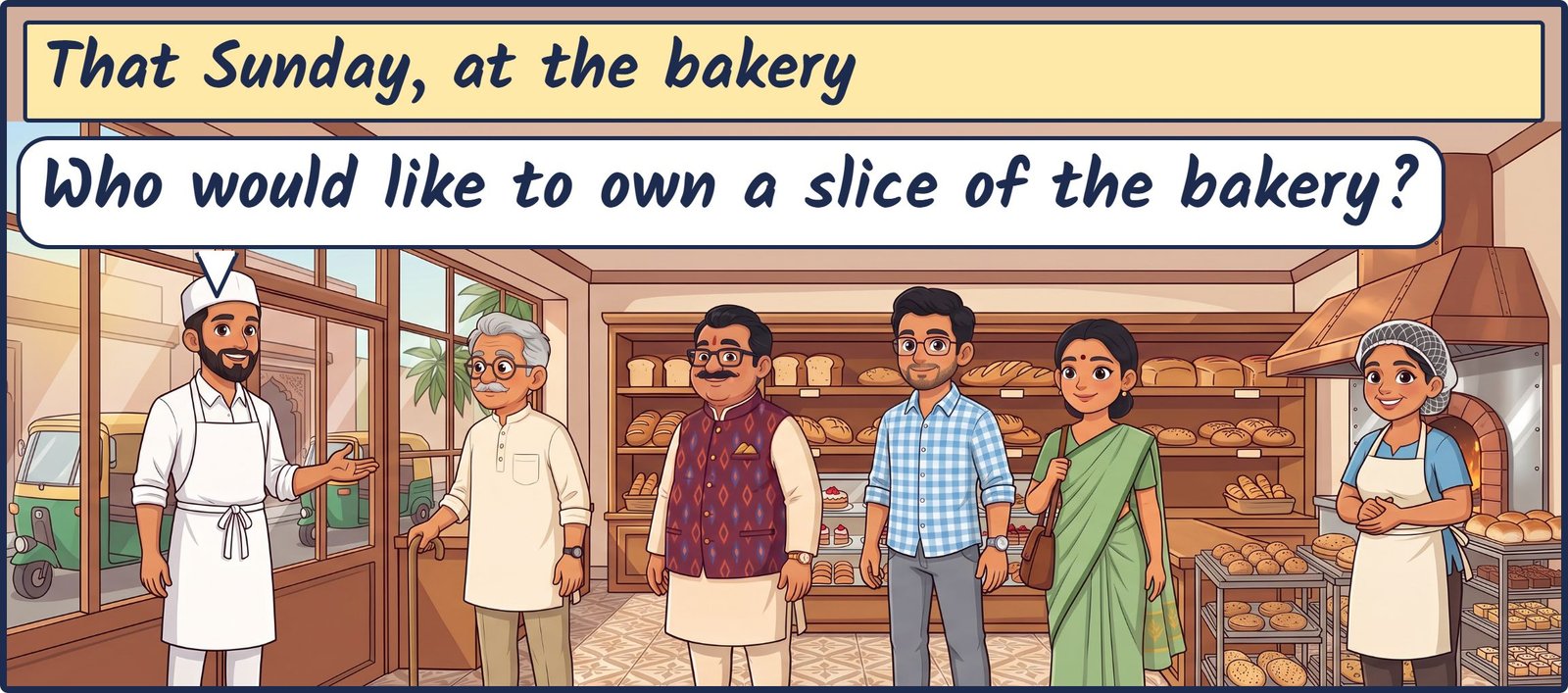
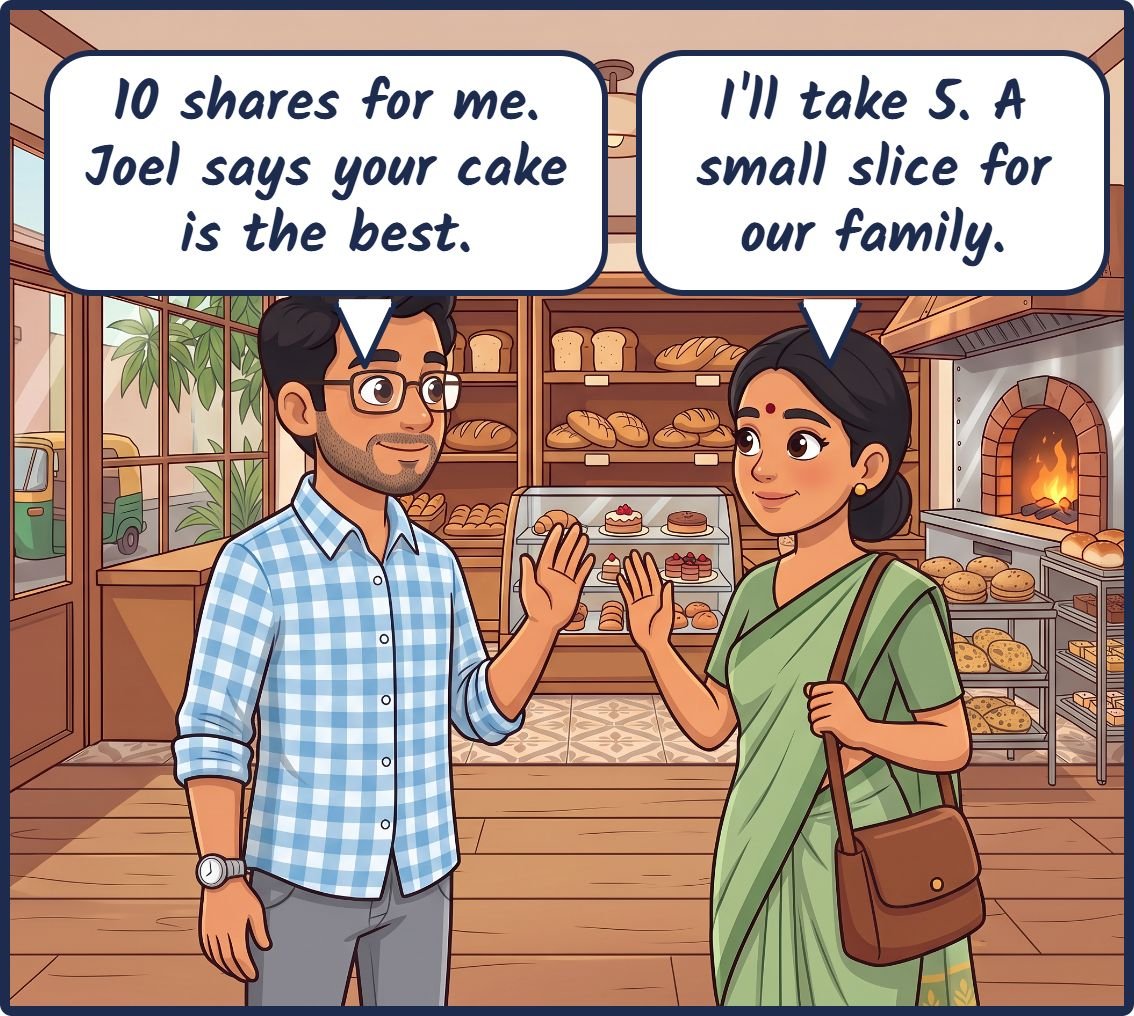
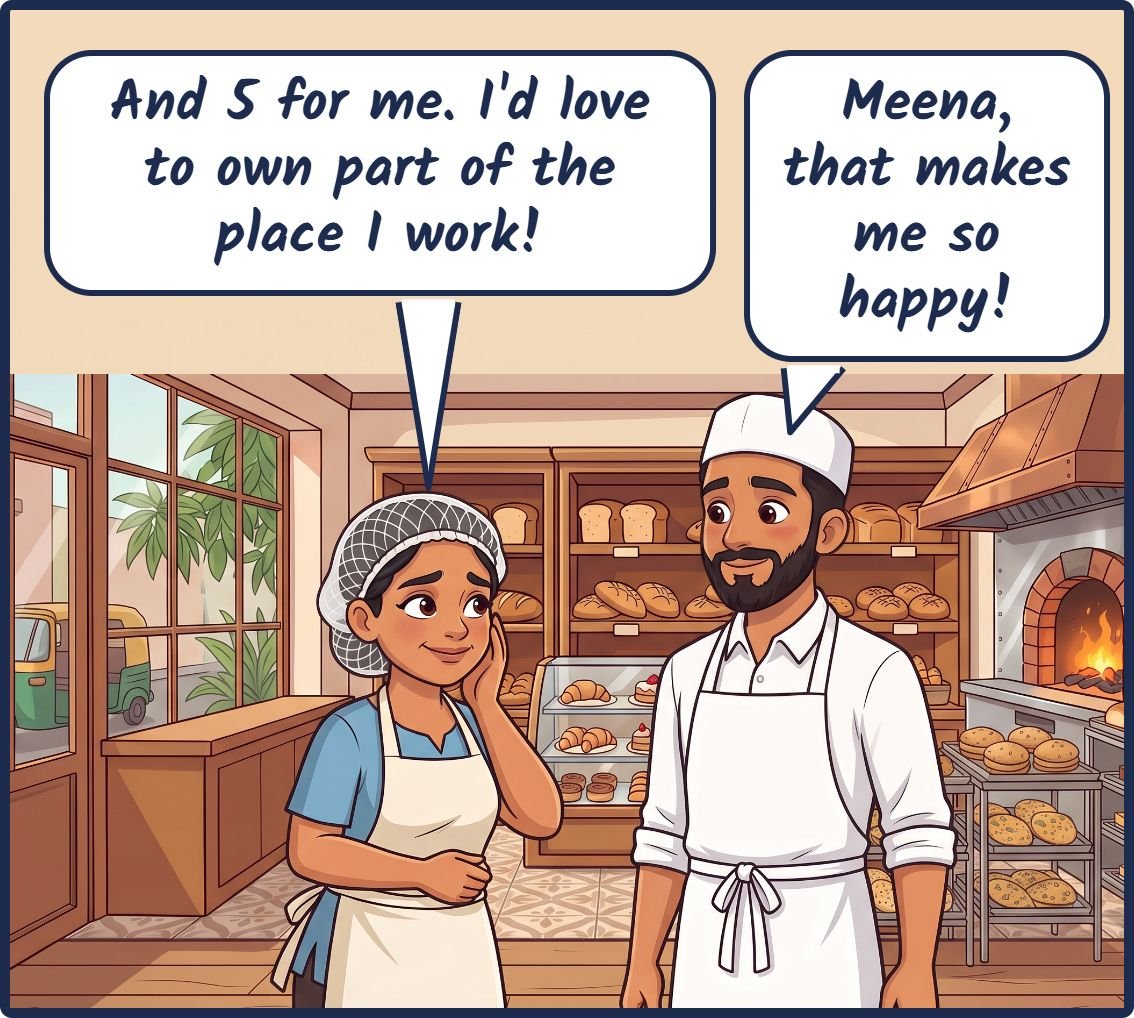
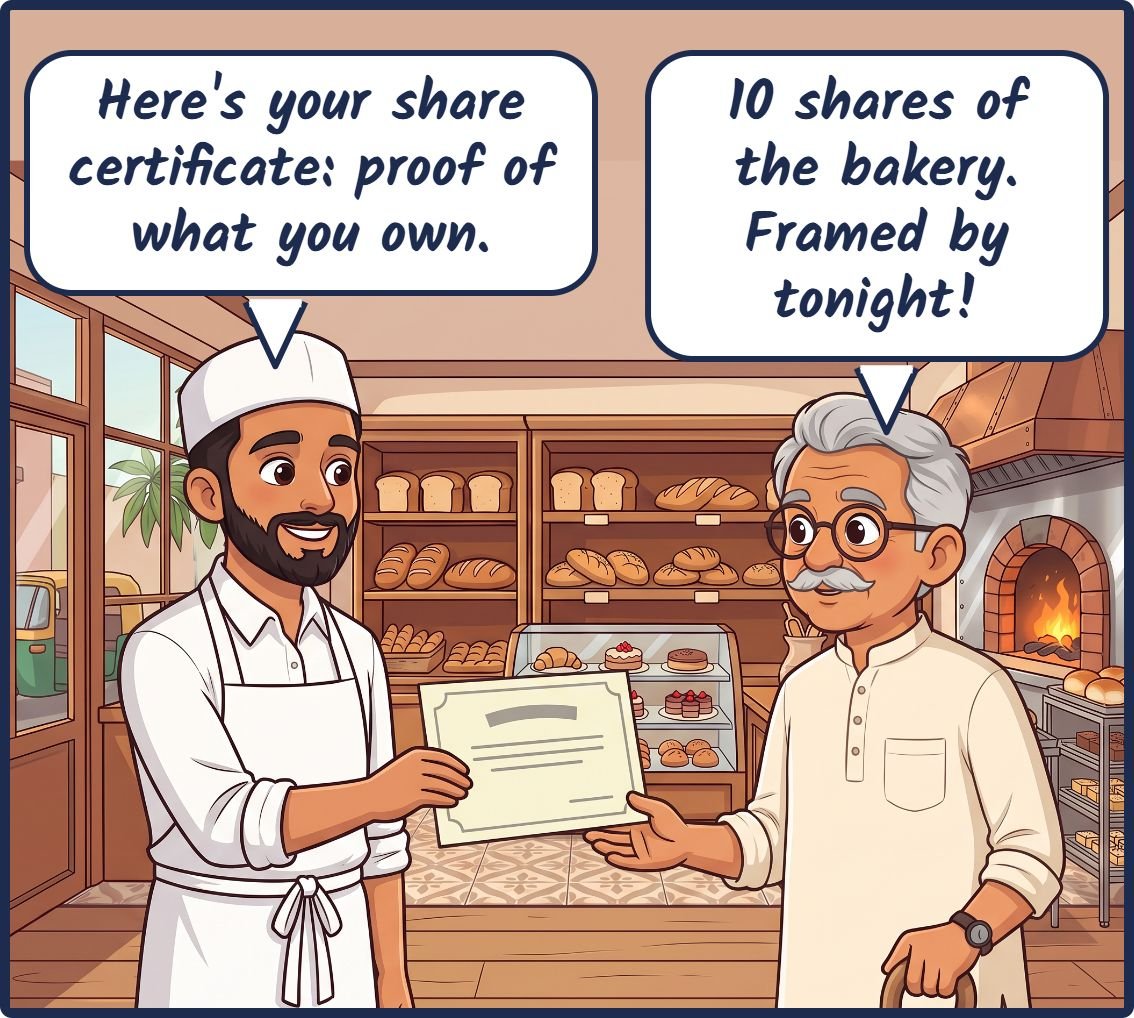
That Sunday, at the bakery Who would like to own a slice of the bakery? I'll take 10 shares. I've eaten your bread for years! Me too. 10 shares for my neighbour's dream! 10 shares for me. Joel says your cake is the best. I'll take 5. A small slice for our family. And 5 for me. I'd love to own part of the place I work! Meena, that makes me so happy! Here's your share certificate: proof of what you own. 10 shares of the bakery. Framed by tonight!
What a slice means

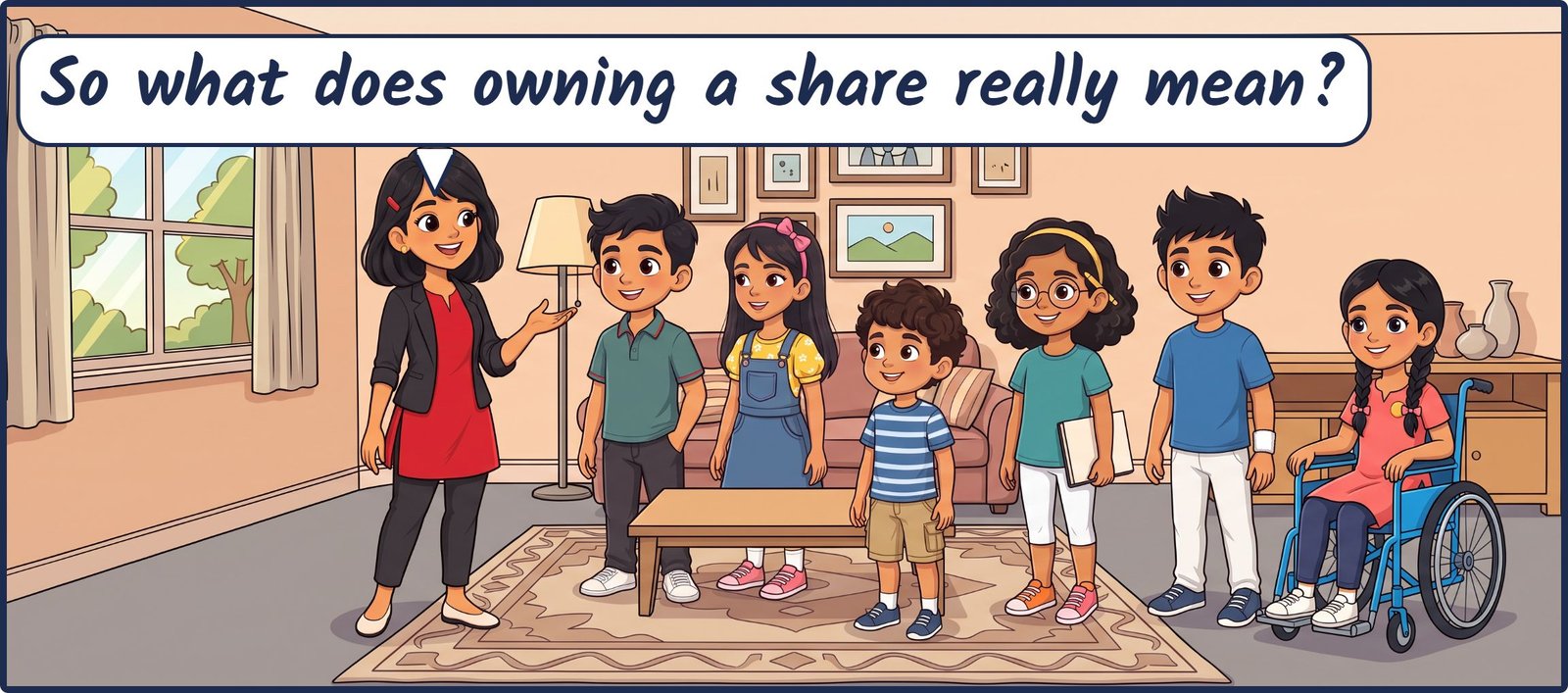
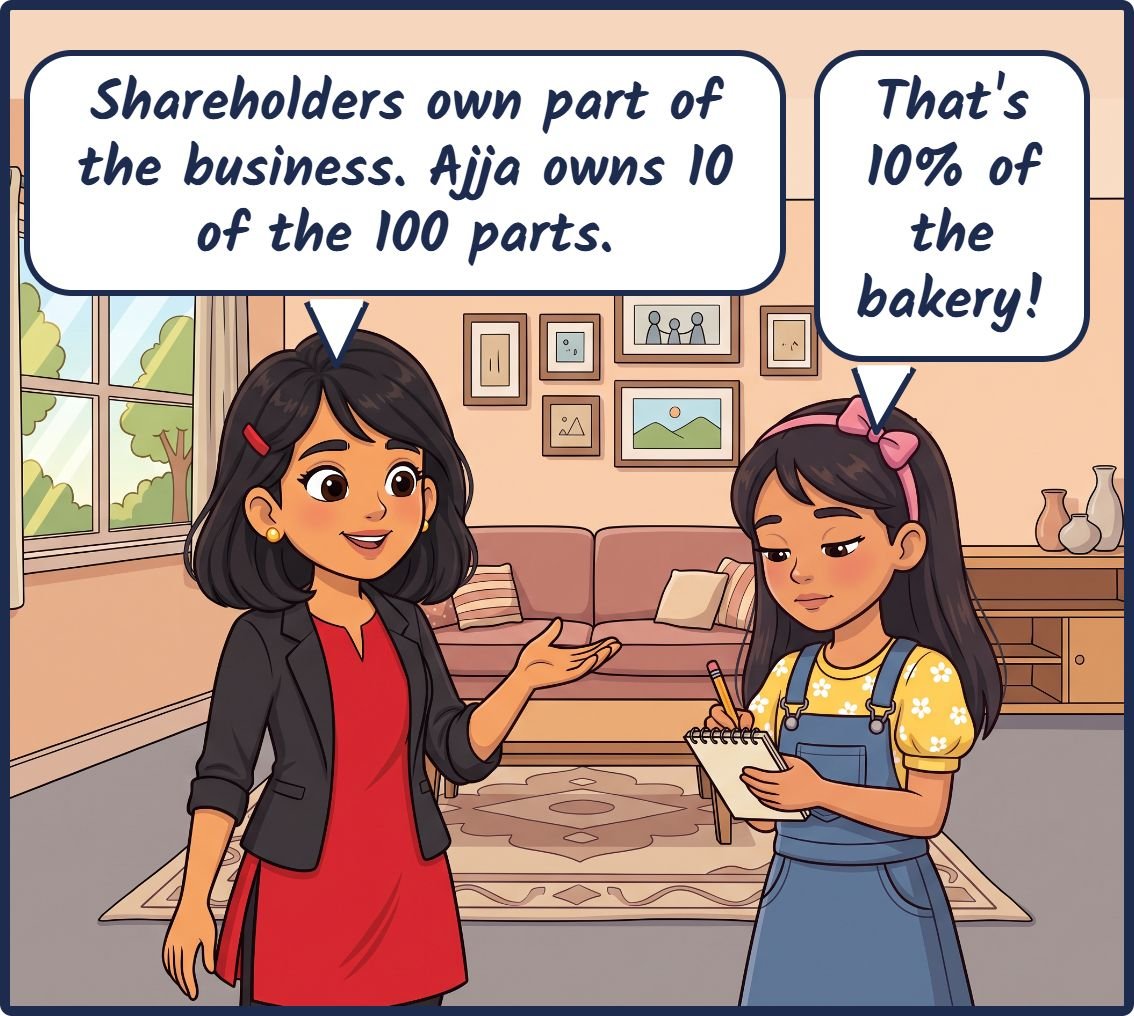
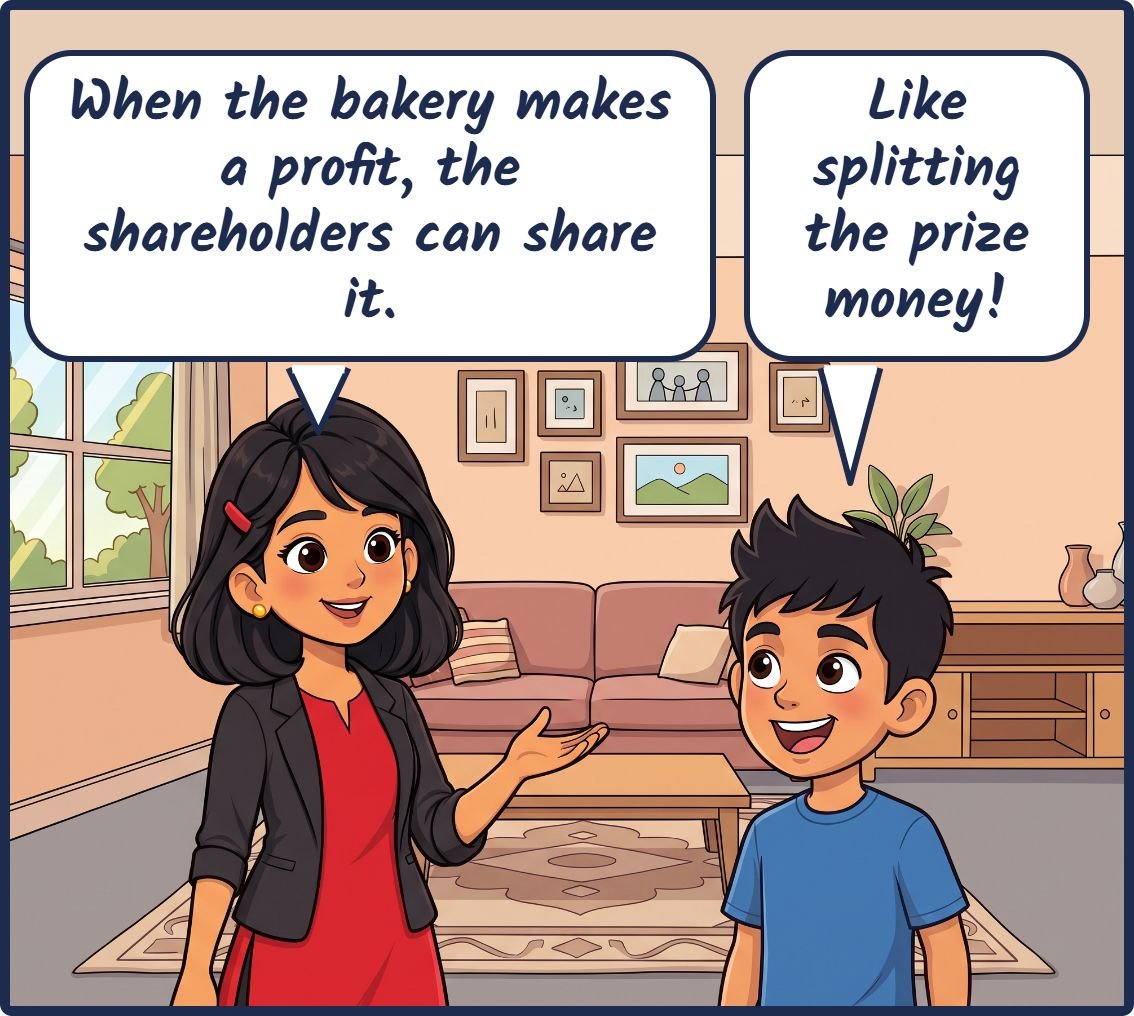
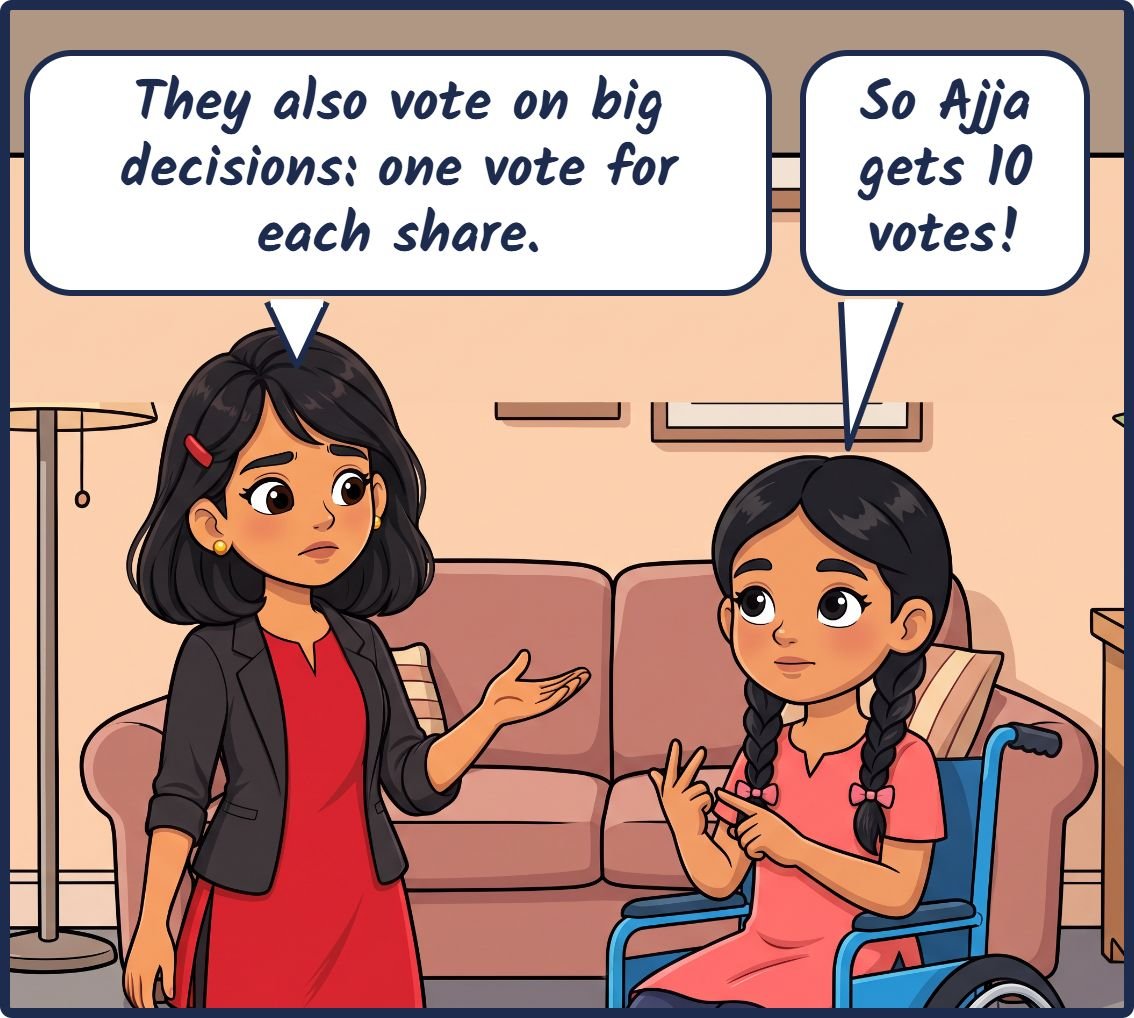
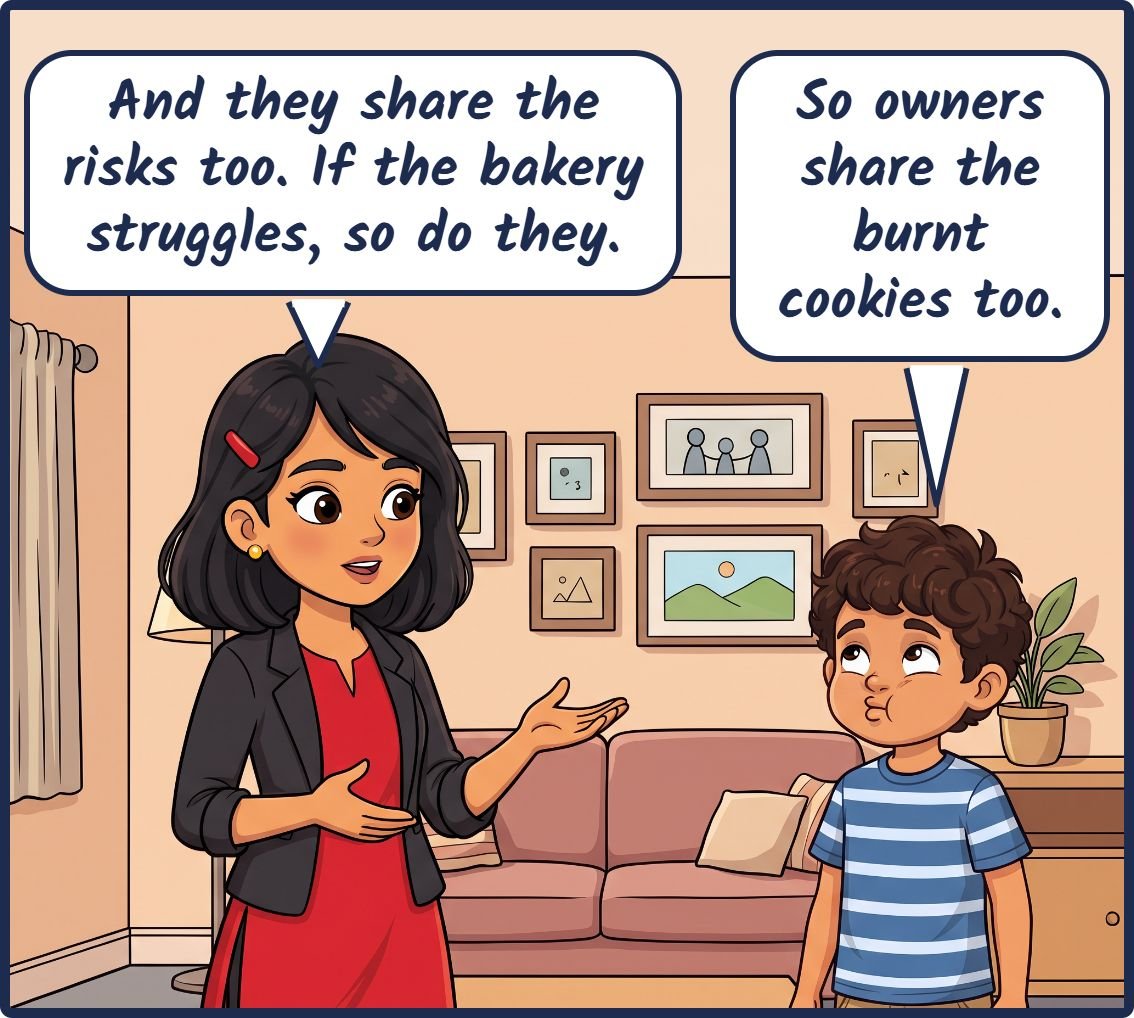
So what does owning a share really mean? Shareholders own part of the business. Ajja owns 10 of the 100 parts. That's 10% of the bakery! When the bakery makes a profit, the shareholders can share it. Like splitting the prize money! They also vote on big decisions: one vote for each share. So Ajja gets 10 votes! And they share the risks too. If the bakery struggles, so do they. So owners share the burnt cookies too.
The new shop opens
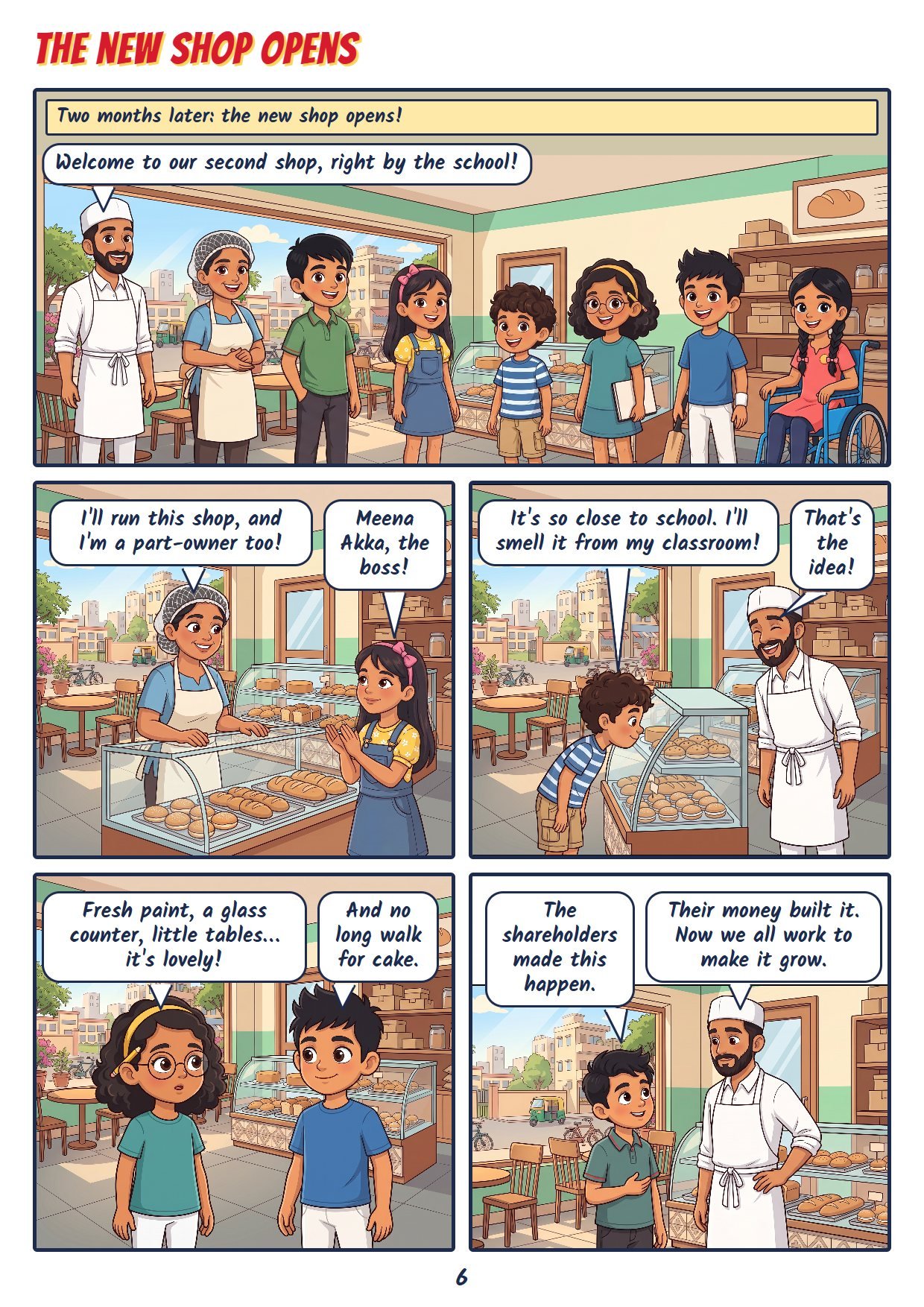
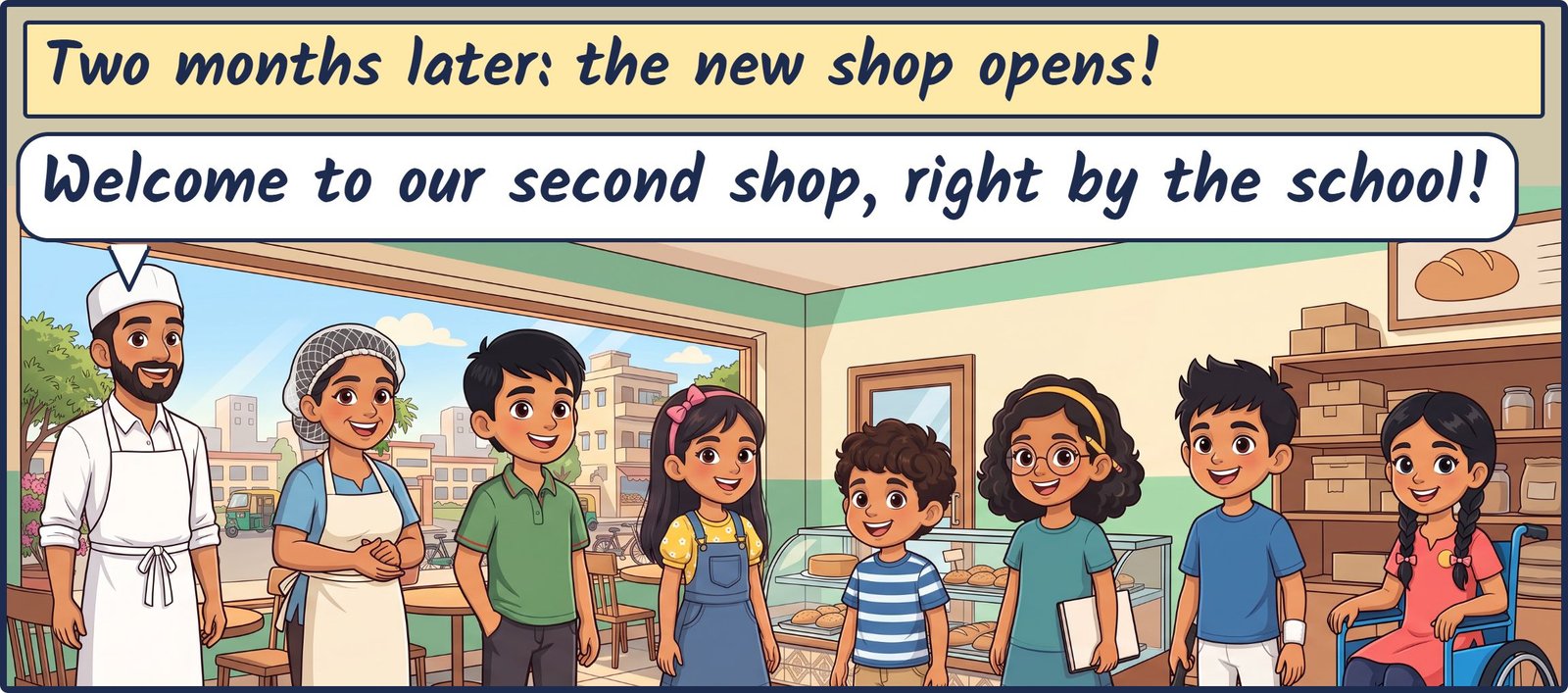
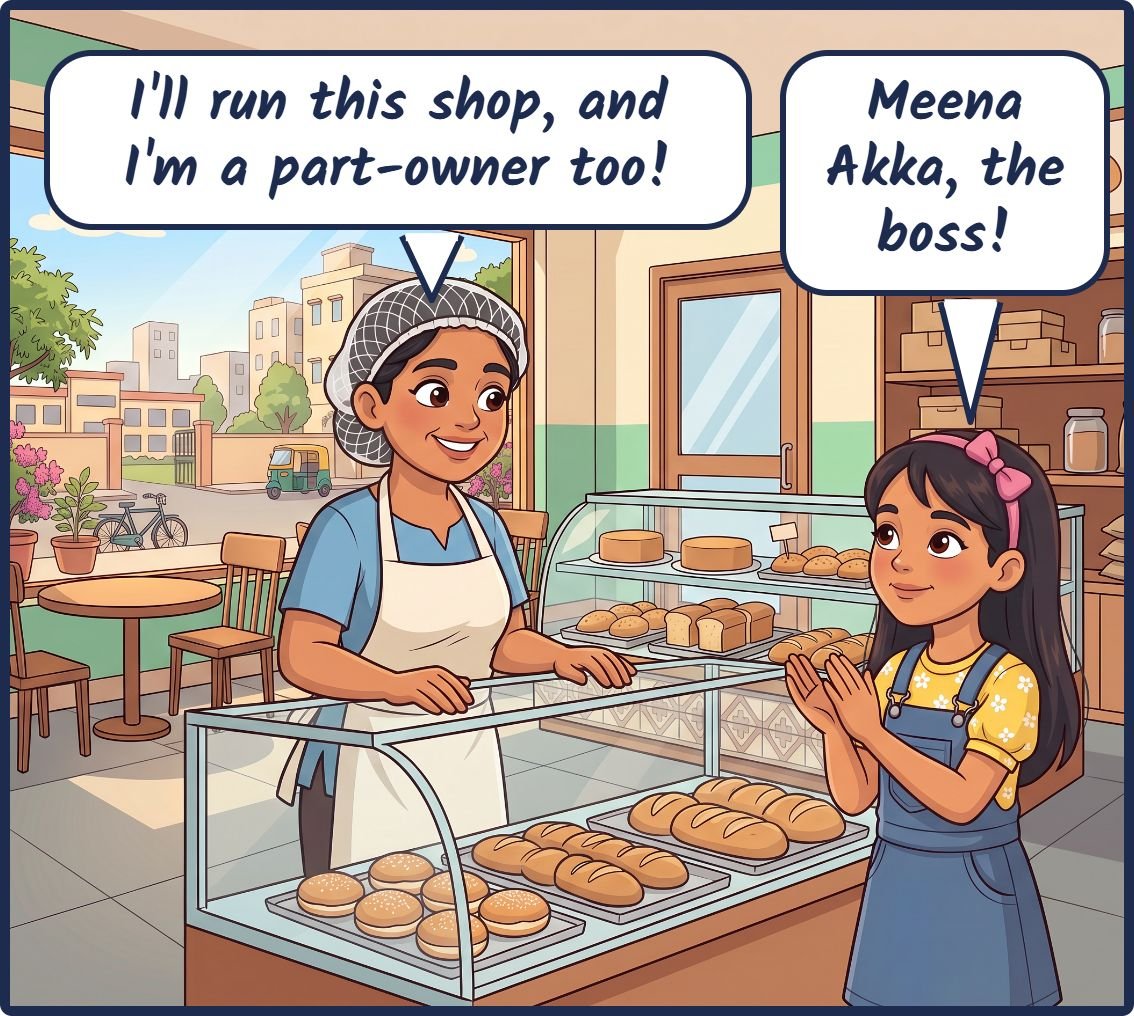
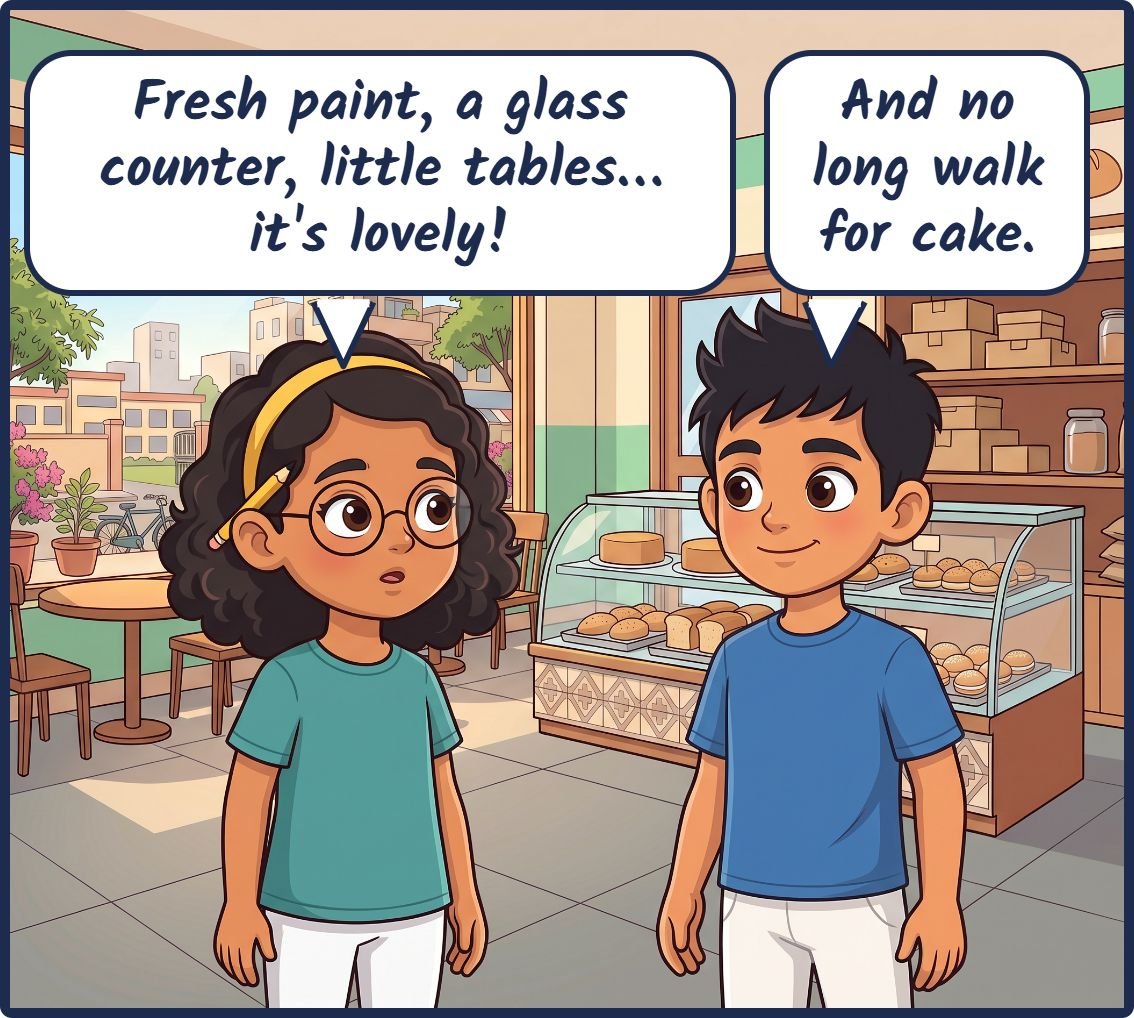
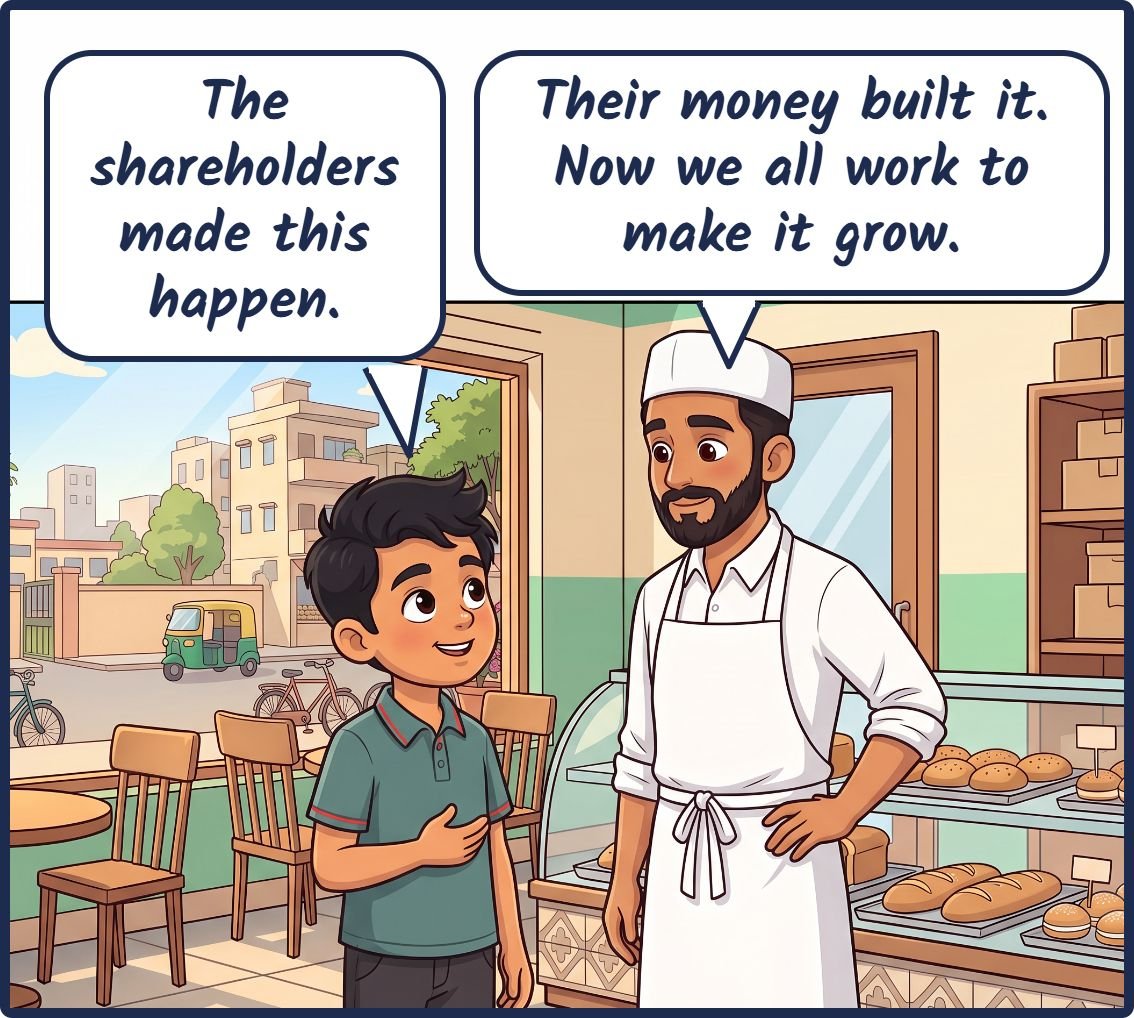
Two months later: the new shop opens! Welcome to our second shop, right by the school! I'll run this shop, and I'm a part-owner too! Meena Akka, the boss! It's so close to school. I'll smell it from my classroom! That's the idea! Fresh paint, a glass counter, little tables… it's lovely! And no long walk for cake. The shareholders made this happen. Their money built it. Now we all work to make it grow.
Profit time

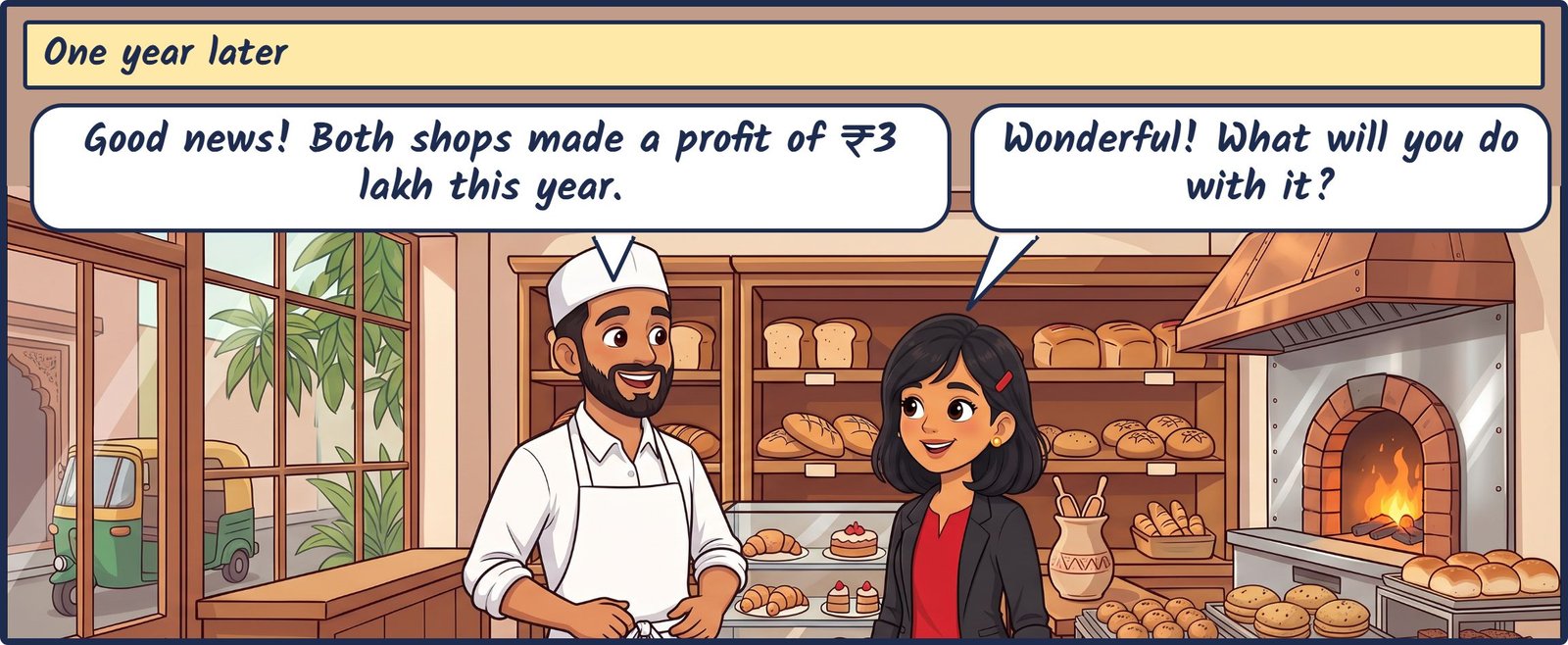
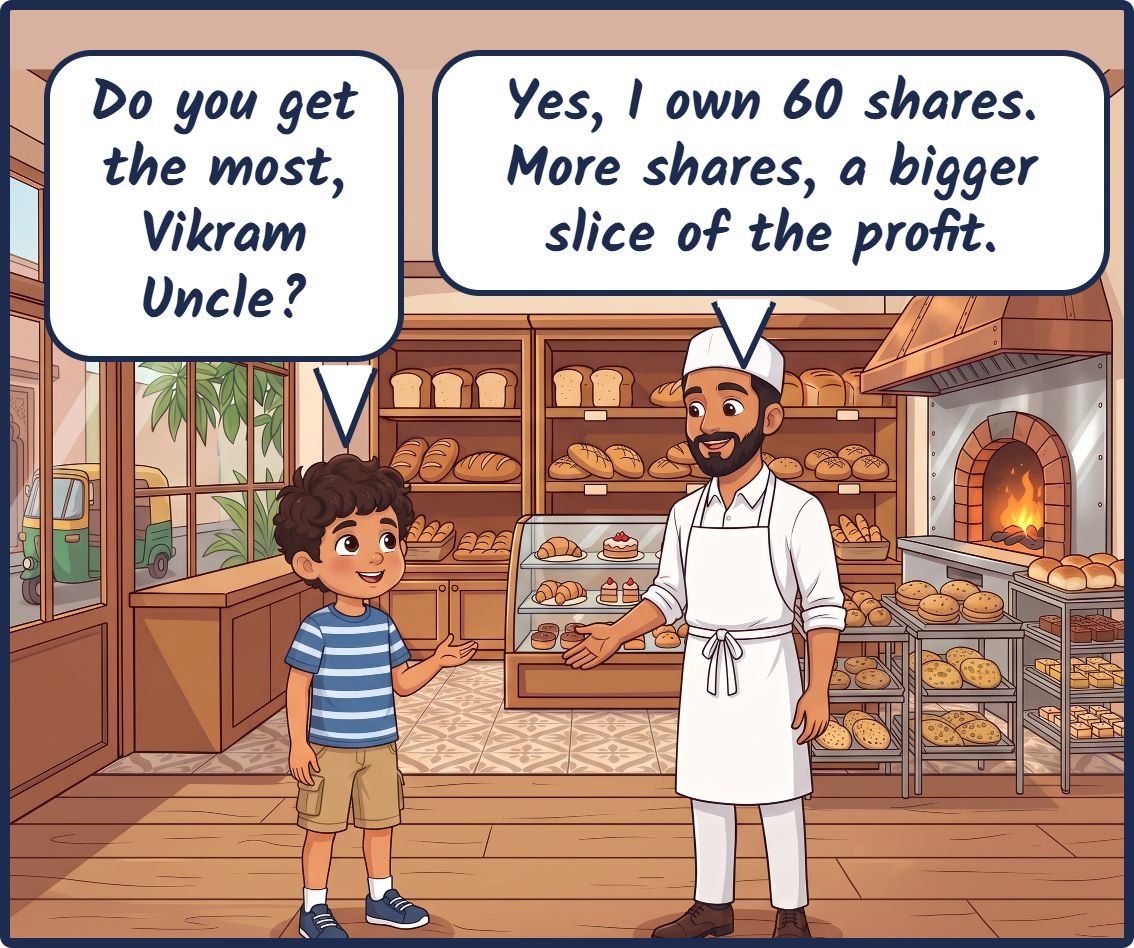
One year later Good news! Both shops made a profit of ₹3 lakh this year. Wonderful! What will you do with it? Half, ₹1.5 lakh, stays in the bakery to help it grow. And the other half? The other ₹1.5 lakh is shared among the 100 shares: ₹1,500 per share. That share of the profit is called a dividend! My 10 shares bring me ₹15,000. A tasty dividend! 10 times ₹1,500. Correct! Do you get the most, Vikram Uncle? Yes, I own 60 shares. More shares, a bigger slice of the profit.
The slice grows

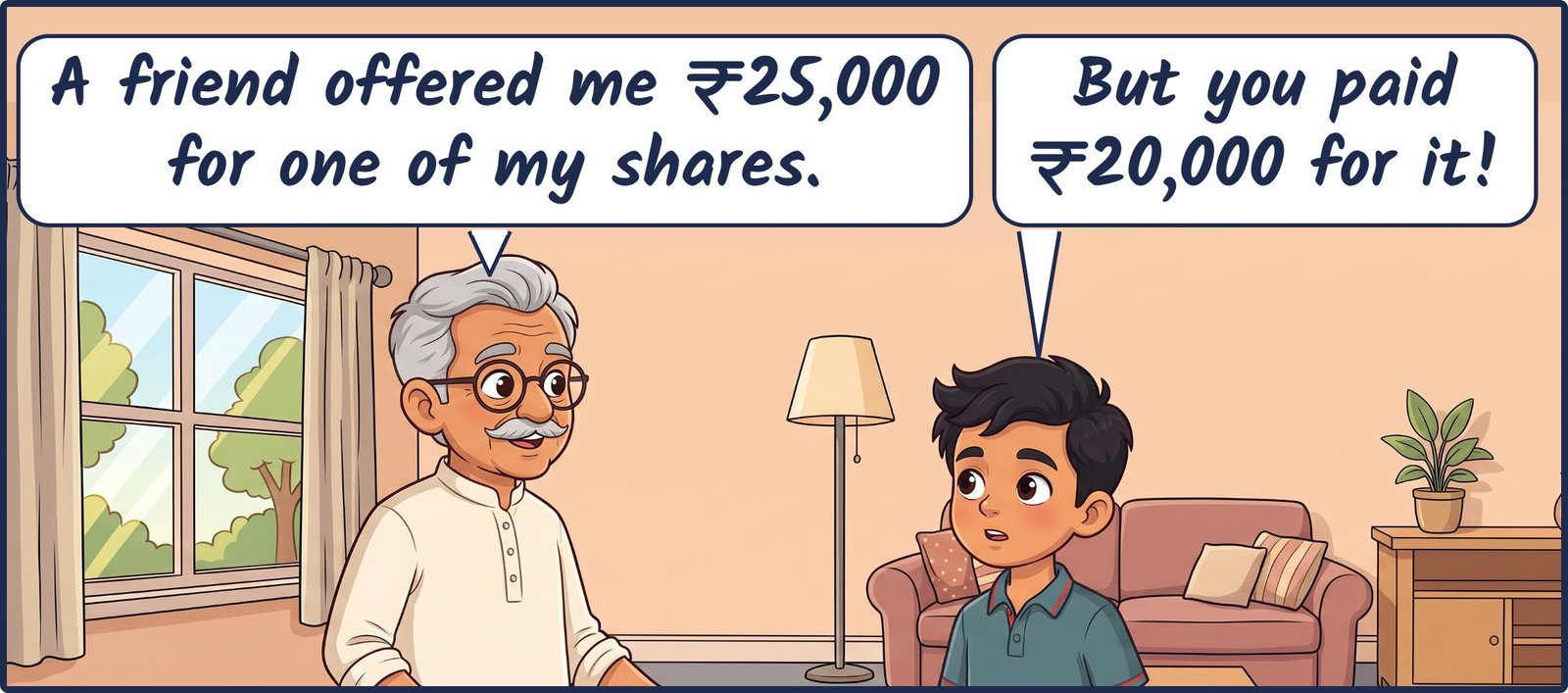
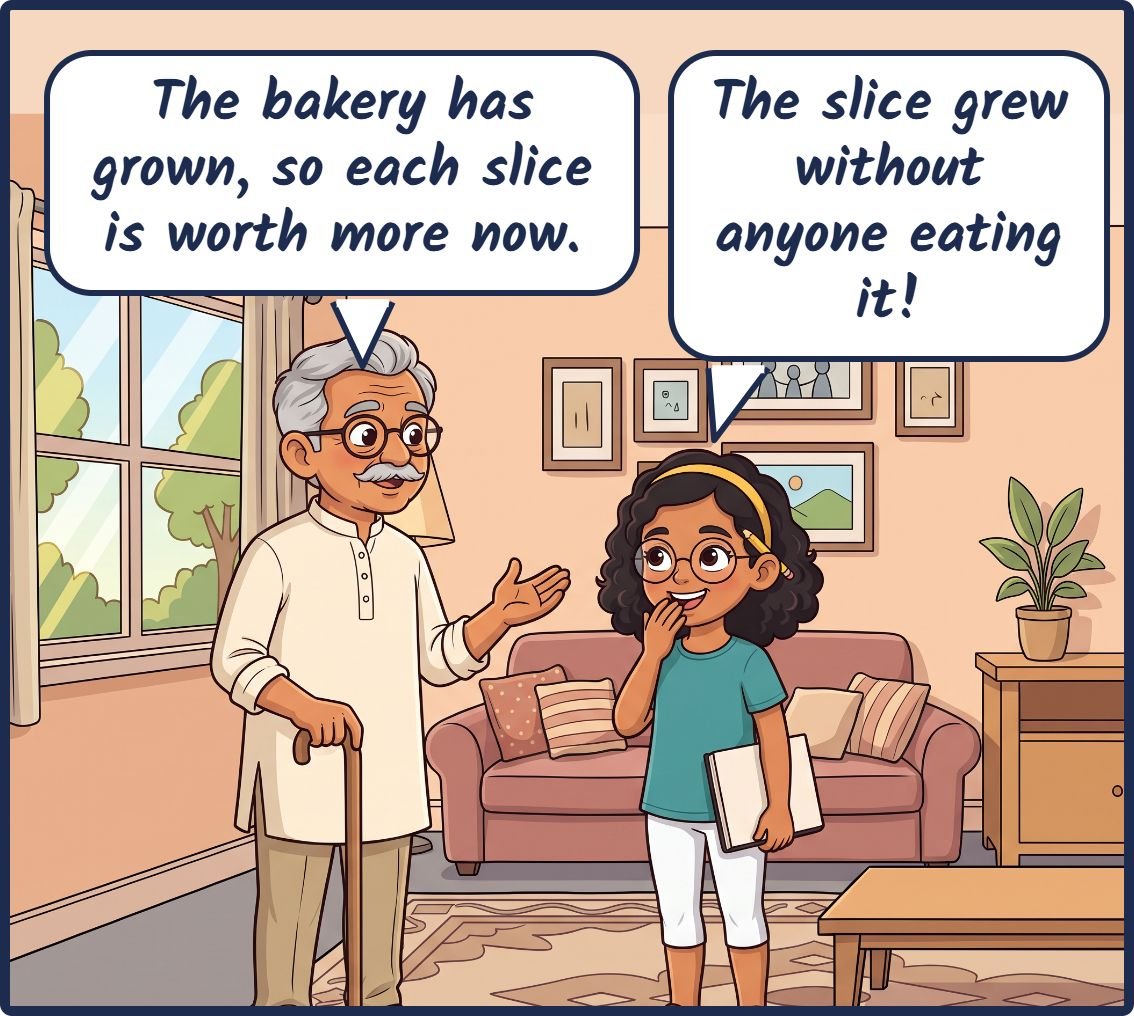
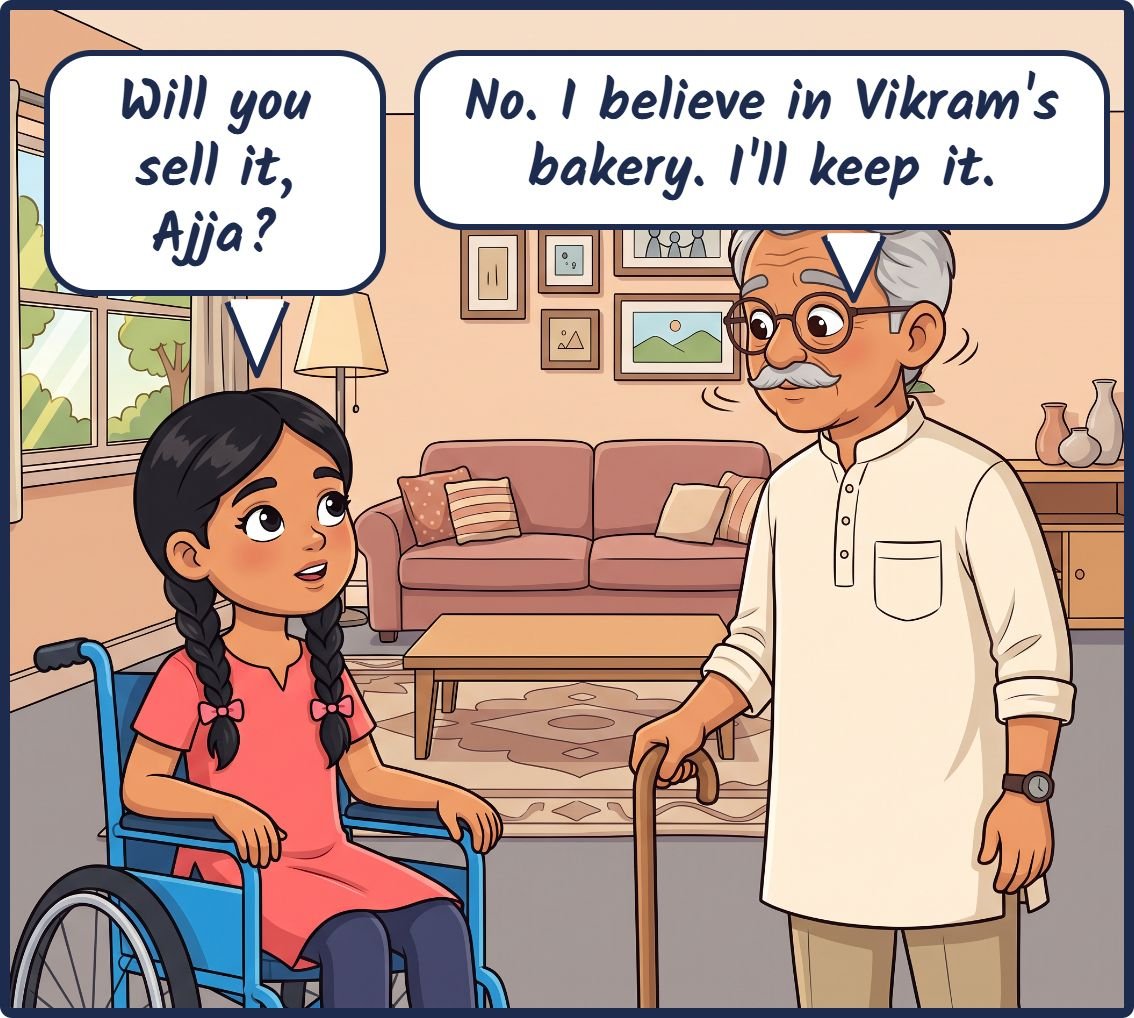
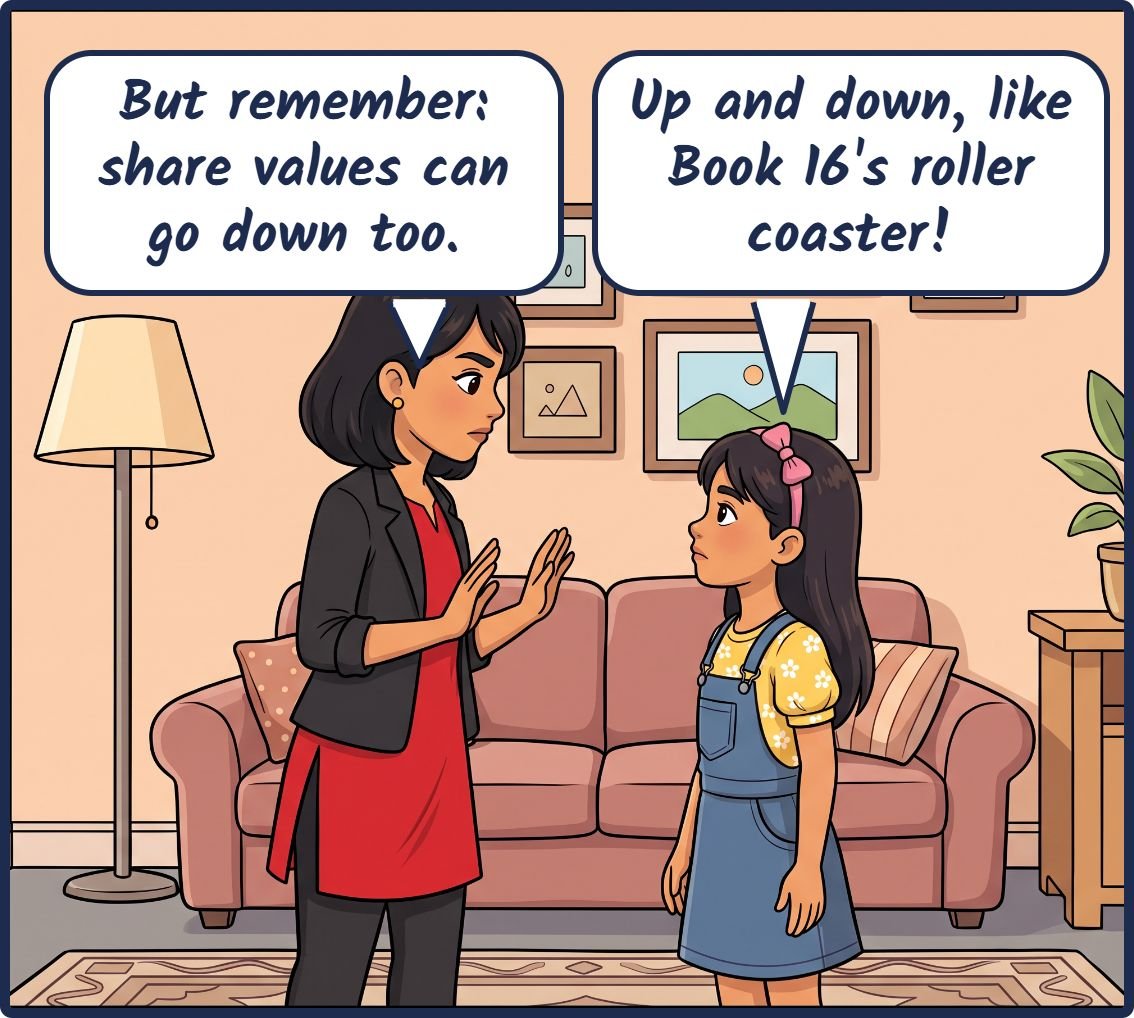
A friend offered me ₹25,000 for one of my shares. But you paid ₹20,000 for it! The bakery has grown, so each slice is worth more now. The slice grew without anyone eating it! When a business does well, its shares can be worth more. Ajja's share went from ₹20,000 to ₹25,000! Will you sell it, Ajja? No. I believe in Vikram's bakery. I'll keep it. But remember: share values can go down too. Up and down, like Book 16's roller coaster!
The rainy months

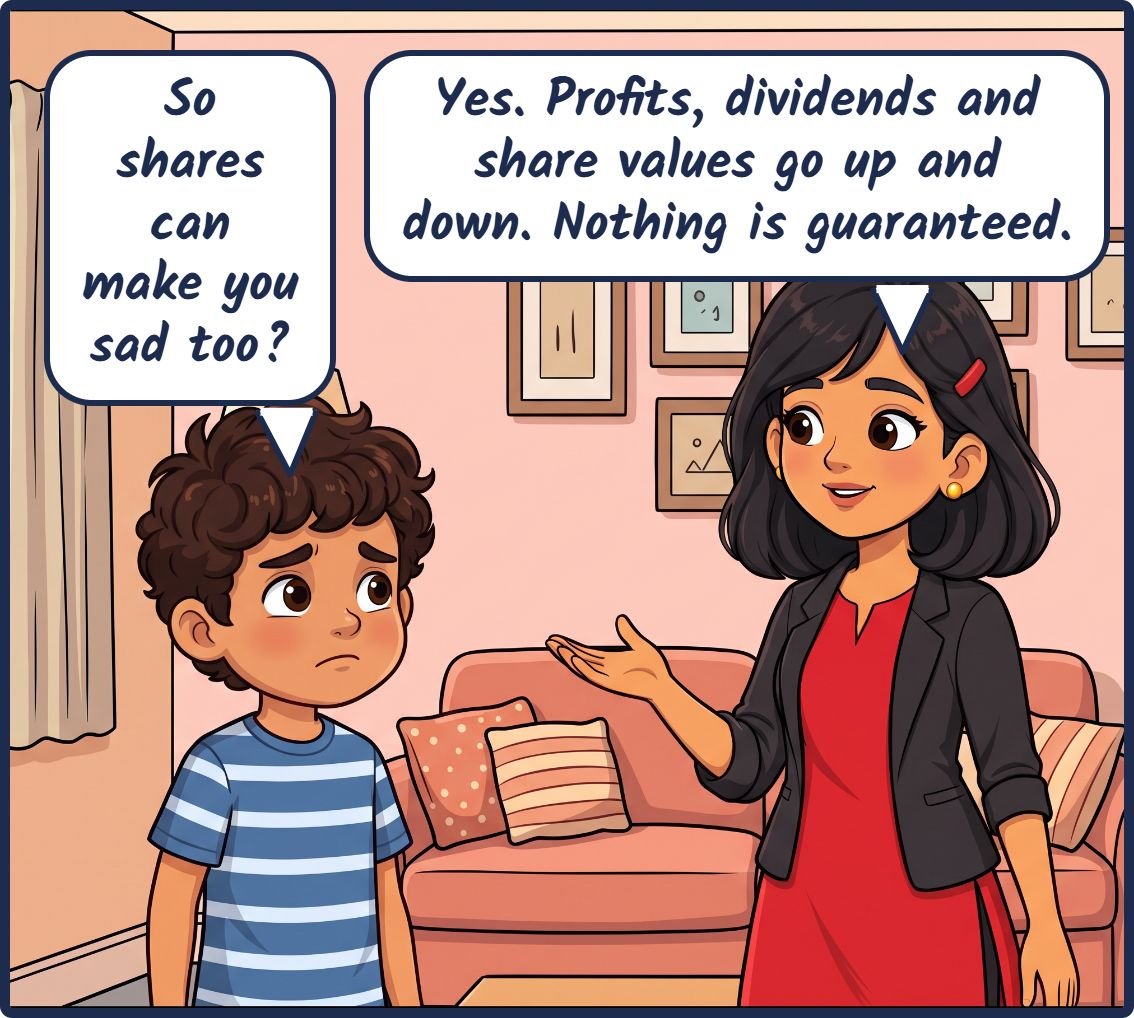
The next monsoon… The new oven broke down, and the rain kept customers away. Repairs cost a lot. Sales are down. Ajja, this year's profit is small. There's no dividend this time. That's the risk of owning a slice. For a while, a share can be worth less than before. Someone might offer only ₹18,000 now! So shares can make you sad too? Yes. Profits, dividends and share values go up and down. Nothing is guaranteed. Unlike an FD, which pays fixed interest. Exactly. Shares carry more risk.
Not all eggs in one basket
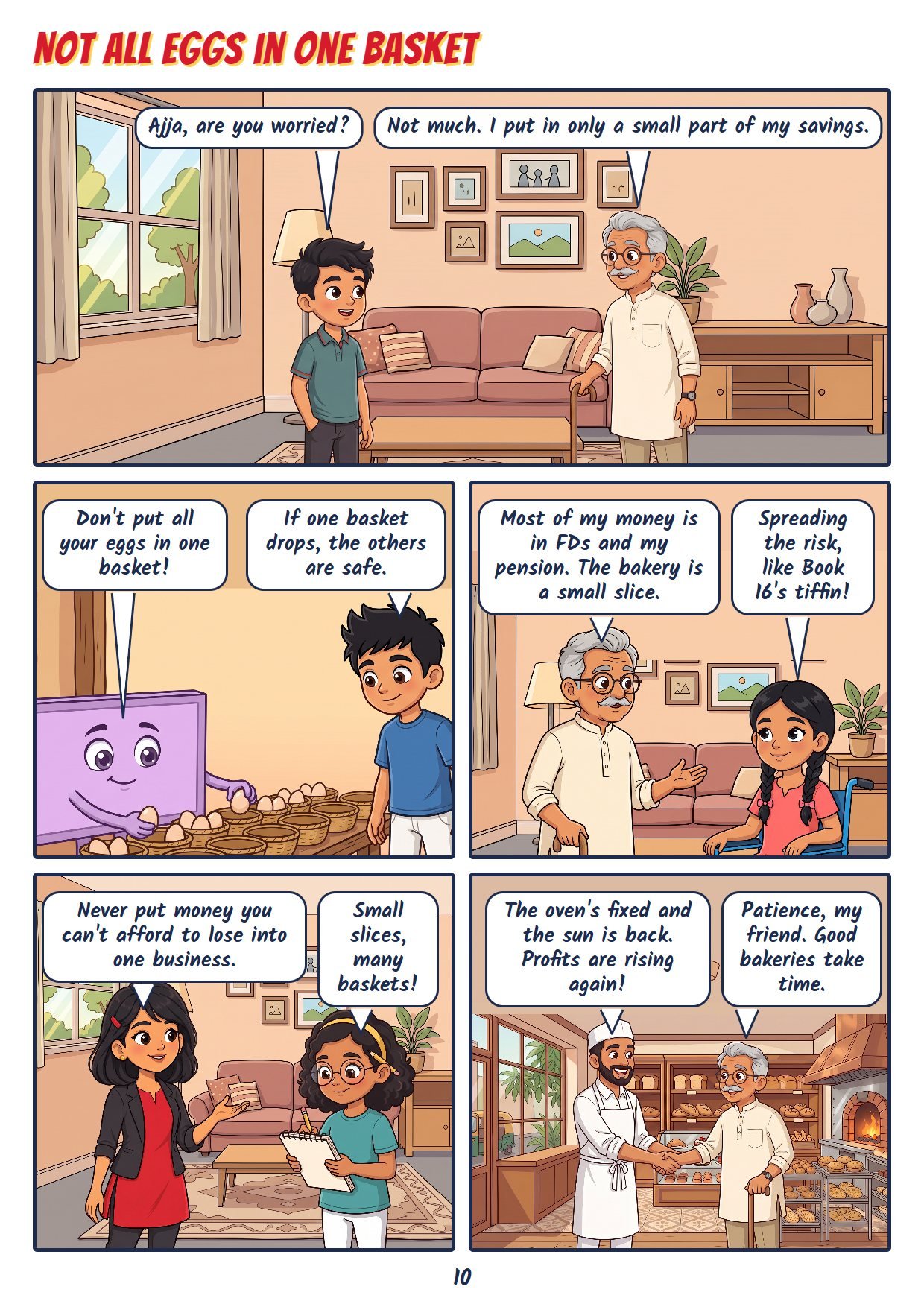
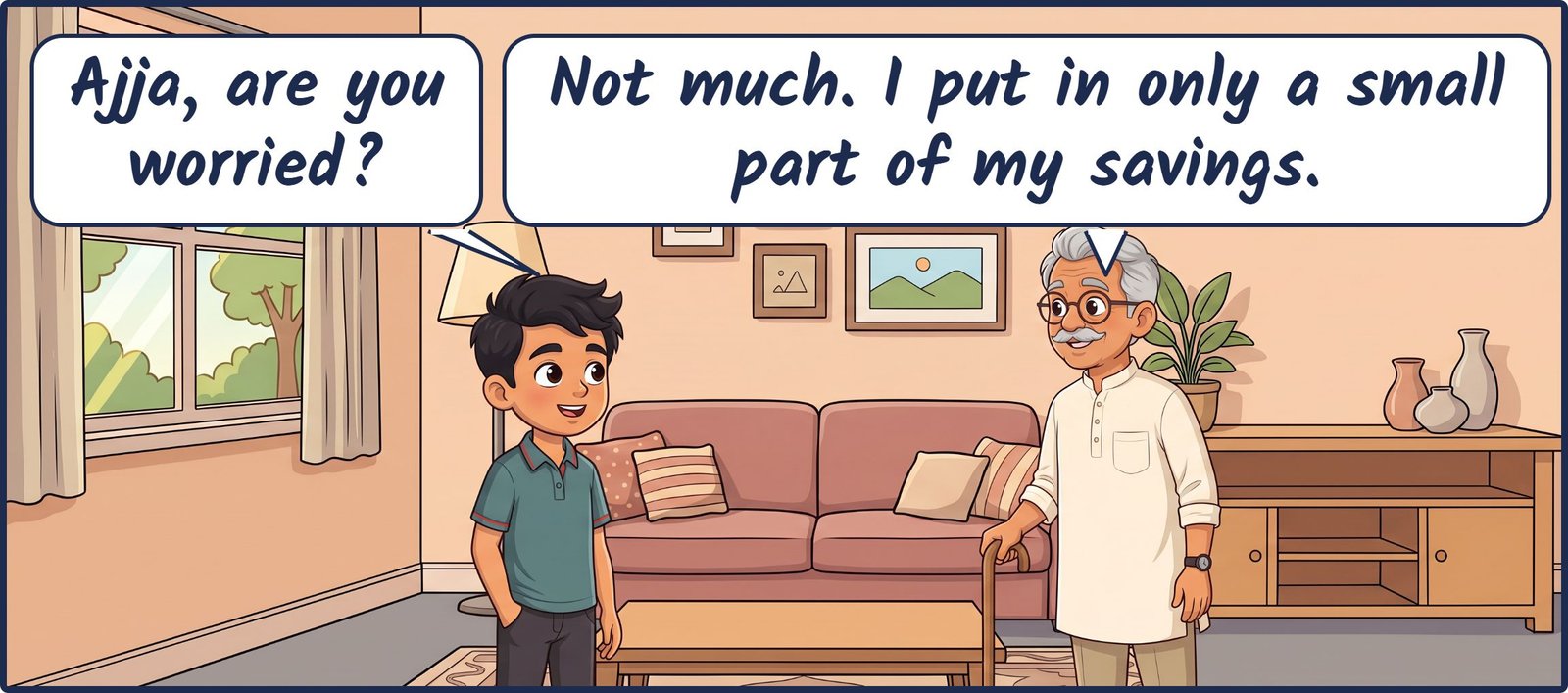
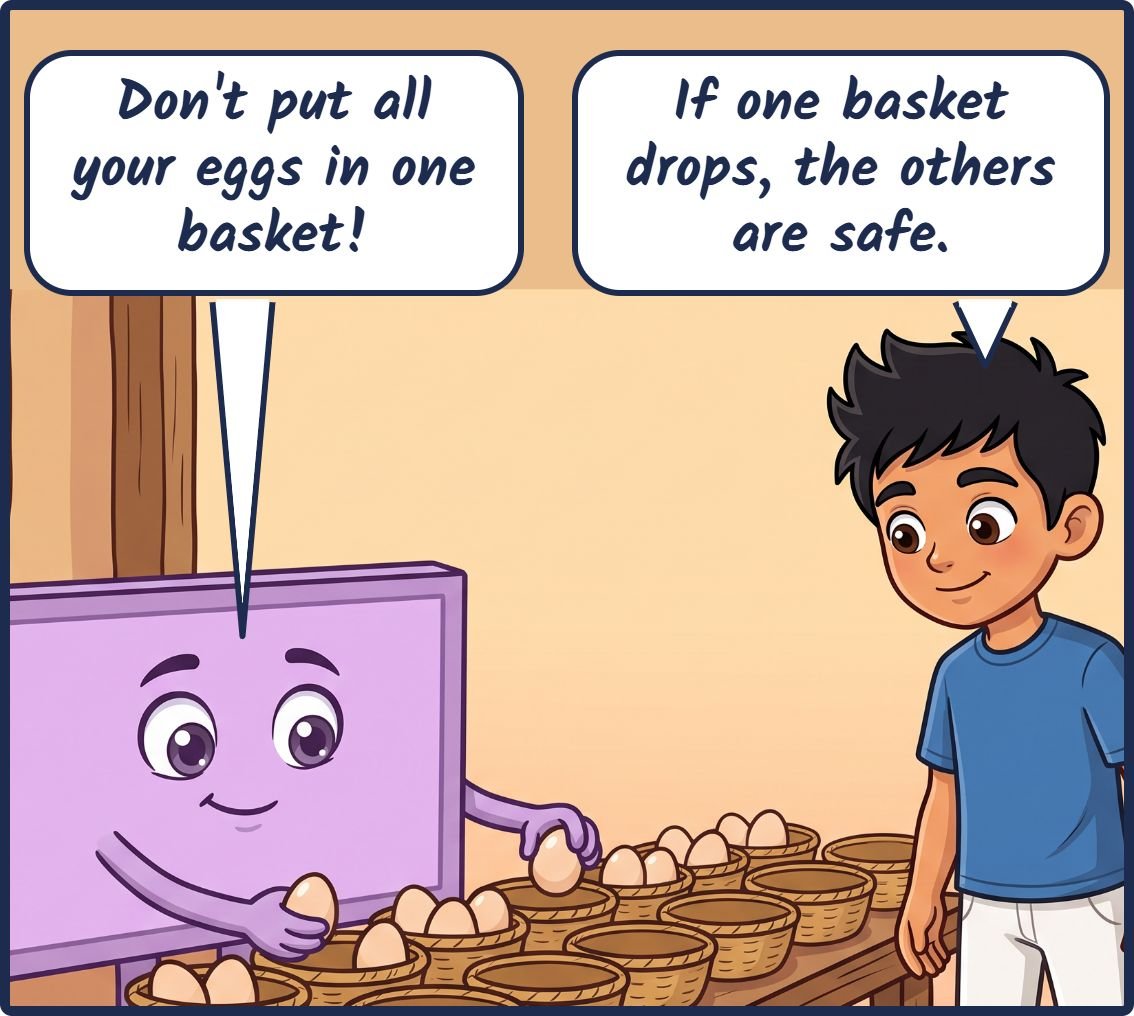
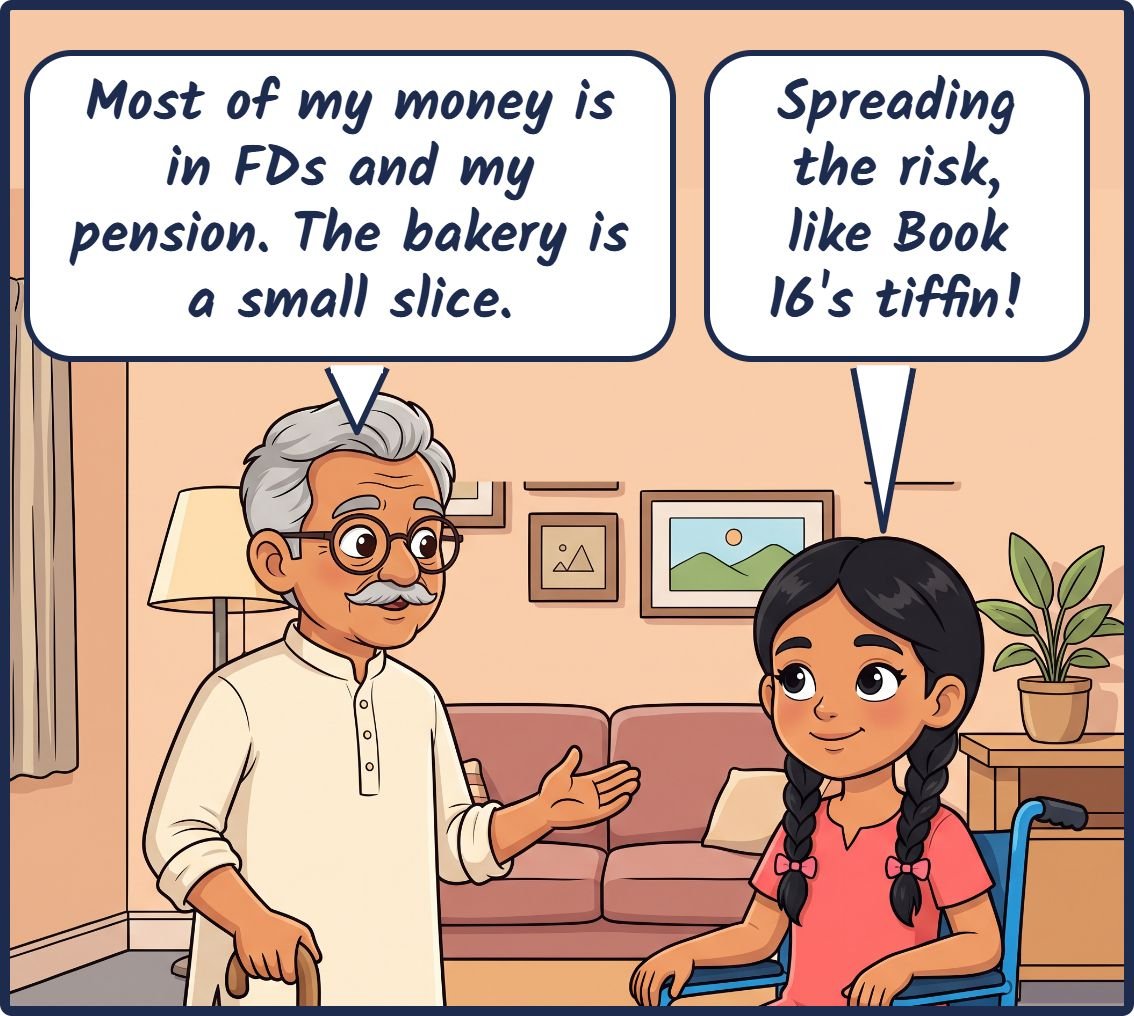
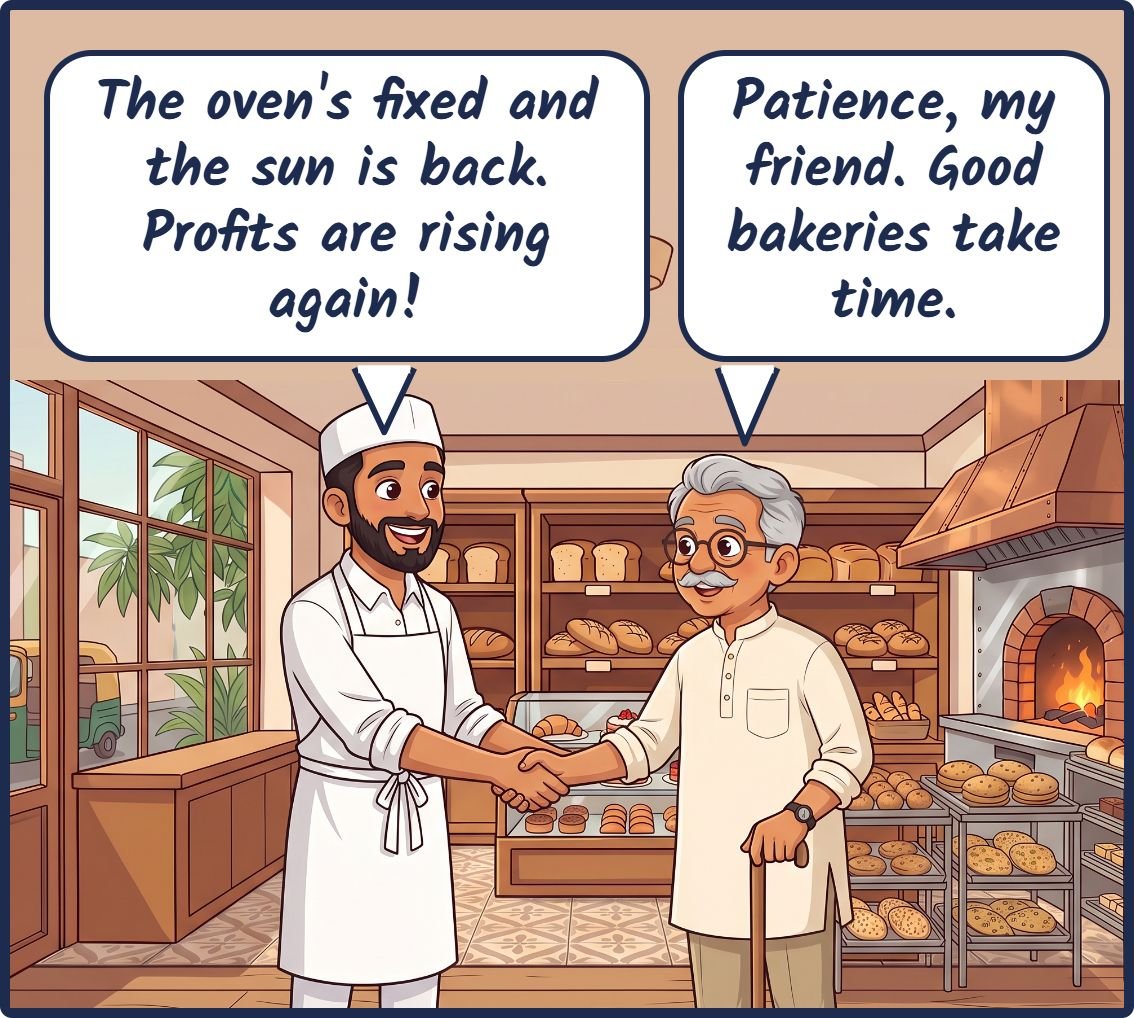
Ajja, are you worried? Not much. I put in only a small part of my savings. Don't put all your eggs in one basket! If one basket drops, the others are safe. Most of my money is in FDs and my pension. The bakery is a small slice. Spreading the risk, like Book 16's tiffin! Never put money you can't afford to lose into one business. Small slices, many baskets! The oven's fixed and the sun is back. Profits are rising again! Patience, my friend. Good bakeries take time.
Big companies

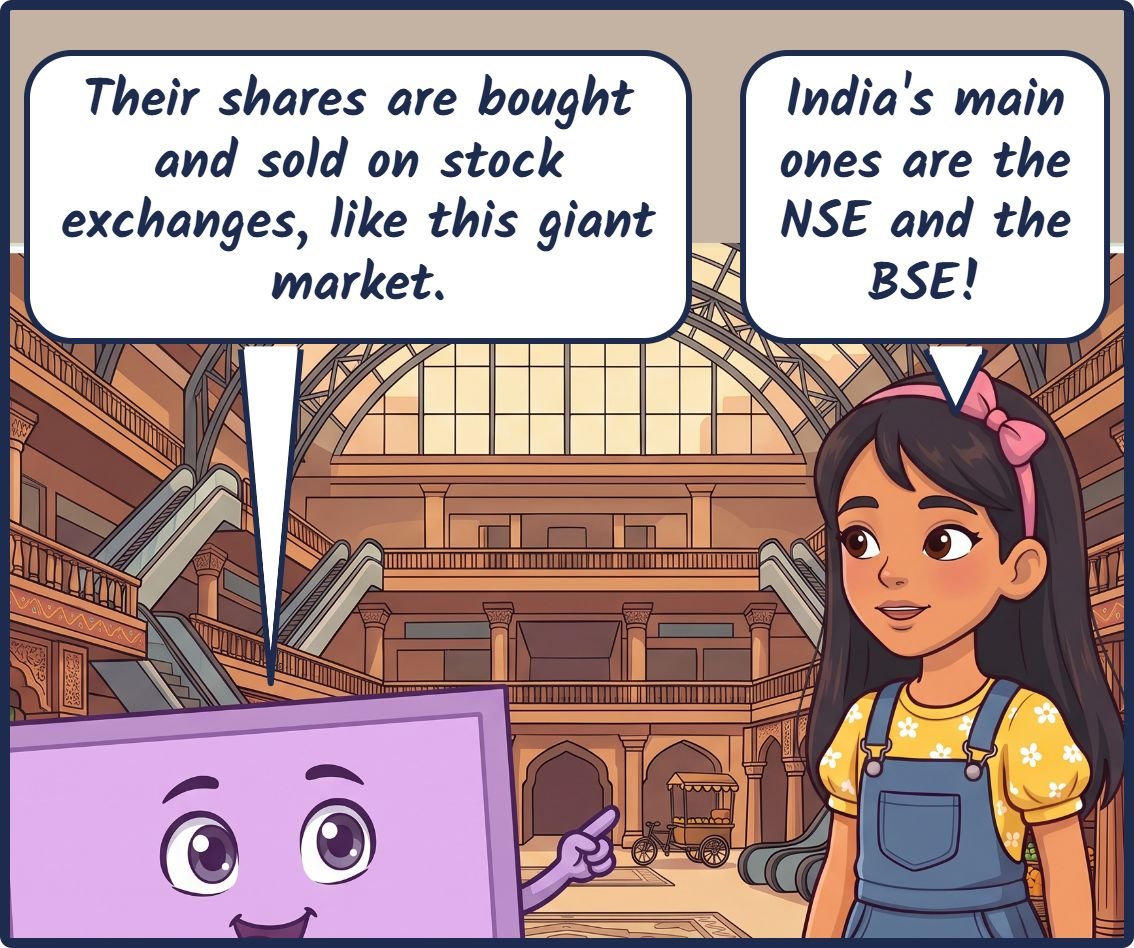
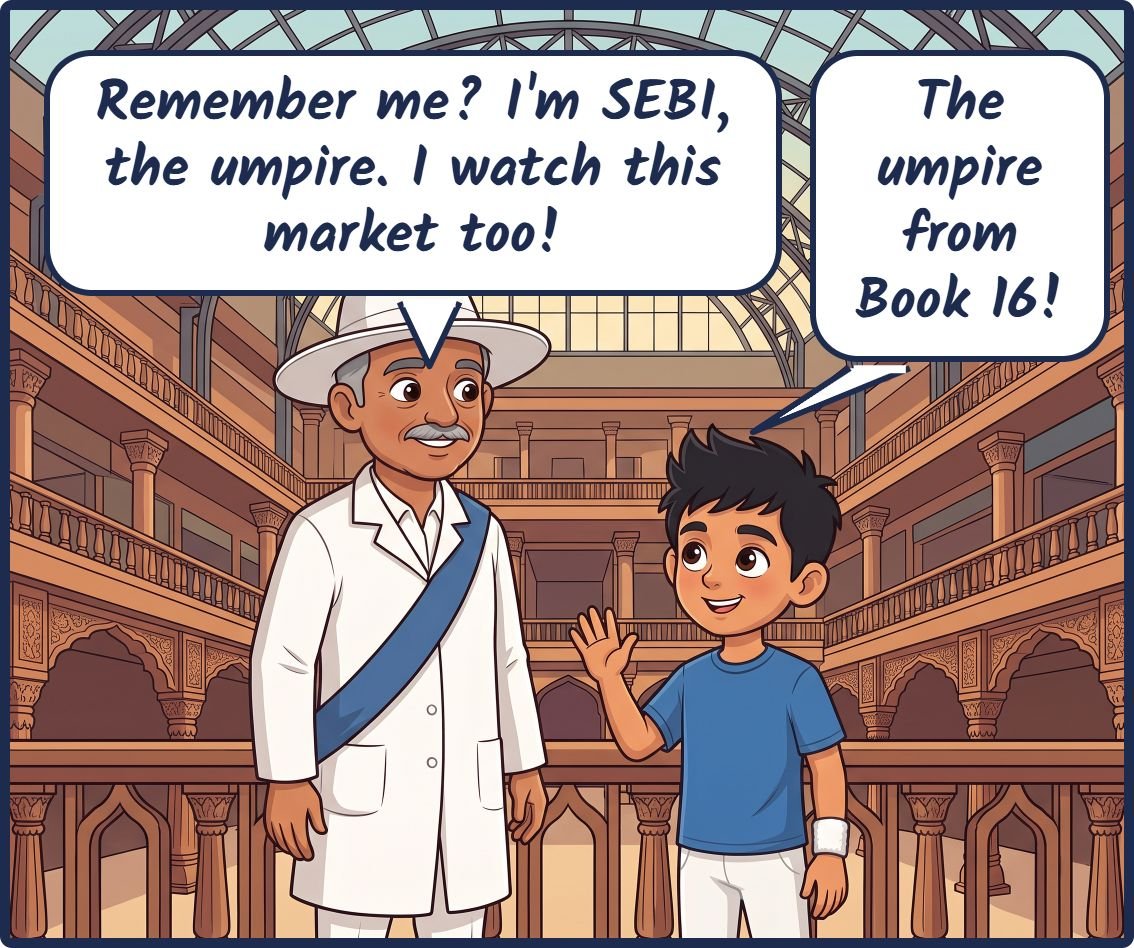
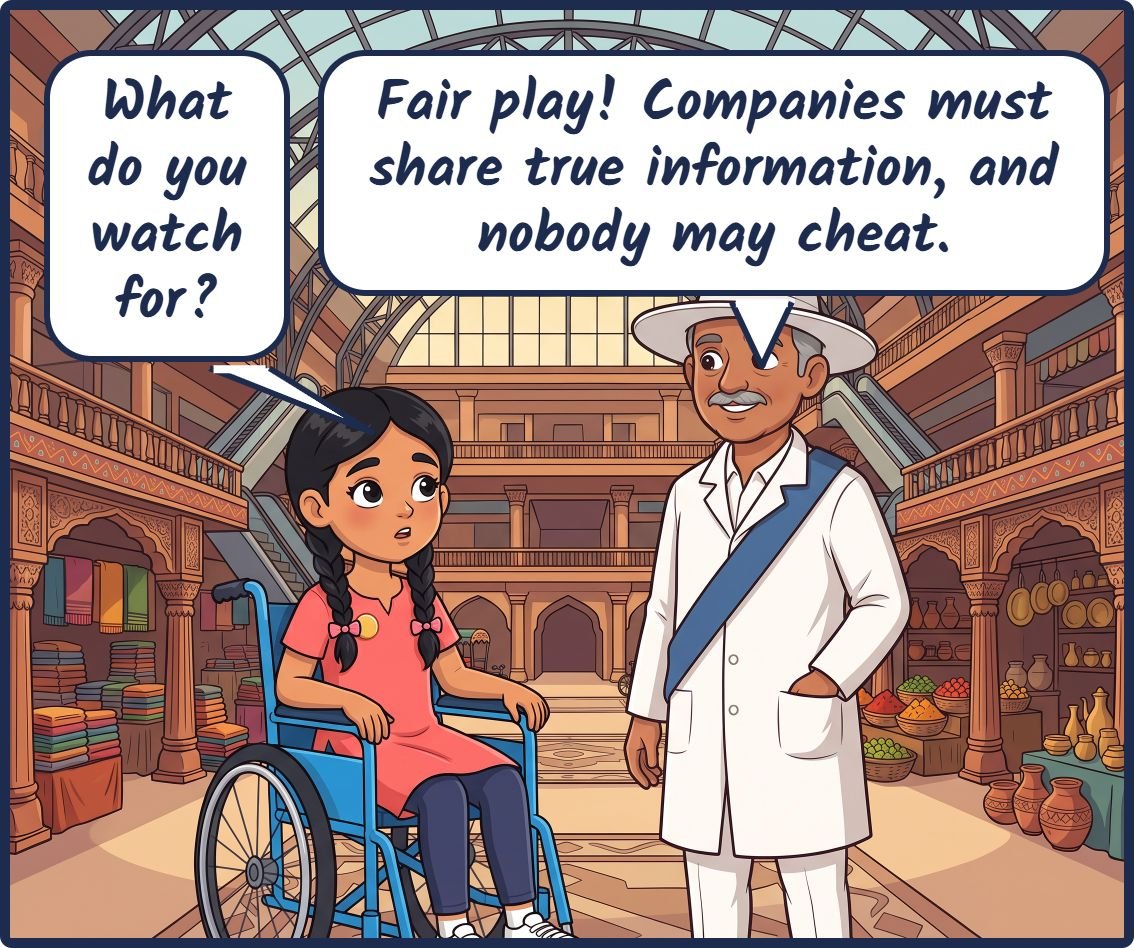
Imagination: a giant market for shares Big companies have lakhs of shareholders! Their shares are bought and sold on stock exchanges, like this giant market. India's main ones are the NSE and the BSE! Remember me? I'm SEBI, the umpire. I watch this market too! The umpire from Book 16! What do you watch for? Fair play! Companies must share true information, and nobody may cheat. The lines on the screens go up and down all day! Share prices change as people buy and sell.
Shares or mutual funds?
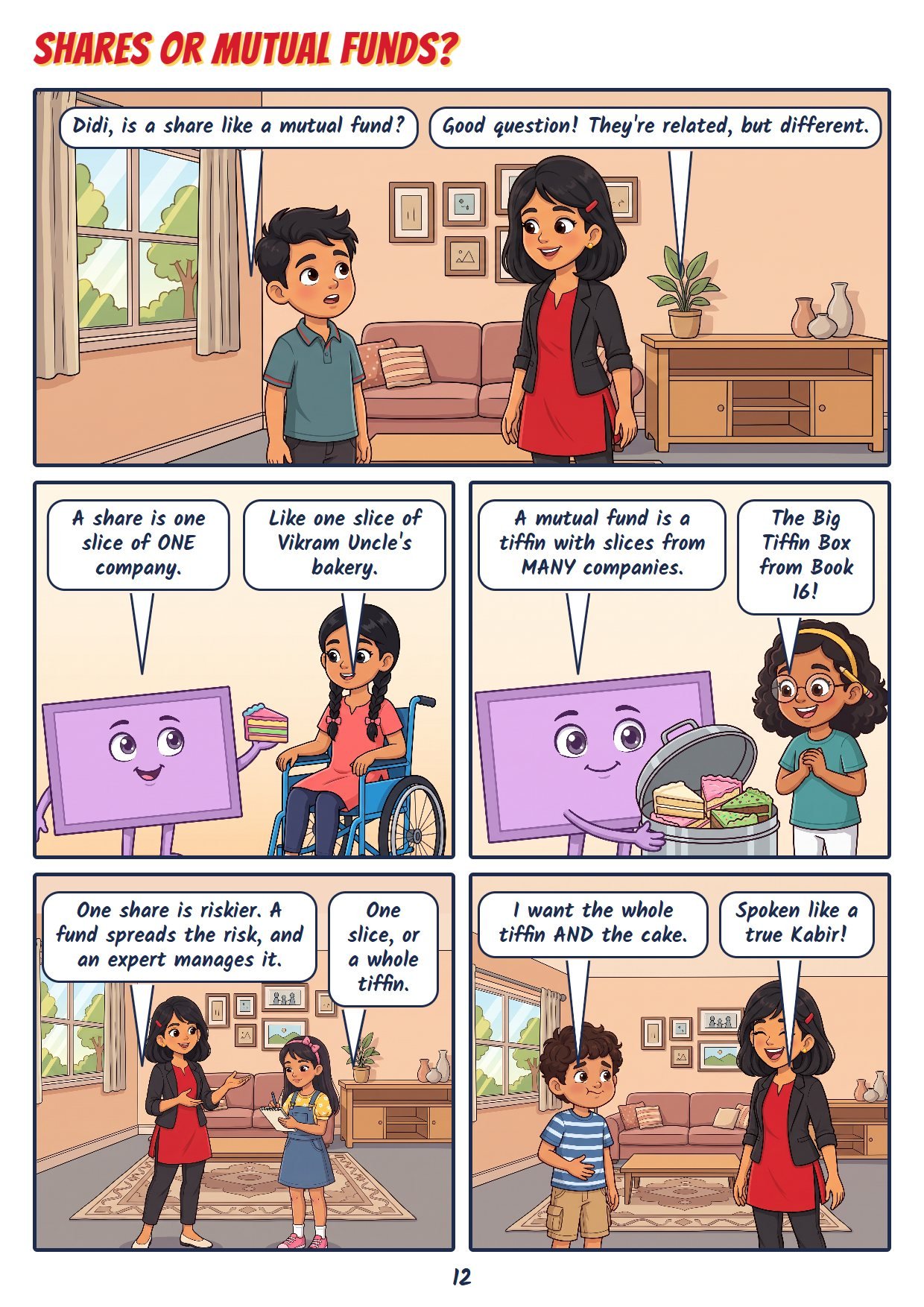
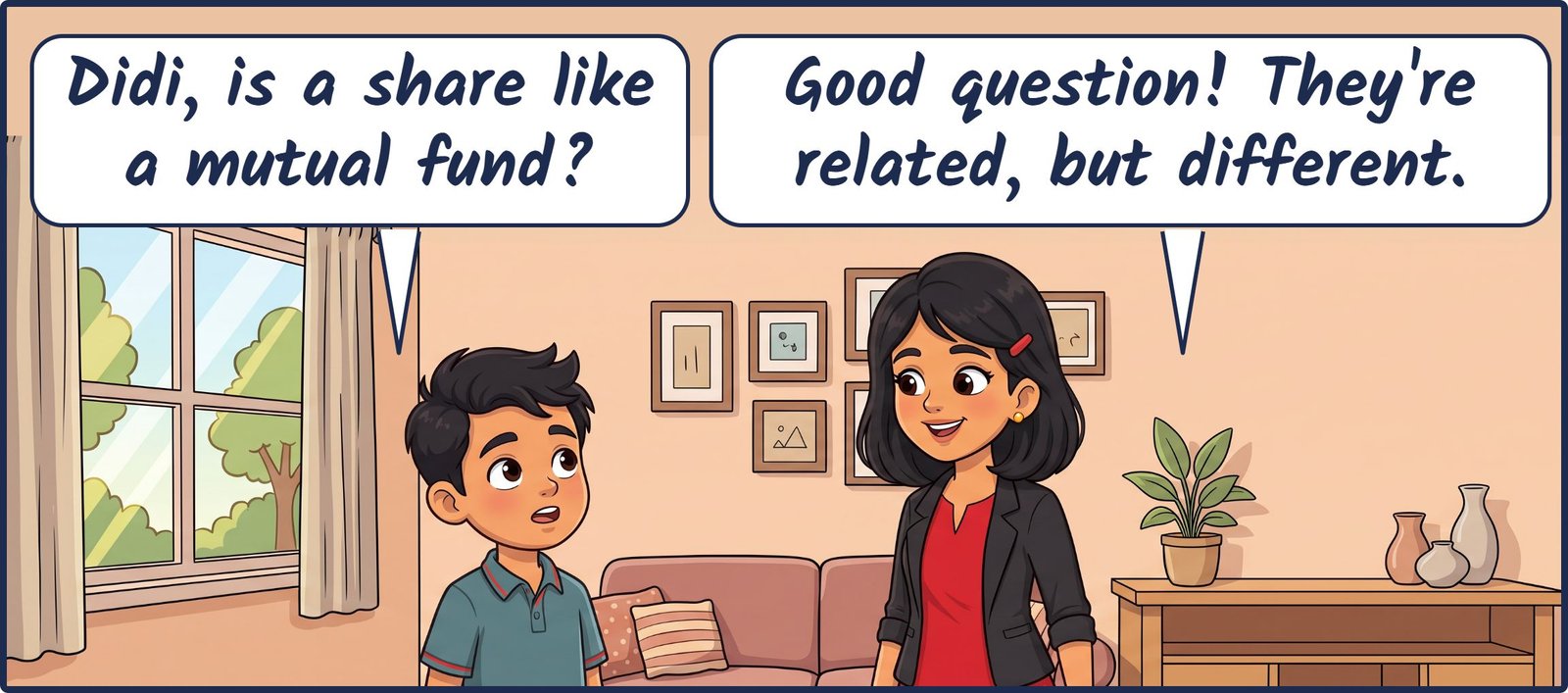
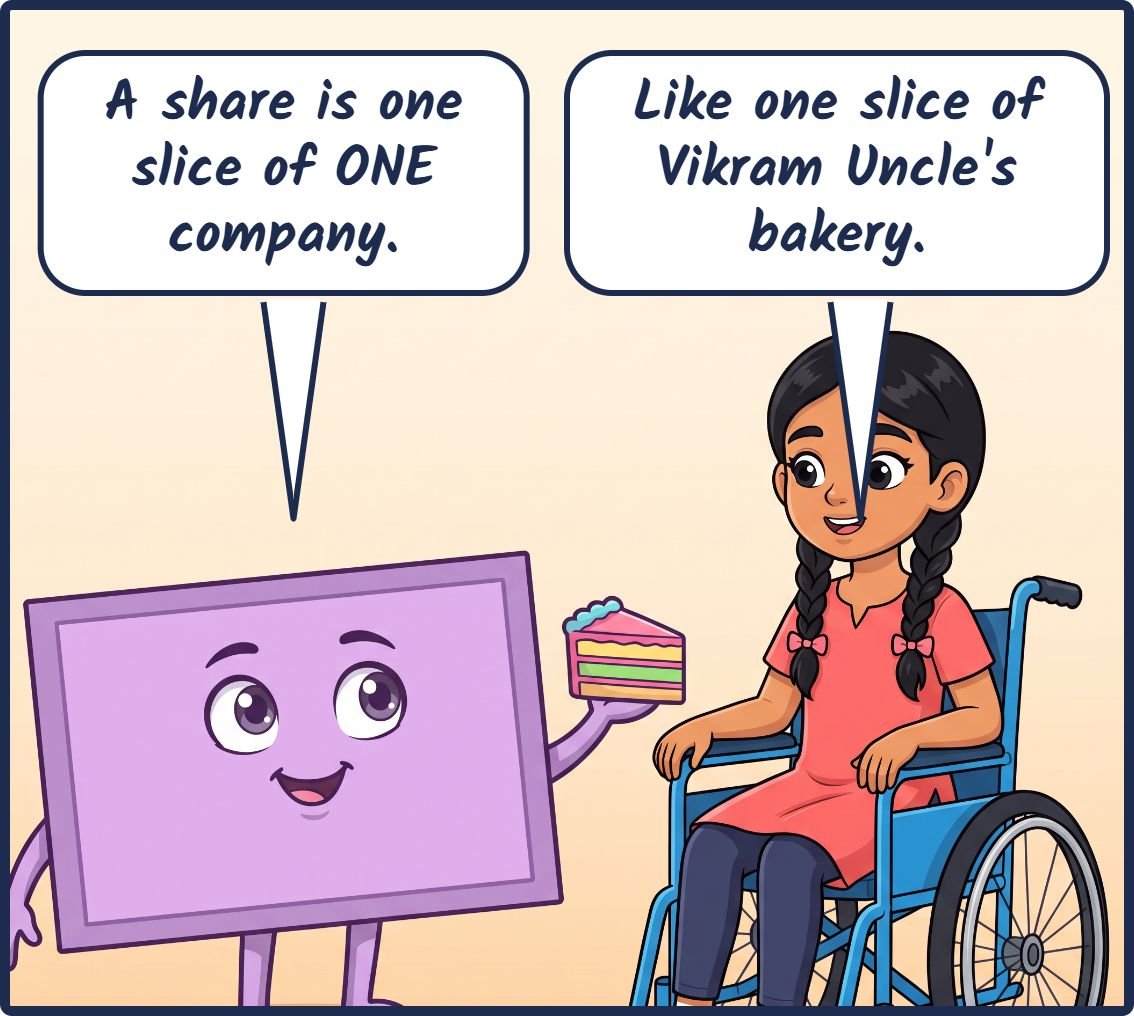
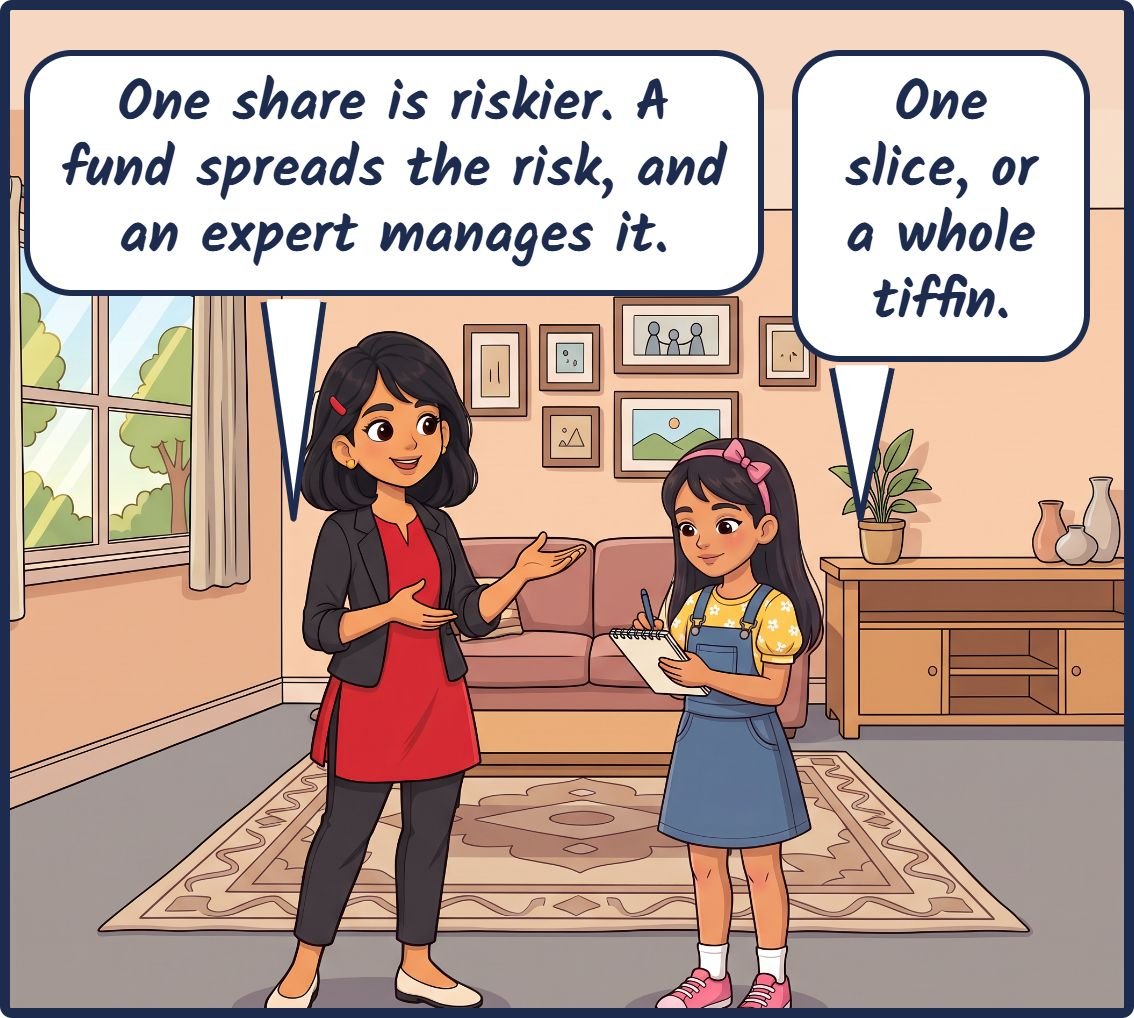
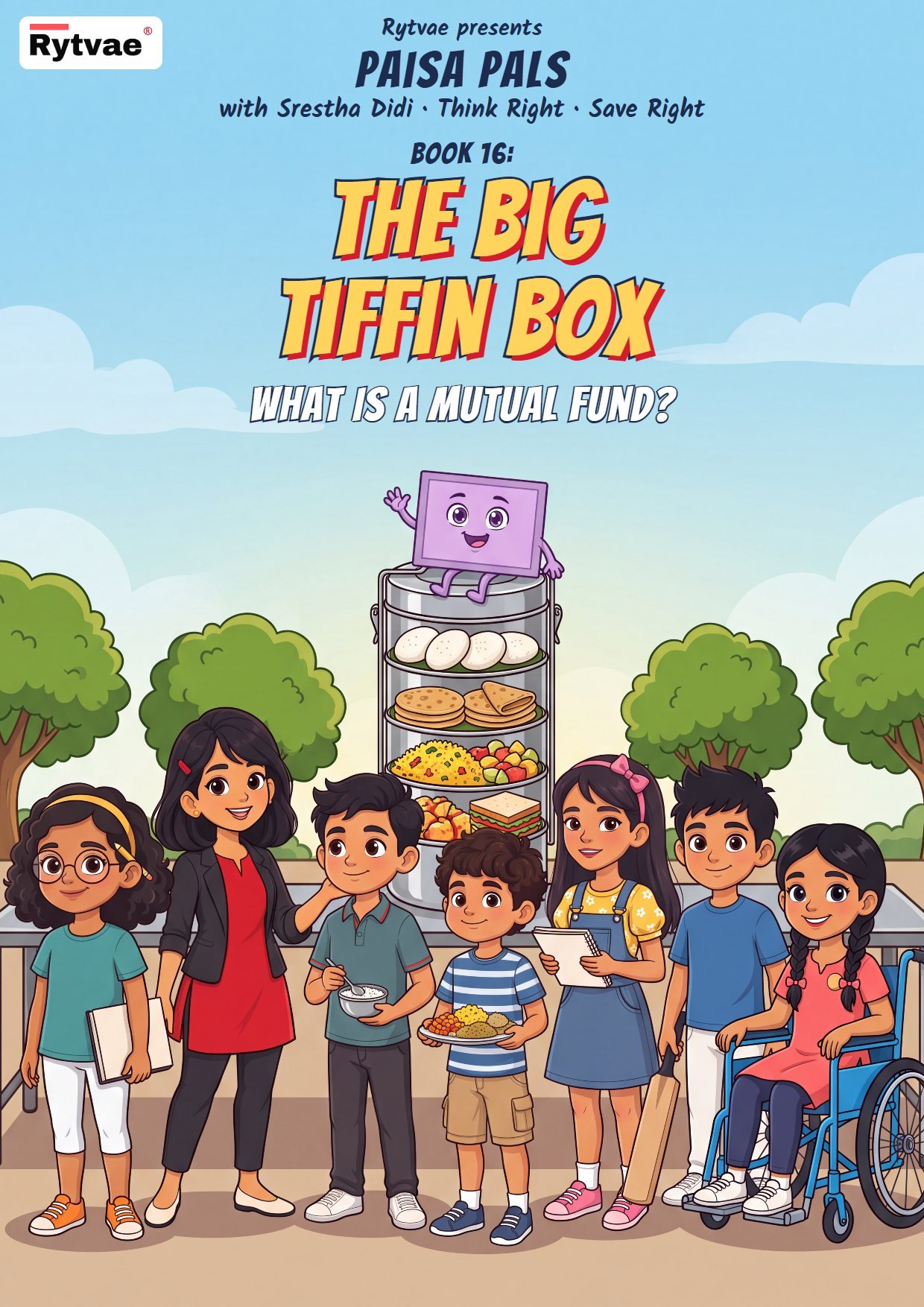
Didi, is a share like a mutual fund? Good question! They're related, but different. A share is one slice of ONE company. Like one slice of Vikram Uncle's bakery. A mutual fund is a tiffin with slices from MANY companies. The Big Tiffin Box from Book 16! One share is riskier. A fund spreads the risk, and an expert manages it. One slice, or a whole tiffin. I want the whole tiffin AND the cake. Spoken like a true Kabir!
Too good to be true

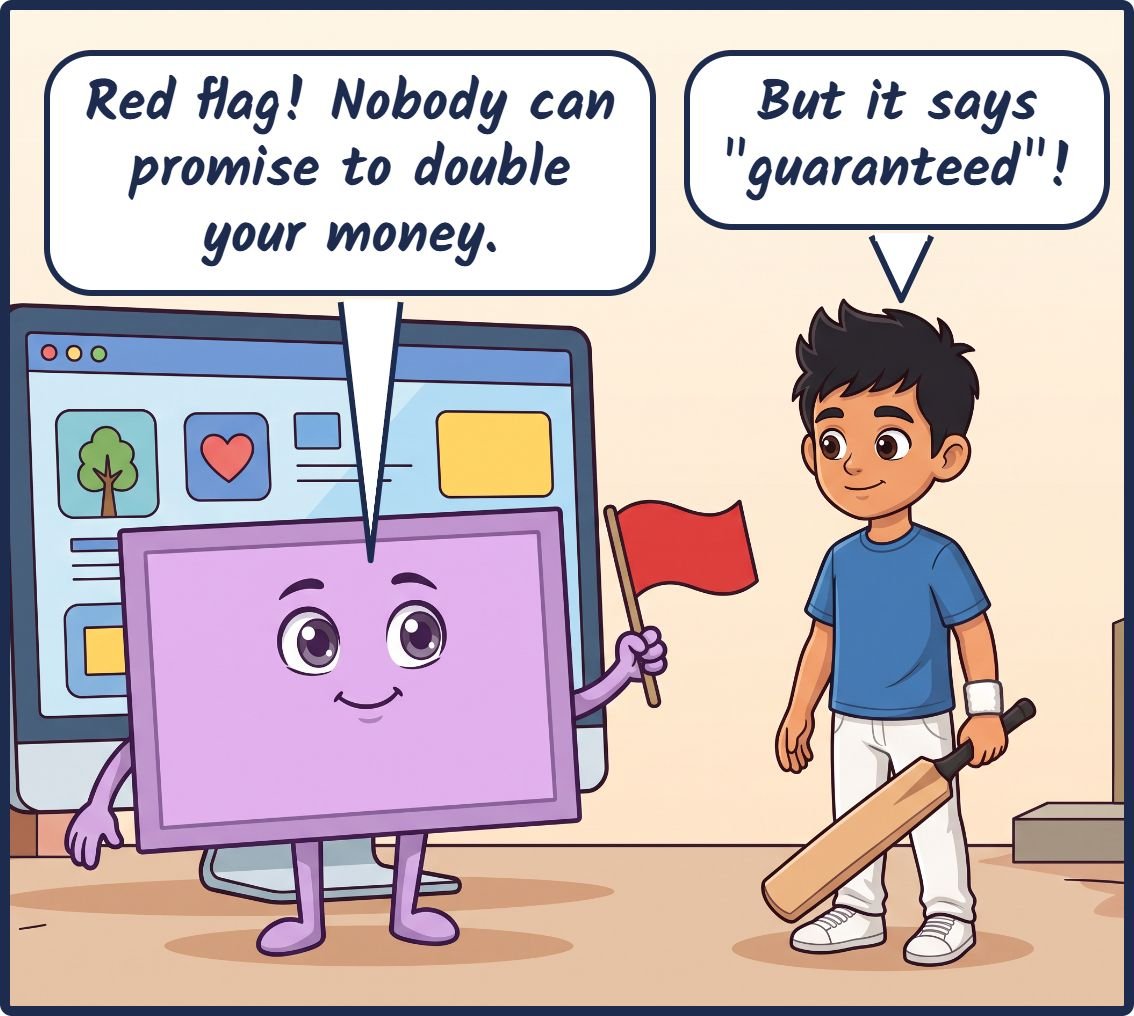
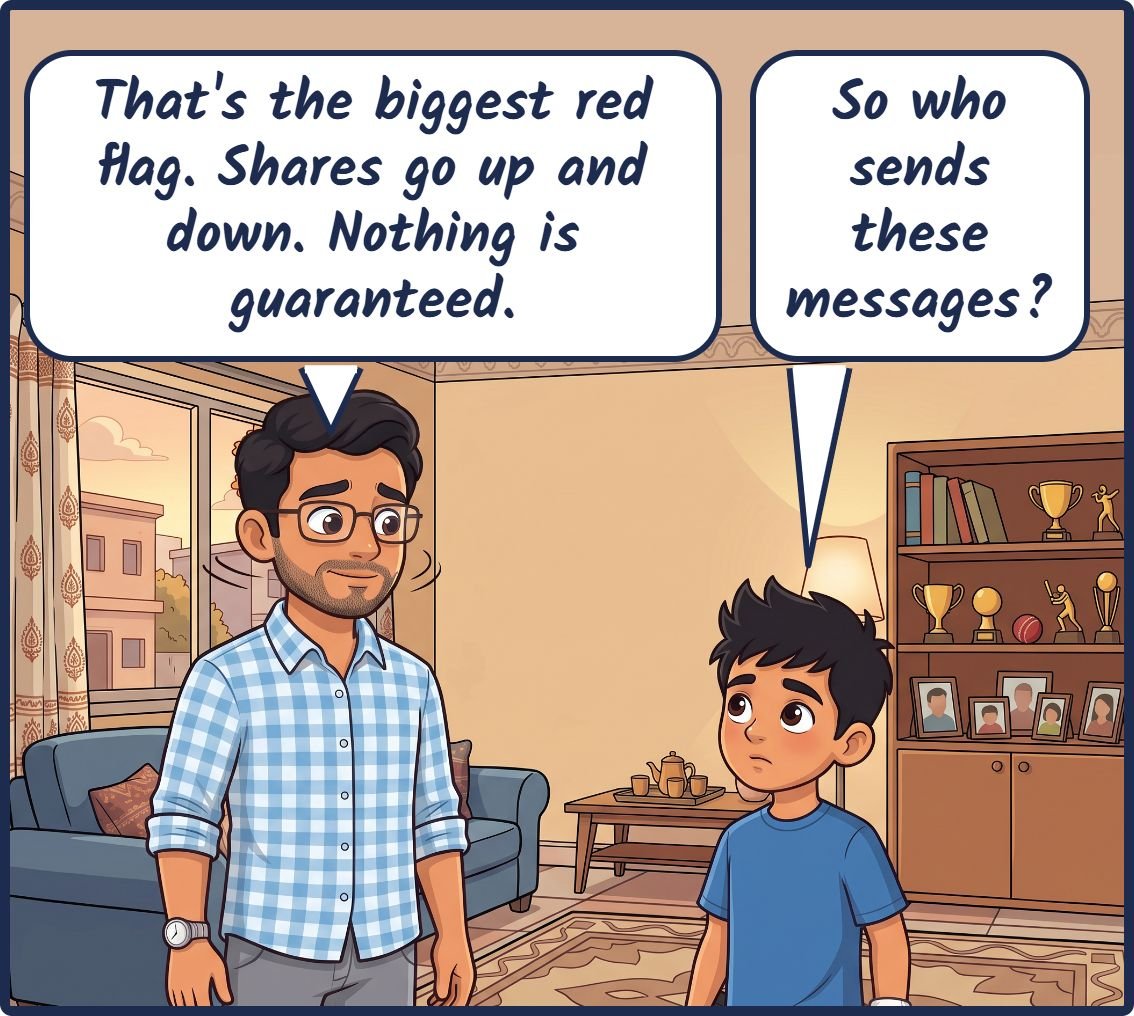
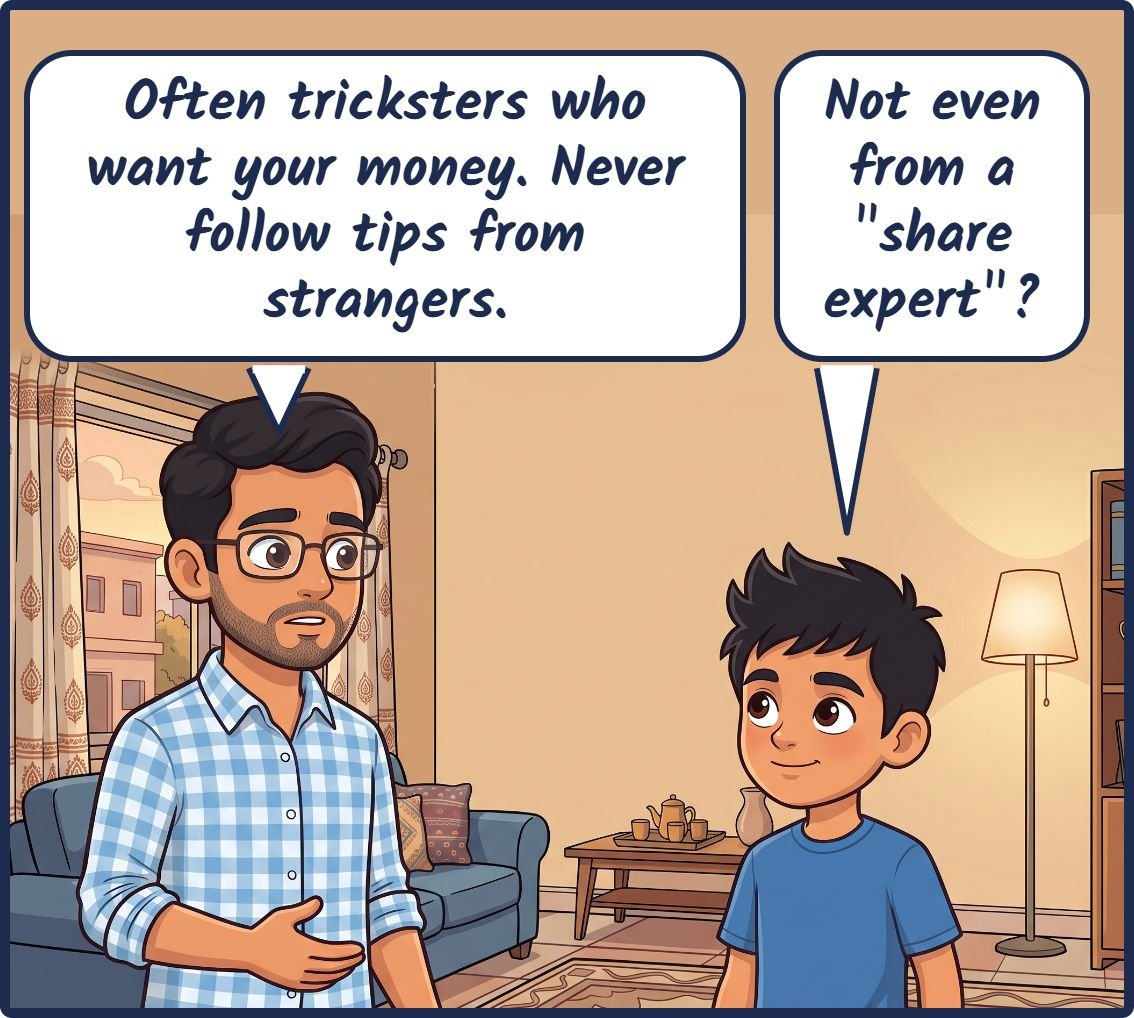
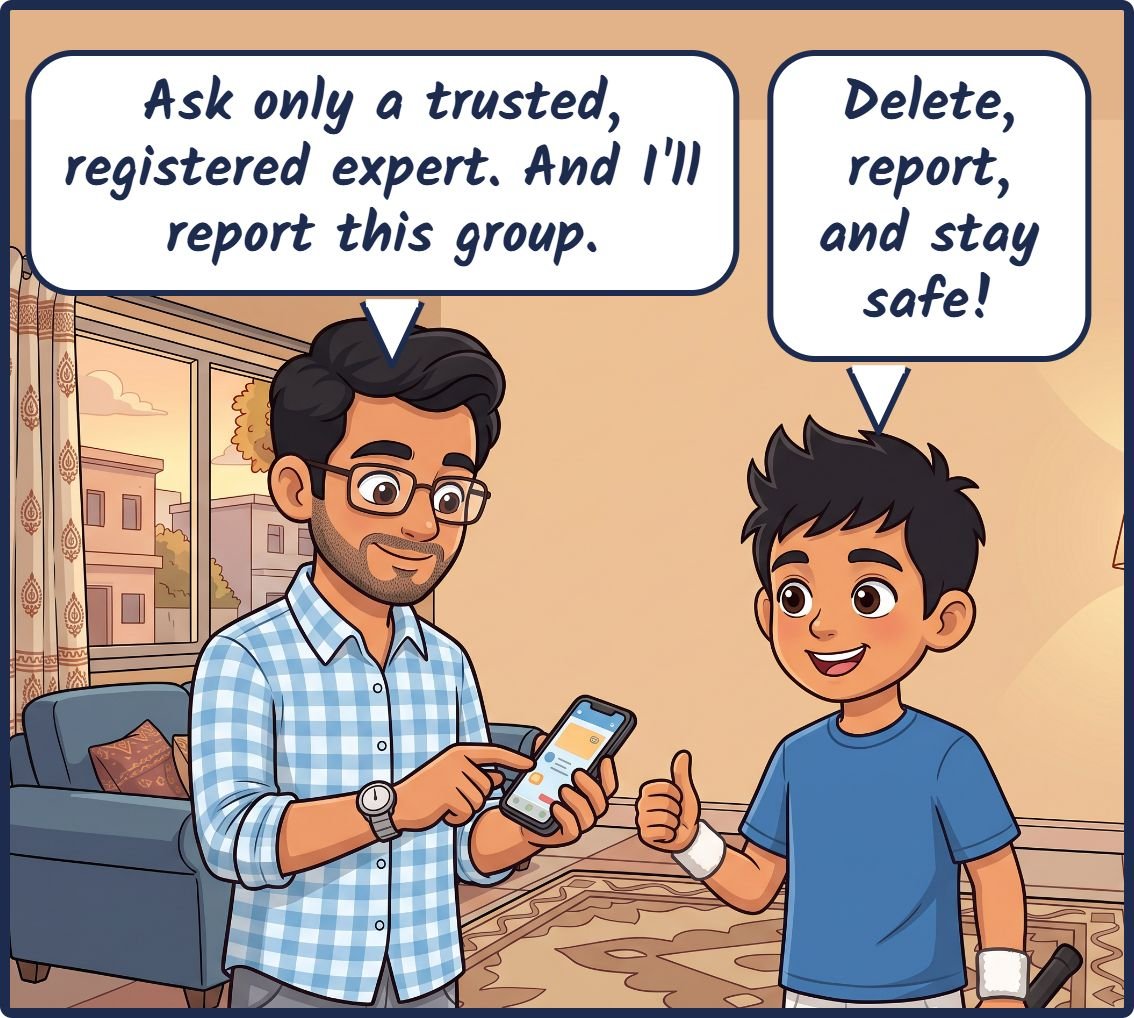
At Joel's home Papa, look at this chat group message! "Double your money in 30 days with this share tip!" Red flag! Nobody can promise to double your money. But it says "guaranteed"! That's the biggest red flag. Shares go up and down. Nothing is guaranteed. So who sends these messages? Often tricksters who want your money. Never follow tips from strangers. Not even from a "share expert"? Ask only a trusted, registered expert. And I'll report this group. Delete, report, and stay safe!
Kabir's slice
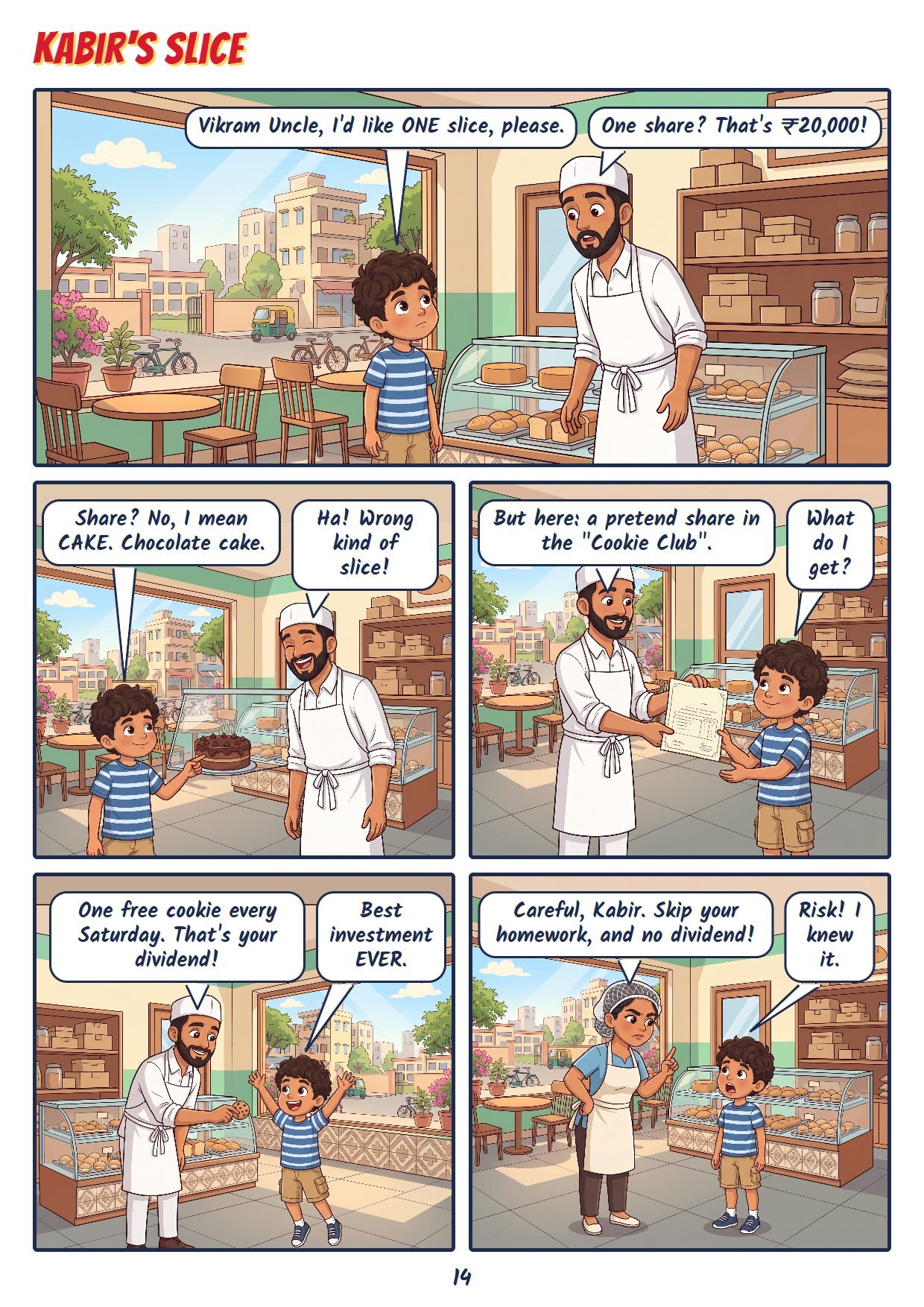
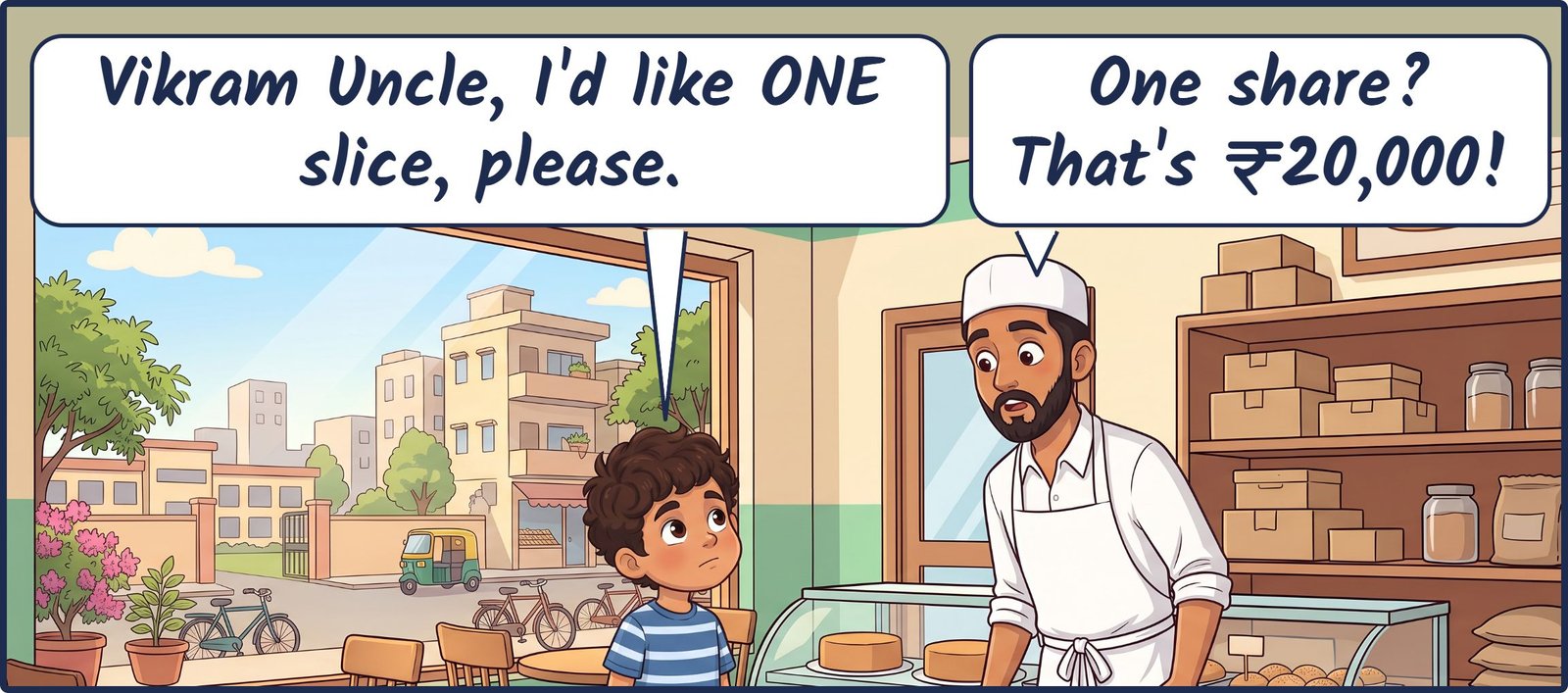
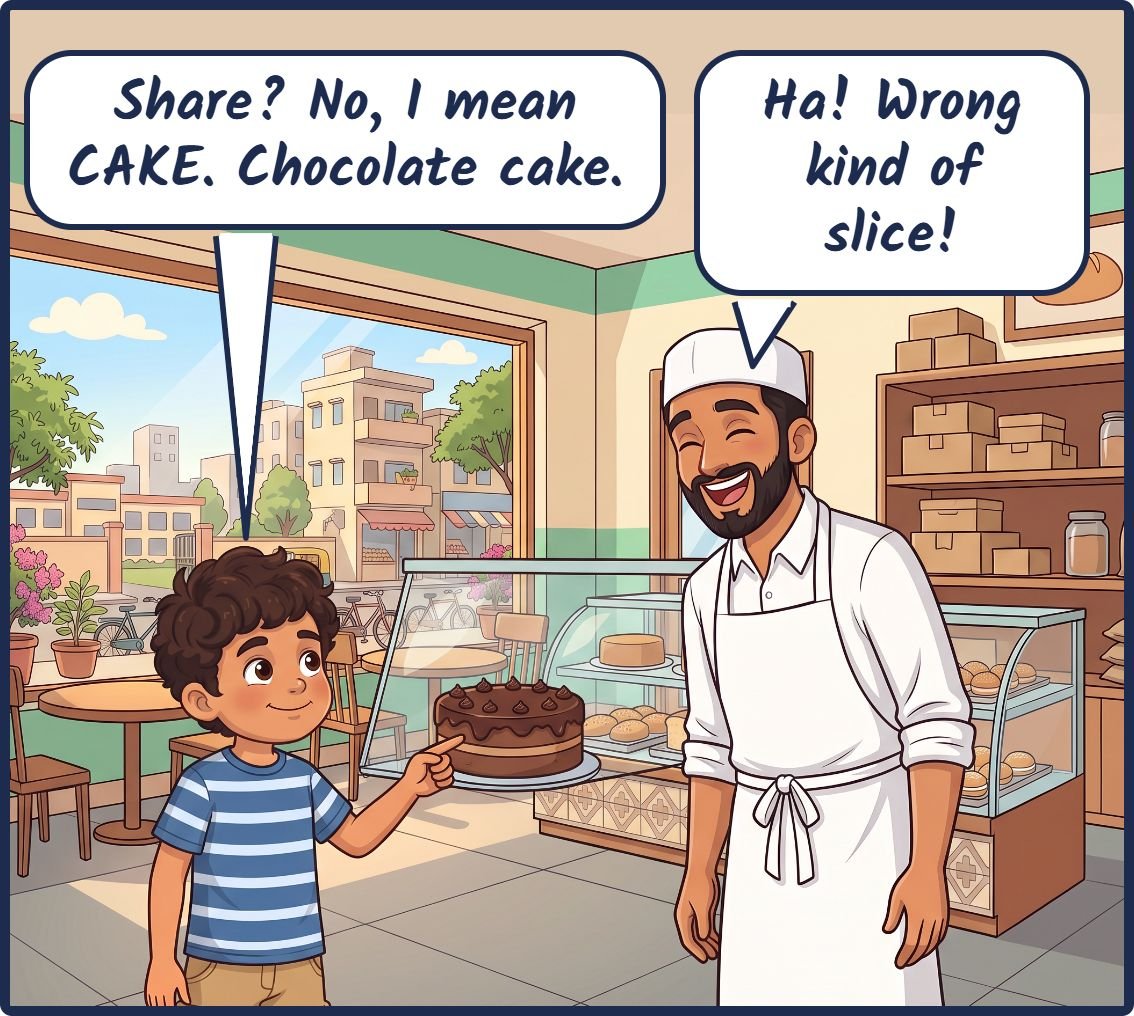
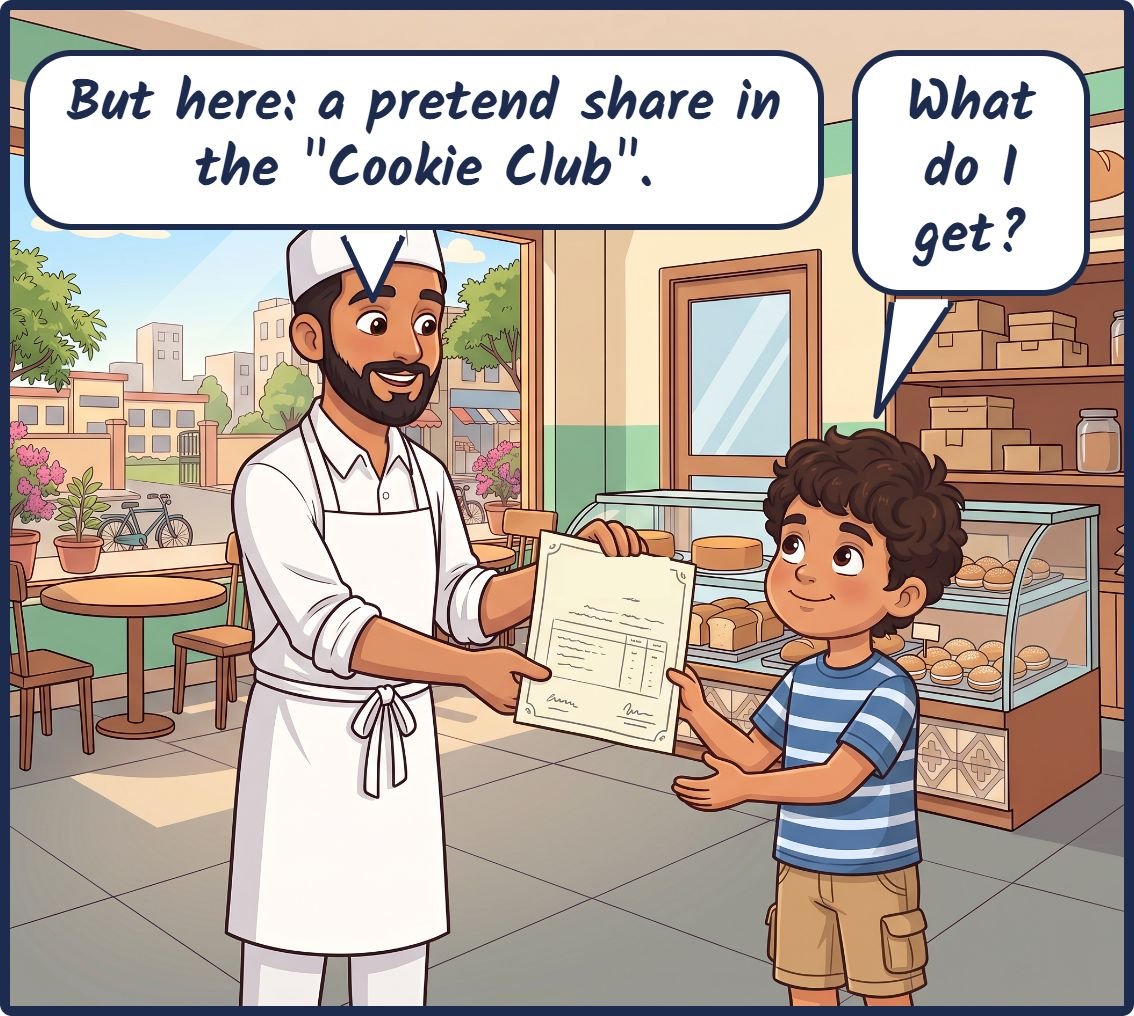
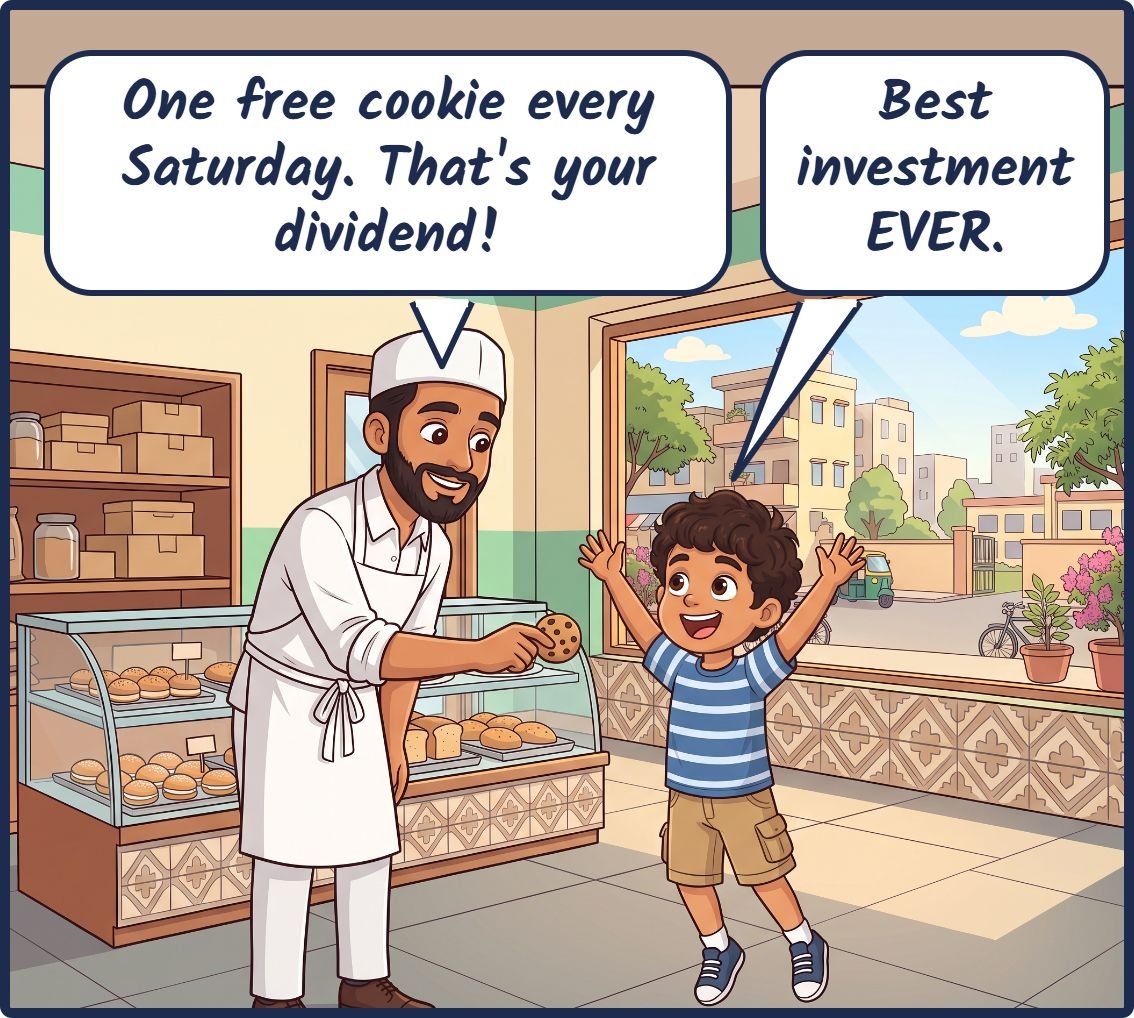
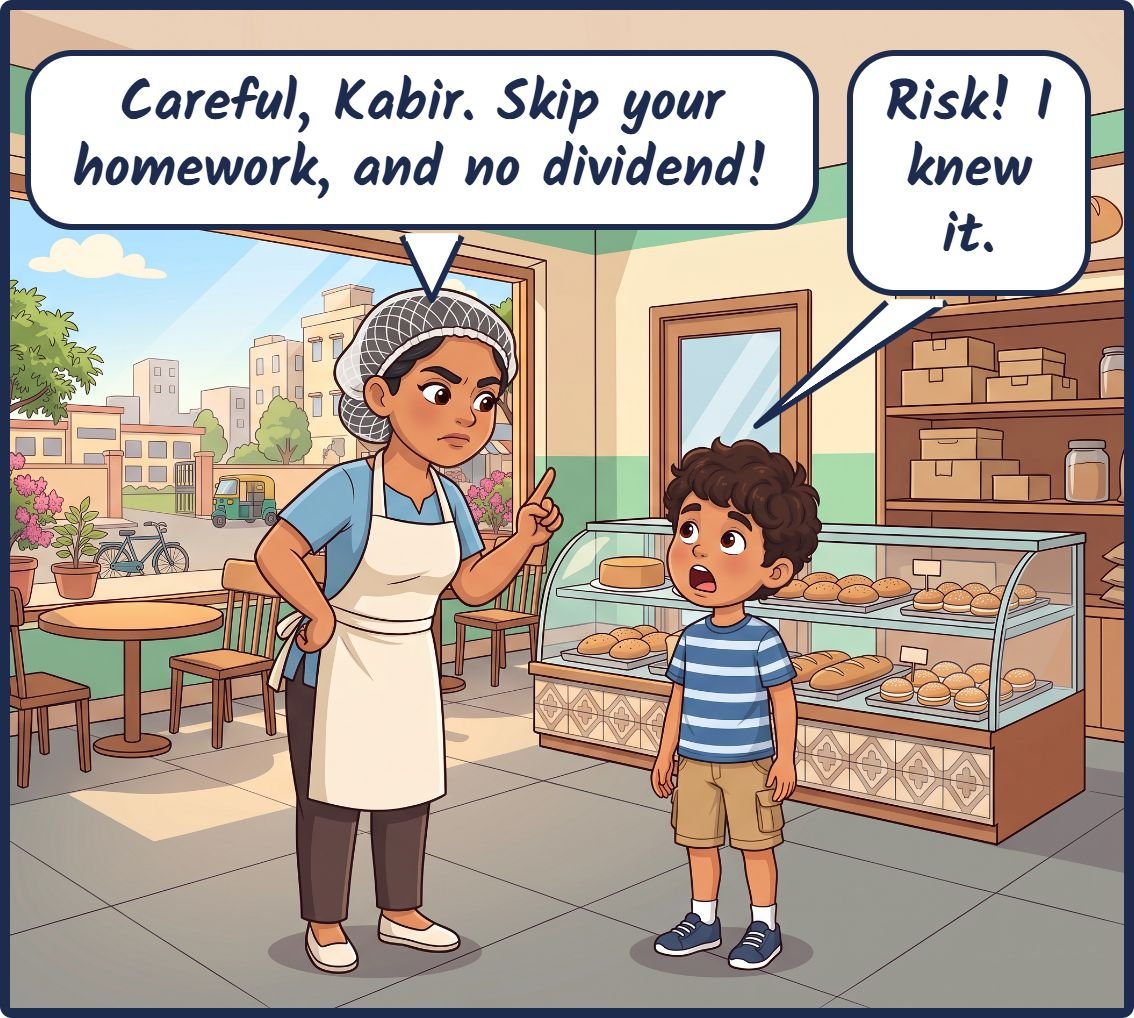
Vikram Uncle, I'd like ONE slice, please. One share? That's ₹20,000! Share? No, I mean CAKE. Chocolate cake. Ha! Wrong kind of slice! But here: a pretend share in the "Cookie Club". What do I get? One free cookie every Saturday. That's your dividend! Best investment EVER. Careful, Kabir. Skip your homework, and no dividend! Risk! I knew it.
The shareholders' meeting
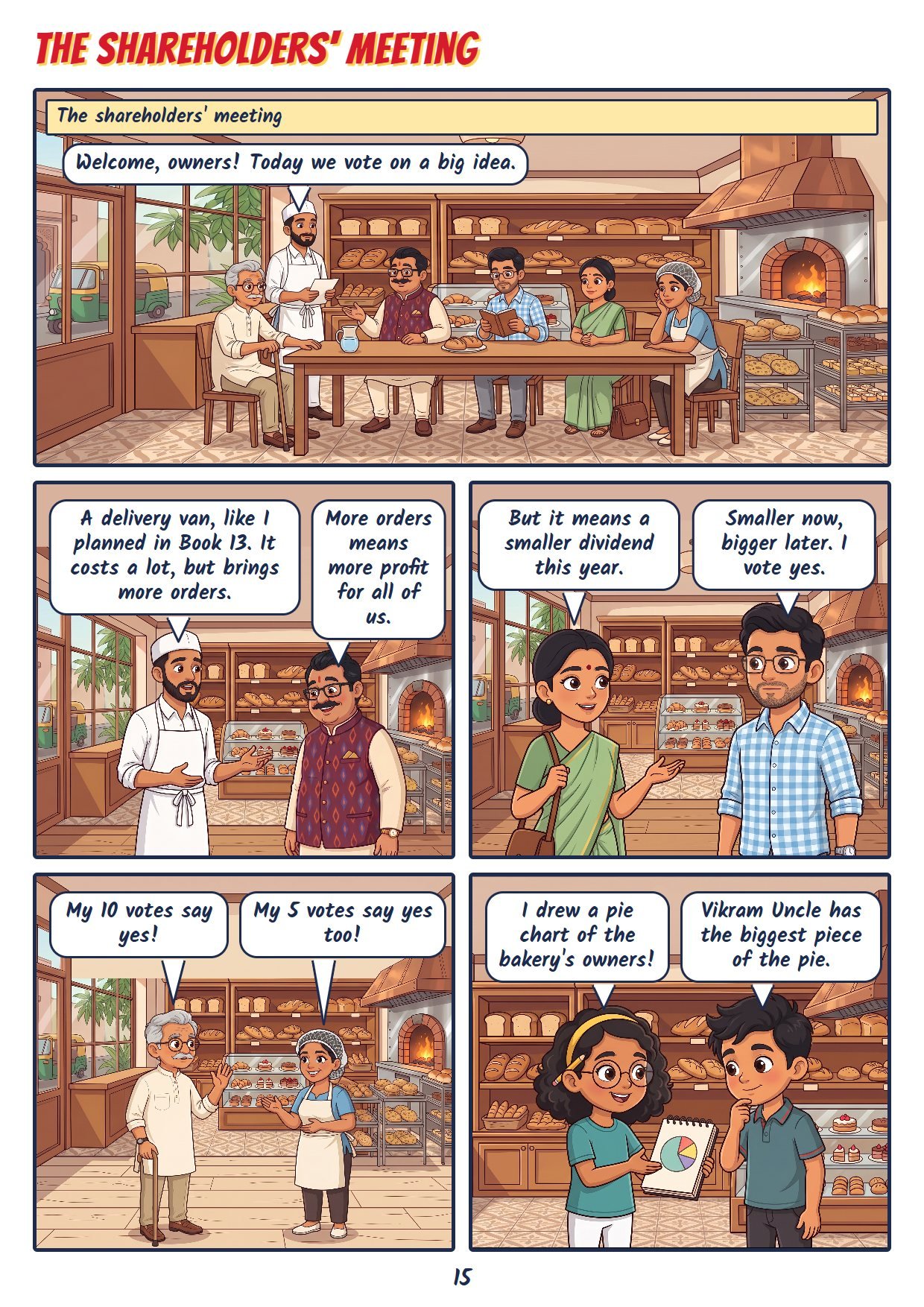
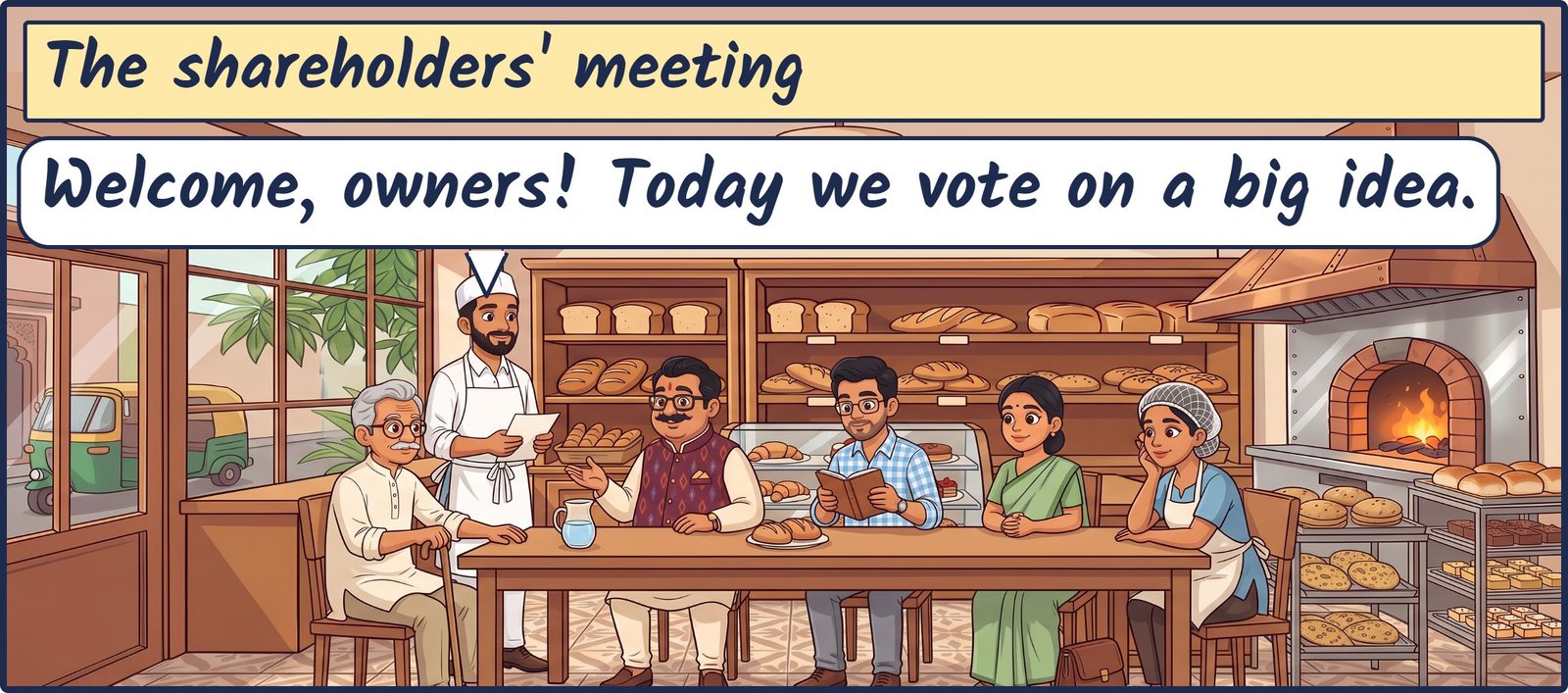
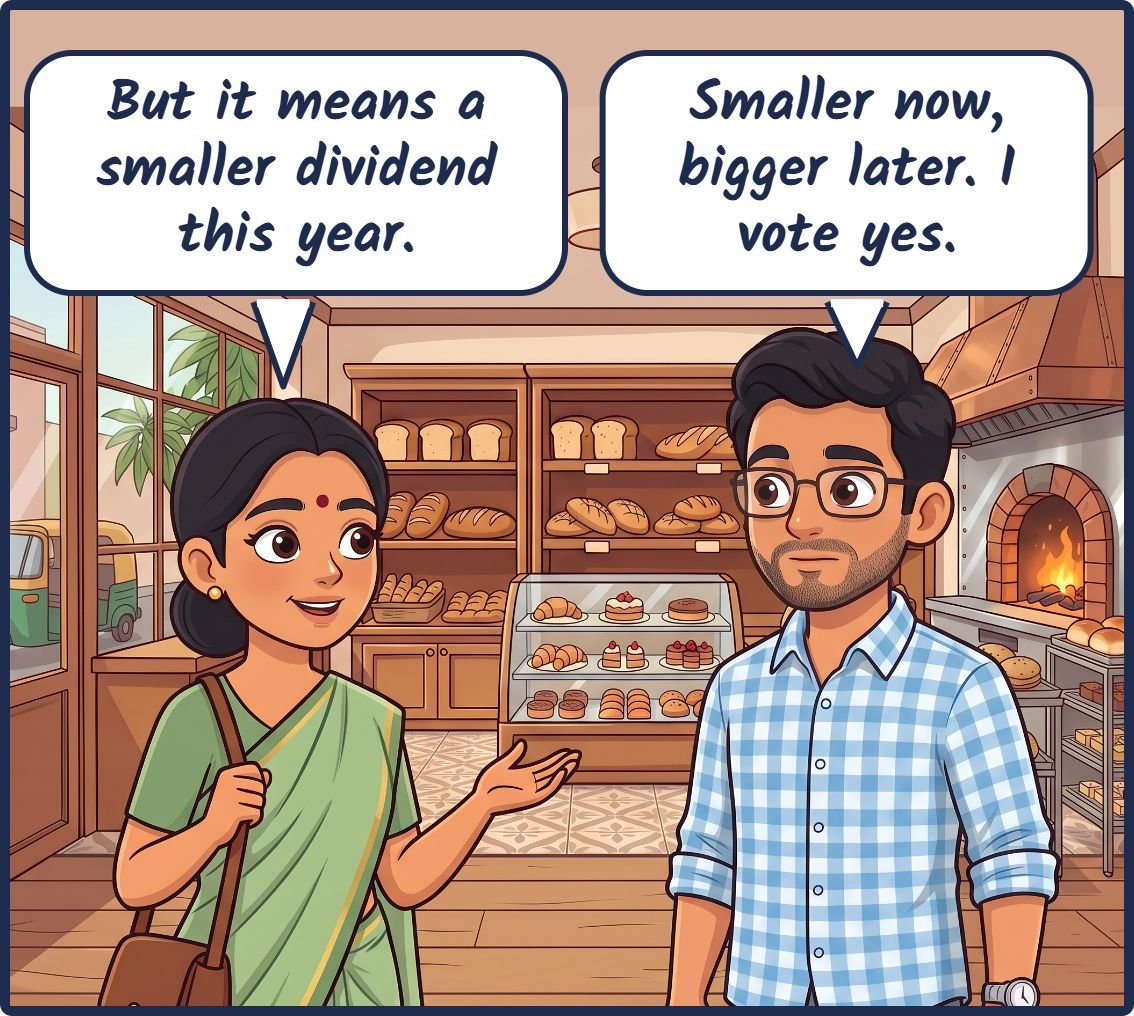
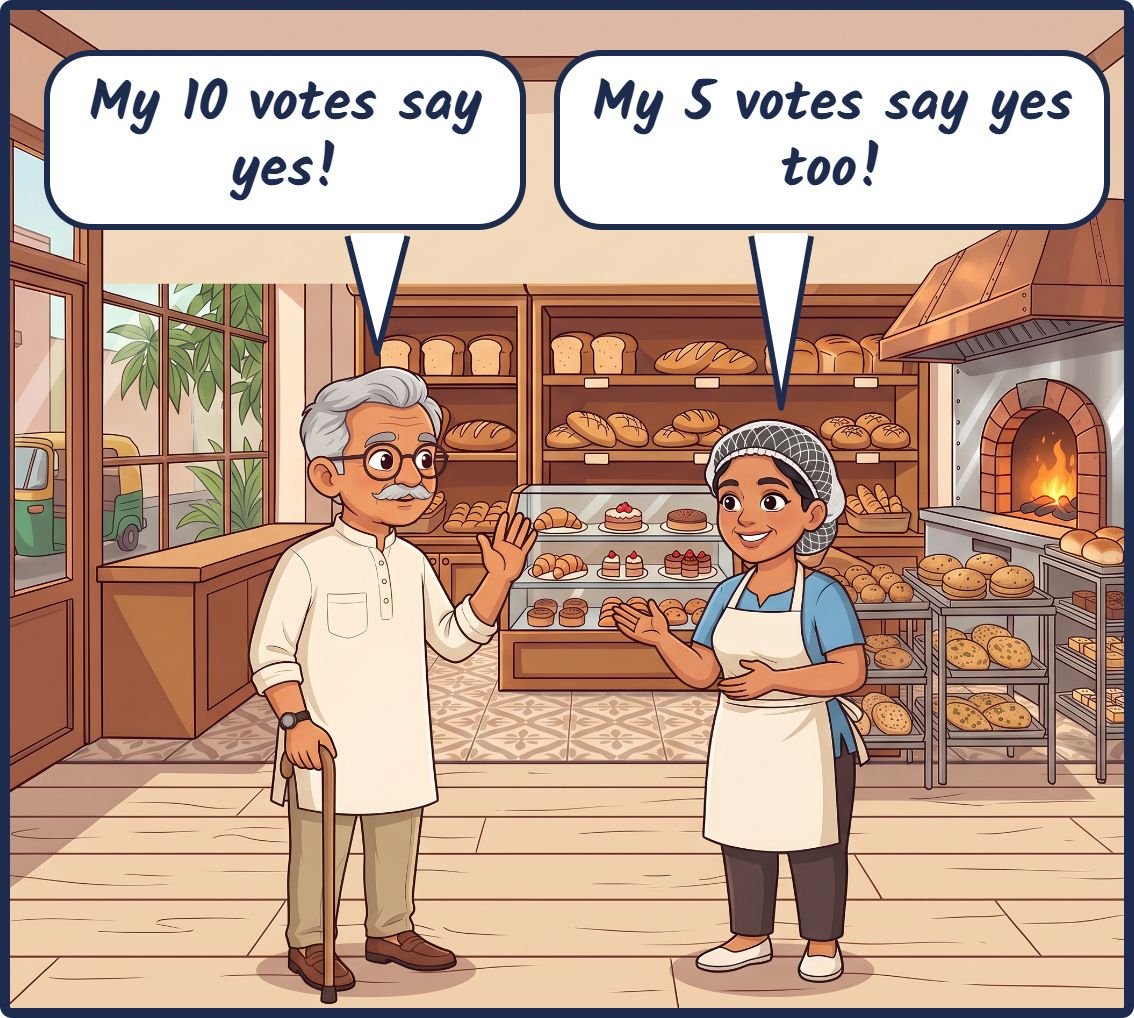
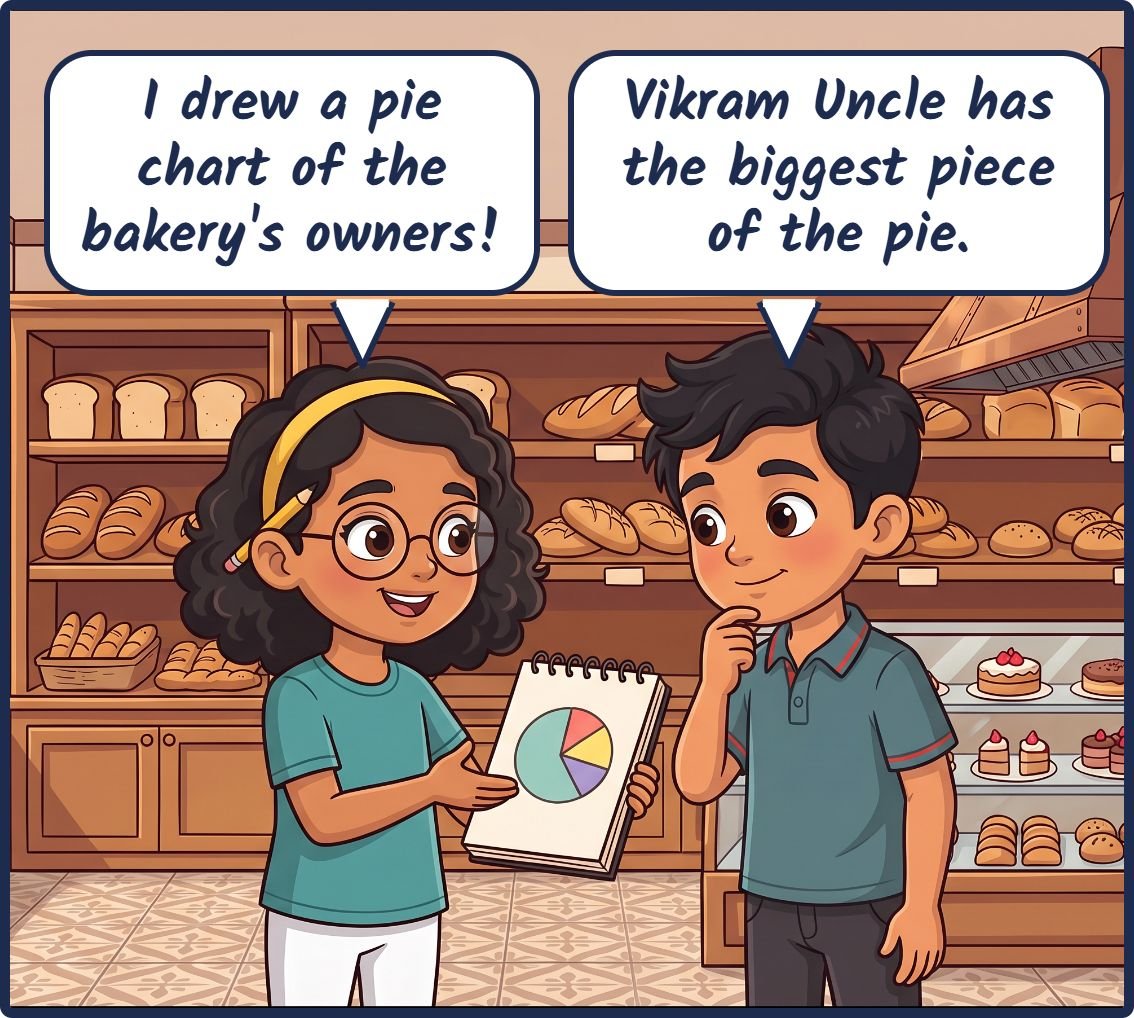
The shareholders' meeting Welcome, owners! Today we vote on a big idea. A delivery van, like I planned in Book 13. It costs a lot, but brings more orders. More orders means more profit for all of us. But it means a smaller dividend this year. Smaller now, bigger later. I vote yes. My 10 votes say yes! My 5 votes say yes too! I drew a pie chart of the bakery's owners! Vikram Uncle has the biggest piece of the pie.
Everyone's bakery
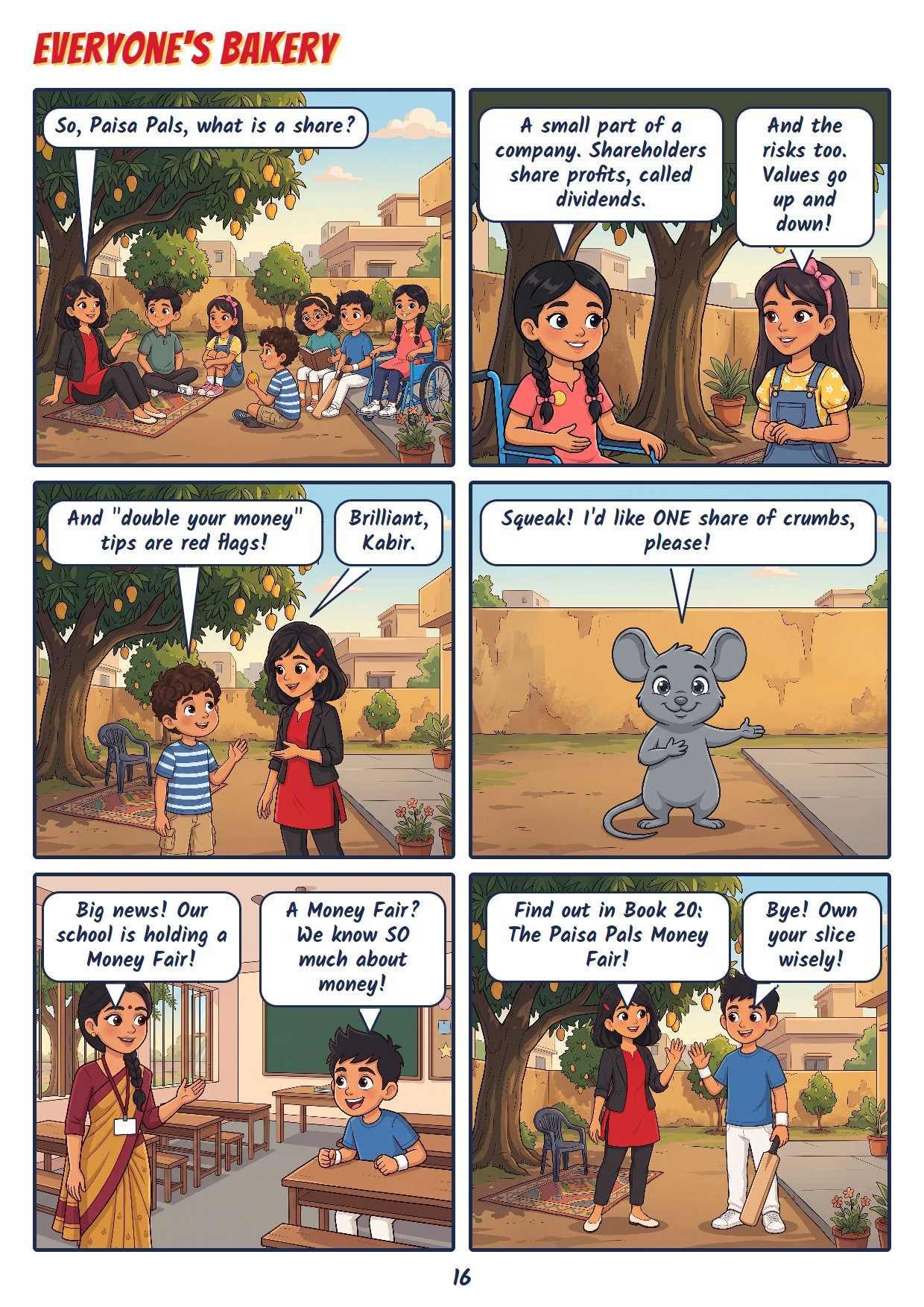
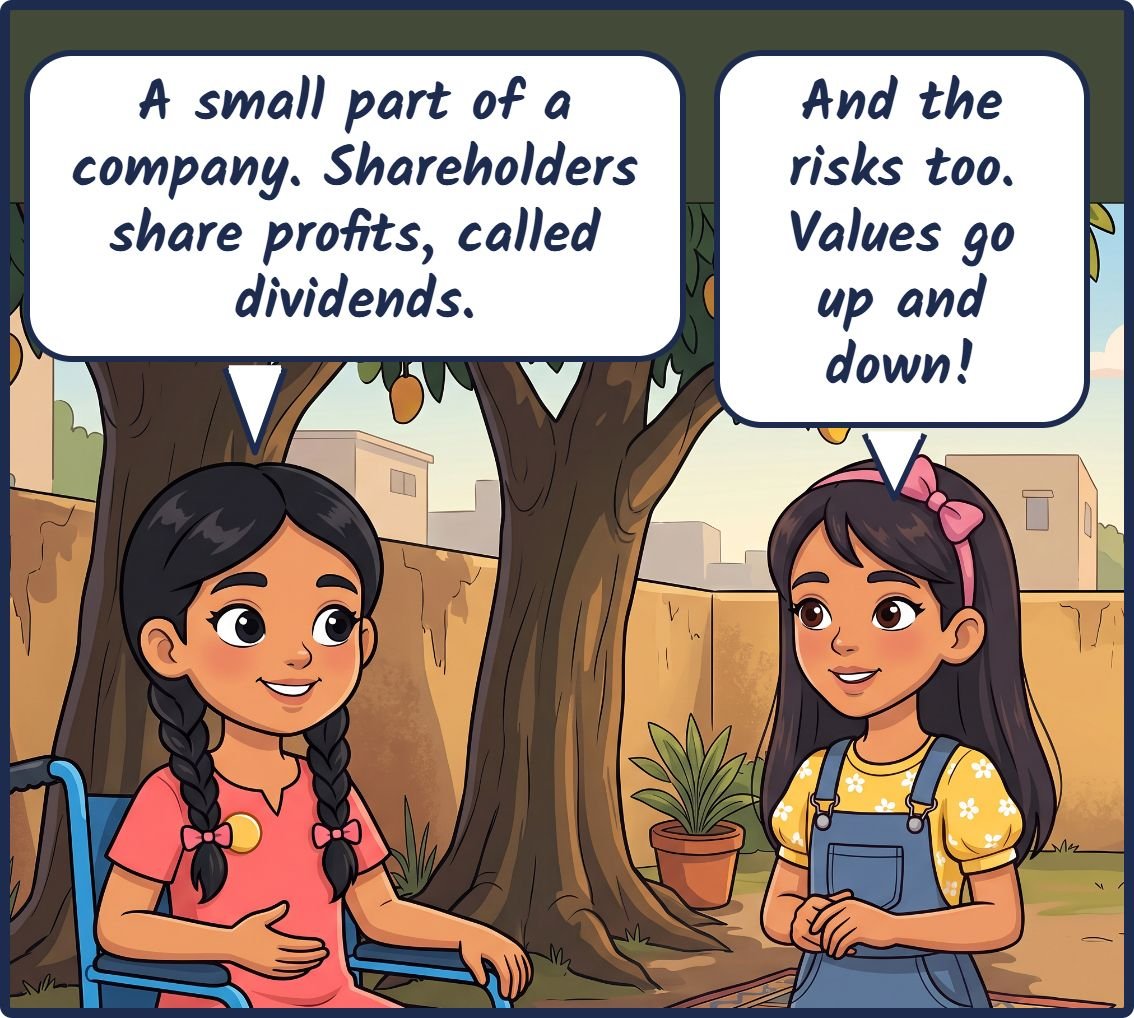
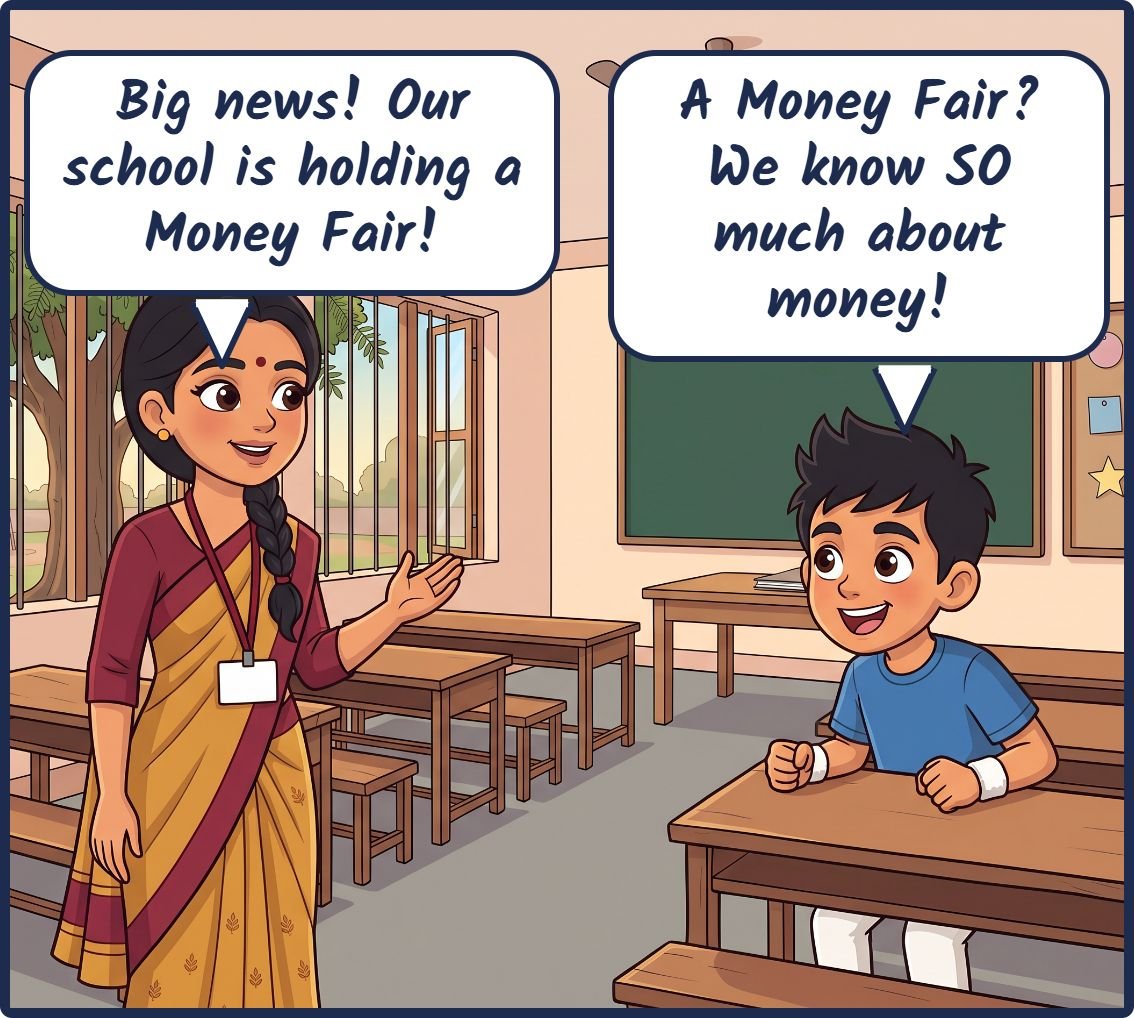
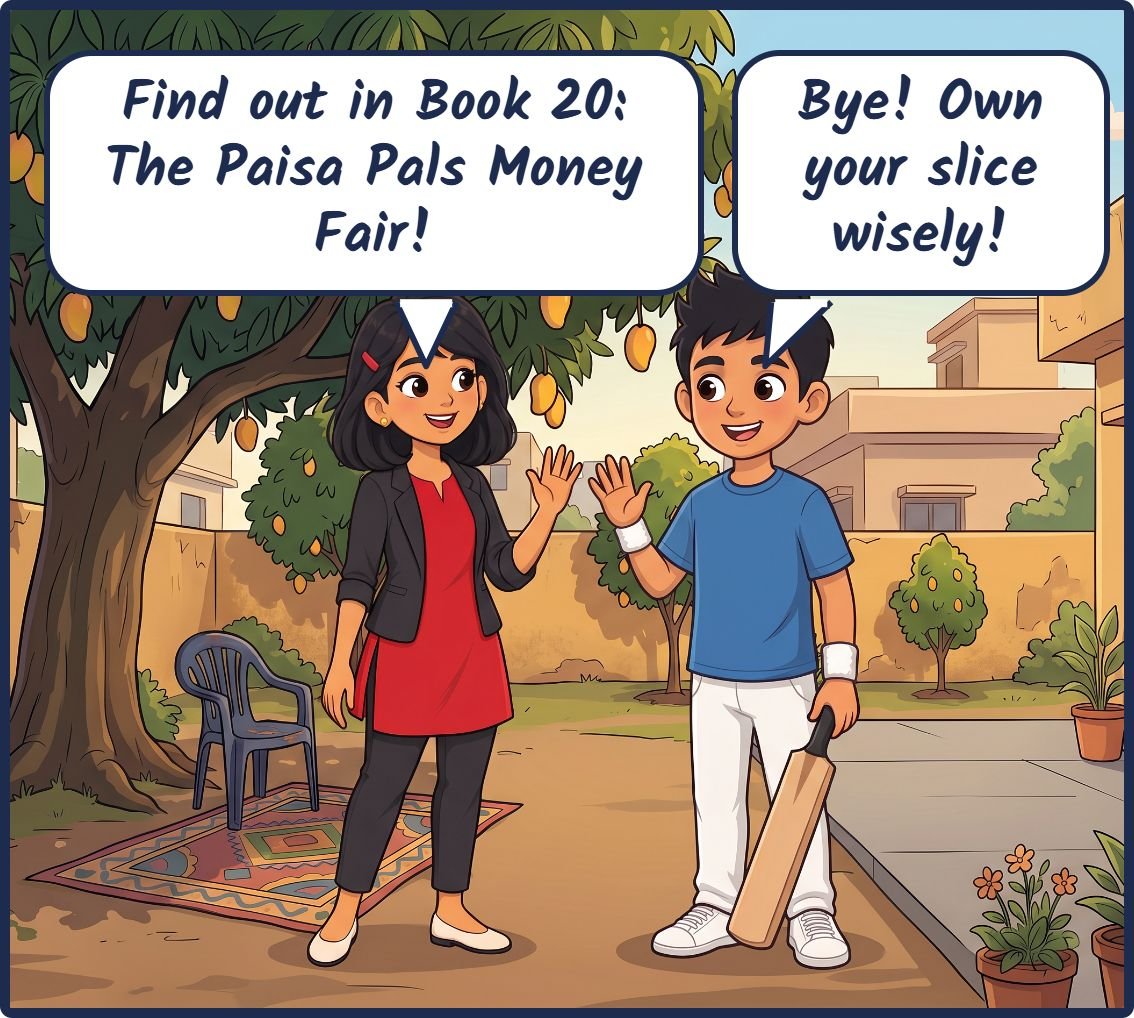
So, Paisa Pals, what is a share? A small part of a company. Shareholders share profits, called dividends. And the risks too. Values go up and down! And "double your money" tips are red flags! Brilliant, Kabir. Squeak! I'd like ONE share of crumbs, please! Big news! Our school is holding a Money Fair! A Money Fair? We know SO much about money! Find out in Book 20: The Paisa Pals Money Fair! Bye! Own your slice wisely!
Srestha's Money Tips
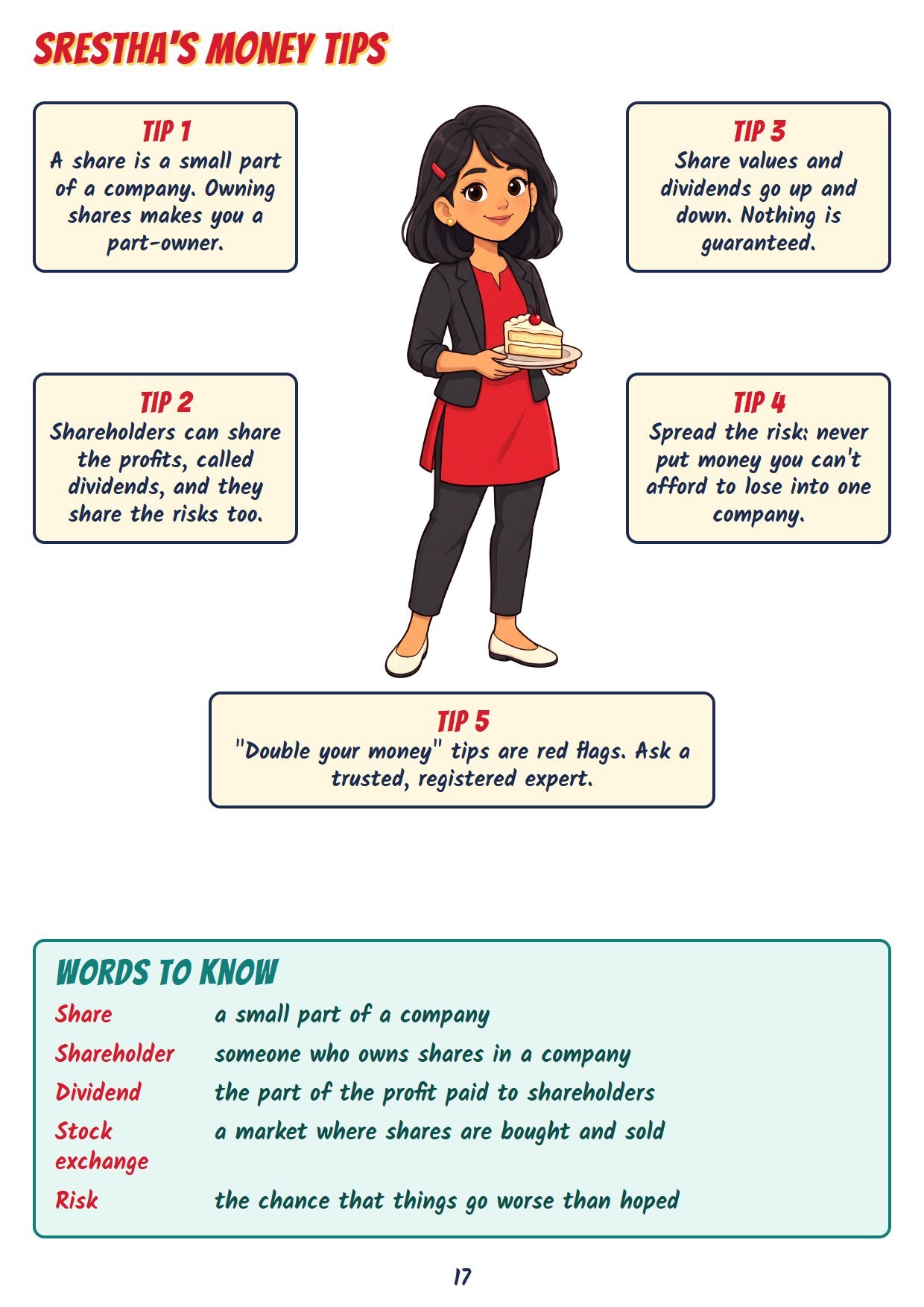
- A share is a small part of a company. Owning shares makes you a part-owner.
- Shareholders can share the profits, called dividends, and they share the risks too.
- Share values and dividends go up and down. Nothing is guaranteed.
- Spread the risk: never put money you can't afford to lose into one company.
- "Double your money" tips are red flags. Ask a trusted, registered expert.
Words to know
- Share
- a small part of a company
- Shareholder
- someone who owns shares in a company
- Dividend
- the part of the profit paid to shareholders
- Stock exchange
- a market where shares are bought and sold
- Risk
- the chance that things go worse than hoped
Quiz time!
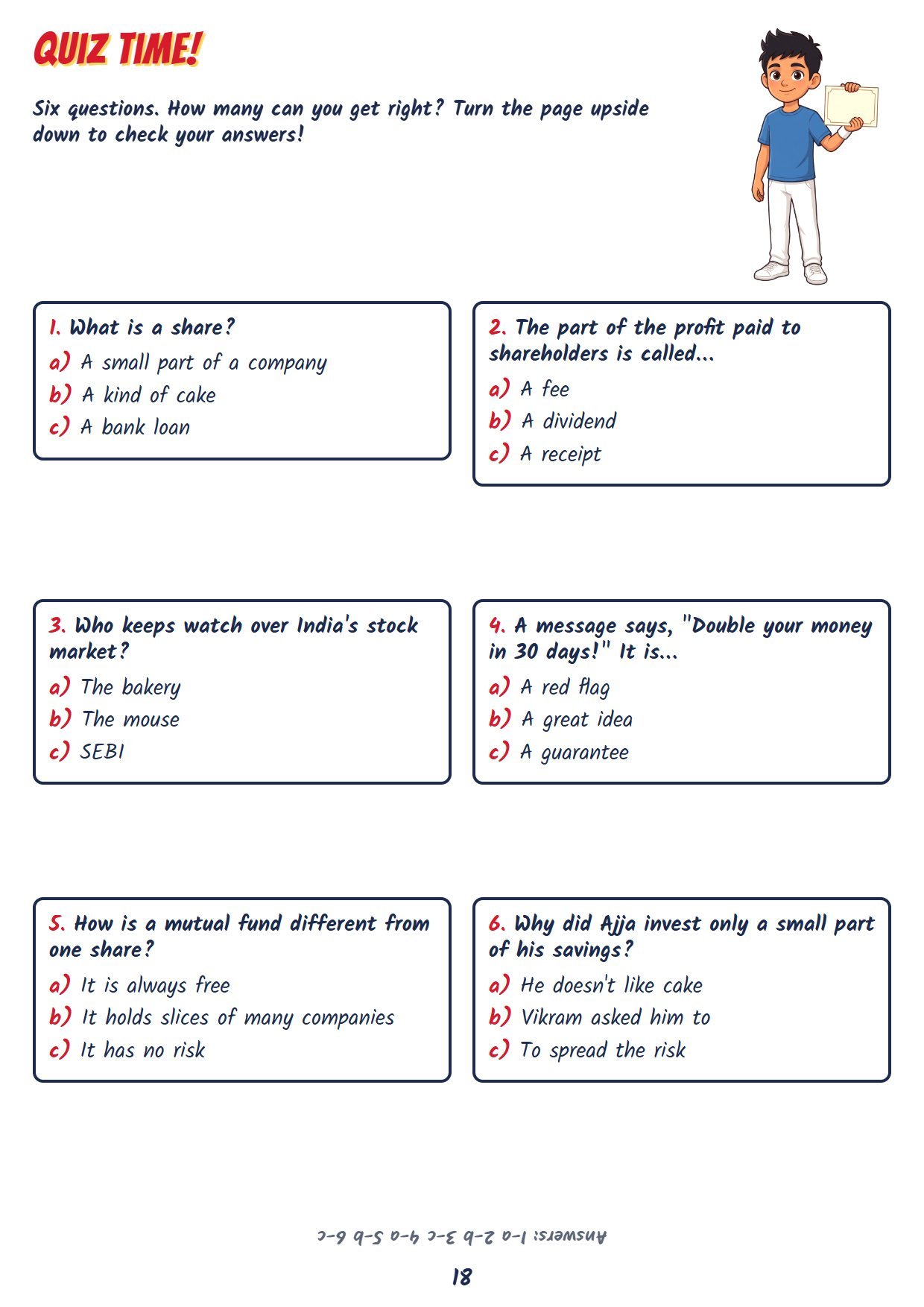
1. What is a share?- A small part of a company
- A kind of cake
- A bank loan
2. The part of the profit paid to shareholders is called…- A fee
- A dividend
- A receipt
3. Who keeps watch over India's stock market?- The bakery
- The mouse
- SEBI
4. A message says, "Double your money in 30 days!" It is…- A red flag
- A great idea
- A guarantee
5. How is a mutual fund different from one share?- It is always free
- It holds slices of many companies
- It has no risk
6. Why did Ajja invest only a small part of his savings?- He doesn't like cake
- Vikram asked him to
- To spread the risk
Answers: 1-a 2-b 3-c 4-a 5-b 6-c
Try this at home
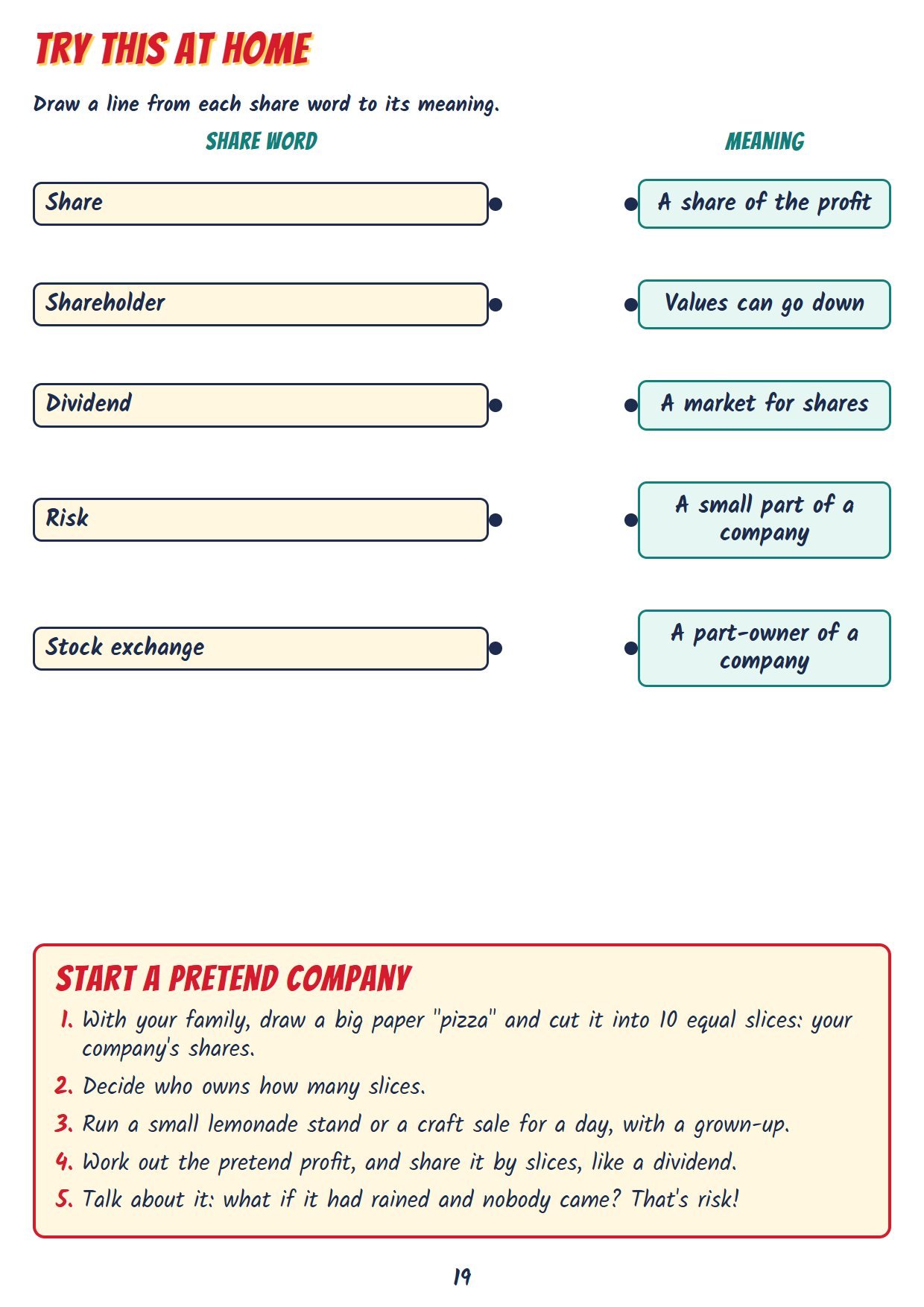
Draw a line from each share word to its meaning.
| Share word | Meaning |
|---|
| Share | A share of the profit |
| Shareholder | Values can go down |
| Dividend | A market for shares |
| Risk | A small part of a company |
| Stock exchange | A part-owner of a company |
Start a Pretend Company
- With your family, draw a big paper "pizza" and cut it into 10 equal slices: your company's shares.
- Decide who owns how many slices.
- Run a small lemonade stand or a craft sale for a day, with a grown-up.
- Work out the pretend profit, and share it by slices, like a dividend.
- Talk about it: what if it had rained and nobody came? That's risk!
For parents and teachers

What this book teaches
Companies and shares: how a business can raise money through a loan or by selling shares; what shareholders own, earn (dividends) and risk; how share values change; spreading risk; stock exchanges and SEBI; the difference between a single share and a mutual fund; and spotting "guaranteed" share tips as red flags.
Talk about it
- Which businesses near us would you like to own a slice of, and why?
- What could make a business's profits go up or down?
- Why should we be careful of tips from strangers in chat groups?
Good to know
- In real life, shares are bought and sold through registered brokers on stock exchanges (NSE and BSE are India's main ones), and SEBI keeps watch over the market.
- Share values and dividends go up and down; nothing is guaranteed. Spread risk, and invest only money you can leave for a long time.
- "Double your money" tips in chat groups are red flags. The amounts in this book are examples.
Paisa Pals is created by Srinivas Kambhampati, AMFI-registered Mutual Fund Distributor (ARN-265474, EUIN E091320), working under the brand Rytvae Consulting. This book is for financial awareness only. It does not recommend any bank, product, investment or scheme. More free comics: rytvae.com (Kids' Corner).























 ComicBook 16