The magic card

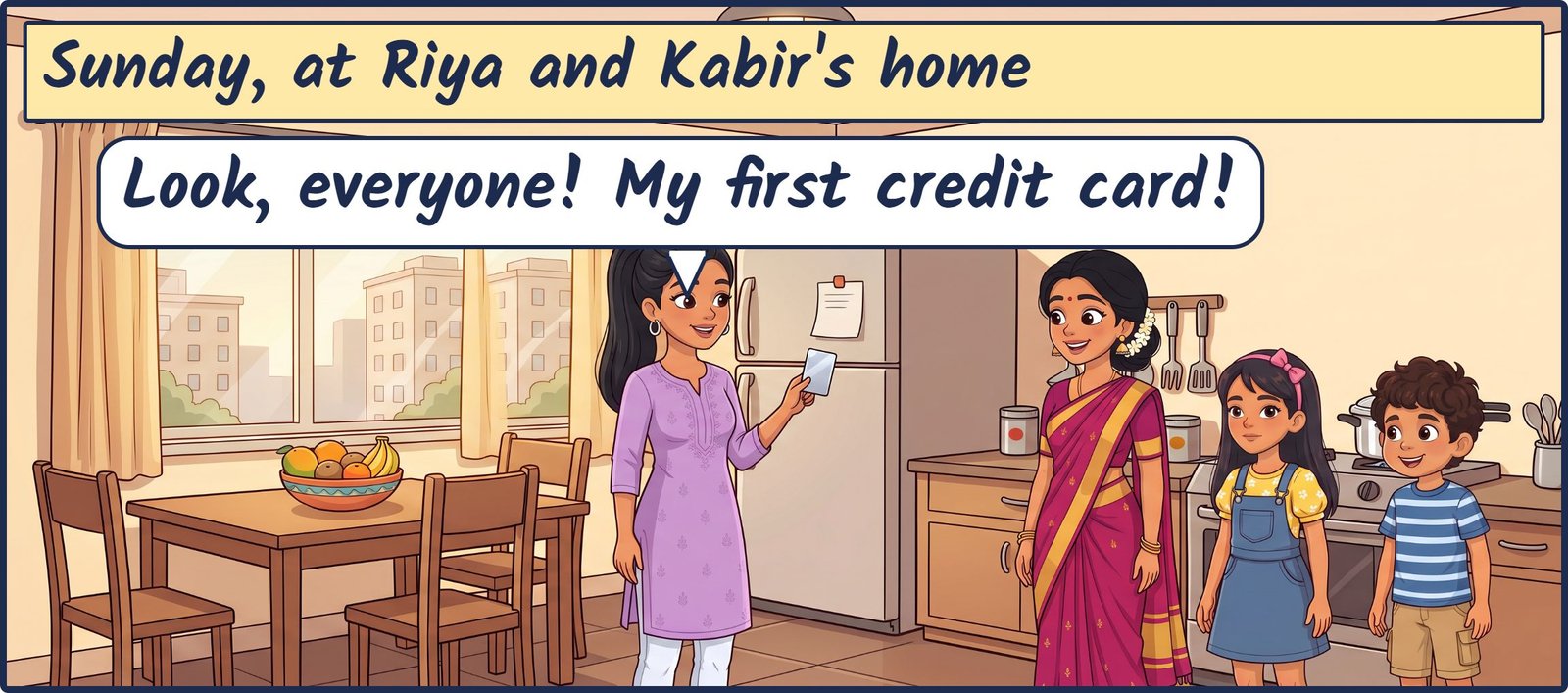
Sunday, at Riya and Kabir's home Look, everyone! My first credit card! I can buy ANYTHING with this! Anything? A rocket? A chocolate factory? How can one small card buy anything? You just tap it, or swipe it. Magic! Pooja, a card isn't magic. The money comes from somewhere. From the bank, Aunty! They're very generous. Banks don't give money away. Remember Book 13? Let's ask Srestha Didi!
Debit or credit?

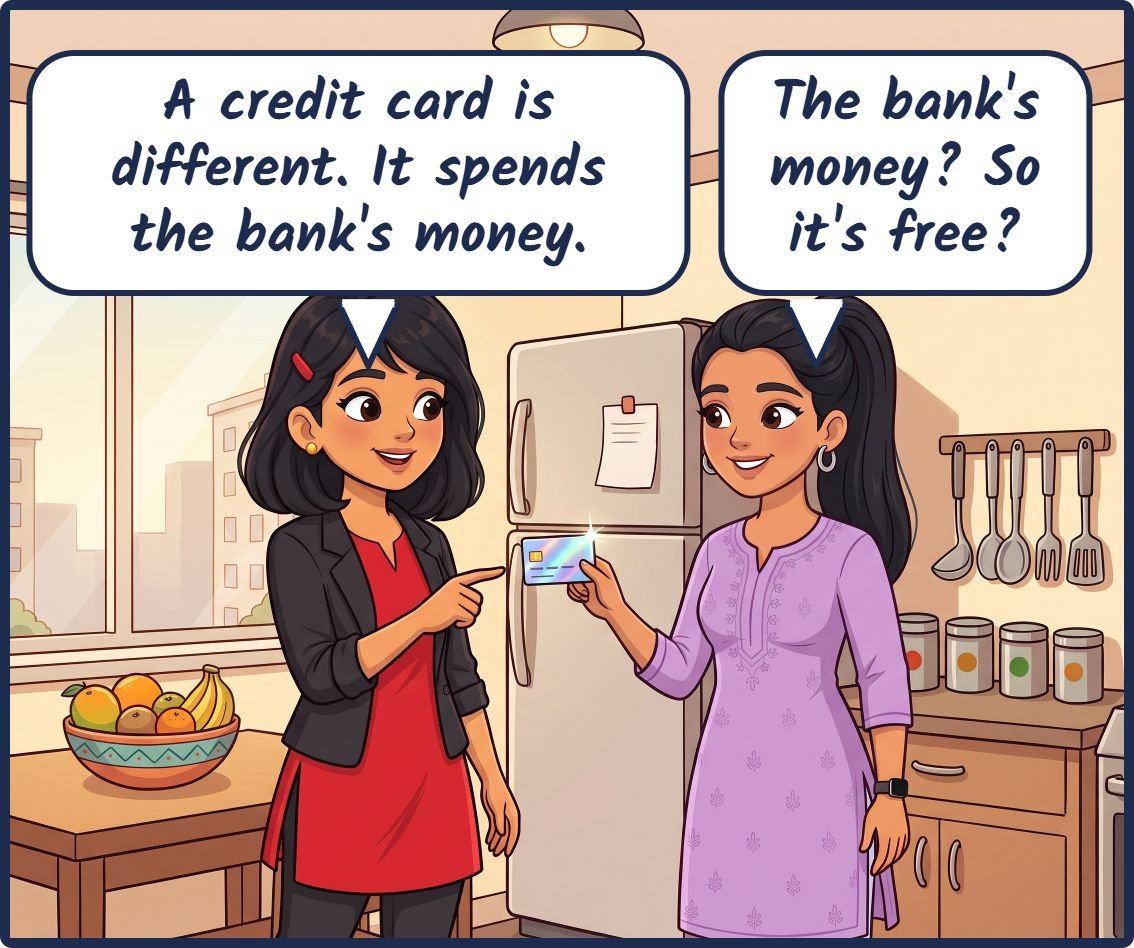
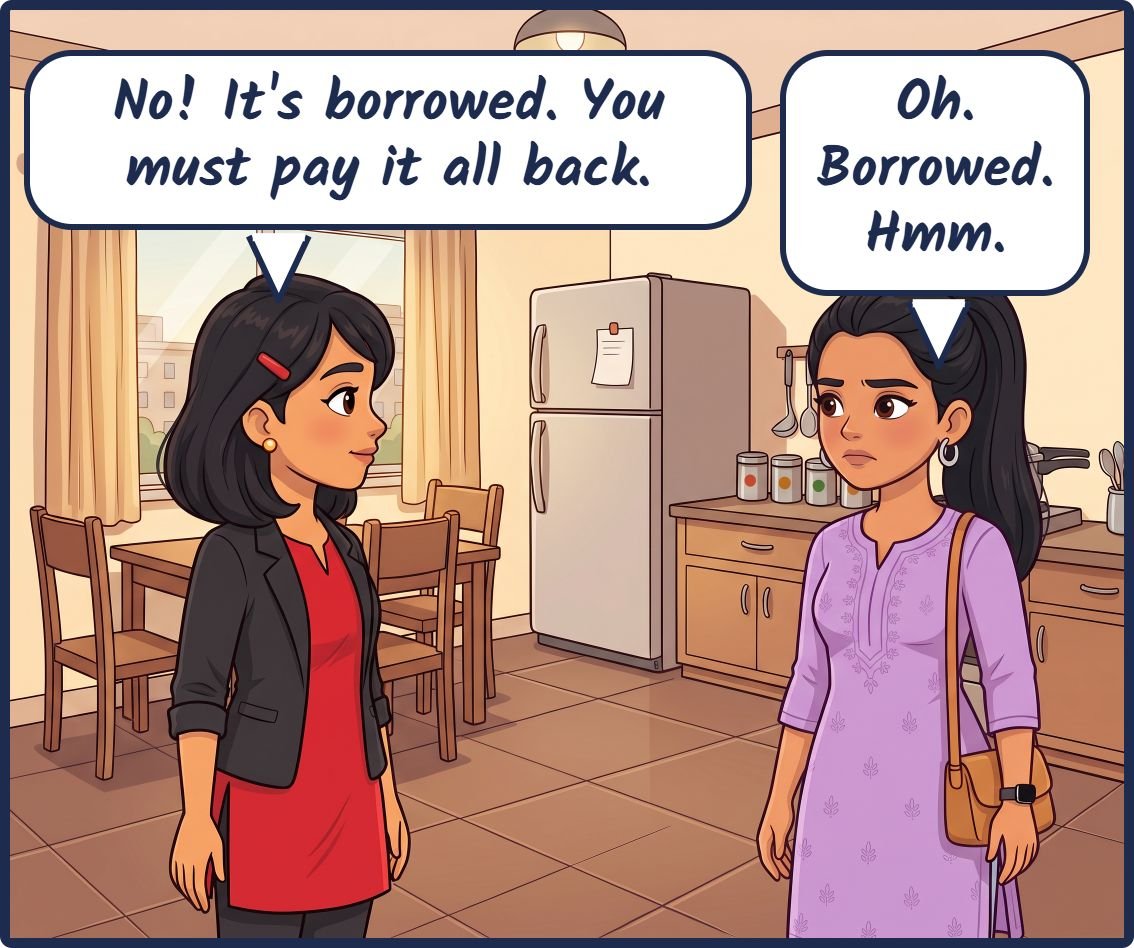
There are two main kinds of cards: debit and credit. My debit card spends my own money, straight from my bank account. So it's a key to your own money! A credit card is different. It spends the bank's money. The bank's money? So it's free? No! It's borrowed. You must pay it all back. Oh. Borrowed. Hmm. Debit card: your own money. Credit card: borrowed money. So a credit card is an "I owe you" card!
Tap to pay
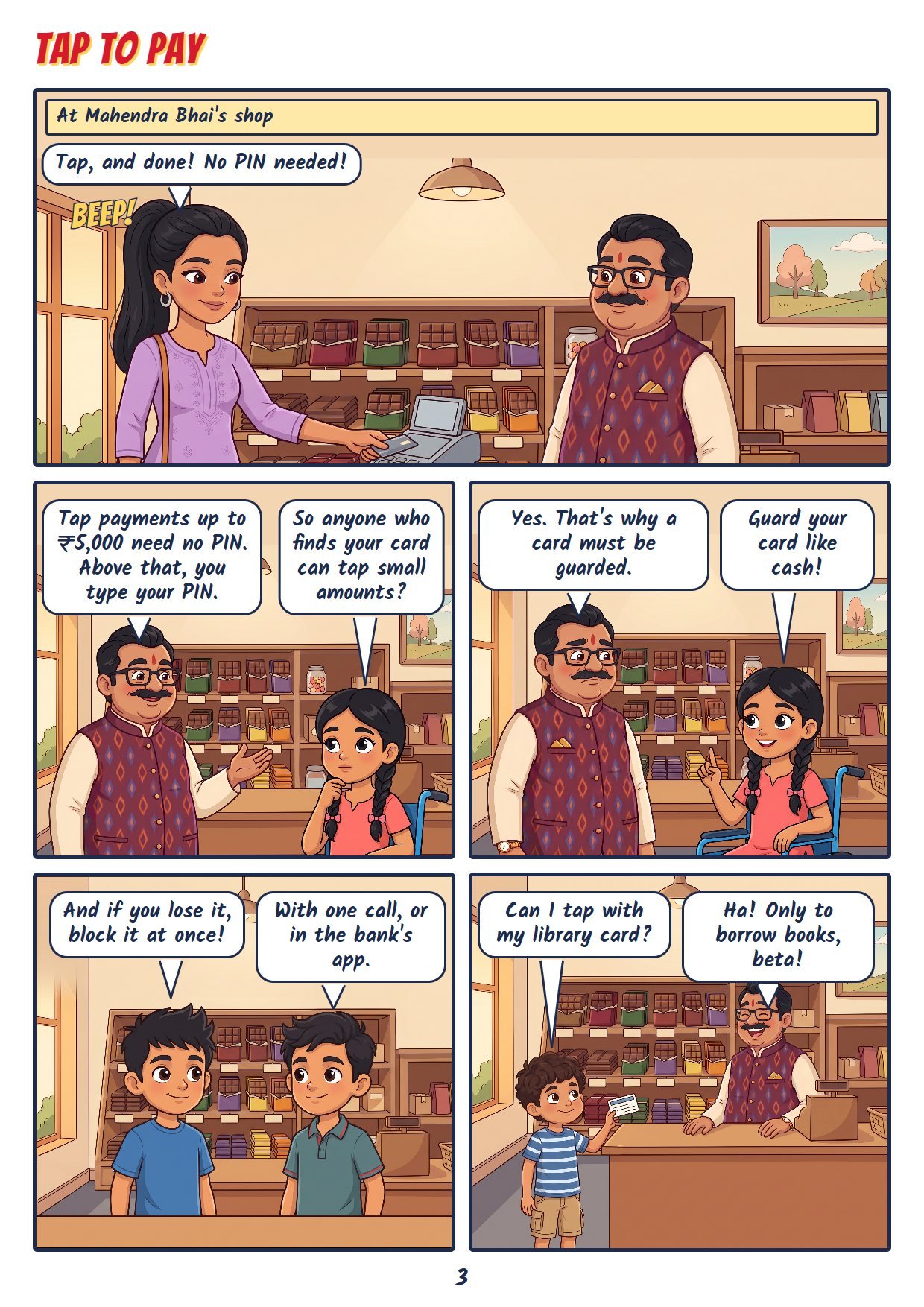
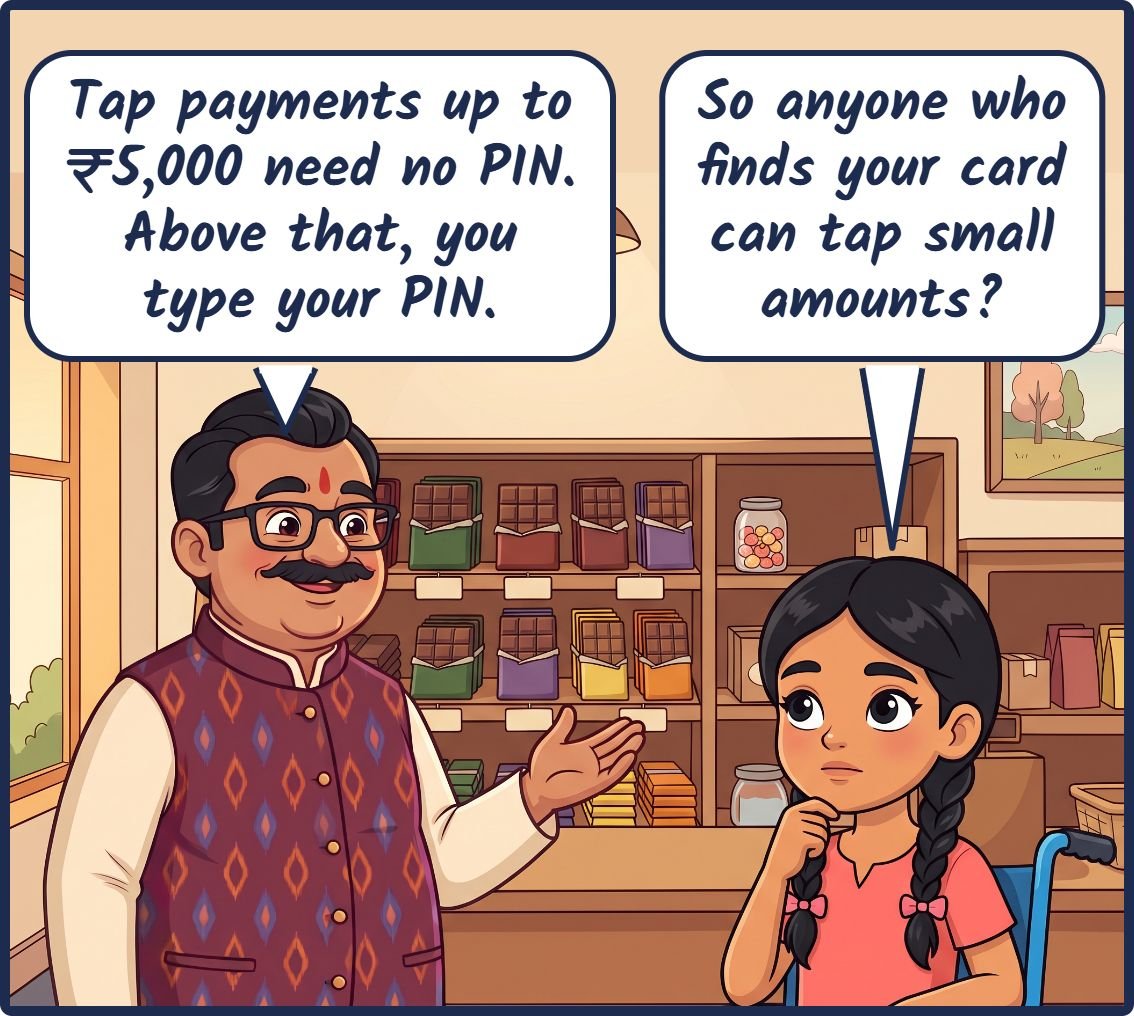
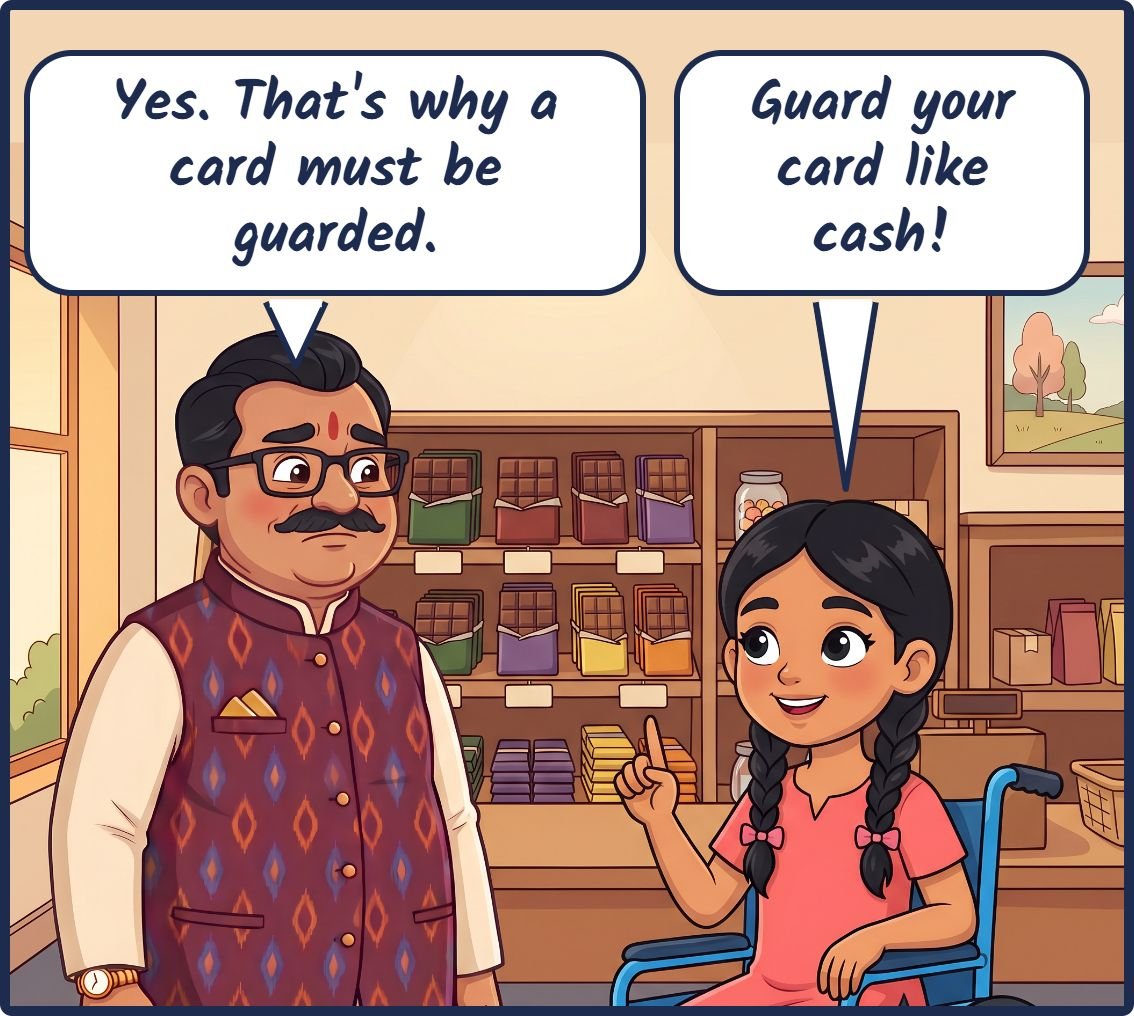
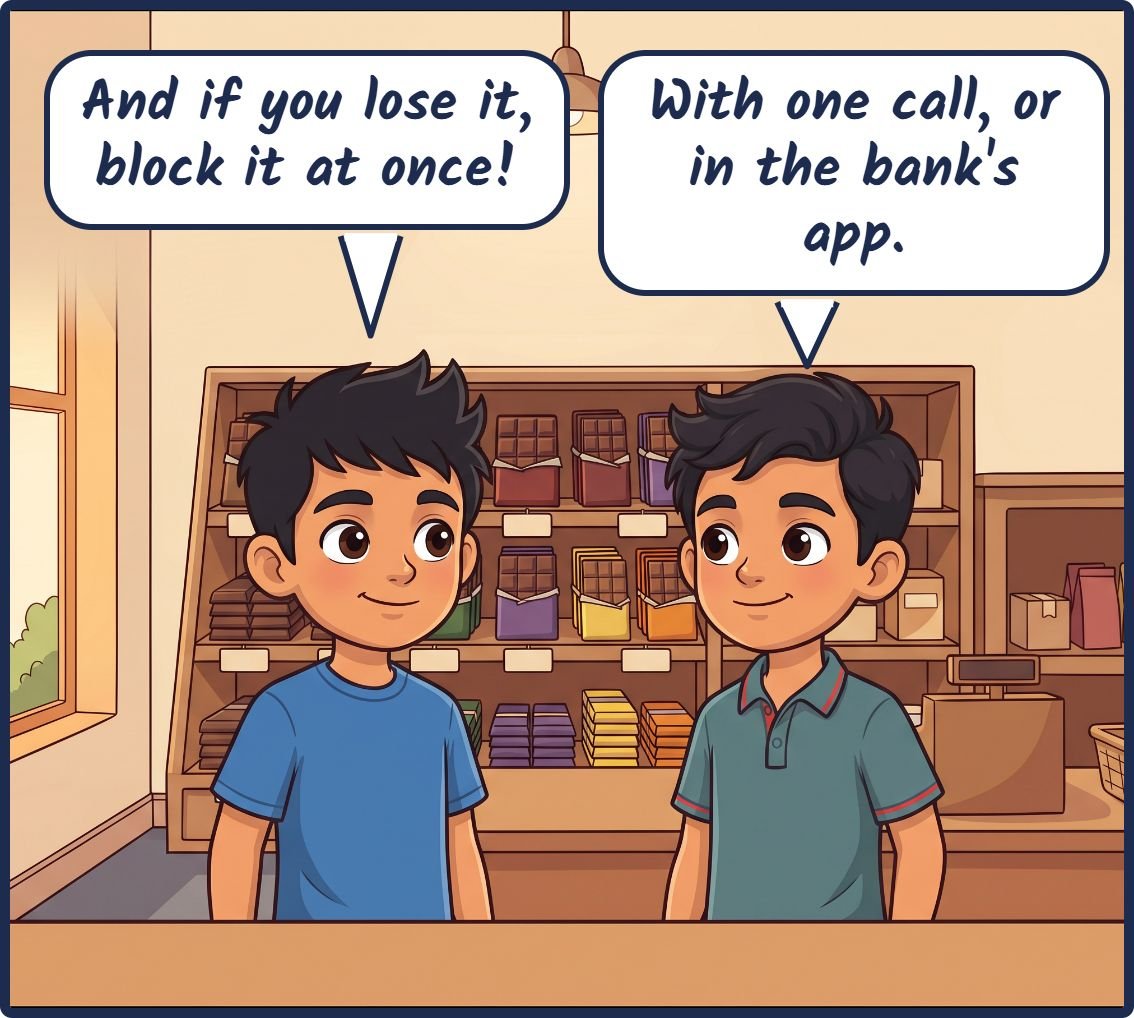
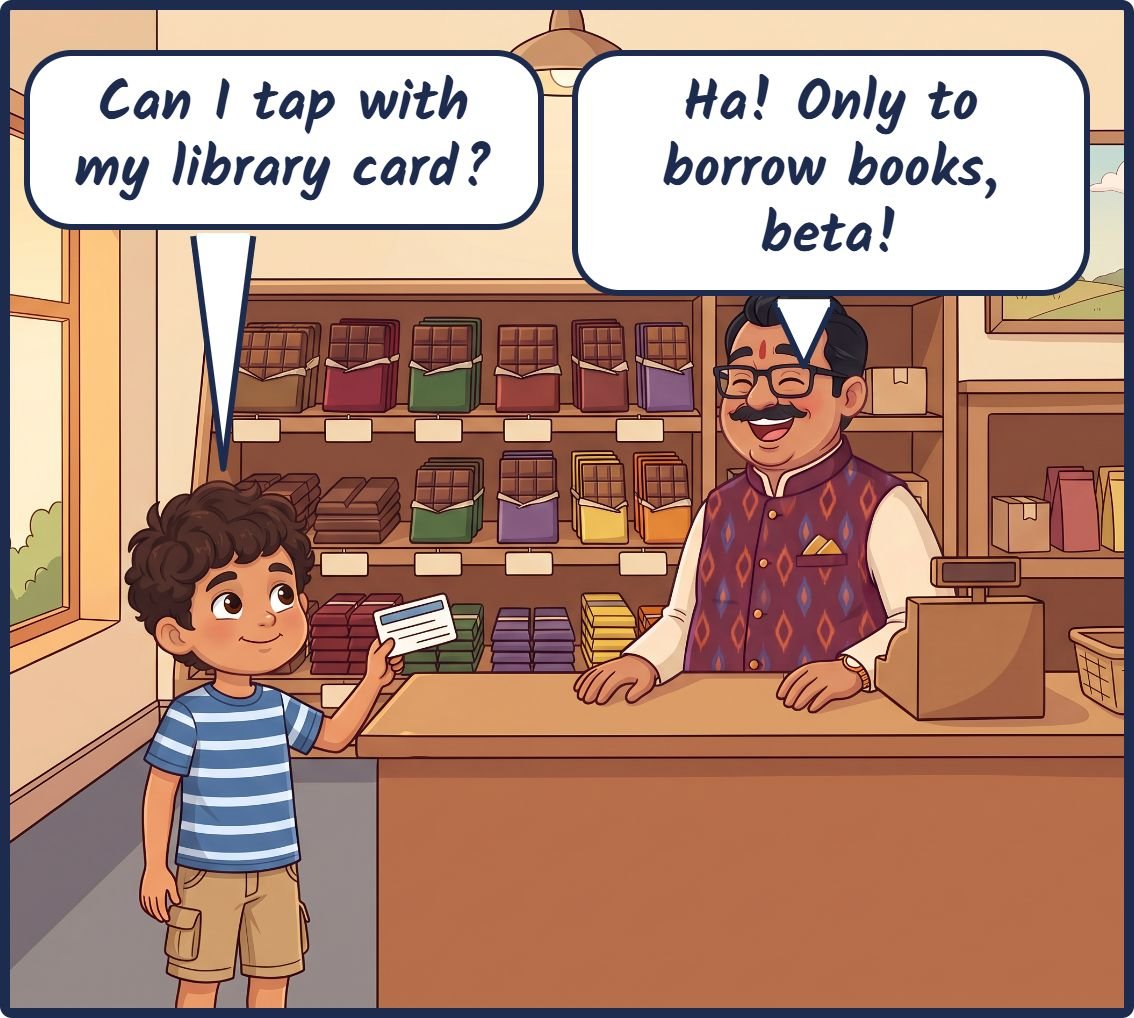
At Mahendra Bhai's shop BEEP! Tap, and done! No PIN needed! Tap payments up to ₹5,000 need no PIN. Above that, you type your PIN. So anyone who finds your card can tap small amounts? Yes. That's why a card must be guarded. Guard your card like cash! And if you lose it, block it at once! With one call, or in the bank's app. Can I tap with my library card? Ha! Only to borrow books, beta!
The spree

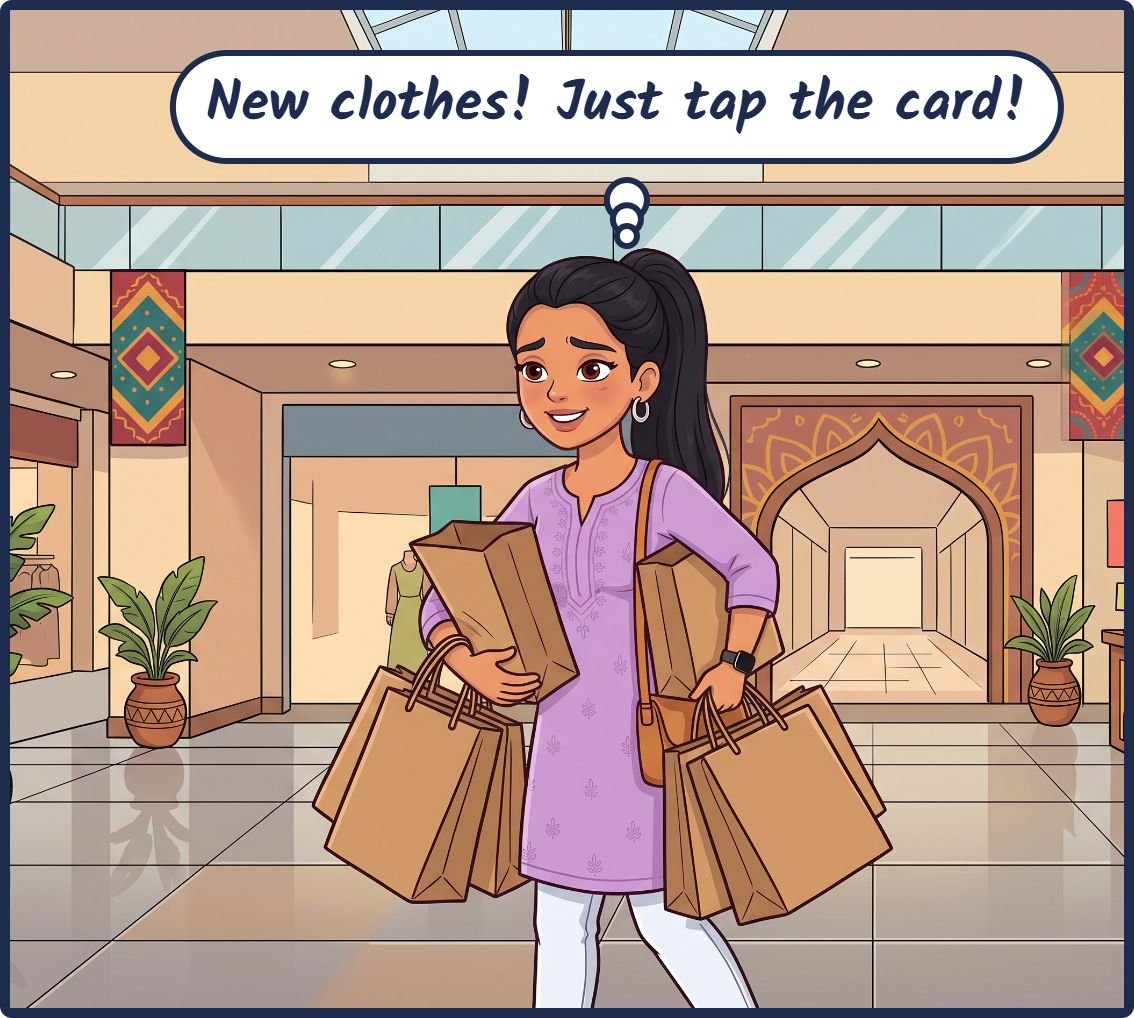
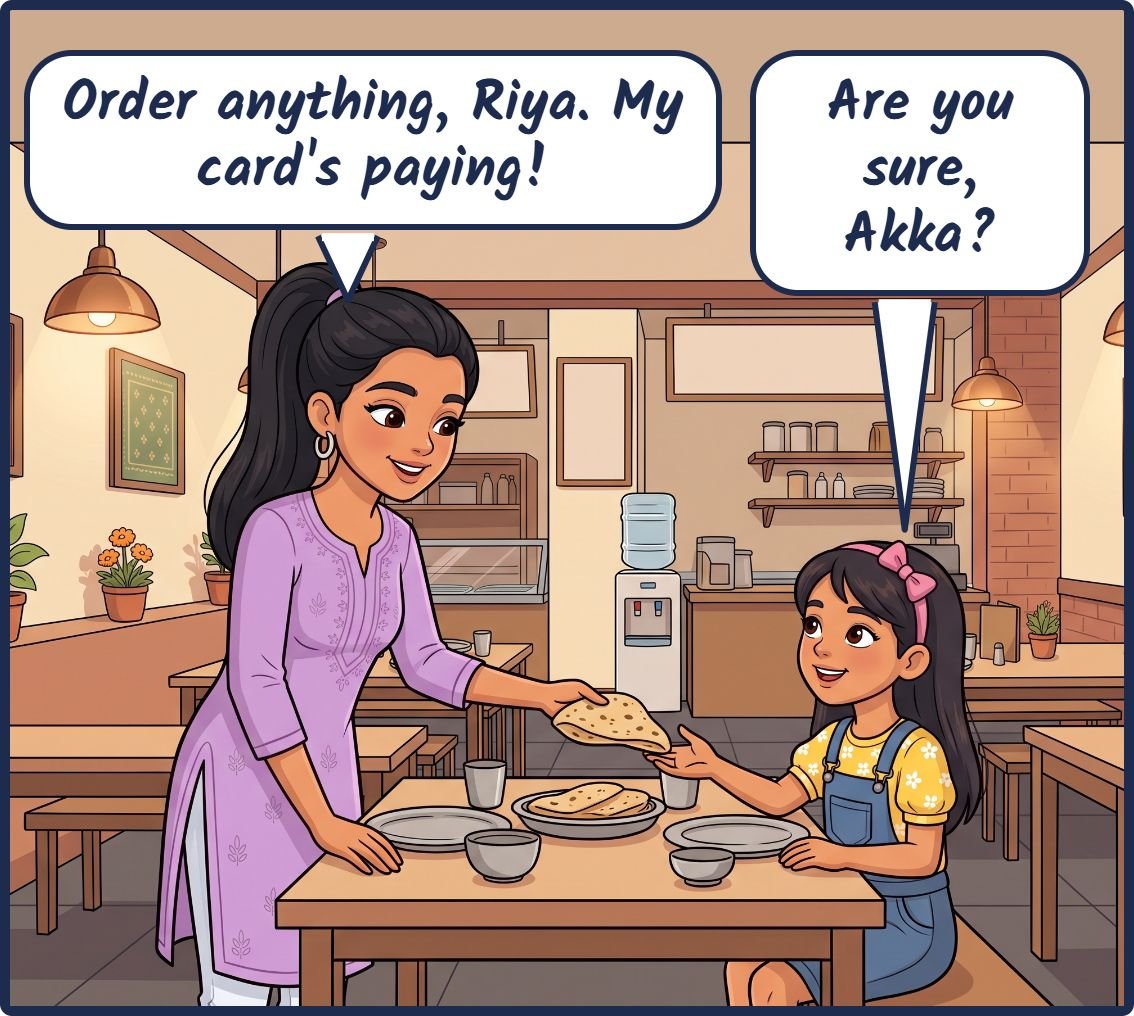
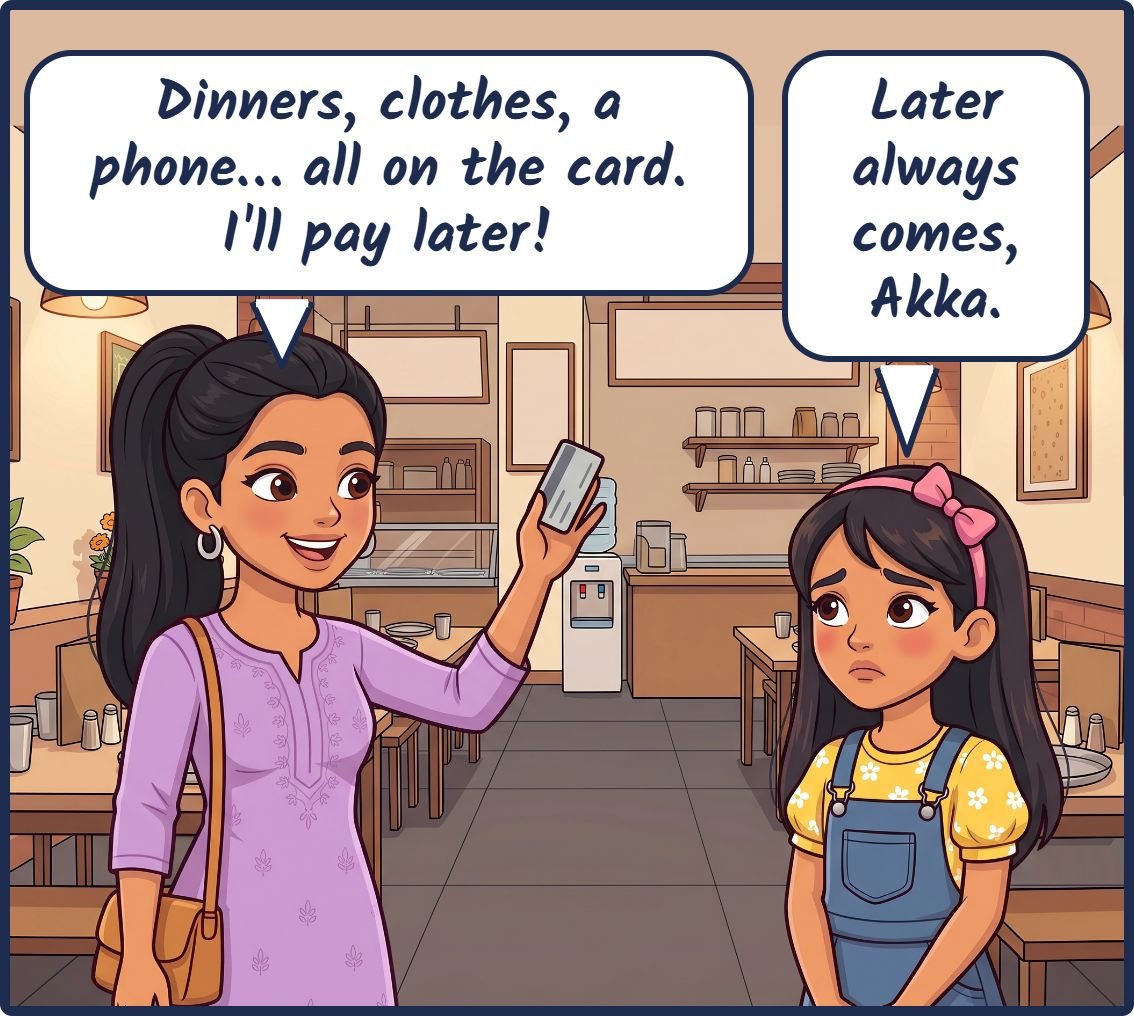
A month earlier… A new phone! I'll pay later. New clothes! Just tap the card! Order anything, Riya. My card's paying! Are you sure, Akka? Dinners, clothes, a phone… all on the card. I'll pay later! Later always comes, Akka. Back to today PING! Oh! My card bill has arrived.
The bill
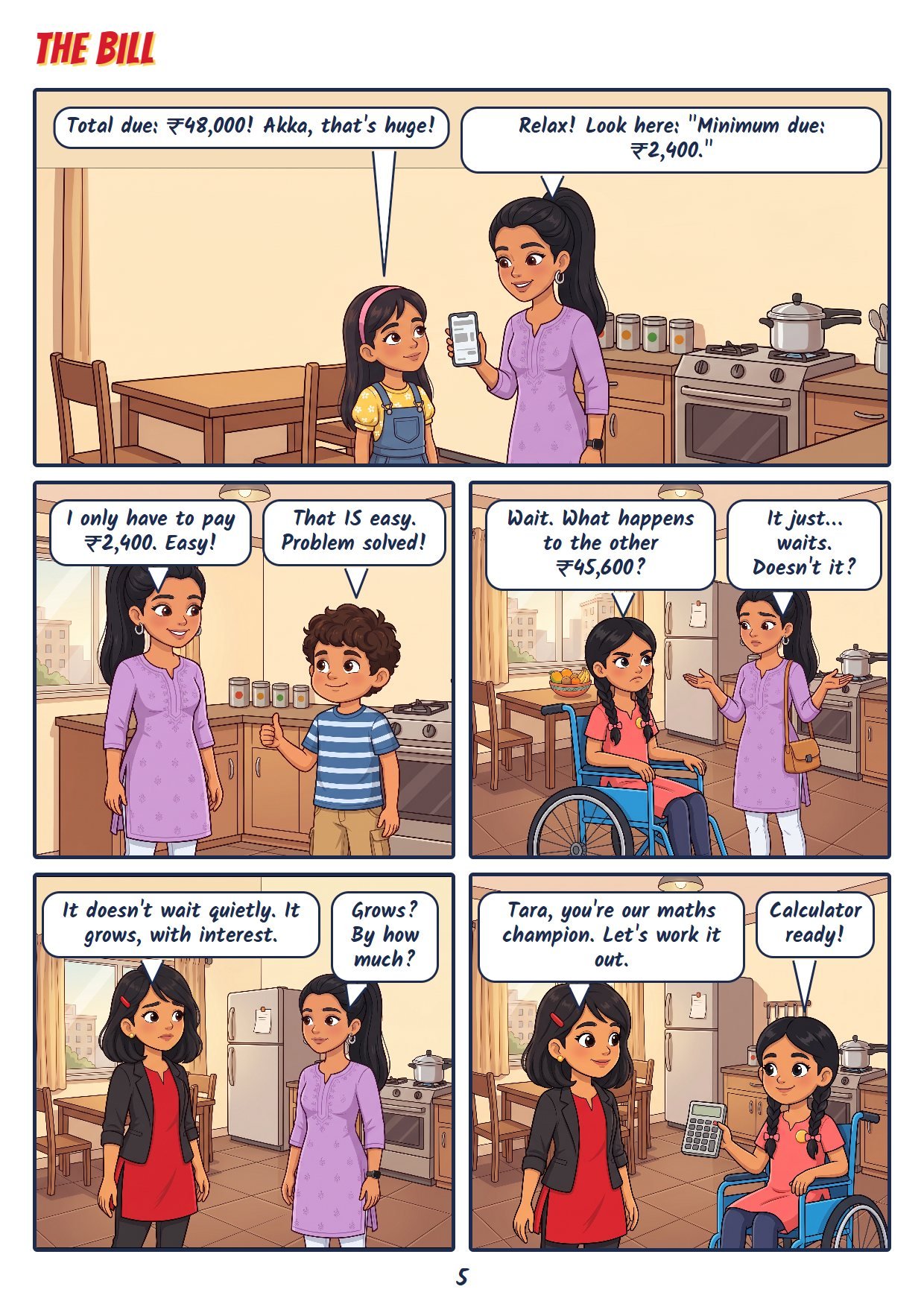
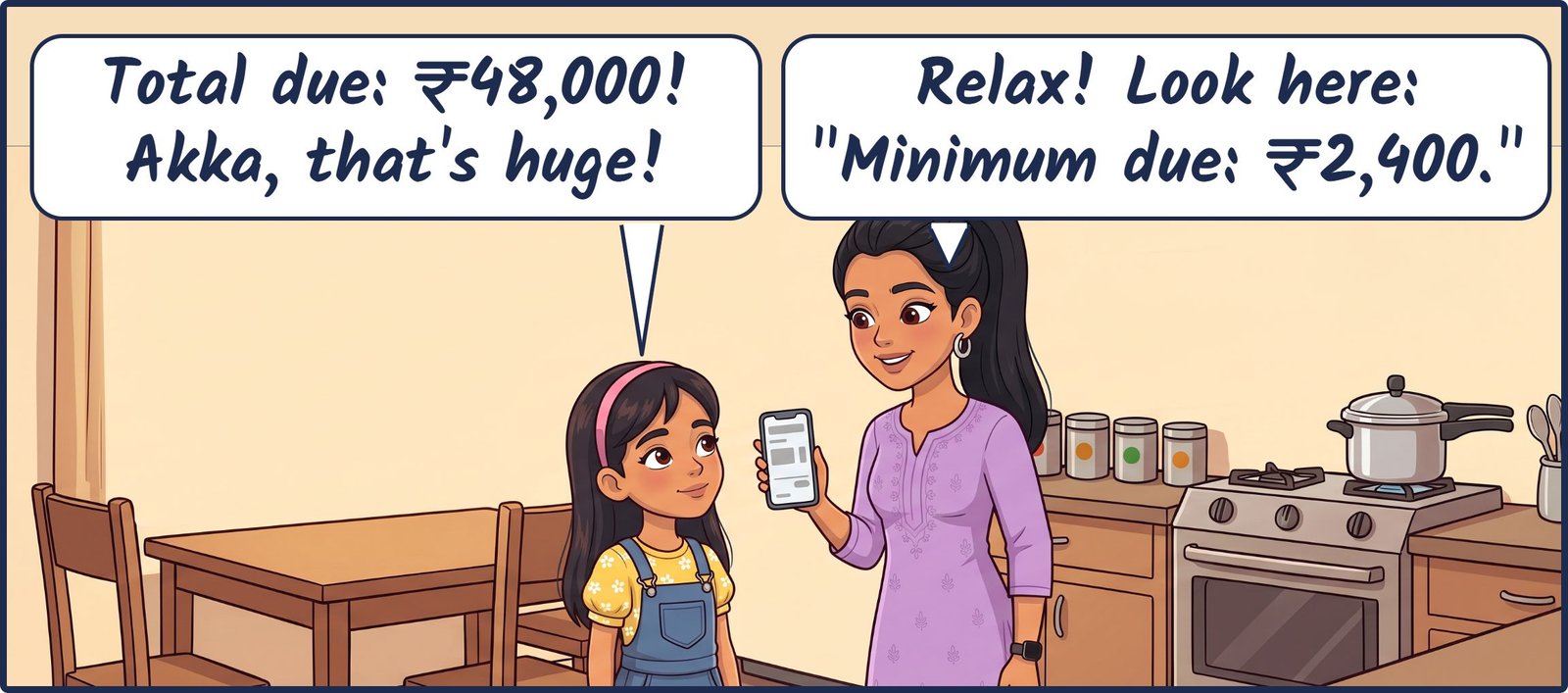
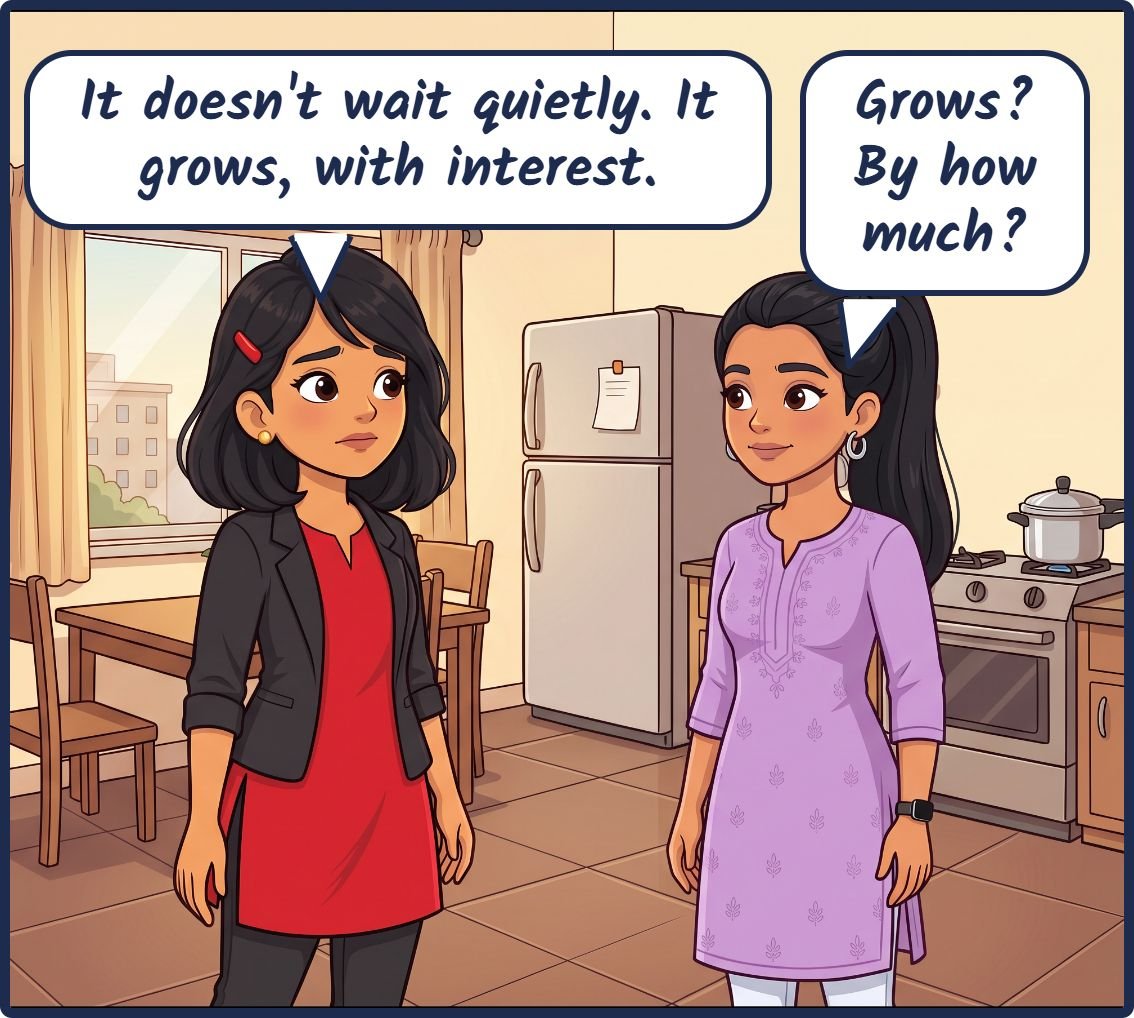
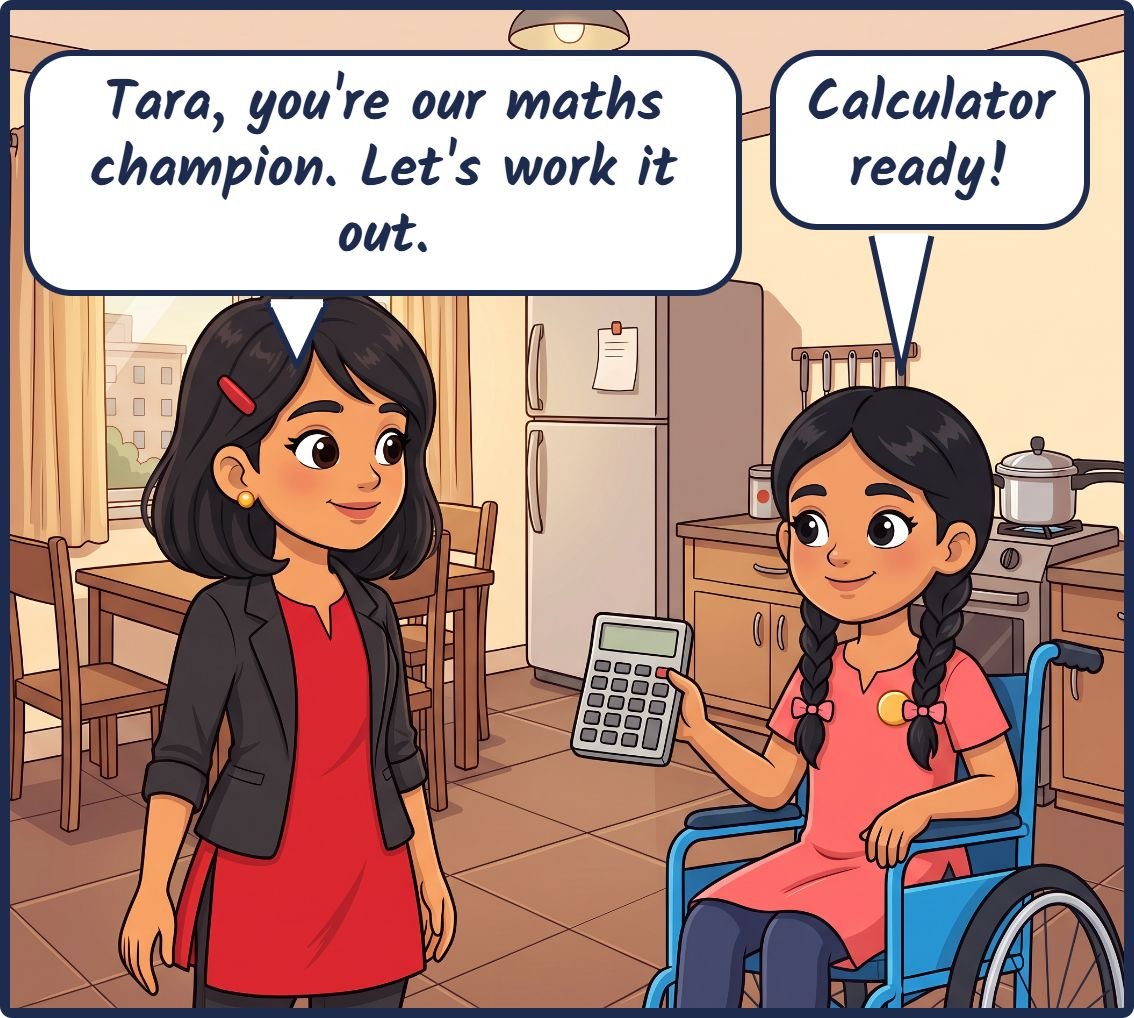
Total due: ₹48,000! Akka, that's huge! Relax! Look here: "Minimum due: ₹2,400." I only have to pay ₹2,400. Easy! That IS easy. Problem solved! Wait. What happens to the other ₹45,600? It just… waits. Doesn't it? It doesn't wait quietly. It grows, with interest. Grows? By how much? Tara, you're our maths champion. Let's work it out. Calculator ready!
The minimum trap
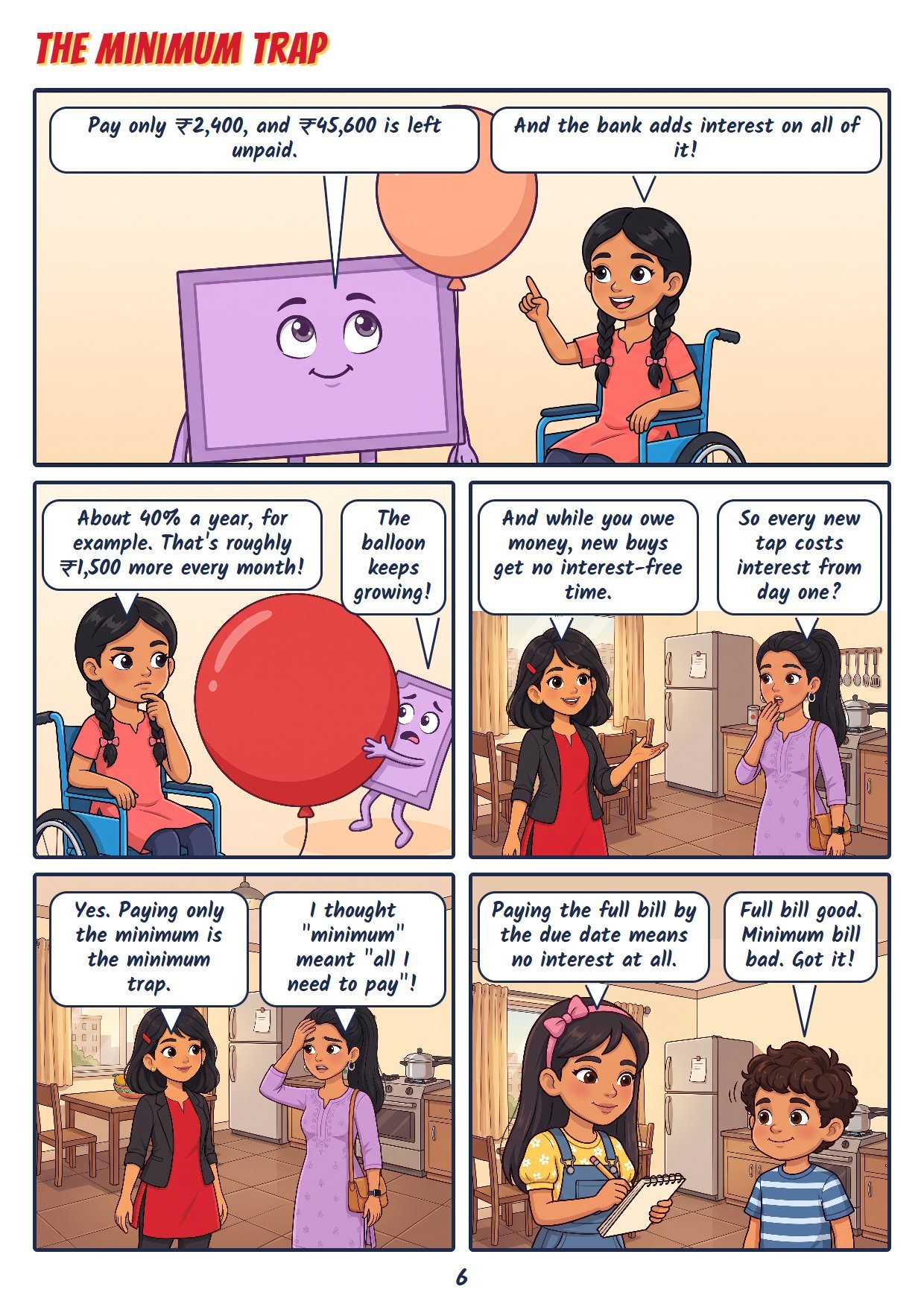
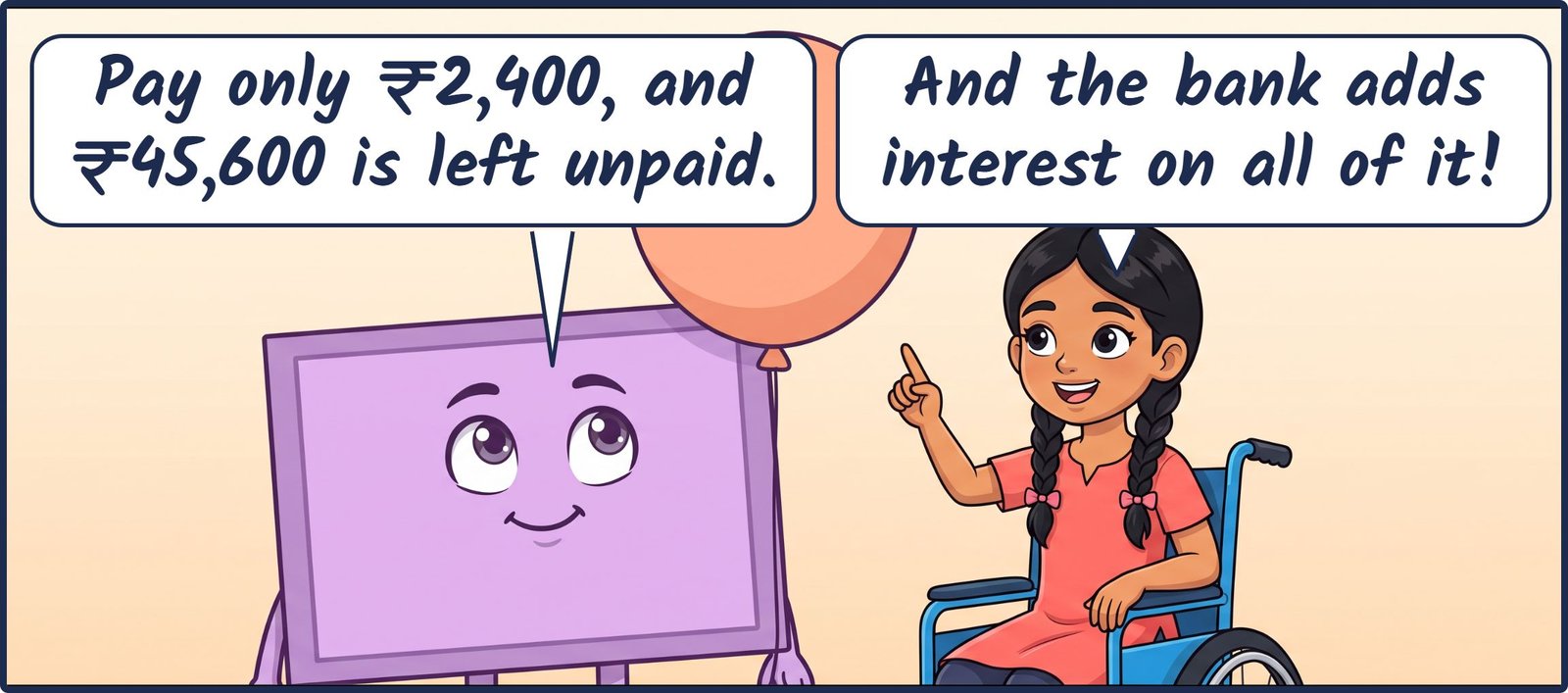
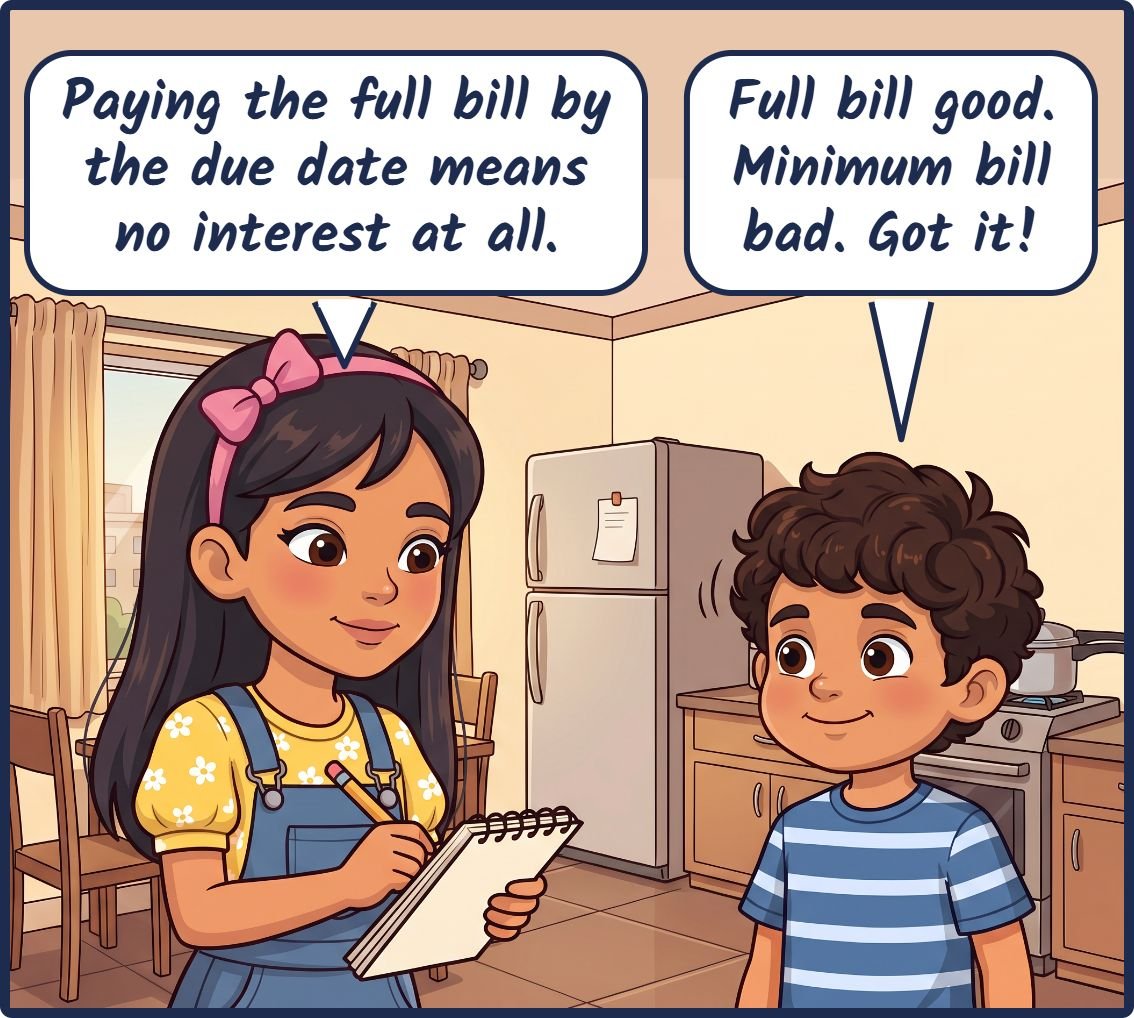
Pay only ₹2,400, and ₹45,600 is left unpaid. And the bank adds interest on all of it! About 40% a year, for example. That's roughly ₹1,500 more every month! The balloon keeps growing! And while you owe money, new buys get no interest-free time. So every new tap costs interest from day one? Yes. Paying only the minimum is the minimum trap. I thought "minimum" meant "all I need to pay"! Paying the full bill by the due date means no interest at all. Full bill good. Minimum bill bad. Got it!
Pay later in disguise
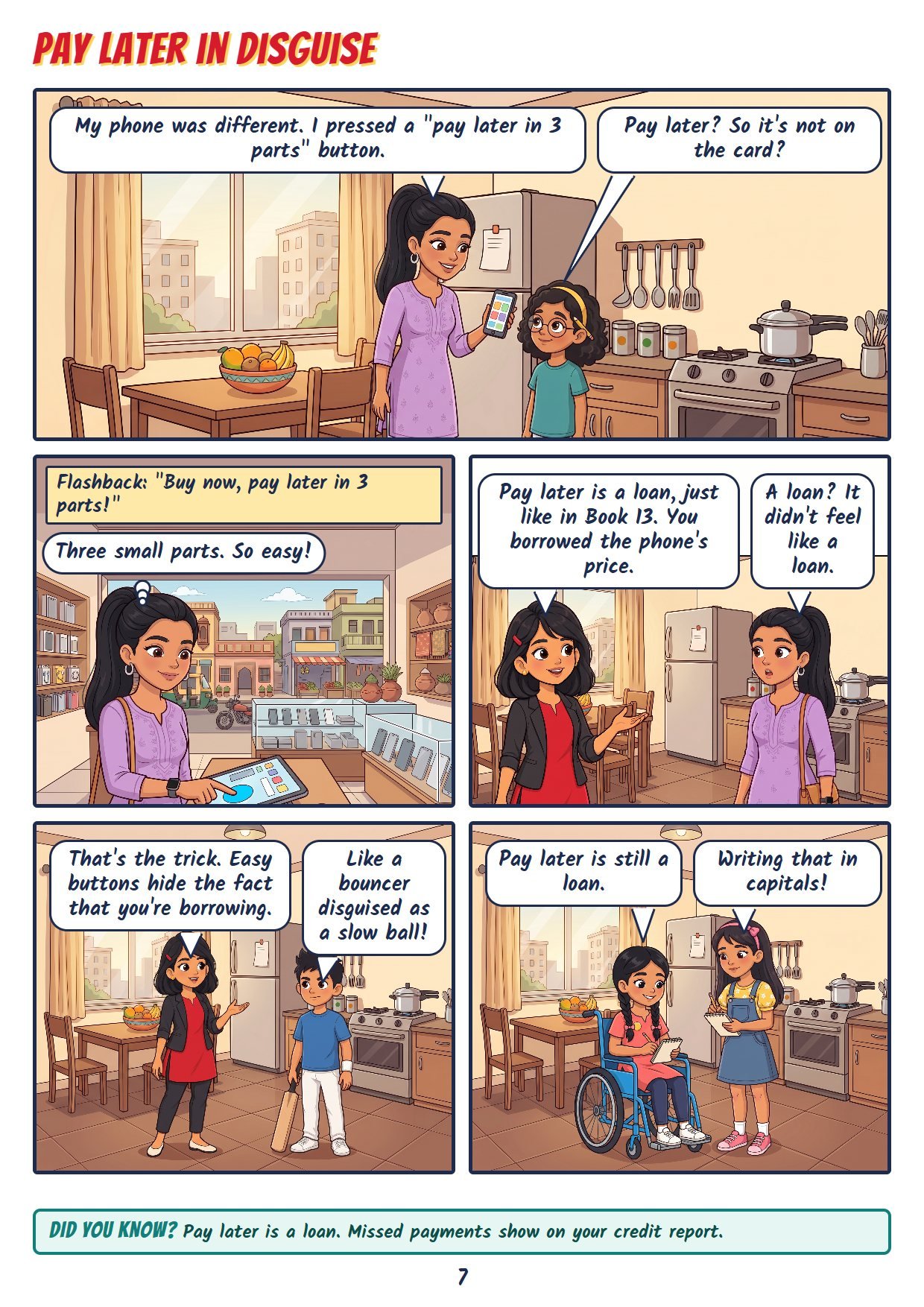
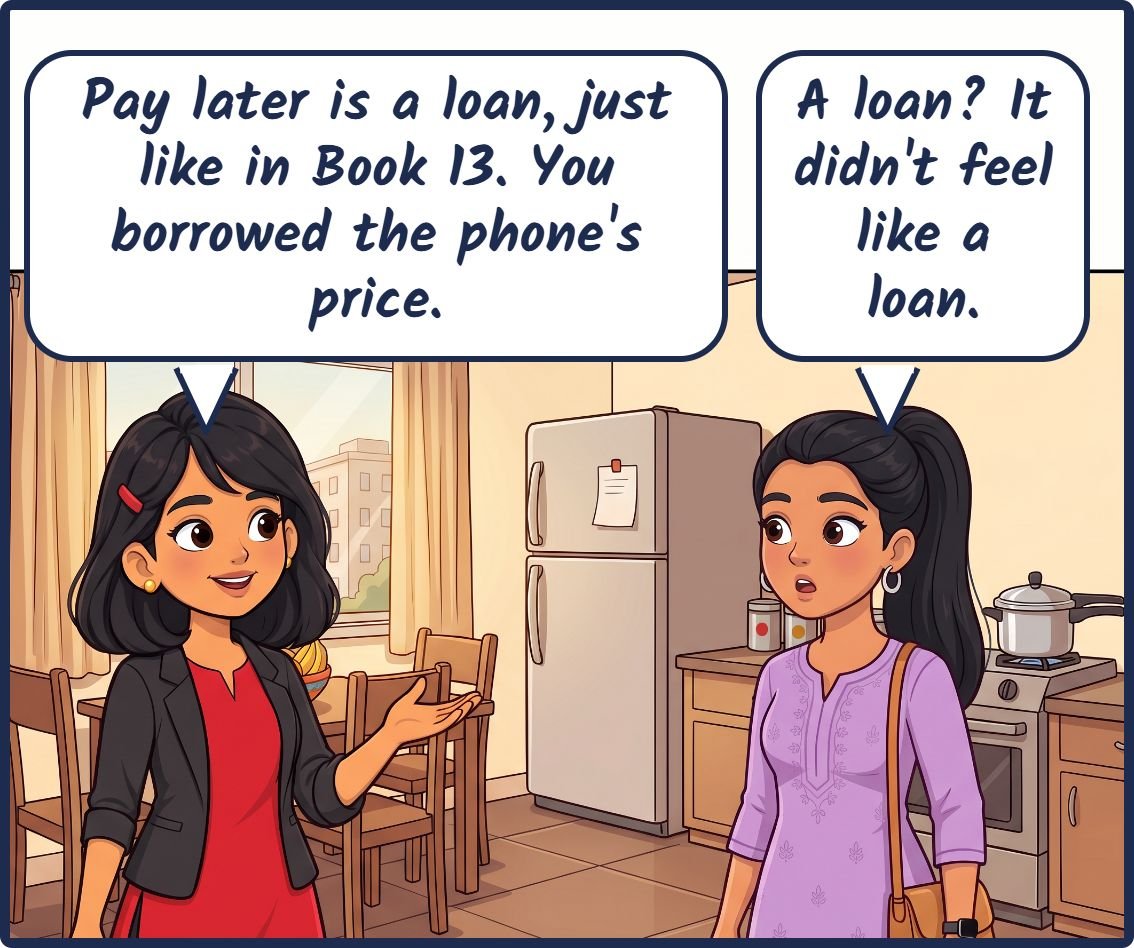
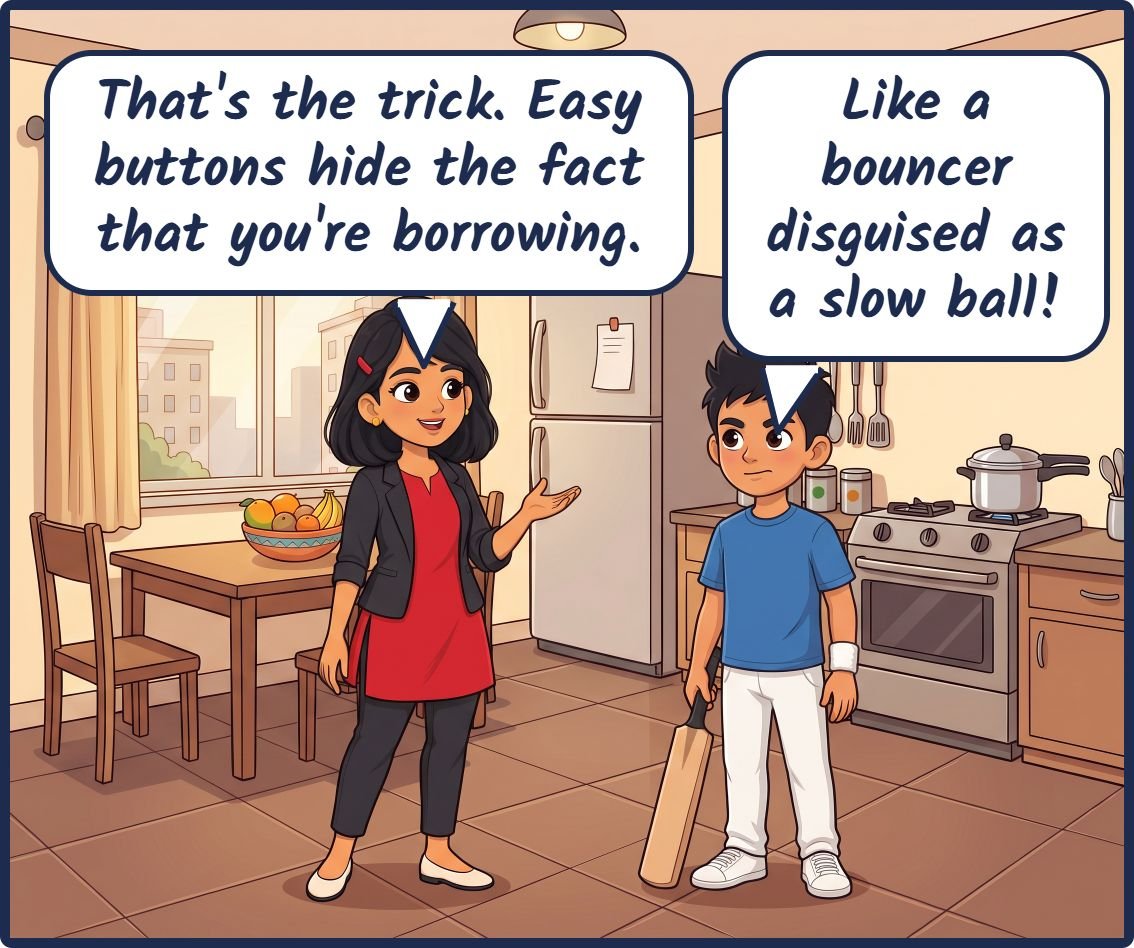
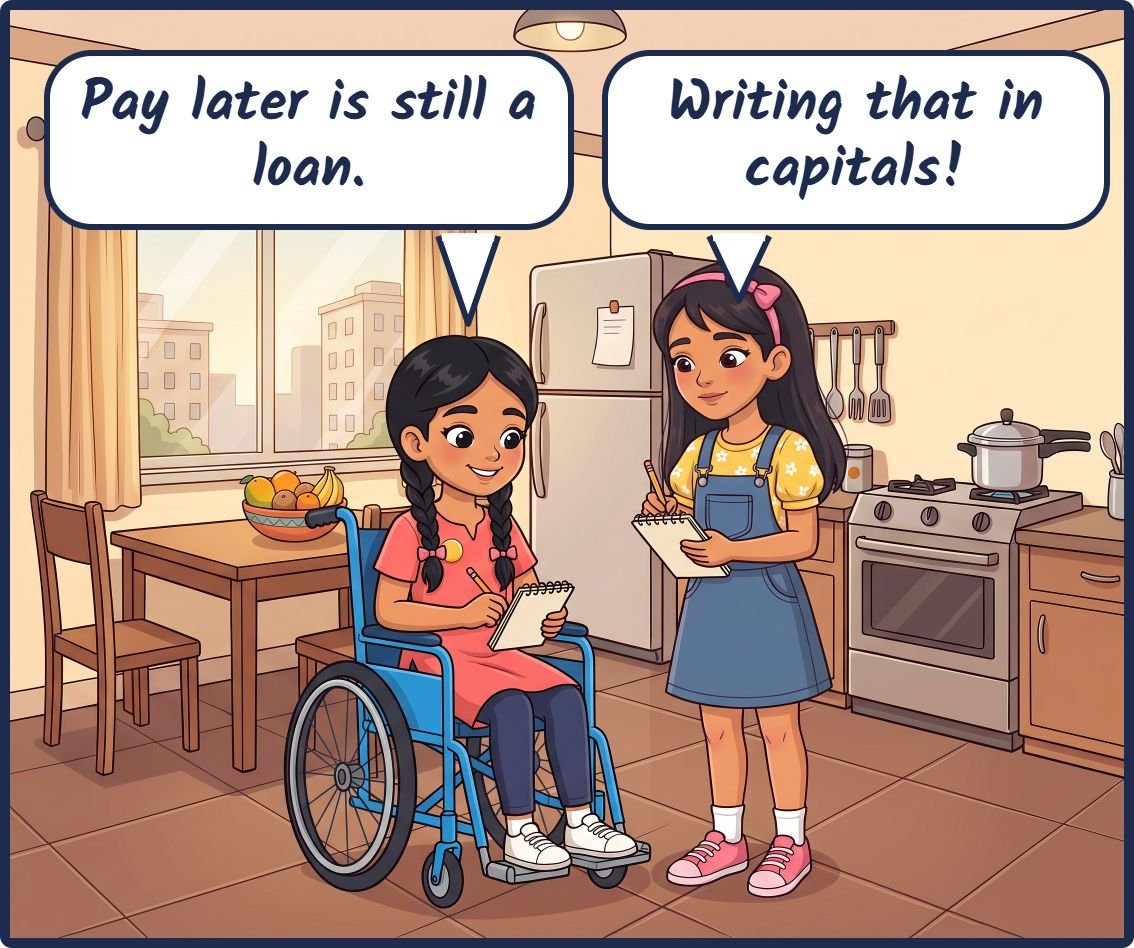
My phone was different. I pressed a "pay later in 3 parts" button. Pay later? So it's not on the card? Flashback: "Buy now, pay later in 3 parts!" Three small parts. So easy! Pay later is a loan, just like in Book 13. You borrowed the phone's price. A loan? It didn't feel like a loan. That's the trick. Easy buttons hide the fact that you're borrowing. Like a bouncer disguised as a slow ball! Pay later is still a loan. Writing that in capitals!
The missed payment
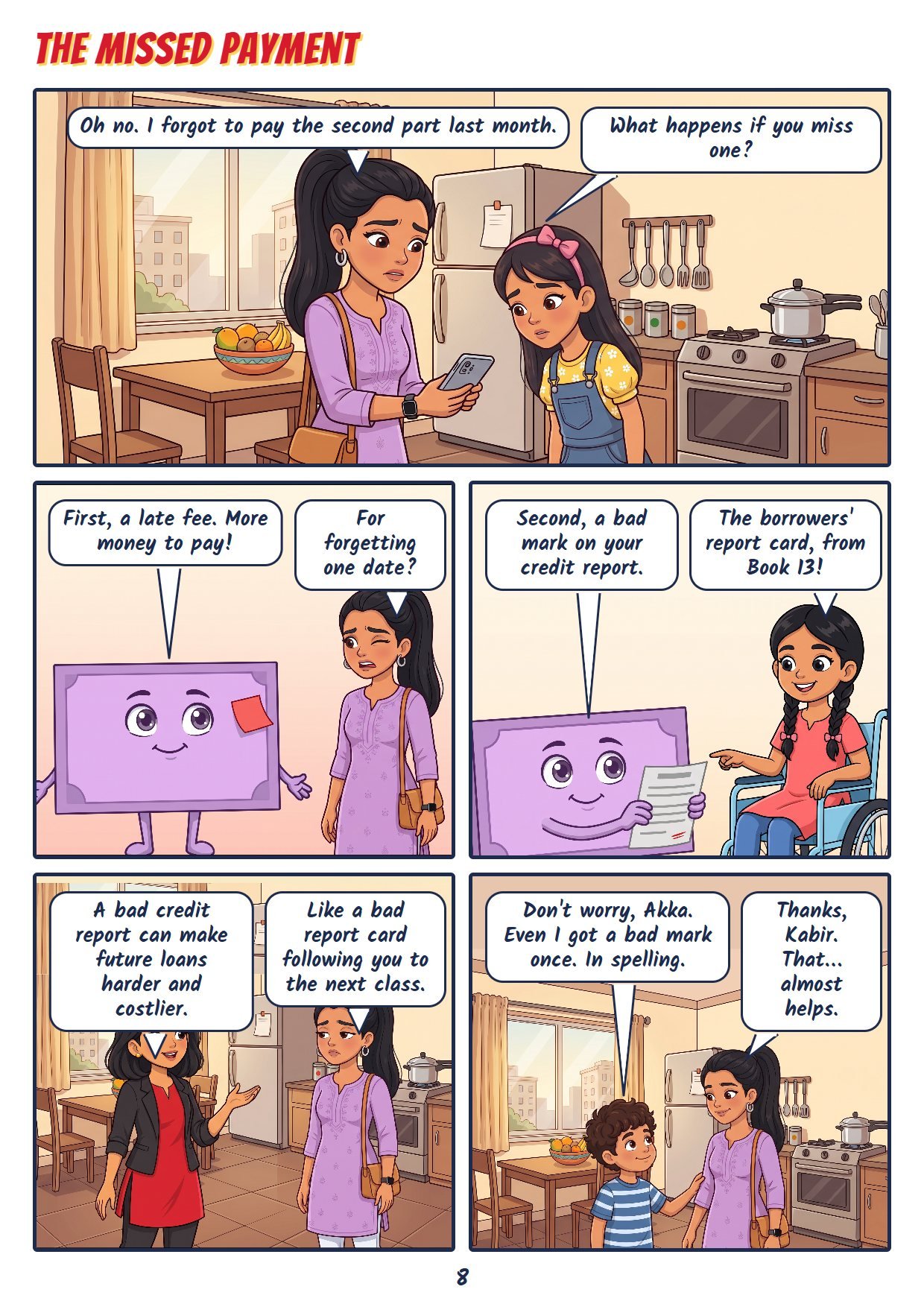
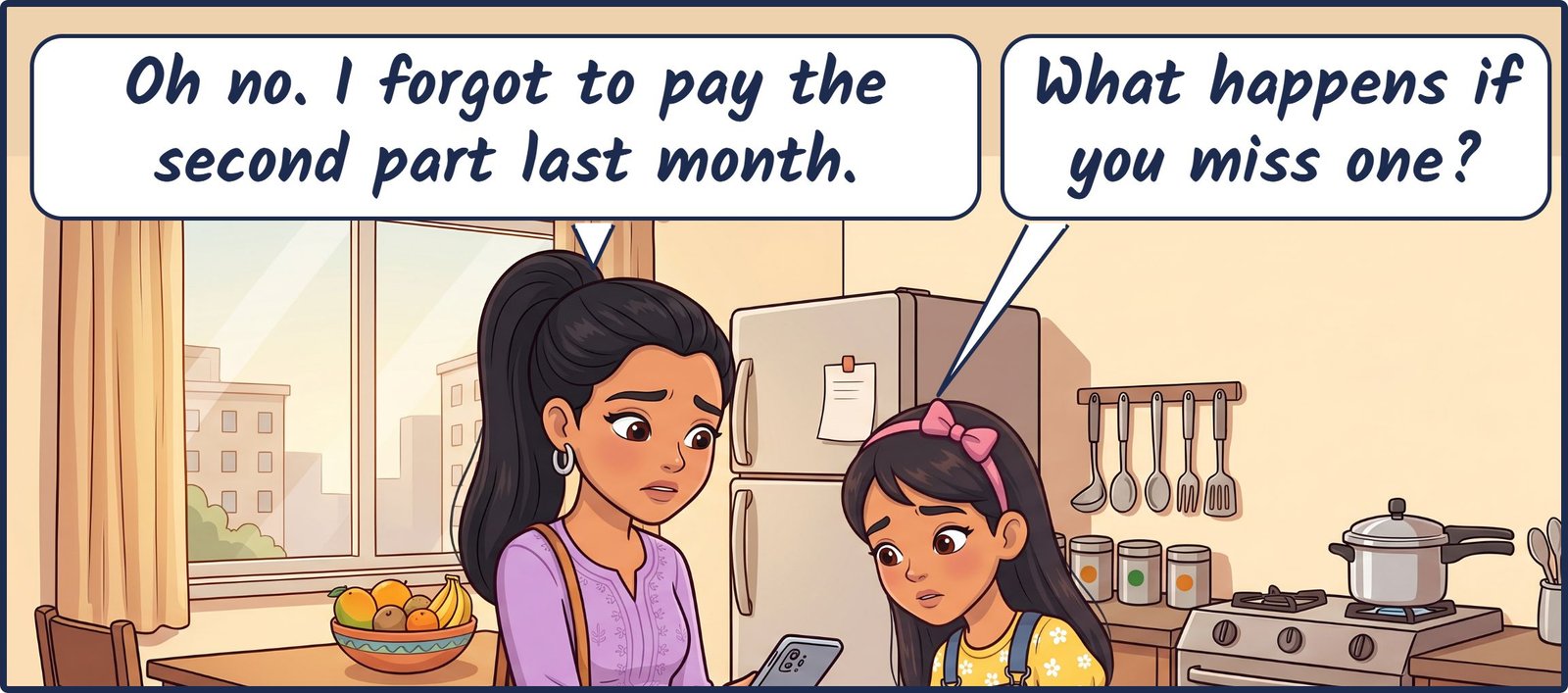
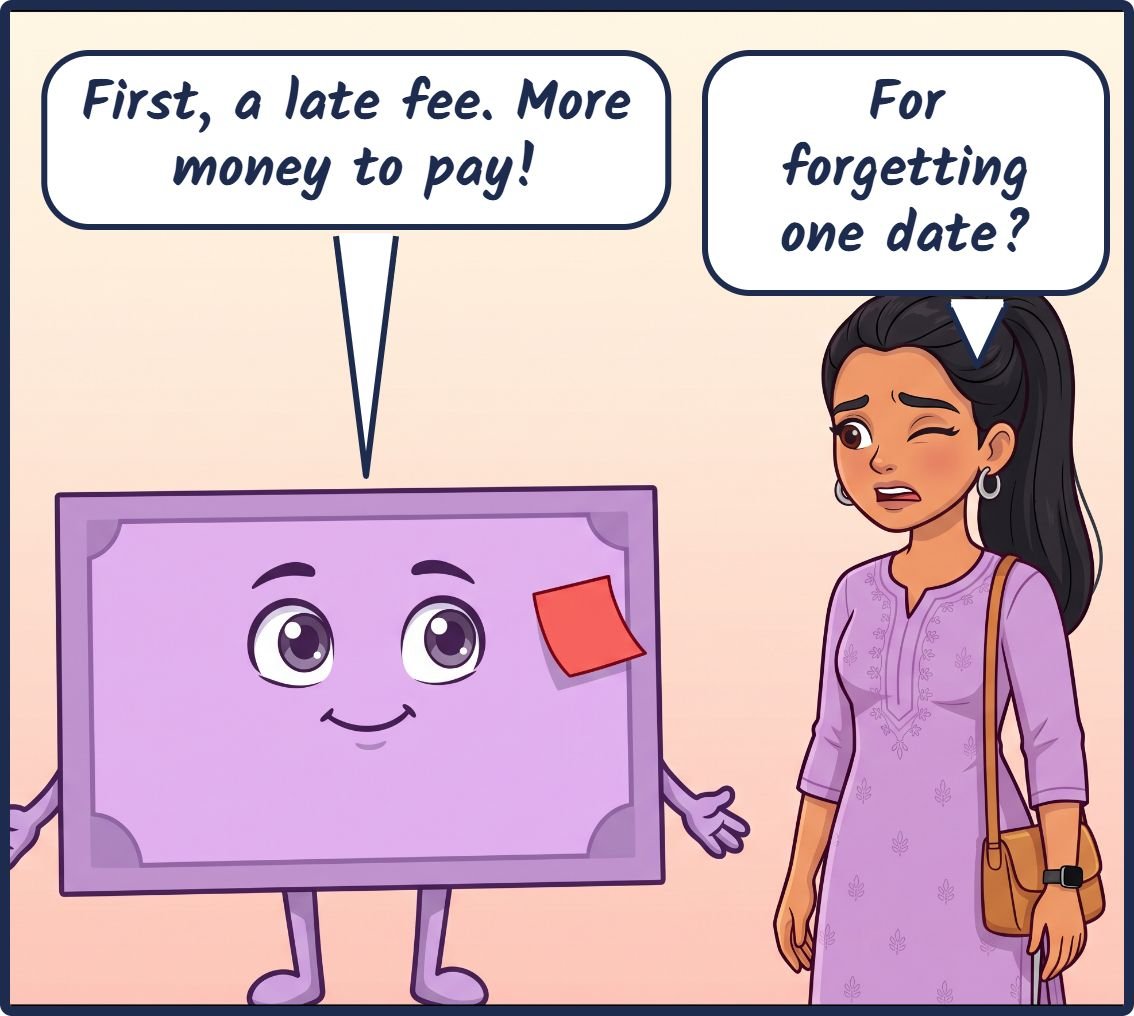
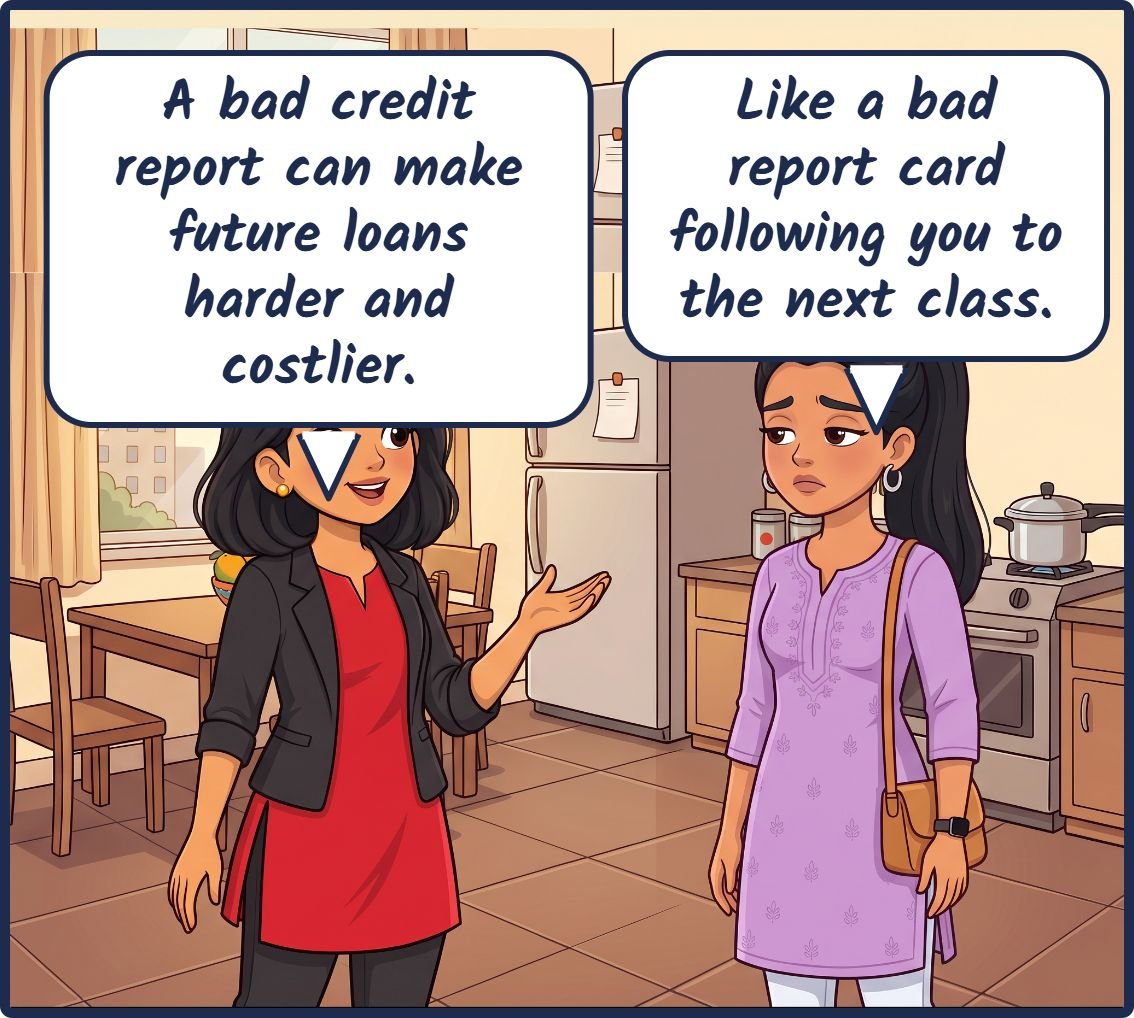
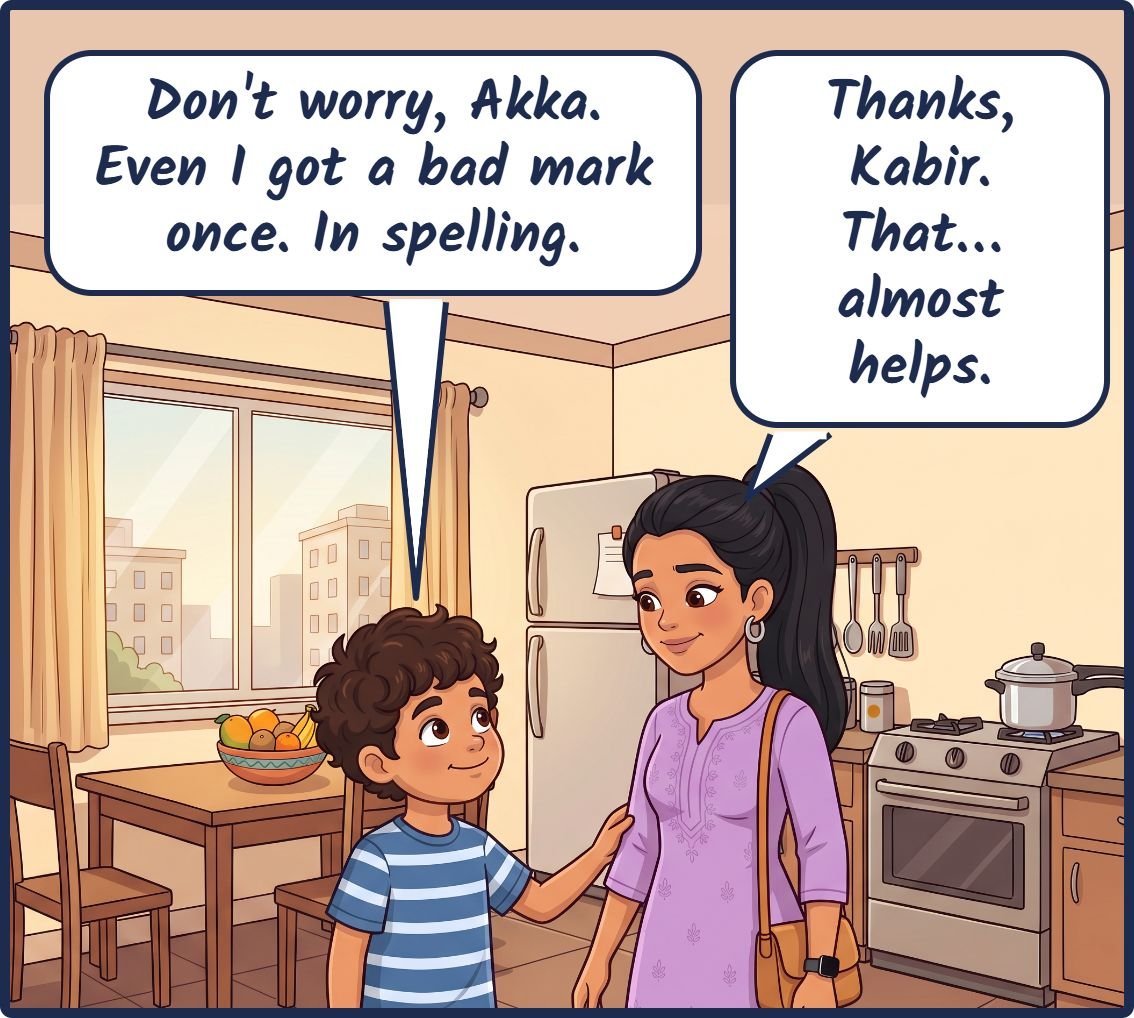
Oh no. I forgot to pay the second part last month. What happens if you miss one? First, a late fee. More money to pay! For forgetting one date? Second, a bad mark on your credit report. The borrowers' report card, from Book 13! A bad credit report can make future loans harder and costlier. Like a bad report card following you to the next class. Don't worry, Akka. Even I got a bad mark once. In spelling. Thanks, Kabir. That… almost helps.
The snowball again
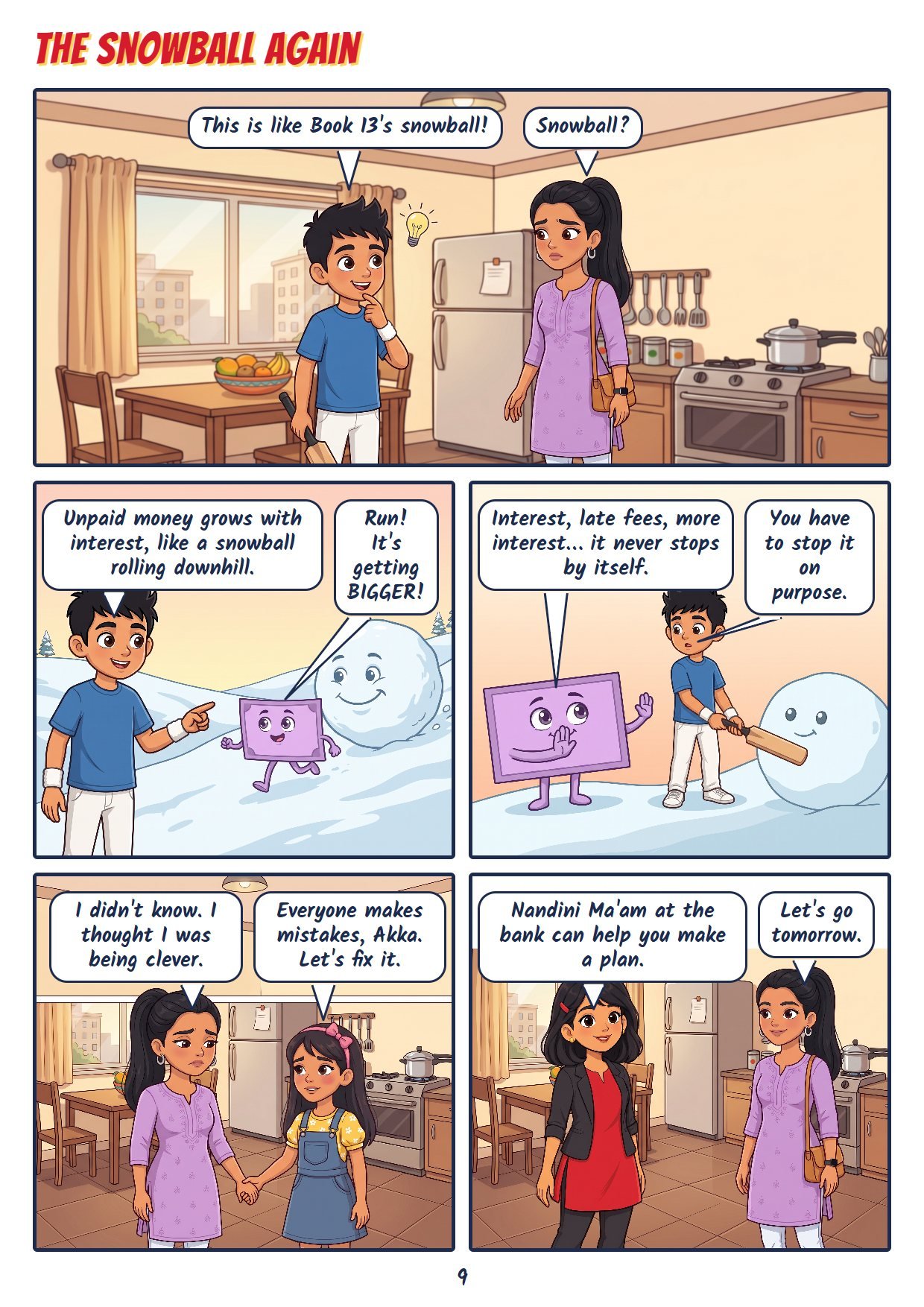
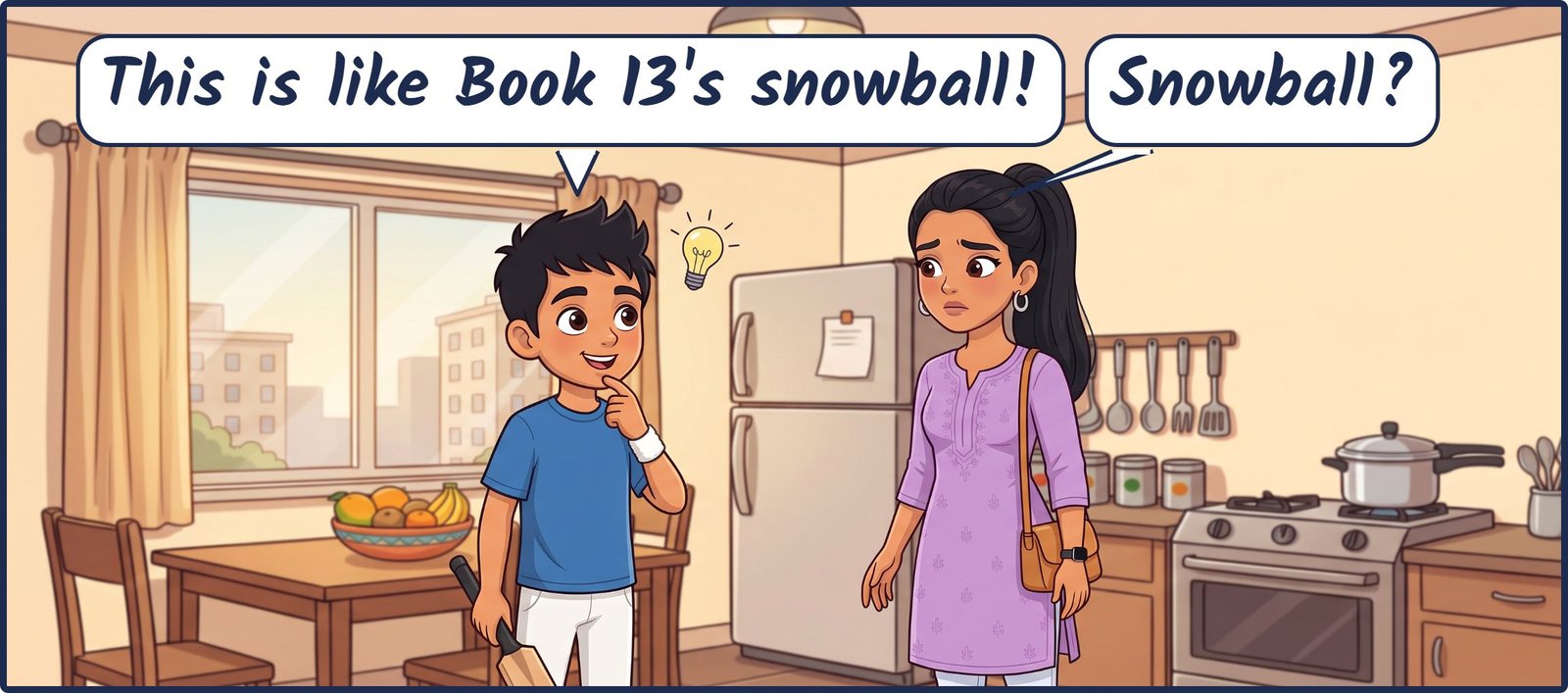
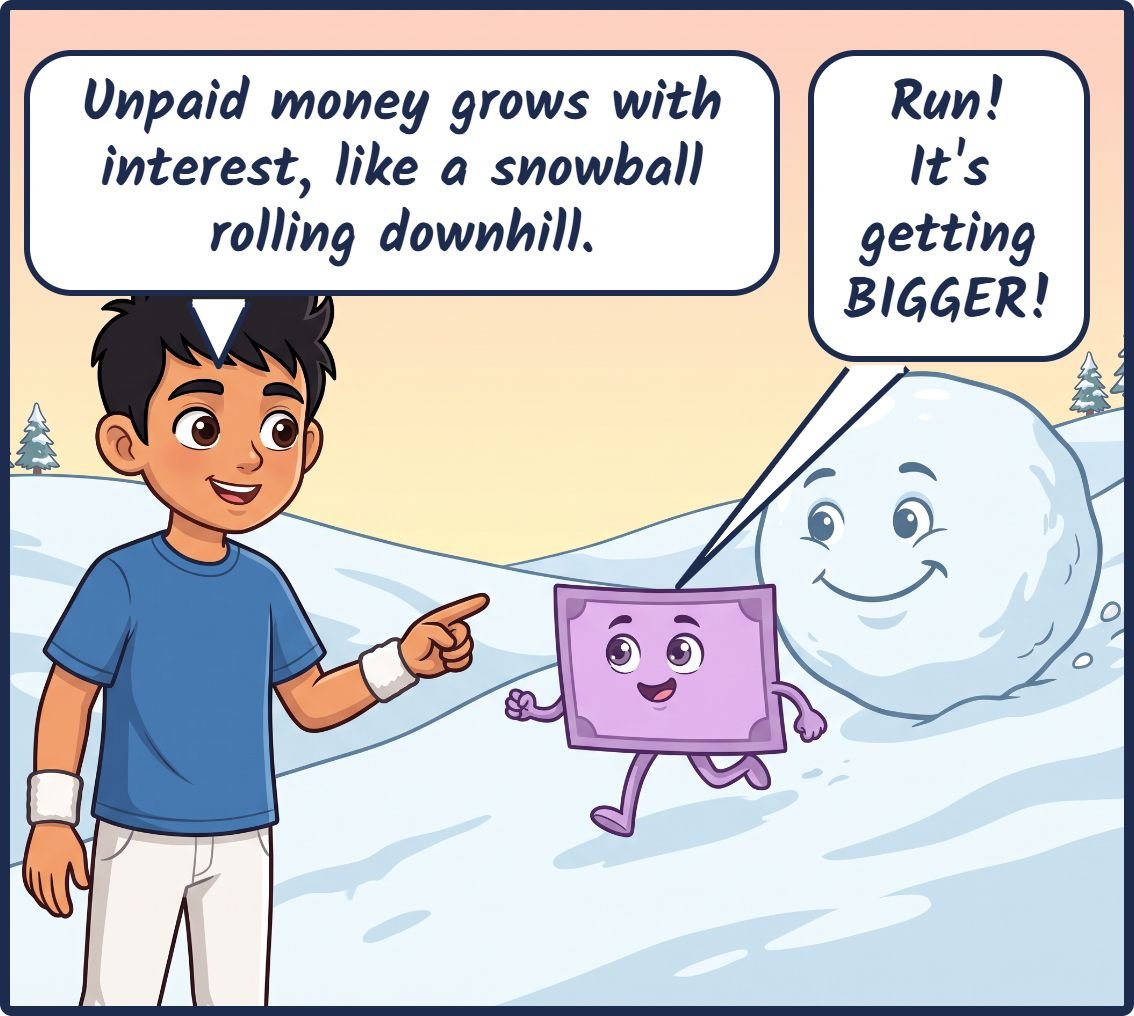
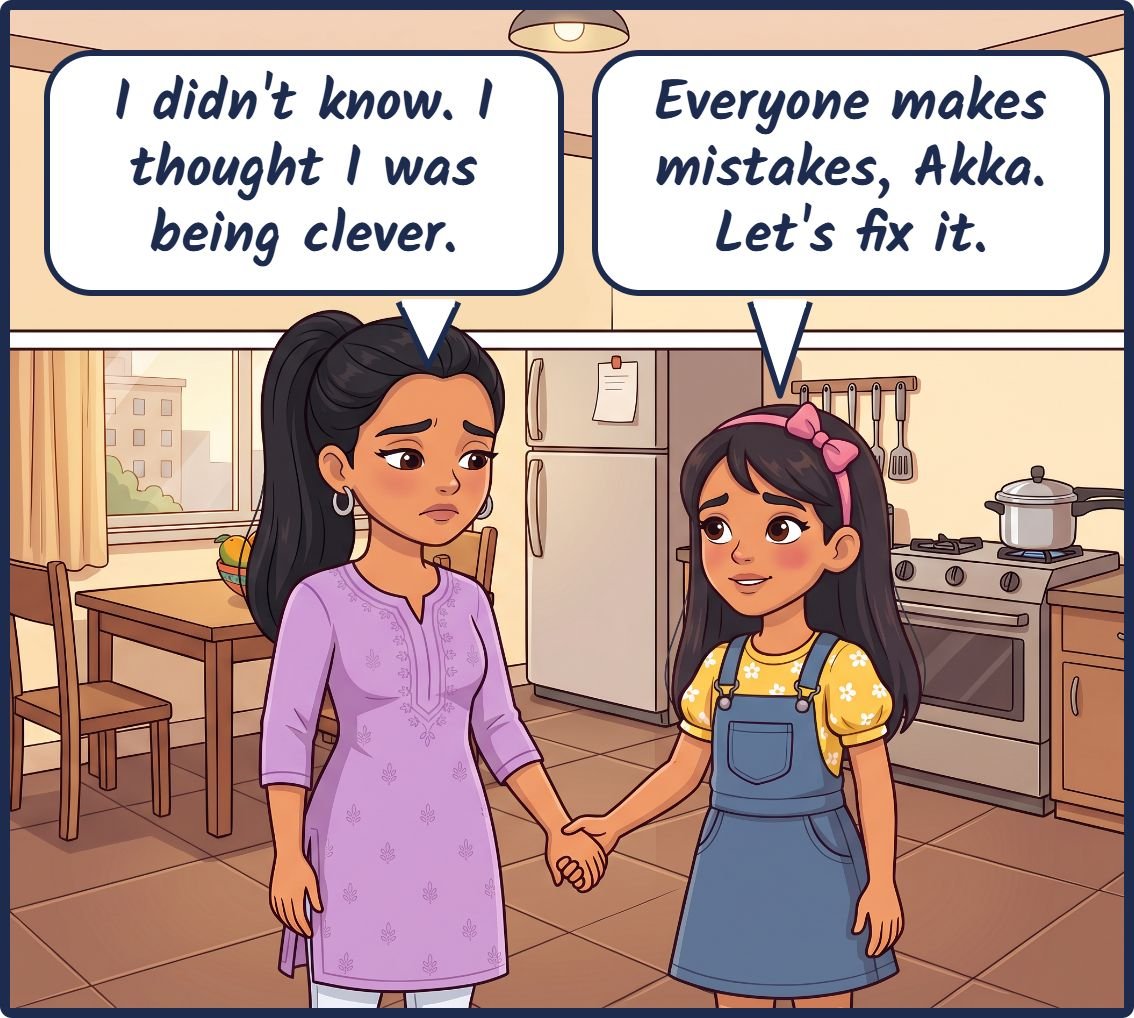
This is like Book 13's snowball! Snowball? Unpaid money grows with interest, like a snowball rolling downhill. Run! It's getting BIGGER! Interest, late fees, more interest… it never stops by itself. You have to stop it on purpose. I didn't know. I thought I was being clever. Everyone makes mistakes, Akka. Let's fix it. Nandini Ma'am at the bank can help you make a plan. Let's go tomorrow.
Pooja Akka's plan
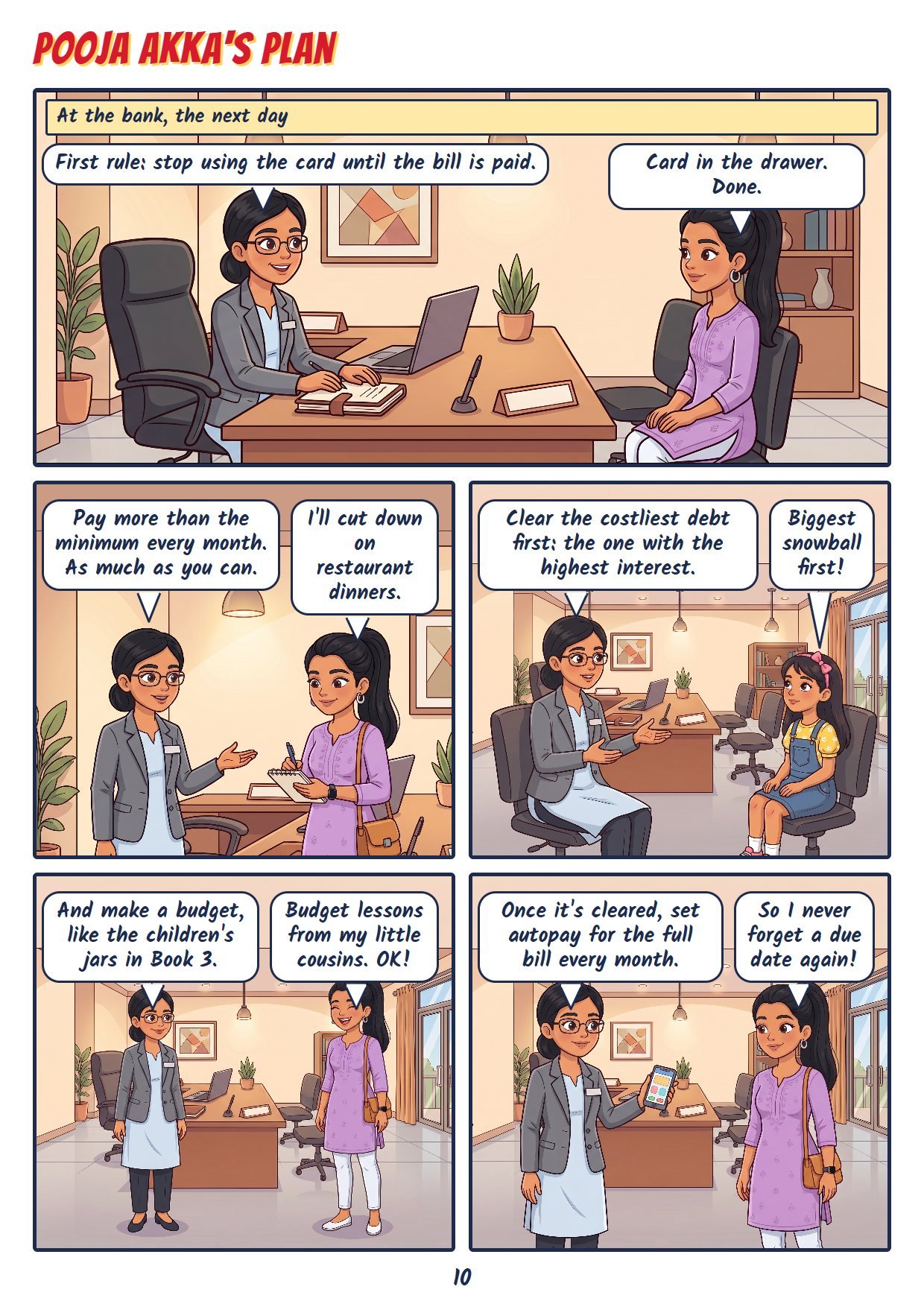
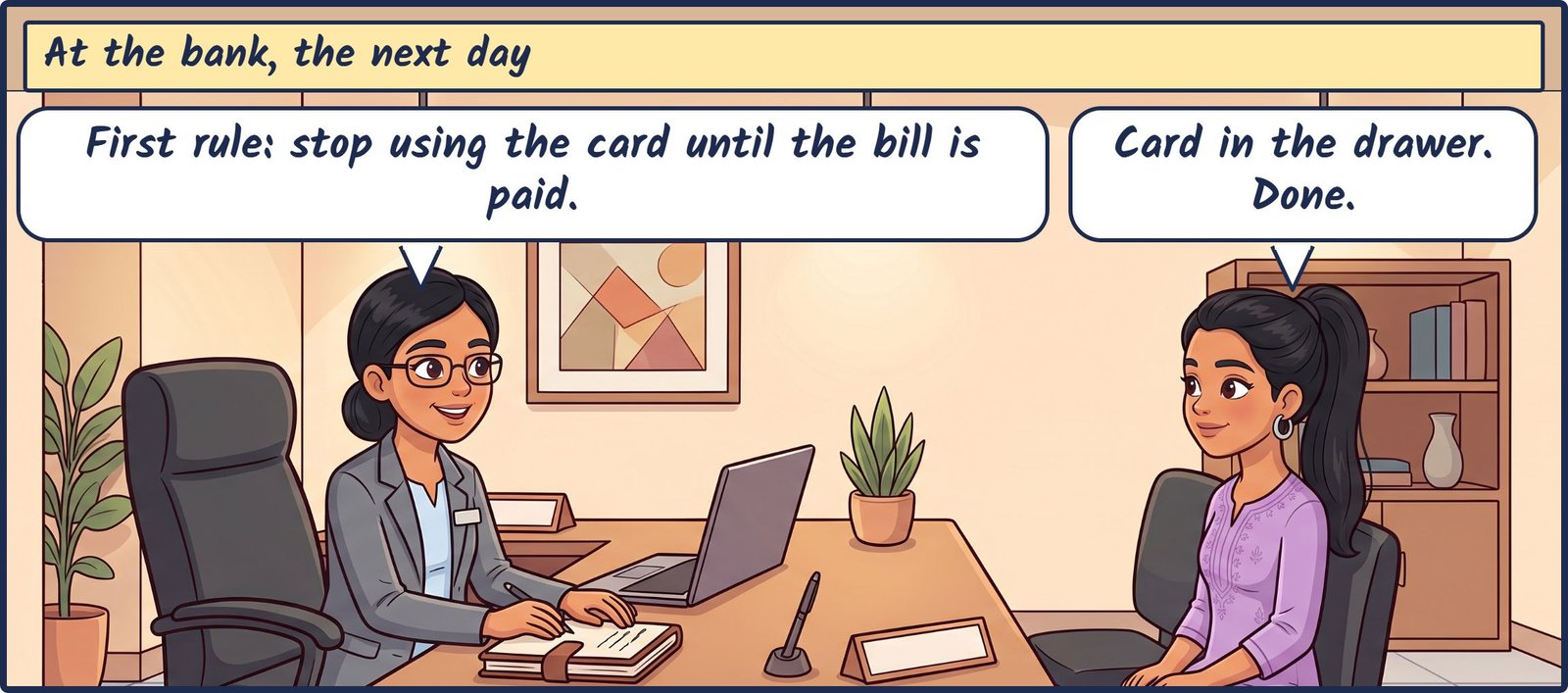
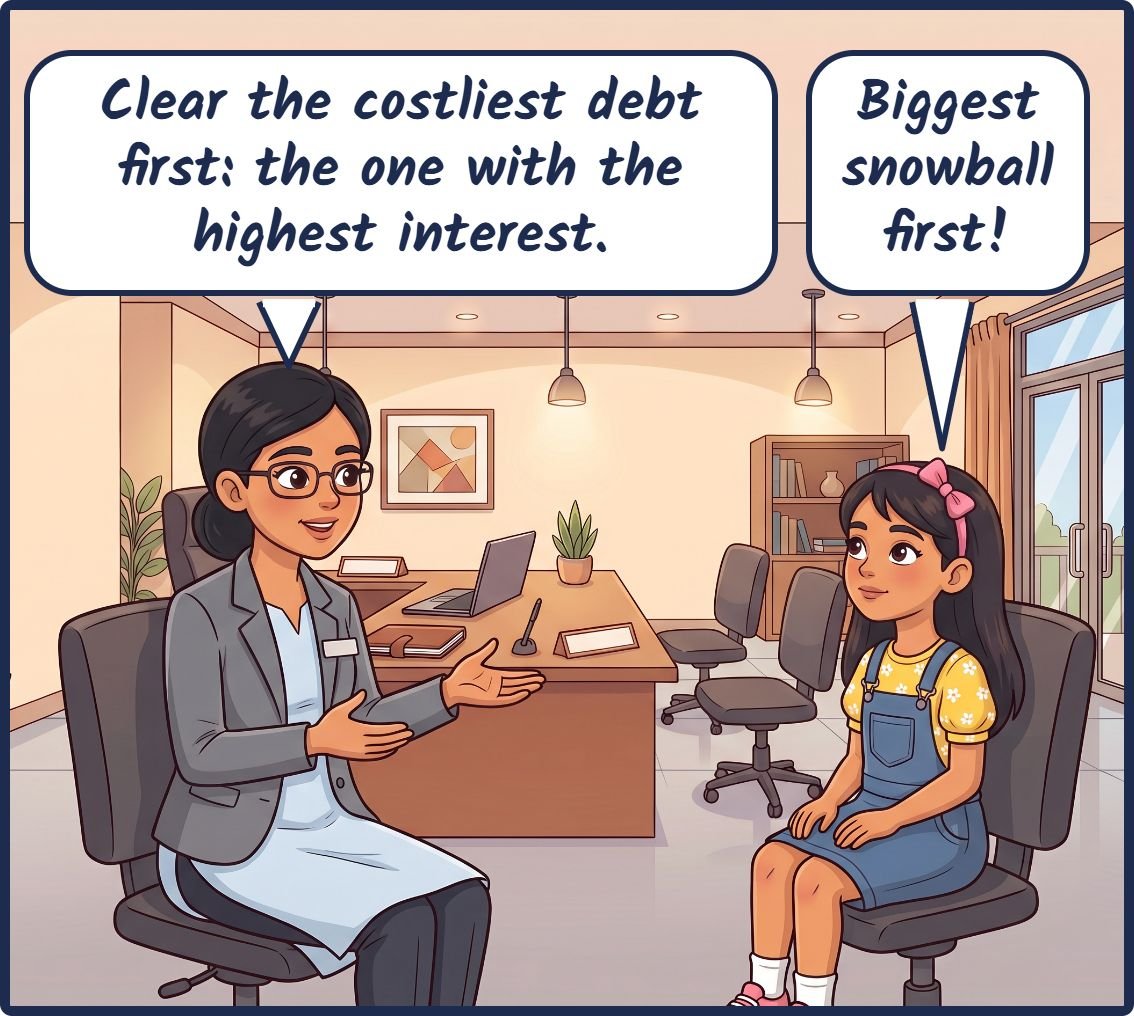
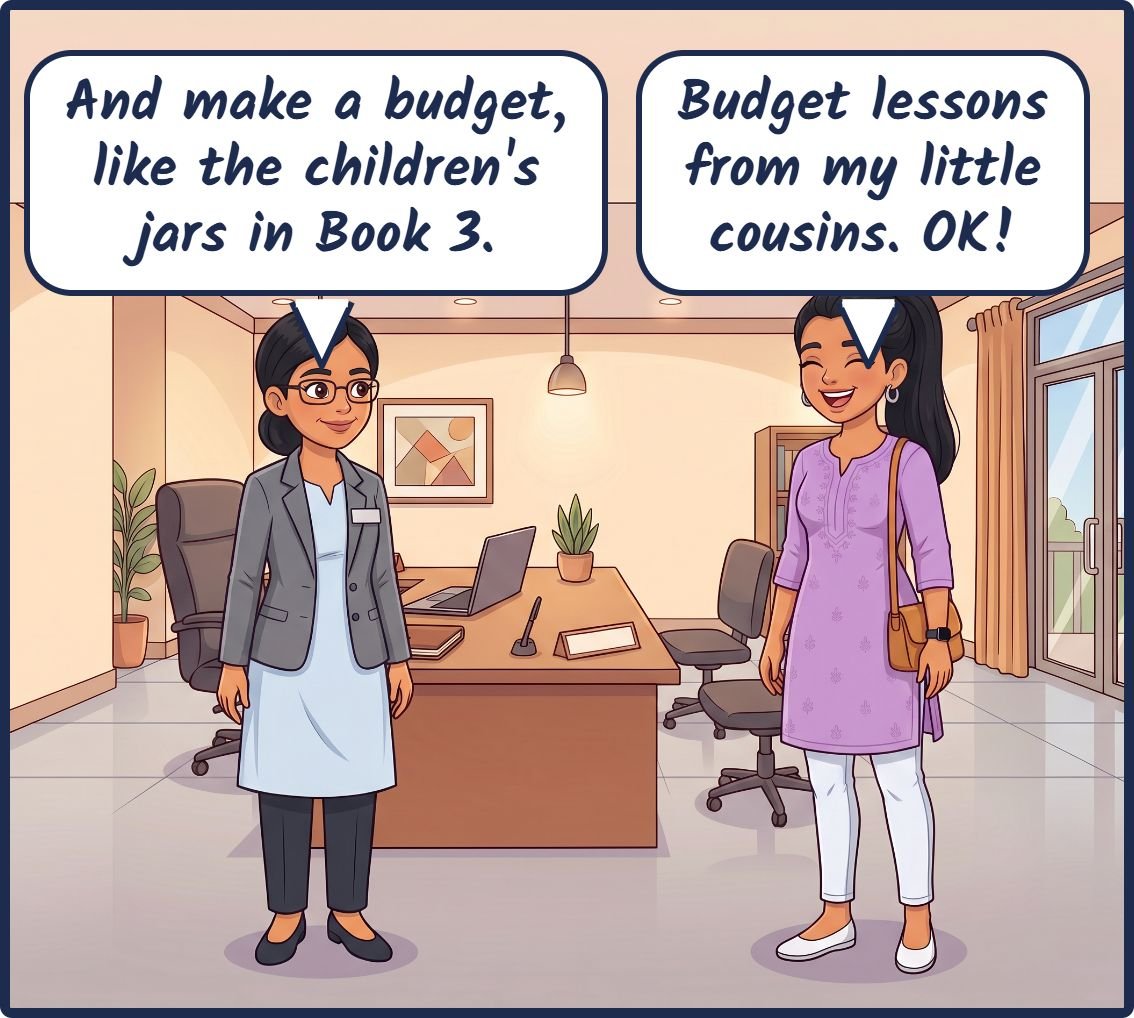
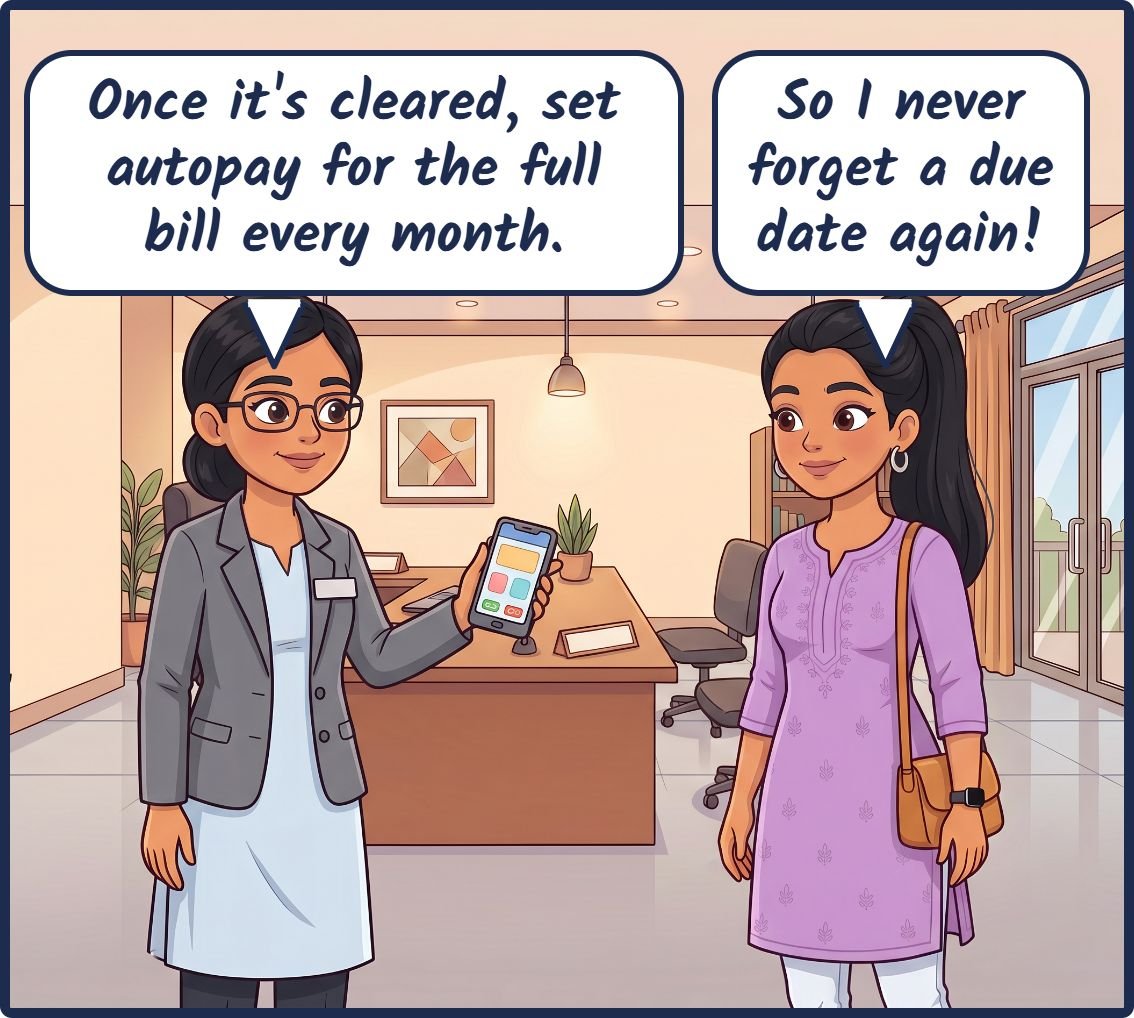
At the bank, the next day First rule: stop using the card until the bill is paid. Card in the drawer. Done. Pay more than the minimum every month. As much as you can. I'll cut down on restaurant dinners. Clear the costliest debt first: the one with the highest interest. Biggest snowball first! And make a budget, like the children's jars in Book 3. Budget lessons from my little cousins. OK! Once it's cleared, set autopay for the full bill every month. So I never forget a due date again!
Card safety
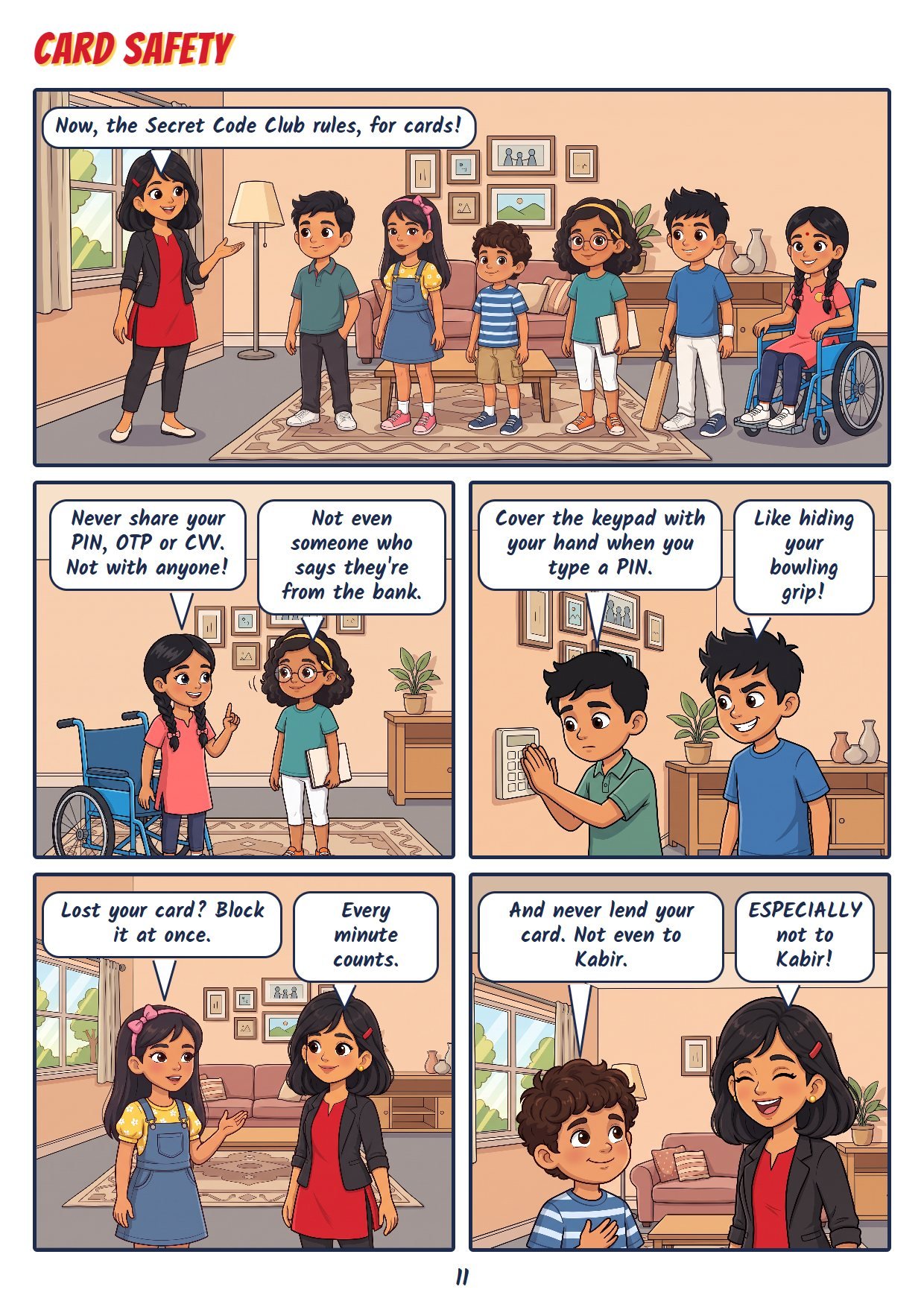
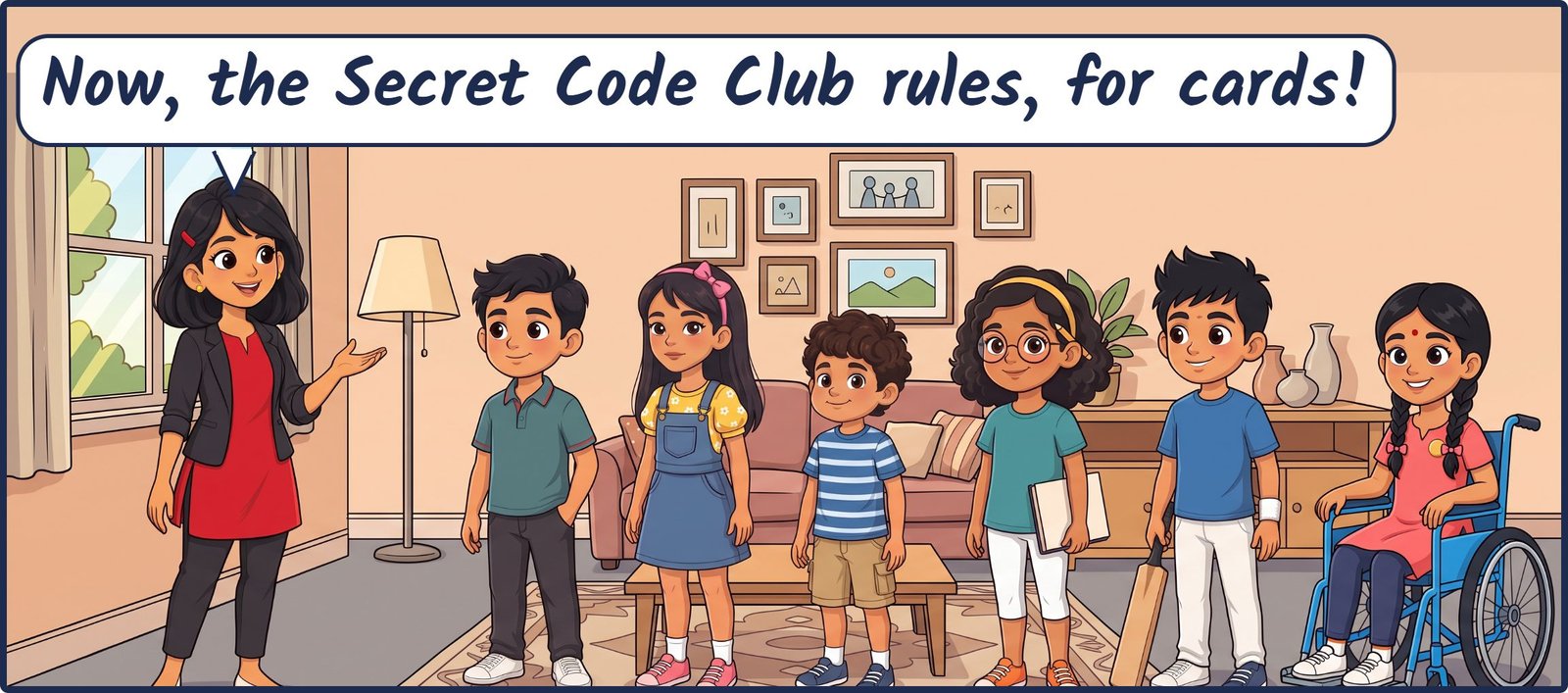
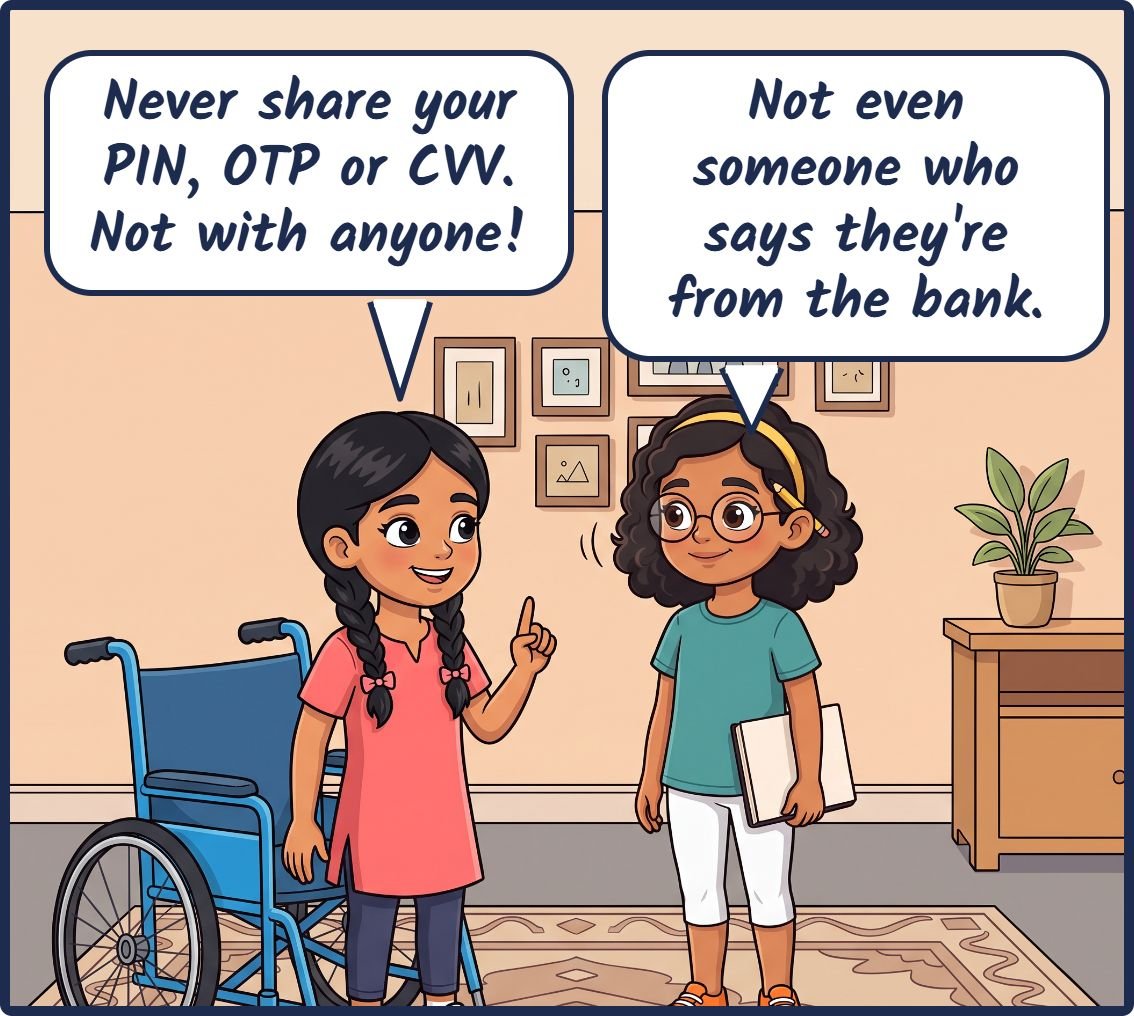
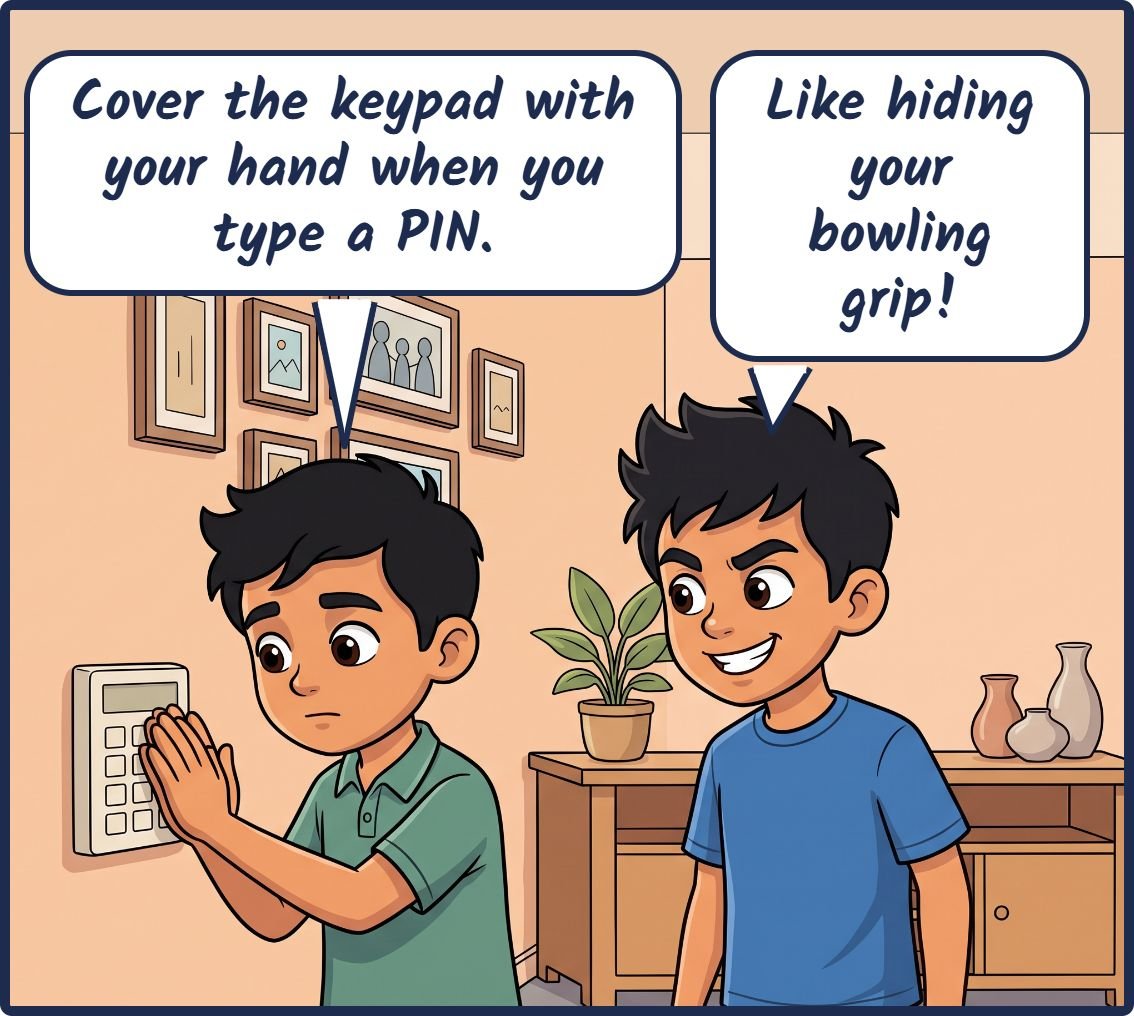
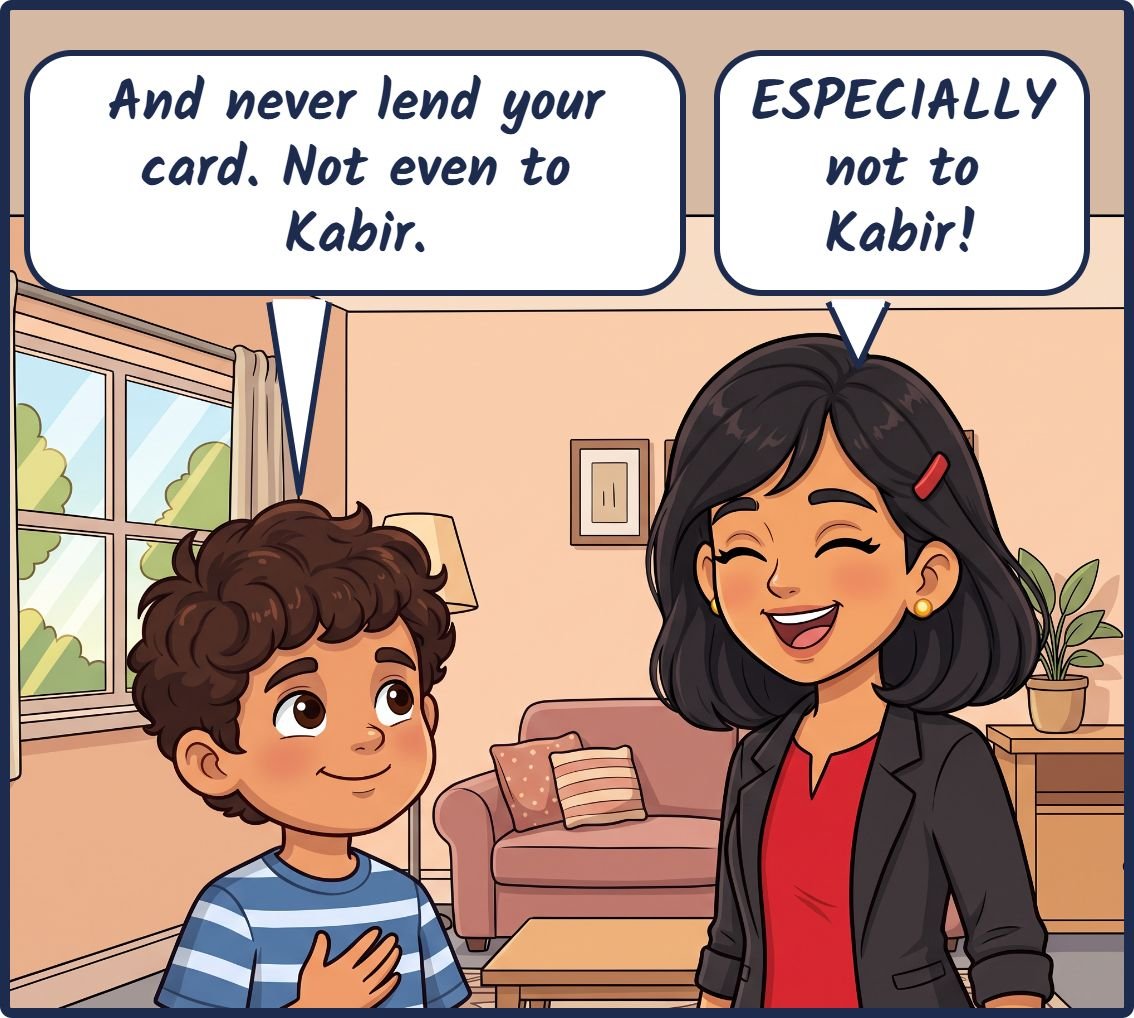
Now, the Secret Code Club rules, for cards! Never share your PIN, OTP or CVV. Not with anyone! Not even someone who says they're from the bank. Cover the keypad with your hand when you type a PIN. Like hiding your bowling grip! Lost your card? Block it at once. Every minute counts. And never lend your card. Not even to Kabir. ESPECIALLY not to Kabir!
Using a card wisely
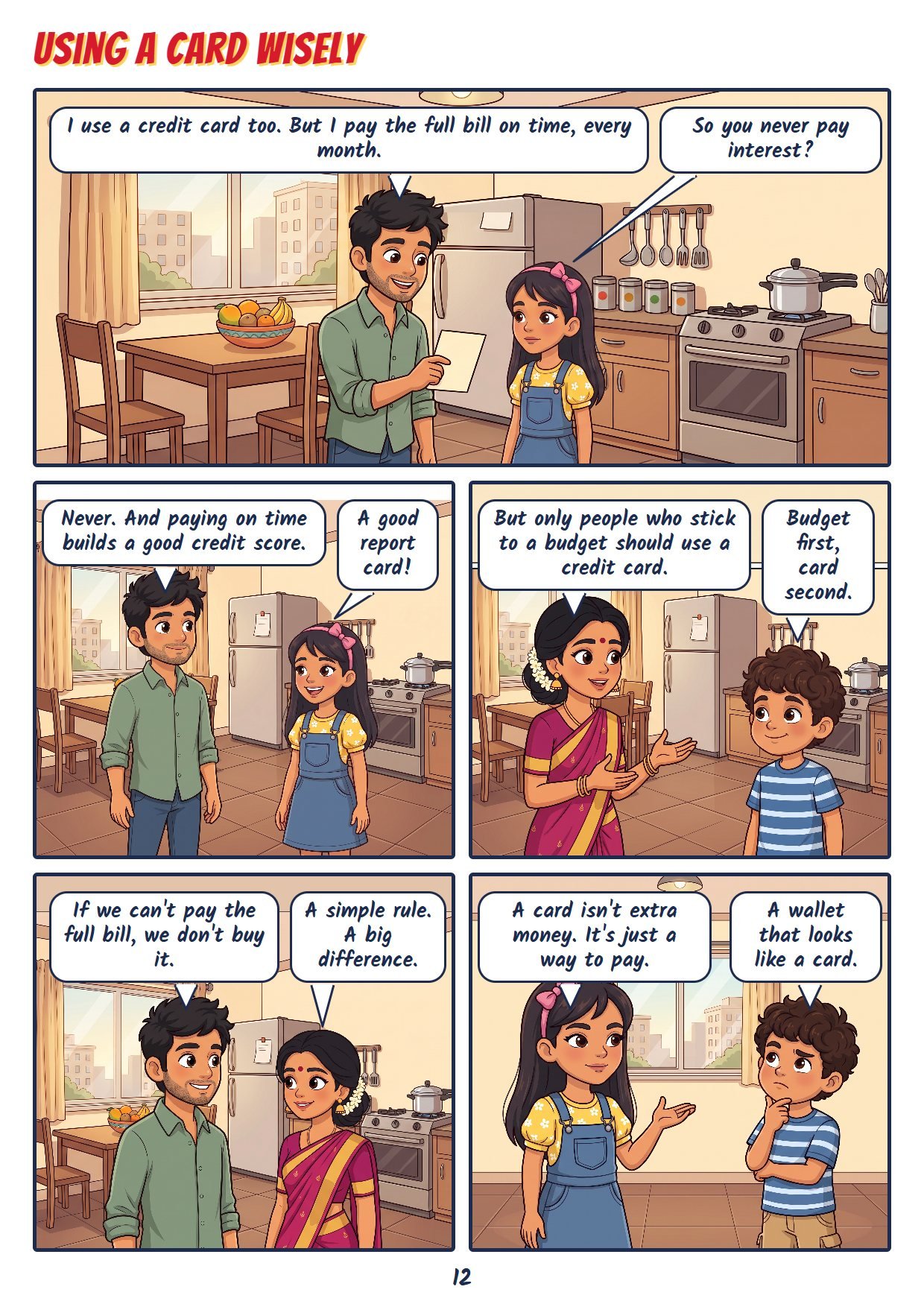
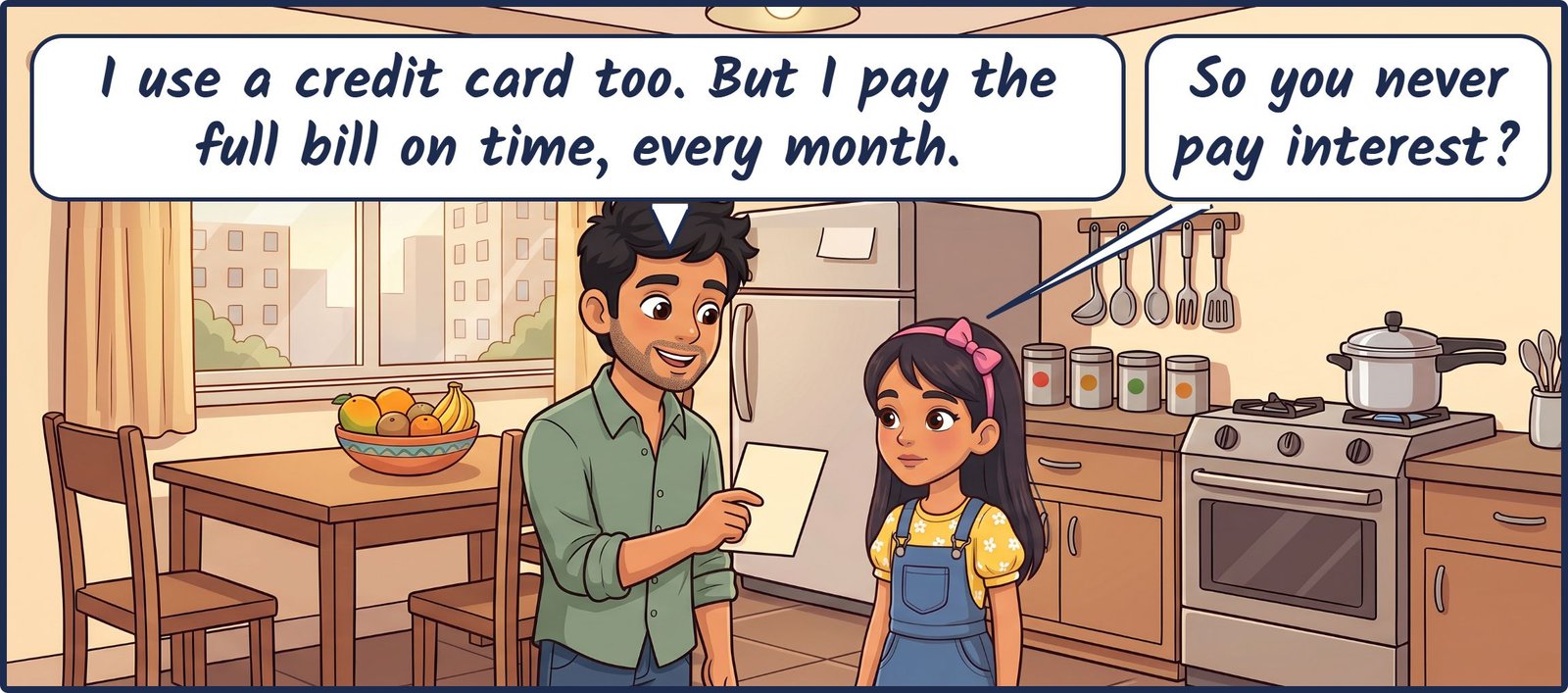
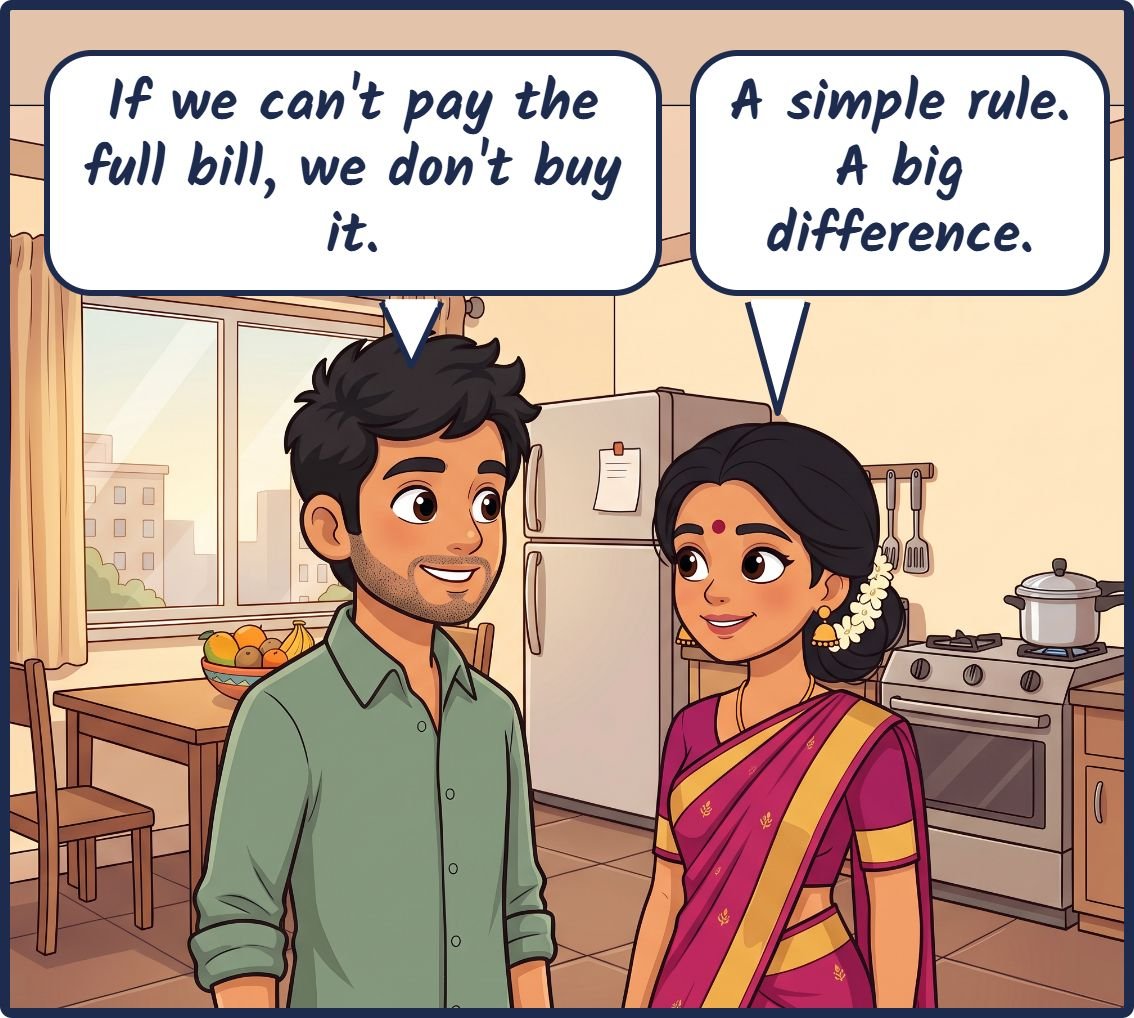
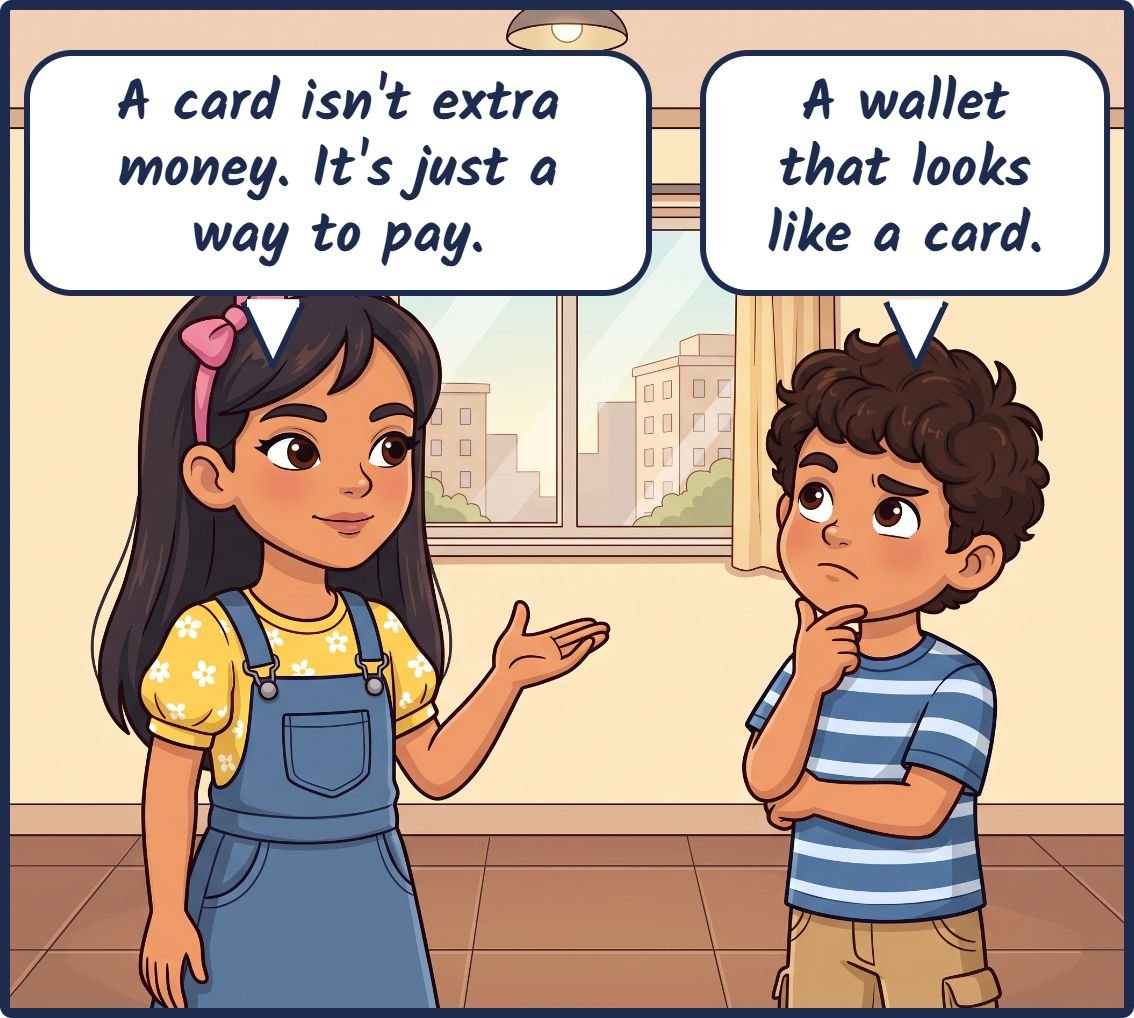
I use a credit card too. But I pay the full bill on time, every month. So you never pay interest? Never. And paying on time builds a good credit score. A good report card! But only people who stick to a budget should use a credit card. Budget first, card second. If we can't pay the full bill, we don't buy it. A simple rule. A big difference. A card isn't extra money. It's just a way to pay. A wallet that looks like a card.
The Kabir Card
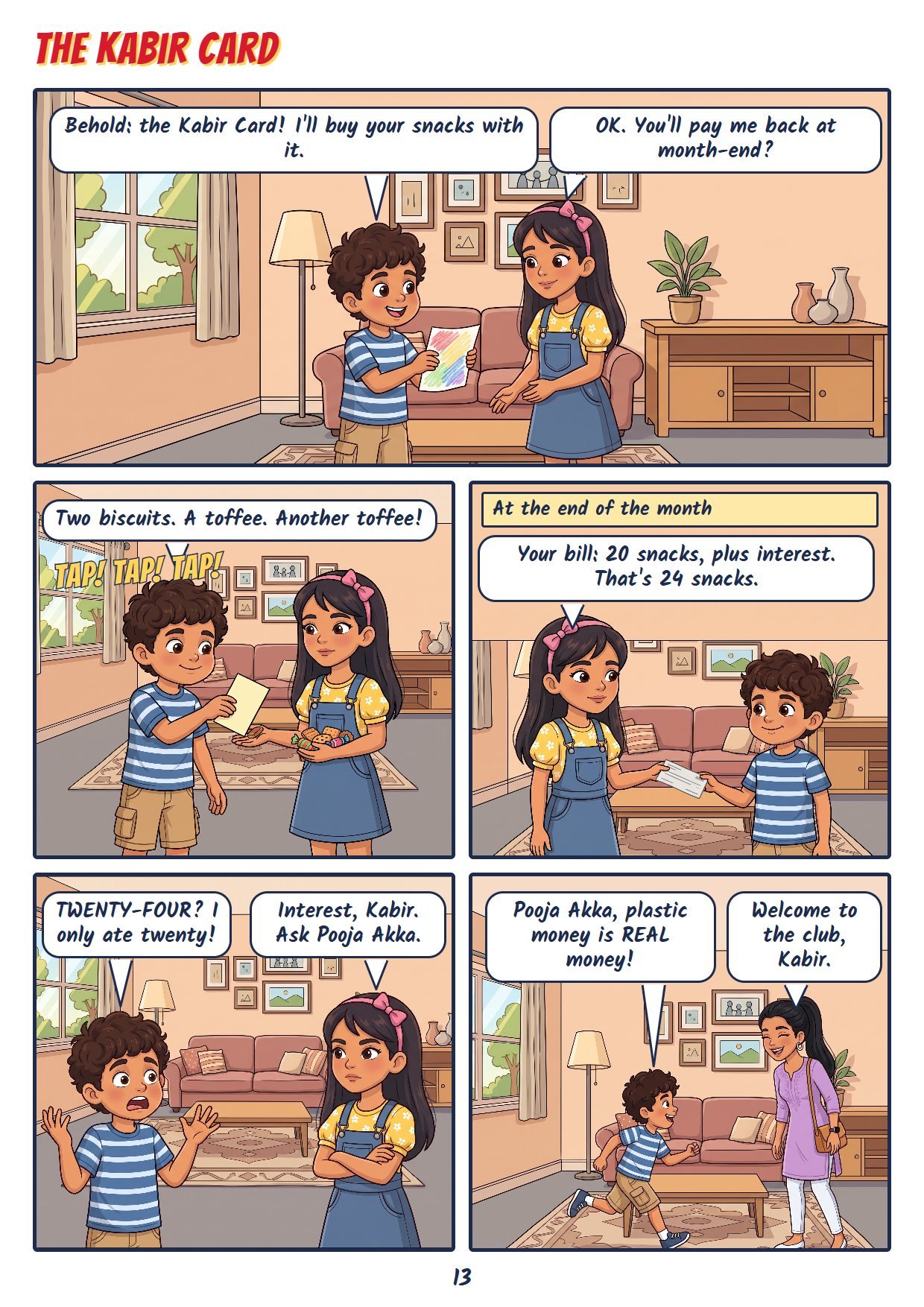
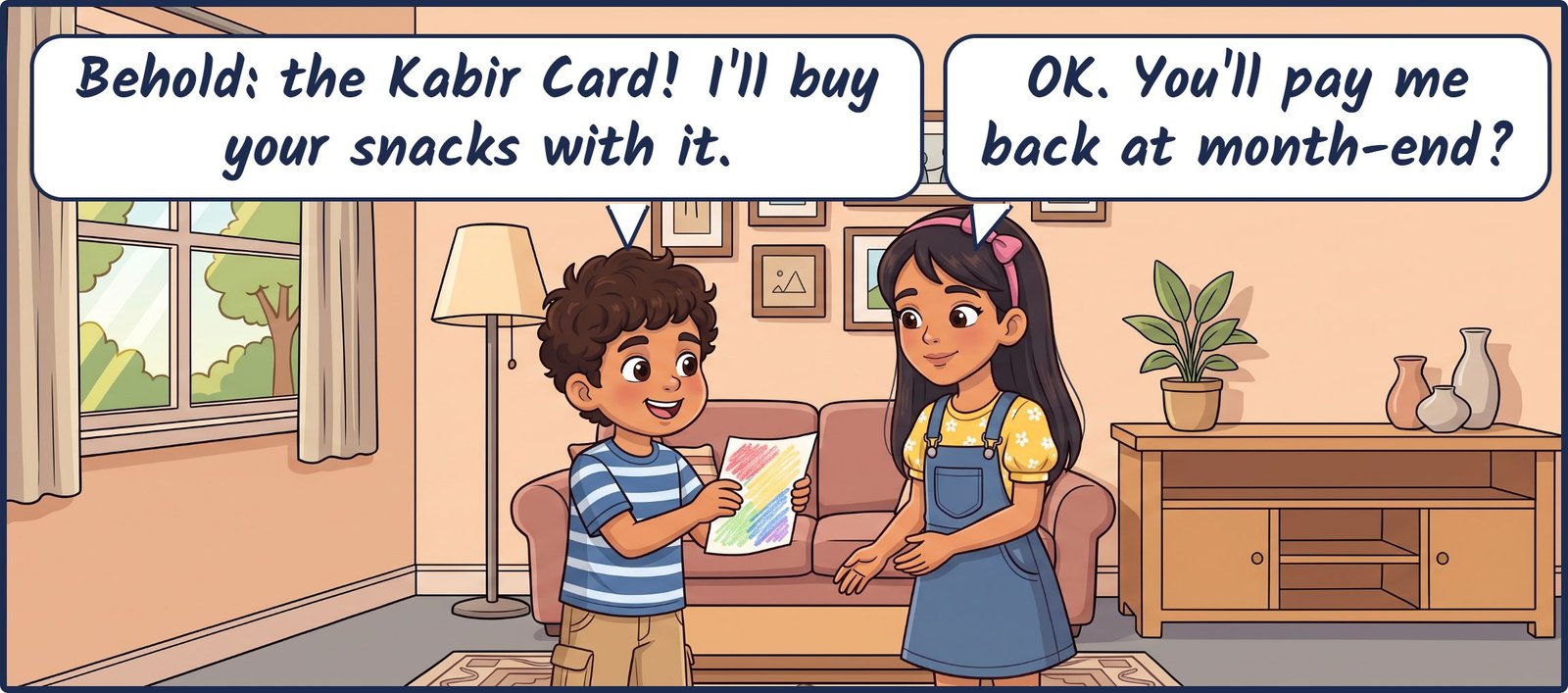
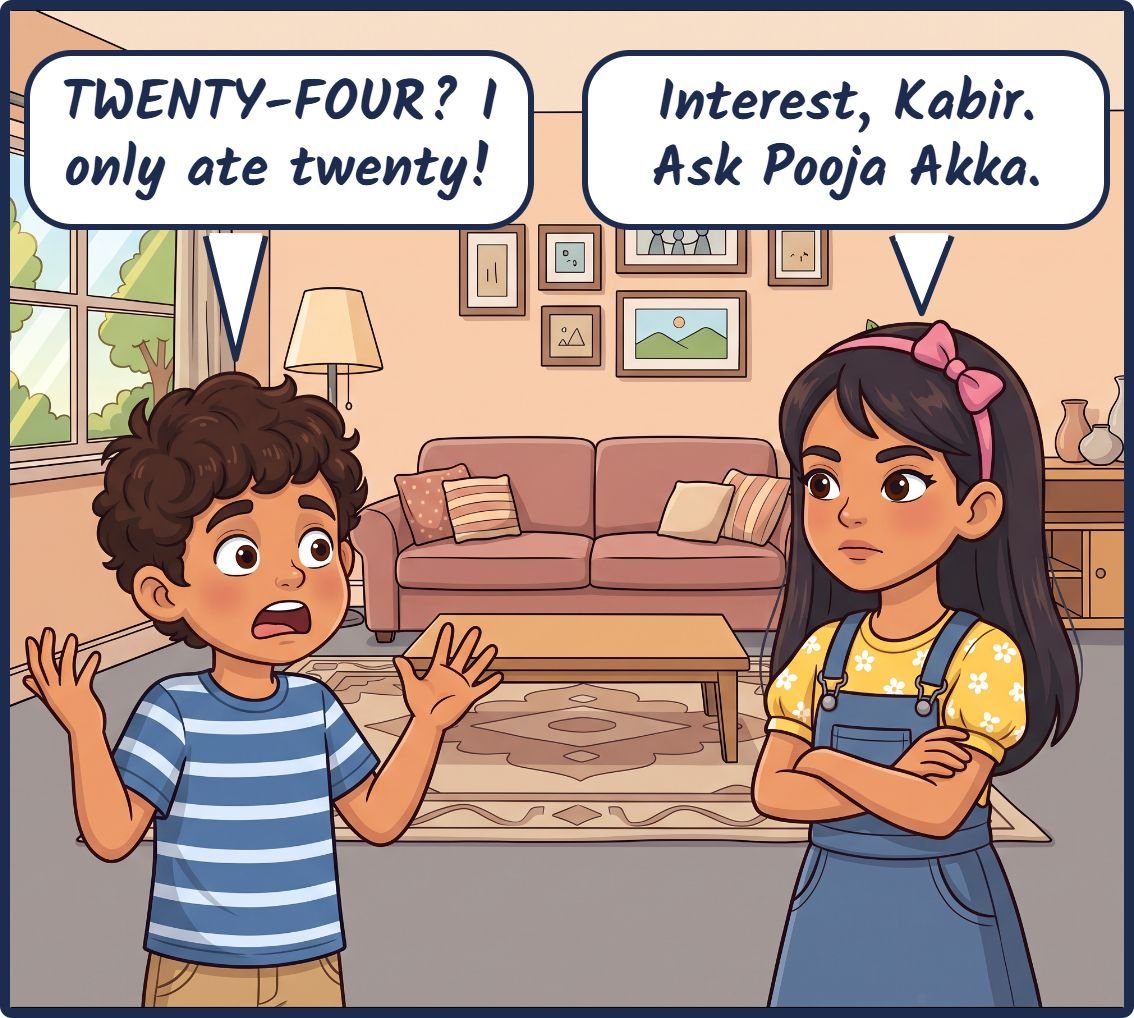
Behold: the Kabir Card! I'll buy your snacks with it. OK. You'll pay me back at month-end? TAP! TAP! TAP! Two biscuits. A toffee. Another toffee! At the end of the month Your bill: 20 snacks, plus interest. That's 24 snacks. TWENTY-FOUR? I only ate twenty! Interest, Kabir. Ask Pooja Akka. Pooja Akka, plastic money is REAL money! Welcome to the club, Kabir.
Real money

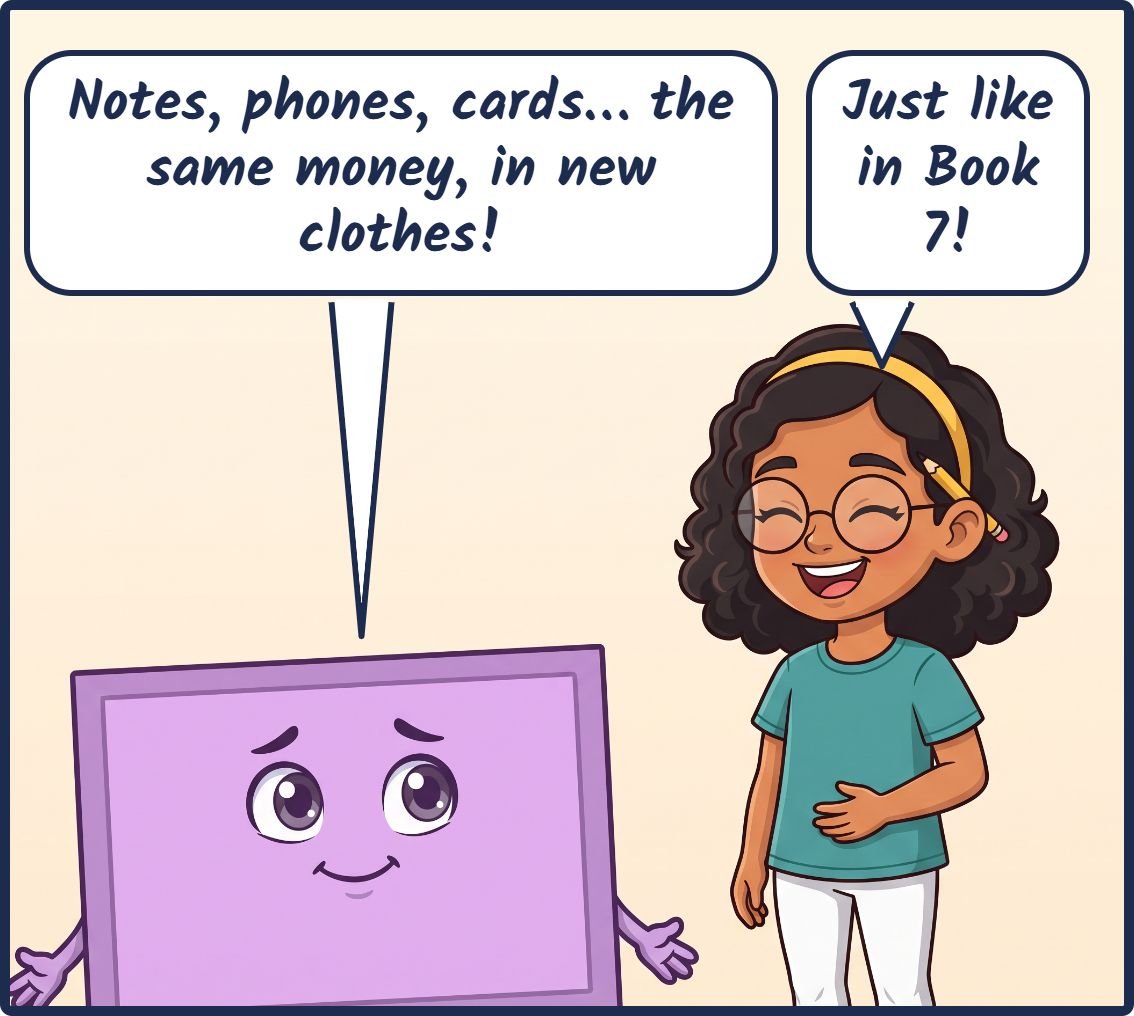
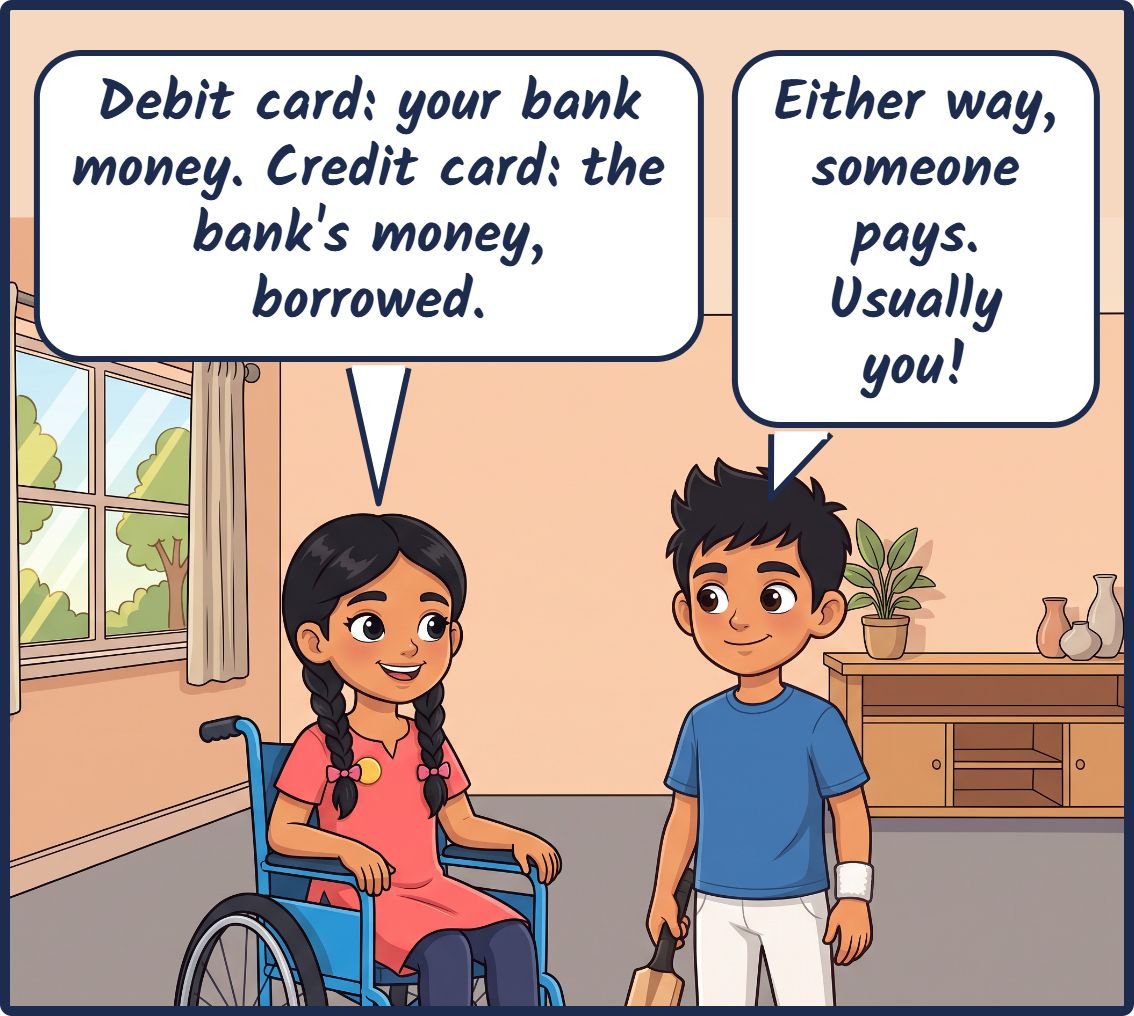
Here's the big rule: a card is just a new way to pay. The money still has to come from somewhere. Notes, phones, cards… the same money, in new clothes! Just like in Book 7! Debit card: your bank money. Credit card: the bank's money, borrowed. Either way, someone pays. Usually you! So we only spend money we really have. Or money we can pay back in full. On time. Kabir! You've learned so much. My snack bill taught me well.
Debt-free Pooja Akka

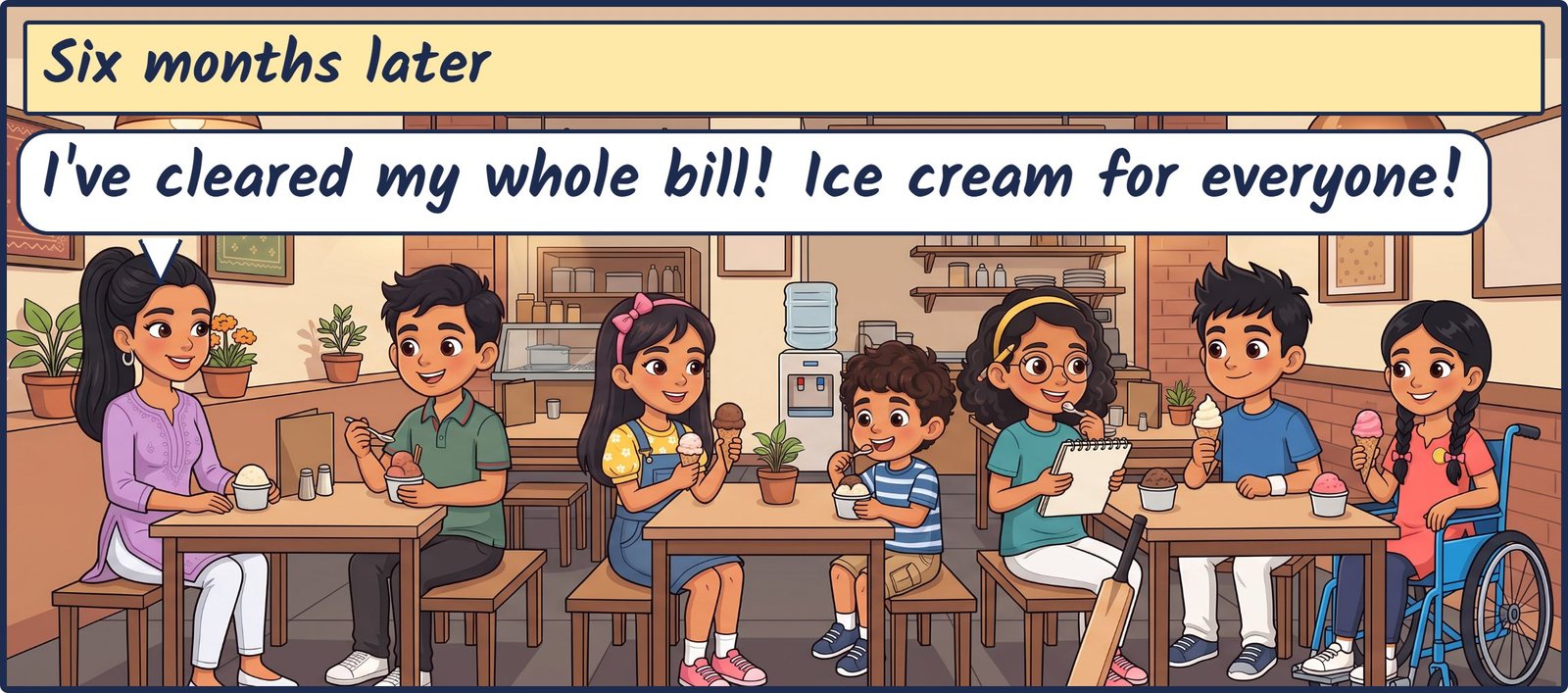
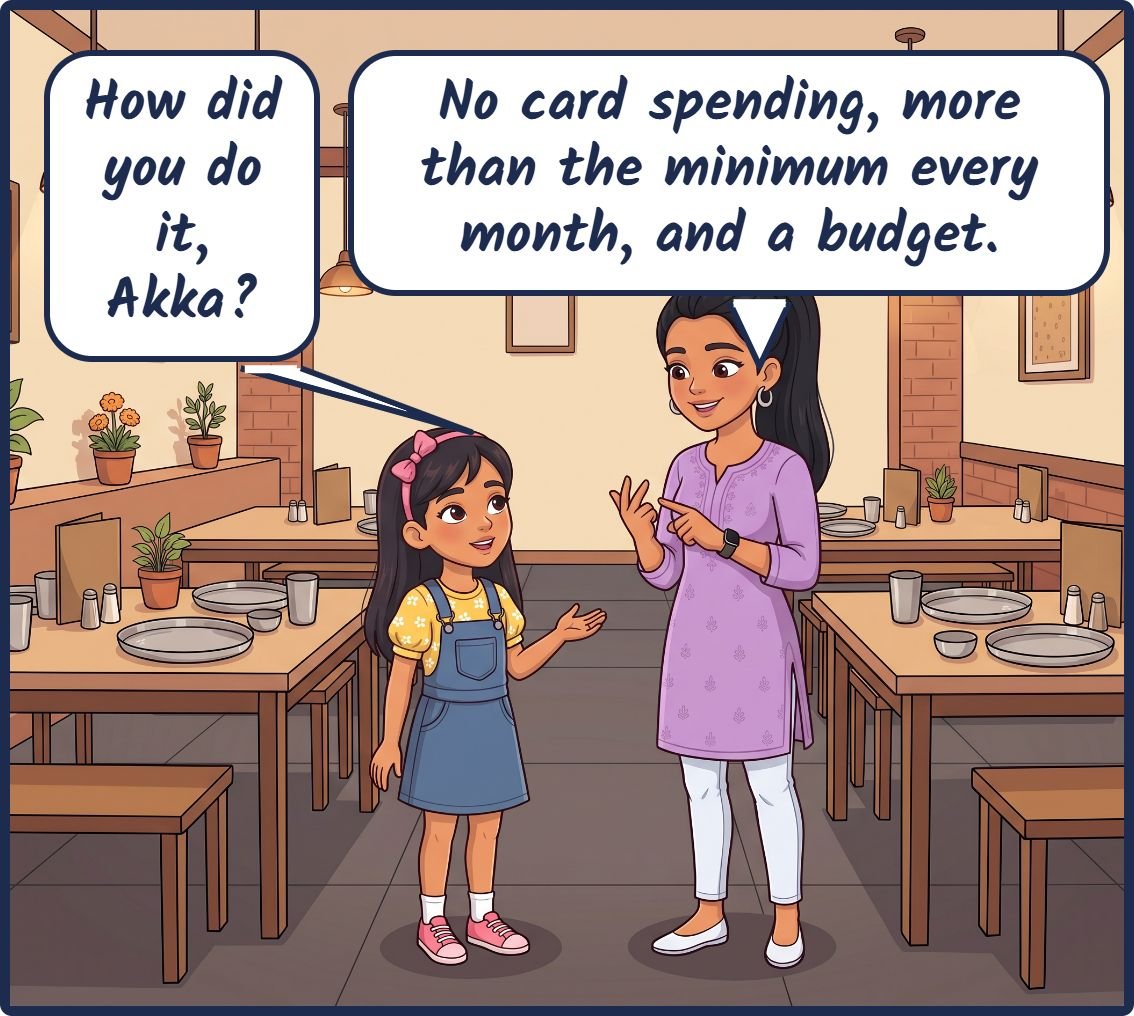
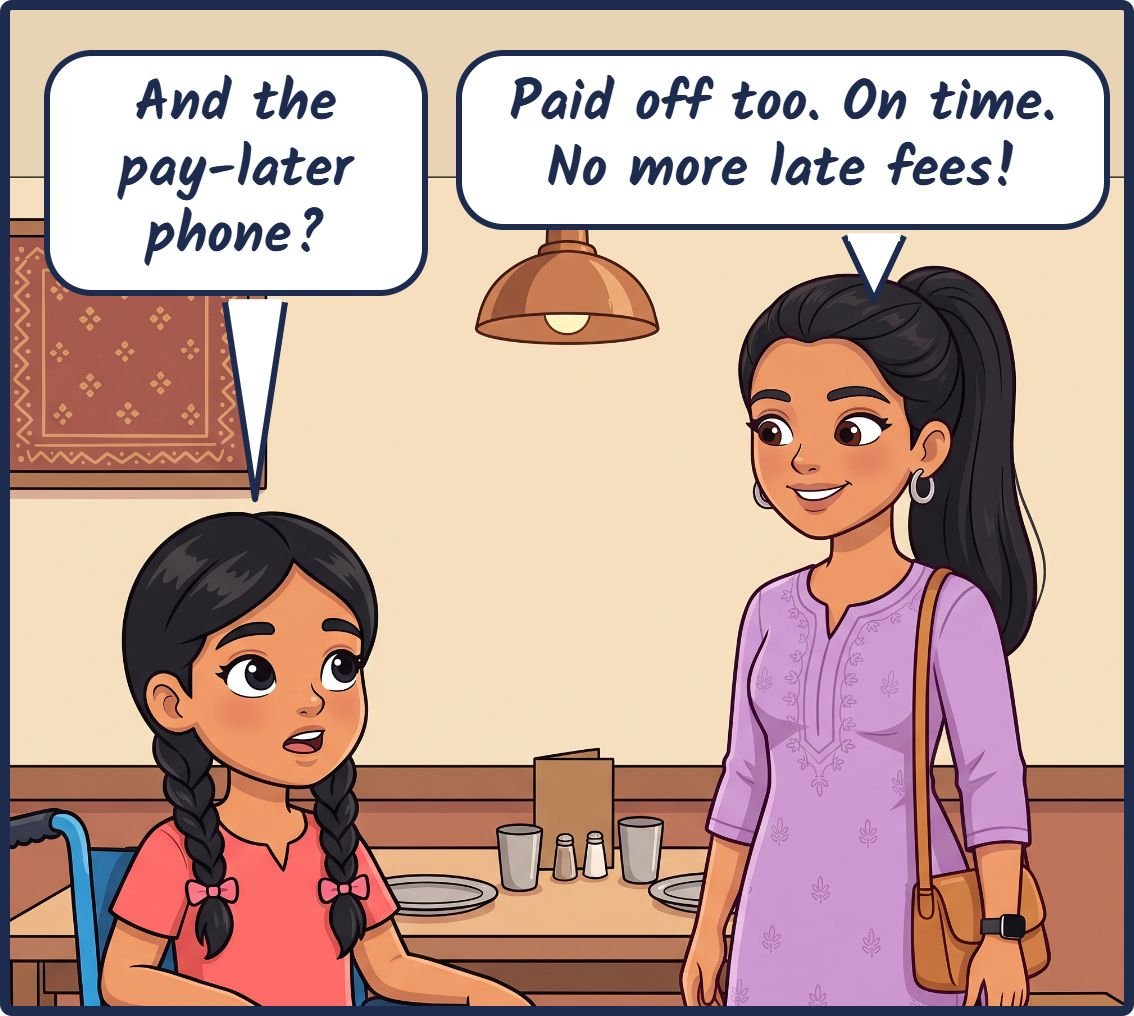
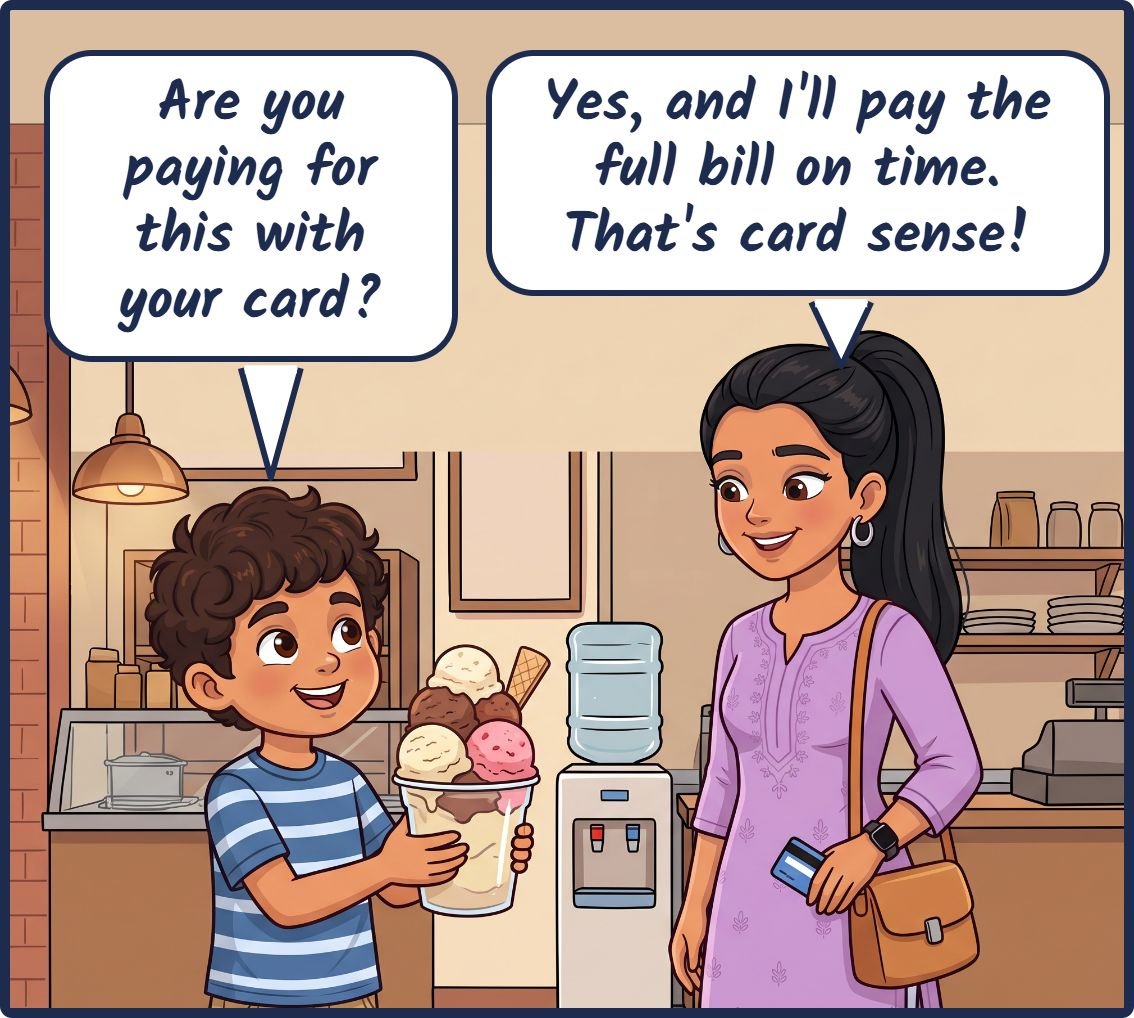
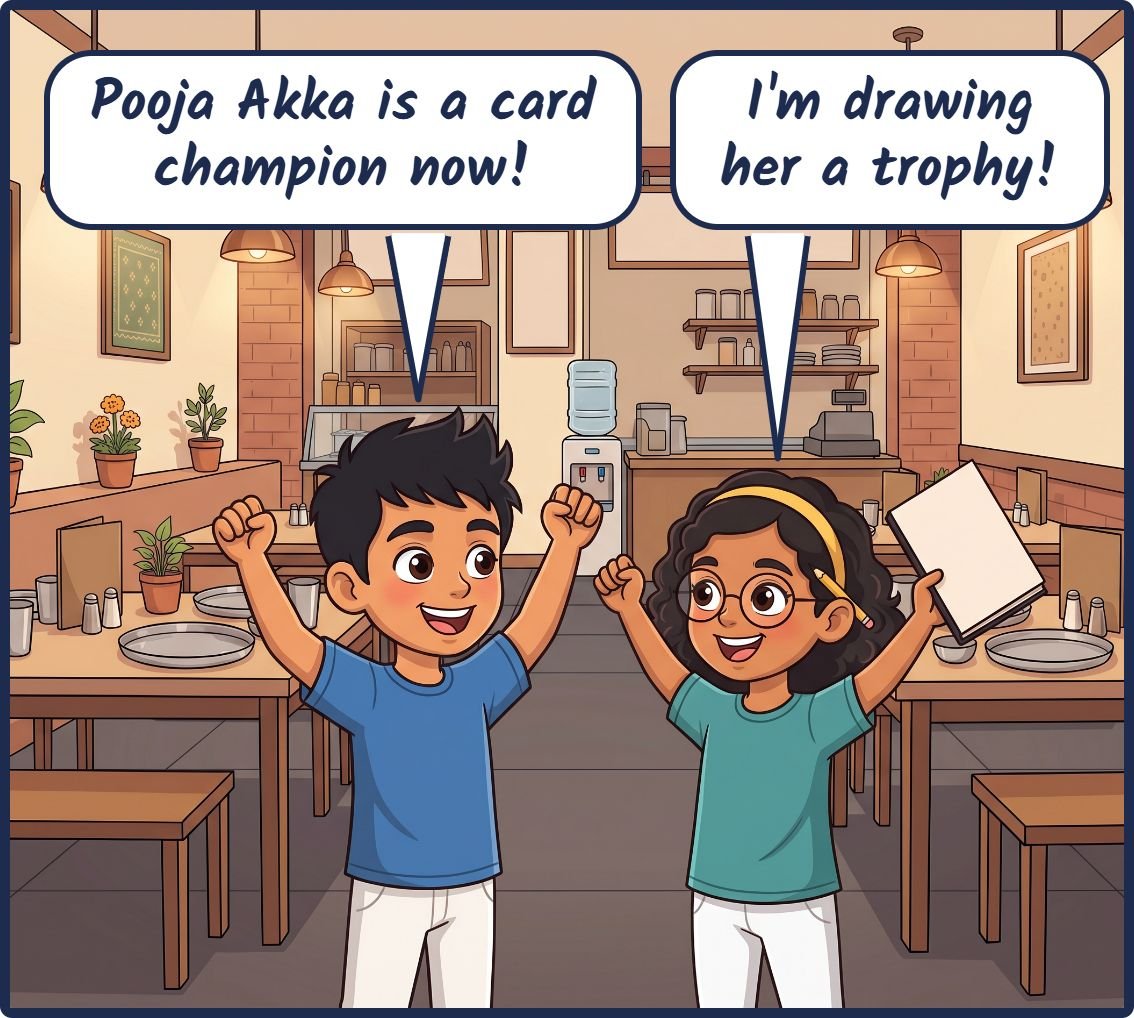
Six months later I've cleared my whole bill! Ice cream for everyone! How did you do it, Akka? No card spending, more than the minimum every month, and a budget. And the pay-later phone? Paid off too. On time. No more late fees! Are you paying for this with your card? Yes, and I'll pay the full bill on time. That's card sense! Pooja Akka is a card champion now! I'm drawing her a trophy!
Card sense
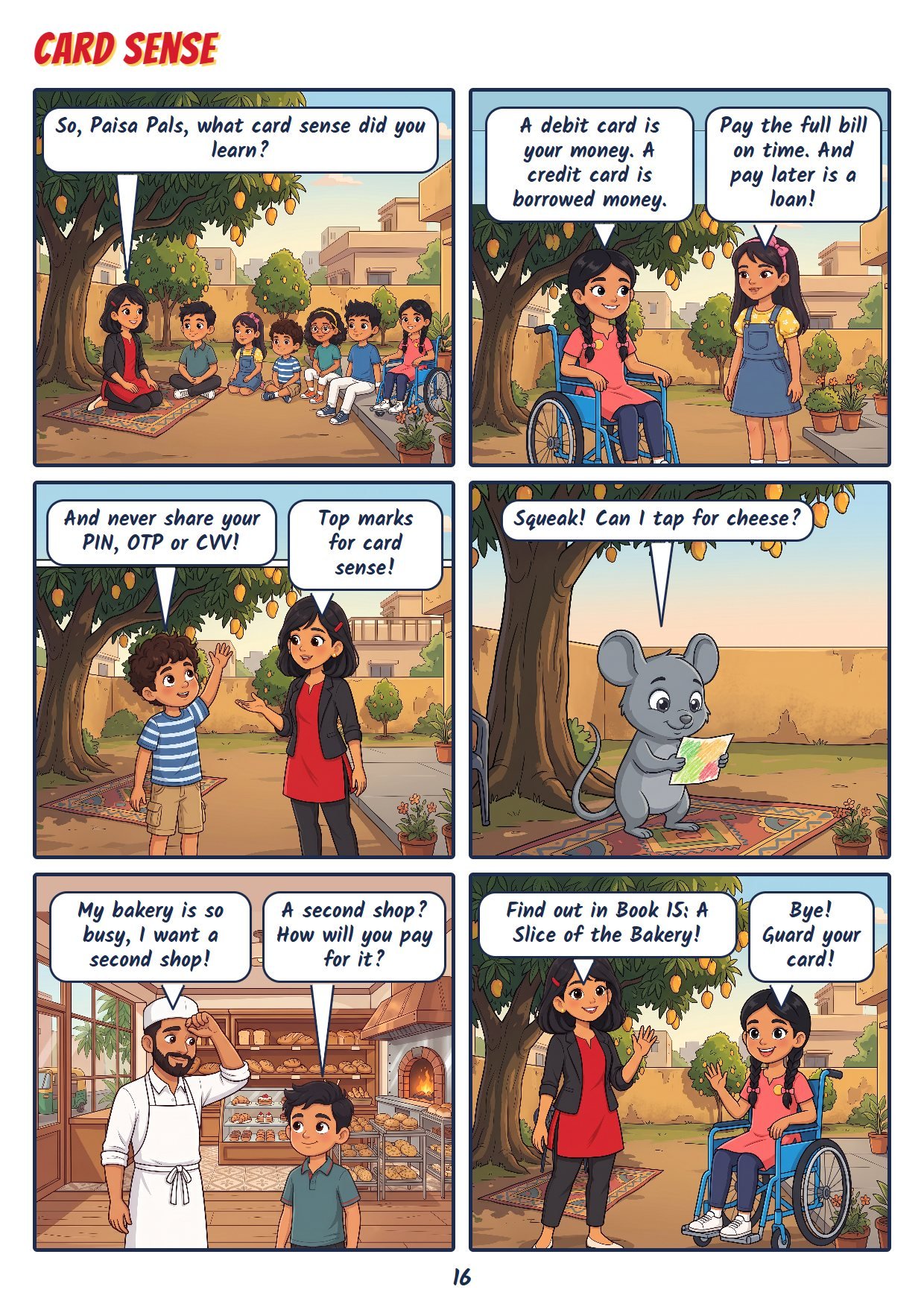
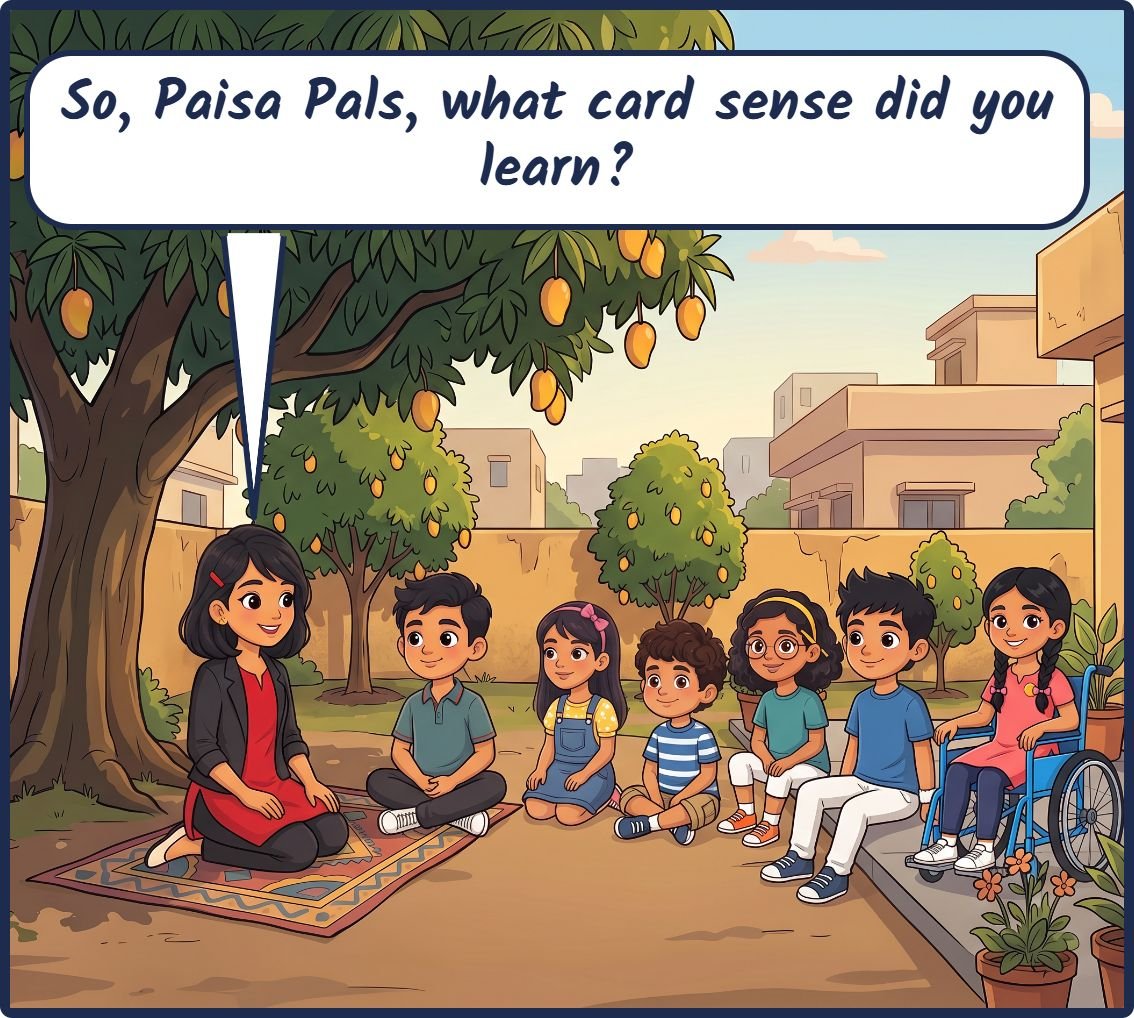
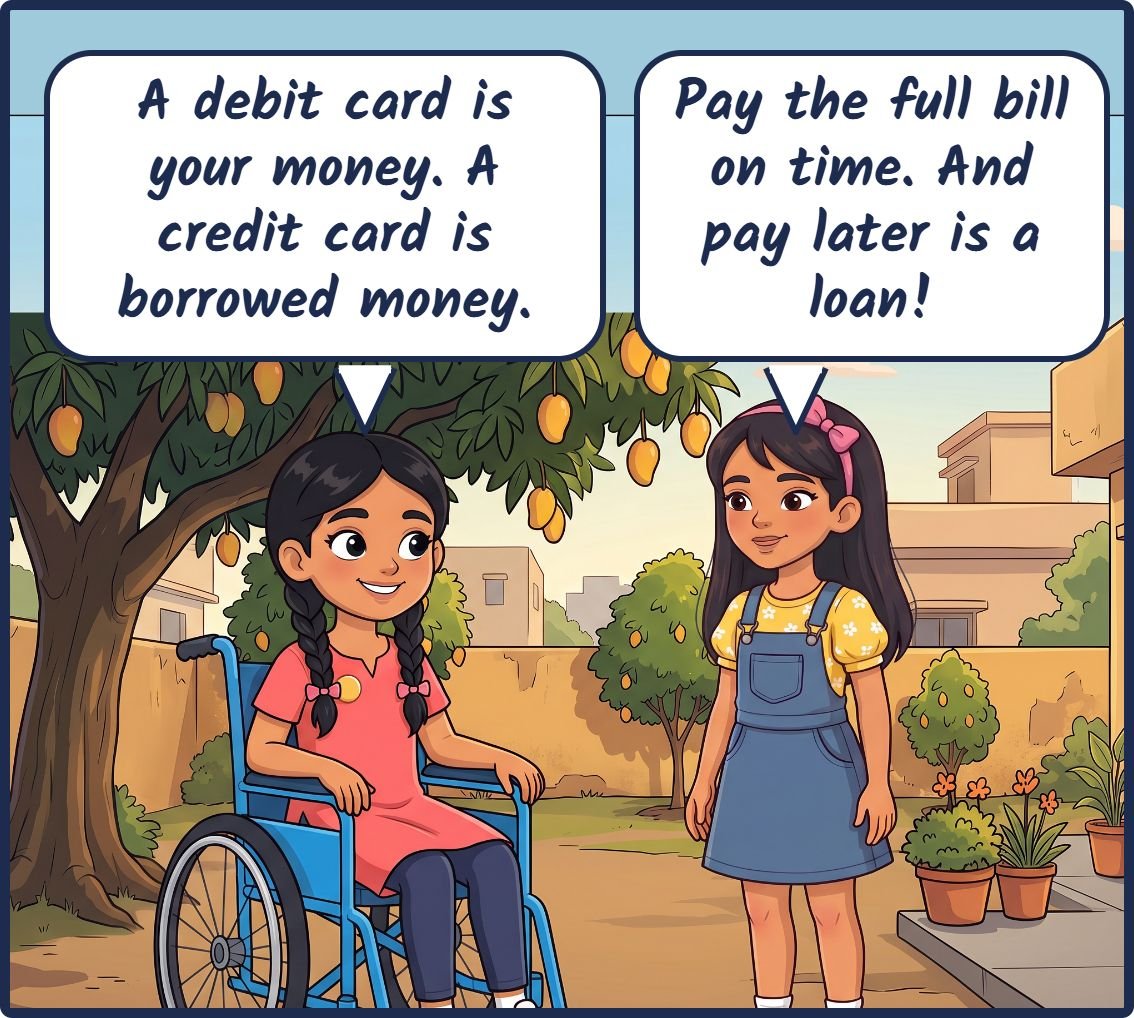
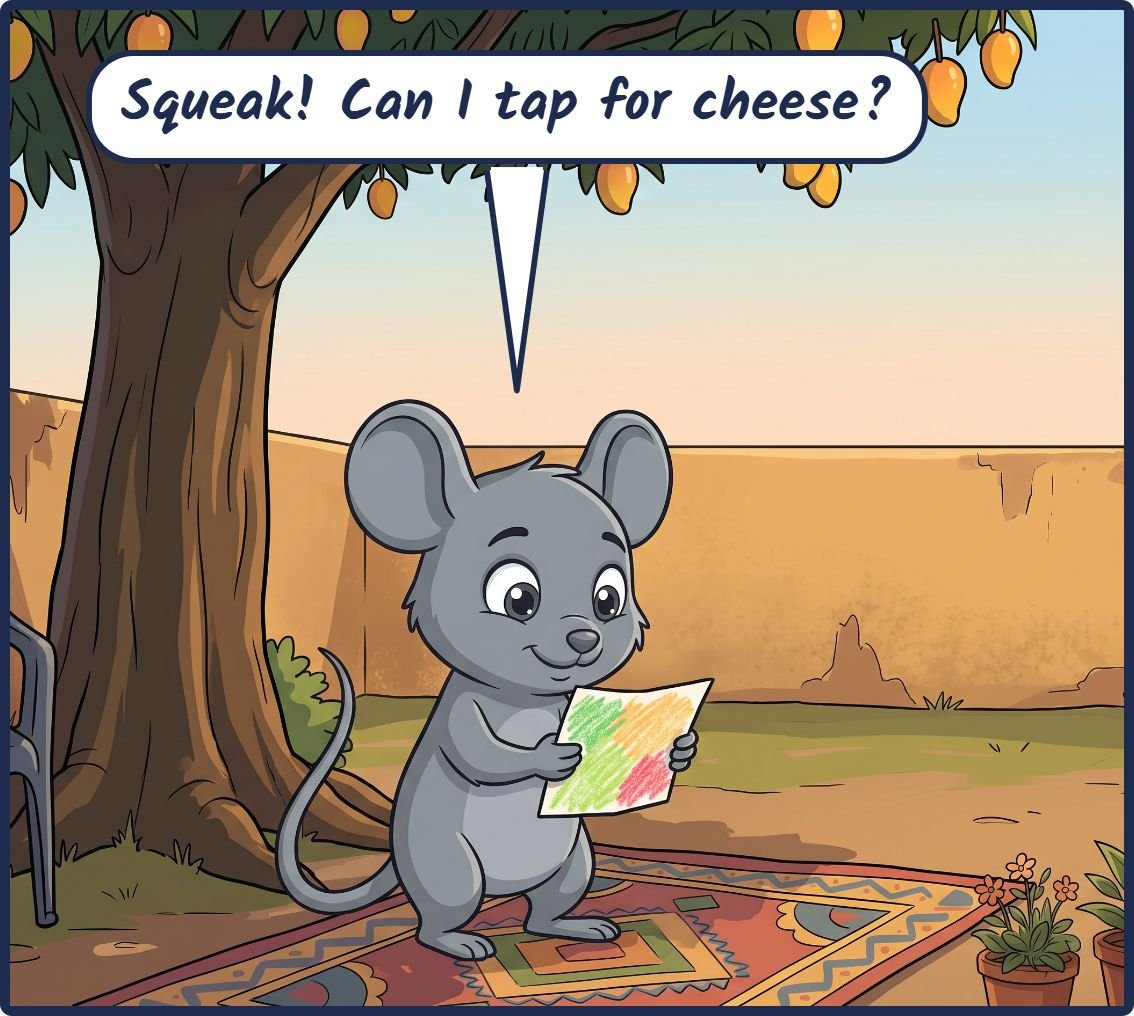
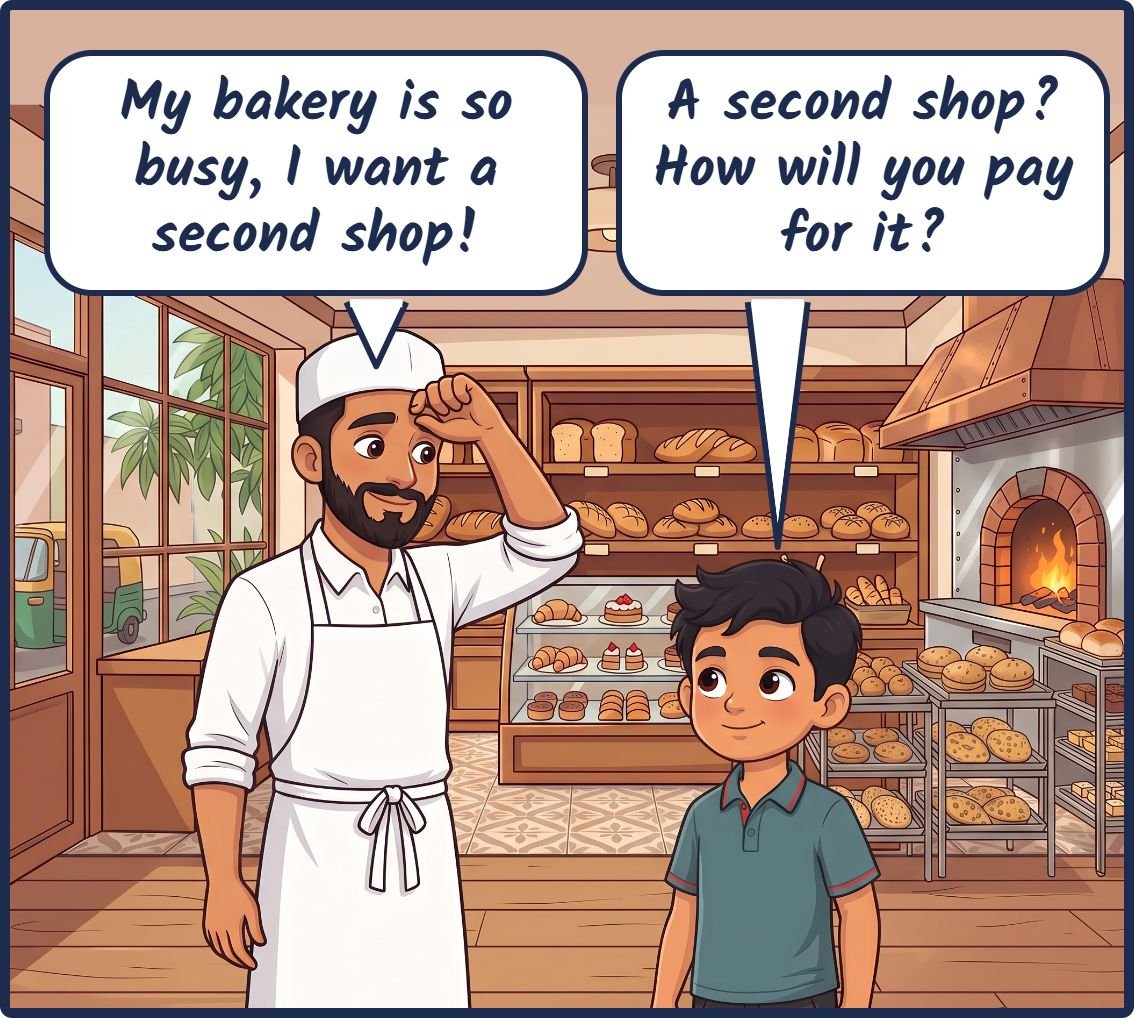
So, Paisa Pals, what card sense did you learn? A debit card is your money. A credit card is borrowed money. Pay the full bill on time. And pay later is a loan! And never share your PIN, OTP or CVV! Top marks for card sense! Squeak! Can I tap for cheese? My bakery is so busy, I want a second shop! A second shop? How will you pay for it? Find out in Book 15: A Slice of the Bakery! Bye! Guard your card!
Srestha's Money Tips

- A debit card spends your own money. A credit card spends borrowed money that you must repay.
- Pay the full credit-card bill by the due date. Paying only the minimum brings interest on the rest.
- Pay later is a loan. Missed payments bring late fees and show on your credit report.
- Never share your PIN, OTP or CVV. Cover the keypad, and block a lost card at once.
- A card is just a way to pay. Spend only money you have, or can repay in full on time.
Words to know
- Debit card
- a card that spends your own money from your bank account
- Credit card
- a card that spends the bank's money, which you must repay
- Minimum due
- the smallest amount you can pay; interest grows on the rest
- Pay later
- buying now and paying in parts later: a loan
- CVV
- the secret code on a card: never share it
Quiz time!
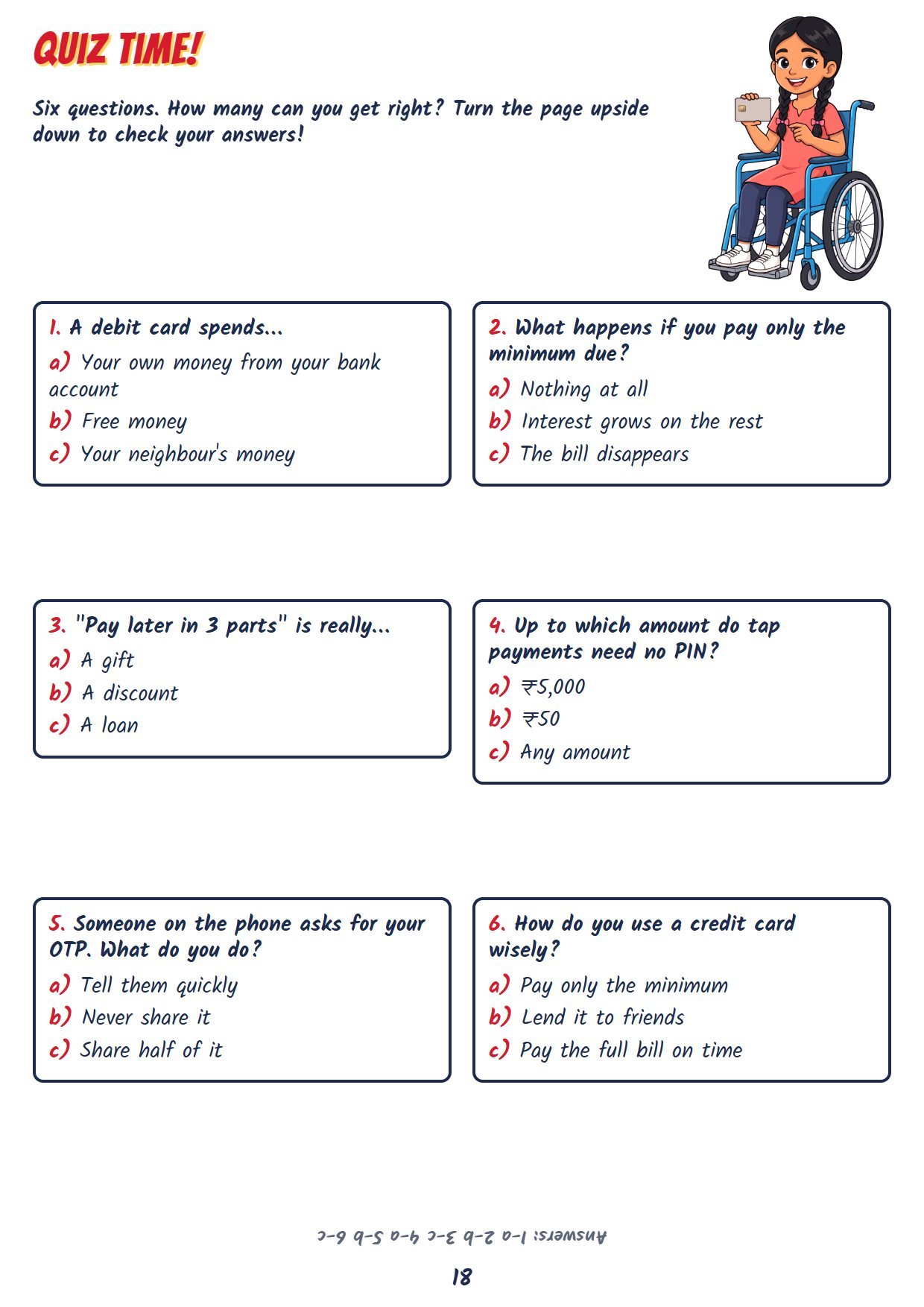
1. A debit card spends…- Your own money from your bank account
- Free money
- Your neighbour's money
2. What happens if you pay only the minimum due?- Nothing at all
- Interest grows on the rest
- The bill disappears
3. "Pay later in 3 parts" is really…- A gift
- A discount
- A loan
4. Up to which amount do tap payments need no PIN?- ₹5,000
- ₹50
- Any amount
5. Someone on the phone asks for your OTP. What do you do?- Tell them quickly
- Never share it
- Share half of it
6. How do you use a credit card wisely?- Pay only the minimum
- Lend it to friends
- Pay the full bill on time
Answers: 1-a 2-b 3-c 4-a 5-b 6-c
Try this at home
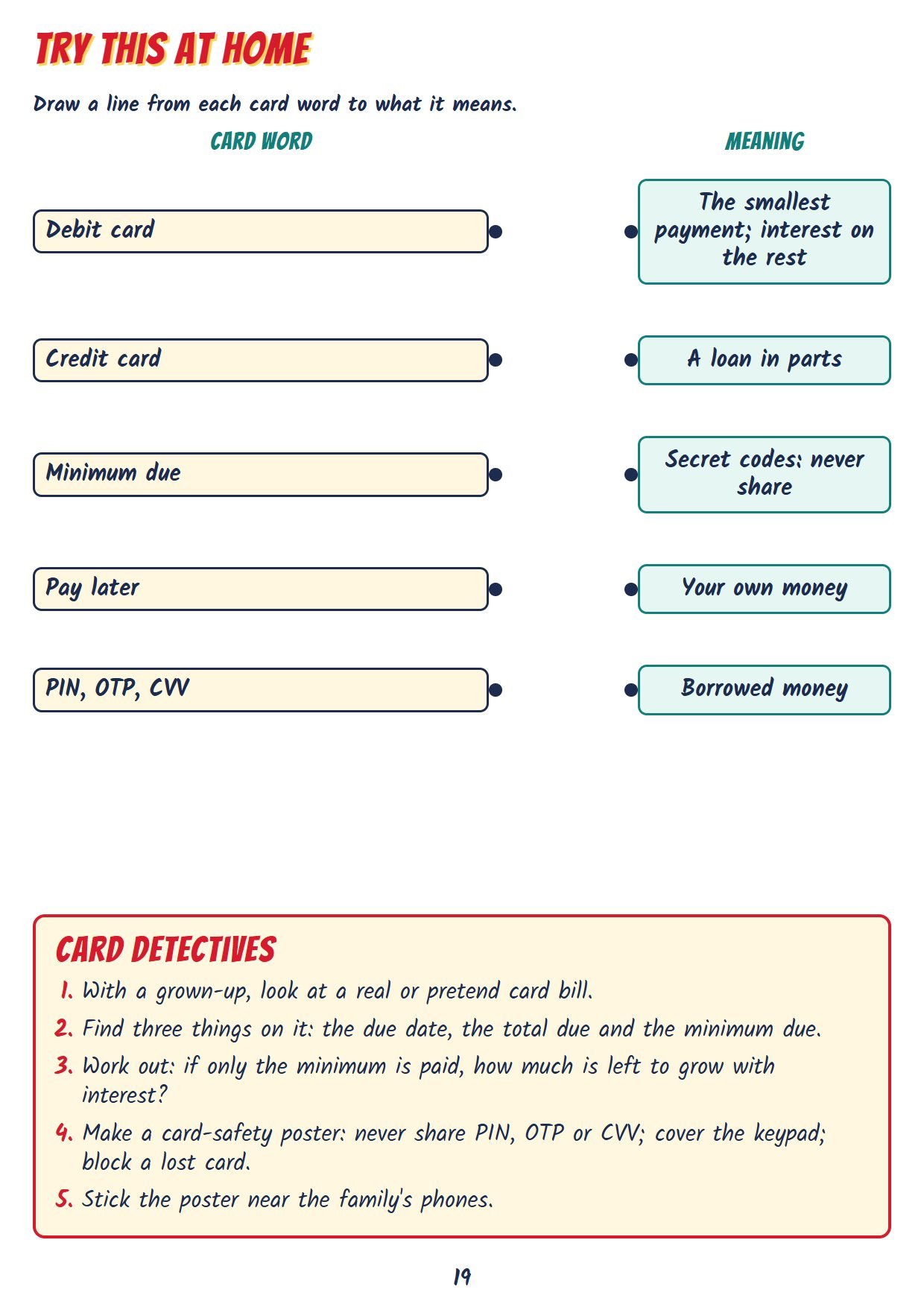
Draw a line from each card word to what it means.
| Card word | Meaning |
|---|
| Debit card | The smallest payment; interest on the rest |
| Credit card | A loan in parts |
| Minimum due | Secret codes: never share |
| Pay later | Your own money |
| PIN, OTP, CVV | Borrowed money |
Card Detectives
- With a grown-up, look at a real or pretend card bill.
- Find three things on it: the due date, the total due and the minimum due.
- Work out: if only the minimum is paid, how much is left to grow with interest?
- Make a card-safety poster: never share PIN, OTP or CVV; cover the keypad; block a lost card.
- Stick the poster near the family's phones.
For parents and teachers
What this book teaches
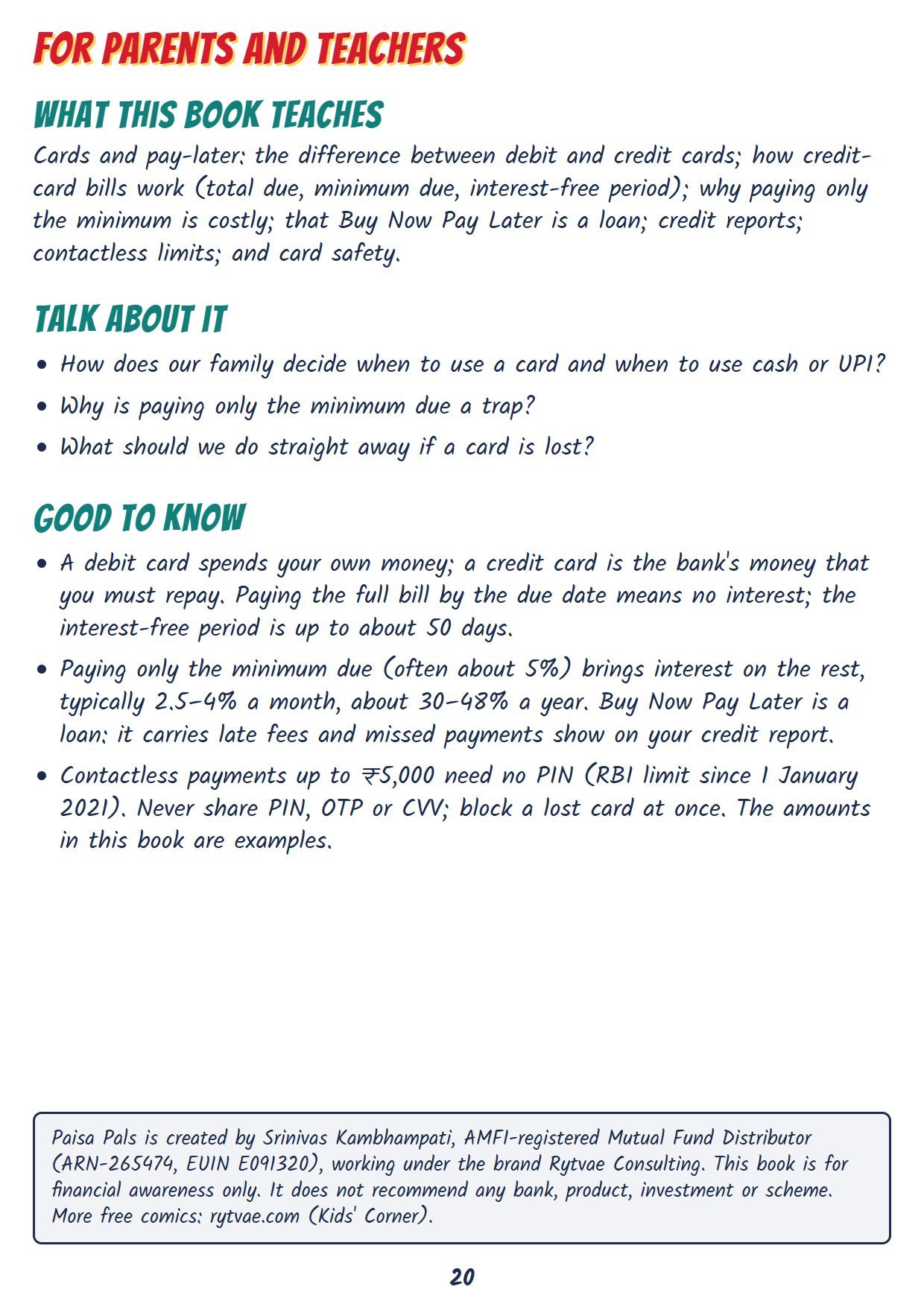
Cards and pay-later: the difference between debit and credit cards; how credit-card bills work (total due, minimum due, interest-free period); why paying only the minimum is costly; that Buy Now Pay Later is a loan; credit reports; contactless limits; and card safety.
Talk about it
- How does our family decide when to use a card and when to use cash or UPI?
- Why is paying only the minimum due a trap?
- What should we do straight away if a card is lost?
Good to know
- A debit card spends your own money; a credit card is the bank's money that you must repay. Paying the full bill by the due date means no interest; the interest-free period is up to about 50 days.
- Paying only the minimum due (often about 5%) brings interest on the rest, typically 2.5–4% a month, about 30–48% a year. Buy Now Pay Later is a loan: it carries late fees and missed payments show on your credit report.
- Contactless payments up to ₹5,000 need no PIN (RBI limit since 1 January 2021). Never share PIN, OTP or CVV; block a lost card at once. The amounts in this book are examples.
Paisa Pals is created by Srinivas Kambhampati, AMFI-registered Mutual Fund Distributor (ARN-265474, EUIN E091320), working under the brand Rytvae Consulting. This book is for financial awareness only. It does not recommend any bank, product, investment or scheme. More free comics: rytvae.com (Kids' Corner).































 ComicBook 15